Malasaña: what to see and do in the neighbourhood of the Movida
Neighbourhoods · Madrid

Malasaña: what to see and do in the neighbourhood of the Movida

Two rebellions a century and a half apart, murals that change every year and the best taverns north of Gran Vía.

10 min read · Updated for 2026
🎧 On the walk Malasaña & La Movida

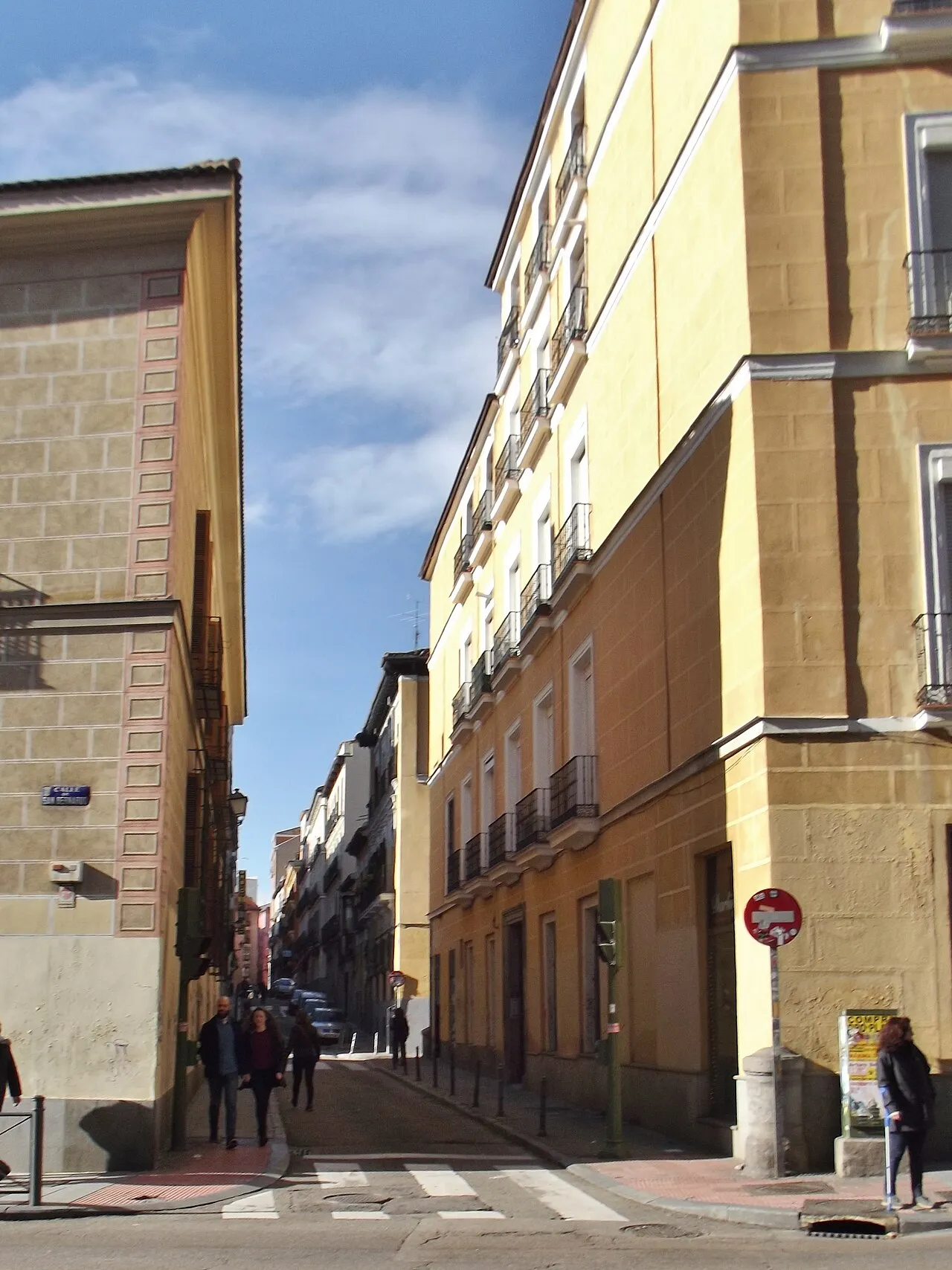
Malasaña is a rectangle of crooked streets north of Gran Vía where two very big things have happened a century and a half apart: here began, on 2 May 1808, the uprising against Napoleon's troops, and here exploded, in the eighties, the Movida madrileña. The neighbourhood has not changed its character since: it still does not ask permission. You can walk it in a good two hours, it is best enjoyed in the afternoon, and it has the highest density of bars, record shops and murals in the whole city.

Watch out for the name: administratively this neighbourhood is called Universidad, and for centuries it was the barrio de Maravillas. Malasaña crept in from the street dedicated to Manuela Malasaña and ended up winning the game.

From barrio de Maravillas to capital of the Movida

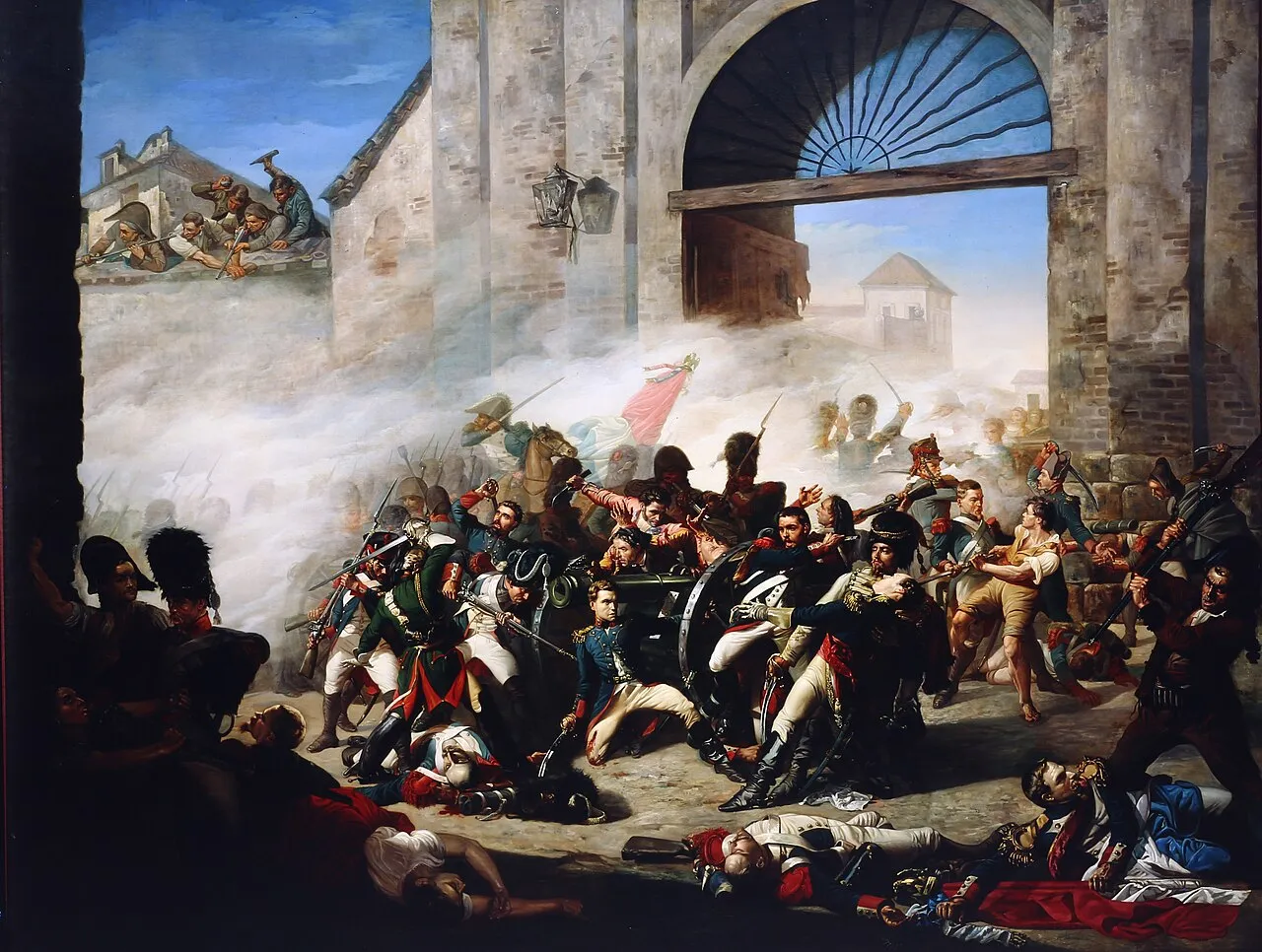
Until the eighteenth century this was almost the outskirts: market gardens, convents — from one of them, dedicated to the Virgen de las Maravillas, comes the old name — and the Palacio de Monteleón with its gardens. When the army set up its artillery depot there, the gunpowder was kept far from the centre. It was the chance that changed everything: on 2 May 1808, captains Luis Daoíz and Pedro Velarde disobeyed the order not to resist, opened the barracks gates and handed out cannon to the residents. They held out for hours against the most powerful army in Europe. They lost, but they lit a war that changed Spain.

Among those residents was Manuela Malasaña, a seventeen-year-old embroiderer, a confectioner's daughter, who died that same day. Tradition has it that the soldiers searched her, found a pair of sewing scissors on her and, deeming her armed, shot her on the spot. Madrid made her a symbol and gave her first a street and then, without meaning to, the name of the whole neighbourhood.

The second explosion came in the eighties. After decades of grey, Madrid let loose with the Movida, and its epicentre was in these streets: Alaska DJing at sixteen, Almodóvar shooting his first films with a borrowed camera, bands forming and breaking up within a week. The most incredible thing is that the authorities blessed it: the mayor, Enrique Tierno Galván, a hugely respected old professor, climbed onto a stage before thousands of young people and delivered his celebrated “el que no esté colocado, que se coloque… y al loro” — roughly, anyone who isn't high, get high… and stay sharp. That complicity between power and the street has never been repeated.

🎧 With Viavoy

Explore Madrid at your own pace

Download the app and discover Madrid offline, whenever you like. Take the walking tour Malasaña & La Movida with a local guide in your ear.

Find out more about Viavoy →

What to see in Malasaña

Eight stops in little more than a kilometre.

You walk the neighbourhood without a map: just come out of Tribunal metro, head up calle Fuencarral and turn left down any street. Even so, this order works well and ends where it should end, on a terrace.

1Plaza del Dos de Mayo

Plaza del Dos de Mayo

📍 Heart of Malasaña

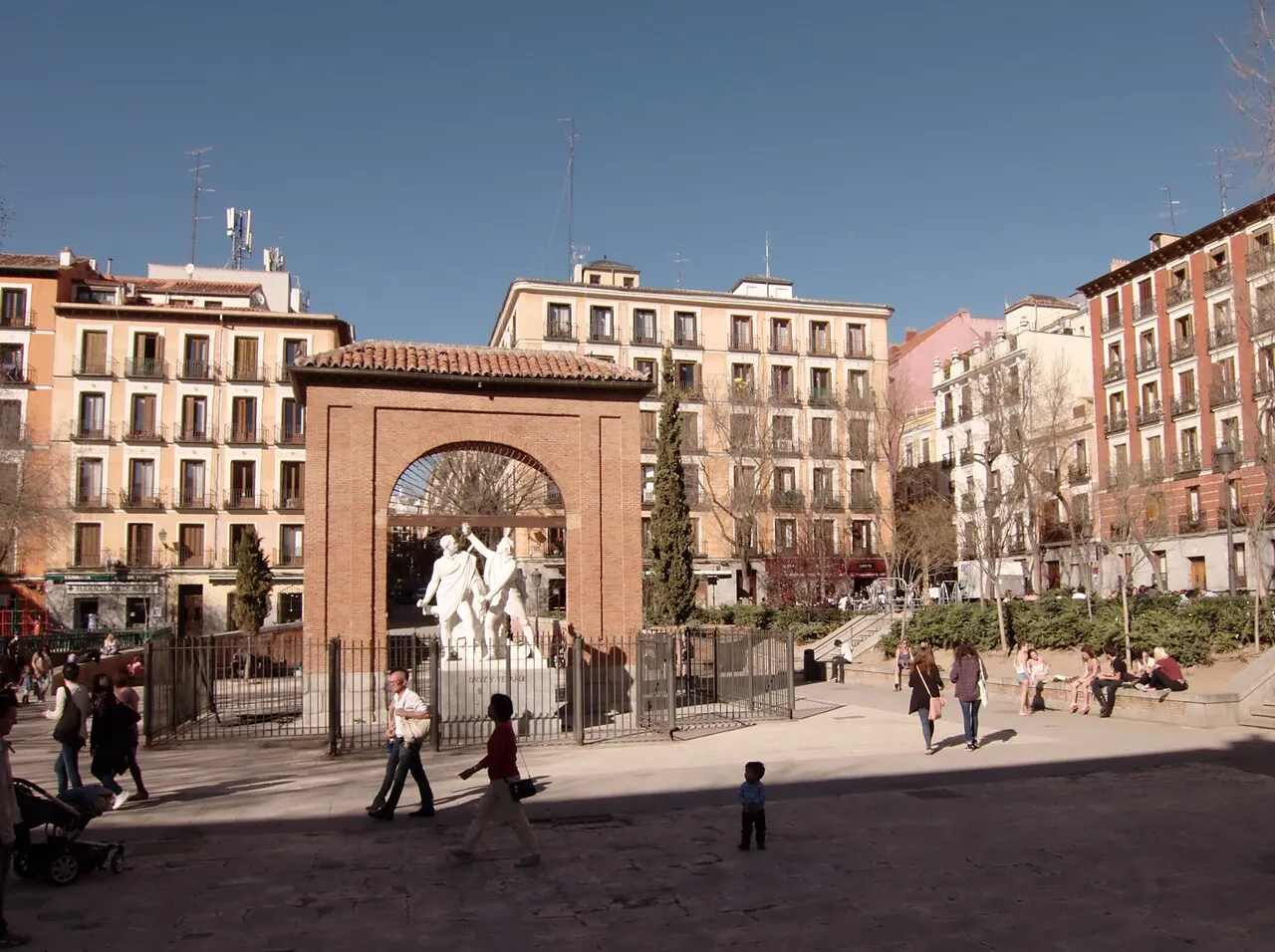
The neighbourhood's living room: children in the sandpit, terrace chairs, someone tuning a guitar and a beer that lasts two hours. In the centre, that brick arch is not decoration: it is the only remnant of the old Cuartel de Monteleón, and beneath it captains Daoíz and Velarde stare at you in bronze with fierce expressions, eternally in mid-action. The square works at any hour, but Sunday midday is when you really see how Malasaña lives.

2Monteleón Barracks

Monteleón Barracks

📍 Plaza del Dos de Mayo

The arch presiding over the square is all that remains of the artillery barracks where it all began. When it was demolished, someone had the good sense to keep that piece of wall as a memorial. Alongside Daoíz and Velarde fought a third officer whom history almost forgot, Lieutenant Jacinto Ruiz, who went on giving orders while badly wounded and died months later far from Madrid. Goya painted those two days — the charge of the Mamelukes and the executions — in two canvases that are today among the greatest things in the Prado Museum.

3Calle de la Palma

Calle de la Palma

📍 Malasaña

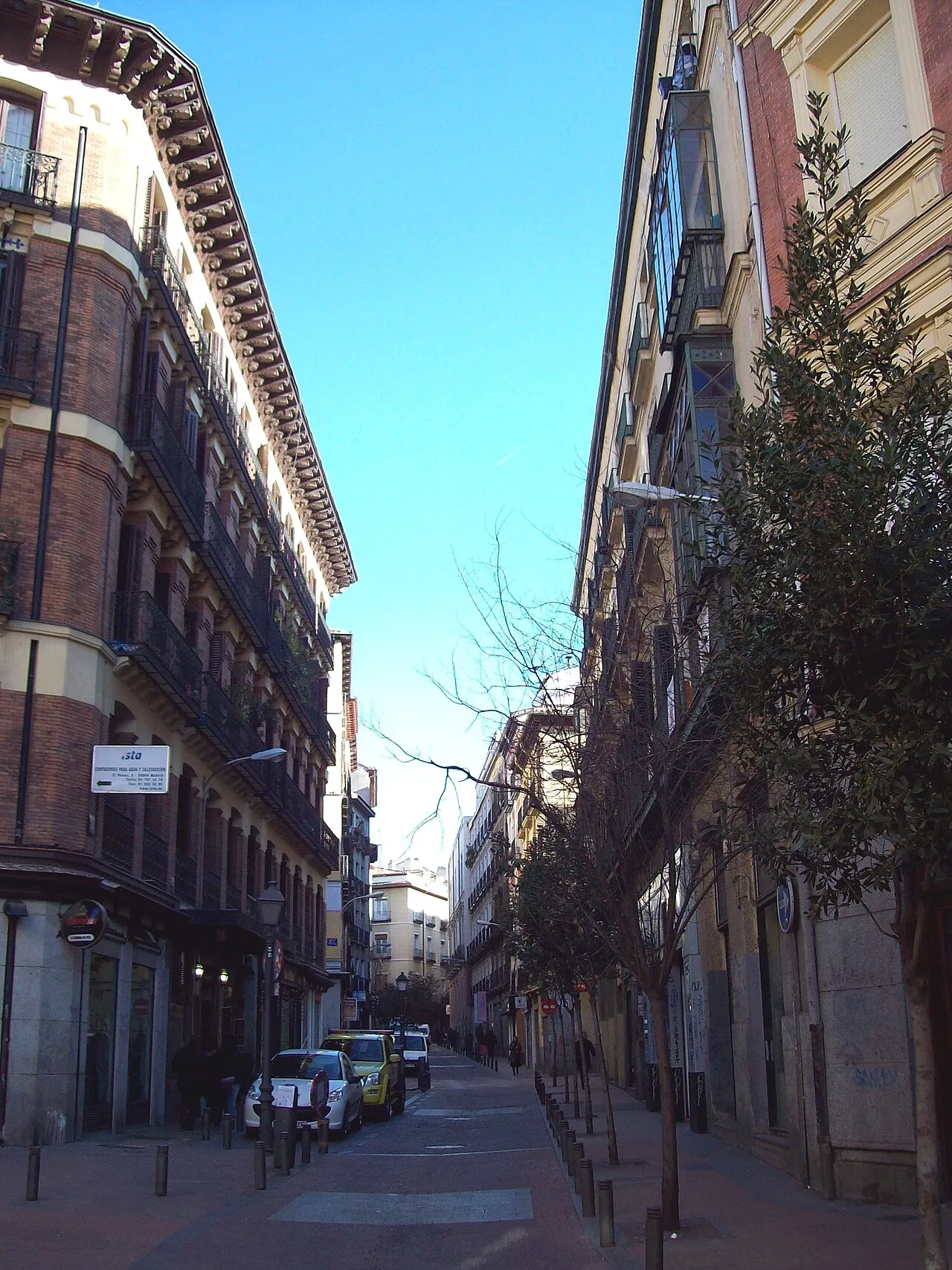
It smells of freshly made coffee and of bread from the bakeries that still hold on. It is Malasaña in its purest form: balconies with plants, record shops, tattoo studios and bars where the waiter recognises you on the second visit. Its crooked line comes from a stream that once ran down here towards the centre: nothing in this neighbourhood is entirely straight. At number 4, El Penta is still open, one of the headquarters of the Movida, its walls lined with records and photos from 1980 and in no hurry to set the clock right.

4Calle del Espíritu Santo

Calle del Espíritu Santo

📍 Malasaña

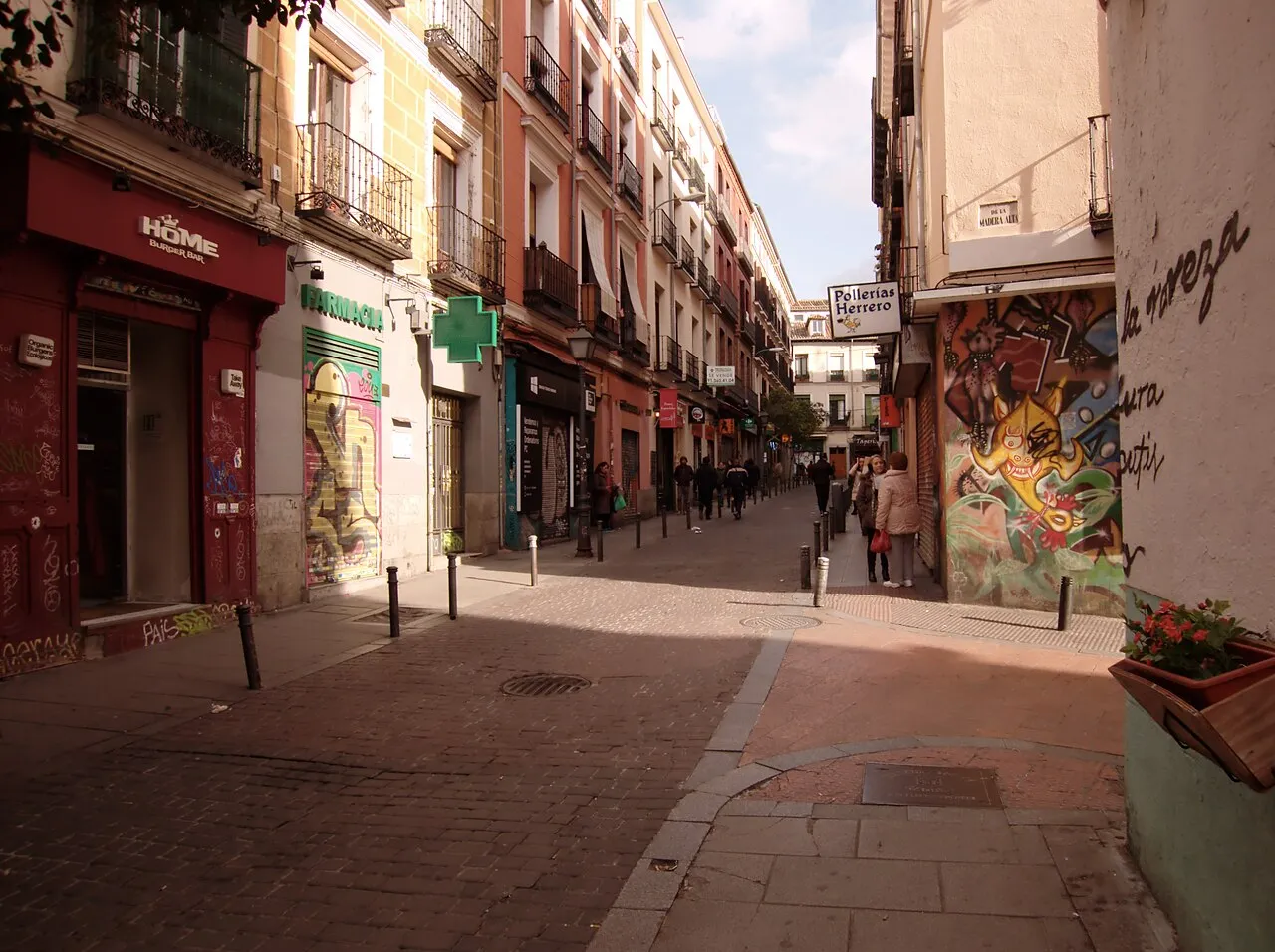
An open-air gallery of urban art, free and always changing: enormous murals, shop shutters turned into canvases, stencils with slogans and tiny mosaics hidden on the corners. Much of it comes from Pinta Malasaña, a neighbourhood festival that since 2015 has filled the façades with live art in a single day, with the shops' permission. What you photograph today may be gone in a year, covered by a new work. Walk slowly and look up.

5Calle del Pez

Calle del Pez

📍 South Malasaña

One of the most castizo and artistic streets in the neighbourhood, full of wine bars, second-hand bookshops and tiny restaurants where you eat wonderfully. The name comes, they say, from a family who had an enormous fish tank — extremely rare for the time — that the neighbours ended up using as a landmark. It appears in novels and films as an emblem of bohemian Madrid, and at number 10 is the Teatro Flamenco Madrid, one of the best options in the city for seeing flamenco at theatre prices.

6Museo de Historia de Madrid

Museo de Historia de Madrid

📍 Fuencarral, 78

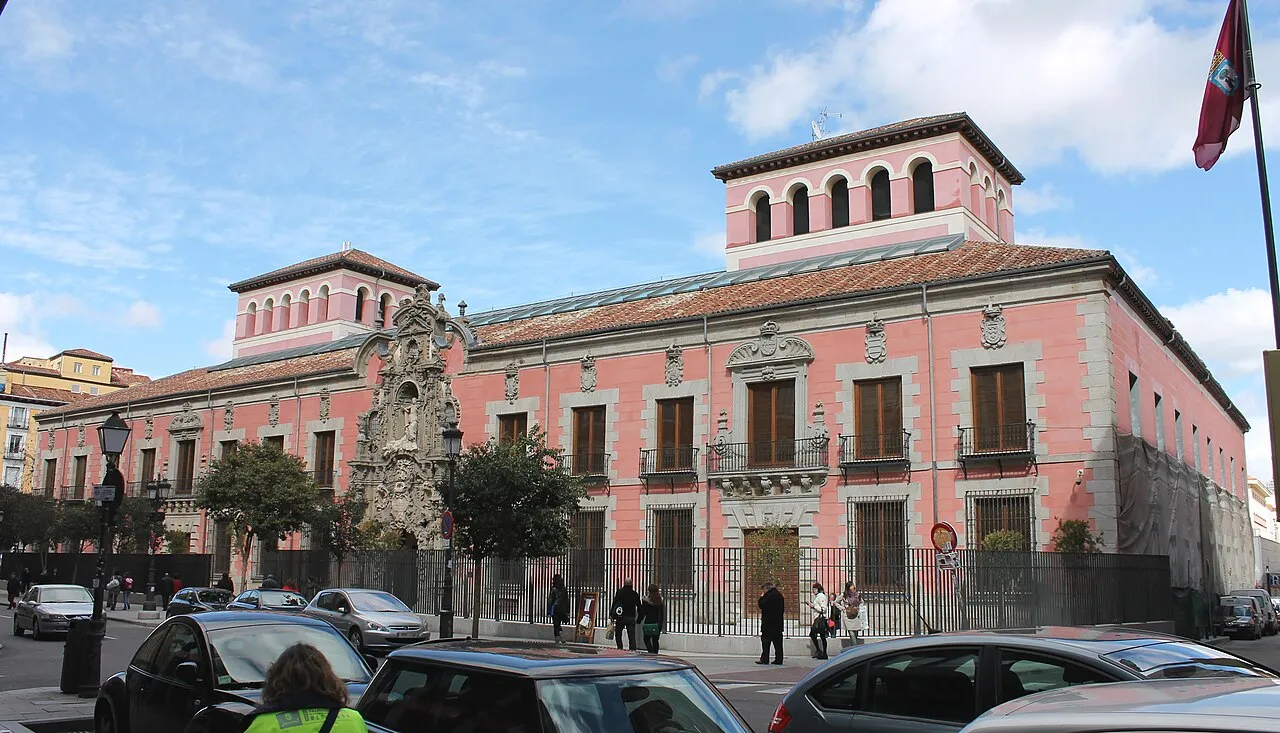
Stop in front of its Baroque doorway and open your eyes wide: it is pure filigree in stone, carved by Pedro de Ribera, the architect of half of eighteenth-century Madrid. The contrast is enormous, because the building was a hospice, an asylum for the poor and orphaned: the most ornate façade on the street for the humblest place in the city. Entry is free and inside there is a little-known jewel: the model of Madrid that León Gil de Palacio made in 1830, street by street and rooftop by rooftop. You will find yourself looking for your own street without being able to help it.

7Iglesia de San Antonio de los Alemanes

Iglesia de San Antonio de los Alemanes

📍 Corredera Baja de San Pablo, 16

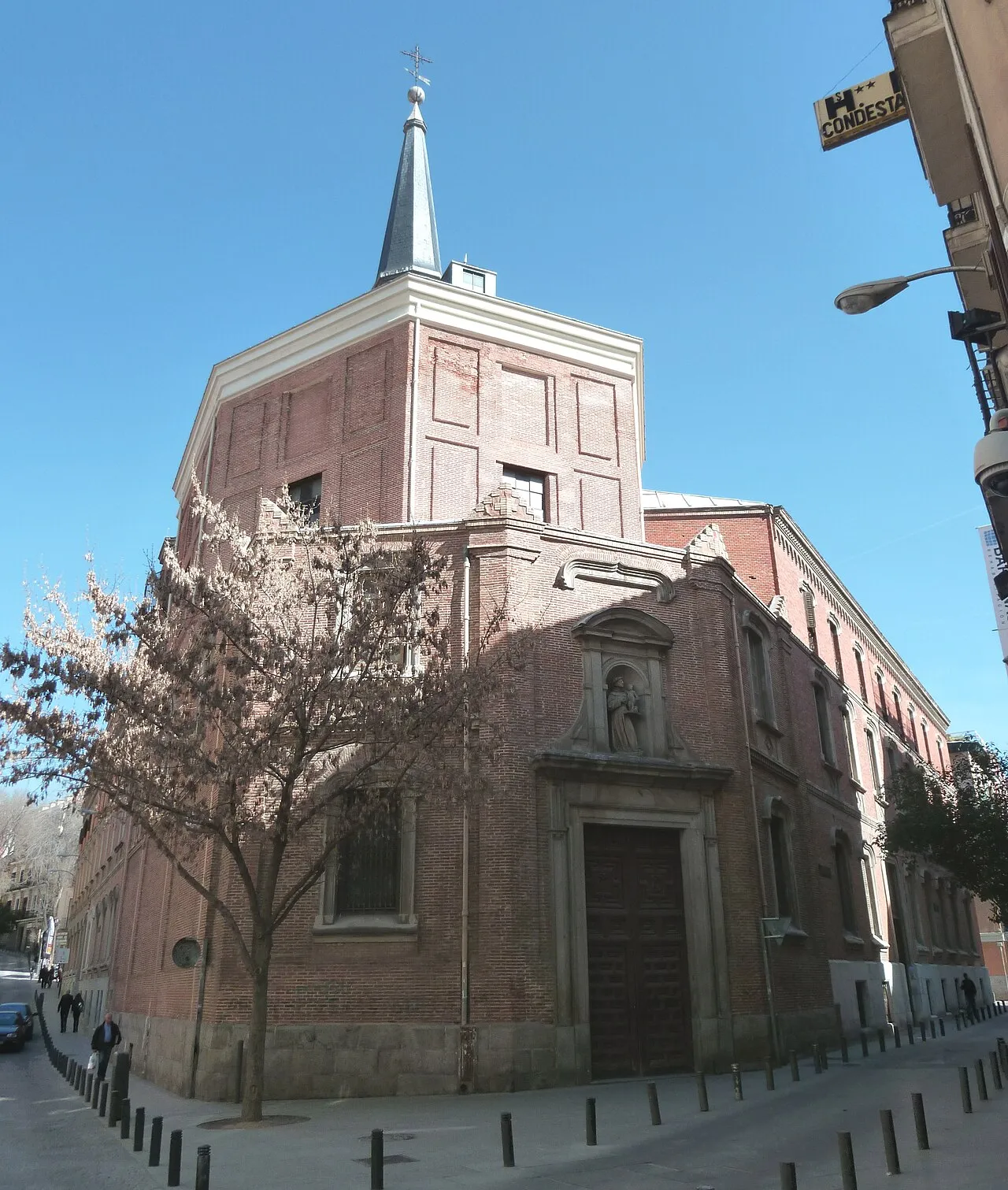
Behind an extremely discreet door hides one of the most astonishing Baroque jewels in Madrid: an oval church with every centimetre of the dome and walls covered in frescoes by Luca Giordano and Coello. Outside, nothing; inside, the Sistine Chapel of Madrid that almost nobody knows. It was born in the seventeenth century as the church of the Portuguese and later passed to German-speaking Catholics, hence the name. For four centuries it has been cared for by the Hermandad del Refugio, which still hands out food to those who need it today.

8Calle Fuencarral and the Mercado de San Ildefonso

Calle Fuencarral and the Mercado de San Ildefonso

📍 Border with Chueca

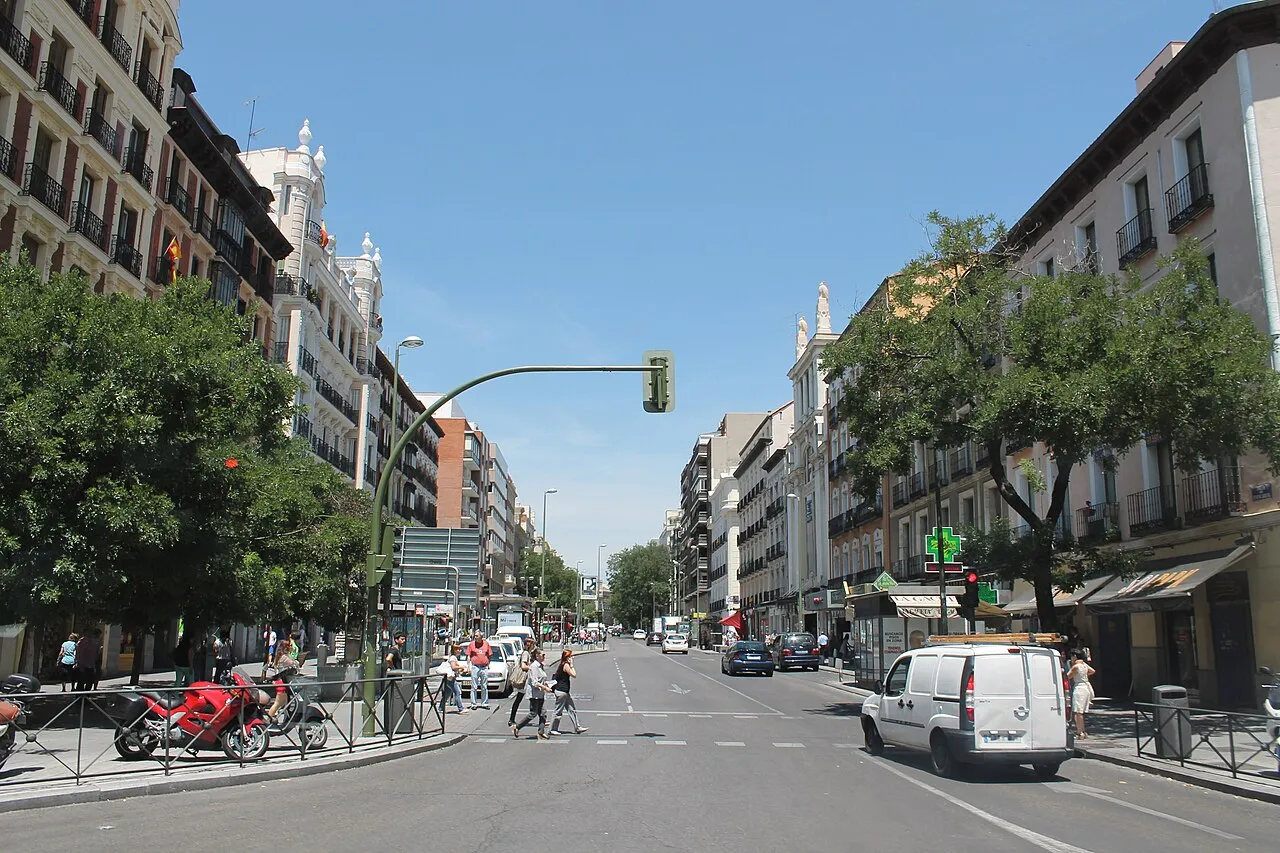
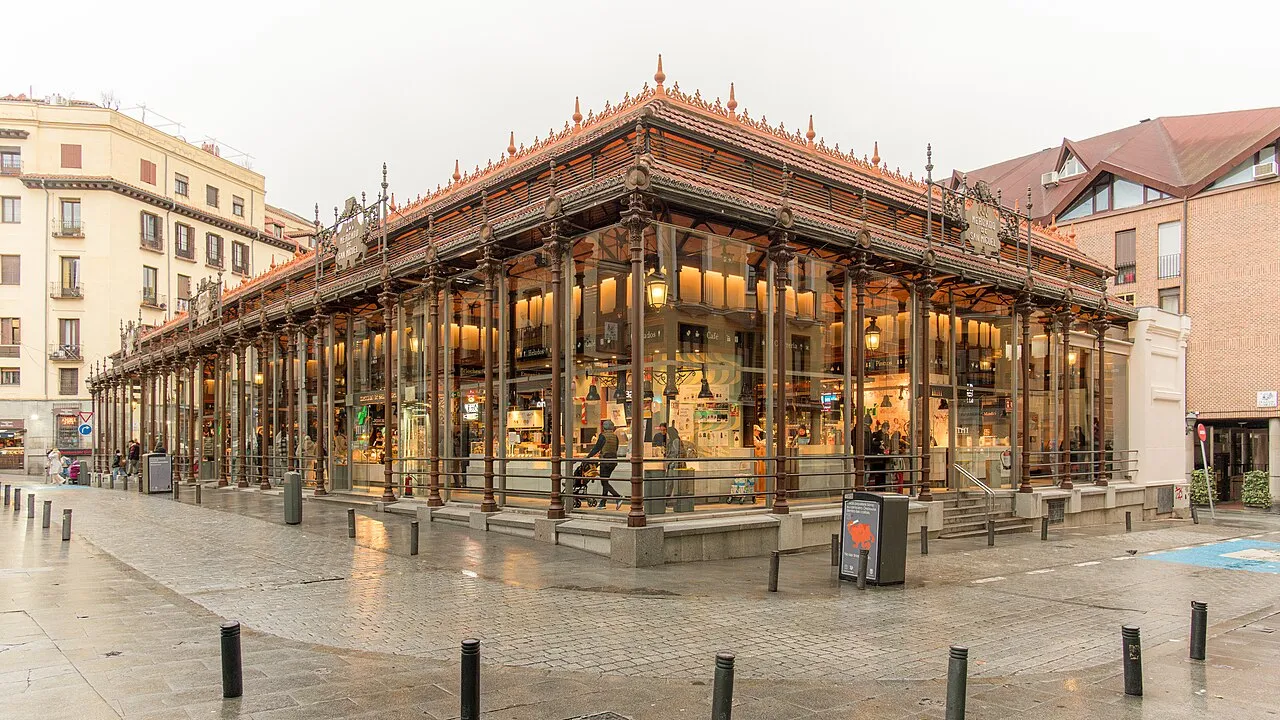
The great commercial artery separating Malasaña from Chueca, pedestrianised for much of its length and full of streetwear shops, sneaker stores and speciality coffee bars. In the eighties it was the daily parade of the Movida and it is still a spontaneous catwalk: in Malasaña, getting dressed is almost a sport. At number 57, the Mercado de San Ildefonso offers three floors of street food to nibble standing up — croquetas in a paper cone, ham carved on the spot — and a terrace on top with views over the street.

Manuela Malasaña and the memory of two rebellions
The soul of the neighbourhood

Manuela Malasaña and the memory of two rebellions

A seventeen-year-old girl shot in 1808 for carrying a pair of sewing scissors, and a neighbourhood that in 1980 exploded again, this time with freedom. Between the one and the other lie a hundred and seventy-two years and the same ground. The temples of that second revolution are still open and are not museums: La Vía Láctea, on calle Velarde, has been running since the late seventies with the same unruly attitude; El Penta, on la Palma, keeps its walls just as they were. If you come back at night, go into either of them and raise a glass to Alaska and her crowd.

🎧 On the tour Malasaña & La Movida📍 View on Google Maps

Chueca, next door

Cross Fuencarral and the air changes.

Malasaña and Chueca are neighbours and opposites. Where one is alternative and a little scruffy, the other is festive, well kept and proud. Chueca was a run-down area in the eighties that the LGBT community rebuilt until it became a European reference point; today it is synonymous with shops with personality, packed terraces and nights that never end. The square that gives it its name owes it neither to a politician nor to a saint, but to Federico Chueca, a zarzuela composer and author of a piece entitled, precisely, “La Gran Vía”.

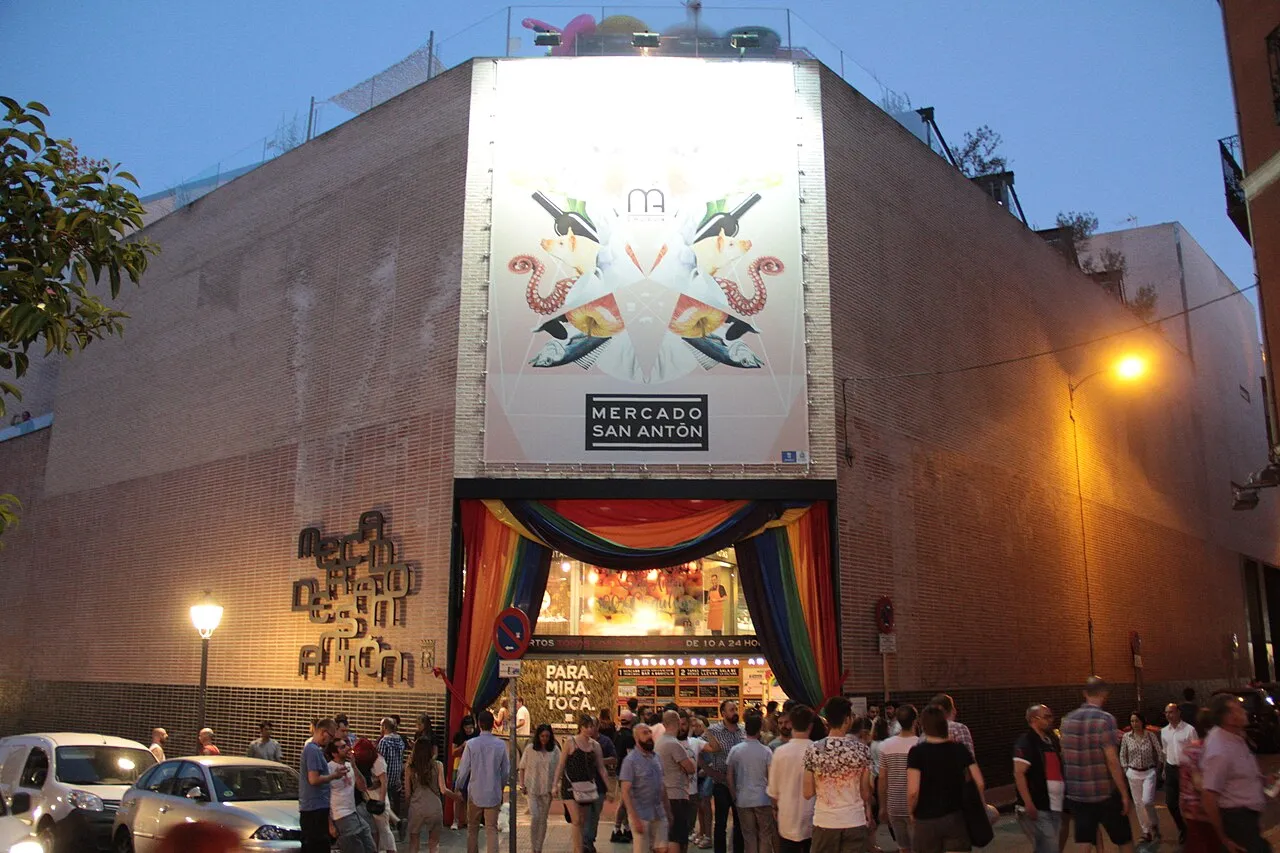
The high point comes in late June and early July with Pride, one of the most massively attended celebrations on the planet: in 2017 Madrid hosted WorldPride and the whole city threw itself into it. If you come on those dates, do not expect peace and quiet anywhere in the Centro district. The rest of the year, Chueca is above all a magnificent area for eating: the Mercado de San Antón, on calle Augusto Figueroa, has fresh produce downstairs, tapas counters on the middle floor and a rooftop with views over the roofs where the evening vermut tastes different.

9Plaza de Chueca

Plaza de Chueca

📍 Chueca

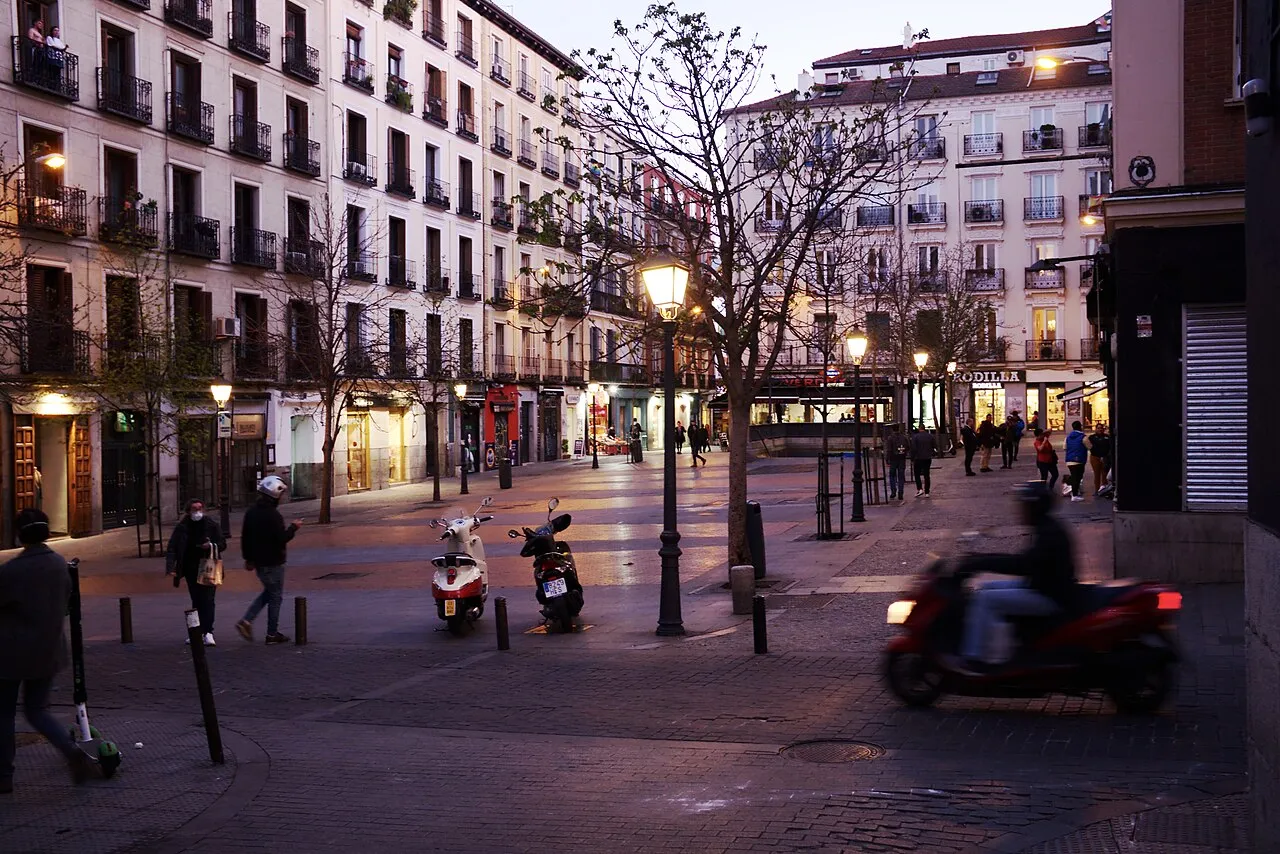
Small, snug, with the terraces packed up against each other and rainbow flags flying almost all year round. It is the neighbourhood's meeting point and a lesson in social urbanism: forty years ago this square was a place people kept away from, and today it is one of the spots with the best atmosphere in Madrid. Sit on a terrace in mid-afternoon, order a vermut and watch people go by; in Chueca, that is the main activity.

10Mercado de San Antón

Mercado de San Antón

📍 Augusto Figueroa, 24

Three well-resolved floors: fresh produce on the ground floor, tasting counters on the middle one and a rooftop terrace on top. Order some oysters or some tinned delicacies with a glass of white wine downstairs, and go up top with a vermut at sunset. The name comes from Saint Anthony Abbot, patron saint of animals, whose church is a step away on calle Hortaleza: every 17 January queues of residents form with dogs, cats, tortoises and the odd horse waiting for the blessing. A centuries-old tradition that is still very much alive.

Frequently asked questions

Why is the neighbourhood called Malasaña?

After Manuela Malasaña, a seventeen-year-old embroiderer who died on 2 May 1808 during the uprising against the French troops. Her name passed first to a street and from there, popularly, to the whole neighbourhood. Administratively it is called Universidad, and for centuries it was the barrio de Maravillas, after an old convent in the area.

What to see in Malasaña in an afternoon?

The Plaza del Dos de Mayo with the arch of the Monteleón Barracks, the murals of Calle del Espíritu Santo, Calle de la Palma, the Baroque doorway of the Museo de Historia (free entry) and the dome of San Antonio de los Alemanes. It all fits into one kilometre and a good two hours, terrace included.

What was the Movida madrileña?

The cultural explosion Madrid lived through in the eighties after the end of the dictatorship: music, cinema, fashion and unbridled nightlife, with Malasaña as its epicentre. Out of it came Almodóvar, Alaska and dozens of bands. Venues such as La Vía Láctea, on calle Velarde, are still open and running as ordinary bars, not as museums.

Malasaña or Chueca: which to visit?

They are neighbours and can be done in one go, separated only by calle Fuencarral. Malasaña is more alternative, with street art, vinyl and historic taverns; Chueca is more festive and polished, with better markets and the epicentre of Pride in late June. The ideal is to start in one and finish in the other.

Where to eat cheaply in Malasaña?

In the historic taverns of calle Colón and calle Madera, where a caña with a tapa costs less than 4 € and the tortillas and croquetas are legendary, and in the Mercado de San Ildefonso (Fuencarral, 57) for nibbling standing up. An informal meal in the Pez area is around 18-30 € per person.

Can you explore Malasaña with a local guide?

Yes, and at your own pace: with Viavoy you download the route “Malasaña & La Movida”, which tells you the story of 2 May, of Manuela Malasaña and of the eighties as you walk, with no group, no timetable and no need for a connection. You can stop for a drink and pick it up where you left off.

Where to eat and drink in Malasaña

The neighbourhood has three culinary layers and all three are worth it. The first is the historic taverns: on calle Colón there is a century-old tiled bodega famous for its tortilla de patatas, and on calle Madera another that has spent decades making croquetas people queue up to eat. In both, a caña with a tapa still costs less than 4 €, you order at the bar and you do not book.

The second layer is modern cooking: Malasaña concentrates the highest density of natural wine bars, craft beers, speciality coffee and fusion cooking in central Madrid, above all along the Pez-Espíritu Santo-Corredera axis. Prices are reasonable (18-30 € per person) and almost everything works without a booking except at the weekend.

And the third is quick nibbling: the Mercado de San Ildefonso on Fuencarral and the Mercado de San Antón in Chueca, both open until late, both with a terrace on top. A timing tip that applies to the whole neighbourhood: between 20:00 and 21:00 you find a spot anywhere; from 21:30 onwards, at the weekend, it is a lottery. And do not leave without going up to a rooftop at sunset: from the roofs of Malasaña you see the city in a very different way from the postcards of the centre.

How to plan it

Short afternoon (2 h)Metro Tribunal → Museo de Historia (free) → Calle Fuencarral → Plaza del Dos de Mayo → Calle de la Palma → vermut on a terrace.
Long afternoon (4 h)Add Calle del Espíritu Santo and its murals, Calle del Pez, San Antonio de los Alemanes and a hop over to Chueca via Fuencarral.
NightTapas dinner on Colón or Madera (21:00) → drinks on Calle del Pez → La Vía Láctea or El Penta to close a Movida-style night.
SundayVermut in the Plaza del Dos de Mayo at midday: the best way to see the neighbourhood being a neighbourhood.

Practical information

Getting thereMetro Tribunal (L1·L10), Bilbao (L1·L4) or Noviciado (L2). From Sol it is 15 minutes' walk uphill along Fuencarral.
When to goWeekday afternoons for the shops and the street art; Sunday midday for the vermut and the neighbourhood atmosphere.
What it costsCaña with a tapa for under 4 €, an informal meal 18-30 €. The Museo de Historia and the murals are free.
Don't missThe 1830 model of Madrid in the Museo de Historia and the dome of San Antonio de los Alemanes: two jewels that are free or nearly so.
With childrenThe Plaza del Dos de Mayo has a play area and the Museo de Historia hooks them. The neighbourhood's nightlife, better without them.
Watch out forThe noise: it is an area of intense nightlife. If you are staying here, ask for an inward-facing room.
On the map

🎧 With Viavoy

Walk Madrid and listen at your own pace

Download Viavoy and walk Madrid offline, whenever you like.

from 2,99 €· one-off payment
City Pass · 9,99 €3 days, all the tours in Madrid
Find out more about Viavoy →
Viavoy app

Keep reading

More articles

Neighbourhoods

La Latina and the Rastro: a guide to Madrid at its most castizo

Food & drink

Tapas routes in Madrid: three bar-to-bar crawls

Itineraries

A weekend in Madrid: from Friday to Sunday

What to see

The best viewpoints in Madrid: where to see the city from above