It is hard to believe, but the capital of flamenco is not in Andalusia. It is here. Madrid did not invent the singing or the dancing, but since the late nineteenth century it has been the place you had to come to if you wanted to make a living from them: first the cafés cantantes, then the tablaos of the fifties and sixties, and today a network of venues where, every night, artists perform who fill festivals across half the world in summer. If you want to see real flamenco — the kind played a metre from your table that leaves your hair standing on end — this guide tells you where, how much it costs and what to avoid.
Golden rule: a small tablao with a compact cuadro (singer, guitar, dancer) and room for 60-80 people gives you better flamenco than a big show with dinner included. Always book, and ask for a table in the first two rows.
Why Madrid is the capital of flamenco
Flamenco was born in Andalusia, but it turned professional in Madrid. In the late nineteenth century the city filled with cafés cantantes — venues with a wooden stage, chairs and waiters — where, for the first time, people paid an entrance fee to hear flamenco singing. In the fifties those cafés gave way to the tablaos: night venues, smaller, designed so the artist performs surrounded by the audience. The first to open was Zambra, and a dozen more followed. Many are still open.
That is why today you can see flamenco in Madrid 365 days a year, something that happens neither in Seville nor in Jerez. The city also concentrates the schools, the tablaos that work as a professional showcase and the big festivals: the Festival Flamenco Madrid in spring and Suma Flamenca, which the regional government organises in June with concerts in theatres across the region. And a good share of the top-flight artists live here, even if they were born six hundred kilometres away.
A note that helps you understand what you are about to see: flamenco is not a single dance. It is organised into “palos” — soleá, seguiriya, alegrías, bulerías, tangos, fandangos — which change the rhythm, the intention and even the mood. A good tablao show alternates several in an hour, opens with something serious and ends in a party por bulerías. You do not need to understand anything to enjoy it, but knowing that the soleá is deep and the alegrías are luminous changes the night quite a bit.
Madrid's tablaos, one by one
From the most historic to the most intimate, with indicative prices.
Corral de la Morería (calle Morería, 17, next to Las Vistillas) is the big name. Open since 1956, practically everyone who has been anyone in flamenco over the last half-century has stepped onto its stage, and its dining room holds culinary recognition of its own. There are two formulas: show with a drink, around 50-60 €, or show with dinner, which can go beyond 100-150 € per person. It is an absolute classic, with the solemnity and the price that implies.
Cardamomo (calle Echegaray, 15, in the Barrio de las Letras) is probably the one that best combines artistic quality and an intimate atmosphere. Small room, compact cuadro, several shows a night and a line-up of artists that rotates a lot. Entry with a drink is around 45-55 €; with tapas or dinner it rises to 70-90 €. Being so small, every table is good, but it sells out days in advance in high season.
Torres Bermejas (calle Mesonero Romanos, 11, next to Gran Vía) is a rarity: open since 1960, it keeps a tiled decor imitating the Alhambra, and Camarón de la Isla performed on its stage in his younger years. Entry with a drink sits in the 45-55 € range. Very central and easy to fit into a night on Gran Vía.
Las Tablas (plaza de España, 9) is the most practical option: early shows, more contained prices — from around 30-35 € with a drink — and a nimble one-hour format. It does not have the pedigree of the others, but the level of the cuadro is solid and it works very well if you are travelling on a tight budget or with older children.
Villa Rosa (plaza de Santa Ana, 15) deserves a mention for its tiled façade from 1911, one of the most photographed in the centre, which Almodóvar immortalised in “High Heels”. It has changed hands and format several times in recent years: check its current programme before counting on it. And Casa Patas, on calle Cañizares in Lavapiés, was for three decades the tablao most respected by aficionados and by the artists themselves; it closed in 2020 and its disappearance still hurts in the neighbourhood. If someone recommends it to you, their information is out of date.
Outside the tablao circuit there are two alternatives that aficionados rate highly. One is the peñas flamencas, neighbourhood associations where the singing is for members and for anyone willing to pay a token entrance fee: less production, less comfort and sometimes much more art. The other is the theatres: the Teatros del Canal, the Fernán Gómez and the Teatro Flamenco Madrid (calle del Pez, 10, in Malasaña) programme company shows at theatre prices, between 20 and 35 €, with a longer and more narrative format than the tablao.
Frequently asked questions
How much does it cost to see flamenco in Madrid?
A tablao ticket with a drink included costs between 30 and 60 € depending on the venue; with dinner, between 70 and 150 €. In theatres and festivals tickets drop to 20-35 €, and in peñas or social centres you can see live singing for less than 10 €. The best value option is usually a ticket with a drink and dinner elsewhere in the neighbourhood.
Which is the best tablao in Madrid?
It depends on what you are after. For the historic and culinary experience, the Corral de la Morería. For the best balance of art and closeness, Cardamomo. For something central with pedigree, Torres Bermejas. And for a contained price and a quick show, Las Tablas. None of them disappoints if you choose a small room and the second show.
Is it worth paying for dinner at the tablao?
Except at the Corral de la Morería, which holds culinary recognition of its own, usually not: dinner pushes up the ticket price considerably and the cooking is rarely at the same level. You are better off buying show-plus-drink only and having dinner before or after in Huertas, La Latina or Lavapiés, where you eat very well for 20-25 €.
Do I need to book in advance?
Yes. The good venues are small — between 60 and 120 seats — and fill up days in advance at weekends and in spring and autumn. Booking directly on the tablao's website is usually cheaper than through resale platforms and lets you ask for a table in the front rows, which makes a big difference in flamenco.
Can you see flamenco for free in Madrid?
In social centres such as La Tabacalera, in some neighbourhood peñas and in pass-the-hat performances in squares and markets, yes, you can find live singing without paying an entrance fee or with a voluntary contribution. There is no fixed programme: you ask around the neighbourhood. During festivities such as San Isidro there is also flamenco on the municipal stages, with free access.
Which Madrid neighbourhoods should I explore before the show?
La Morería and Las Vistillas if you are going to the Corral; Huertas and Santa Ana if you are going to Cardamomo; Lavapiés if you want to eat well and cheaply. With Viavoy you can walk those same streets with a local guide in your ear before the show: “Tapas: La Latina & El Rastro” and “Lavapiés: Multicultural Madrid” cover two of the three areas.
Before you book: seven things worth knowing
First, the format. Almost every tablao offers three options: show only with one drink, show with tapas, or show with dinner. The dinner version costs double or triple and the food is rarely up to the price, except at the Corral de la Morería. Recommendation: ticket with a drink, and dinner before or after in the neighbourhood.
Second, the time. Shows usually run at 19:00-20:00 and at 21:30-22:30. The second show is always better: there is more atmosphere, the audience is looser and the artists stretch out. If you are travelling with children, the first one.
Third, the seat. Book by phone or through the tablao's own website rather than through resale platforms, because it usually works out cheaper and because that way you can ask for a table at the front. In a small room, the difference between the first row and the fifth is enormous.
Fourth, the length: between 60 and 90 minutes. Fifth, photos: allowed without flash before and after, but not during the numbers; respect that, because the zapateado needs concentration. Sixth, the “olé”: you say it when something genuinely moves you, not every two beats. And seventh, tipping is not compulsory but is appreciated if the cuadro has moved you.
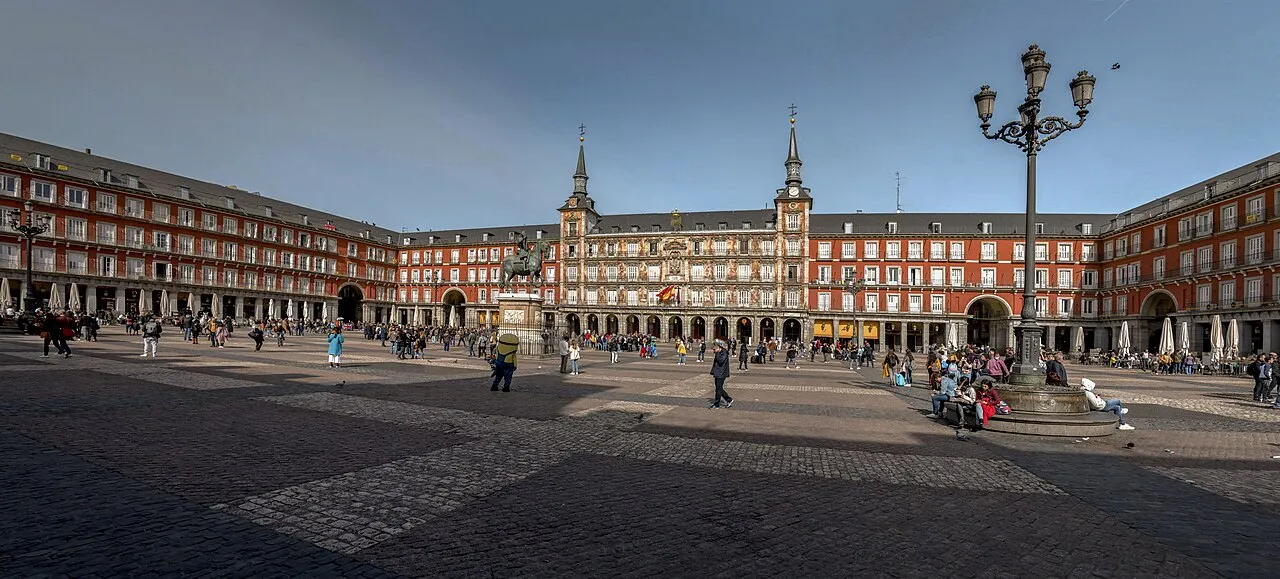
One last local tip: if you enjoyed the flamenco, do not stop at a single night. See whether your trip coincides with the Festival Flamenco Madrid (spring) or with Suma Flamenca (June), where for 20-30 € you see, in a theatre, figures who never perform in a tablao. And if you are around the centre by day, the Plaza Mayor and the streets of the Austrias quarter have a four-century history of street music that is also part of all this.
Practical information
Indicative pricesTablao with a drink: 30-60 €. With dinner: 70-150 €. Theatre or festival: 20-35 €. Peñas and social centres: from free to 10 €.
ShowtimesShows at 19:00-20:00 and at 21:30-22:30, every day of the year. The second show has more atmosphere.
BookingEssential at weekends and in high season. Book on the tablao's website and ask for a table in the front rows.
LengthBetween 60 and 90 minutes for a tablao show; 90-120 minutes for company productions in a theatre.
Getting thereMetro La Latina (L5) for La Morería, Sevilla or Sol for Huertas, Callao (L3·L5) for Gran Vía, Lavapiés (L3) for the neighbourhood.
FestivalsFestival Flamenco Madrid in spring and Suma Flamenca in June, with programmes in theatres across the whole region.