The Madrid of the Habsburgs on foot: a route through the old town
What to see · Madrid

The Madrid of the Habsburgs on foot: a route through the old town

Twelve stops between the Puerta del Sol and the Arab wall to understand where this city came from.

11 min read · Updated for 2026
🎧 On the walk Historic & Royal Madrid (Habsburg Quarter)

When Philip II moved the court to Madrid in 1561, this was a town of narrow streets built over an old Muslim fortress. In the century and a half that followed, under the Habsburg dynasty — the Austrias — almost everything we now think of as “the Madrid of old” was built: the Plaza Mayor, the enclosed convents, the taverns of the Cava Baja, the slate roofs with pointed spires. This walking route covers that Madrid in about three and a half kilometres, almost all on gentle slopes, and can be done in half a day.

The route runs from the Puerta del Sol to the Arab wall and ends in the Plaza Mayor. Do it in the morning, on a weekday: from twelve onwards, the stretch around Ópera and the Palace fills with groups.

What “the Madrid of the Austrias” means

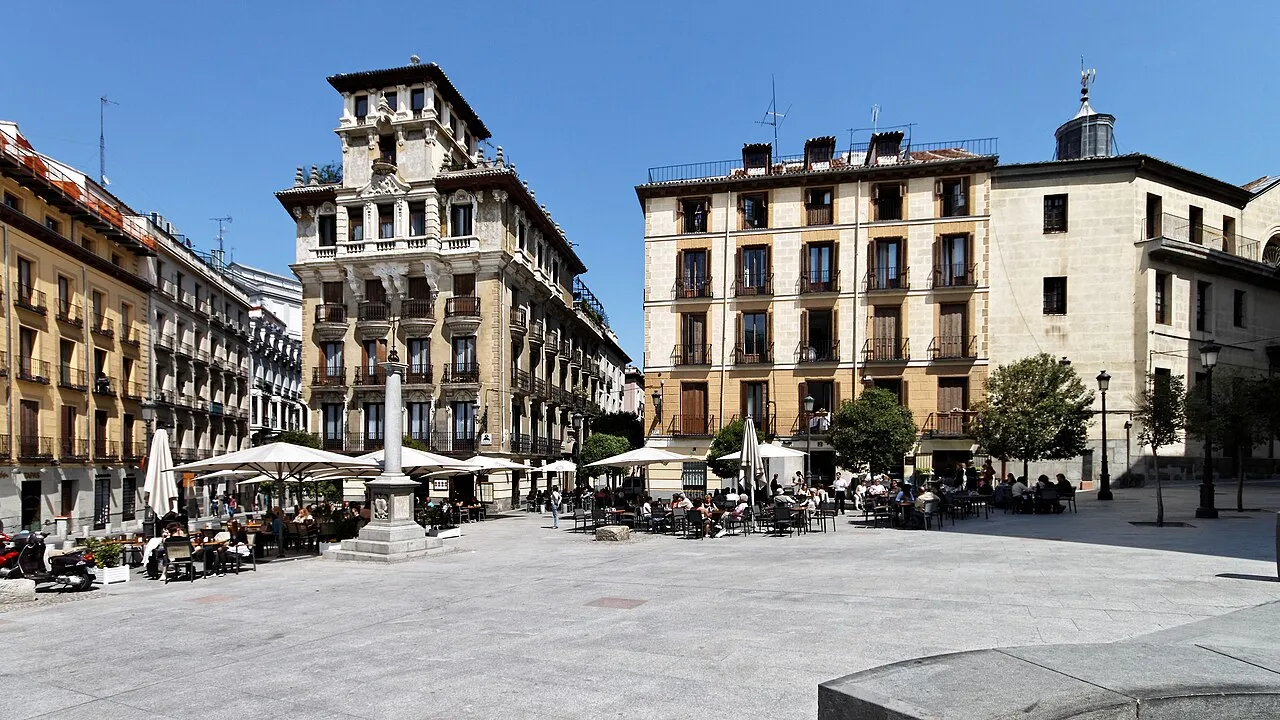
The Austrias, or Habsburgs, reigned in Spain between 1516 and 1700. Madrid was their capital from 1561, and the architectural style they left here is recognisable at a glance: reddish brick combined with granite at the corners and frames, steeply pitched roofs of black slate and pointed spires crowning the towers. Those dark spires are no local whim: they are a fashion the kings brought from Flanders and Central Europe, where they served to let the snow slide off. Here, with our sun, they were pure imported elegance. Look for them all over the old town: they are the Habsburg signature on the sky of Madrid.

Beneath that layer there are two older ones. The first is Islamic: Madrid was born in the ninth century as the fortress of “Mayrit”, raised on this hill; that is, literally, where the city's name comes from, and the root of the place name refers to the watercourses that sprang up here. The second is medieval Christian, with its Mudéjar church and its market squares. The route crosses them all: in one kilometre you pass from the ninth century to the seventeenth without noticing.

A piece of context that changes how you look at all this: for centuries Madrid was a capital without a cathedral, an almost unheard-of case in Europe. The Almudena was not begun until 1883 and not consecrated until 1993. Everything you see of the Habsburgs was therefore built around a palace and a few royal convents, not around a great church. It is a city of the court, not of bishops.

🎧 With Viavoy

Explore Madrid at your own pace

Download the app and discover Madrid offline, whenever you like. Take the walking tour Historic & Royal Madrid (Habsburg Quarter) with a local guide in your ear.

Find out more about Viavoy →

The route, stop by stop

From Sol to the Royal Palace and back to the Plaza Mayor. About 3.5 km.

Start in the Puerta del Sol at half past nine in the morning. The whole route is urban, flat or gently sloping, and there are bars and fountains every few metres: you need nothing more than comfortable shoes and water in summer.

1Puerta del Sol

Puerta del Sol

📍 Sol

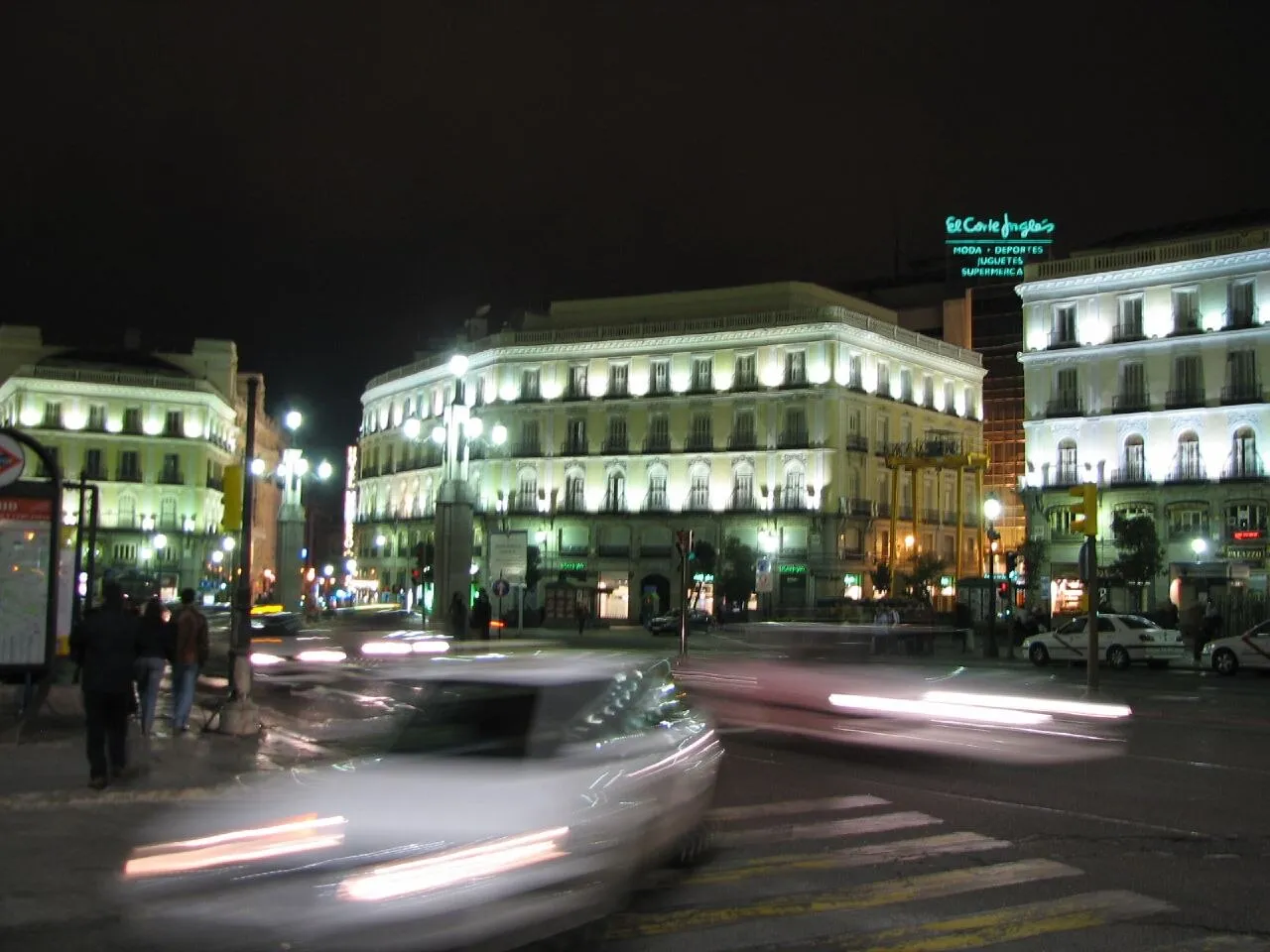
The starting point and the navel of Spain: here lies the Kilometre Zero slab, from which the country's roads are measured and Madrid's streets are numbered. The name comes from a real gate: in the walled Madrid of five centuries ago, an entrance facing east opened here, with a sun painted above it. The wall vanished, so did the gate, but the name stayed. Look for the statue of the Bear and the Strawberry Tree: the bear is not eating the fruit, it is stretching to reach it, and Madrid has spent centuries arguing whether that tree is a strawberry tree or a hackberry.

2Convent of the Descalzas Reales

Convent of the Descalzas Reales

📍 Plaza de las Descalzas

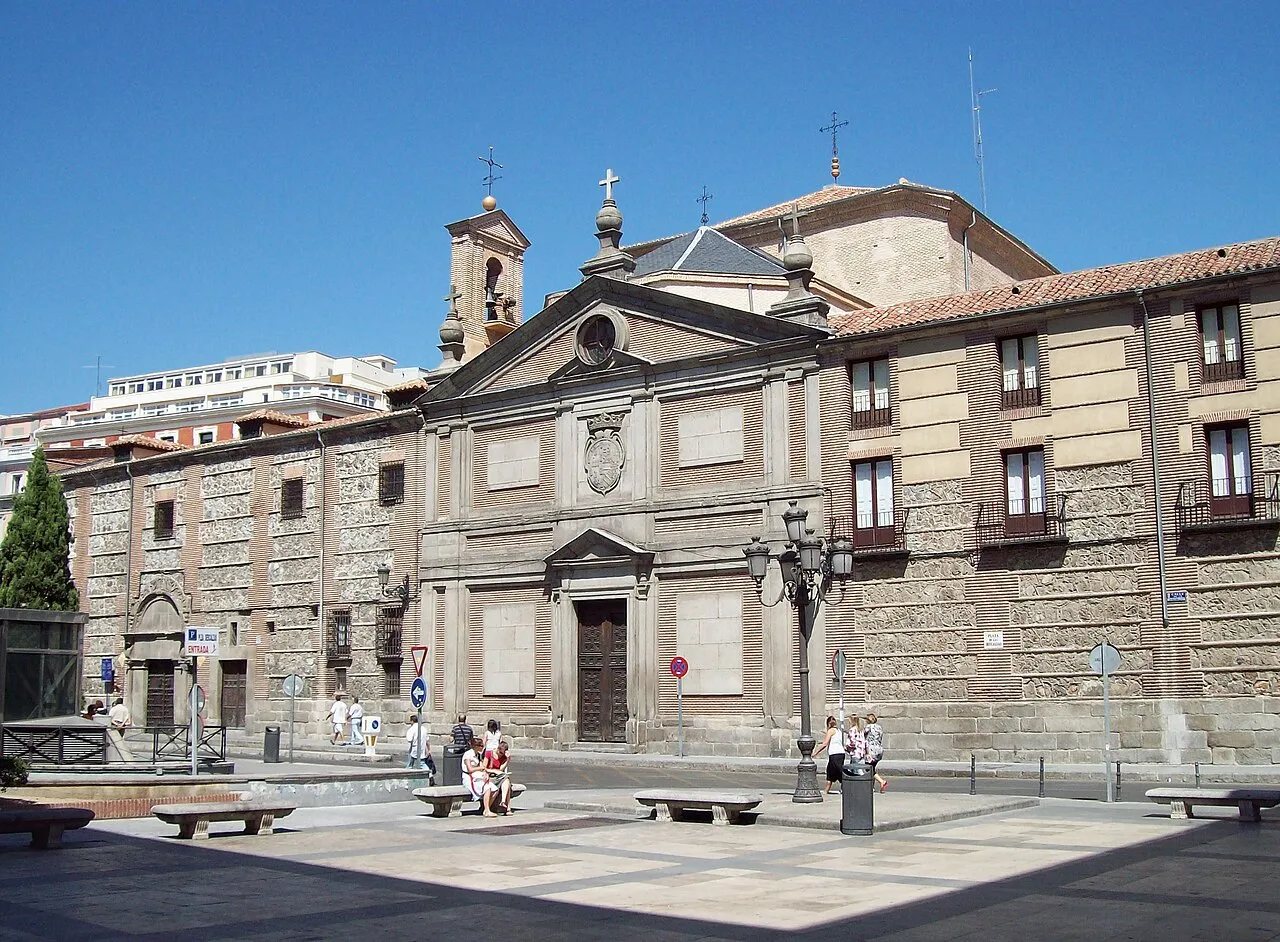
The most deceptive façade in Madrid: sober, almost austere, it hides one of the most impressive artistic treasures in the country. It was the palace where Joanna of Austria, daughter of Charles V, was born; in 1559 she turned it into a convent of Poor Clares. For centuries the most powerful women of European royalty retired here with dowries paid in art: tapestries woven from Rubens cartoons, Titians, a staircase with frescoes that stops you in your tracks. It is still an enclosed convent, so the visit is guided and numbers are limited. Buy your ticket online.

3Iglesia de San Ginés

Iglesia de San Ginés

📍 Arenal, 13

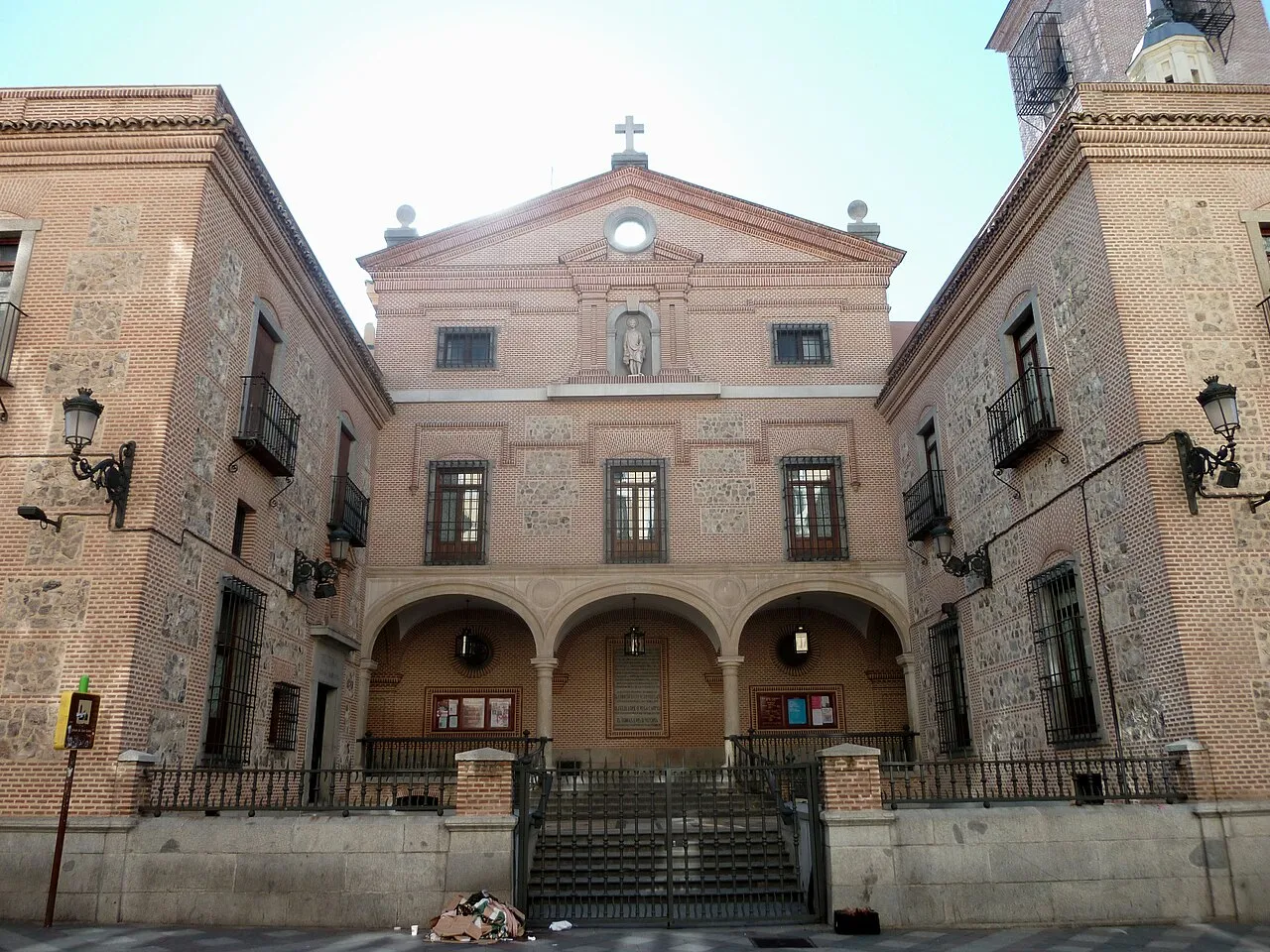
One of the oldest churches in Madrid: it already appears in thirteenth-century documents, when this was a suburb outside the wall. What you see is mostly seventeenth century, rebuilt after fires and refurbishments, like almost everything in this city of overlapping layers. Go in if it is open and look in a side chapel for a painting by El Greco, “Christ Driving the Money Changers from the Temple”: almost nobody knows there is an El Greco hidden in the very heart of the centre. Next door, the passage with the most famous chocolatería in Madrid, open since 1894.

4Plaza de Isabel II and the Teatro Real

Plaza de Isabel II and the Teatro Real

📍 Ópera

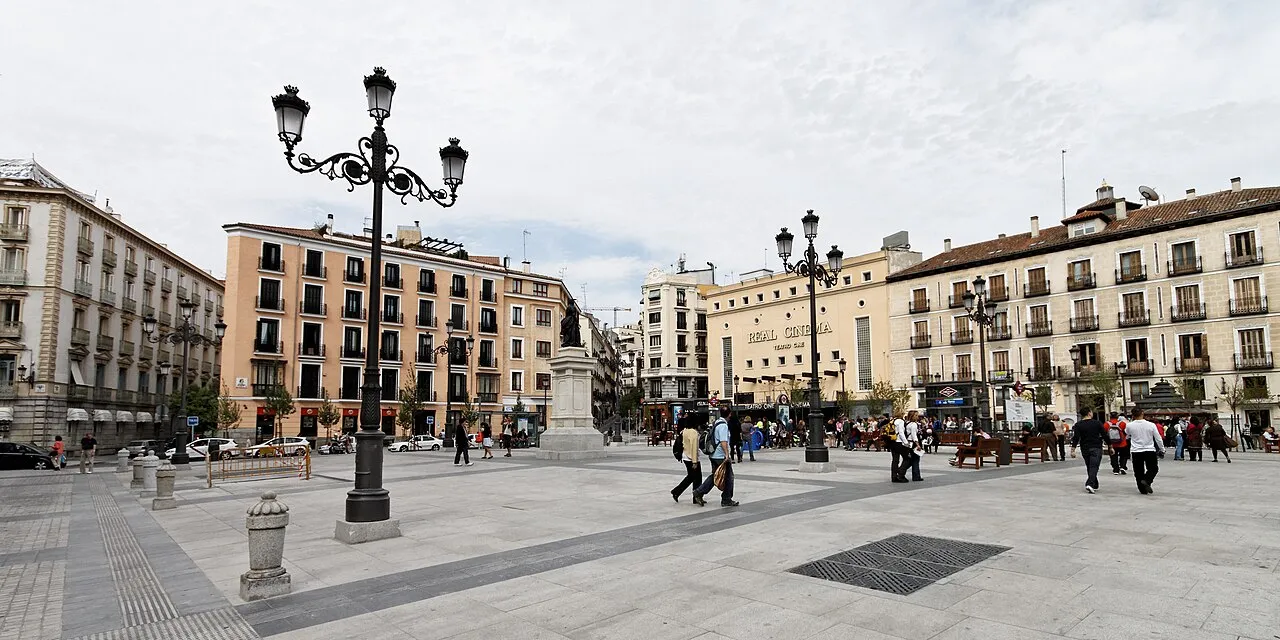
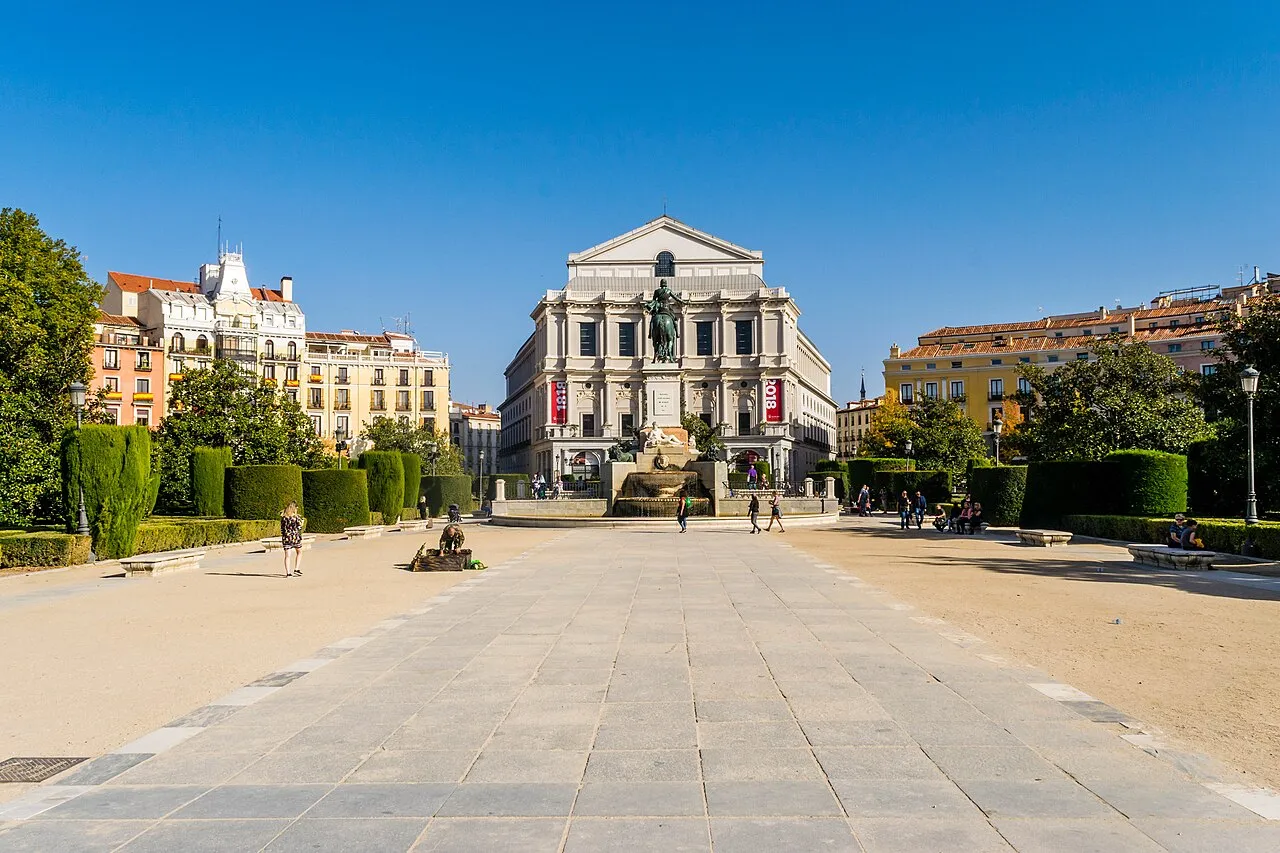
The Teatro Real has two faces, one towards this square and another, more solemn, towards the palace, because it had to be squeezed onto a difficult site full of underground streams that very nearly ruined it: it was closed as unsafe in 1925 and opera was not sung here again until 1997. Beneath the square, when the metro was dug, the remains of the seventeenth-century fountain and washhouse of the Caños del Peral appeared, and part of them is preserved and visible inside the station itself. A piece of the Golden Age between the platforms.

5Plaza de Oriente

Plaza de Oriente

📍 Ópera

The great landscaped semicircle between the palace and the theatre. The statues of Visigothic kings surrounding it were meant to crown the cornice of the Royal Palace, but they weighed too much — or, according to the juicier legend, a queen dreamt that an earthquake sent them tumbling onto her head — and they ended up at eye level. In the centre, the Philip IV on horseback was the first equestrian statue in the world supported only on its hind legs: they say Galileo was consulted, and advised making the rear third solid and the front hollow.

6Royal Palace

Royal Palace

📍 Bailén, s/n

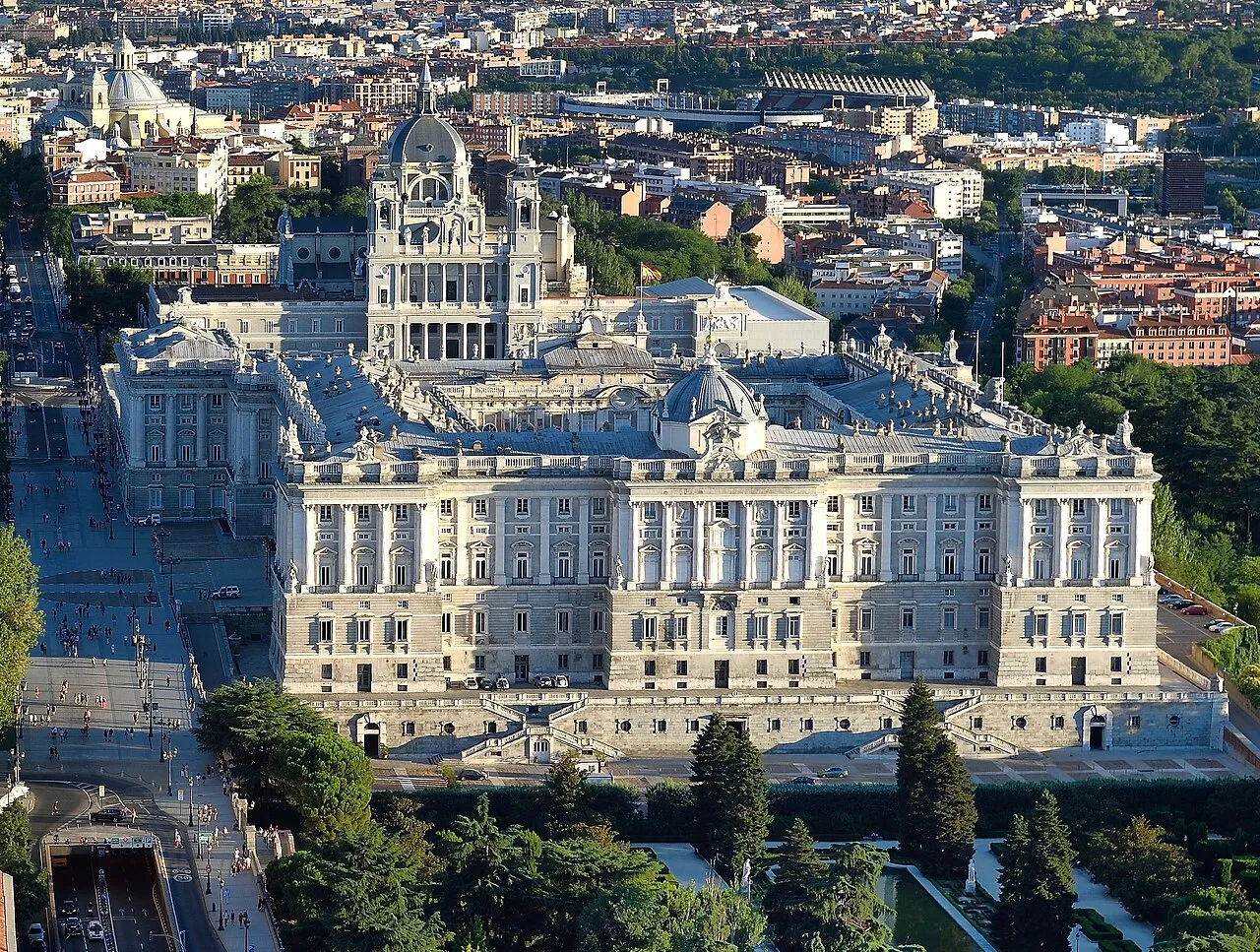
On this hill there stood first a Muslim fortress and then the Alcázar of the Habsburgs, where Charles V and Philip II lived. On Christmas Eve 1734 it burned for days: paintings, tapestries and jewels were lost, and “Las Meninas” was saved, so they say, because it was taken down in a hurry and passed out through a window. Philip V decided not to rebuild it but to raise something new in stone and marble that could never burn again. The result is the largest royal palace in Western Europe, with more than three thousand rooms. Entry around 14 €.

7Almudena Cathedral and the Arab wall

Almudena Cathedral and the Arab wall

📍 Cuesta de la Vega

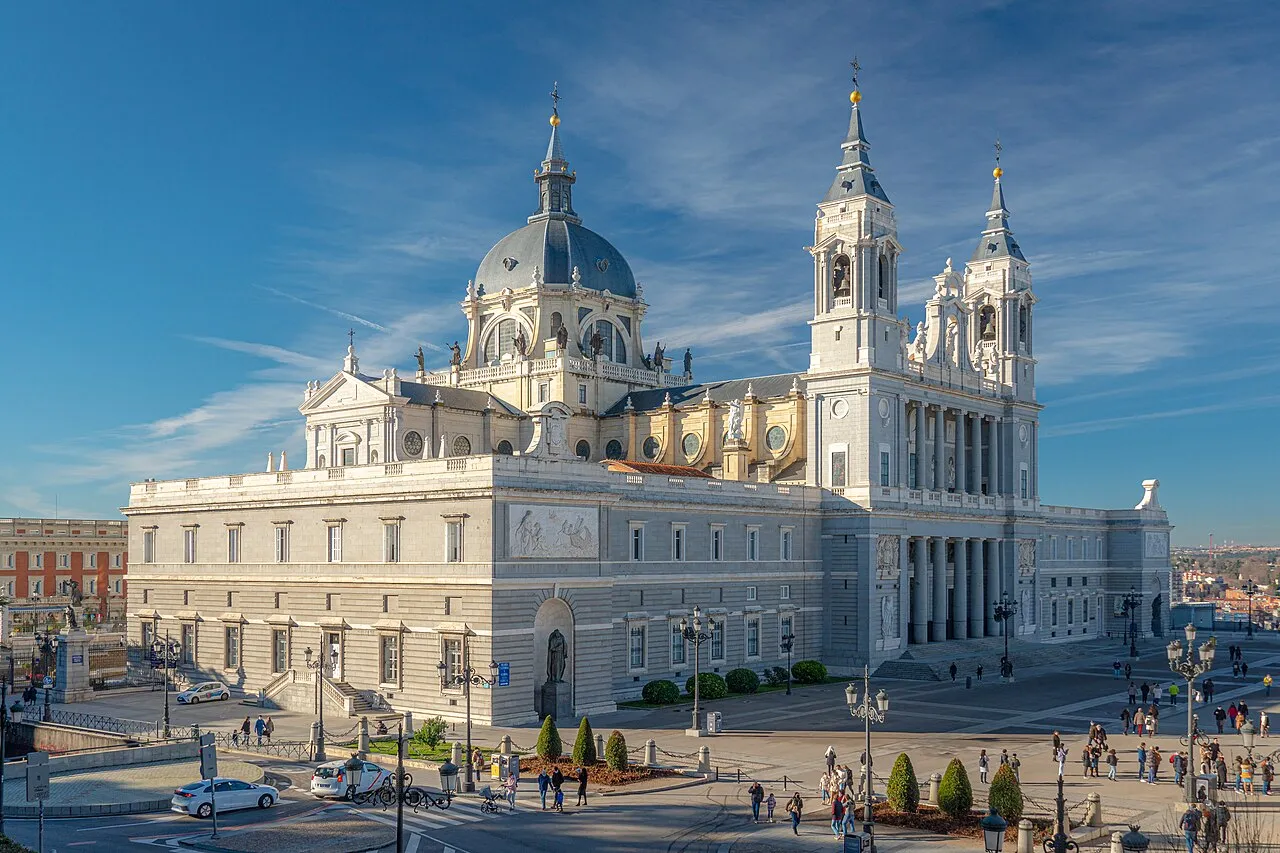
Facing the palace, the youngest and strangest cathedral in Spain: begun in 1883, consecrated in 1993, Neoclassical outside and full of vivid stained glass inside, oriented north to south so as not to turn its back on the king. Then walk down the Cuesta de la Vega and put your hand on some irregular stones: it is a stretch of ninth-century wall, the oldest thing still standing in Madrid, from when this was the Islamic fortress of “Mayrit”. Here, literally, the city begins. It is free and almost nobody goes down to see it.

8Iglesia de San Nicolás de los Servitas

Iglesia de San Nicolás de los Servitas

📍 Plaza de San Nicolás, 6

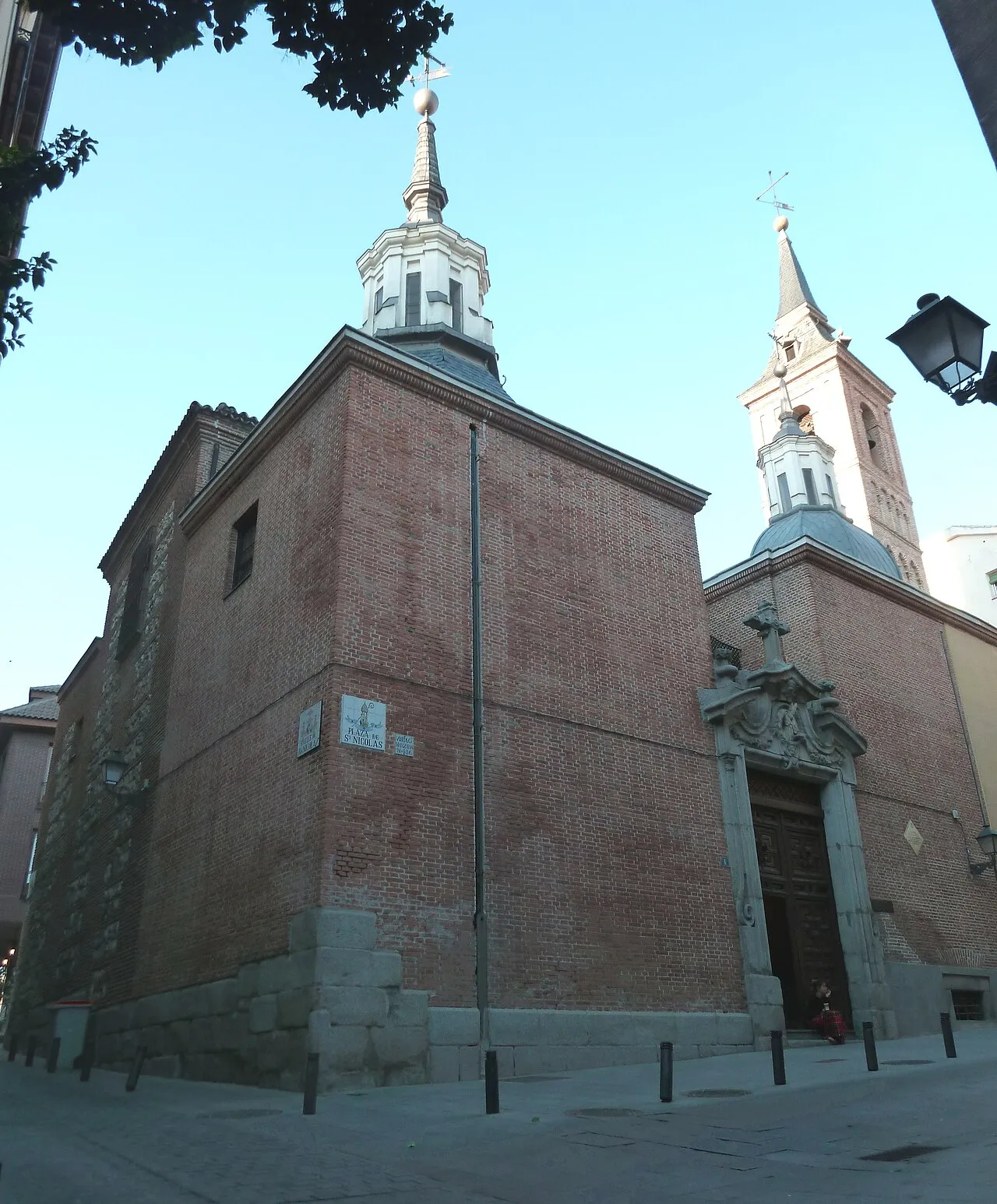
Squeezed between houses, on a narrow street, hides the oldest Christian building still standing in Madrid. Its brick tower, with blind arches and a sober air, is Mudéjar and dated to around the twelfth century: the oldest tower in the city. For a long time it was thought it might be the minaret of a mosque reused as a bell tower; the experts argue about it, but the fact that the doubt is even possible says a lot about how much Islamic Madrid was buried beneath the Madrid of the Habsburgs.

9Plaza de la Villa and calle del Codo

Plaza de la Villa and calle del Codo

📍 Los Austrias

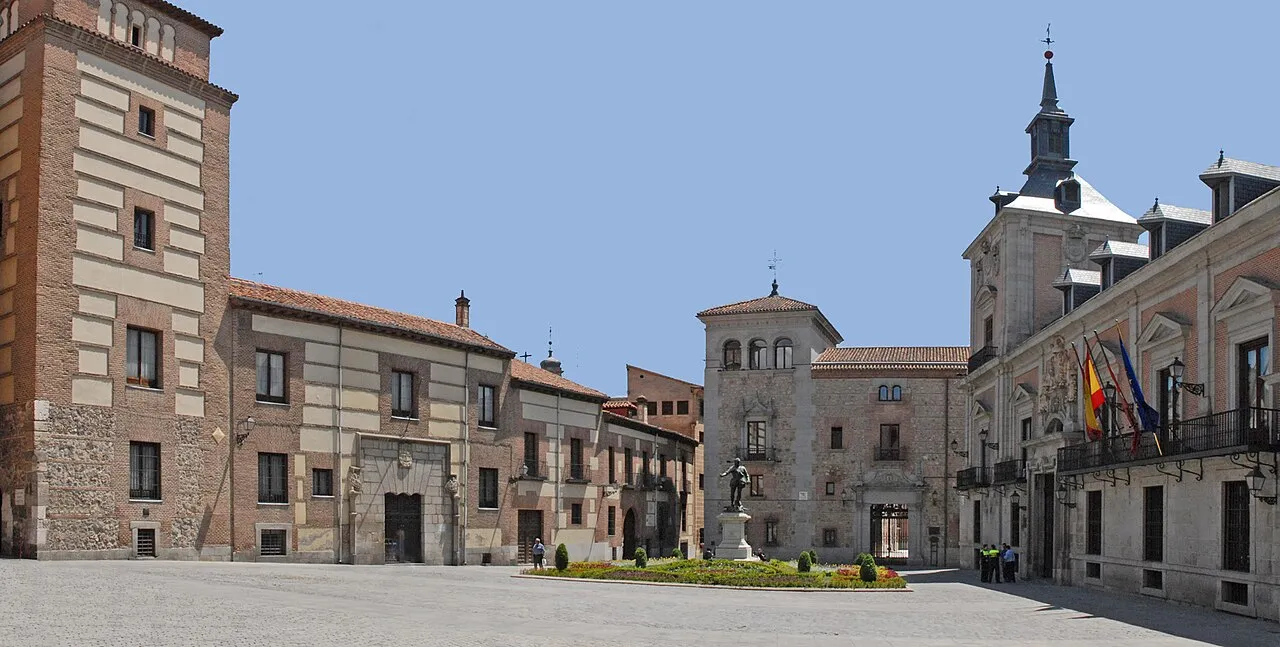
One of the best-preserved ensembles of old Madrid, and for centuries the seat of the town council. Three buildings from three eras: the seventeenth-century Casa de la Villa, the Plateresque sixteenth-century Casa de Cisneros and the fifteenth-century Torre de los Lujanes, one of the oldest civil buildings in the city, where legend has King Francis I of France held prisoner after the Battle of Pavia. Next to it, the calle del Codo bends at a right angle and keeps the anecdote of Quevedo answering a neighbour who had painted a cross so that nobody would urinate there.

10Plaza de la Paja

Plaza de la Paja

📍 La Latina

The heart of medieval Madrid, the most important square in the town before the Plaza Mayor existed. It slopes and has not a single right angle; its name comes from the tithe of straw (paja) paid to the Bishop's Chapel, that Gothic-Renaissance jewel that peeps out on one side and was closed for decades until 2010. Behind it hides the Jardín del Príncipe de Anglona, the only eighteenth-century garden to survive in the old town. Sit on the steps at sunset, like the locals.

11Mercado de San Miguel and Cava de San Miguel

Mercado de San Miguel and Cava de San Miguel

📍 Plaza de San Miguel

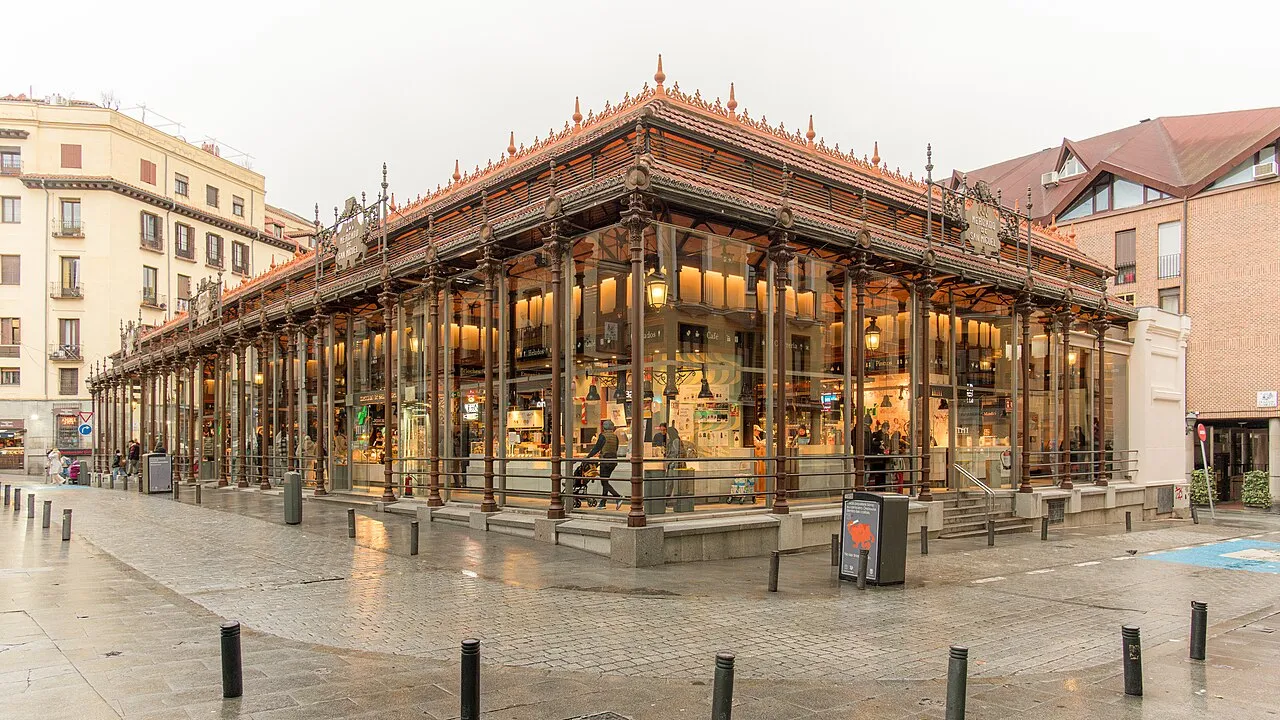
An iron-and-glass market from 1916 built on the site of a vanished church, San Miguel de los Octoes, demolished during the French occupation. Today it is a temple of tapas, beautiful and expensive: go in for a drink for the atmosphere and then walk down the Cava de San Miguel, the sloping street that occupies the old moat of the medieval wall. Its houses hide up to eight storeys on the ravine side: they are the tallest in old Madrid, built “a la malicia” — with cunning — to avoid having to lodge the king's servants.

12Plaza Mayor

Plaza Mayor

📍 Centro

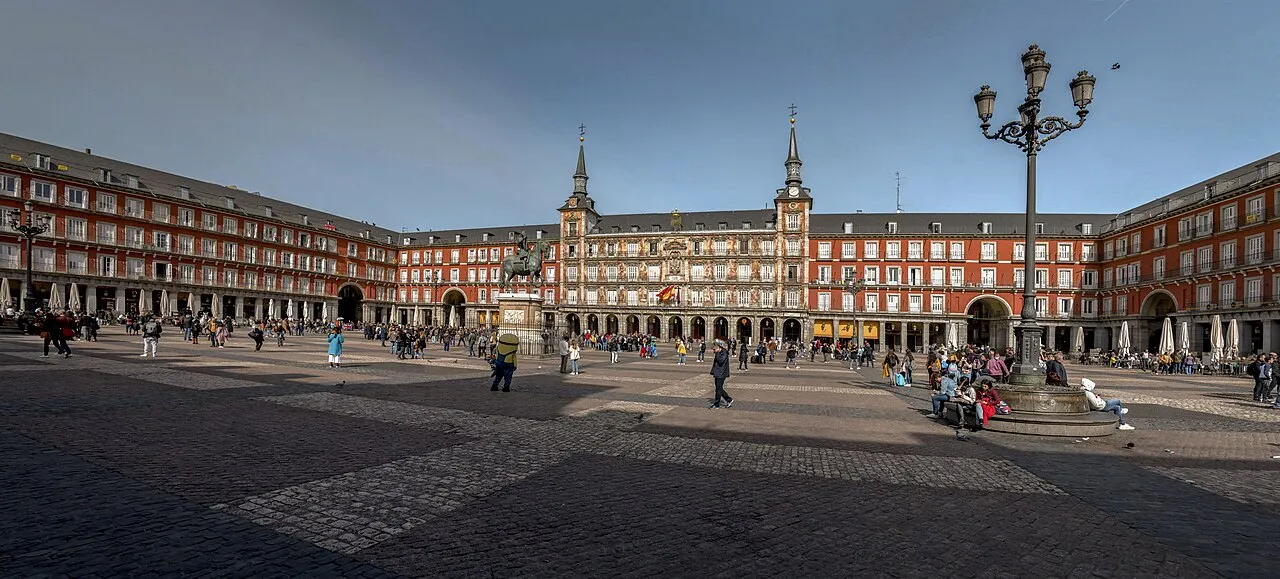
The end of the route and Madrid's great open-air drawing room. Philip III ordered it built and it was finished in 1619 as an enclosed, monumental square for a capital that wanted to measure up. For centuries its balconies were a giant royal box: bullfights, proclamations of kings, markets, festivities and also the autos-da-fé of the Inquisition. It has burned three times, and what you see is the eighteenth-century reconstruction. Look at the Casa de la Panadería: the frescoes covering it look ancient, but they date from 1992.

The Plaza de Ramales and Velázquez's lost tomb
The mystery of the route

The Plaza de Ramales and Velázquez's lost tomb

It is a small square, easy to cross without looking, between the Teatro Real and the Plaza de Oriente. In the centre stands a monolith marking the spot where the church of San Juan Bautista stood, demolished in the early nineteenth century during the French occupation. Diego Velázquez was buried in that church in 1660, and a week later his wife, Juana Pacheco. When it was demolished the exact trace of the tomb was lost; excavations have been carried out several times and it has never been found with certainty. It is quite possible that the remains of the painter of Las Meninas are still down there, beneath the cobbles you are treading.

🎧 On the tour Historic & Royal Madrid (Habsburg Quarter)

Frequently asked questions

What is the Madrid of the Austrias?

It is the old town built between the sixteenth and seventeenth centuries, when the Habsburg dynasty reigned and Madrid had just become the capital. You recognise it by the reddish brick with stone at the corners and by the slate roofs topped with pointed spires, a fashion brought from Flanders. It takes in the Plaza Mayor, the Plaza de la Villa, the royal convents and the streets of La Latina.

How long does it take to walk the Madrid of the Austrias?

About two and a half hours on foot without going into any monument, covering some 3.5 km between the Puerta del Sol and the Plaza Mayor. If you add the guided visit to the Descalzas Reales and the Royal Palace, it becomes a whole day with a stop for lunch.

What is the oldest thing you can see in Madrid?

The stretch of Arab wall on the Cuesta de la Vega, from the ninth century, from when the city was the Islamic fortress of “Mayrit”. It is free, it is right below the Almudena Cathedral and almost nobody goes down to see it. The second-oldest building is the Mudéjar tower of San Nicolás de los Servitas, from the twelfth century.

Is the Descalzas Reales worth visiting?

Very much so, and it is the most underrated visit in the centre: tapestries woven from Rubens cartoons, canvases by Titian and a staircase with frescoes, in an enclosed convent where nuns still live. The visit is guided, numbers are small and the hours are strict, so buy your ticket online in advance.

Where is Velázquez buried?

Nobody knows for certain. He was buried in 1660 in the church of San Juan Bautista, which stood on what is now the Plaza de Ramales, next to the Teatro Real. The church was demolished in the early nineteenth century during the French occupation and the exact trace of the tomb was lost. Excavations have been carried out several times without a conclusive result.

Can you do this route with a guide and at your own pace?

Yes. Viavoy's route “Madrid Histórico y Real” follows practically this same itinerary narrated by a local guide, with the interior visit included at several monuments. You download it, start it whenever you like and it works offline: you stop for lunch and pick it up where you left off.

How to do the route and what to add

Time and pace. Without going into any monument, the full route is about two and a half hours of walking. With the visit to the Descalzas Reales (one hour) and the Royal Palace (an hour and a half), it becomes a whole day with a stop for lunch. If you are short of time, skip the palace: the façade, the courtyard and the Jardines de Sabatini are free and give you the same photo.

When. On a weekday and in the morning, no argument. From twelve onwards, the Ópera-Palace-Almudena stretch fills with groups, and the squares lose half their charm. The churches, moreover, open at Mass times — usually first thing in the morning and late in the afternoon — so if you want to see the El Greco in San Ginés or the inside of the San Nicolás tower, get up early.

What to add if it leaves you wanting more. Three short detours are well worth it: the Monasterio de la Encarnación, in its quiet little square next to the palace, which holds an impressive reliquary and the famous phial of the blood of Saint Pantaleon which, according to tradition, liquefies every 27 July; the Jardines de Sabatini, on the north façade of the palace, perfect at sunset; and Las Vistillas, five minutes beyond the Plaza de la Paja, with the best view of the cornisa and the mountains. And if you finish hungry, you have the Cava Baja two hundred metres away, which is exactly where any route through old Madrid ought to end.

How to plan it

Leg 1 (45 min)Puerta del Sol → Descalzas Reales → San Ginés → Plaza de Isabel II and Teatro Real.
Leg 2 (60 min)Plaza de Oriente → Royal Palace → Almudena Cathedral → Arab wall on the Cuesta de la Vega.
Leg 3 (45 min)San Nicolás de los Servitas → Plaza de la Villa and calle del Codo → Plaza de la Paja and Jardín de Anglona.
Leg 4 (30 min)Cava de San Miguel → Mercado de San Miguel → Plaza Mayor → tapas lunch on the Cava Baja.

Practical information

Distance and durationAbout 3.5 km, two and a half hours on foot without going into monuments; a full day with the Descalzas and the Royal Palace.
Getting thereMetro Sol (L1·L2·L3) to start, Ópera (L2·L5·R) halfway and La Latina (L5) at the end. Everything else, on foot.
When to goOn a weekday and in the morning. The churches open at Mass times; the museums and the palace close one day a week.
TicketsDescalzas Reales and Royal Palace, online. Almudena and Arab wall, free. Almudena crypt, donation.
Where to eatCava Baja and Cava Alta at the end of the route; Casa Labra (Tetuán, 12) if you prefer to stop at the start.
AccessibilityAlmost the whole route is cobbled and on gentle slopes. The Arab wall stretch has steps.
On the map

🎧 With Viavoy

Walk Madrid and listen at your own pace

Download Viavoy and walk Madrid offline, whenever you like.

from 2,99 €· one-off payment
City Pass · 9,99 €3 days, all the tours in Madrid
Find out more about Viavoy →
Viavoy app

Keep reading

More articles

Itineraries

Madrid in 2 days: the perfect itinerary

Neighbourhoods

La Latina and the Rastro: a guide to Madrid at its most castizo

Food & drink

Tapas routes in Madrid: three bar-to-bar crawls

What to see

The best viewpoints in Madrid: where to see the city from above