1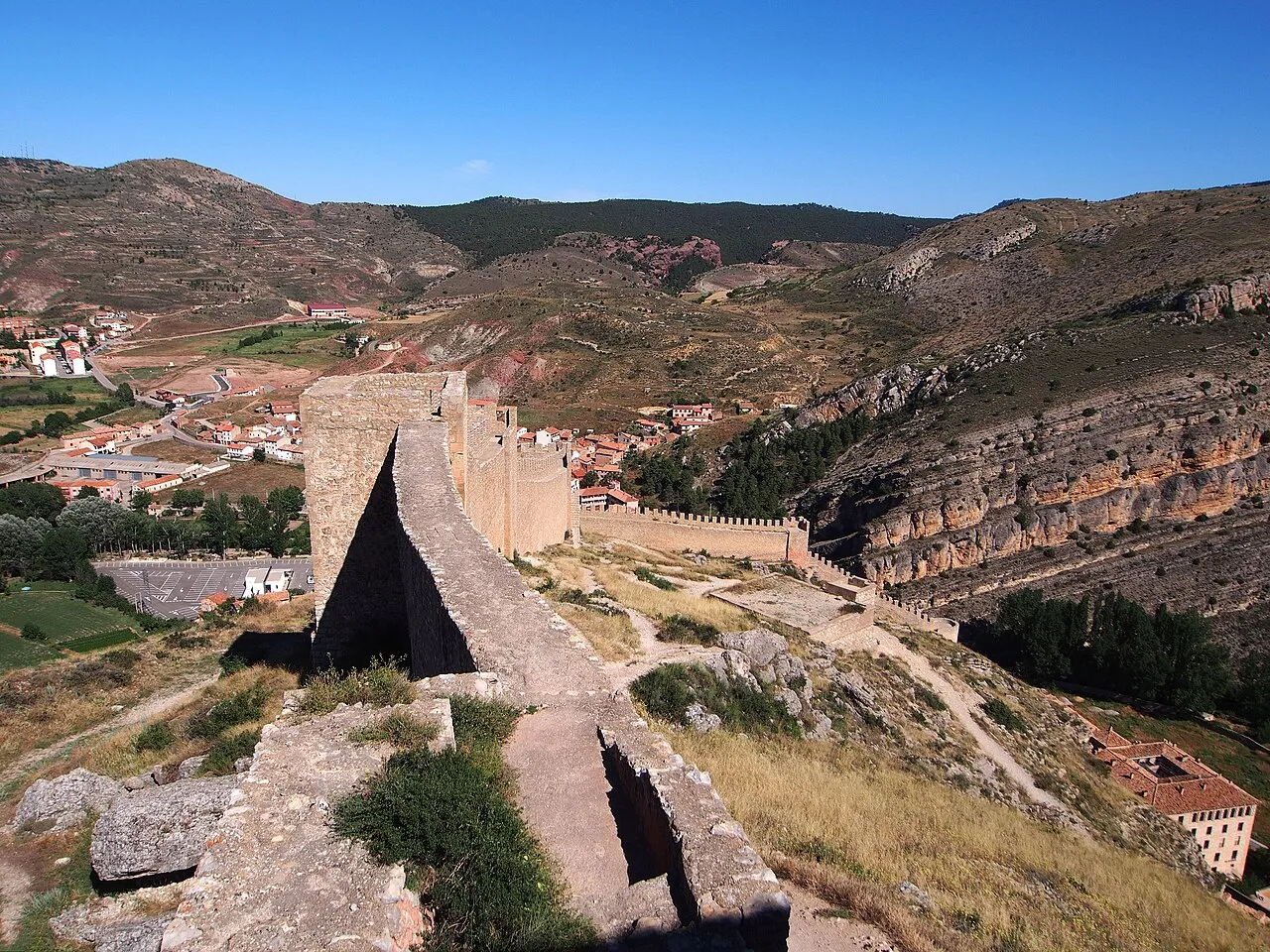
Andador Tower
📍 Highest point of the walled enclosure
Tenth-century stone, raised in the time of the caliphate. Twenty minutes of climbing and the best viewpoint in the village. Do it at the start of the day.
A Berber taifa, a lord who declared himself a vassal of the Virgin, a bishopric of its own and a tenth-century wall. All in red stone, inside a river bend.
🎧 On the walk Red Albarracín: the village clinging to the rockAlbarracín has fewer than a thousand inhabitants and a wildly disproportionate history. It was a Muslim taifa, then an independent lordship that recognised neither Castile nor Aragon, and it obtained a bishopric of its own, which is why a village of shepherds has a cathedral. You can walk it in a long half-day, all uphill and all in red.
Start by climbing to the Torre del Andador along the walls walk. It is about twenty minutes of serious climbing, but it is the oldest stone in the village: the Muslims raised it in the tenth century, in the time of the caliphate, and it is the point where the wall closes at the top.
Its name comes from the andador, the sentry walk along which the guards patrolled the wall at night, lantern in hand. Whoever held this point controlled who came up the ravine and who approached across the sierra.
From the top you see the key to everything: the village coiled inside a bend of the Guadalaviar, almost an island of rock, with a single tongue of land to get in by. A place designed to be impregnable and to go unnoticed at the same time.
And a fact few people know: you are in the Montes Universales, one of those rare places where great rivers rise. The Tagus is born very close by, crossing half the peninsula to Lisbon, and the Guadalaviar itself becomes the Turia downstream and ends up in Valencia.
Tenth-century stone, raised in the time of the caliphate. Twenty minutes of climbing and the best viewpoint in the village. Do it at the start of the day.
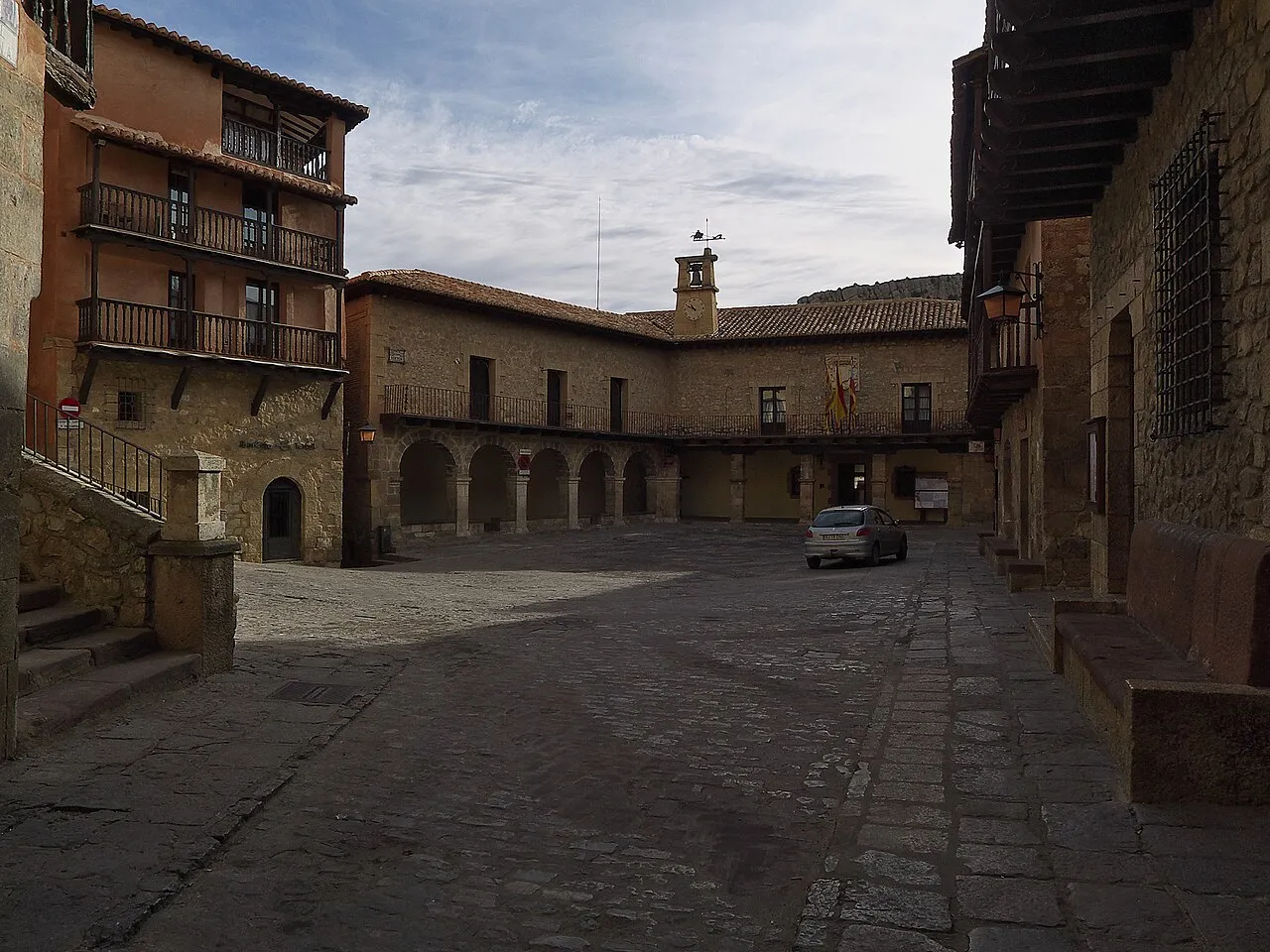
The only flat spot and the site of the old Muslim souk. This is where the bars and restaurants are, and where you need to be at sunset.
Download the app and discover Albarracin offline, whenever you like. Take the walking tour Red Albarracín: the village clinging to the rock with a local guide in your ear.
Find out more about Viavoy →Come down to the Plaza Mayor, which occupies the site of the Muslim souk and is the only flat ground in the village: everything else is slope. Look up at the wooden gallery on its posts, from which the news was proclaimed and the market was watched over.
Around it, the streets of the old quarter: the Casa de la Julianeta, crooked and extremely narrow, the Casa del Tío Americano, the Casa de la Comunidad and the large houses with lattices and overhanging balconies. The ensemble has been listed as a National Monument since 1961.
The colour comes from the rodeno, the red sandstone of the sierra with which the houses were built and rendered. At dusk, with the sun low and raking, the façades catch fire: it is the moment of the day that justifies staying on.
That practically intact medieval quarter, with barely a modern trace, has turned the village into a natural film and television set. You only have to plant a camera in the square to go back five centuries without any scenery.
The castle stands above the river bend, at the most strategic point. The Muslim alcázar was planted here more than a thousand years ago, and in the eleventh century it was the seat of a taifa governed by the Banu Razín: from “Al Banu Razín”, the land of the Razín, comes the name of the village.
The excavations brought to light a complete Andalusi quarter, with the palace courtyard, the domestic rooms and a hammam with its hypocaust, that is, a bathhouse with underfloor heating. All of it beneath the later Christian alterations.
The Catedral del Salvador raises the obvious question: what is a cathedral doing in a village like this? The answer is that Albarracín obtained a bishopric of its own in 1172, which guaranteed independence in religious matters too. The present building is from the 16th century, by Pierres Vedel, the engineer who brought water to Teruel.
And the church of Santa María closes the story. Its name is not devotional but political: so as not to submit to any king, Pedro Ruiz de Azagra declared himself a vassal of the Virgin alone. By recognising no flesh-and-blood monarch, he guaranteed his independence. It lasted until 1284.
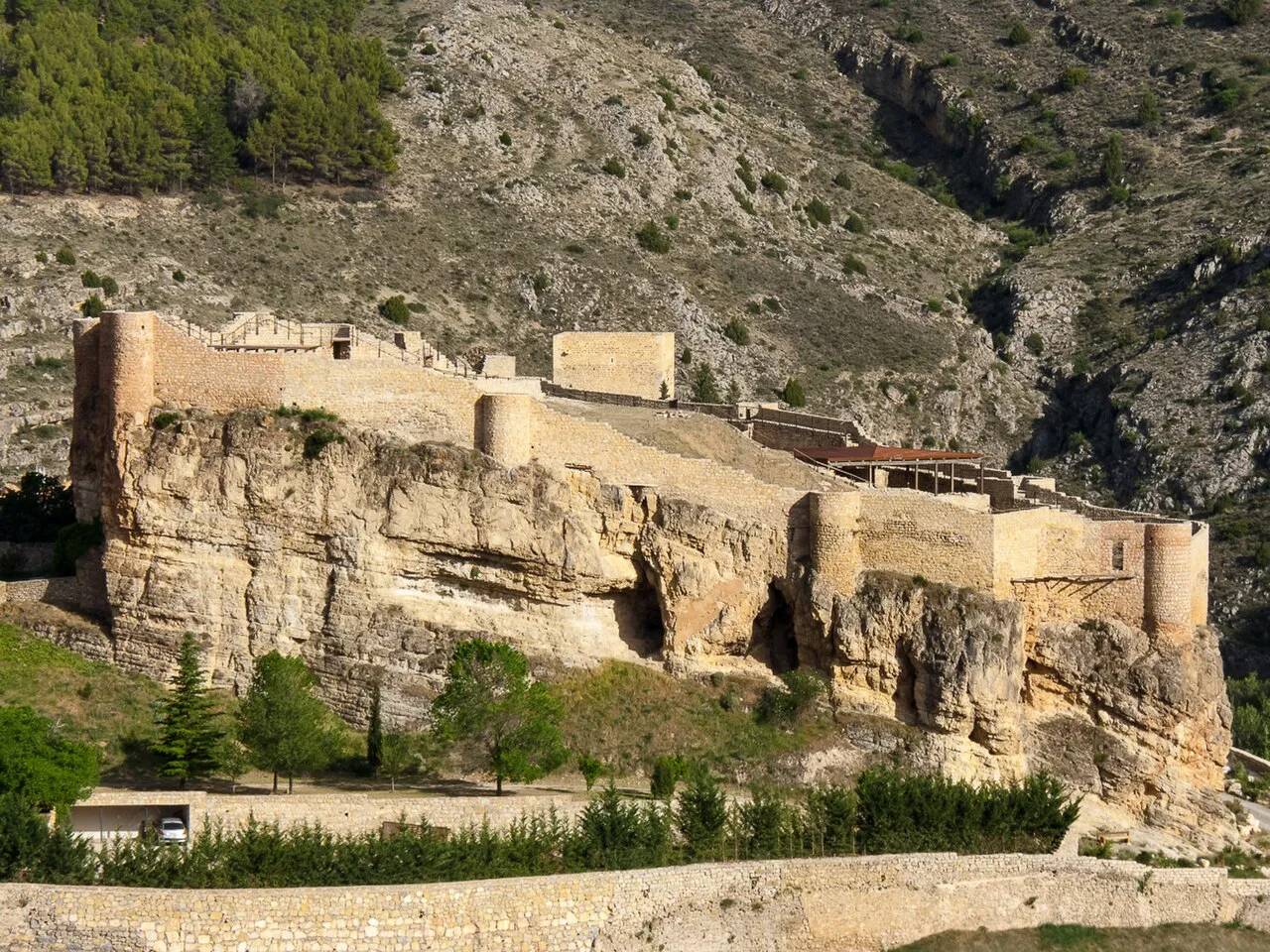
The alcázar of the Banu Razín, with an Andalusi quarter brought to light by the excavations, including a bathhouse with a hypocaust. Forty-five minutes.
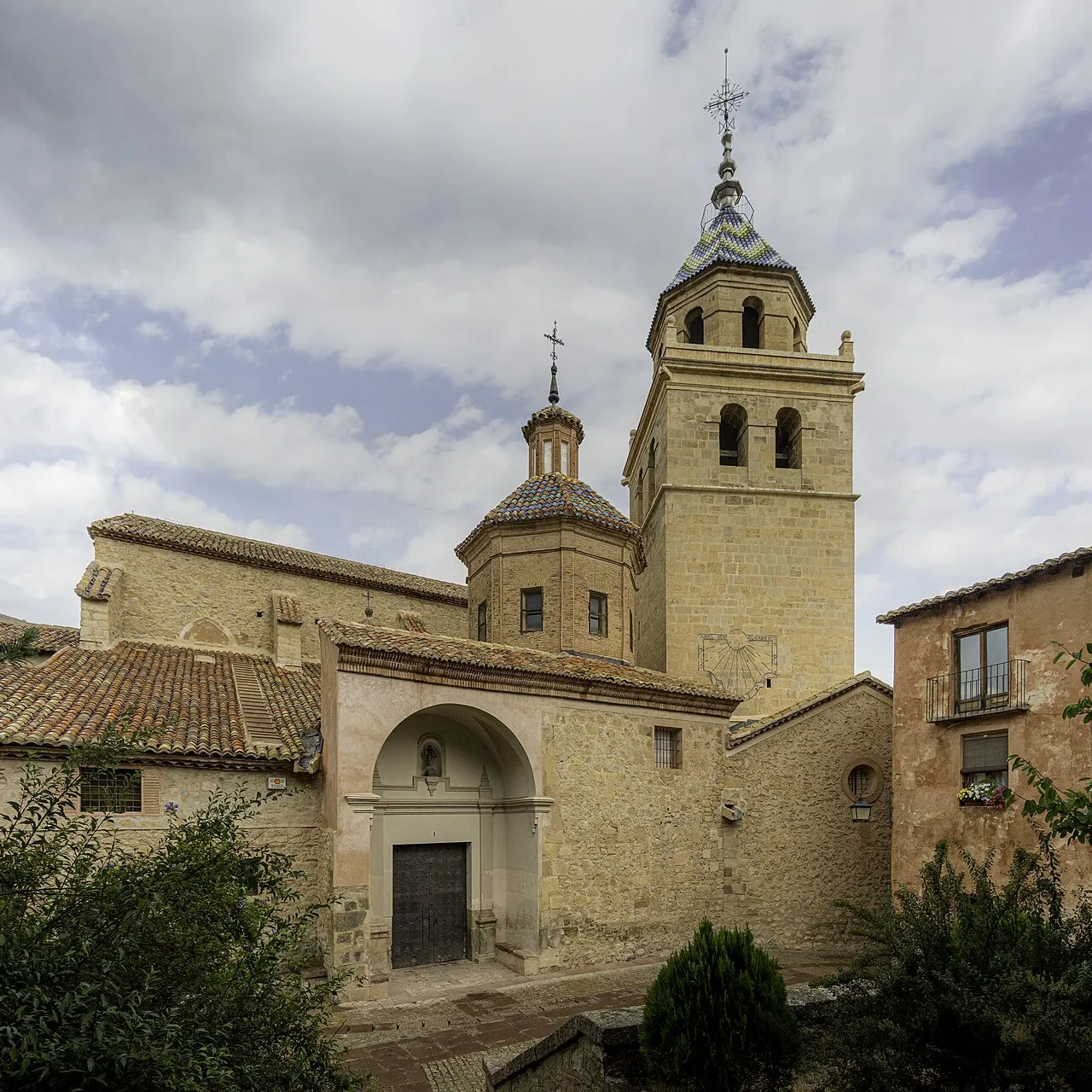
Its own bishopric since 1172 and a building from the 16th century, by Pierres Vedel. A single luminous nave, with Gothic paintings that were once hidden.
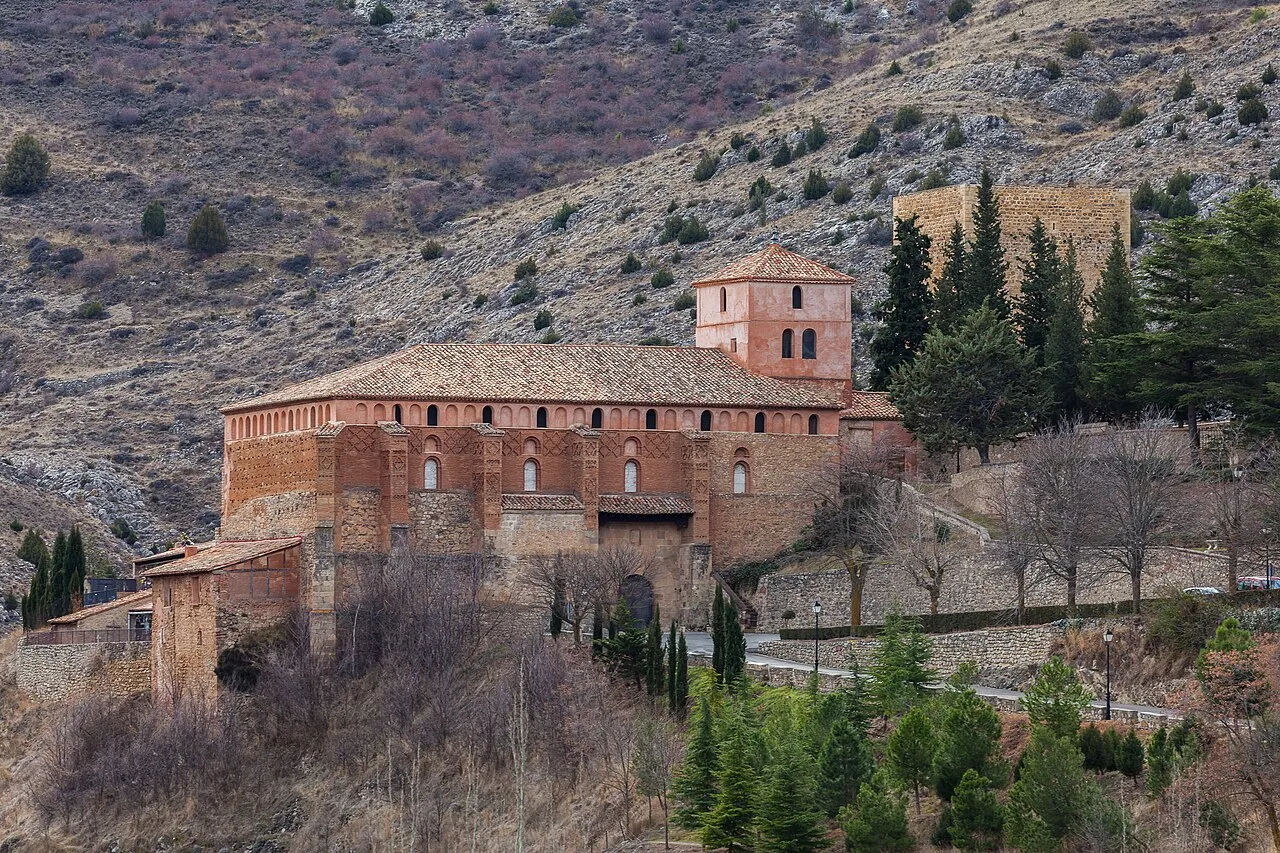
The name is a political declaration: Azagra declared himself a vassal of the Virgin so as to obey no king. And it formed part of the wall.
A long half-day covers the whole village: the climb to the Torre del Andador along the walls, the Plaza Mayor and the streets of the old quarter, the castle with its Andalusi quarter, the cathedral and the church of Santa María. If you stay for lunch and to watch the sunset on the red stone, a full day.
From the Banu Razín, a Berber family that governed a taifa here in the eleventh century. “Al Banu Razín”, the land of the Razín, was gradually deformed until it became Albarracín. Every time the village is named, those eleventh-century Arab lords are being named without anyone realising.
Because it was the seat of a bishop. The lordship obtained a diocese of its own in 1172, when Pedro Ruiz de Azagra secured a bishop for his land. Having a cathedral meant independence in religious matters too, since neither Castile nor Aragon ruled here. It was one of the smallest dioceses in Spain and today it is joined to Teruel.
A brilliant political move of the twelfth century. So as to submit neither to the king of Castile nor to the king of Aragon, Pedro Ruiz de Azagra declared himself a vassal of Santa María alone. By recognising no flesh-and-blood monarch, no king could demand obedience of him. The lordship kept that independence until 1284.
Quite. The village clings to a hill inside a river bend and practically everything is slope, with steep streets and flights of steps. The only flat ground is the Plaza Mayor. Nothing is impossible, but comfortable footwear is advisable and it is best to do the route from top to bottom, going up to the Andador first.
Because of the rodeno, the red sandstone characteristic of this sierra, used both to build the houses and to render them with tinted plaster. That tone gives the whole place a very particular warm light, above all at dusk, when the raking sun sets the façades alight.
It is about 40 kilometres from Teruel by mountain road. There is a bus from there, but with very limited frequencies, so in practice almost everyone arrives by car. There is a car park at the entrance to the village and from there the whole old quarter is covered on foot.
Download Viavoy and walk Albarracin offline, whenever you like.

Keep reading