1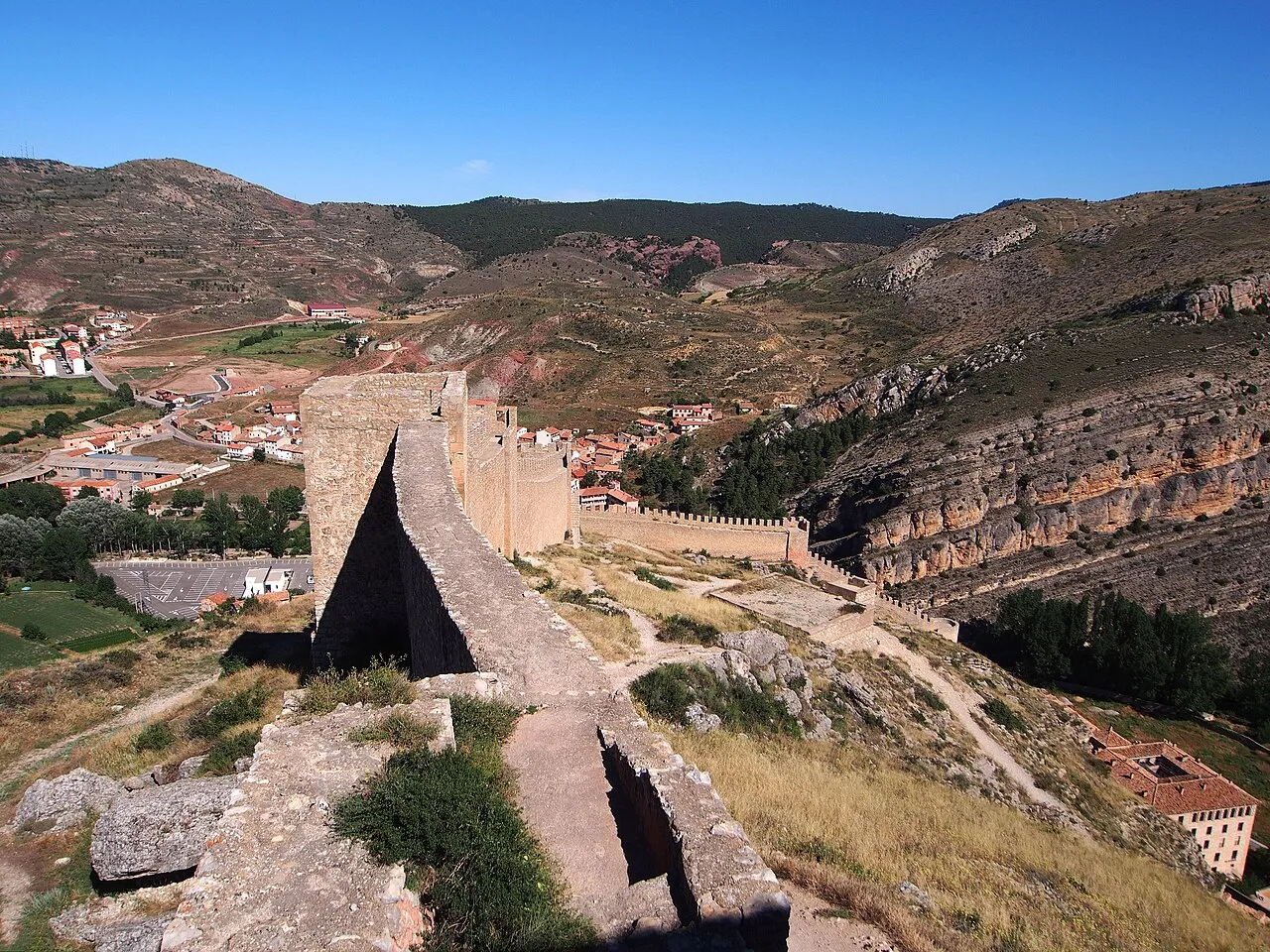
Andador Tower
📍 Highest point of the walled enclosure
Tenth century, in the time of the caliphate. Rectangular in plan, rough, without ornament: its only function was to watch the ravine and the sierra.
How you defend a place the river embraces on three sides. The military logic that explains why this village held out independent for more than a century.
🎧 On the walk Red Albarracín: the village clinging to the rockThe defensive system of Albarracín is a lesson in making the most of the terrain: the Guadalaviar does the work on three sides, the wall climbs the hill to close off the fourth, and a tenth-century tower crowns the whole thing at the highest point. It can all be walked, and the views are the reward.
Albarracín coils in on itself inside a bend of the river Guadalaviar: almost an island of rock. The river laps the foot of the hill on three sides, and only one tongue of land is left by which you can get in.
That configuration reduces the defensive problem to a single point: you have to close off the isthmus and control the height. The whole system of walls is designed for exactly that, without wasting a metre of stone where the terrain already defends.
It is the material reason for the village's independence: for more than a century it obeyed neither Castile nor Aragon, and it held out because taking it came at an enormous cost. Only in 1284, with a full siege by Peter III of Aragon, did it fall.
The castle occupies the most strategic point of all, the hill above the river bend. From there you control the river, the ravine and the way in. It was a Muslim alcázar more than a thousand years ago and the seat of the taifa of the Banu Razín in the eleventh century.
Tenth century, in the time of the caliphate. Rectangular in plan, rough, without ornament: its only function was to watch the ravine and the sierra.
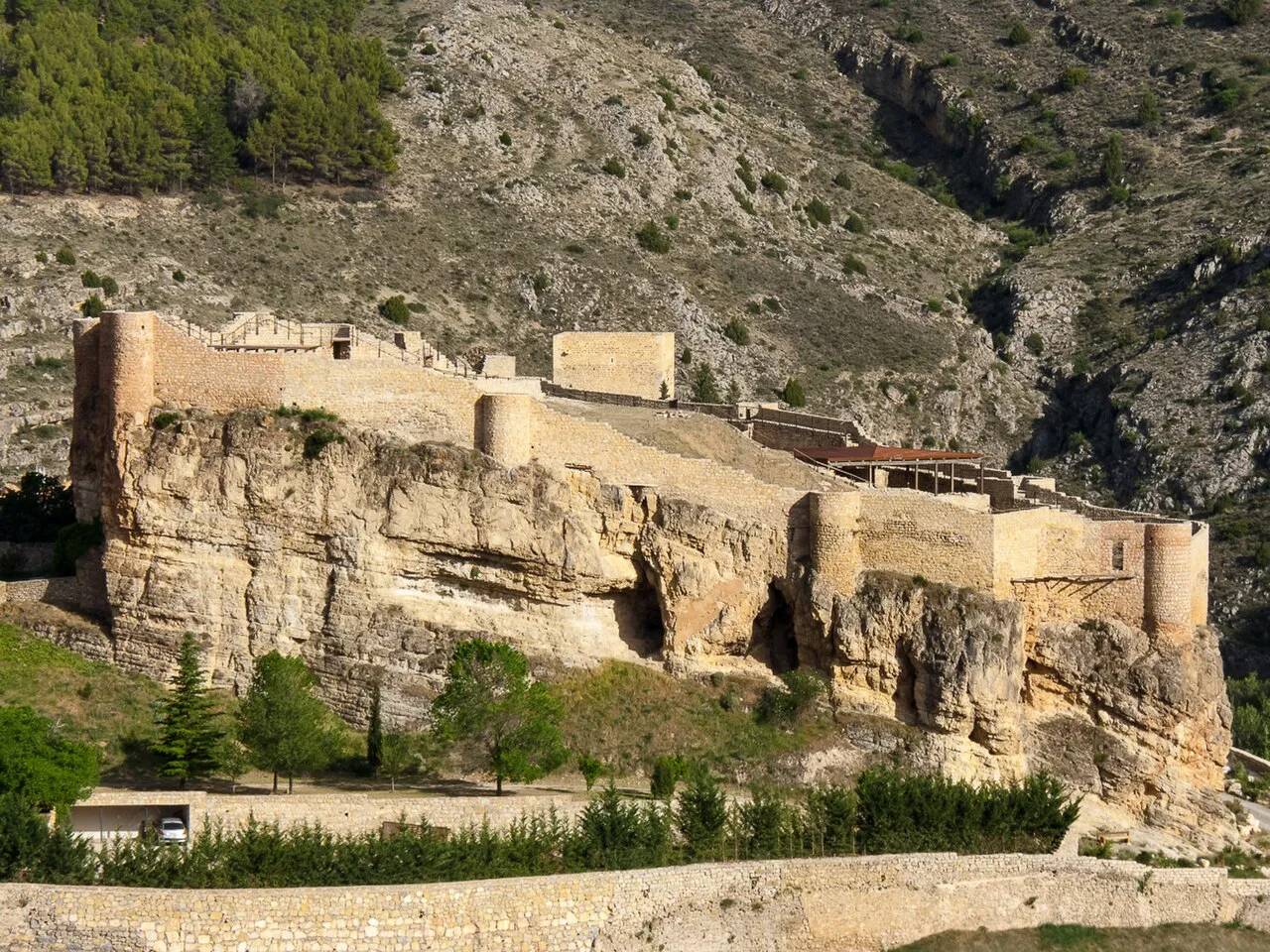
The most strategic point: it controls the river, the ravine and the only tongue of land by which the village is reached.
Download the app and discover Albarracin offline, whenever you like. Take the walking tour Red Albarracín: the village clinging to the rock with a local guide in your ear.
Find out more about Viavoy →The Torre del Andador is the oldest piece of the whole complex: the Muslims raised it in the tenth century, in the time of the caliphate of Córdoba, and it is the point where the wall closes at the top, gripping the hill like a knot.
Rectangular in plan, rough and without a single ornament, it answers one problem and nothing more. That austerity is characteristic of caliphal military architecture, highly functional, and it contrasts with the decorative sophistication of the palaces of the same period.
Its name comes from the andador, the sentry walk along which the guards patrolled the wall at night, lantern in hand, challenging the shadows. It is a term that has disappeared from almost all of Spain and here it survives.
Today the climb is the best viewpoint in the village: from the top you see the whole river bend, the red huddle of houses coiled in on itself and the sierra all around. It is about twenty minutes of serious climbing from the village, but it is well worth it.
The excavations at the castle have brought to light a complete Andalusi quarter inside the enclosure: the central courtyard of the palace, the domestic rooms and the old well.
The most remarkable thing is the hammam with its hypocaust, that is, a bathhouse with underfloor heating: hot air circulating beneath a floor raised on small pillars. It is Roman technology adopted and perfected by the Islamic world, and finding it in a mountain castle is unusual.
All that sits alongside the alterations the Christians made when the castle changed hands, so the enclosure reads as a superimposition: Andalusi fortress below, Christian adaptation on top.
And there is a third defensive piece that almost nobody identifies as such: the church of Santa María, from the sixteenth century, formed part of the village's defensive belt. It prays and defends at the same time, something very typical of a frontier town.
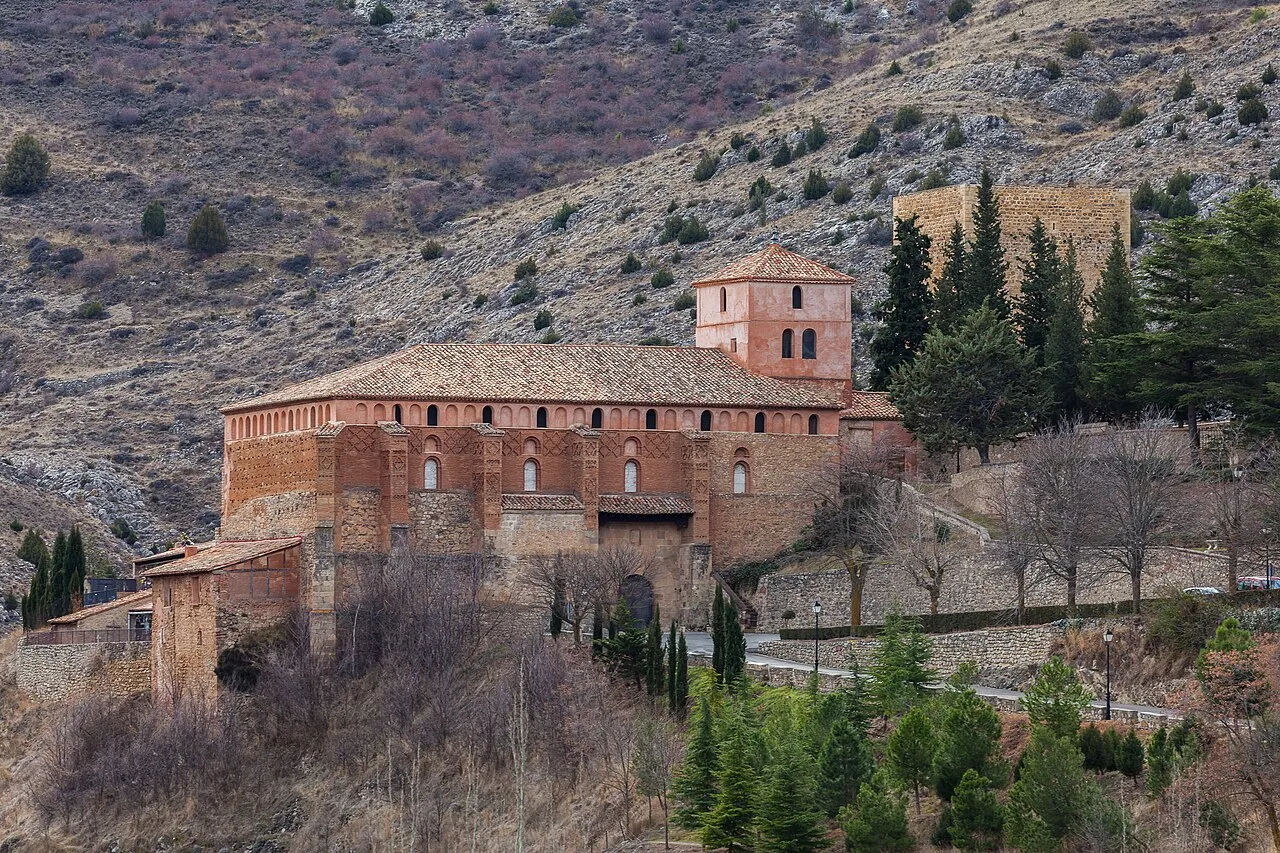
From the sixteenth century, attributed to Pierres Vedel, and part of the village's defensive belt. It prays and defends at the same time, very much the frontier town.
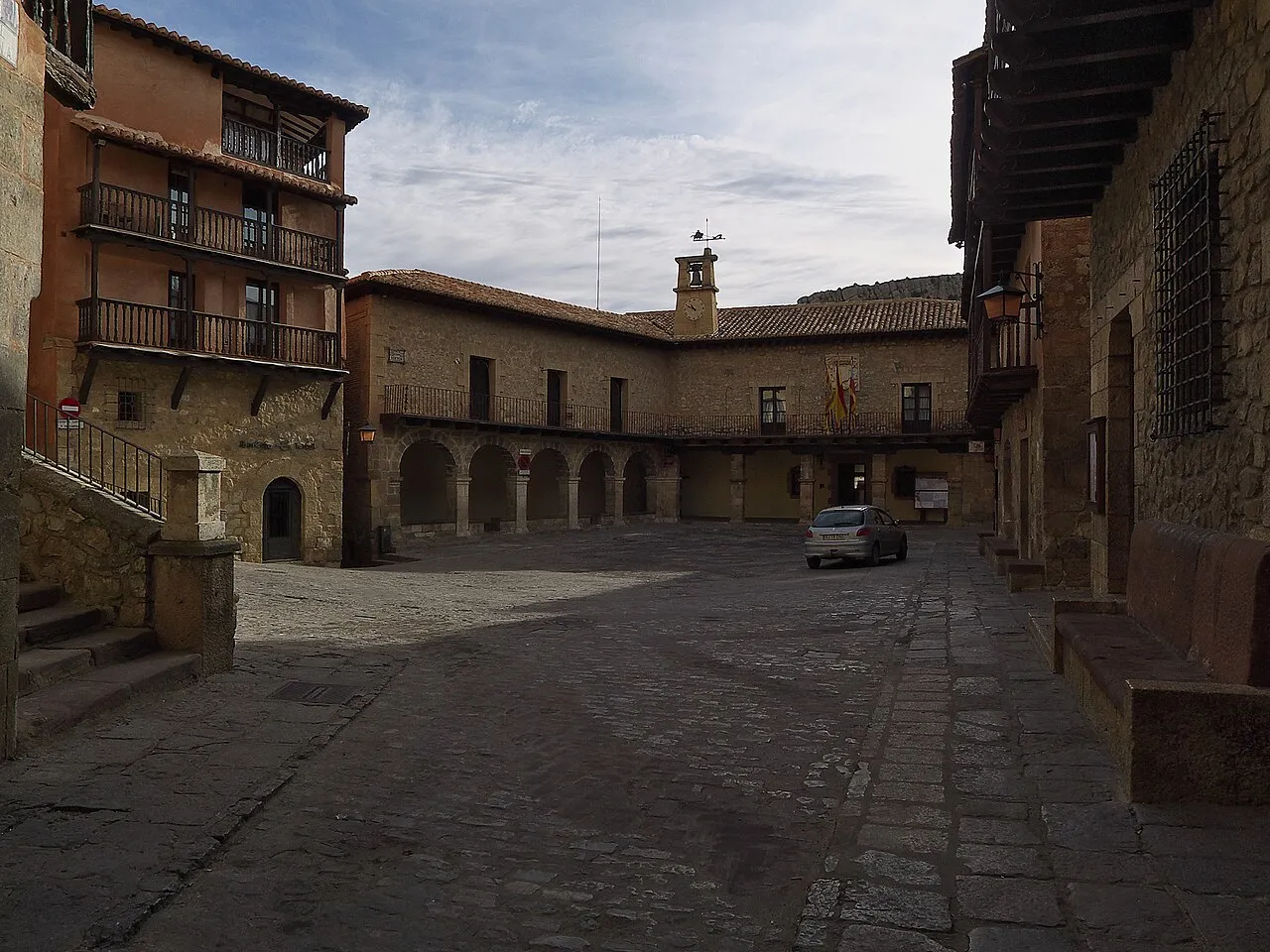
The only flat ground inside the walled enclosure, on the site of the Muslim souk. The place to take a break between one climb and the next.
Because of the geography. The village is coiled inside a bend of the Guadalaviar, almost like an island of rock: the river laps the foot of the hill on three sides and only one tongue of land is left to get in by. With the wall closing off that isthmus and the height under control, taking it cost far more than it was worth.
The Torre del Andador, raised by the Muslims in the tenth century, in the time of the caliphate of Córdoba. It is the oldest stone you tread in the village and the point where the wall closes at the top, gripping the hill. Rectangular in plan and without a single ornament: its function was purely to keep watch.
It was the sentry walk along which the guards patrolled the wall at night, lantern in hand, challenging the shadows. The term has disappeared from almost all of Spain and in Albarracín it survives in the name of the tower, which is the highest point of that walk.
An Andalusi quarter brought to light by the excavations: the central courtyard of the palace, the domestic rooms, the old well and, most remarkably, a hammam with its hypocaust, a bathhouse with underfloor heating. All of it beneath the alterations the Christians made when the castle changed hands.
An underfloor heating system: hot air generated in a furnace circulating beneath a floor raised on small pillars, heating the room from below. It is Roman technology that the Islamic world adopted and perfected in its baths. Finding one preserved in a mountain castle is unusual.
About twenty minutes of serious slope from the village, along the walls walk. It is worth doing at the start of the day: from the top you take in the whole village at a glance, and from there on the entire route runs downhill.
Yes. The church of Santa María, from the sixteenth century, formed part of the village's defensive belt. Praying and defending at the same time is very typical of frontier towns, and integrating churches into the wall system is common in medieval Aragon.
Download Viavoy and walk Albarracin offline, whenever you like.
