Palma
Palma · What to see

What to see in Palma: the 15 essentials

A Gothic cathedral with Gaudí's hand inside it, a trading exchange that looks like a castle, more than a hundred hidden noble courtyards and the only circular castle in Spain.

Palma is a city that grew rich facing the sea and turned that wealth into stone. The civic Gothic left behind by the medieval merchants — the Lonja, the Consolat de Mar — stands comparison with anything in Europe; the noble courtyards of the old town, more than a hundred of them listed, are an architectural genre of their own; and the Modernisme of the early twentieth century arrived with a commercial middle class that wanted façades to be seen from the street. All of it fits into a flat, compact old town, presided over by the cathedral leaning out over the water.

The 15 must-sees

1Palma Cathedral

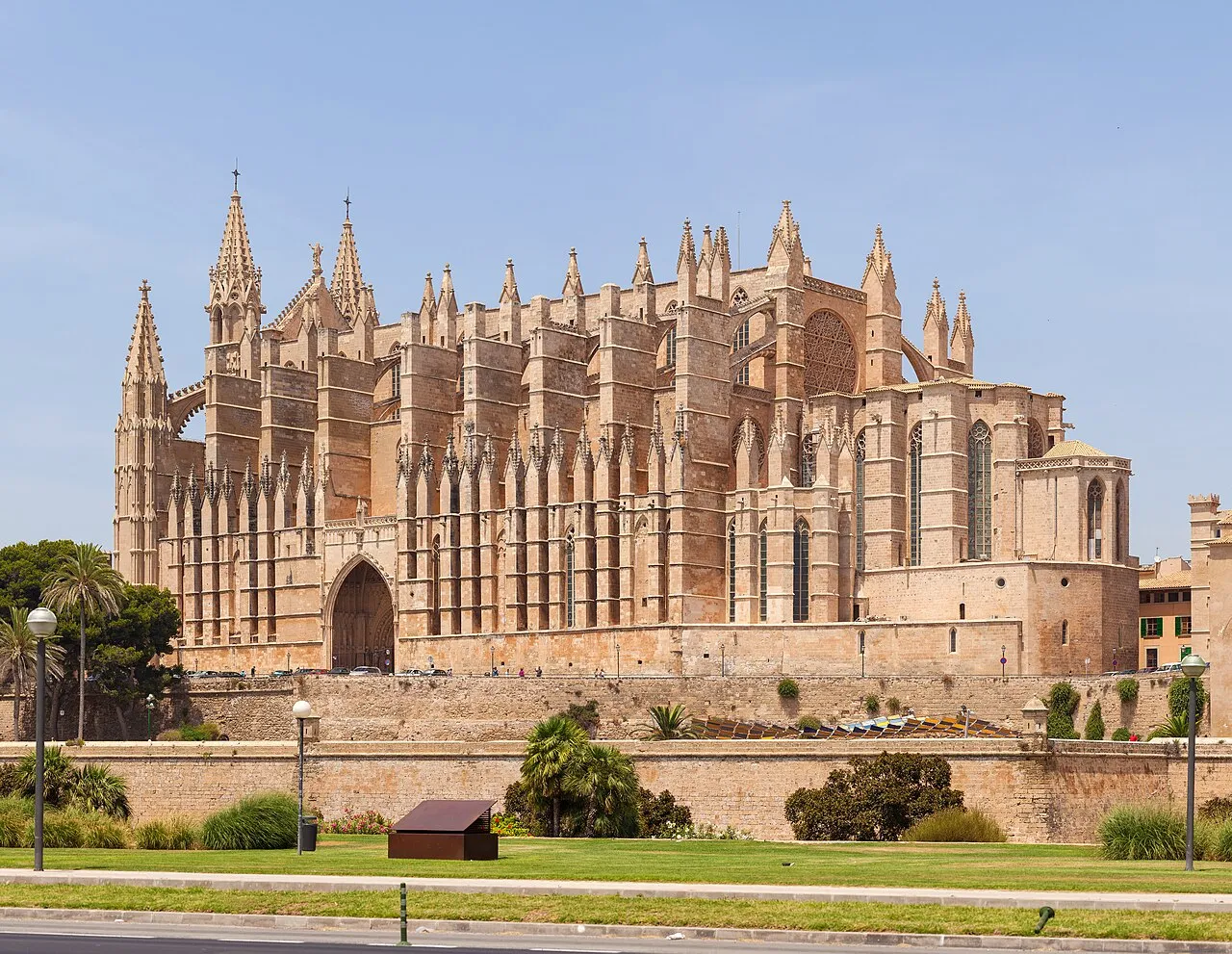
Palma Cathedral

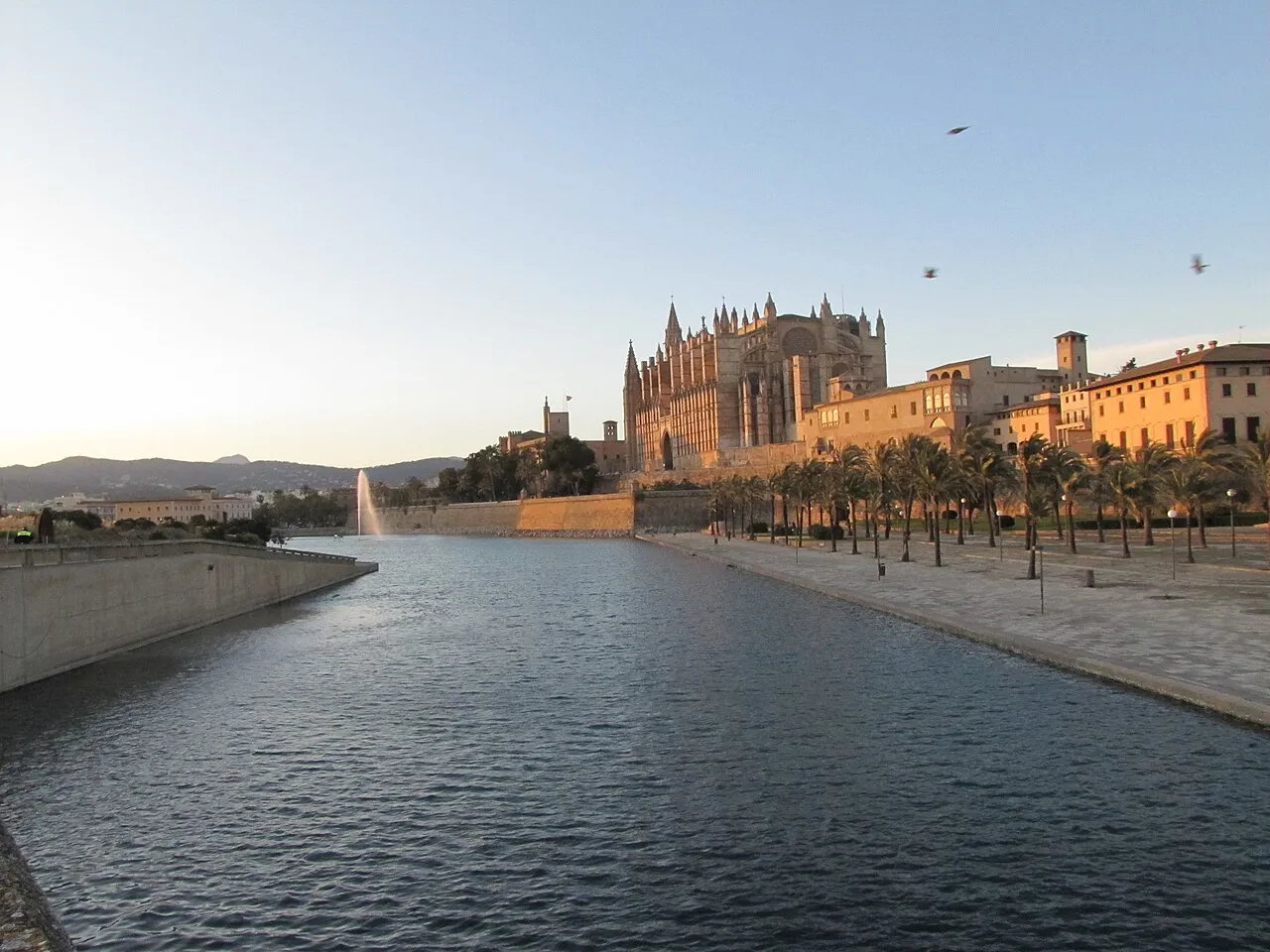
La Seu, built over the main mosque to be the first thing ships would see. Fourteen octagonal pillars leave the nave completely clear, at one of the greatest Gothic heights in Europe. And Gaudí, called in by Bishop Campins, took the choir out of the middle and hung the wrought-iron baldachin over the altar that still trembles up there.

🎧 La Seu Cathedral, the Almudaina and the seafront📍 View on Google Maps
2Almudaina Palace

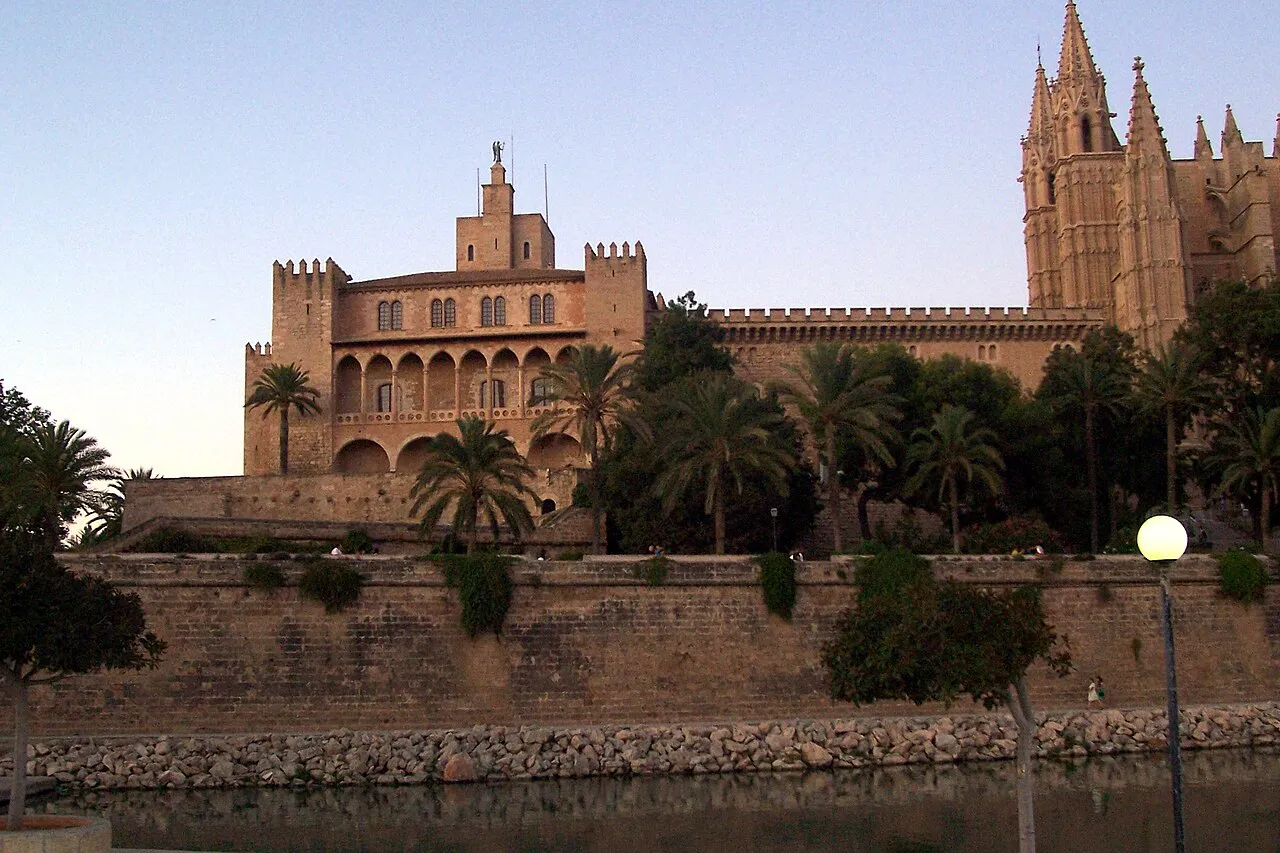
Almudaina Palace

A Roman fort, then the alcázar of the Muslim governors and later a Gothic palace: the Christians did not demolish, they moved in. An independent Kingdom of Majorca was governed from here, with a king and a coinage of its own. It is still the official residence of the Crown, so it can close for state occasions.

🎧 La Seu Cathedral, the Almudaina and the seafront📍 View on Google Maps
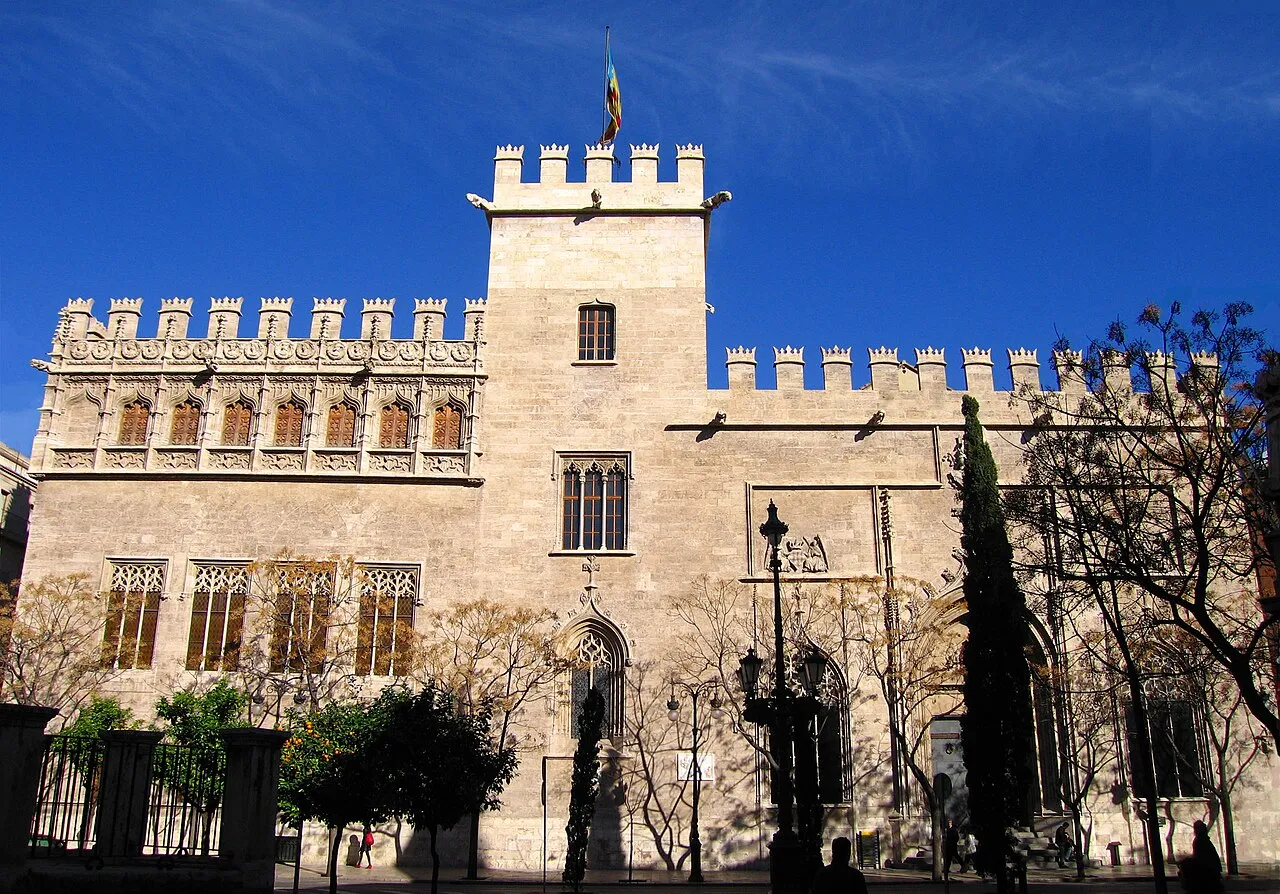
3La Lonja

La Lonja

It looks like a castle and it is a trading exchange. Guillem Sagrera raised it between 1420 and 1452 for the merchants' guild, who wanted a building that shouted their power. Inside, six twisted columns without capitals open out above into ribs: a forest of stone palms. Valencia copied the idea and took the fame.

🎧 El Born, La Lonja and Modernist Palma📍 View on Google Maps
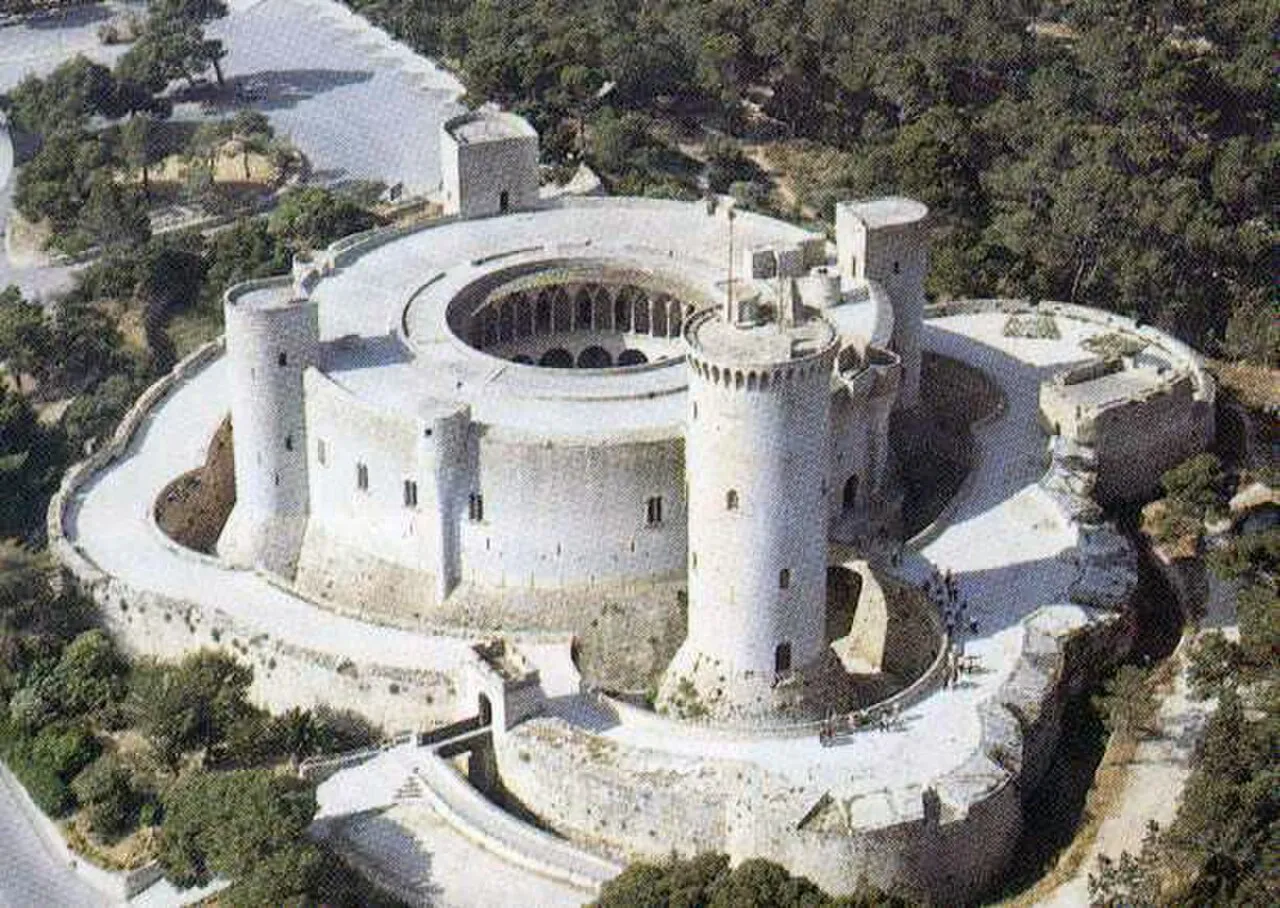
4Bellver Castle

Bellver Castle

Round, from 1300, and one of the very few circular castles in Europe: there is no other in Spain. The circle is not a whim, it is tactics: with no dead corners every inch of wall can be covered. It was a royal palace and ended up as the prison of Jovellanos. The terrace gives the best panorama of the bay.

🎧 Bellver Castle and El Terreno📍 View on Google Maps
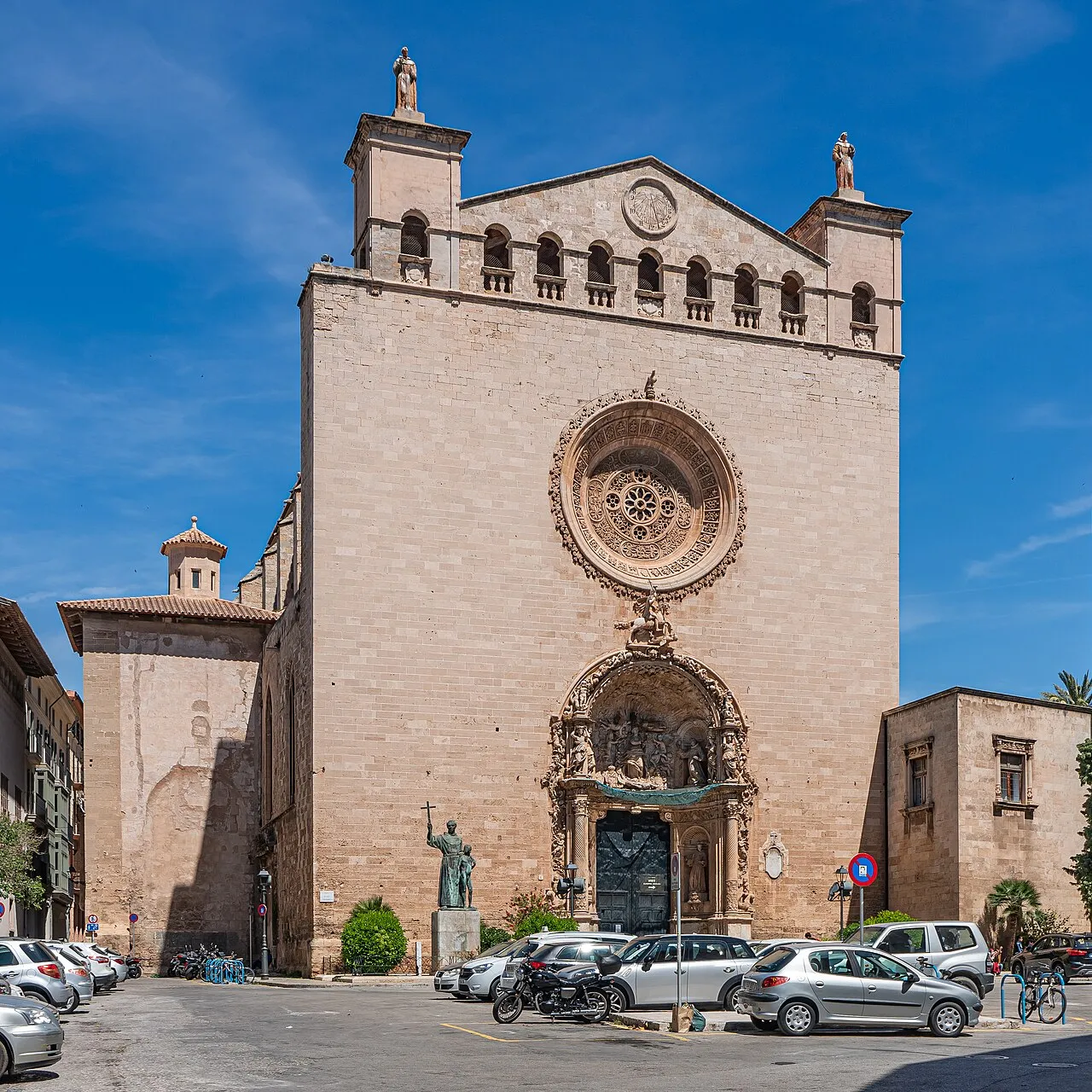
5Basilica of Sant Francesc

Basilica of Sant Francesc

A Baroque portal of stone lace and, behind it, one of the most beautiful cloisters in the Mediterranean: columns in pairs, lobed arcading, orange trees and silence. Ramon Llull rests inside, the man who wrote philosophy in Catalan when all Europe was writing it in Latin.

🎧 The old town: courtyards, Sant Francesc and Santa Eulàlia📍 View on Google Maps
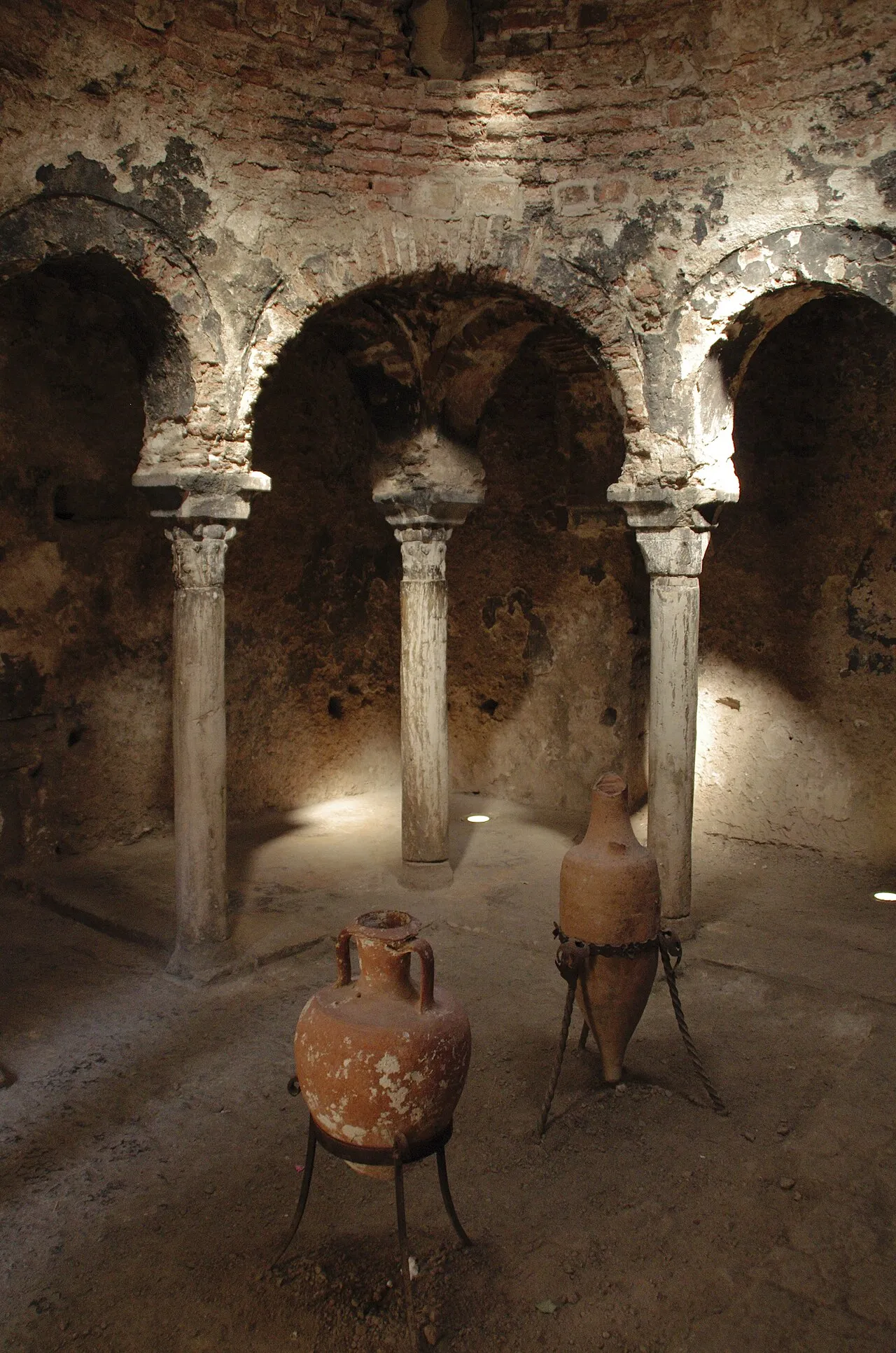
6Arab Baths

Arab Baths

The oldest thing you can walk on in Palma: a hammam of the tenth to twelfth centuries, one of the very few remains of Madina Mayurqa. Twelve columns with capitals reused from Roman and Byzantine buildings, and twenty-five star-shaped skylights in the vault. It is a single room: fifteen minutes, but unrepeatable.

🎧 La Seu Cathedral, the Almudaina and the seafront📍 View on Google Maps
7Parc de la Mar

Parc de la Mar

An artificial saltwater lake excavated in 1984 with a single purpose: to give the cathedral back the reflection a motorway had taken from it. It solves no problem of traffic, it solves a problem of looking. First thing or at dusk, with the water still, it is the best place in the city.

🎧 La Seu Cathedral, the Almudaina and the seafront📍 View on Google Maps
8Plaza de Cort

Plaza de Cort

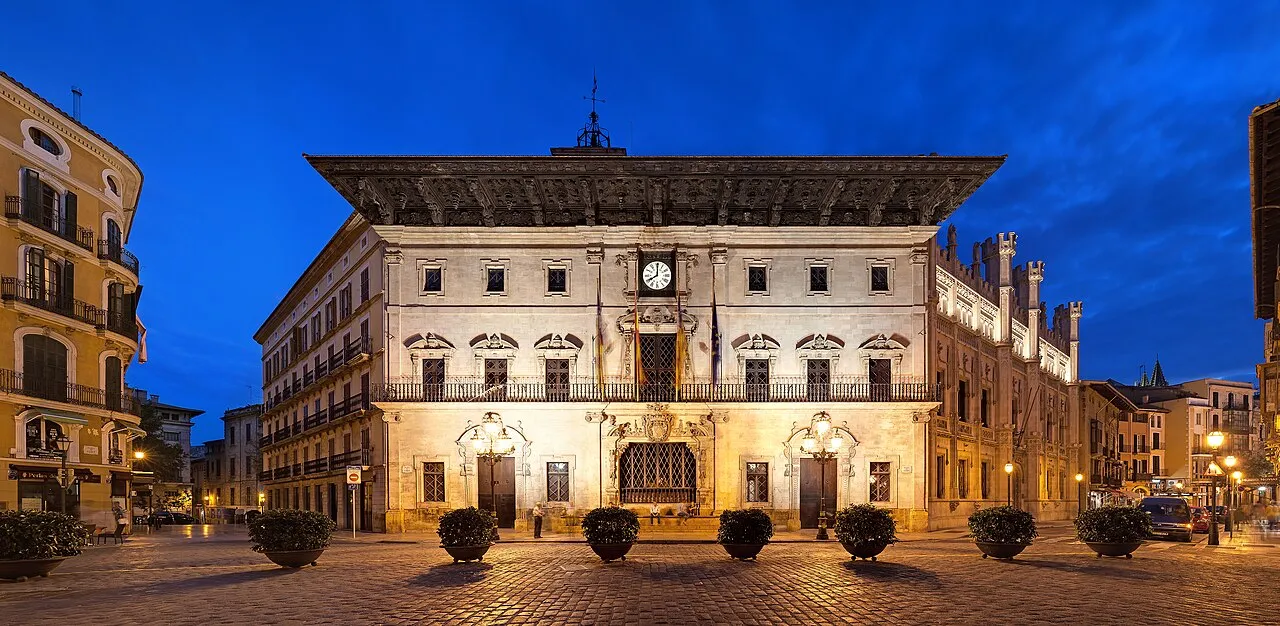
Cort means tribunal, and the island has been governed here since 1229: the Universitat met, proclamations were read out and the pillory stood here too. On one wall the cana was marked, the official measuring rod: if you were cheated over a cloth, you came to check. And the Town Hall eaves fly three metres out over the street.

🎧 The old town: courtyards, Sant Francesc and Santa Eulàlia📍 View on Google Maps
9Can Vivot

Can Vivot

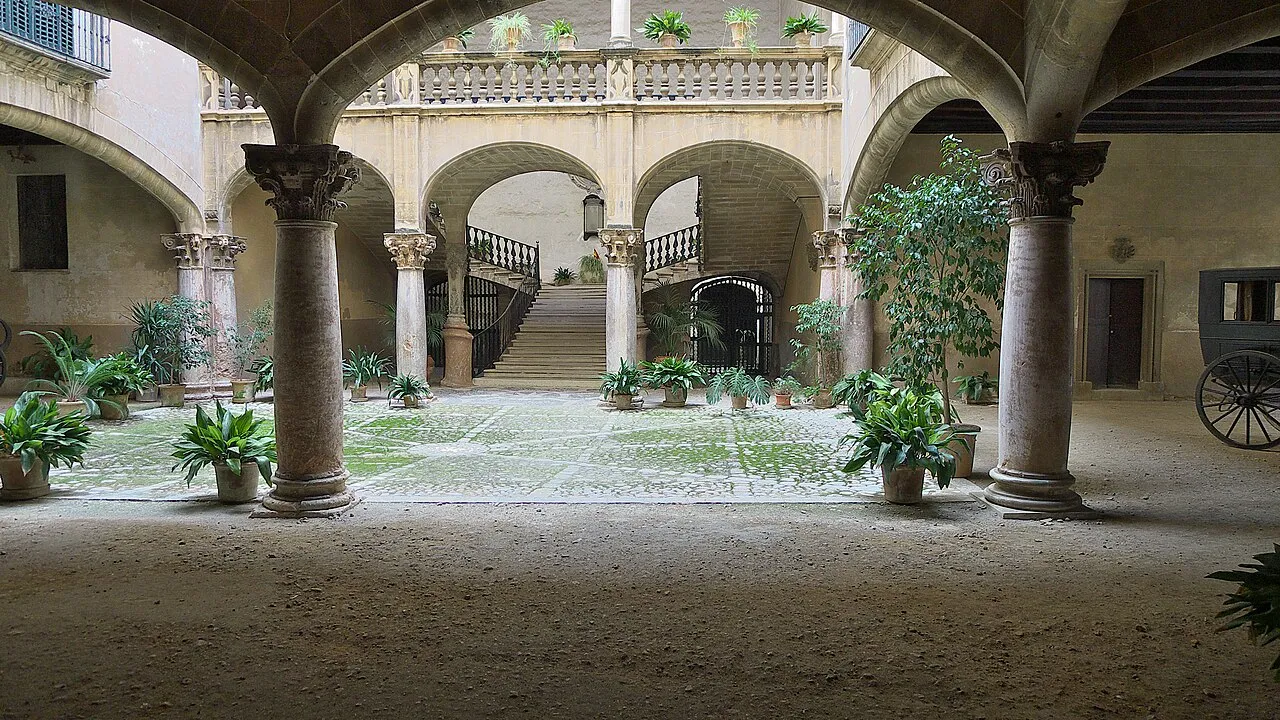
The most spectacular courtyard in Palma, untouched since its remodelling of 1683-1711: columns of red Binissalem marble, iron lanterns and an imperial staircase with a double flight. The furniture, the paintings and the library survive too, because the family is still tied to the house three centuries later.

🎧 The old town: courtyards, Sant Francesc and Santa Eulàlia📍 View on Google Maps
10Paseo del Born

Paseo del Born

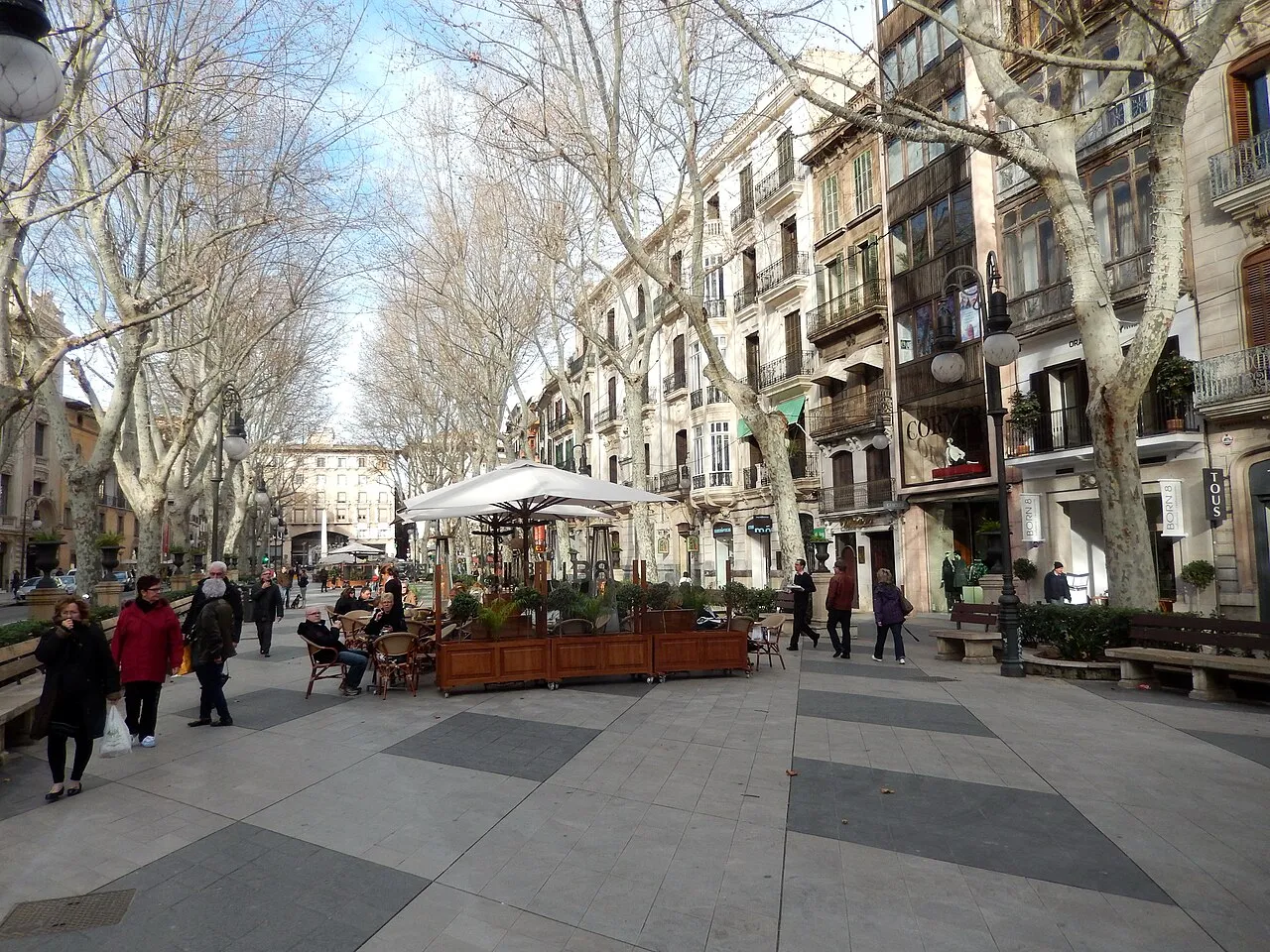
The city's drawing room, and underfoot the bed of a torrent. Sa Riera crossed Palma here until the flood of 1403 razed whole streets; in 1613 it was diverted outside the walls and the dry bed became a promenade. The name comes from the medieval jousts that were ridden on this very ground.

🎧 El Born, La Lonja and Modernist Palma📍 View on Google Maps
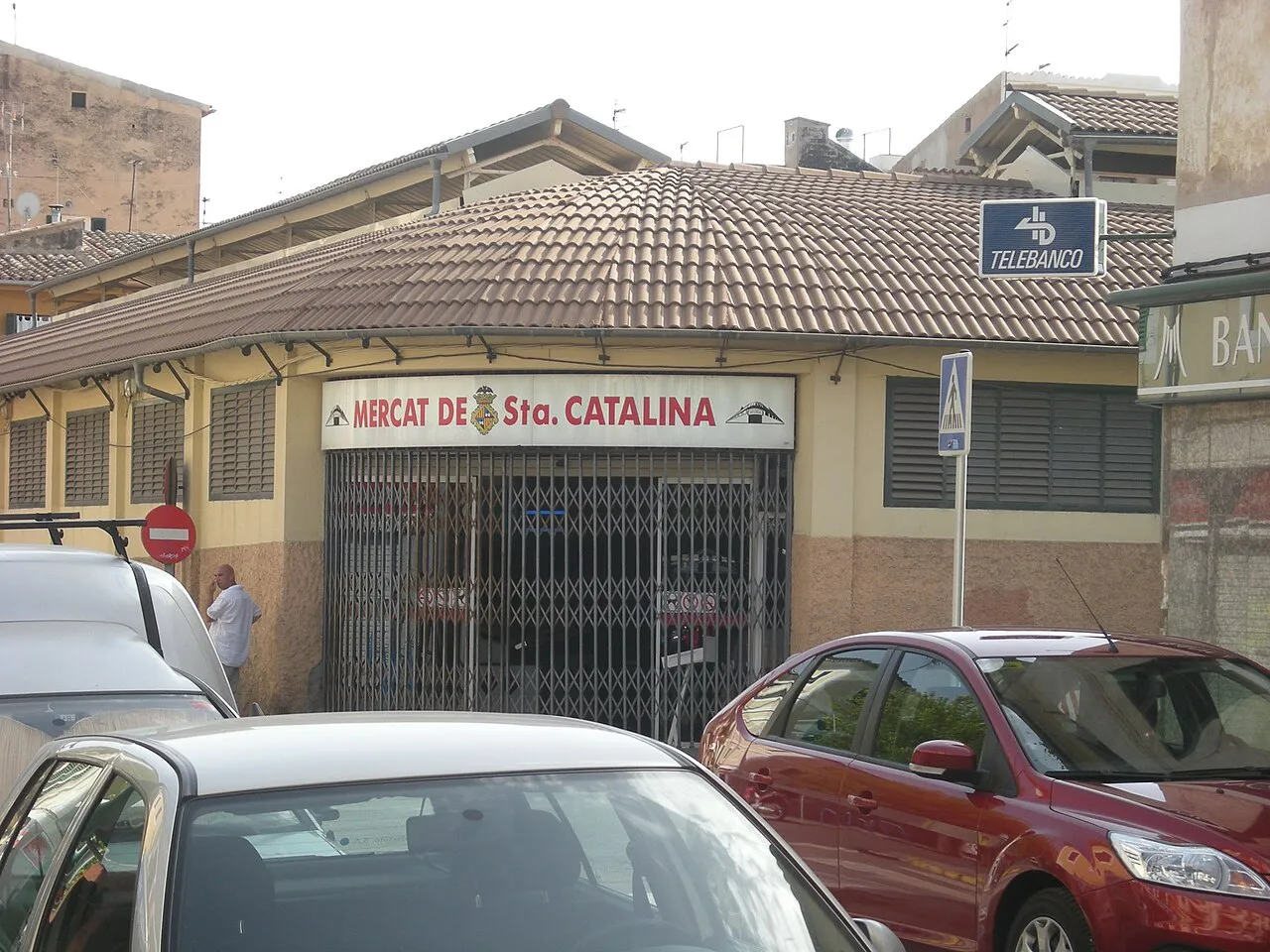
11Santa Catalina Market

Santa Catalina Market

The oldest food market in Palma, in a quarter that was a fishermen's suburb and today is the most sought-after area in the city. The old stalls share the space with the new bars without having been driven out, which is the hard part. Go hungry, walk the whole way round and buy where there is a queue of people from here.

🎧 Santa Catalina, the market and Es Jonquet📍 View on Google Maps
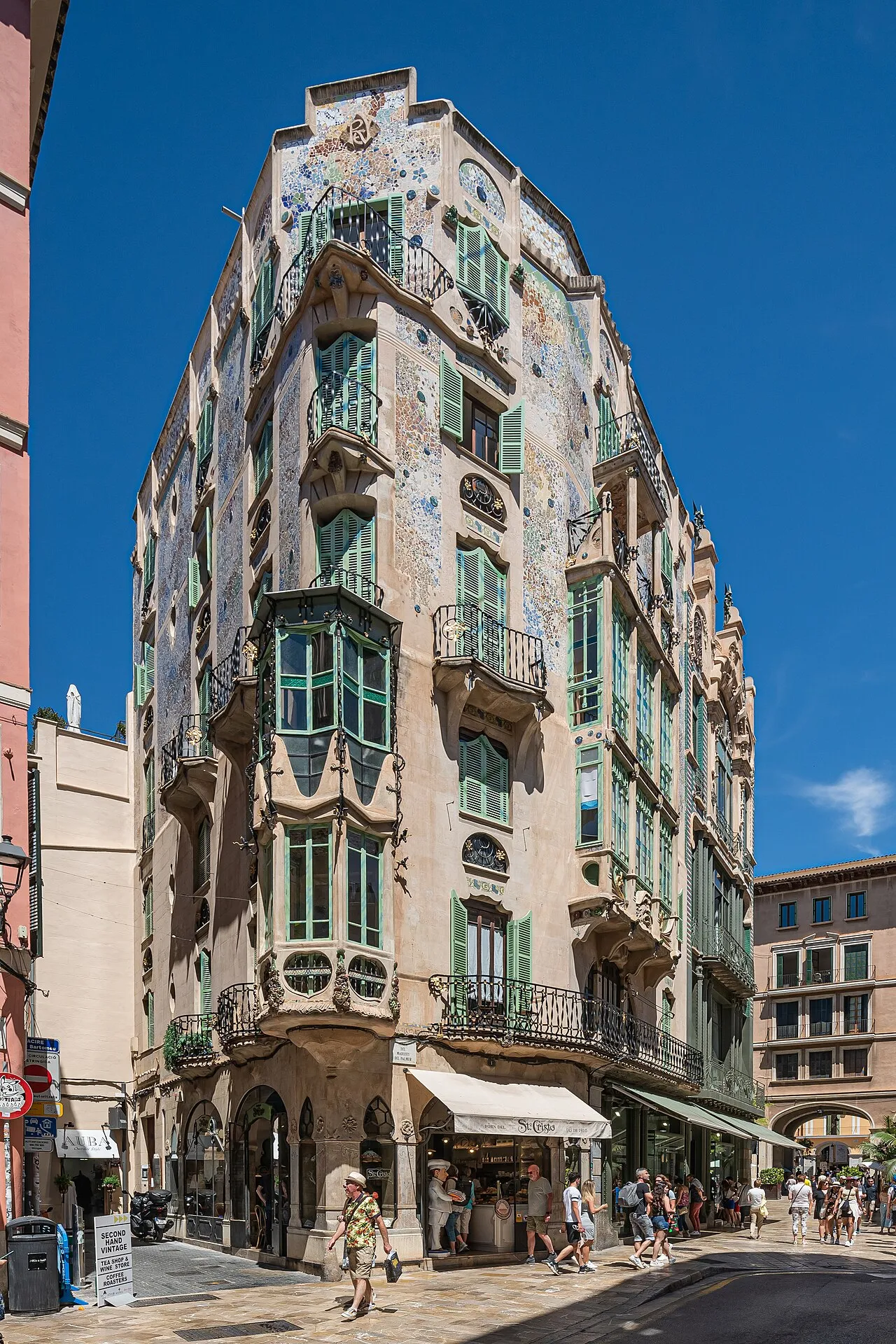
12Can Forteza Rey

Can Forteza Rey

The most extravagant façade in the city: trencadís of crockery and broken glass, with flowers, butterflies and a great monstrous head among the ceramic. A jeweller commissioned it in 1909, with his workshop below and a dental clinic inside. After the cathedral, the most photographed building in Palma.

🎧 El Born, La Lonja and Modernist Palma📍 View on Google Maps
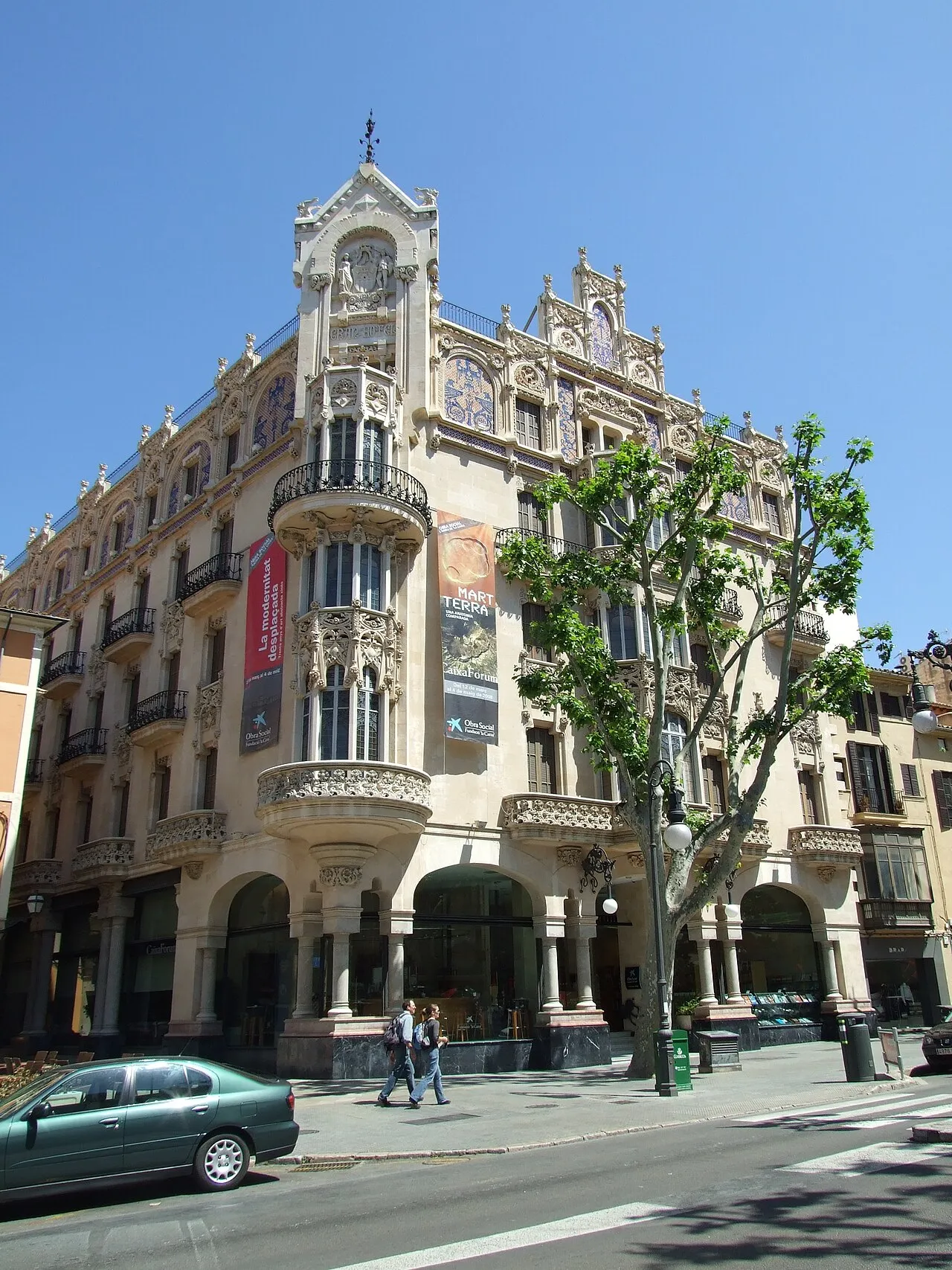
13Gran Hotel

Gran Hotel

Domènech i Montaner, 1903, and Mallorcan tourism was born with it: it was the first building on the island with electricity and a telephone, with 450 bulbs and a lift. Two years later the Foment del Turisme was founded, the oldest in Spain. Today it is CaixaForum and you can go in.

🎧 El Born, La Lonja and Modernist Palma📍 View on Google Maps
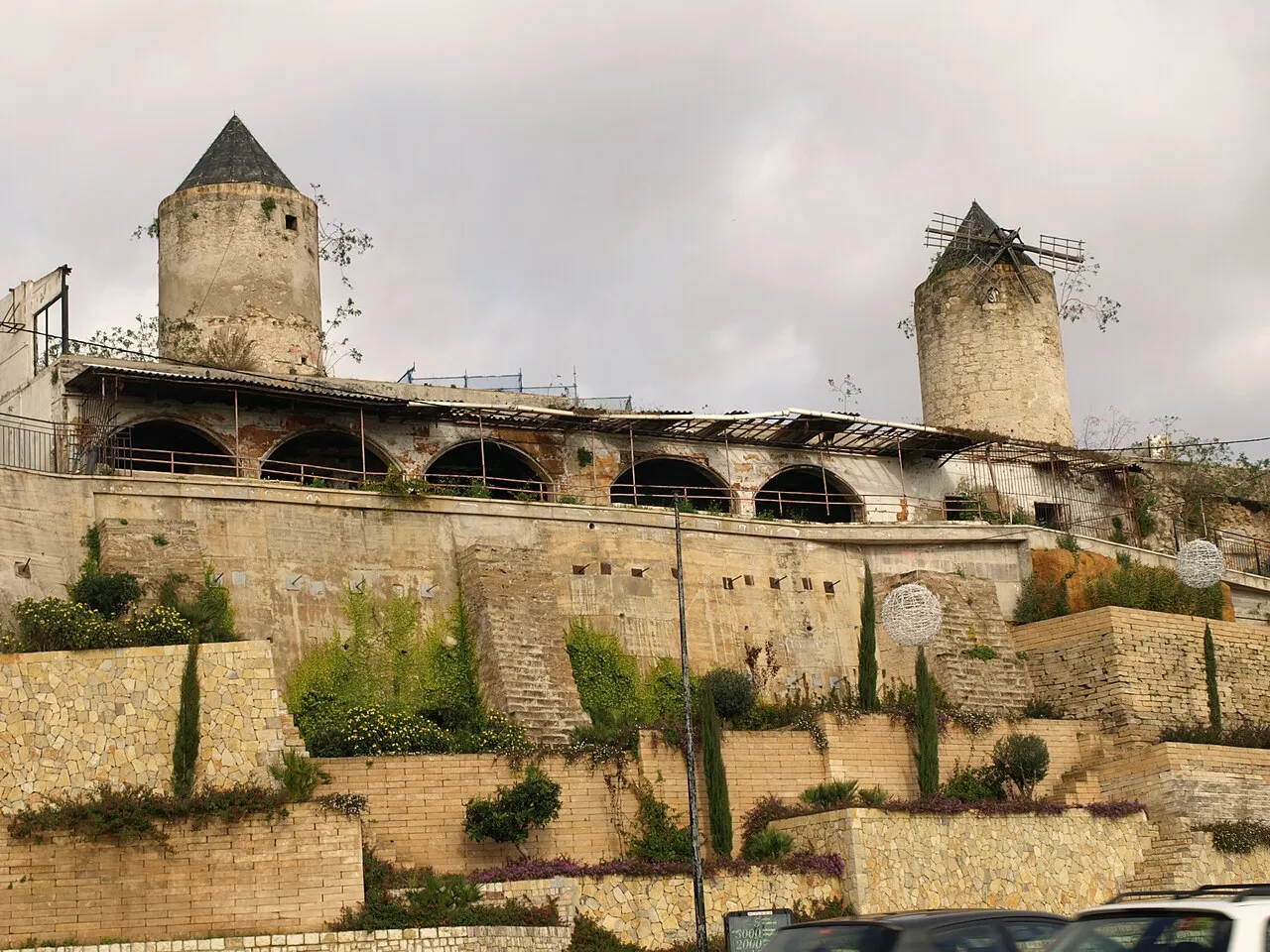
14Es Jonquet

Es Jonquet

A hillock facing the sea with whitewashed fishermen's cottages and the old flour mills crowning it. They are there because high up is where the wind blows best: only the wooden cap turned, and canvas sails were tied to the arms as on a boat. At dusk, unmissable.

🎧 Santa Catalina, the market and Es Jonquet📍 View on Google Maps
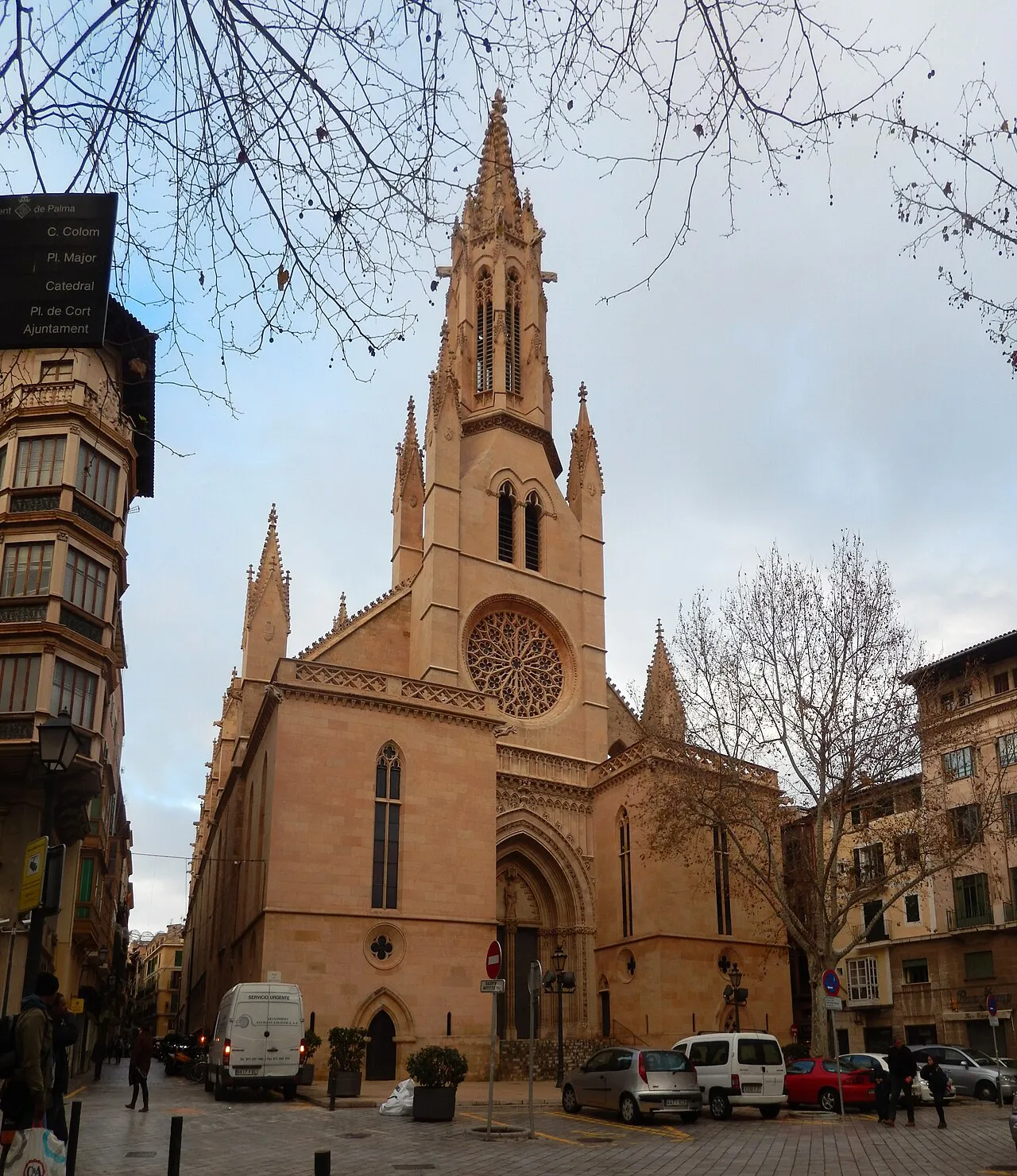
15Church of Santa Eulàlia

Church of Santa Eulàlia

The oldest of the great parish churches and the only Gothic one in Palma with three naves, when the Mallorcan model has a single nave. Here, in 1276, James II was recognised as king of an independent Majorca. Look at the gargoyles on the roof: dragons, harpies and impossible beasts.

🎧 The old town: courtyards, Sant Francesc and Santa Eulàlia📍 View on Google Maps

Walking tours in Palma

🎧 Bellver Castle and El Terreno · El Born, La Lonja and Modernist Palma · La Seu Cathedral, the Almudaina and the seafront · Santa Catalina, the market and Es Jonquet · The old town: courtyards, Sant Francesc and Santa Eulàlia

Frequently asked questions

How many days do you need to see Palma?

Two full days cover the whole old town, Bellver and Santa Catalina without hurrying. With only one you can do the essentials — cathedral, Almudaina, Lonja and a turn round the old town — but the courtyards, the Modernisme and the Santa Catalina quarter are left out, and they are a good part of what makes the city interesting.

Can the noble courtyards be visited?

Palma preserves more than a hundred listed ones, but almost all are behind closed gates and open only on open-house days or booked tours. The ones accessible any day are the Casal Solleric, on the Born, which is municipal and free, and Can Bordils. The rest are seen from the gateway when it is open.

Is it worth going up to the castle of Bellver?

Yes, and not only for the castle, which is unique in Spain for its circular plan. The upper terrace gives the best panorama of the city and the bay, and around it lies the Bellver woodland, Palma's great green lung. It is 3 km from the centre and there is a city bus that goes almost up to the gate.

Where is the best view of the cathedral?

From the Parc de la Mar, the artificial lake excavated in 1984 precisely to give it back its reflection. First thing in the morning or at dusk, when the wind drops and the water goes smooth, the towers and the rose window appear doubled upside down. Stand on the southern edge looking north.

When is the best time to visit Palma?

Spring and autumn. In summer it is hot, there are a lot of people and accommodation prices shoot up; in winter the city is quiet and pleasant, with mild temperatures, though part of what the coast offers closes. January has one draw: on the 20th Sant Sebastià is celebrated, with bonfires and concerts all over the city.

What do you eat in Palma?

Sobrasada, better if it is porc negre; frit mallorquí, made of offal with potato and pepper; tumbet, the island's version of pisto, the Spanish stewed-vegetable dish; arròs brut; and pa amb oli, with the pa moreno kneaded without salt since the days when salt was taxed. For something sweet, the ensaïmada. And wines from Binissalem and Pla i Llevant, the island's two denominations.
Palma on the map

The 15 must-sees, point by point.

🎧 With Viavoy

Walk Palma and listen at your own pace

Download Viavoy and walk Palma offline, whenever you like.

from 2,99 €· one-off payment
City Pass · 9,99 €3 days, all the tours in Palma
Find out more about Viavoy →
Viavoy app

In the Magazine

Keep discovering Palma

Neighbourhoods

Bellver and El Terreno: the round castle and the neighbourhood of legendary nights

Food & drink

Eating in Palma: sobrasada, frit mallorquí and bread without salt

Art & architecture

La Seu: a guide to visiting Palma Cathedral

Art & architecture

The patios of Palma: a hundred grand houses hidden behind a gate