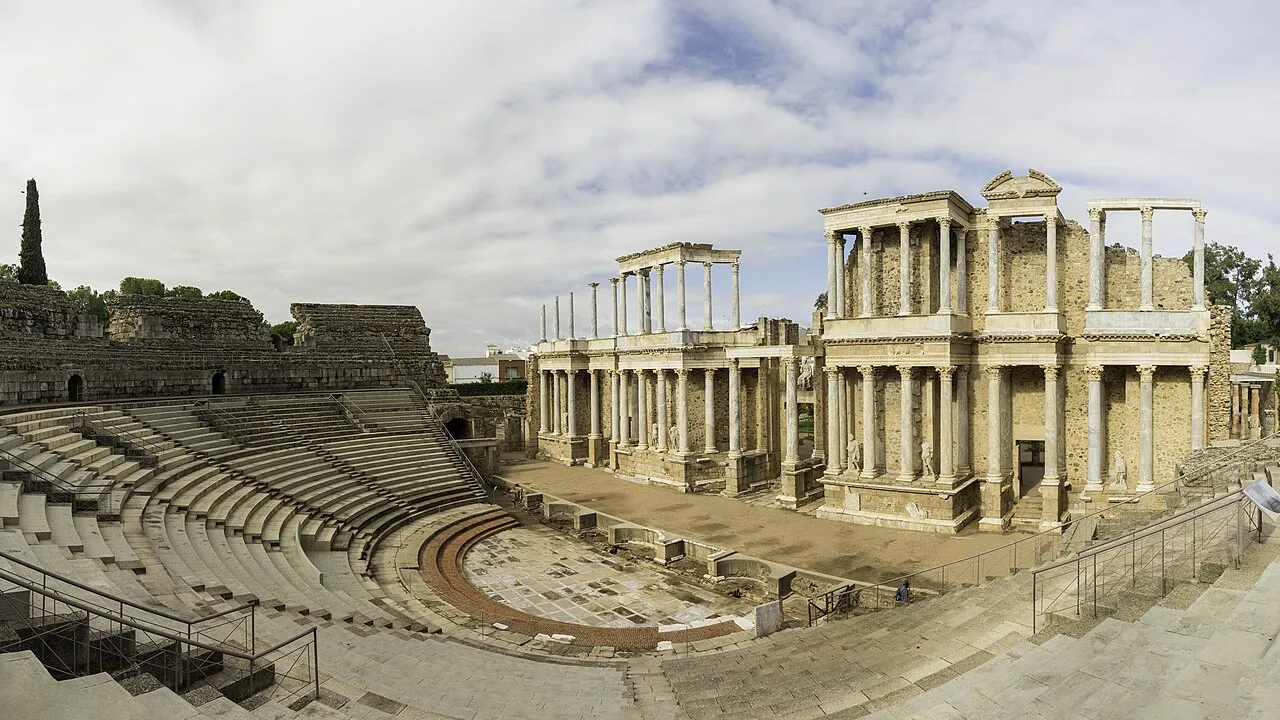
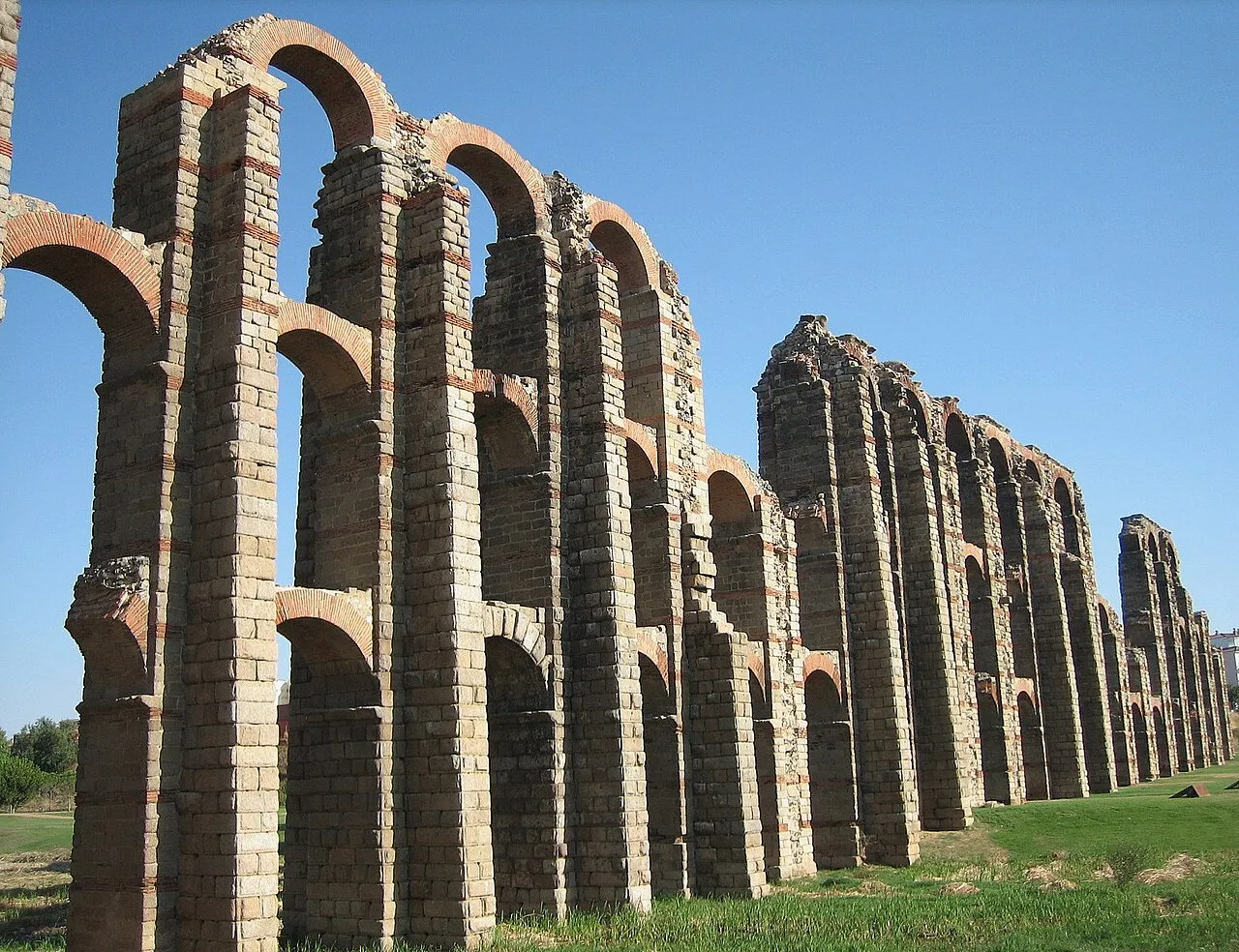
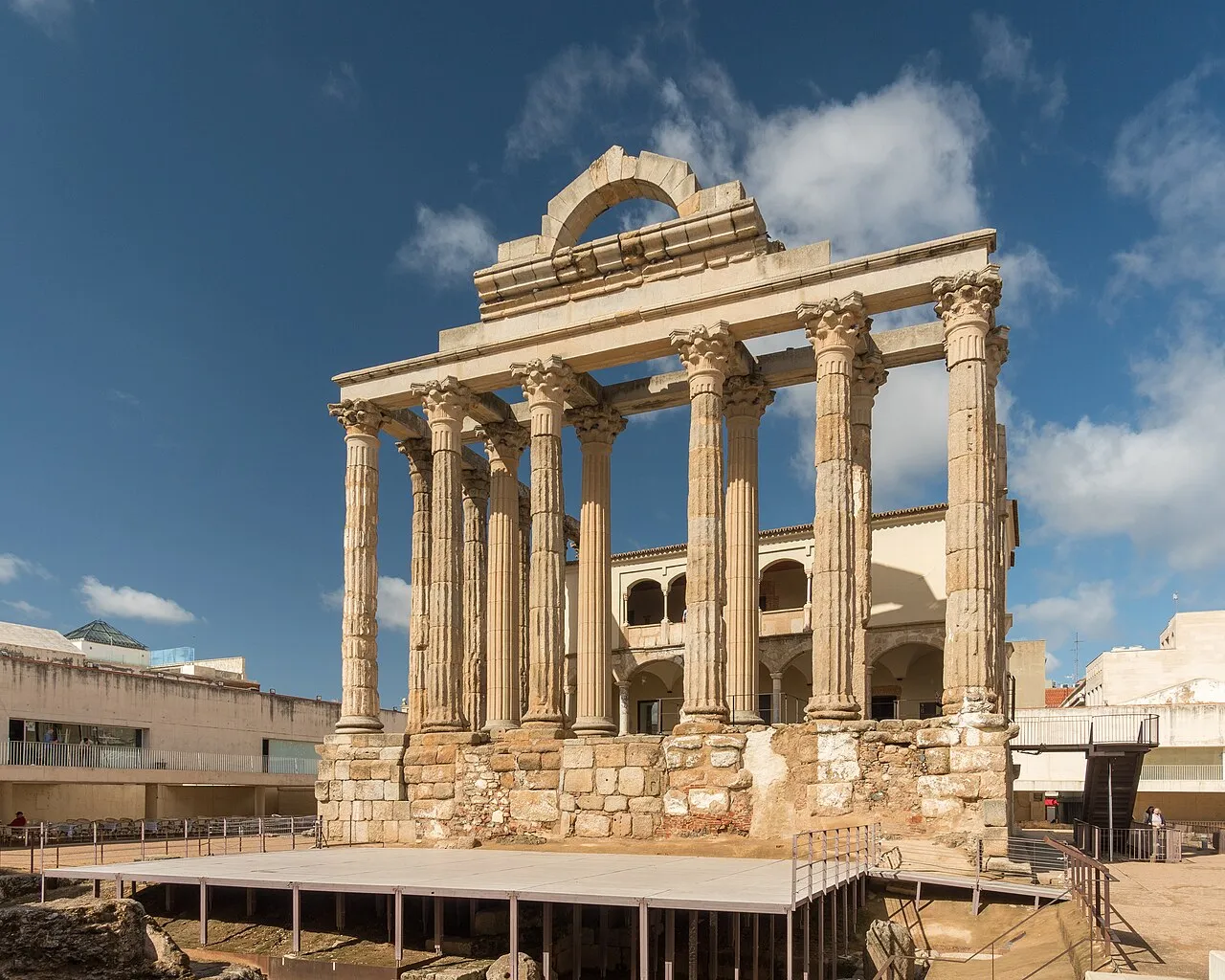
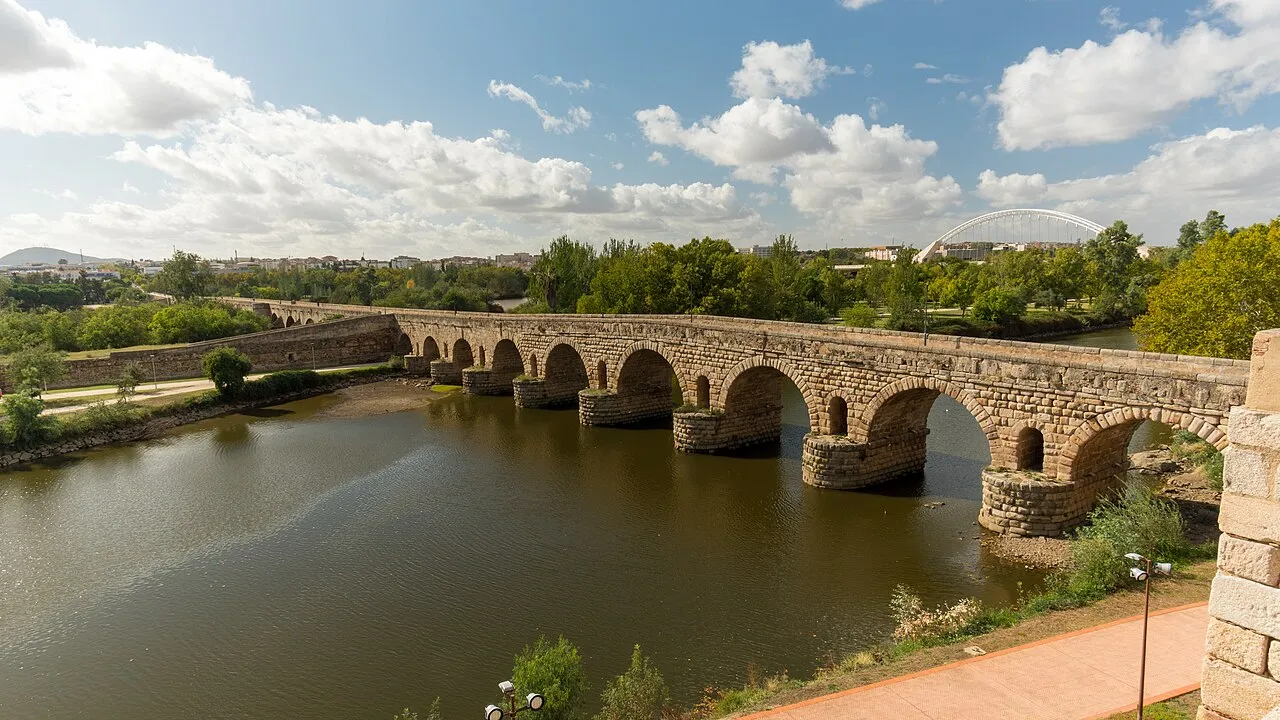
Mérida was founded in 25 BC as Emerita Augusta, to settle the veterans — the emeriti — of two legions discharged after the Cantabrian wars, and it ended up as the capital of the province of Lusitania. That status as a capital explains everything: a theatre and an amphitheatre almost at once, a circus, a forum, a temple of the imperial cult, one of the longest bridges in the Empire and a water system with reservoirs of its own. Today it is a World Heritage site and the most complete Roman ensemble in Spain, with the peculiarity that it is not a separate archaeological site but spread through the living city.
Frequently asked questions
How many days do you need to see Mérida?
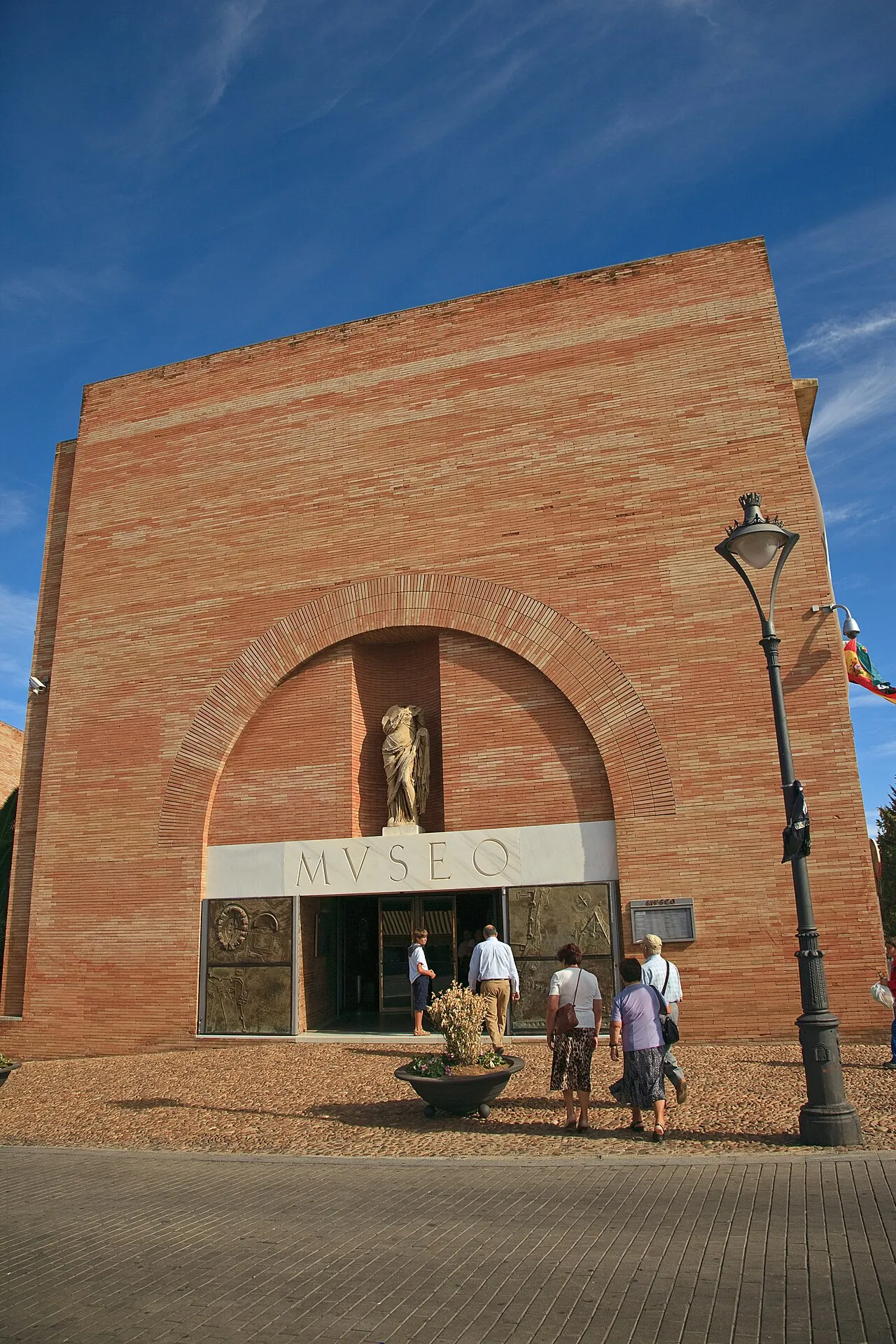
One full day covers the essentials: theatre, amphitheatre, museum, temple of Diana, Roman bridge and the Acueducto de los Milagros. With two days there is also room for the Roman circus, the Arab alcazaba, the Casa del Mitreo with its mosaics, the columbaria and the basilica of Santa Eulalia, without rushing in the heat.
Is there a joint ticket?
Yes, there is a joint ticket for the monumental ensemble that includes the theatre and amphitheatre, the Casa del Mitreo, the columbaria, the alcazaba, the circus and the basilica of Santa Eulalia. The Museo Nacional de Arte Romano is separate, with its own ticket, because it belongs to the state.
Why is there so much Roman work in Mérida?
Because it was the capital of the province of Lusitania, one of the three into which Hispania was divided. A provincial capital received systematic public investment: theatre, amphitheatre, circus, forum, temples, a monumental bridge and a water system with reservoirs. And afterwards, the city never grew enough to sweep away what was there before.
Can you see the theatre during the festival?
During the International Festival of Classical Theatre, in July and August, tourist access is restricted during set-up and performance hours, although it can normally still be visited in the mornings. It is worth checking beforehand. And if your trip coincides with it, seeing a performance in the original seating is an experience hard to match.
When is the best time to visit Mérida?
Spring and autumn. The Extremaduran summer comfortably passes forty degrees and almost the whole circuit is outdoors and without shade: theatre, amphitheatre, aqueduct and bridge. If you go in July or August, organise the outdoor visits for first thing and save midday for the museum, which is air-conditioned.
What do you eat in Mérida?
Extremaduran cooking from the dehesa: acorn-fed Iberian pork, torta del Casar — a sheep's cheese eaten with a spoon — migas with Vera paprika, lamb stew and grilled meats. To drink, wines from the Ribera del Guadiana, the province's denomination, at very reasonable prices.