The titanium that changed a city, a funicular from 1915, forty-three columns that never repeat and the Siete Calles where it all began in 1300. A selection ordered by riverbanks.
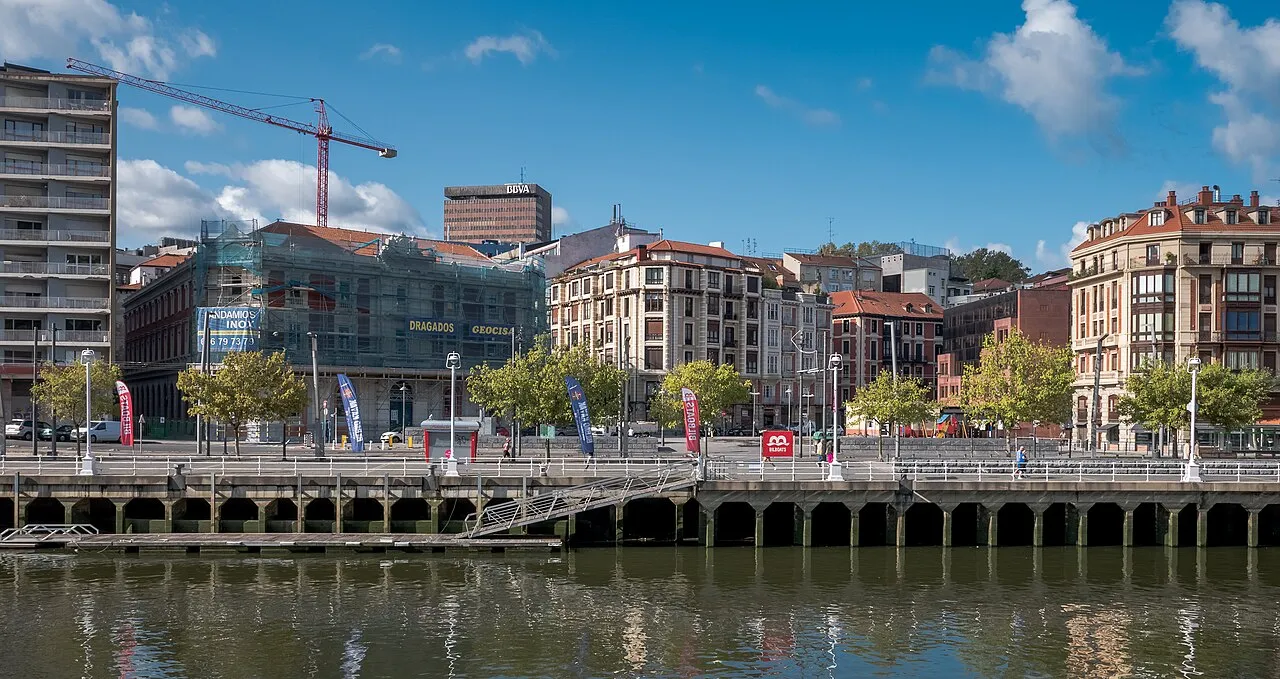
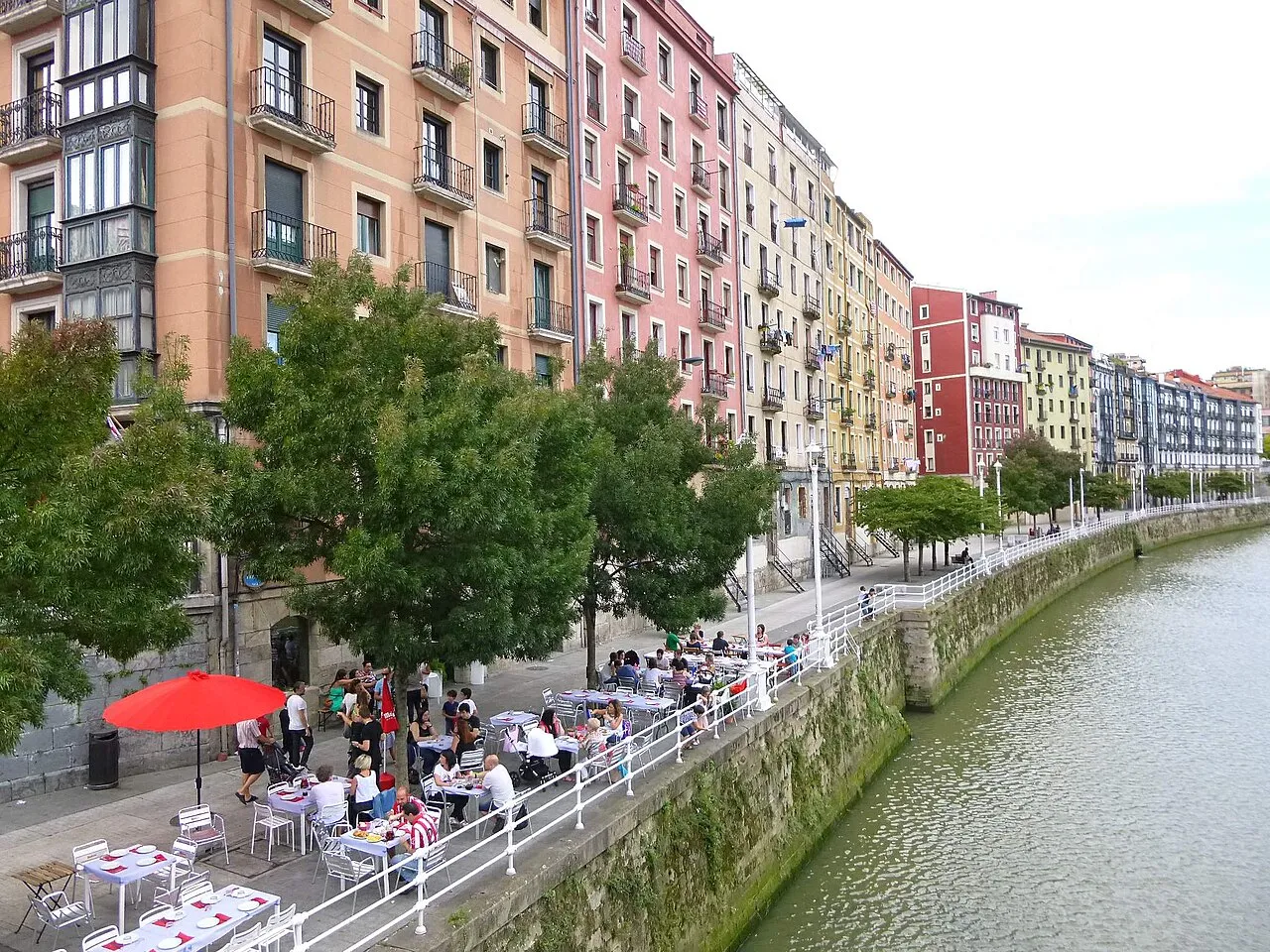
Bilbao is the European city that has told the story of its own reinvention best, and that is why it is worth visiting with both layers in mind. Underneath is the medieval town of 1300 with its Siete Calles, the ore port and the shipyards; above it, the cultural and urban operation that began in 1997 and turned a steel city in crisis into a global case study. The two meet at the ría, which organises everything. This guide goes bank by bank and from east to west, in the order in which the stops string together on foot.
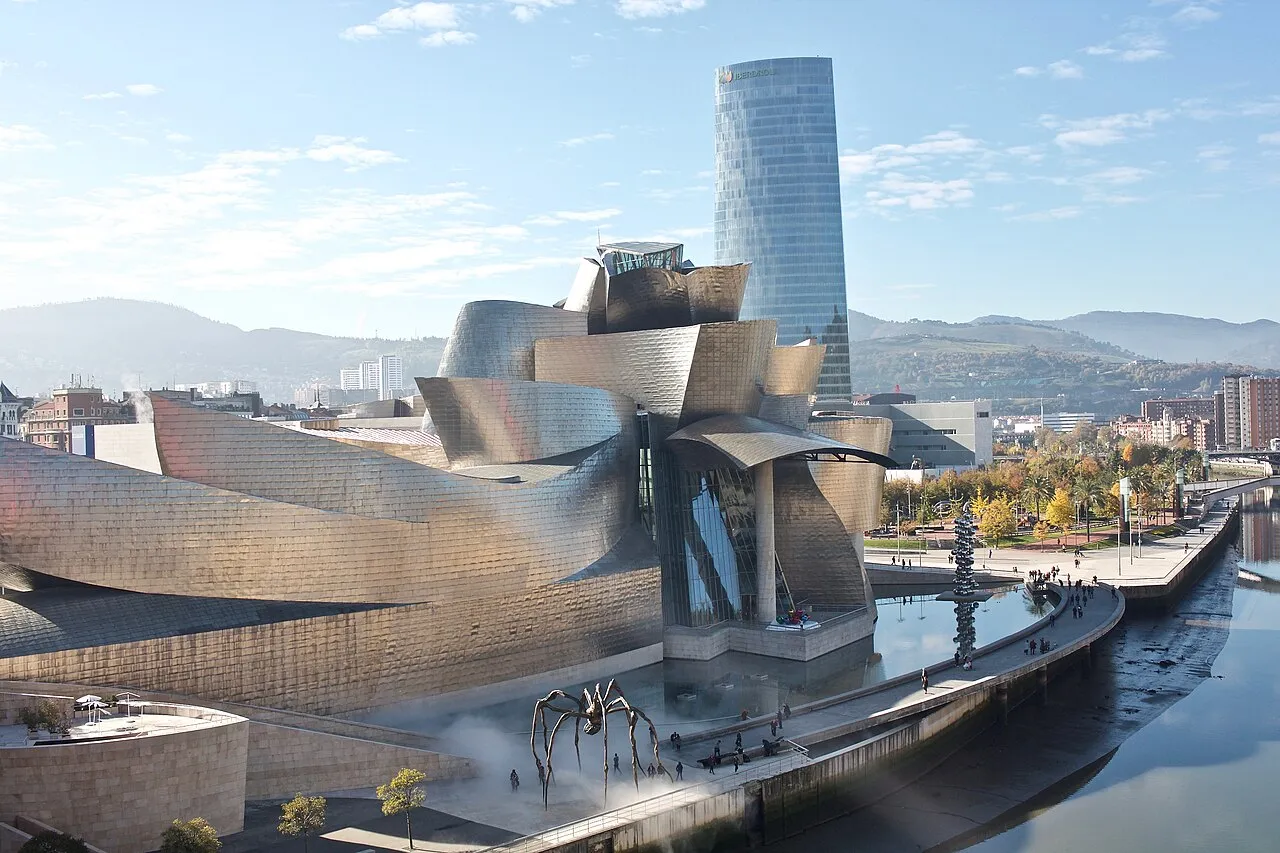
Thirty-three thousand titanium sheets half a millimetre thick, laid like scales and never quite flat, so that the surface vibrates instead of reflecting. Gehry could not have raised it without aeronautical design software to translate his hand-twisted models. Inside, Richard Serra's «The Matter of Time», which you walk through from within. Two and a half hours.
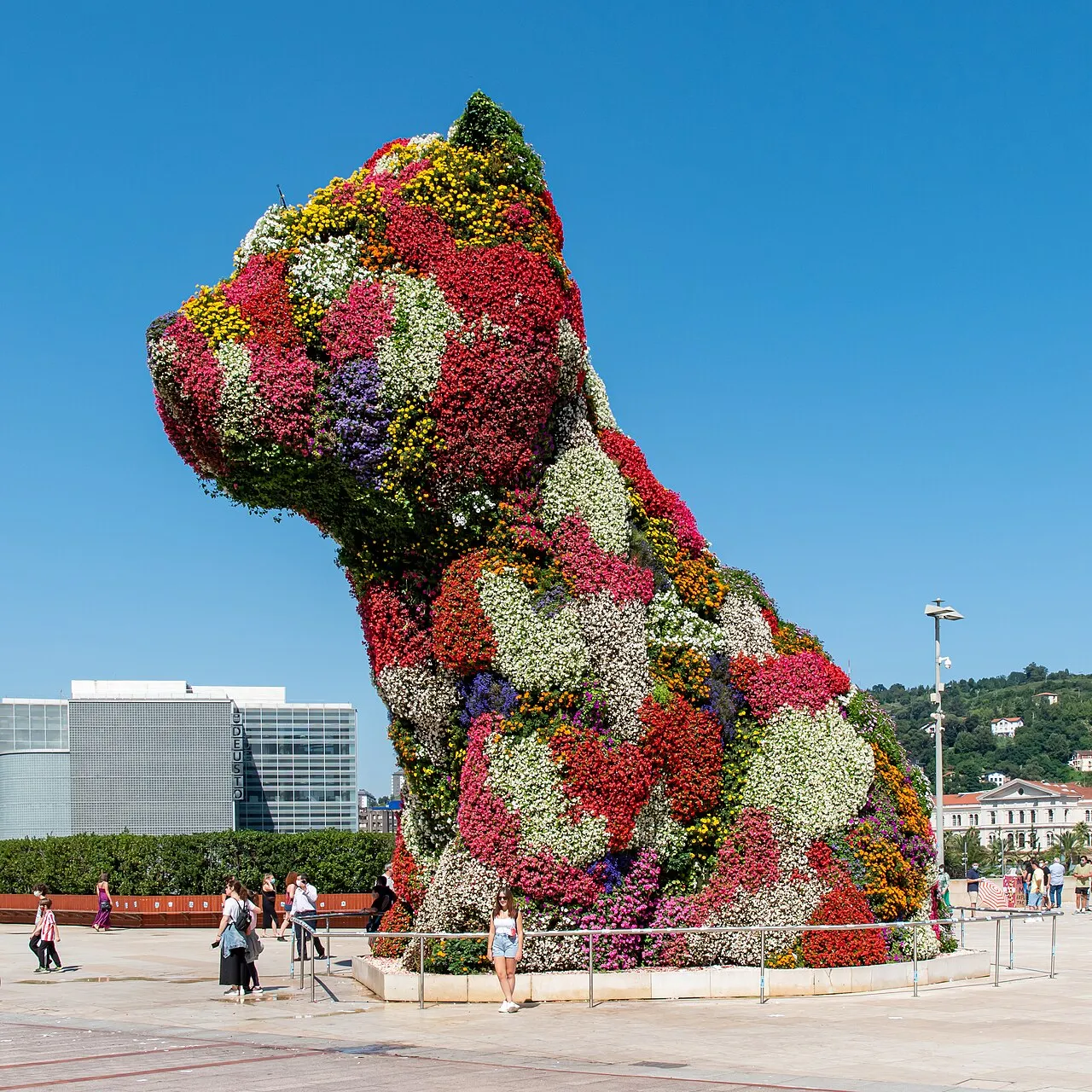
Thirteen metres of puppy made of tens of thousands of living flowers on a steel structure with internal irrigation. It is replanted twice a year, so anyone coming back in another season sees a different work. It is older than the museum: it arrived from Sydney as something temporary and the city refused to give it back. It can be seen without a ticket.
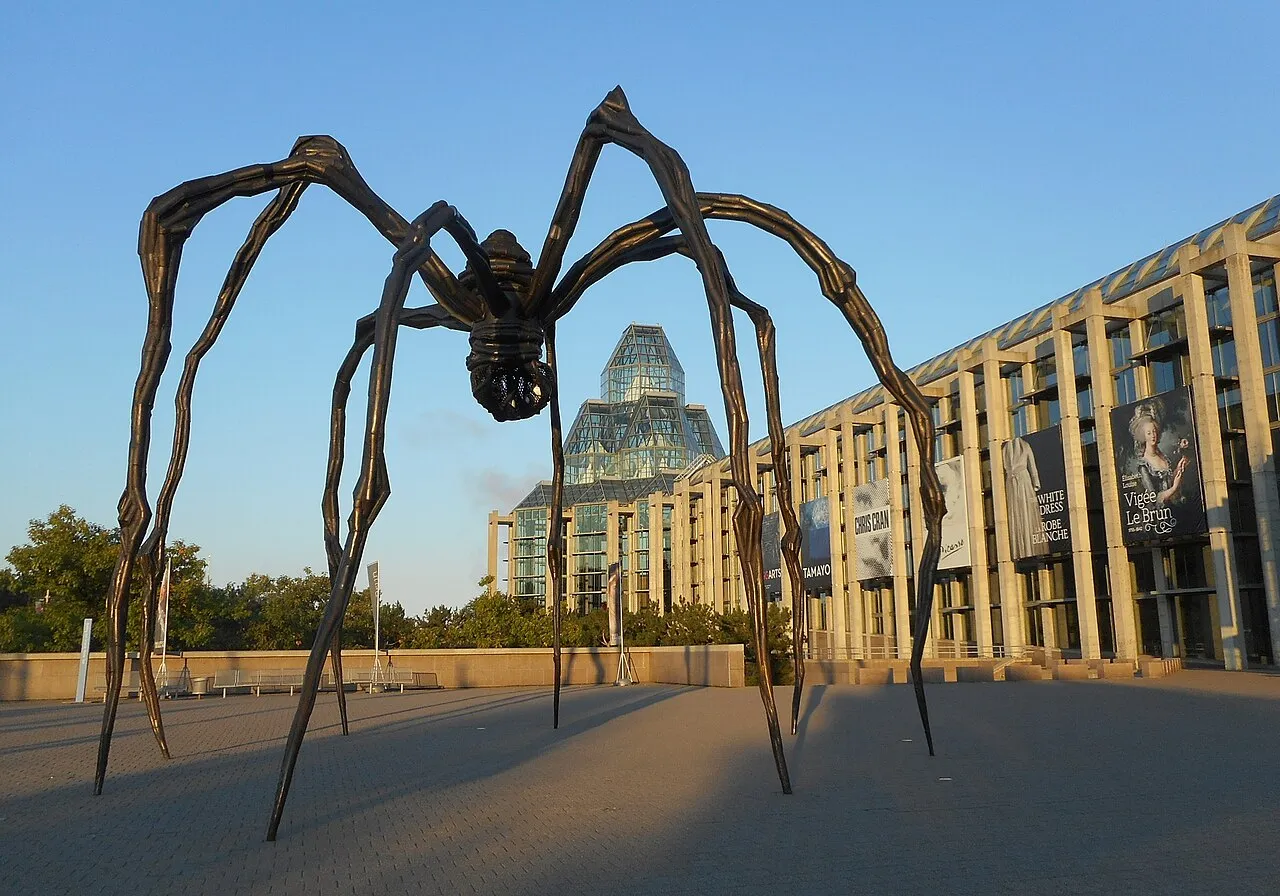
Nine metres of spider in bronze and steel, with twenty eggs of white and grey marble hanging in the sac between the legs. Bourgeois made it as a homage to her mother, who restored tapestries: weaving and mending with infinite patience was the point of the comparison. She made it when she was around ninety.
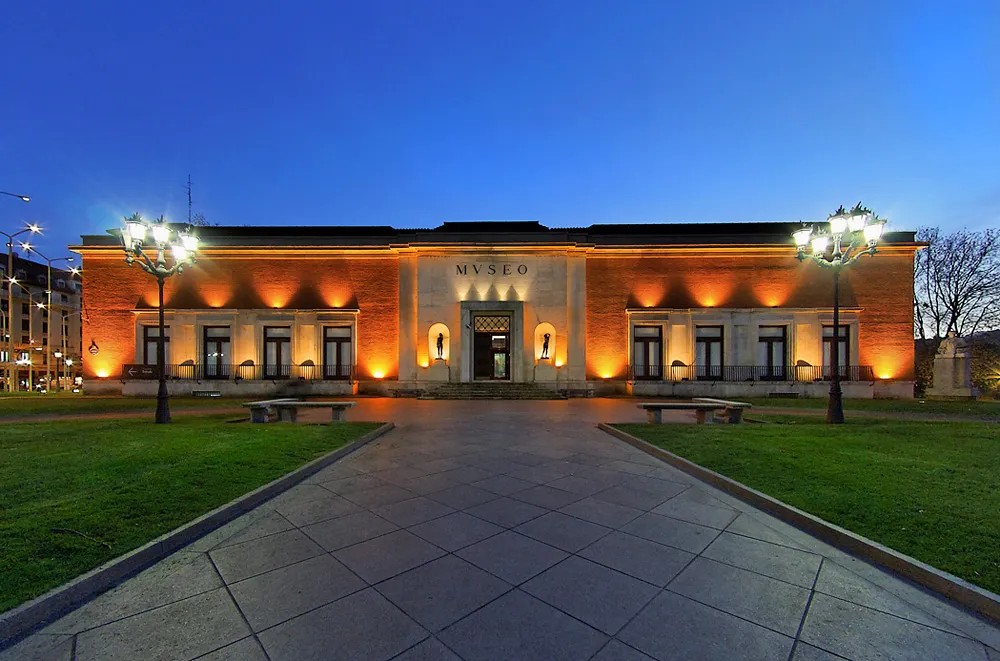
The museum the people of Bilbao really love, five minutes from the Guggenheim and inside a park. Eight centuries of art, with El Greco, Goya, Zurbarán and the finest collection of Basque painting there is. And a genuine Gauguin painted at Arles in 1888, when he was sharing a house with Van Gogh. It keeps free-entry slots.
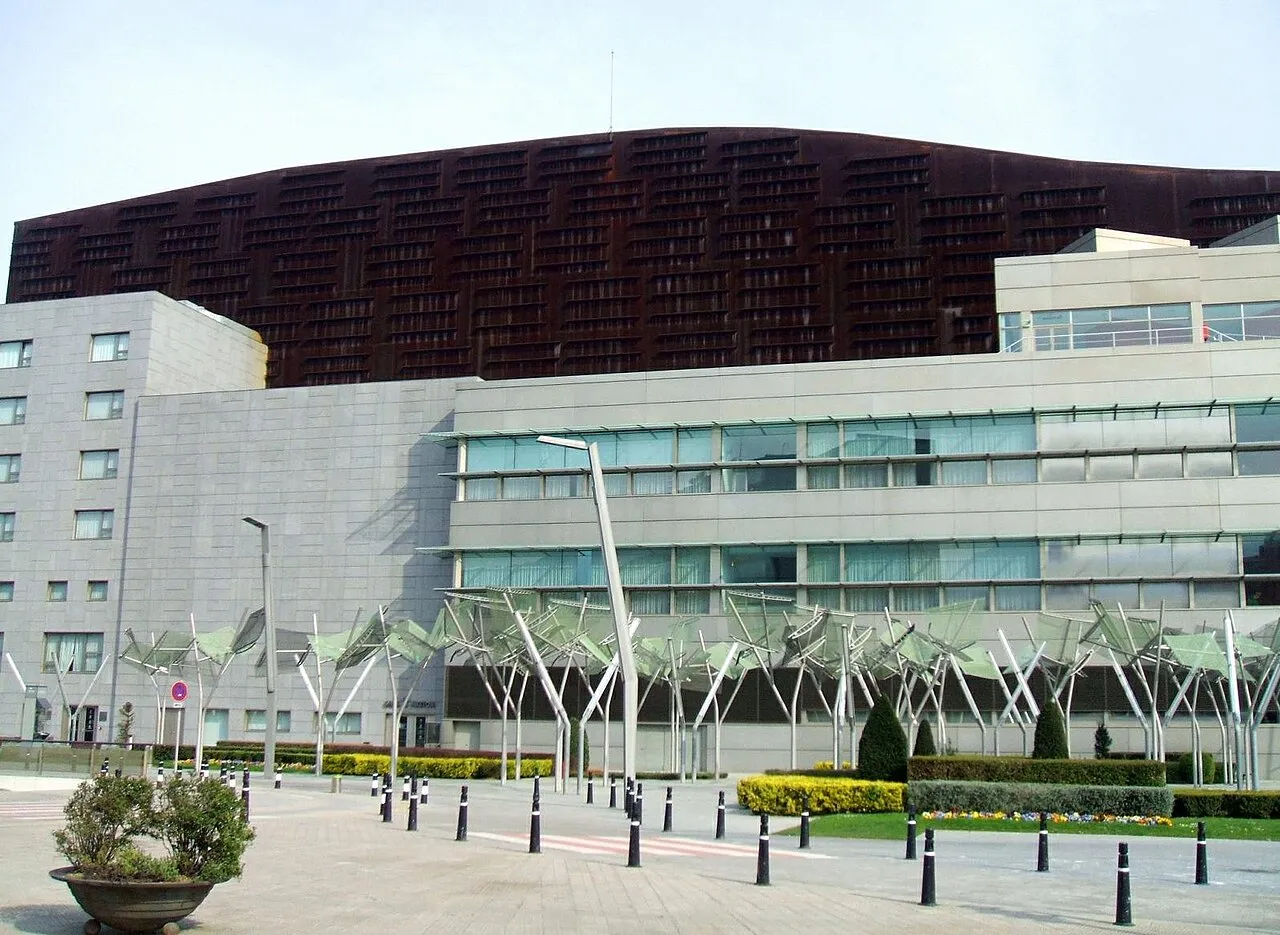
A mass of Corten steel that looks like a half-built ship, raised in 1999 on the site of the Euskalduna shipyards. It is conceived as that yard's last ship. Its closure in the eighties brought strikes and pitched battles; today, where vessels were launched, a symphony orchestra plays.
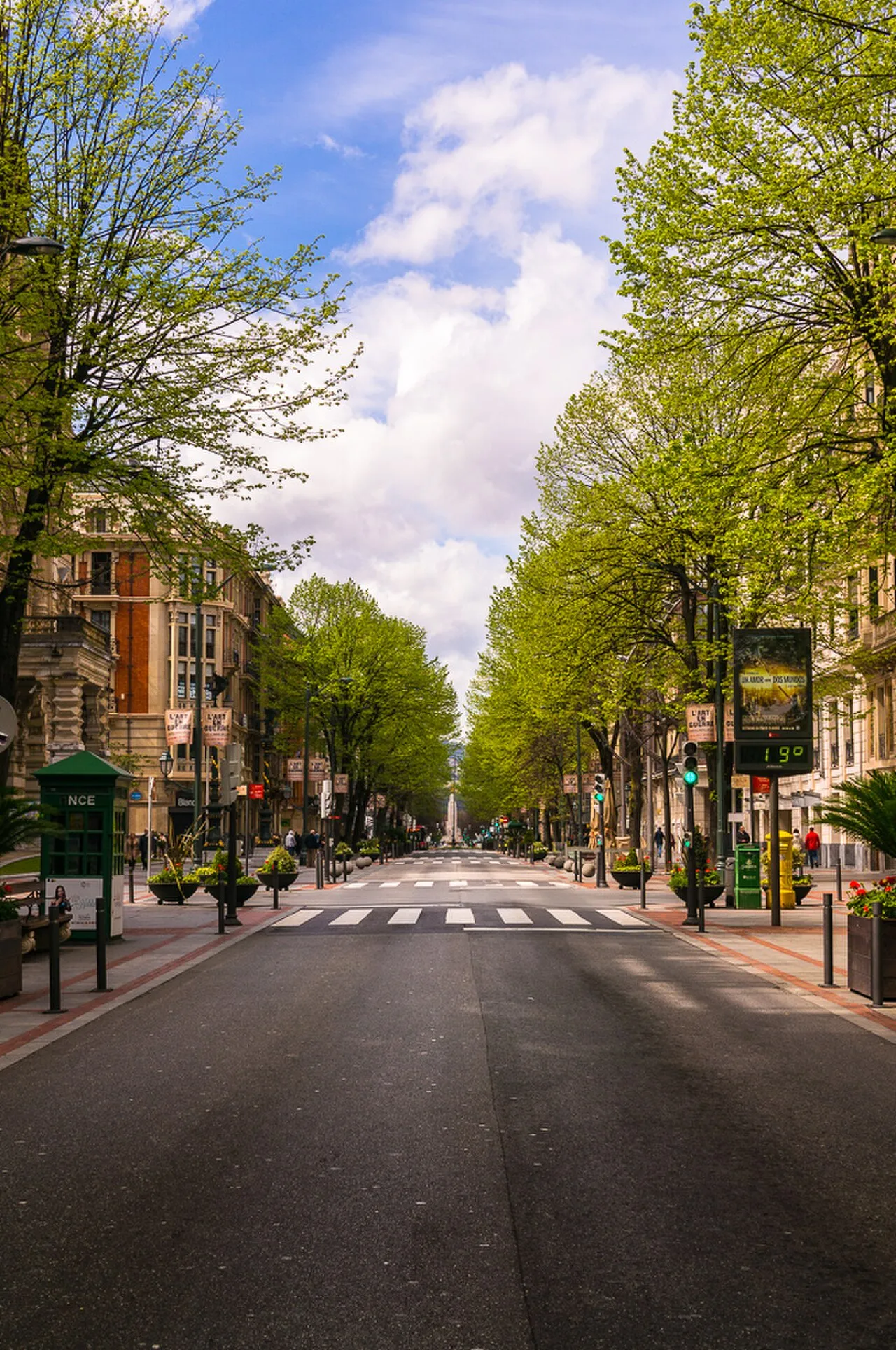
The axis the iron money built to look at itself in the mirror, laid out in 1876 over the market gardens of Abando. Its engineers planned a Bilbao so large that they were taken for dreamers, and the city filled every block. At Moyúa, the Palacio Chávarri, where no window is the same as another.
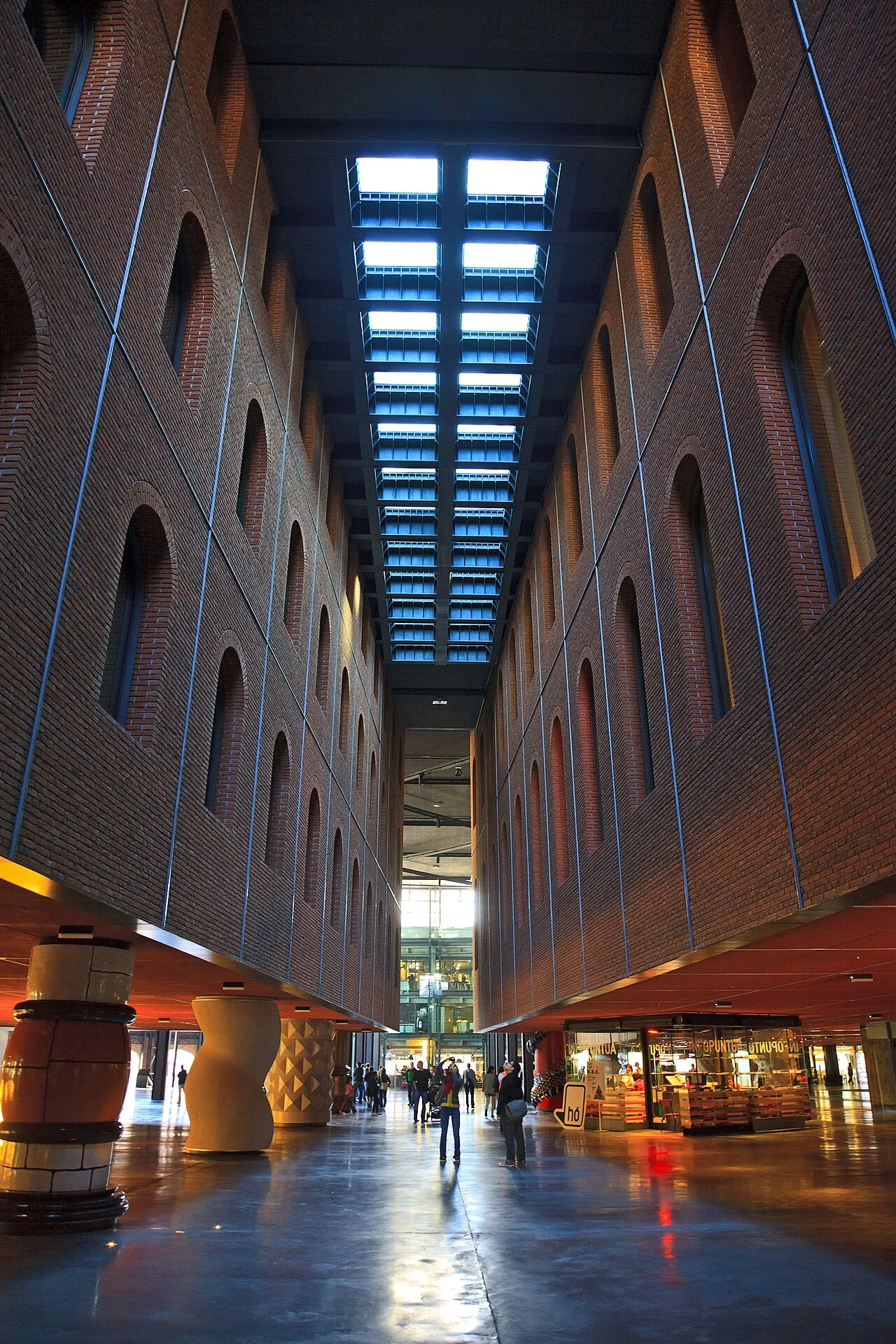
The municipal wine warehouse of 1909, hollowed out with only the shell kept. Starck put three buildings inside, suspended on forty-three columns, each designed by a different artist and not one repeated. Upstairs there is a swimming pool with a glass bottom. The ground floor is public and free.
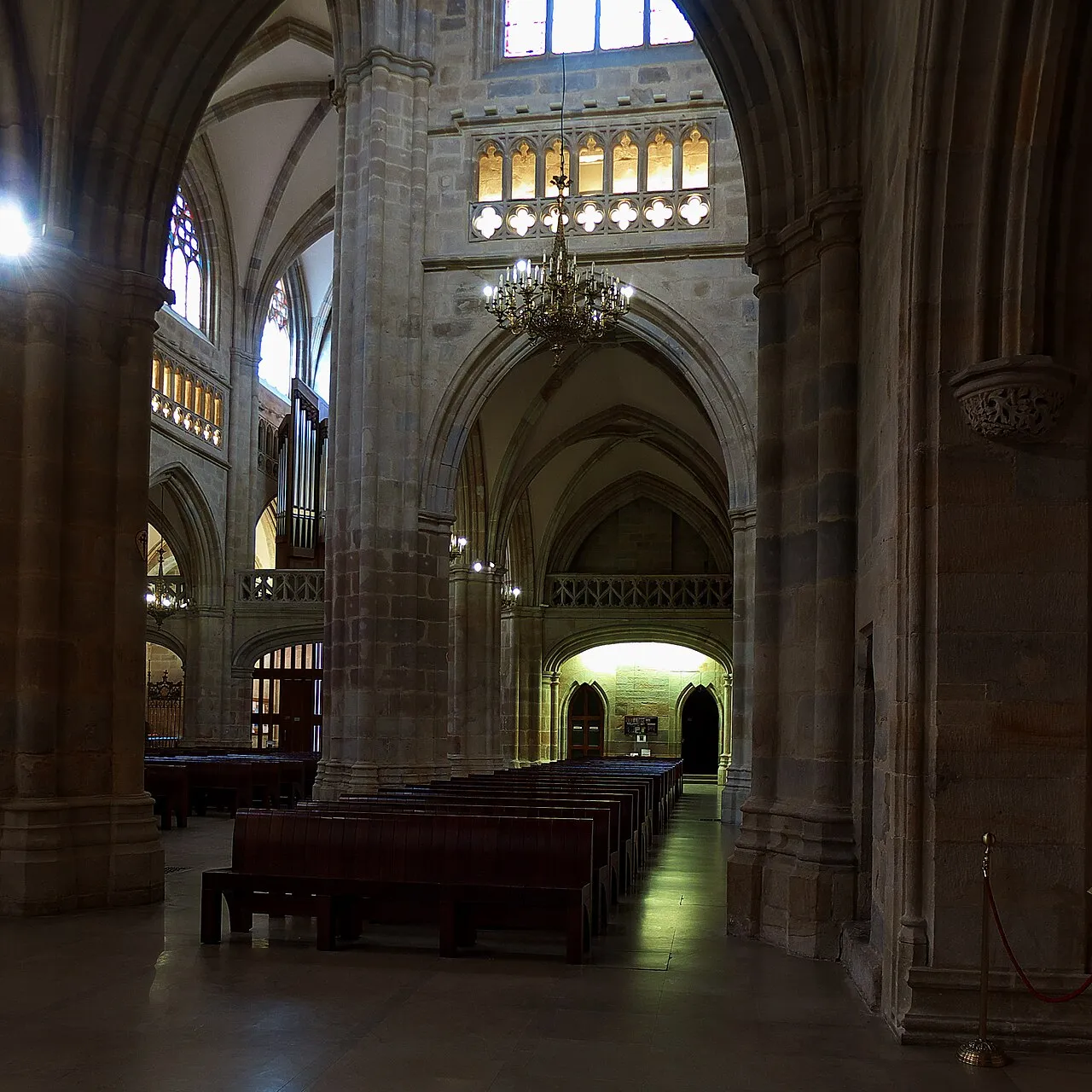
The oldest building standing in Bilbao, and for almost six hundred years it was not a cathedral but the parish church of merchants and sailors: it was not raised until 1949. The dedication comes from the Northern Way, which crosses the town. The best of it is the fifteenth-century Gothic cloister, hidden and silent, which hardly anybody visits.
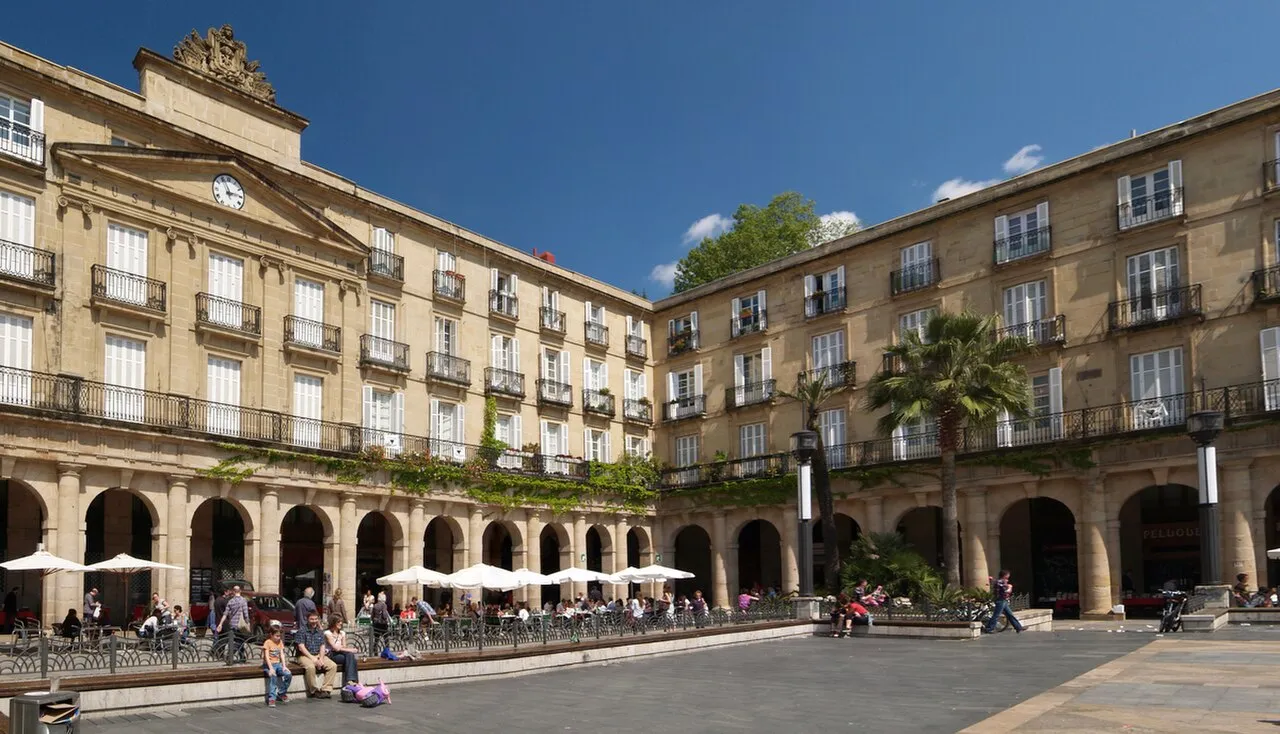
Sixty-four arcades closing a perfect quadrangle that only looks inwards. It was begun around 1821 and opened in 1851: thirty years of Carlist wars and lack of funds. On Sunday mornings, a market of stamps, coins and old books; the rest of the week, some of the best pintxos in town.
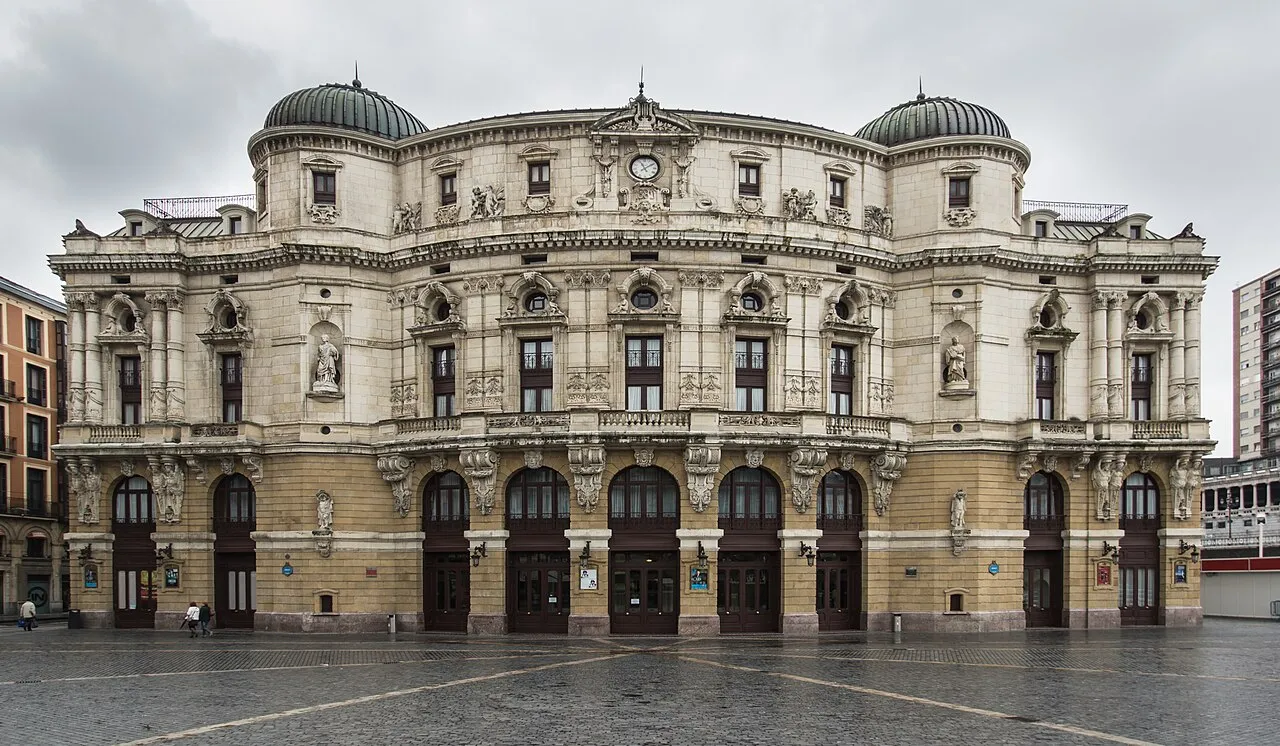
Neo-Baroque of 1890 with the Paris opera house as its declared model, signed by the same architect as the town hall. It burned inside in 1914 and was submerged in the floods of 1983. It carries the name of a Bilbao child prodigy who died at nineteen. You see it entire from the opposite bank.
White bridge, in Basque. Calatrava resolved it with the arch shifted to one side, so that the walkway crosses on a curve. The original floor was glass and it was slippery in the rain, so it had to be covered: the architect ended up taking the city to court. The best pedestrian view in Bilbao.
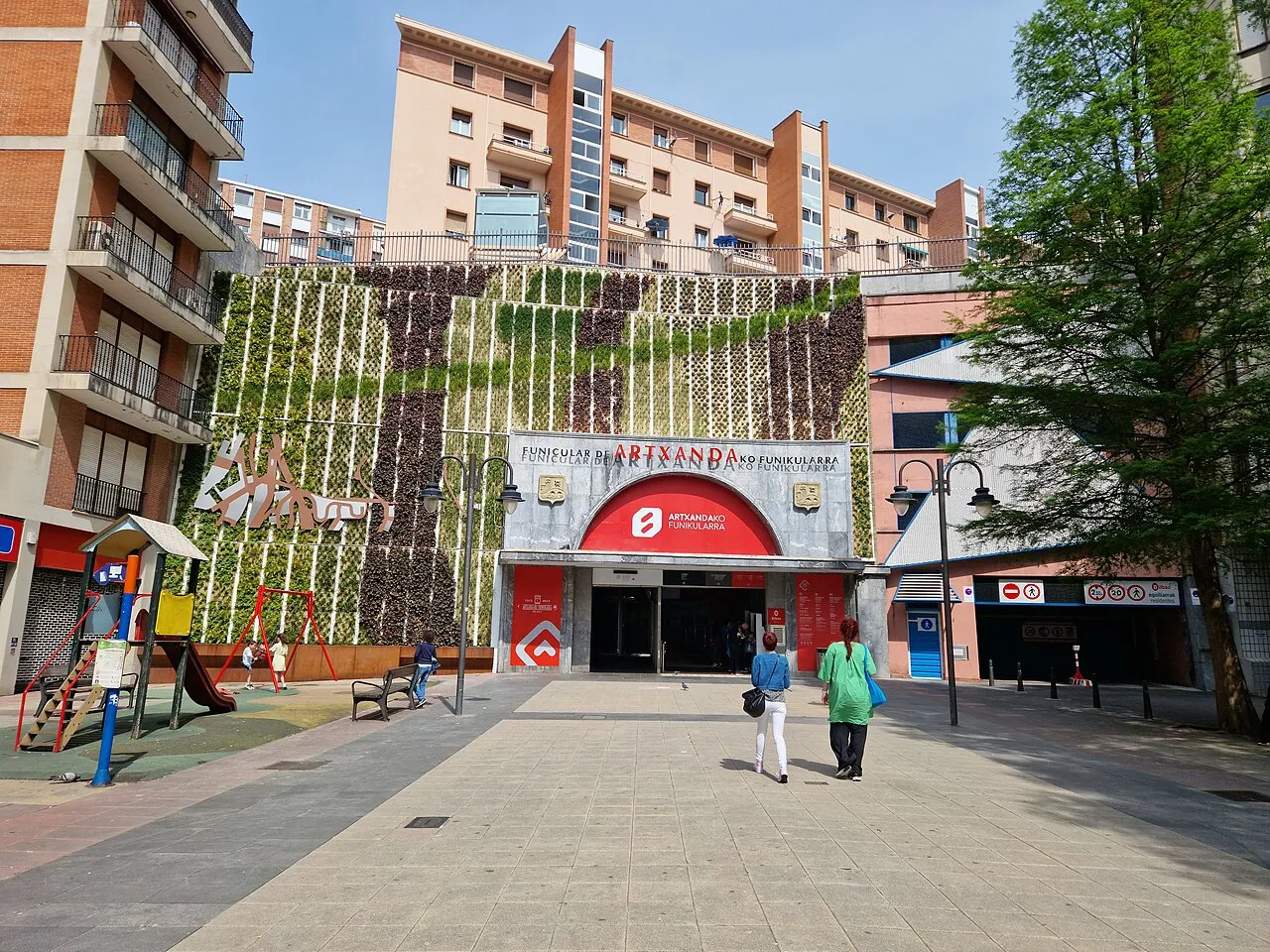
Running since 1915, it covers two hundred and twenty-six metres of height gain in a little over three minutes. It was closed in 1976 as unprofitable and was nearly lost, until pressure from residents brought it back. Today it is urban transport in its own right: the people of the hillside use it daily.
From here you understand why the people of Bilbao call their city «el bocho», the hole: it sits in the bottom of a valley closed in by hills, and it does not spread out, it curls up. For decades it was where courting couples took their Sunday photograph. It is open parkland, with eating houses: you can spend the afternoon.
The stretch of the ría where the iron ore came down on its way to England, and where the historic frontier between old Bilbao and industrial Bilbao begins and ends. When the industry left it was dead, and artists and galleries took it over. Today it is the heart of the arts district.
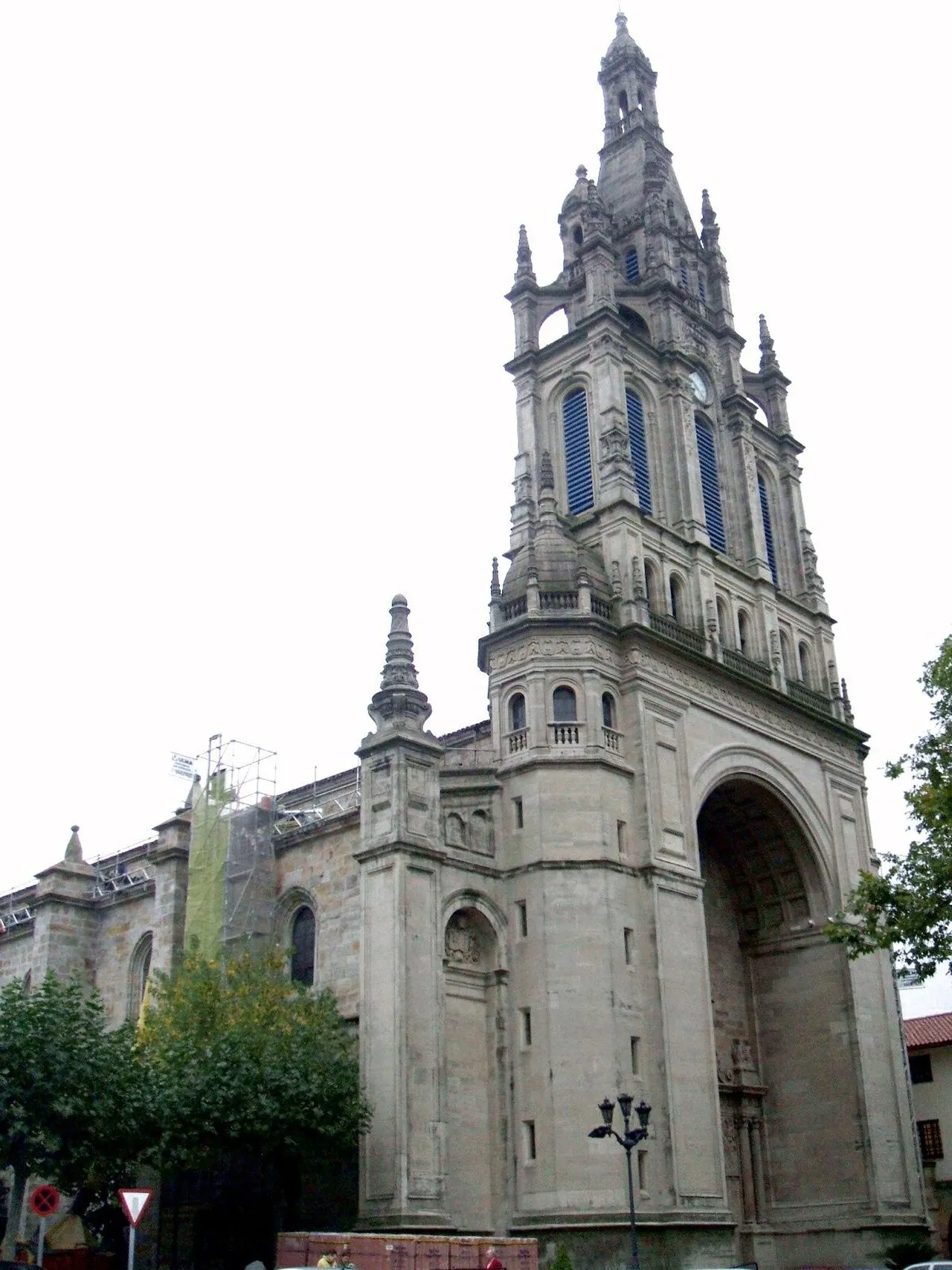
The house of the Amatxu, the little mother, as the people of Bilbao call their patron saint. A Gothic body raised between 1511 and 1621 and a neo-Gothic tower finished in 1928: four centuries between the base and the crown. You climb by the Calzadas de Mallona, more than three hundred steps, or by the public lift hardly anybody knows about.
Two days cover the essentials with room to spare: one for the ría, the Guggenheim, Abandoibarra and the Ensanche, and another for the Casco Viejo, Bilbao la Vieja and the climb up to Artxanda. With three days you also fit in the Fine Arts Museum at leisure and a trip out to Getxo or the Bizkaia transporter bridge.
Is it worth going into the Guggenheim or is seeing it from outside enough?
The exterior is free and spectacular, and so are the sculptures around it — Puppy, Maman, Buren's arch. Inside, what justifies the ticket are the large-format temporary exhibitions and the Richard Serra gallery, which is unrepeatable. It is worth looking at the programme first: the museum's own collection is modest and rotates.
Which is better, the Guggenheim or the Fine Arts Museum?
They are different things and ideally you do both. The Guggenheim is architecture and large-format contemporary art; the Fine Arts is a collection spanning eight centuries with El Greco, Goya and the finest Basque painting there is. If there is only time for one and painting is what interests you, the second — and it is cheaper too.
How do you get up to Artxanda?
On the funicular, which leaves the plaza del Funicular every few minutes and takes a little over three. It is ordinary urban transport, with a normal-price ticket and a reduction using the transport card. There is also a road and a bus, but the funicular is part of the experience.
Where do you eat the best pintxos in Bilbao?
In the Casco Viejo, with the Plaza Nueva and its arcades as the epicentre, and on calle Ledesma and around Diputación in the Ensanche. The system is to have one or two per bar and keep moving. In Bilbao many pintxos are ordered hot and from a menu, not just off the counter: it is worth asking what they make to order.
Does it rain as much as they say?
A fair amount: more than a hundred and fifty days of rainfall a year, spread across every season. It is not usually heavy rain but persistent, so it is better to bring a waterproof than an umbrella and to have indoor plans in reserve. The advantage is that the green of the hills around the city cannot be explained any other way.
Bilbao on the map
The 15 must-sees, point by point.
🎧 With Viavoy
Walk Bilbao and listen at your own pace
Download Viavoy and walk Bilbao offline, whenever you like.