Visiting Toledo Cathedral: the Transparente and the sacristy
A hole opened in a Gothic vault to catch the sun, a picture gallery hidden in the sacristy and a chapel where they pray in a rite older than the Roman one. What to look at and in what order.
Primate means that its archbishop heads the Spanish episcopate, and for centuries that office made whoever held it the second most powerful man in Castile after the king. That power is built in stone: five naves when three were the norm, eighty-eight columns, more than two and a half centuries of work, between 1226 and 1493, and an accumulation of art inside that will not fit into a single visit.
Go in mid-morning. That is when the sun comes through the skylight opened in the vault and lights the Transparente from within. At other hours the work is there, but it does not do what it was built to do.
The Transparente, a machine for light
What Narciso Tomé did in 1732.
You reach it by going round behind the Capilla Mayor, and the contrast is deliberate: you come from a Gothic nave in shadow and all at once an explosion of white marble, angels, clouds and gilded bronze appears. It is pure Baroque set into a fourteenth-century building, and at the time it was not a peaceful decision.
The stroke of genius is not in the sculpture but in what Tomé did with the building. He opened an oculus in the Gothic vault above it and oriented the whole ensemble towards that entry of light, so that at certain hours a beam of sun crosses the darkness and makes the marble appear to light up from inside.
It is not a sculpture with good lighting: it is an optical machine that uses the sun as a building material. When it works, the effect is still disconcerting almost three centuries later, and it explains why the ensemble has a name of its own.
As you look up, notice how the crowning of the skylight is treated as part of the work, with figures peering out between the Gothic ribs. Tomé did not hide the assault on the old building: he turned it into the argument.
Begun in 1226 over the main mosque, finished in 1493, with five naves and eighty-eight columns. Entry is around 12 € and includes a recorded commentary; the climb up the tower is separate and runs in timed slots. Restricted opening on Sundays because of services.
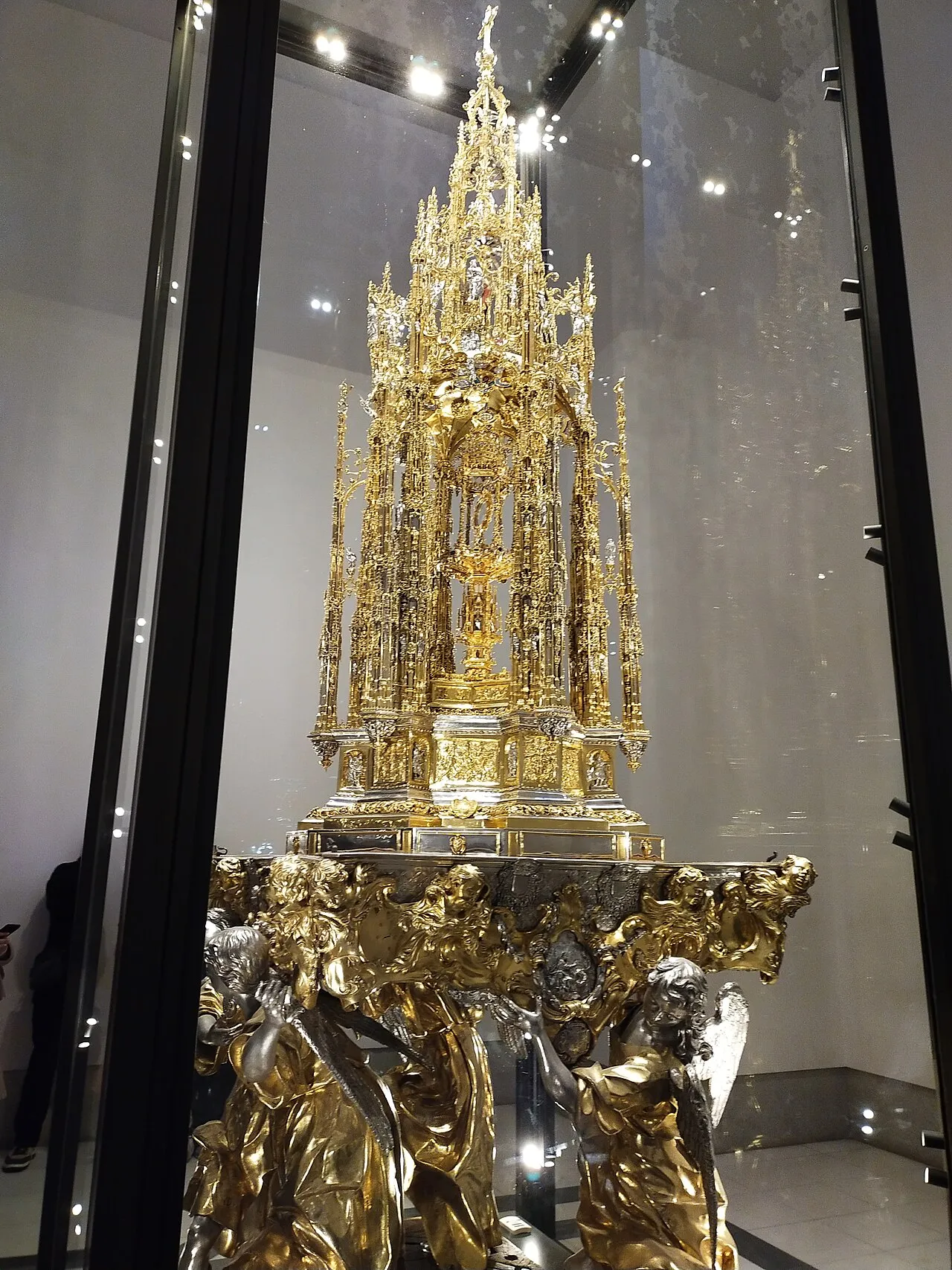
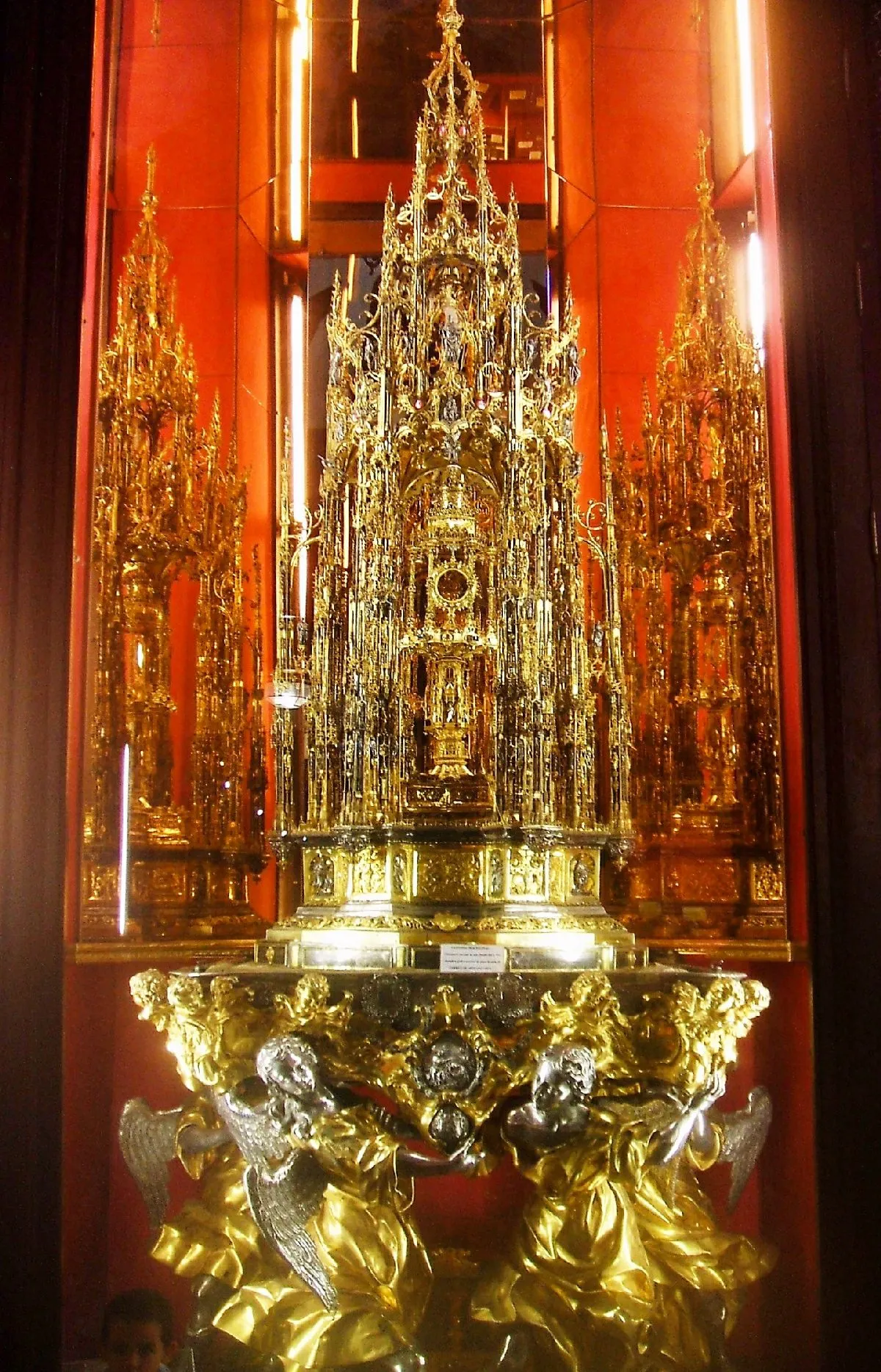
A processional monstrance of silver and gold, more than three metres tall and two hundred kilos, worked by Enrique de Arfe in the sixteenth century from thousands of assembled pieces. It goes out into the street in the Corpus Christi procession, which in Toledo is the great feast and fills the whole city.
Many people go into the cathedral thinking about architecture and come out talking about painting, and the reason is the sacristy. There hangs El Greco's “The Disrobing of Christ”, painted around 1579 for that very space and one of his major works, in which Christ appears in an intense red surrounded by a compressed crowd.
Around it are more than a dozen of his works, including a complete apostolado, a series of Christ and the apostles, and pieces by Goya, Van Dyck, Raphael, Titian, Caravaggio and Bellini. It is one of the best painting collections you can see in Spain outside a museum, and it is in a room you simply pass through.
The ceiling was frescoed by Luca Giordano at the end of the seventeenth century, and it is worth looking up before you concentrate on the paintings. The whole room is conceived as a space for display, not as a sacristy storeroom.
The choir, in the middle of the nave, is the other place to stop. The lower stalls were carved by Rodrigo Alemán at the end of the fifteenth century, each panel telling one episode of the conquest of Granada, practically live, commissioned by Cardinal Mendoza, who was there.
The chapel almost nobody visits
In a corner, under a dome of its own, is the Mozarabic Chapel, and it is probably the most singular thing in the whole building. The Hispano-Mozarabic rite is celebrated there daily, the liturgy used on the peninsula before the Roman rite was imposed in the eleventh century.
The Christians of Toledo preserved it through the centuries of Muslim rule, and when the city passed into Castilian hands it was reduced to a few parishes. At the beginning of the sixteenth century Cardinal Cisneros rescued it from disappearance by founding this chapel and having its liturgical books printed.
In other words: here people still pray in a form more than fifteen hundred years old that is not practised regularly anywhere else in the world. Access is restricted to service times, which is why most visitors never even find out it exists.
Allow a long hour and a half for the whole complex, two if you linger in the sacristy. And if there is time, the climb up the tower is separate, in timed slots, and gives the view of the old town from the only genuinely high point in the centre.
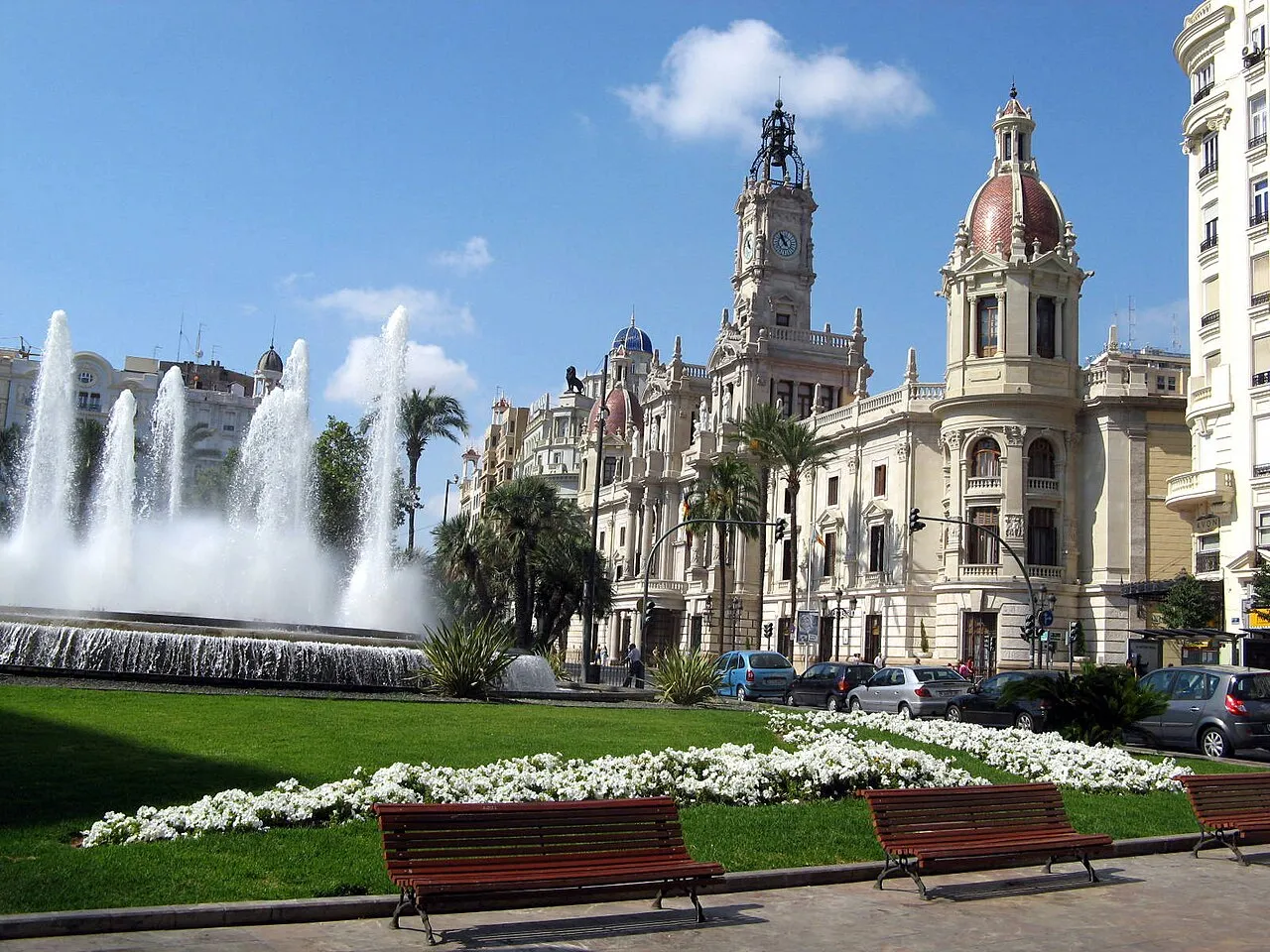
The only square from which you see the main façade whole, because the old town gives no perspective at any other point. At dusk, with the low light setting the stone alight and no groups in the way, it is the best moment of the day to look at it.
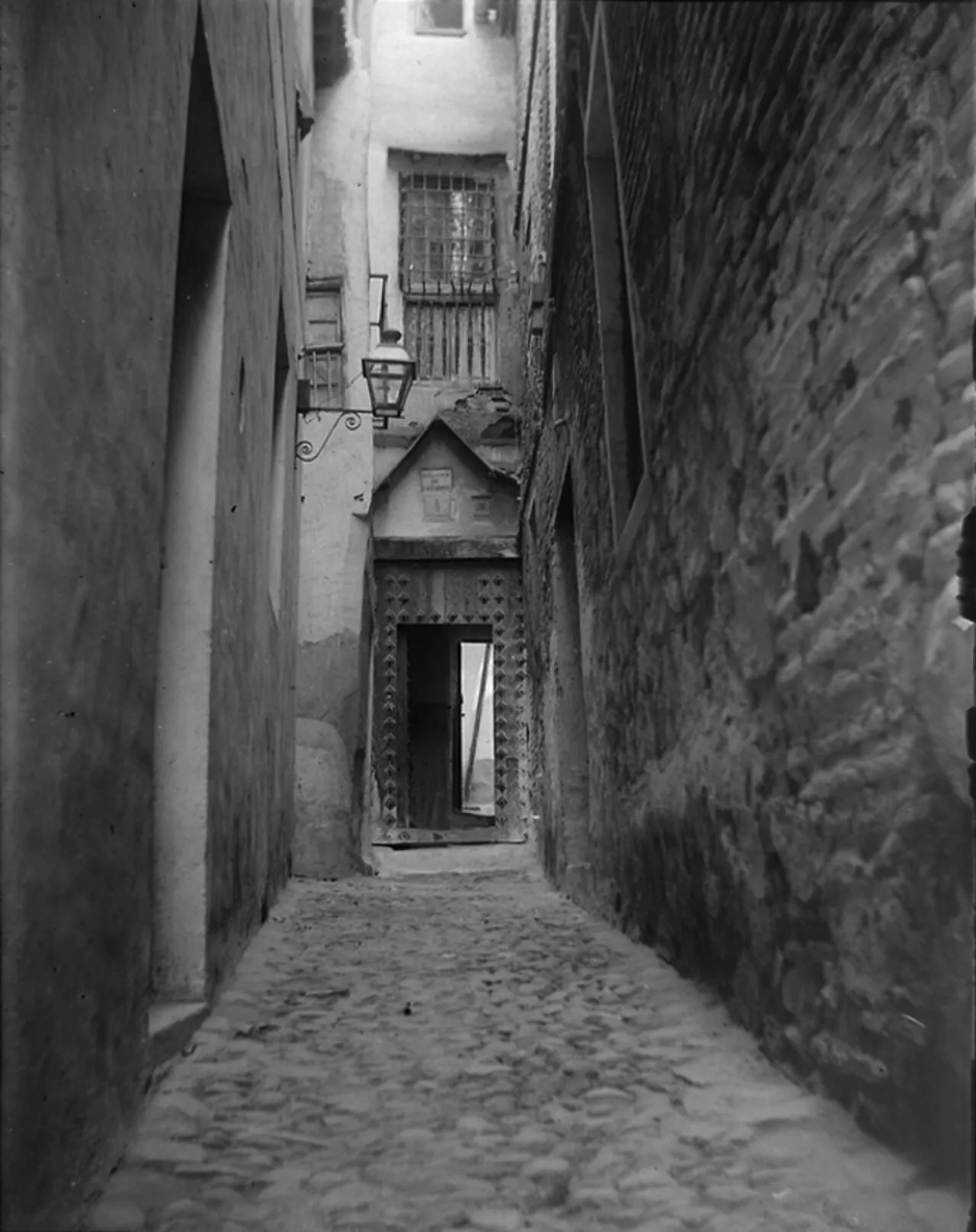
What was la Alcaná, the market of the Jewish merchants that surrounded the church. Alleys narrow by design, to give continuous shade and force face-to-face dealing. It is here that Cervantes places the discovery of the manuscript of Don Quixote.
A Baroque ensemble of marble, bronze and sculpture that Narciso Tomé finished in 1732 behind the Capilla Mayor. Its singularity is that Tomé opened a skylight in the fourteenth-century Gothic vault above it and oriented the whole ensemble towards it, so that at certain hours a beam of sun lights it from within.
What time is it best seen?
Mid-morning, which is when the sun comes through the skylight. The effect lasts a while and is the whole reason for the work's fame: at other hours you see an impressive sculptural ensemble, but without the light it was designed for. It is worth planning the visit around that detail.
How much does it cost and how long does it take?
Entry is around 12 € and includes a recorded commentary; the climb up the tower is paid for separately and runs in timed slots. A long hour and a half lets you see the whole thing calmly, and two hours lets you give real time to the sacristy, which is where the painting is.
What is in the sacristy?
A picture gallery. El Greco's “The Disrobing of Christ” hangs there, painted around 1579 for that very space, next to more than a dozen of his works and pieces by Goya, Van Dyck, Raphael, Titian, Caravaggio and Bellini. The ceiling was frescoed by Luca Giordano. It is one of the best collections you can see in Spain outside a museum.
What is the Mozarabic Chapel?
The chapel where the Hispano-Mozarabic rite is celebrated daily, the liturgy used on the peninsula before the Roman rite was imposed in the eleventh century. The Christians of Toledo preserved it under Muslim rule and Cardinal Cisneros rescued it by founding this chapel in 1502. Access is tied to service times.
Can you visit on Sundays?
Yes, but with restricted opening because of the liturgical celebrations, usually opening only in the afternoon. If your trip falls on a Sunday it is worth checking the times on the official website before organising the day, because the available slot may not coincide with the good hour for seeing the Transparente.
Practical information
WhereCalle Cardenal Cisneros, 1, in the middle of the old town.
TicketsAround 12 €, with a recorded commentary included. The tower is separate and runs in timed slots.
DurationA long hour and a half; two hours if you linger in the sacristy.
Key timingMid-morning for the Transparente. On Sundays, restricted opening because of services.
Don't missThe sacristy, the choir stalls and the Mozarabic Chapel.
OutsideThe main façade can only be seen whole from the plaza del Ayuntamiento.
On the map
🎧 With Viavoy
Walk Toledo and listen at your own pace
Download Viavoy and walk Toledo offline, whenever you like.