El Greco in Toledo: where to see his work, in order
He came to Spain hoping to paint for Philip II, failed, and stayed here for forty years. A route through the five places where his paintings hang, including the ones that never left their wall.
Doménikos Theotokópoulos was born in Crete, trained in Venice under Titian and worked in Rome, and reached Spain in 1577 with one specific aim: to paint for Philip II at El Escorial. The king did not like his work and left him out. That closed door turned out to be his luck: he found clients in the cathedral chapter and among the nobility of Toledo, settled here and did not leave again for almost forty years.
Several of his works are still exactly where they were hung: painted for that wall, that chapel and that light. It is a rare privilege, because almost all the painting of the period ended up taken down and carried off to museums.
The painting that never moved
Santo Tomé, 1586.
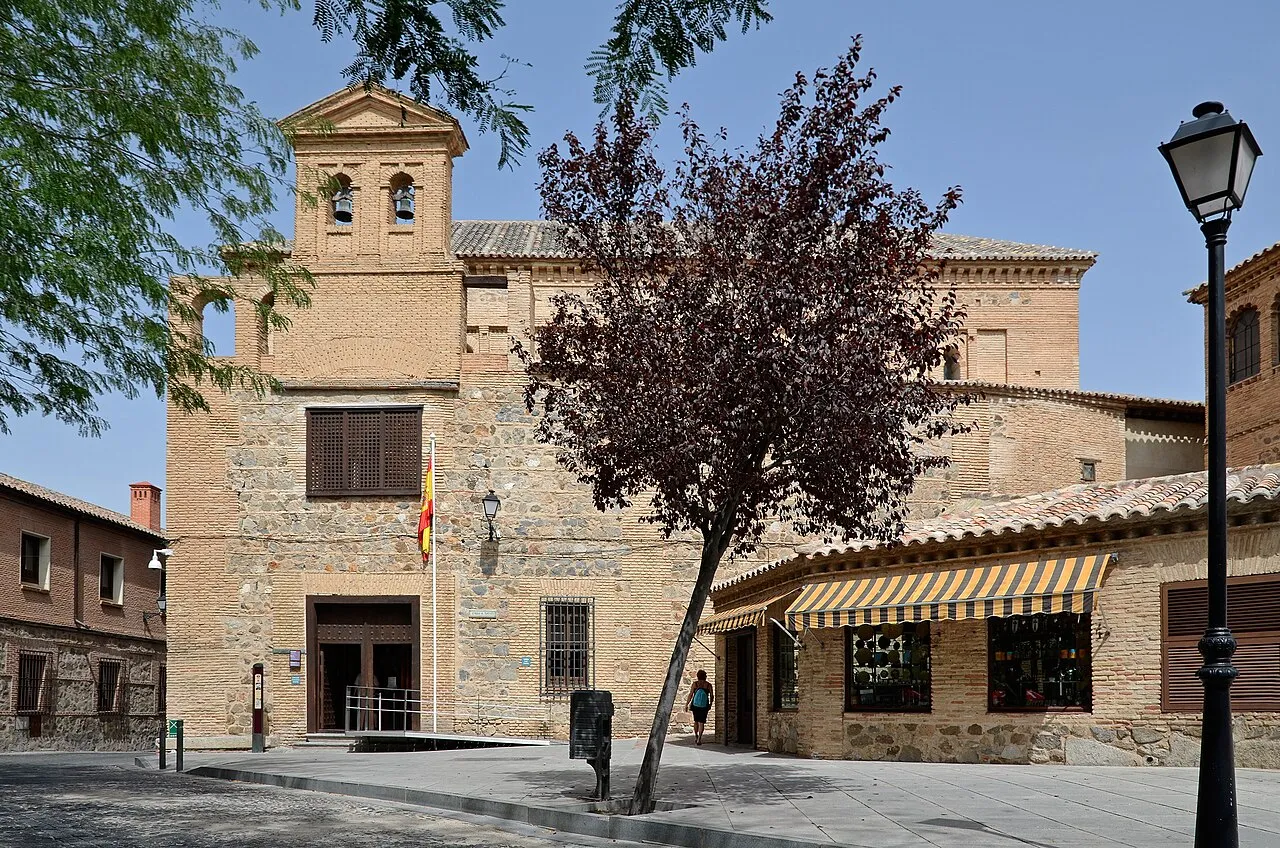
“The Burial of the Count of Orgaz” was commissioned in 1586 for the parish church of Santo Tomé and it is still there, in the same chapel and on the same wall. Seeing it in its original position changes the work: the light it receives is the light the painter calculated, and the height you look at it from is the one he foresaw.
The composition is utterly clear: below, the earthly world, with the nobles of Toledo burying a man among suits of armour and white ruffs, and above, heaven opening in a storm of clouds and souls. The break between the two zones is not only thematic, it is technical.
In the lower half the drawing is firm, the volumes emphatic and the faces are recognisable portraits of specific Toledans of the period. In the upper half the forms stretch, blur and the matter turns almost vaporous. El Greco painted two different pictures on a single canvas so that the leap would show.
Look for him among the row of gentlemen: he painted himself looking outwards, at whoever is watching, and he is the only one in the whole group who breaks the scene. The commission, incidentally, ended in a lawsuit over the valuation, something fairly frequent in his career.
Limited capacity and separate access to the chapel, with entry around 4 €. In high season you queue and end up seeing the painting in a hurry: go first thing or last thing. The fourteenth-century Mudéjar tower is worth looking at from the little square before you go in.
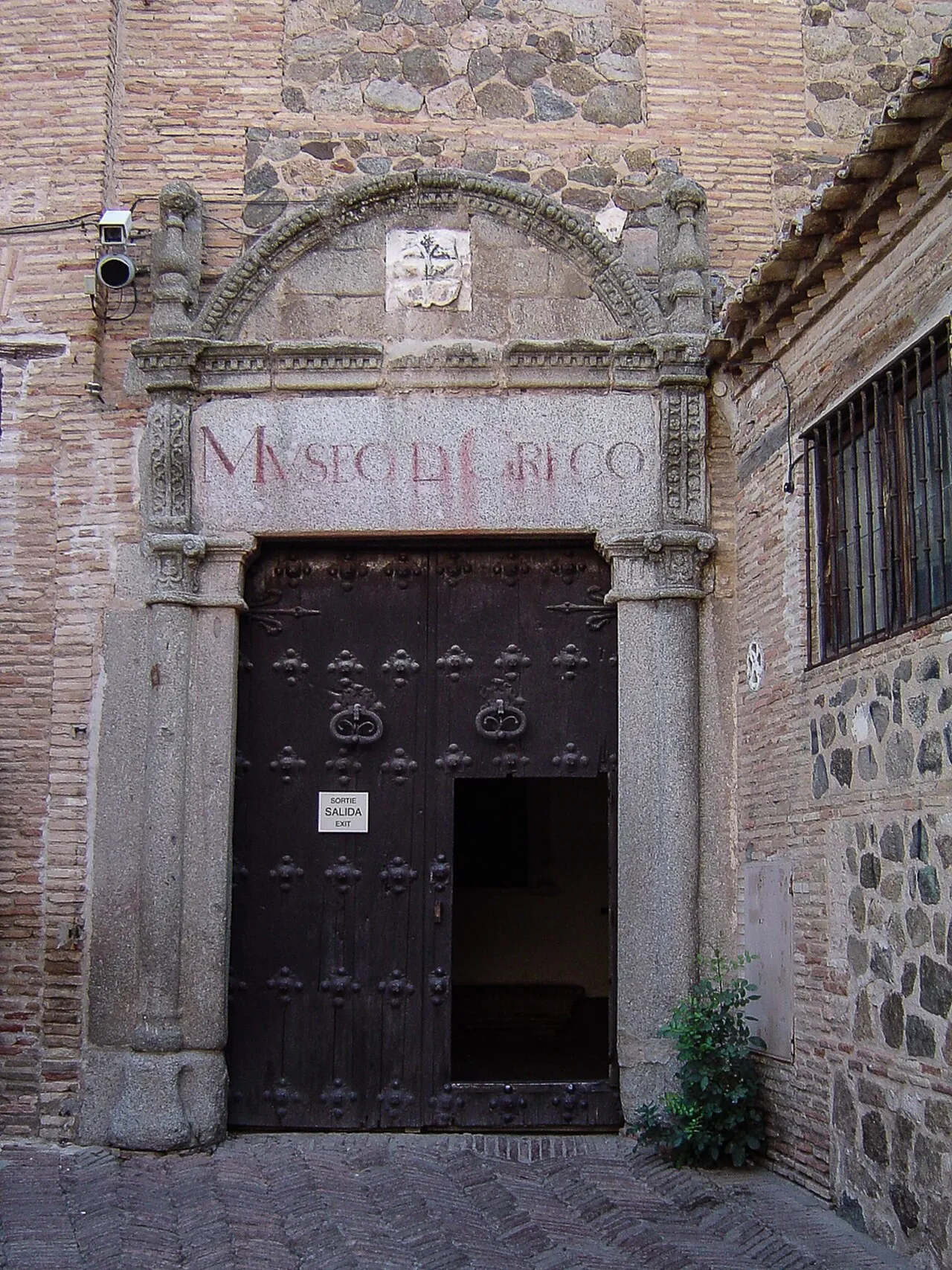
It is not the house where he lived: it is a recreation put together in the early twentieth century by a collector marquess on a plot near the one the painter occupied. Even so, it reconstructs a Toledan interior of the period with rigour and holds work of his, including a complete apostolado, a series of Christ and the apostles.
The other place where a work of his is still in its original position is the cathedral sacristy, and there hangs “The Disrobing of Christ”, painted around 1579 for that very space. It is one of his major works: Christ in an intense red, compressed by a crowd that presses right up to the edge of the canvas.
That commission also ended in conflict. The chapter objected that there were figures placed above the head of Christ and that the three Marys appeared, which it considered contrary to the Gospel account, and there was disagreement over the price. The painter did not give way on the essentials.
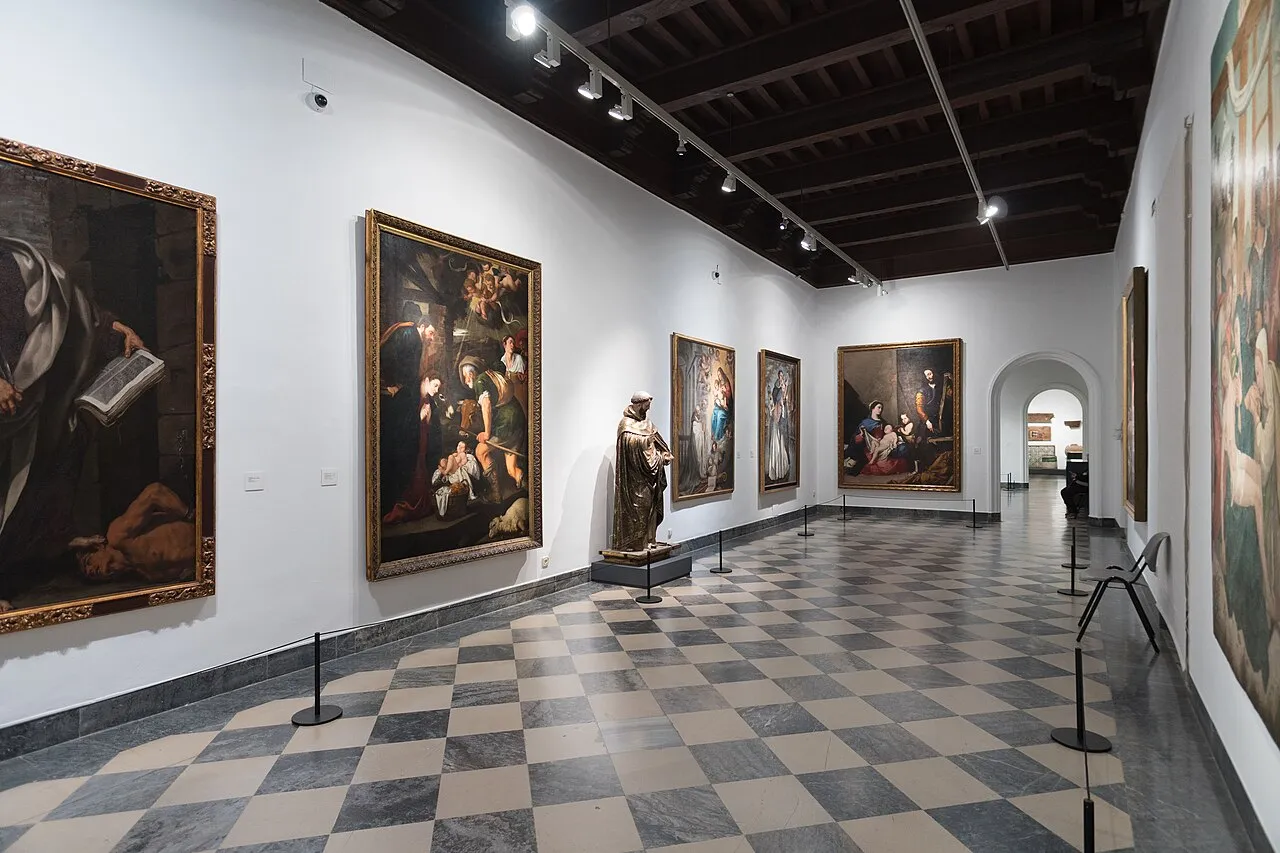
Around it hang more than a dozen of his works, including an apostolado, and pieces by Goya, Van Dyck, Raphael, Titian and Caravaggio, with a ceiling frescoed by Luca Giordano. It is the best painting room in the city and it sits in a space you simply pass through.
That detail of the lawsuits appears again and again in his Toledan biography, and it is revealing: El Greco charged high prices, argued over valuations and took his clients to court. He was not a submissive painter, and that partly explains why Philip II did not want to work with him.
The rest of the route
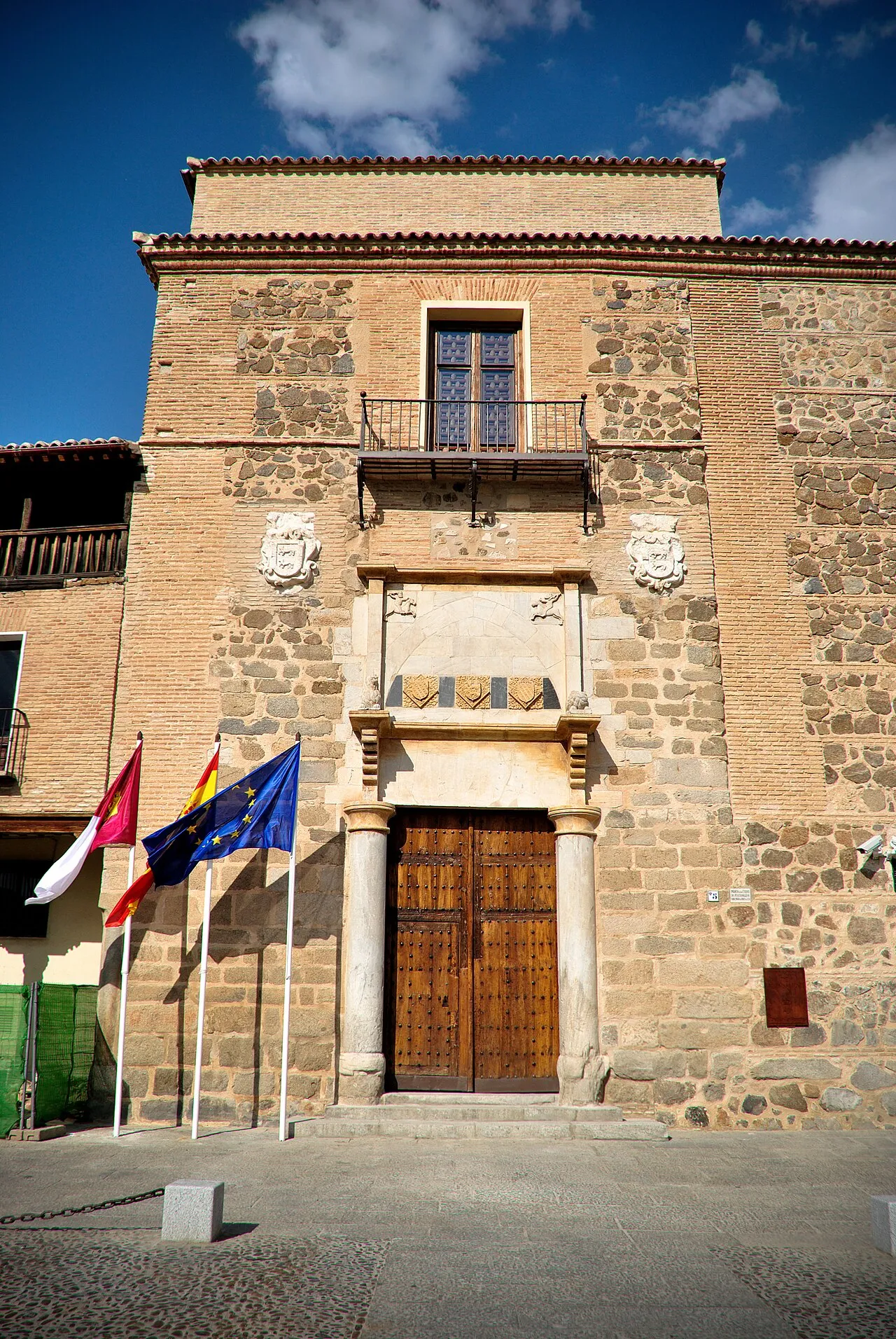
The Museo de Santa Cruz, next to Zocodover, brings together several works from different periods, including an “Assumption of the Virgin” from his last years. Seeing them together lets you follow how his style gradually stretched and dematerialised over time until it reached those impossible figures of the end.
Near Santo Tomé is the Casa-Museo, which is worth visiting knowing what it is: not the painter's home but a recreation from the early twentieth century, put together by the Marquess of Vega-Inclán on a plot next to the one he occupied. It reconstructs a Toledan interior of the period with rigour and holds work of his.
Outside the old town, the Hospital de Tavera keeps some of his last pieces and is far less visited, and the Museo del Prado has the bulk of his production. “View of Toledo”, probably the most famous image of this city, is kept in New York.
The full circuit inside the old town — Santo Tomé, Casa-Museo, cathedral and Santa Cruz — takes half a day. If the interest is the painter and not the city, that is the order that makes sense, because it goes from what never moved to what was gathered together afterwards.
Several works from different periods in Cardinal Mendoza's former orphans' hospital. It is the most complete museum in Toledo and one of the least visited: besides the El Grecos there are Flemish tapestries, Roman and Visigothic archaeology and Talavera ceramics.
In the sacristy hangs “The Disrobing of Christ”, painted around 1579 for that very space, surrounded by more than a dozen of his works and by an apostolado. It is the most important painting room in the city, and many people go in thinking about architecture and come out talking about paintings.
The little square from which you reach the painting, with the fifteenth-century palace where the empress Isabella of Portugal, wife of Charles V, died. It is one of the quietest corners of the old town and a good place to wait your turn to go in.
He came to Spain in 1577 hoping to paint for Philip II at El Escorial, but the king did not like his work and left him out of the project. He then found clients in the cathedral chapter and among the Toledan nobility, who did value his painting, and settled here until his death, almost forty years later.
Where is “The Burial of the Count of Orgaz”?
In the church of Santo Tomé, in the Jewish Quarter, and it has never left: it was painted in 1586 for that chapel, that wall and that light. You go in through a separate entrance with limited capacity, so in high season it is worth going first thing or last thing so you can stand in front of the painting without rushing.
How many of his works are there in Toledo?
Spread between the church of Santo Tomé, the cathedral sacristy, the Museo de Santa Cruz, the Casa-Museo del Greco and the Hospital de Tavera, there are several dozen, including two apostolados. It is the largest concentration of his work in its original or nearby setting, although the bulk of his production is in the Museo del Prado.
Is the Casa-Museo del Greco really his house?
No. It is a recreation put together in the early twentieth century by the Marquess of Vega-Inclán on a plot next to the one the painter occupied, and the attribution as his home does not stand up documentally. That said, it reconstructs a Toledan interior of the period with rigour and holds authentic work, including a complete apostolado.
Why are his figures so elongated?
It is a trait that becomes more pronounced over the years and has been much debated, from theories about his eyesight to stylistic explanations. The most accepted reading is that it was deliberate: it comes from the Italian Mannerism he encountered in Rome and from the Byzantine icon tradition of his Cretan training, and he used it to separate the heavenly from the earthly.
Is the Hospital de Tavera worth it?
If the interest is the painter, yes. It is outside the walls, ten minutes on foot from the Puerta de Bisagra, keeps late work of his and receives far fewer visits than the sites in the old town. Besides, the building itself, with its double Renaissance courtyard, is one of the best in Toledo and almost nobody sees it.
Practical information
WhereSanto Tomé, the Casa-Museo, the cathedral and the Museo de Santa Cruz, all inside the old town.
DurationHalf a day for the full circuit.
The orderSanto Tomé first, the cathedral after, Santa Cruz at the end or on arrival.
TicketsEach site is paid for separately; there is no combined pass just for El Greco.
TipSanto Tomé first or last thing: capacity is limited and in high season you see it in a hurry.
Outside the old townThe Hospital de Tavera keeps late work and is far less visited.
On the map
🎧 With Viavoy
Walk Toledo and listen at your own pace
Download Viavoy and walk Toledo offline, whenever you like.