Visiting the Mezquita-Catedral of Córdoba: tickets, timings and what to look at
What to see · Córdoba

Visiting the Mezquita-Catedral of Córdoba: tickets, timings and what to look at

How to get in free, what time to go, what to look for among eight hundred columns and why there is a Renaissance cathedral planted in the middle.

10 min read · Updated for 2026
🎧 On the walk The Mezquita-Catedral and the Roman Bridge

It is one of the most singular buildings in the world and also one of the most misunderstood: plenty of people walk out of it without having seen the mihrab, without having understood why the arches are the way they are and without knowing that there is a slot in which you get in free. This guide is about that. Which ticket to buy, what time to go, what specifically to look at and how to read the superimposition of mosque and cathedral that puzzles so many people.

There is free access first thing in the morning, Monday to Saturday, for individual visitors. It is limited and it does not cover every area, but it is real.

Tickets, timings and the free slot

General entry is around 13 € and you buy it online or at the ticket office, in the Patio de los Naranjos. Going up the bell tower is paid for separately, it works in time slots with very limited capacity and it is worth booking at the same time as the main ticket, because it sells out.

The free slot exists and is little known: first thing in the morning, Monday to Saturday, individual visitors are let in at no cost for a limited stretch of time. It does not include the recorded commentary or every area and there is usually a queue before opening, but for anyone travelling on a tight budget it is a real option.

The Patio de los Naranjos, the old ablutions courtyard, is always freely open. It keeps the grid of orange trees with the irrigation channels at ground level and the bell tower raised over the minaret. It deserves a stop even if you do not go in.

1Mosque-Cathedral

Mosque-Cathedral

📍 Calle Cardenal Herrero, 1

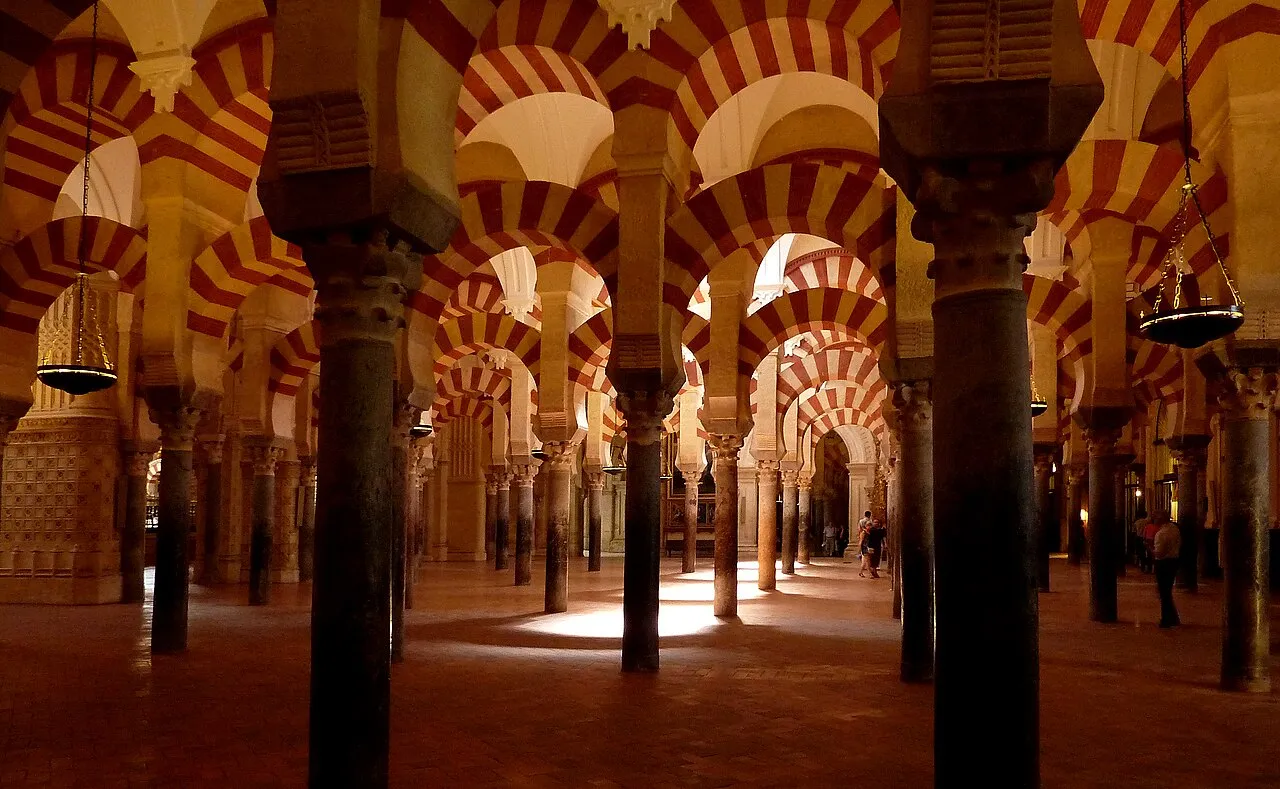
Eight hundred columns of marble and jasper, arches of red and white voussoirs repeating with no vanishing point, the most refined mihrab in western Islam and a Renaissance cathedral built in the middle of it in 1523. Four successive enlargements between the eighth and tenth centuries, all of them repeating the same system, which is what makes the forest seem infinite.

2The Roman Bridge

The Roman Bridge

📍 Two minutes from the exit

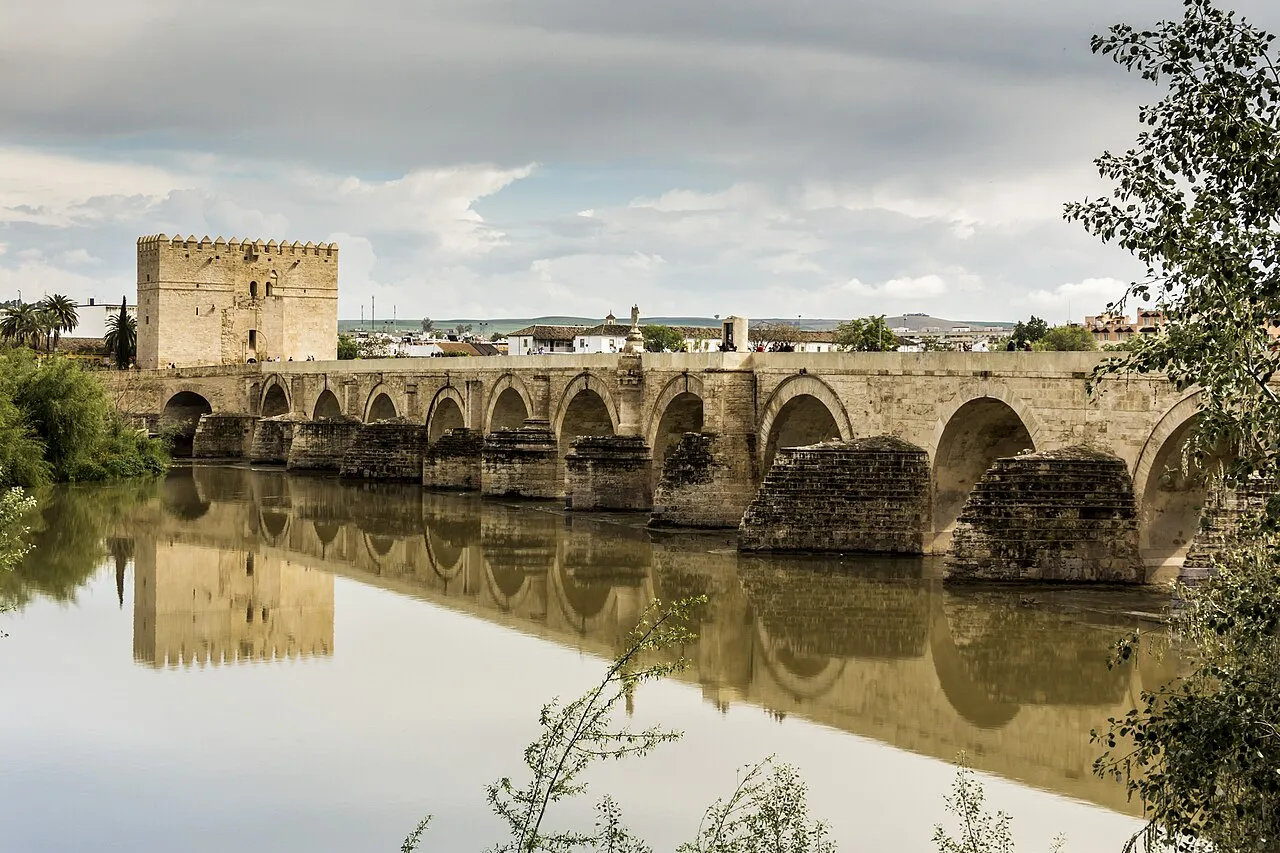
The obligatory complement: cross it end to end and turn round from the far bank, with the Mezquita behind. Sixteen arches on the line of the Via Augusta, with the Arab mills in the river and the Albolafia waterwheel, which appears on the city's coat of arms. At sunset it is the best picture of Córdoba.

3Alcázar of the Christian Monarchs

Alcázar of the Christian Monarchs

📍 Five minutes away

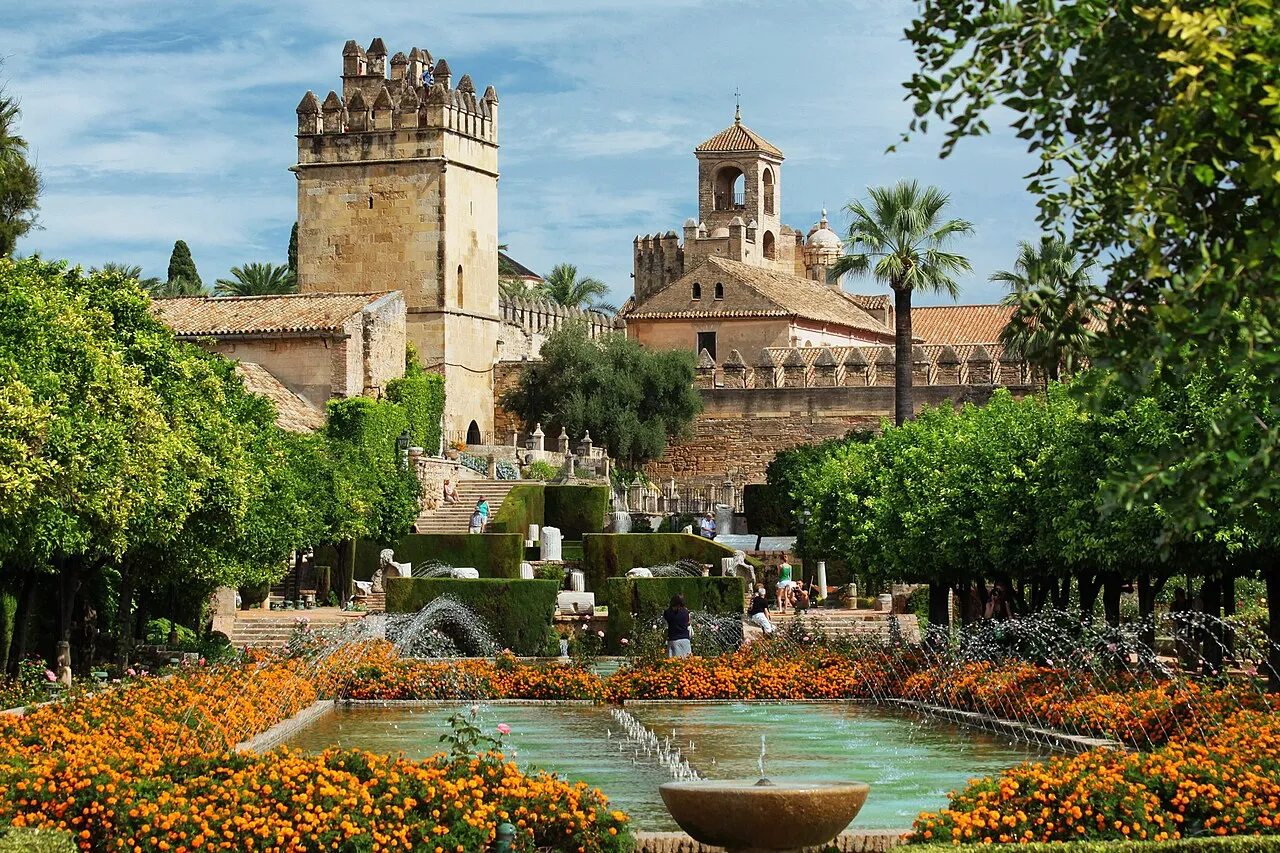
The natural continuation of the visit: headquarters of the Catholic Monarchs during the war of Granada, seat of the Inquisition for three centuries and a prison until 1931. Its gardens on three terraces, with ponds and fountains dropping towards the river, take up more room than the building and are the best part.

🎧 With Viavoy

Explore Córdoba at your own pace

Download the app and discover Córdoba offline, whenever you like. Take the walking tour The Mezquita-Catedral and the Roman Bridge with a local guide in your ear.

Find out more about Viavoy →

What to look at, in order

Four specific things and let the rest come on its own.

The arches. They come first and they matter most: two superimposed levels, a horseshoe arch below and a round arch above, with alternating voussoirs of pale stone and red brick. They were invented to solve a practical problem — the columns reused from Roman and Visigothic buildings were too short — and they ended up producing the most recognisable visual effect in western Islamic architecture.

The mihrab of Al-Hakam II, from the tenth century, in the southern part. It is a small octagonal chamber roofed by a scallop-shell dome carved from a single block of marble, with the doorway faced in glass and gold mosaics made by craftsmen sent by the emperor of Byzantium at the caliph's request. It is the most refined piece in the building.

The domes of the maqsura, in front of the mihrab: ribs that cross without passing through the centre, forming stars. It is a structural solution of remarkable daring for the tenth century and it anticipates later Gothic developments by several centuries.

And the cathedral crossing. Built from 1523 on, with a late Gothic nave, Renaissance vaults and Baroque choir stalls by Pedro Duque Cornejo that are a masterpiece in themselves. Whatever you make of it, do not brush it aside: it is architecture of the first rank in the worst possible place, and that contradiction is the whole building.

4Calahorra Tower

Calahorra Tower

📍 At the far end of the Roman Bridge

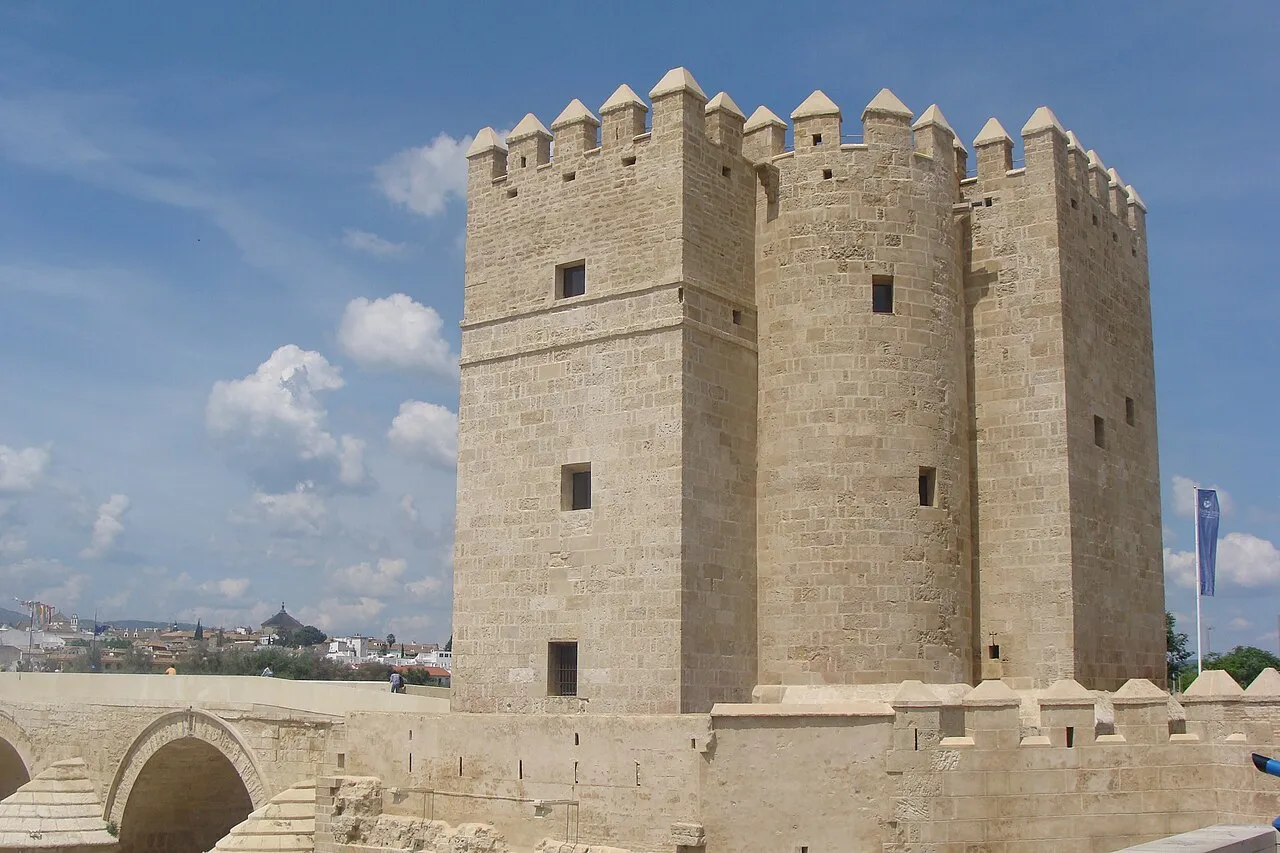
Its museum keeps a detailed model of the Mezquita before the cathedral was built, which is the best way to understand what the original building was like. There are also models of the Alhambra and the Giralda, and an account of the Córdoba of the three cultures in the tenth century.

5Synagogue of Córdoba

Synagogue of Córdoba

📍 Calle Judíos, 20

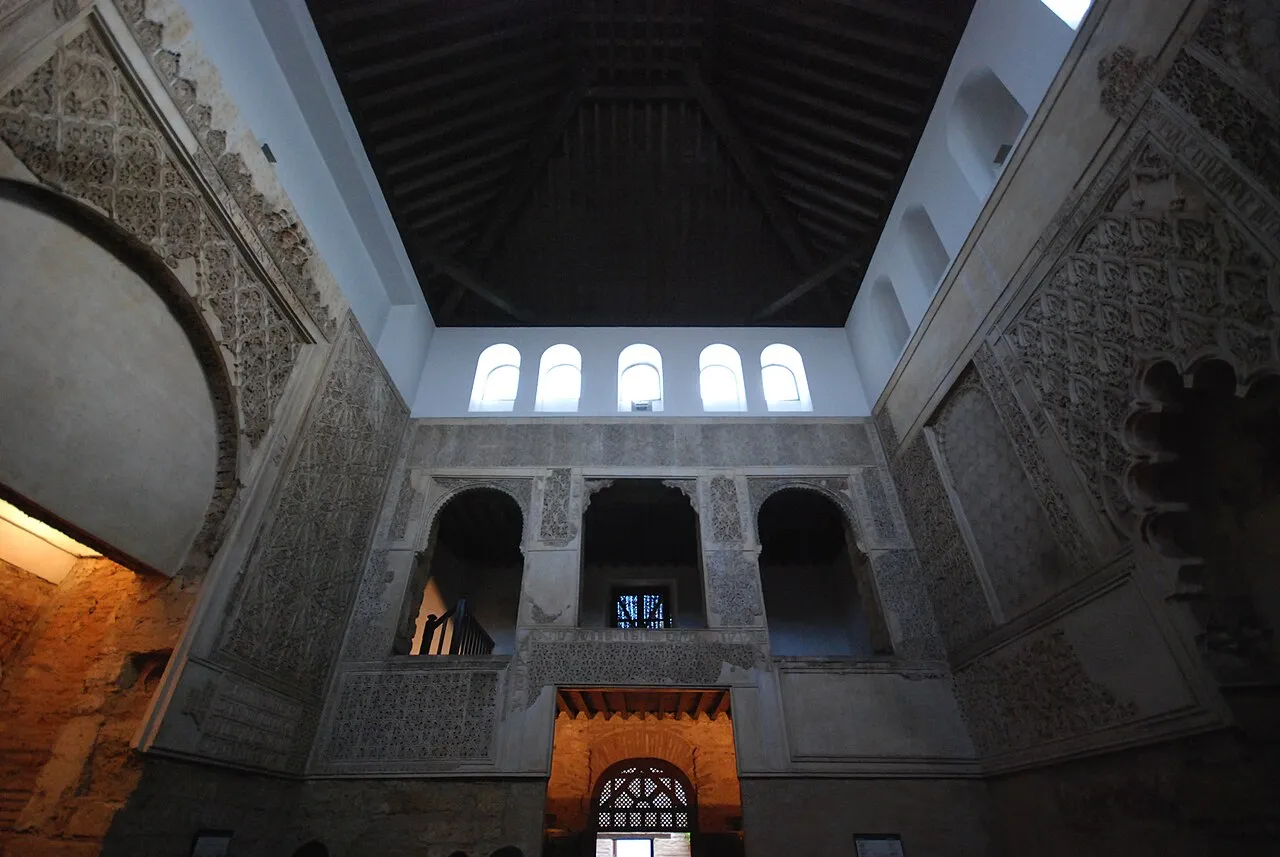
Five minutes away, in the Jewish Quarter: one of the three medieval synagogues left in Spain and the only one in Andalusia, from 1315, with Mudéjar plasterwork and verses from the Psalms in Hebrew among the interlace. A token entrance fee, free for EU citizens, and a fifteen-minute visit.

6Almodóvar Gate

Almodóvar Gate

📍 West entrance to the Jewish Quarter

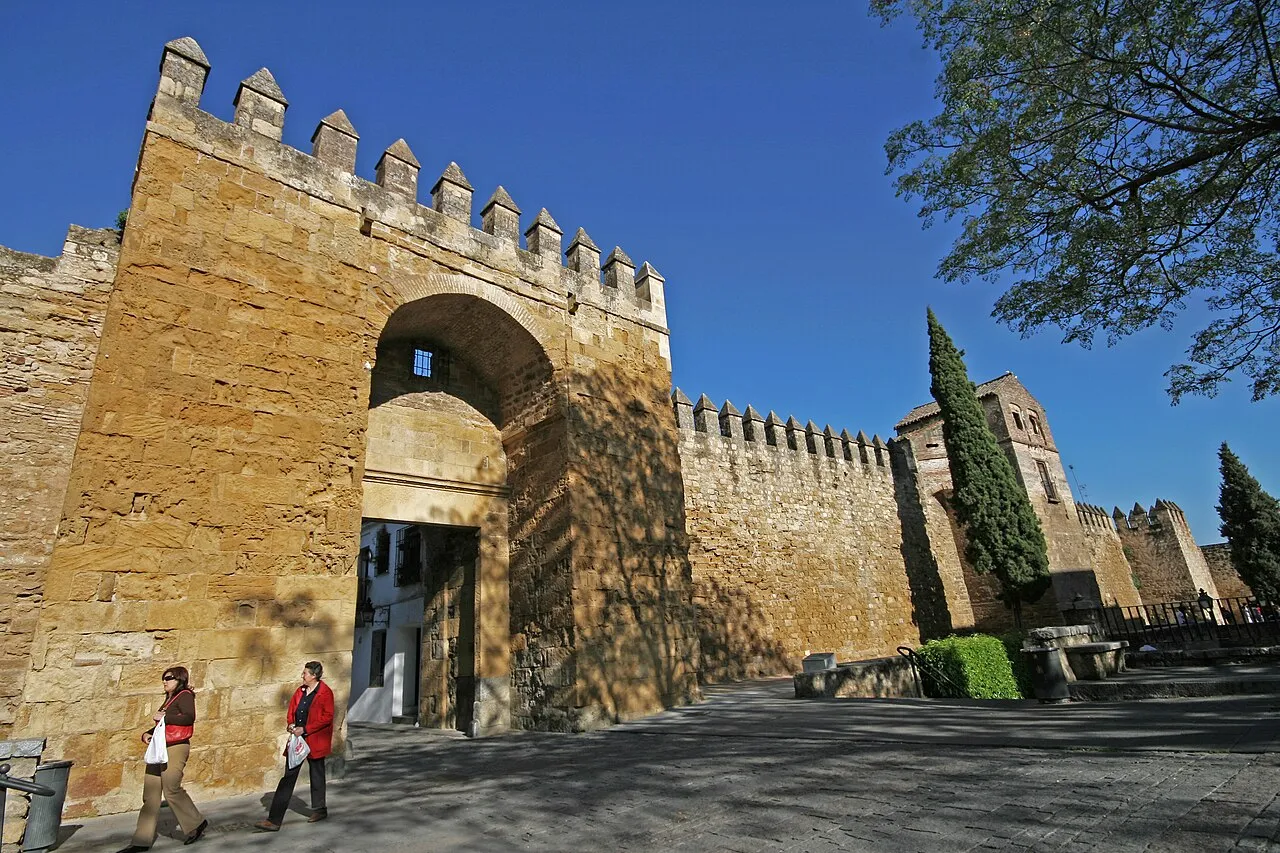
The only medieval gate still standing of the many the city once had, raised by the Muslims on Roman foundations. Going through it means entering the Jewish Quarter, whose two-metre-wide streets are the coolest part of the Old Town in summer because the sun barely reaches the ground.

Frequently asked questions

Can you get into the Mezquita of Córdoba free?

Yes, there is a free access slot first thing in the morning, Monday to Saturday, reserved for individual visitors. It is limited in time, it does not give access to every area and it does not include the recorded commentary, and there is usually a queue before opening. Outside that slot, general entry is around 13 €. The Patio de los Naranjos, the old ablutions courtyard, is freely open at any hour even if you do not go into the building.

Why is there a cathedral inside the Mezquita of Córdoba?

Because in 1523 the cathedral chapter obtained permission from Charles V to build a crossing in the middle of the prayer hall, pulling down part of the forest of columns. The city council opposed it head-on and went as far as threatening the death penalty for anyone working on it, but the bishop appealed to the emperor and won. The line attributed to Charles V lamenting the result is famous and probably apocryphal: no contemporary source records it.

How much time do you need to see the Mezquita of Córdoba?

An hour and a half for the interior at a calm pace, and half an hour more if you go up the bell tower. It is a building you walk through with no fixed itinerary, so the time depends a great deal on how much you want to stop. Four things justify stopping: the two-tier arches, the mihrab of Al-Hakam II, the crossed-rib domes of the maqsura and the Baroque choir stalls of the cathedral.

Why are the arches of the Mezquita of Córdoba the way they are?

Because of a practical problem turned into a brilliant solution. The columns were reused from Roman and Visigothic buildings and were too short to reach the height needed, so two levels of arches were superimposed: a horseshoe arch below and a round arch above, on piers. The alternating voussoirs of pale stone and red brick are both structure and visual rhythm, and they ended up producing the most recognisable image in western Islamic architecture.

Can you go up the tower of the Mezquita?

Yes, the bell tower is visited with a ticket separate from the general one, it works in time slots and it has very limited capacity, so it is worth booking at the same time as the main ticket because it sells out. It was raised in the sixteenth century wrapping around the old minaret of Abd al-Rahman III, which is still inside. From the top you see the Patio de los Naranjos, the historic centre and the river.

Who owns the Mezquita of Córdoba?

It is the property of the Catholic Church, which registered it in its own name in the Land Registry in 2006 through a procedure that has been the object of controversy and of claims that it should be declared publicly owned. There is also a debate about the name: the institution calls it the Cathedral, while a good part of the public and of the academic world argues for the name Mezquita-Catedral. None of this affects the visit, but it explains the signs and the arguments.

The cathedral inside and the debate that goes on

In 1523 the cathedral chapter obtained permission from the emperor Charles V to raise a crossing in the middle of the prayer hall, pulling down part of the forest of columns. The city council opposed it head-on, to the point of threatening the death penalty for anyone taking part in the works. The bishop appealed to the emperor and won.

The line attributed to Charles V on seeing the result — that they had destroyed something unique to build something that can be made anywhere — is the most repeated quotation in the history of Spanish heritage and probably apocryphal: no contemporary source records it.

And there is a live debate today that is worth knowing about. The building is the property of the Catholic Church, which registered it in its own name in 2006 through a registry procedure that has been the object of controversy and of claims that it should be declared publicly owned. The name is also disputed: the institution calls it the Cathedral, while a good part of the public and of the academic world argues for the name Mezquita-Catedral.

Neither of those two things affects the visit, but it explains the signs, the initials and the arguments you will see around it. It is a building that is still under dispute.

Practical information

TicketAround 13 €. The bell tower separately, in time slots and with limited capacity: book both at once.
FreeA slot first thing in the morning, Monday to Saturday, for individual visitors.
Patio de los NaranjosAlways freely open, even if you do not go into the building. The old ablutions courtyard.
DurationAn hour and a half for the interior, half an hour more if you go up the tower.
Best momentThe first slot of the day. From eleven onwards the groups come in.
Don't missThe two-tier arches, the mihrab, the domes of the maqsura and the choir stalls.
On the map

🎧 With Viavoy

Walk Córdoba and listen at your own pace

Download Viavoy and walk Córdoba offline, whenever you like.

from 2,99 €· one-off payment
City Pass · 9,99 €3 days, all the tours in Córdoba
Find out more about Viavoy →
Viavoy app

Keep reading

More articles

Itineraries

Córdoba in one day: the itinerary that makes every hour count

Neighbourhoods

The Jewish Quarter of Córdoba: the synagogue, Maimonides and the two-metre streets

Culture

Roman Córdoba: the bridge, the temple and the theatre nobody visits

Festivals & traditions

The patios of Córdoba: when, where and how to see them without queues