Roman Córdoba: the bridge, the temple and the theatre nobody visits
Culture · Córdoba

Roman Córdoba: the bridge, the temple and the theatre nobody visits

Capital of Baetica, the richest province in the empire, and birthplace of Seneca and Lucan. Four stops that almost no visitor strings together, absorbed by the Mezquita.

8 min read · Updated for 2026
🎧 On the walk Roman Córdoba: From the Temple to la Corredera

Before it was the capital of a caliphate, Córdoba was the capital of Baetica, the richest province of the Roman empire, and one of the important cities of Hispania. It gave Rome Seneca and his nephew Lucan. Of that city there remain a bridge people still cross, a temple that turned up by accident, two mausoleums and a theatre preserved in the basement of a museum almost nobody goes into.

The Roman theatre of Corduba was one of the largest in the empire. It lies under the Archaeological Museum and you go down to see it on the museum ticket, which is free for EU citizens.

Capital of Baetica

Corduba was founded as a Roman colony around 169 before Christ and in the time of Augustus it became the capital of the province of Baetica, the most urbanised and the richest in Hispania, the one that exported oil to the whole empire in the amphorae that make up Monte Testaccio in Rome.

That wealth produced a monumental ensemble of the first rank: a temple of the imperial cult, a circus, a theatre among the largest in the empire, an amphitheatre, a colonial forum and a provincial one, and a bridge over the Guadalquivir for the Via Augusta. The city knew almost nothing about any of it until the twentieth century.

And it produced names too. Seneca, the Stoic philosopher, tutor to Nero and forced by him to take his own life, was born here in the year 4 before Christ. So was his nephew Lucan, author of the Pharsalia. That a provincial city gave two of the great literary figures of imperial Rome says a good deal about what it was.

1The Roman Bridge

The Roman Bridge

📍 Over the Guadalquivir

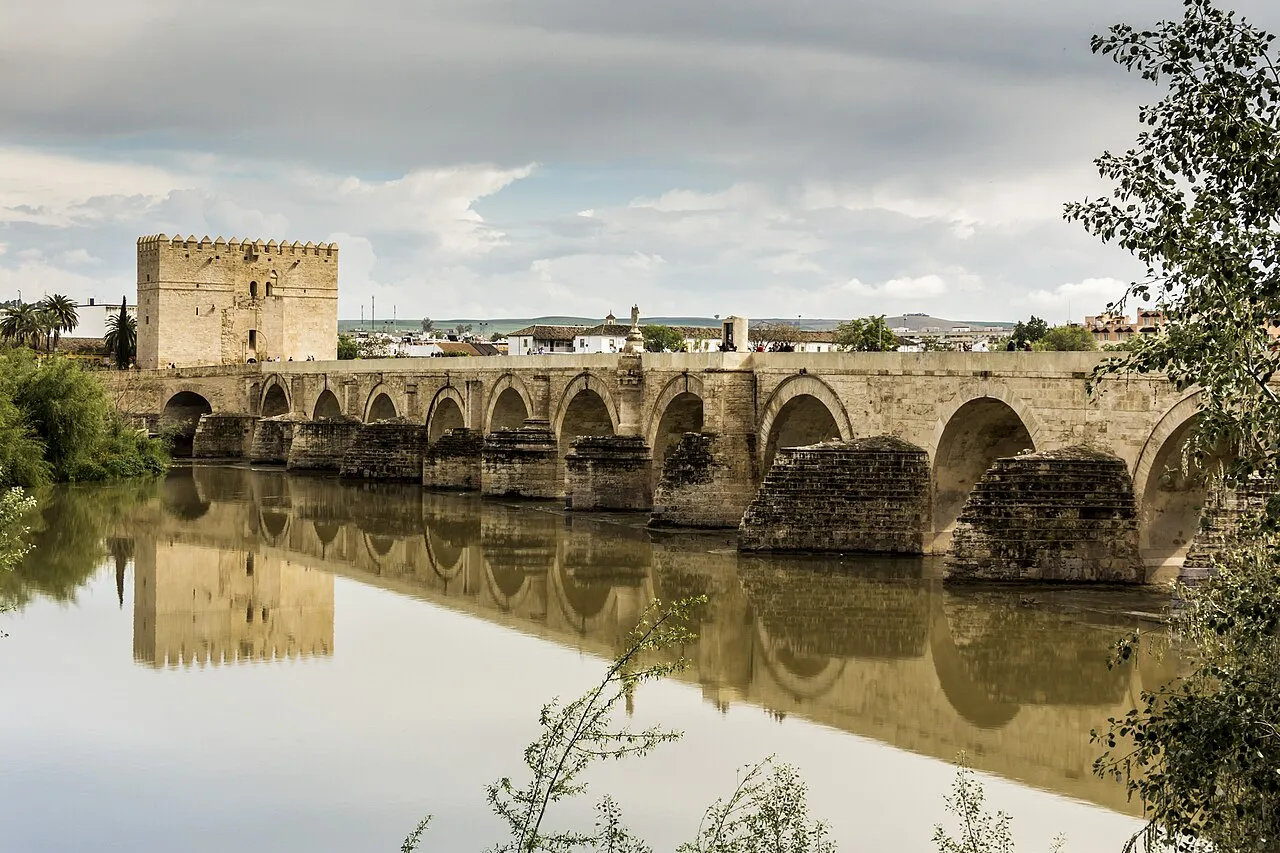
Three hundred and thirty metres and sixteen arches on the line of the Via Augusta, the road that linked Rome with the south of Hispania. The fabric has been remade many times — the Umayyads repaired it thoroughly in the eighth century — but you cross exactly where the legions crossed. Pedestrianised since 2008.

2The Roman Temple

The Roman Temple

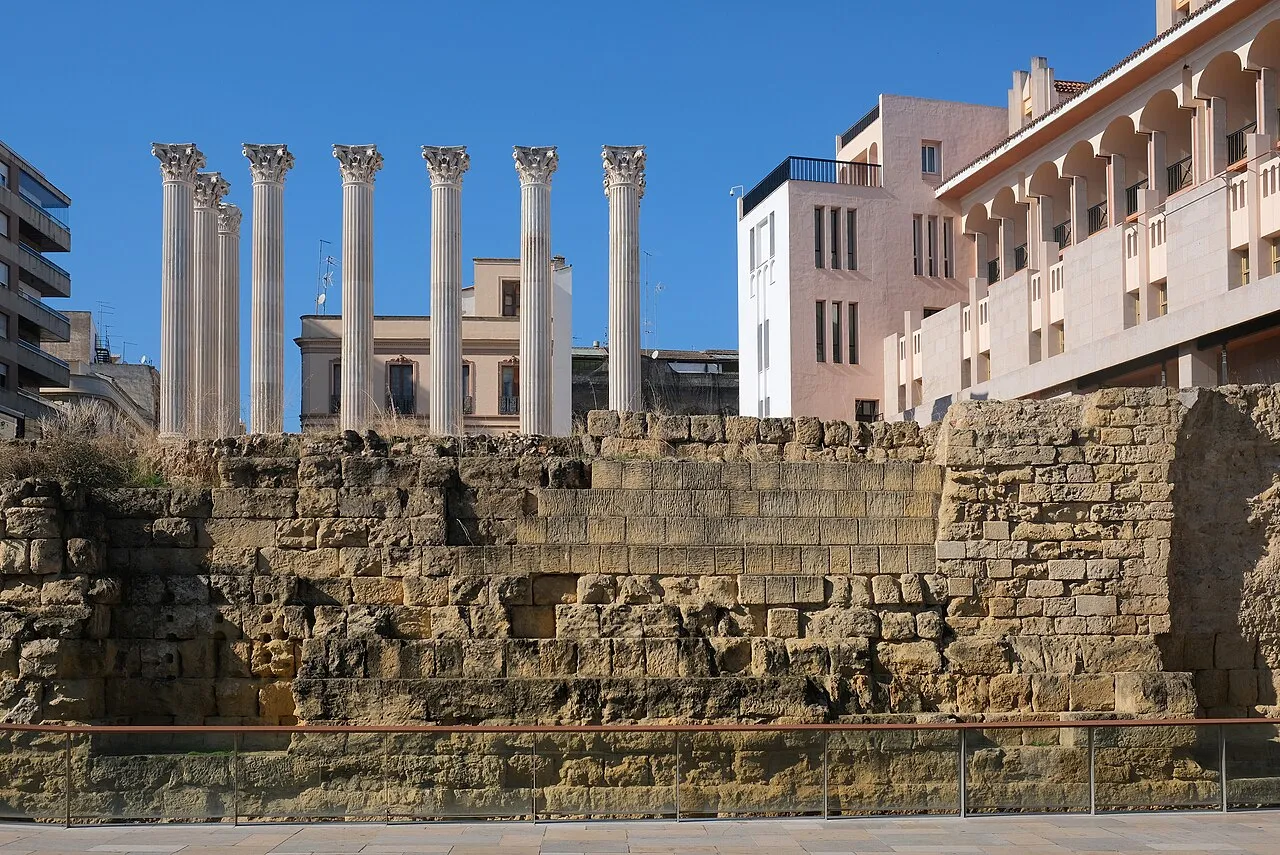
📍 Next to the City Hall

Six Corinthian columns on a podium, what is left of the great temple of the imperial cult, where the deified emperors themselves were worshipped. It turned up by chance in the fifties, while the City Hall was being extended: column drums started coming out of the rubble. The marble of the capitals came from Italian quarries.

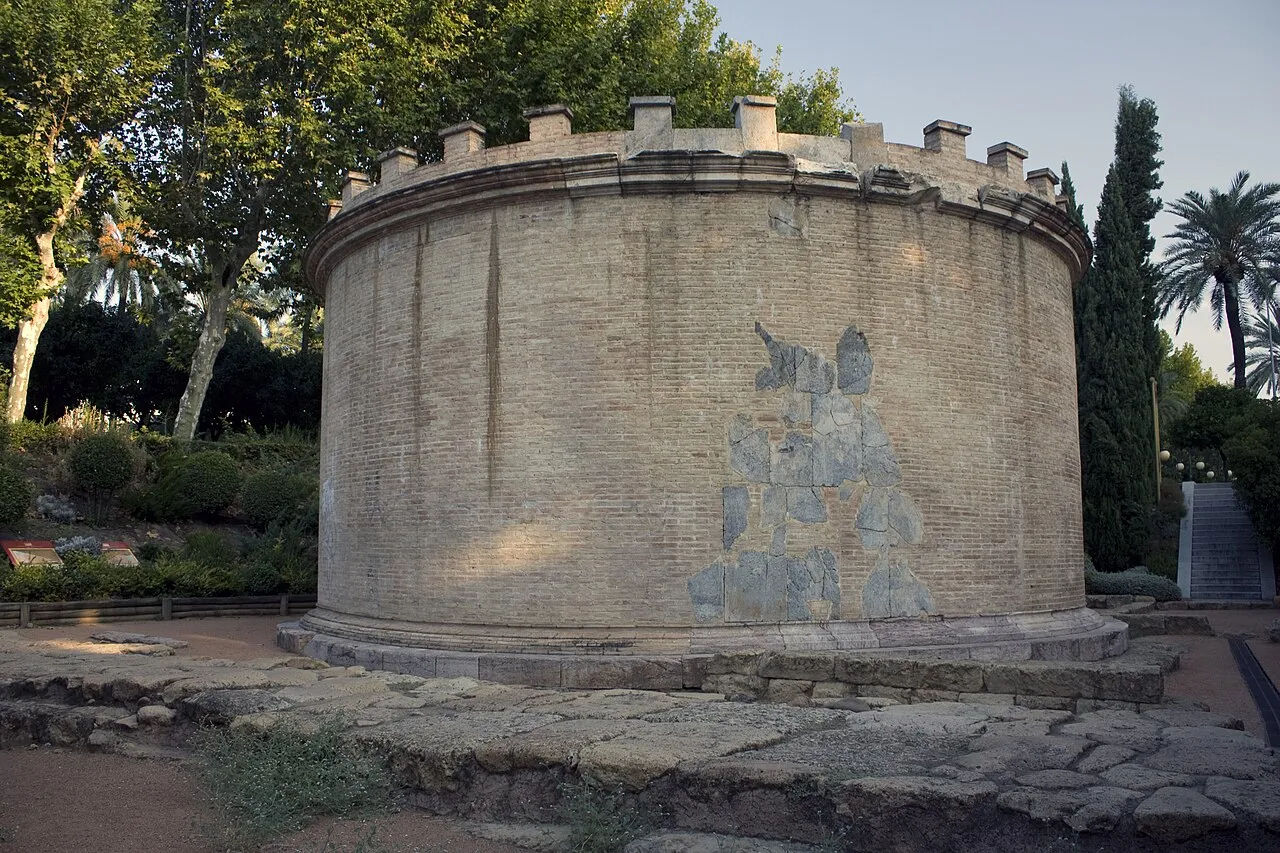
3Roman Mausoleums

Roman Mausoleums

📍 Jardines de la Victoria

Two cylindrical tombs from the first century that flanked the road to Seville. Roman law forbade burial inside the city limits, so anyone arriving in the city was met by an avenue of tombs belonging to powerful families. Their form copies the circular mausoleums of Rome, starting with that of Augustus.

🎧 With Viavoy

Explore Córdoba at your own pace

Download the app and discover Córdoba offline, whenever you like. Take the walking tour Roman Córdoba: From the Temple to la Corredera with a local guide in your ear.

Find out more about Viavoy →

What lies underneath

The theatre, the mosaic and the roads.

The Archaeological Museum of Córdoba occupies a Renaissance palace and, in its basement, preserves the remains of the Roman theatre: part of the cavea, the entrances and the structure, excavated while the building was being extended. It was one of the theatres with the largest capacity in the empire, holding several thousand spectators.

You go down to see it on the museum ticket, which is free for citizens of the European Union, and it is the most underrated visit in Córdoba: the museum also has an excellent collection covering everything from prehistory to the caliphate.

A spectacular Roman mosaic with mythological scenes turned up under the Plaza de la Corredera, and is displayed today in the Hall of Mosaics in the Alcázar. And the works in the Plaza de las Tendillas brought out roads of Corduba, confirming that this point has been the centre of something for two thousand years.

The amphitheatre, one of the largest in Hispania, was located under the veterinary faculty in the year 2000. It cannot be visited, but knowing it is there completes the map.

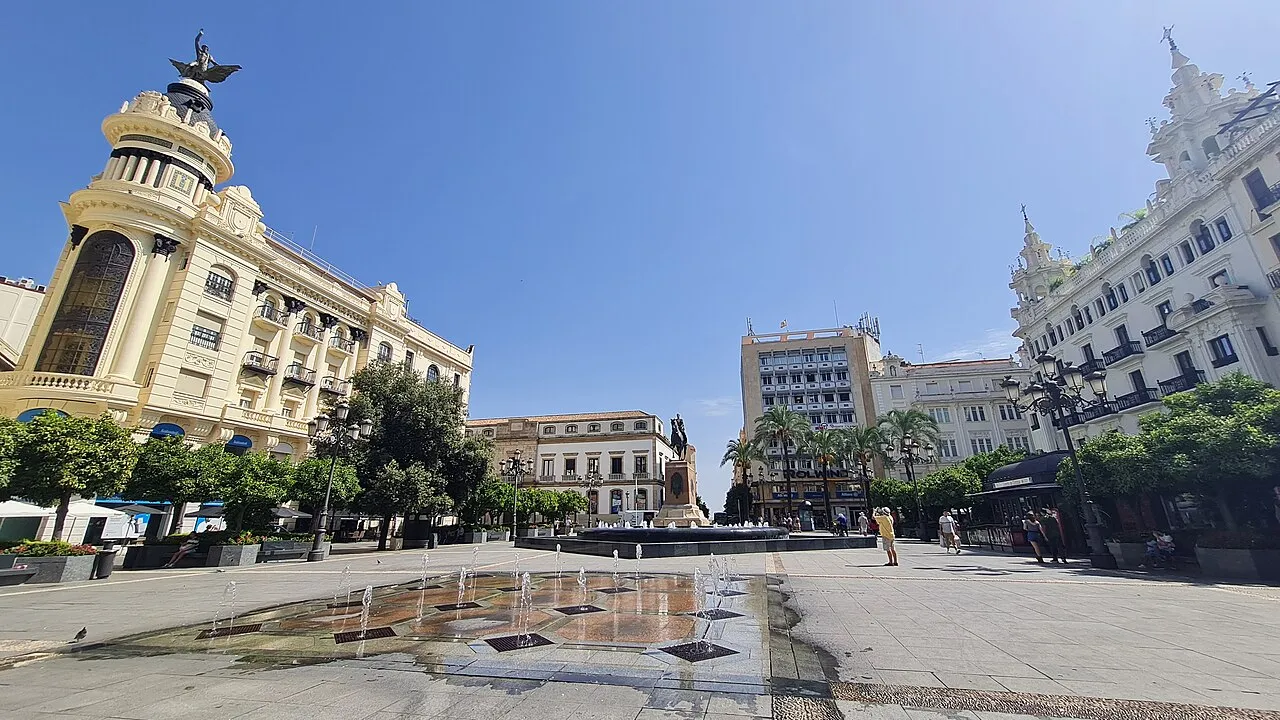
4Plaza de las Tendillas

Plaza de las Tendillas

📍 Centre

Roman roads turned up under its paving during the underground works, confirming that this point has always been the centre of the city. Today it is the square where Córdoba meets itself, with the Gran Capitán on horseback and a clock that strikes the hours with Spanish guitar chords.

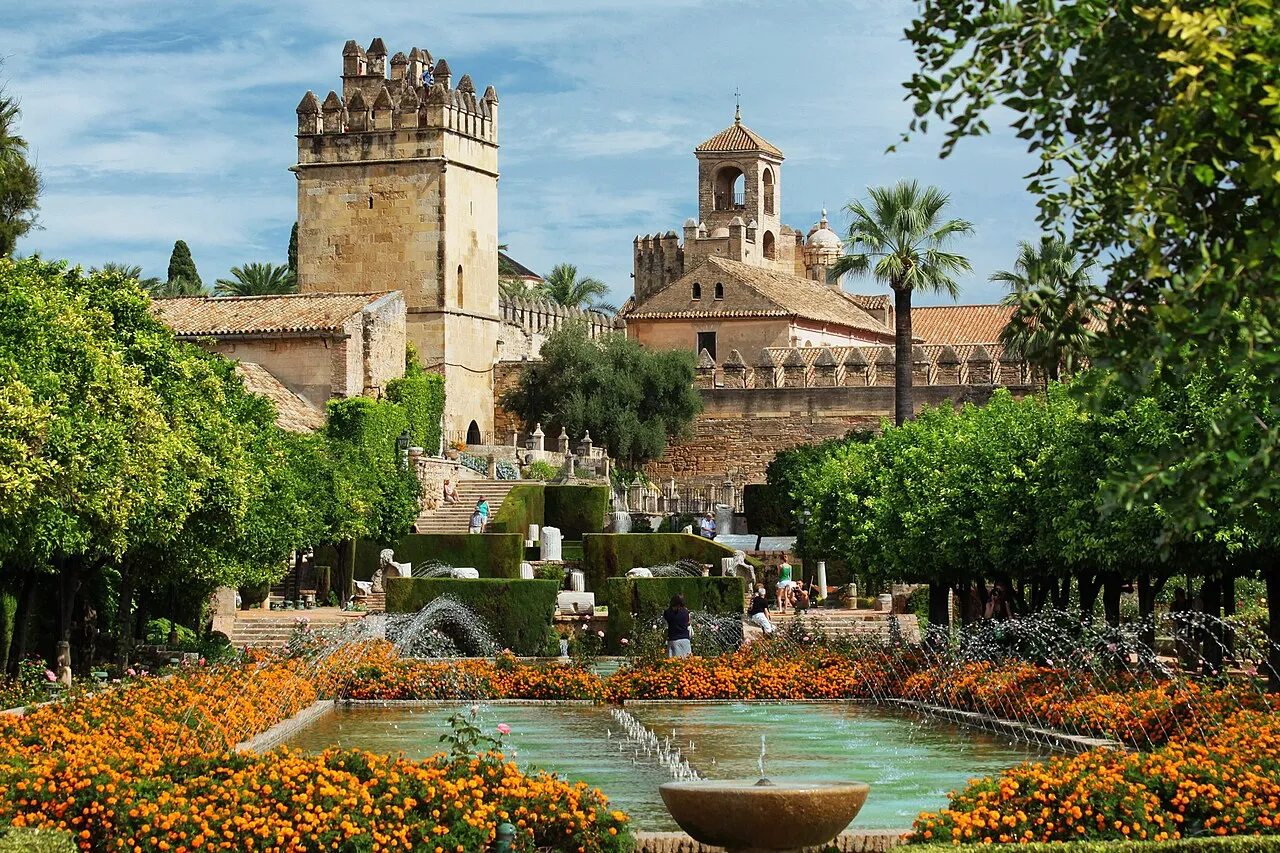
5Alcázar of the Christian Monarchs

Alcázar of the Christian Monarchs

📍 Campo Santo de los Mártires

Its Hall of Mosaics displays the Roman floors of the second and third centuries that turned up under the Plaza de la Corredera, with mythological scenes of great quality. In the same room there is a third-century marble sarcophagus with the door to the afterlife carved half open, the most unusual piece in the collection.

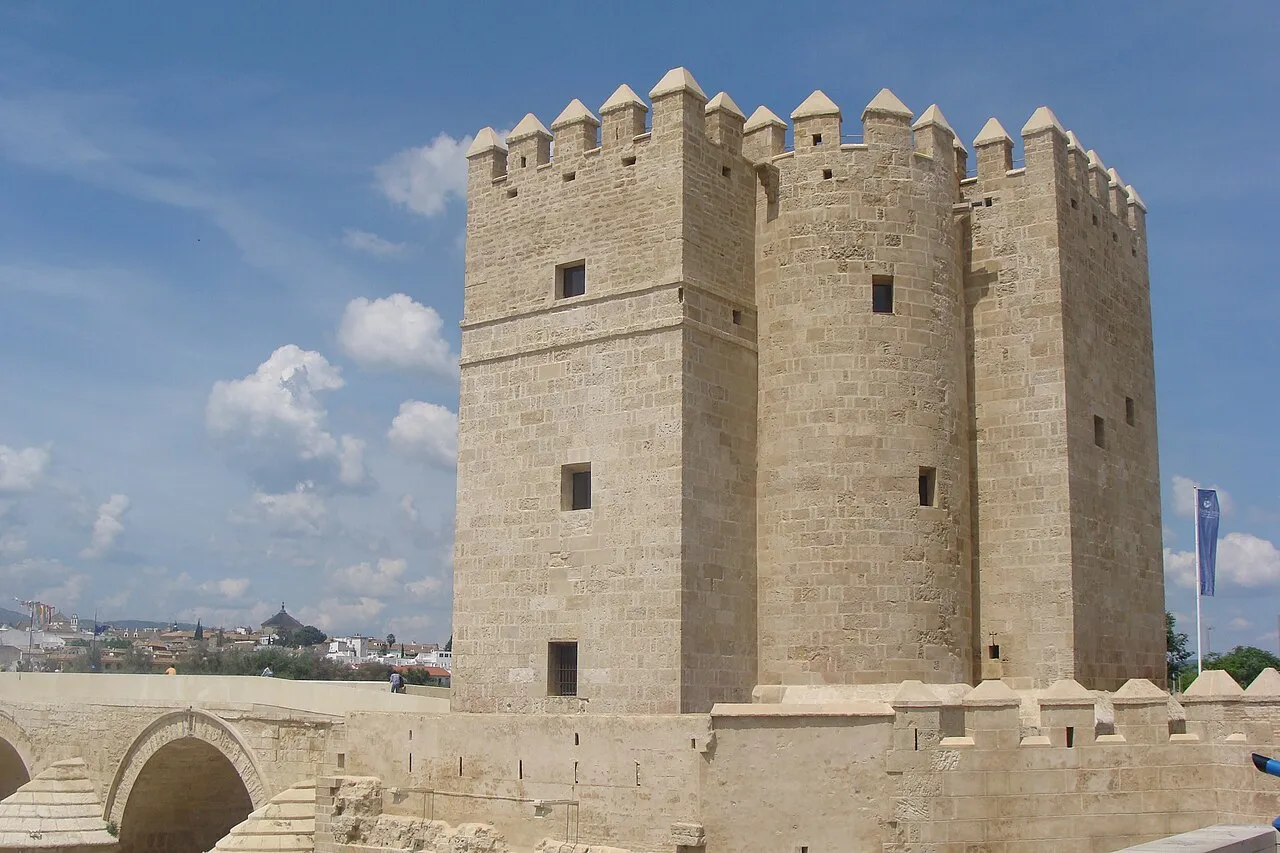
6Calahorra Tower

Calahorra Tower

📍 At the far end of the Roman Bridge

It guards the bridgehead, that is, the point where the Via Augusta entered the city. Its museum concentrates on caliphal Córdoba, but from its terrace you see clearly the line of the bridge and how the Roman city was organised around it.

Frequently asked questions

What is left of Roman Córdoba?

The Roman Bridge, on the line of the Via Augusta; the Roman Temple next to the City Hall, from the imperial cult; the Mausoleums in the Jardines de la Victoria; the theatre, preserved in the basement of the Archaeological Museum; and the mosaics that turned up under the Plaza de la Corredera, today in the Alcázar. The amphitheatre was located under the veterinary faculty and cannot be visited. All of it can be strung together in about two hours.

Can you visit the Roman theatre in Córdoba?

Yes, it is preserved in the basement of the Archaeological Museum, which was built and extended over it, and you go down to see it on the museum ticket. It was one of the theatres with the largest capacity in the empire, holding several thousand spectators. Entry to the museum is free for citizens of the European Union and its collection, running from prehistory to the caliphate, is of the first rank. It is the most underrated visit in Córdoba.

Why was Córdoba important in Roman times?

Because it was the capital of Baetica, the most urbanised and richest province in Hispania, the one that exported oil to the whole empire. That position explains its monumental ensemble — a temple of the imperial cult, a circus, a theatre, an amphitheatre and two forums — and also its intellectual output: Seneca, the Stoic philosopher and tutor to Nero, was born here, and so was his nephew Lucan, author of the Pharsalia.

Is the Roman Bridge in Córdoba really Roman?

The line and the site are, and they date from the time of Augustus, around the first century before Christ. The fabric you see today, on the other hand, is largely later: the Umayyads repaired it thoroughly in the eighth century and it was rebuilt again in the thirteenth, sixteenth and seventeenth centuries. The last major intervention is from 2008, when it was fully pedestrianised and the traffic that was punishing it was removed.

What is Medina Azahara and is it worth it?

The palace city that Abd al-Rahman III had built in the tenth century eight kilometres from Córdoba, as the seat of the newly proclaimed caliphate. It was sacked and abandoned barely seventy years after it was finished, it was left buried and excavation did not begin until the twentieth century. It has been a World Heritage Site since 2018, it has a museum and a site, you need half a day and there is a shuttle bus from the centre. It is very much worth it.

Where is the Roman forum of Córdoba?

Under the present-day city, and it cannot be visited as a whole. Corduba had two forums, the colonial and the provincial, and partial stretches of them have been excavated in various urban works. It is the usual situation in Córdoba: the Roman city lies literally beneath the Islamic and the modern one, and it keeps turning up with every building project. The Roman Temple, which was linked to the provincial forum, is the most visible remnant of that ensemble.

How to string it together

The logical route takes two hours and starts at the Roman Bridge: cross it, come back and climb towards the centre. Then the Roman Temple, next to the City Hall; five minutes away, the Archaeological Museum with the theatre in the basement; and to finish, the Mausoleums in the Jardines de la Victoria.

If you want to complete it, the Hall of Mosaics in the Alcázar adds the floors and the sarcophagus, and the Plaza de la Corredera — where those mosaics came from — is also the only arcaded Castilian-style main square that exists in Andalusia, from the seventeenth century.

It is a thread almost no visitor follows, because the Mezquita absorbs all the attention. And precisely for that reason all these stops are empty: the Archaeological Museum, with a first-rank collection and a Roman theatre underneath it, receives a tiny fraction of the city's visitors.

And if you have half a day to spare, Medina Azahara closes the circle from the other end: the tenth-century palace city, eight kilometres away, which shows what the caliphate built once it was no longer imitating Rome but competing with Baghdad.

Practical information

The routeRoman Bridge → Roman Temple → Archaeological Museum → Mausoleums. Two hours.
Archaeological MuseumWith the Roman theatre in the basement. Free entry for EU citizens.
The mosaicsIn the Hall of Mosaics in the Alcázar, with a third-century sarcophagus with its door ajar.
What you cannot seeThe amphitheatre, under the veterinary faculty; the circus and the forum, under the city.
CostPractically zero: the bridge, the temple and the mausoleums are free and so is the museum for the EU.
To complete itMedina Azahara, 8 km away: the caliphal palace city, a World Heritage Site since 2018.
On the map

🎧 With Viavoy

Walk Córdoba and listen at your own pace

Download Viavoy and walk Córdoba offline, whenever you like.

from 2,99 €· one-off payment
City Pass · 9,99 €3 days, all the tours in Córdoba
Find out more about Viavoy →
Viavoy app

Keep reading

More articles

Itineraries

Córdoba in one day: the itinerary that makes every hour count

What to see

Visiting the Mezquita-Catedral of Córdoba: tickets, timings and what to look at

Neighbourhoods

The Jewish Quarter of Córdoba: the synagogue, Maimonides and the two-metre streets

Neighbourhoods

La Axerquía: the other half of Córdoba, the one nobody visits