MACA
Free entry and an hour and a half of visit. Besides the international names, it has a very solid representation of Spanish art from the second half of the twentieth century: El Paso, the normativos, the kinetic artists.

A city this size should not have this much on offer. What is in the MACA, the MARQ and the MUBAG, which to choose if you only have time for one and why the best one is free.
🎧 On the walk The museums: MACA, MUBAG and MARQAlicante has three museums that go comfortably beyond what a Spanish provincial capital is supposed to have: one with Picasso, Miró, Dalí and Chillida and free entry, another that was European Museum of the Year, and a third in the grandest palace in the city. And almost nobody arrives knowing it.
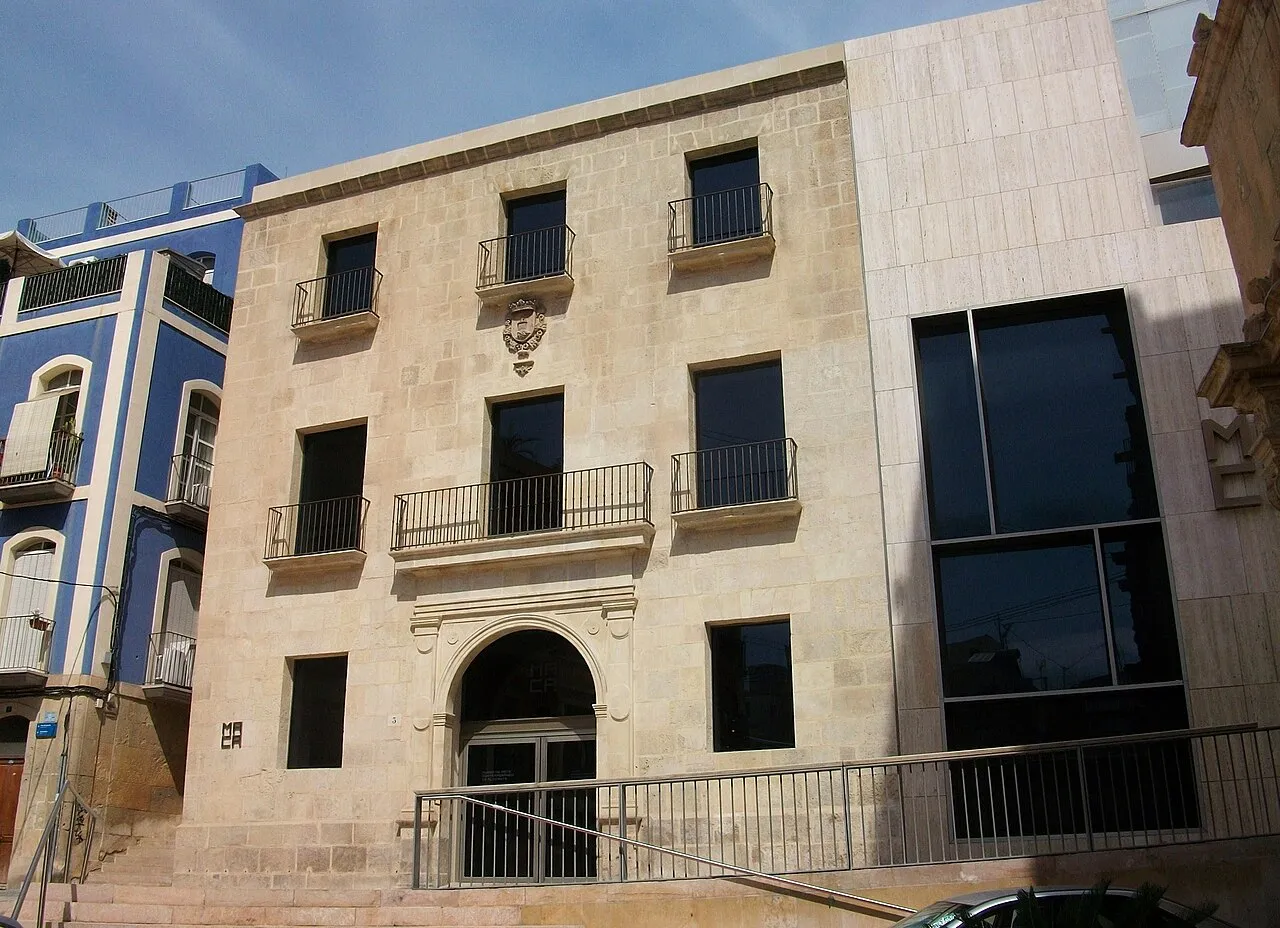
Behind its walls there are Picassos, Mirós, Dalís, Chillidas and Tàpies, and also Kandinsky, Chagall and Giacometti: one of the best twentieth-century art collections in Spain, with free entry.
It arrived here through the decision of a single man. Eusebio Sempere, an Alicante artist of international standing and a master of kinetic art, gathered almost two hundred works by more than a hundred artists over the course of his life and, instead of selling them or keeping them, gave them to his city.
The museum was born from that donation; it opened in 1977 and reopened, renovated, in 2011 after a major refurbishment, in the Casa de La Asegurada, the oldest civil building in Alicante. The layout organises the route around three ideas of modern art: geometry, abstraction and figuration.
It is worth thinking about what that means: a lad from Onil, a village in the province, plants himself in the Paris of the fifties to fight it out as an artist, succeeds, mixes with the greats, and instead of keeping the treasure gives it to his own people so that anyone can see a Picasso for free.
Free entry and an hour and a half of visit. Besides the international names, it has a very solid representation of Spanish art from the second half of the twentieth century: El Paso, the normativos, the kinetic artists.
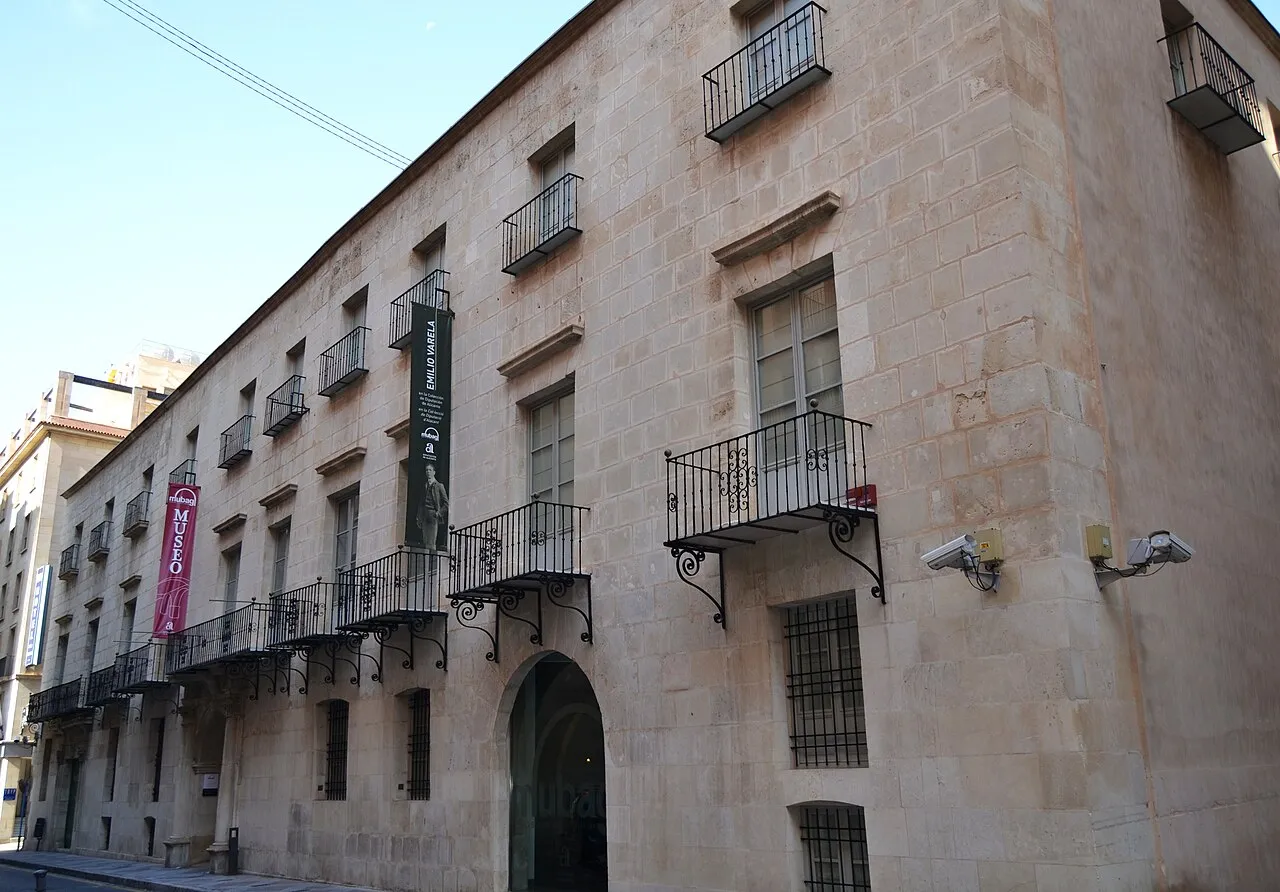
Two minutes from the MACA, in the grandest eighteenth-century palace in Alicante. Four centuries of painting, from the sixteenth to the twentieth, with works on loan from the Museo del Prado. An hour is enough.
Download the app and discover Alicante offline, whenever you like. Take the walking tour The museums: MACA, MUBAG and MARQ with a local guide in your ear.
Find out more about Viavoy →In 2004 the European Museum Forum named it European Museum of the Year, an award it shares in the whole of Spain with only a handful of names, among them the Guggenheim in Bilbao. That such recognition should land in Alicante says a good deal.
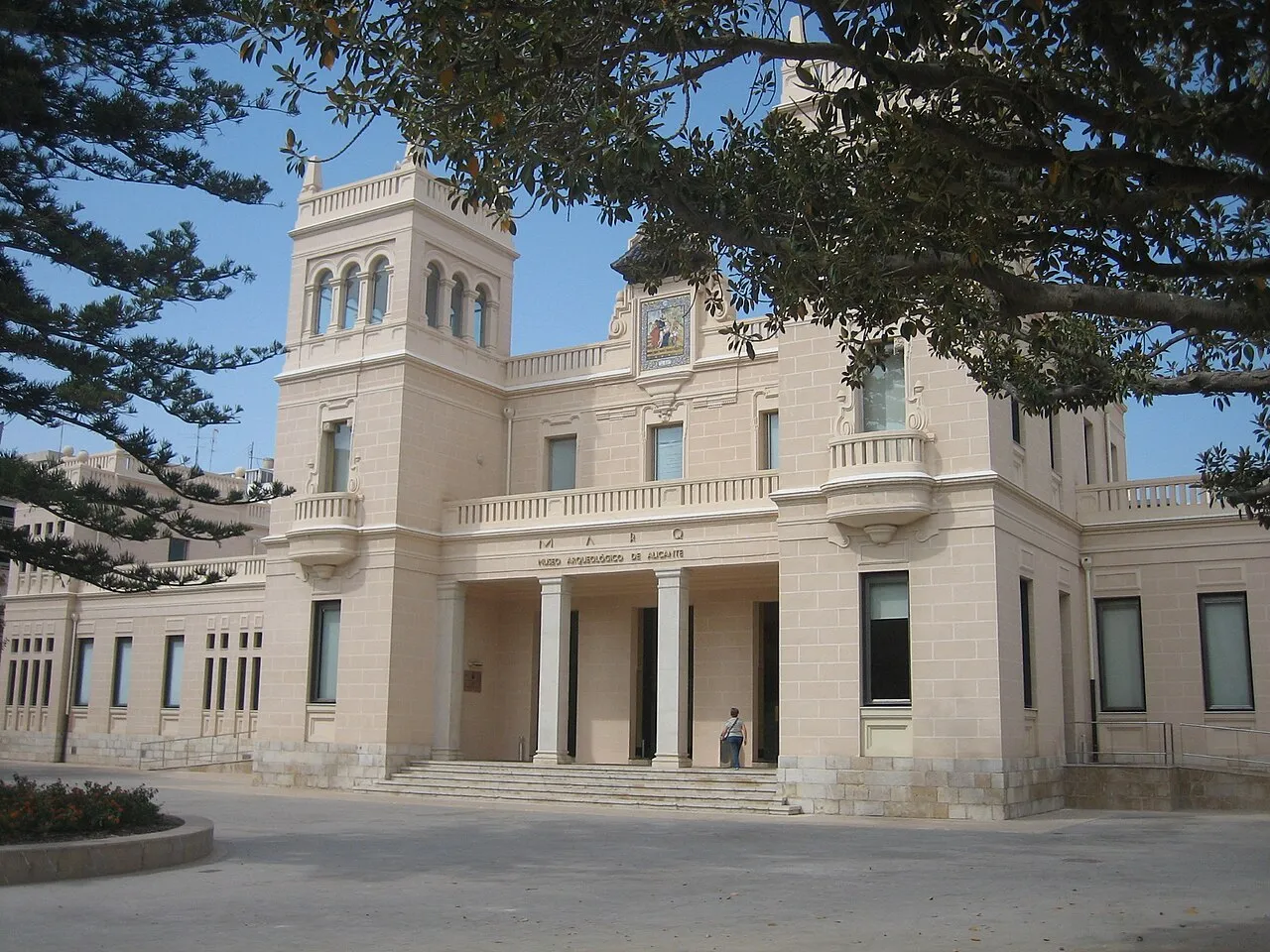
It was given the award because it changed the way archaeology is told. Inside there are not only display cases with pieces and minimal labels: prehistory, the Iberian world, Rome and the Middle Ages are told with lights, sound, reconstructions and rooms that transform themselves, almost like a stage set.
It was a risky bet in the year 2000, when Spanish archaeological museum design was still mostly austere. Today it is a standard in the sector, and a good part of that evolution has a recognised point of reference here.
It holds more than eighty thousand pieces, and one of its jewels is what came from Lucentum, the Roman city of the Tossal de Manises from which the name of Alicante derives. And those ruins can be walked on: they are in the open air next to Albufereta beach.
A former hospital from 1926 turned into a museum in the year 2000. It asks for a whole morning and works especially well with children. The ticket is usually linked to the one for the Lucentum site.
Yes, entry is free. And the collection includes Picasso, Miró, Dalí, Chillida, Tàpies, Kandinsky, Chagall and Giacometti, as well as a very solid representation of Spanish art from the second half of the twentieth century. It is one of the best twentieth-century art collections in Spain.
Through the donation of Eusebio Sempere, an Alicante artist of international standing and a master of kinetic art, who gathered almost two hundred works by more than a hundred artists over the course of his life and gave them to his city. The museum was born from that, and opened in 1977.
It was named European Museum of the Year in 2004, an award it shares in Spain with only a handful of names, among them the Guggenheim. It was given the award because it changed the way archaeology is told: lights, sound, reconstructions and rooms that transform themselves, almost like a stage set, when the Spanish standard was much more austere.
The MACA. It is free, it is small, you see it in an hour and a half, it is in the old town and it has a collection nobody expects to find in a city this size. The MARQ is excellent but it asks for a whole morning and is to the north, with a tram.
Yes, but it is tight. The MACA and the MUBAG are two minutes from each other in the old town and can be strung together in one long morning. The MARQ is to the north and asks for a whole morning on its own. The sensible thing is to devote one morning to the two in the old town and an afternoon or a different day to the MARQ.
The Roman city of the Tossal de Manises, from which the name of Alicante derives: Lucentum meant something like city of light, it passed into Arabic as Al-Laqant and from there to Alacant and Alicante. The ruins are preserved in the open air next to Albufereta beach, they can be walked on, and the ticket is usually linked to the one for the MARQ.
The MUBAG occupies the Palacio Gravina, the house built by the family of the Count of Lumiares at the height of the commercial boom of the eighteenth century. There is a notable coincidence: one of those counts, Antonio Valcárcel, was among the first archaeologists in Spain and excavated precisely Lucentum.
Inside there are four centuries of painting, from the sixteenth to the twentieth, with holdings from the provincial council and works on loan from the Prado. But the name of the house is Emilio Varela, an Alicante painter and heir to Sorolla's light who stayed here instead of going to Madrid or Paris and took decades to be recognised.
As for organising them: the MACA and the MUBAG are two minutes from each other in the old town, next to the co-cathedral, so they can be strung together in one long morning.
The MARQ is to the north, with its own tram stop, and asks for a whole morning on its own. All three together are a full day, and for that it is worth setting aside the second day of your visit to the city.
Download Viavoy and walk Alicante offline, whenever you like.

Keep reading