Flamenco in Seville: where to see the real thing and how not to get it wrong
Culture · Seville

Flamenco in Seville: where to see the real thing and how not to get it wrong

Triana, the three pillars of flamenco and the difference between a tablao, a peña and a show for coach parties.

8 min read · Updated for 2026
🎧 On the walk Triana: Ceramics, Flamenco, and River

Flamenco was not born in a theatre or with a numbered ticket. It took shape in shared courtyards, in forges, in neighbourhood streets and at gatherings where there was no audience, only people, and a significant part of that gestation happened in Triana, among gypsy families settled by the river and ceramics workers. That explains two things: why Seville is a serious place to listen to it, and why here excellent shows exist side by side with others designed to fill coaches. Telling them apart does not require being an expert, just understanding three or four things.

Practical rule: if the venue offers a dinner-show with a tourist menu and shows every hour, you are going to see a correct but predictable choreography. The places where something really happens usually have a single show a night and a small capacity.

The three pillars: cante, baile and toque

Flamenco stands on three legs and, contrary to what people usually think, the main one is not the dancing. The cante is the voice that laments and rejoices, and it is the core: without cante there is no flamenco, even if there is dancing. The toque is the guitar that holds the whole together and sets the rhythm. And the baile is the body turned into rhythm, the most visible part and the one most exported.

At the Monumento al Arte Flamenco in the plaza del Altozano, in Triana, those three figures are represented. It stands exactly where it belongs: in the square that serves as the gateway to the neighbourhood where a good part of this art took shape.

There is a fourth element that does not appear in the sculptures and that is what separates a good show from an excellent one: the jaleo. The hand-claps, the cries and the encouragement thrown from the stage or from the audience are not decoration, they are part of the rhythm. When nobody in a room joins in the jaleo, something is missing.

1Monumento al Arte Flamenco

Monumento al Arte Flamenco

📍 Plaza del Altozano · Triana

A bronze from the early nineties put up to honour the art these streets helped to invent. Look at it calmly and you can read the three pillars: the cante, the baile and the toque. It is not a decorative sculpture placed at random: it stands in the square that serves as the gateway to Triana, the neighbourhood that together with Jerez and Cádiz forms the triangle where flamenco became what it is. A good part of what the world today calls flamenco came out of places like this long before it filled a theatre.

2Plaza del Altozano

Plaza del Altozano

📍 At the head of the Triana bridge

The neighbourhood's living room. The name explains it: altozano, a small rise, the ground that stayed dry when the Guadalquivir flooded Triana time and again. The neighbourhood made it its safe place and then its meeting point. Here the two bronzes that sum up this bank stand side by side: the one to flamenco and the one to Juan Belmonte, the bullfighter who changed bullfighting and who was also born on this side of the river.

3Calle Pureza

Calle Pureza

📍 Triana

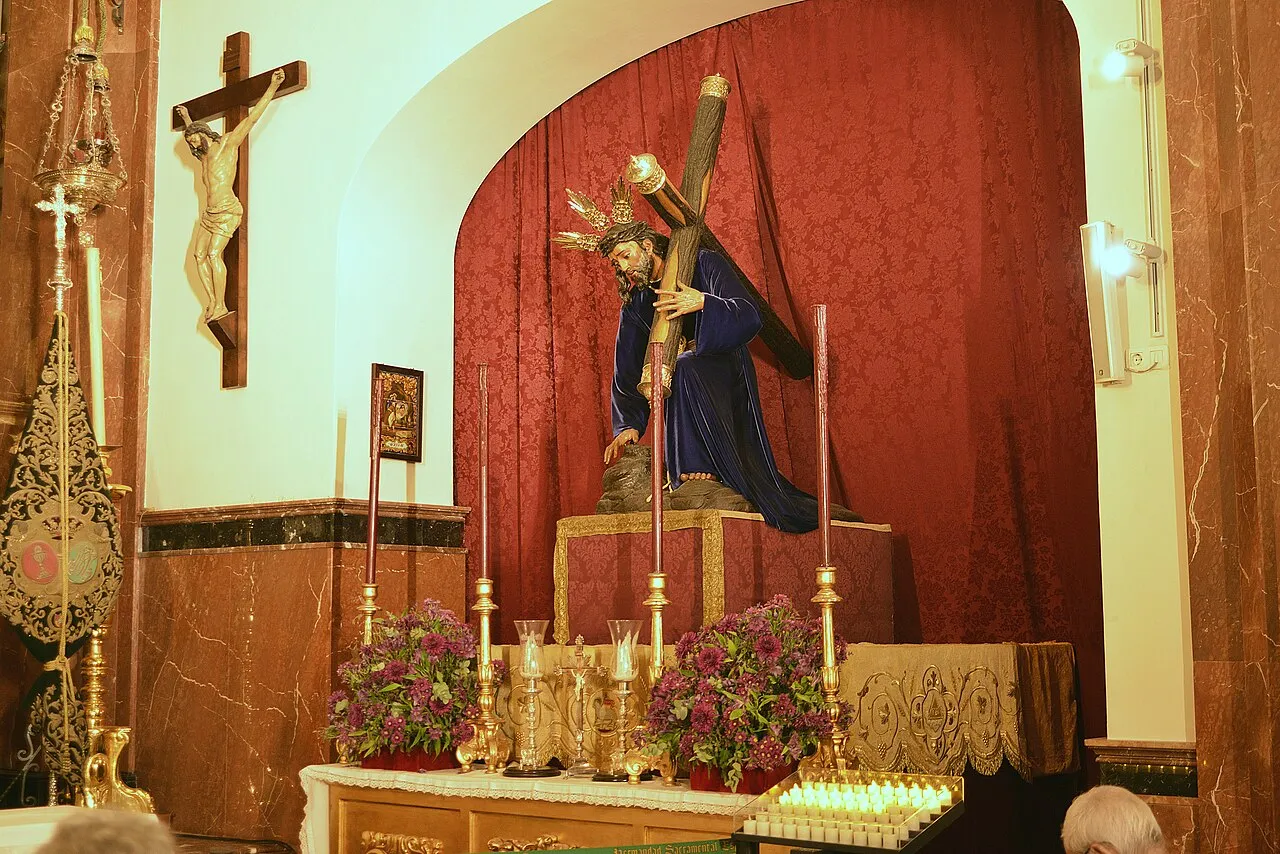
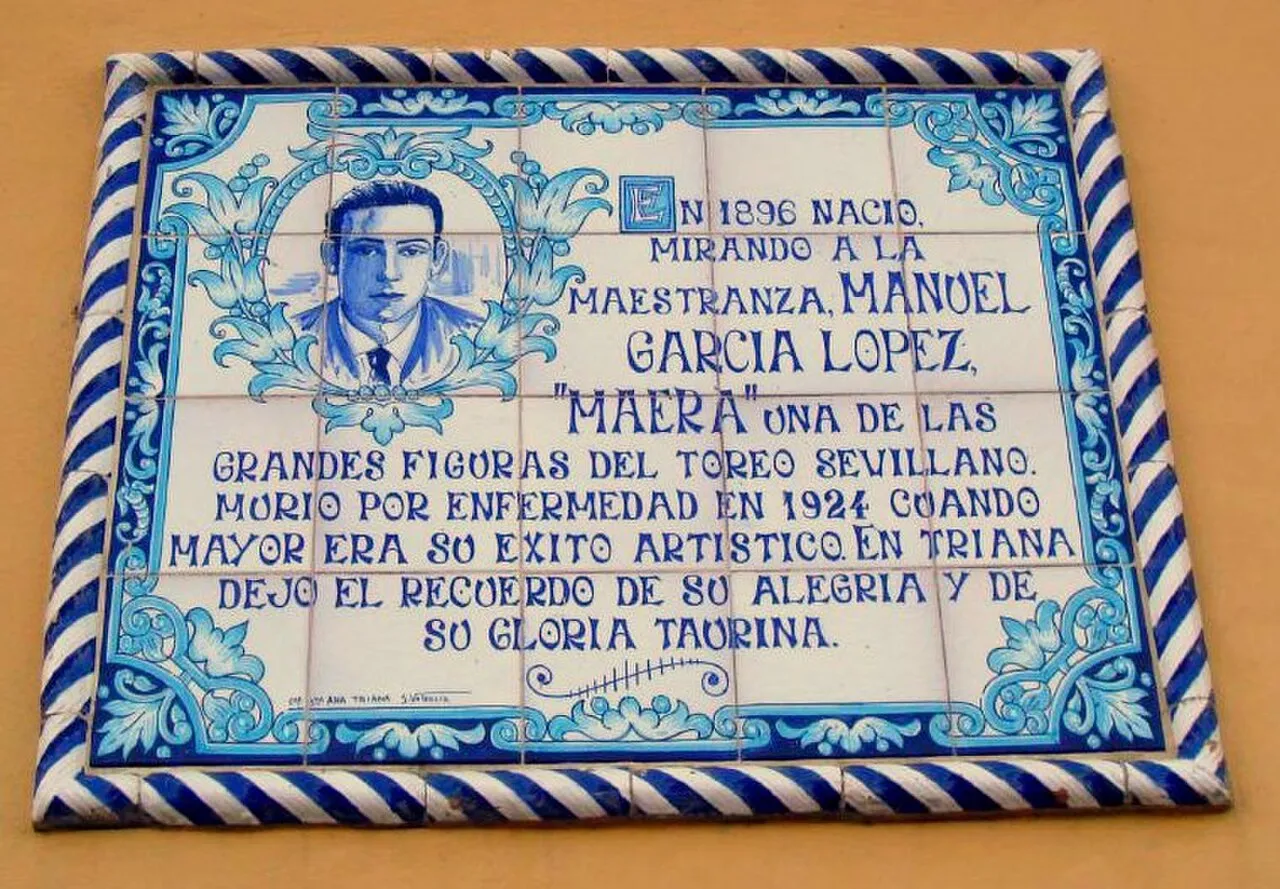
Narrow, with low houses, iron grilles, flowerpots and the tile of a Virgin presiding over some corner: it is one of the most Trianero streets there is and the heart of the old neighbourhood. Here, in corrales de vecinos, shared tenement courtyards like those that filled these blocks, lived generations of families who gave flamenco its names. The Capilla de los Marineros, halfway along the street, belongs to a brotherhood with origins in the guilds of potters and sailors more than five centuries ago.

🎧 With Viavoy

Explore Seville at your own pace

Download the app and discover Seville offline, whenever you like. Take the walking tour Triana: Ceramics, Flamenco, and River with a local guide in your ear.

Find out more about Viavoy →

Tablao, peña or theatre: which suits you

Three different formats, three different experiences.

The tablao is the most common format for the visitor: a small room, a stage at floor level, a show of a good hour with a full cuadro — singing, guitar and dancing — and a drink. The good ones have a small capacity, rotating artists and a single show a night. The bad ones string together shows every hour with a set menu included, and there the quality suffers out of sheer logistics.

The peña flamenca is something else: an association of aficionados, with members, that programmes performances mostly of cante. It is not a show designed for tourists and for that very reason it is the closest thing to how flamenco is listened to among those who know it. You have to find out about the programme and respect absolute silence during the singing.

And there is the theatre format, with shows by big companies in municipal venues or at the Teatro de la Maestranza. It is the most comfortable option and the one with the most polished production, though also the furthest from the intimate gathering where flamenco works best.

4Maestranza Theatre

Maestranza Theatre

📍 Paseo de Cristóbal Colón, 22

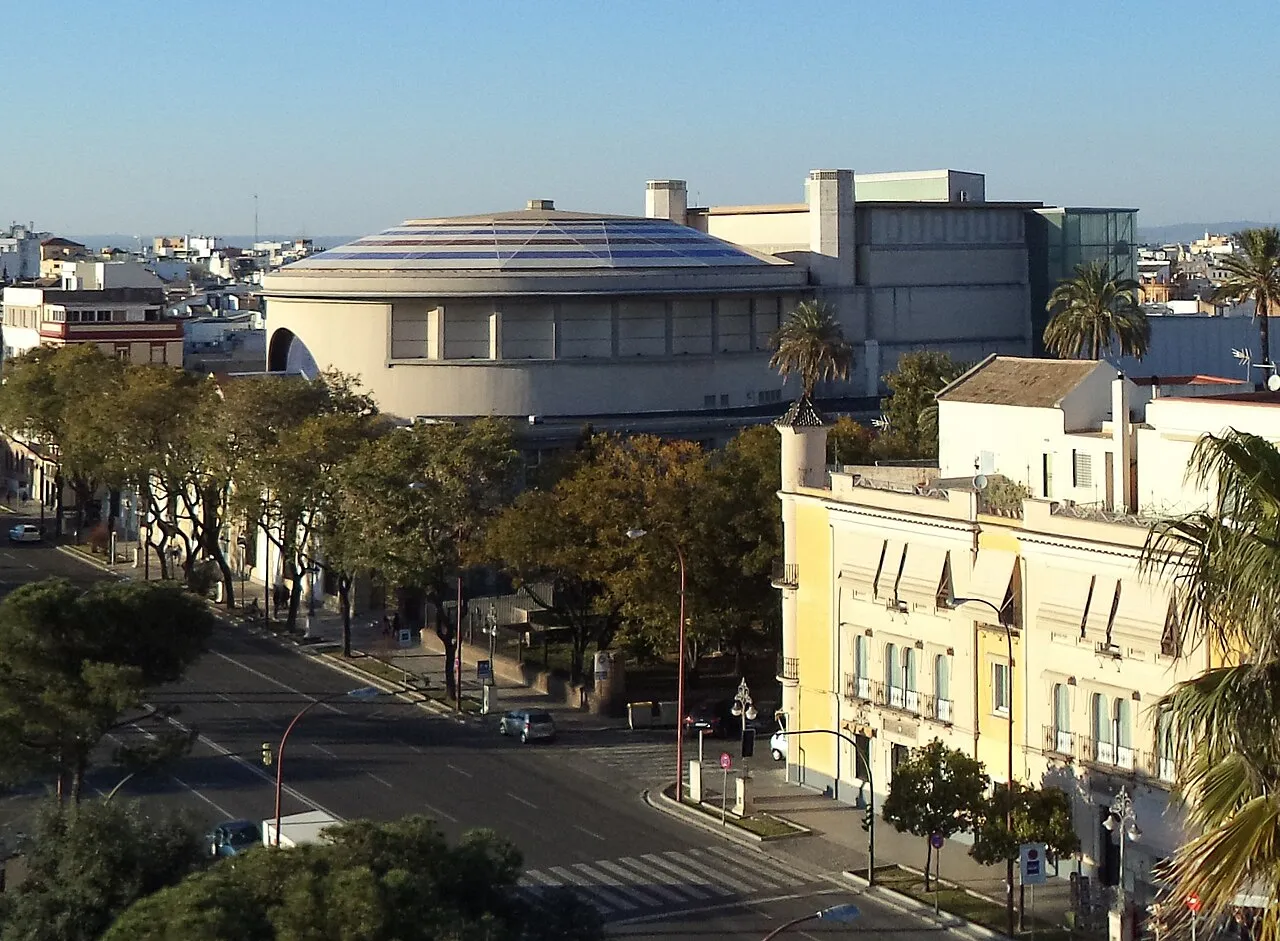
Seville's great opera house, opened in 1991, with a dome that reminded Sevillians so much of a pressure cooker that they jokingly christened it “la Magefesa”. The classical façade in front is much older: it belongs to the Maestranza de Artillería founded by Philip II in the sixteenth century, and it was preserved when the new hall was built behind it. It also programmes flamenco by big companies. It is one of the few opera houses in the world set beside a river and opposite a bullring.

5Calle Betis

Calle Betis

📍 Triana bank

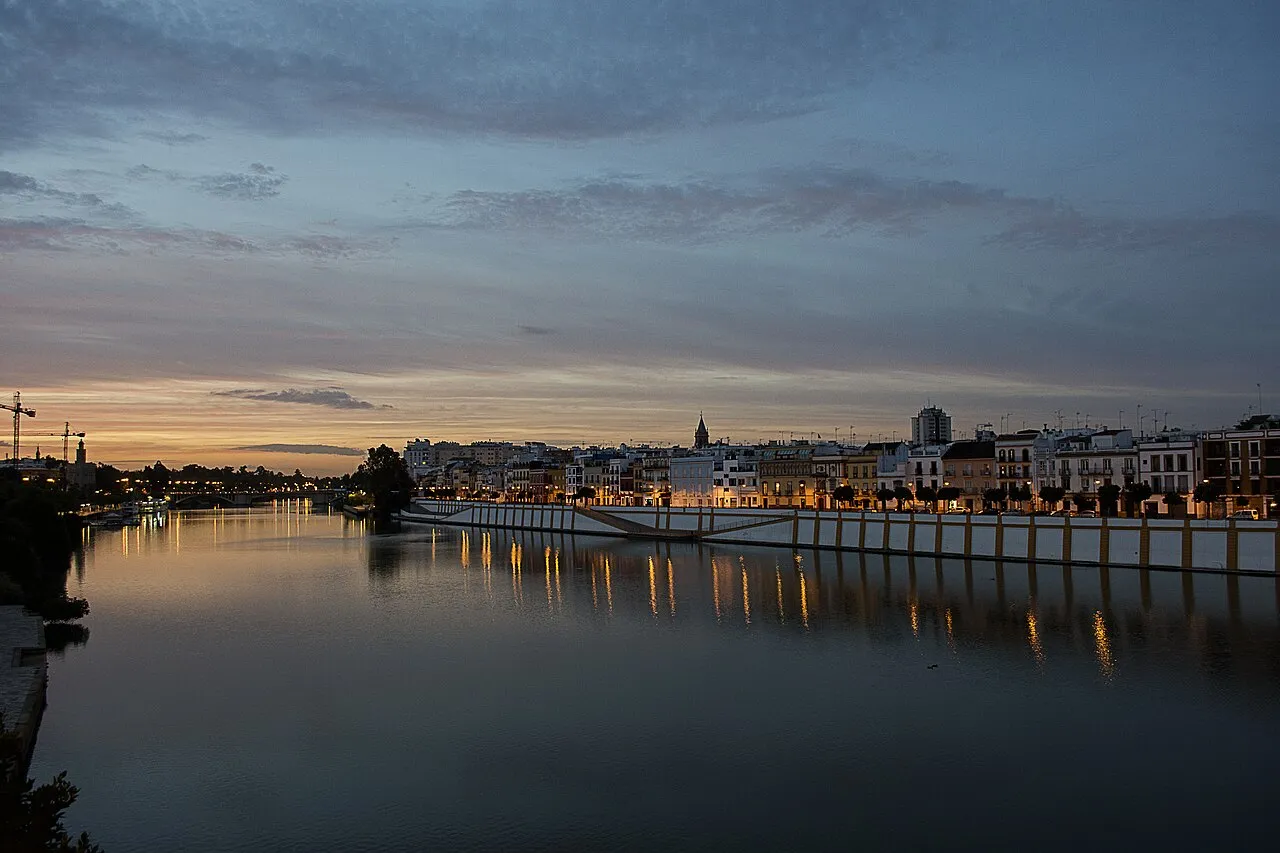
The row of coloured façades facing the Guadalquivir concentrates several venues with live music and is the natural place to end a flamenco night without having planned it. Opposite is the whole of Seville lit up: the Torre del Oro, the Maestranza and the Giralda peeking out. Betis is what the Romans called the river two thousand years ago. Don't look for a serious tablao here; look for atmosphere and a drink with a view.

Seville, the setting for more than a hundred operas
The city in song

Seville, the setting for more than a hundred operas

Carmen, The Marriage of Figaro, The Barber of Seville, Don Giovanni, even Beethoven's Fidelio: more than a hundred operas set here have been counted. And the most curious thing is that almost none of those composers ever set foot in the city. They imagined it from Paris or Vienna, with its sun, its iron grilles and its passions, as the perfect backdrop for love and jealousy. They sang it from hearsay, without knowing it, and still they nailed its character. It is the same operation the world performed centuries later with flamenco: turning Seville into a symbol before understanding it.

🎧 On the tour The River and El Arenal: Tower of Gold and La Maestranza📍 View on Google Maps

Frequently asked questions

Where can you see authentic flamenco in Seville?

In tablaos with a small capacity and a single show a night, and above all in the peñas flamencas, which are associations of aficionados where mostly singing is programmed and where the audience knows what it is listening to. Triana and the area around the Altozano concentrate a good part of the offer with the deepest roots. What to avoid are the dinner-shows with shows every hour: the quality suffers out of sheer logistics.

Why is Triana important in the history of flamenco?

Because it was one of the places where flamenco took shape, long before tablaos existed. It was born in shared courtyards, forges and neighbourhood streets, among gypsy families settled by the river and ceramics workers. Together with Jerez and Cádiz, Triana forms the triangle where this art became what it is. The Monumento al Arte Flamenco in the Altozano recalls it with its three figures.

How long does a flamenco show last?

A tablao show lasts between an hour and an hour and a quarter, normally with a full cuadro: singing, guitar and dancing. In the peñas the performances can run longer and are less predictable, because they depend on the mood of the night. Theatre productions usually run around an hour and a half.

What are cante, baile and toque?

The three pillars of flamenco. The cante is the voice, and it is the core: without cante there is no flamenco, even if there is dancing. The toque is the guitar, which holds the whole together and sets the rhythm. And the baile is the body turned into rhythm, the most visible part and the one most exported. There is a fourth element that is not always mentioned: the jaleo, the hand-claps and the “olés”, which are part of the rhythm and not decoration.

Can you take photos at a flamenco show?

Usually yes, a few and without flash, but recording the whole show is forbidden. Flash is banned everywhere because it dazzles the person dancing two metres away. The most important thing is not the photos but the silence: during the singing nobody talks, and in the peñas that is respected with an almost liturgical seriousness.

Do you need to book?

Yes, especially from Thursday to Saturday. The good venues have a small capacity and a single show a night, which usually sells out the same day. In the peñas it is also worth finding out about the programme in advance, because they don't perform every night and the calendar is not always easy to find.

How to behave at a flamenco show

During the singing, silence. It is the most important rule and the one most often broken. Flamenco cante a palo seco, unaccompanied, demands absolute concentration from the singer, and a conversation in the background or the click of a camera genuinely ruins it. In the peñas this is respected with an almost liturgical seriousness.

Hand-claps, only if you know how. It sounds unfriendly but it is exactly the opposite of what people think: keeping the rhythm badly is not taking part, it is getting in the way. If you don't have a grip on the metre, listen. Spoken jaleo — an “olé” at just the right moment — is always welcome.

On photos: almost every venue allows a few without flash, and forbids recording the whole show. Flash is banned everywhere, and rightly so: it dazzles the person dancing two metres away.

And on applause: you applaud at the end of each piece, not in the middle. If the singing ends and there is a two-second silence before the applause, it is not awkwardness, it is the room letting the last note die away. That silence is one of the best things flamenco has.

One last practical recommendation: book. The places with a small capacity fill up, especially from Thursday to Saturday, and the only show of the night usually sells out the same day.

Practical information

Where to lookTriana and the area around the Altozano; the centre between the Alfalfa and the Salvador; theatre venues for big productions.
FormatsTablao (show with a drink), peña (association of aficionados, mostly singing), theatre (big companies).
Warning signDinner-show with shows every hour and a set menu.
Good signSmall capacity, a single show a night, a rotating line-up of artists.
BookingYes, especially from Thursday to Saturday.
With ViavoyThe route “Triana: Ceramics, Flamenco, and River” explains on the ground where and why this art was born.
On the map

🎧 With Viavoy

Walk Seville and listen at your own pace

Download Viavoy and walk Seville offline, whenever you like.

from 2,99 €· one-off payment
City Pass · 9,99 €3 days, all the tours in Seville
Find out more about Viavoy →
Viavoy app

Keep reading

More articles

Neighbourhoods

Triana: a guide to the neighbourhood that thinks it is a city apart

Neighbourhoods

La Macarena and the Alameda: the Seville where people live

Food & drink

Tapas in Seville: a guide to the bars, the hours and what to order at each

Itineraries

Seville in 2 days: the itinerary that really works