Eating in Segovia: cochinillo, judiones and ponche
Why the suckling pig is carved with the edge of a plate, what separates a good roast from a mediocre one and what to order when you do not fancy meat. With the timings and the booking.
Segovia is a city of asadores, wood-fired roast houses, and that shapes a visit more than you would expect: eating well here takes time, it needs a booking and it is not something you squeeze in between two monuments. Cochinillo, roast suckling pig, is the dish that defines the city, and it comes with precise rules: the oven first, then the age of the animal, and finally a gesture at the table that has turned into a ritual.
Carving the cochinillo with the edge of an earthenware plate is a demonstration: it proves the meat is so tender that no knife is needed. The plate is then smashed on the floor. This is not tourist folklore, it is an old local tradition.
Cochinillo, properly judged
A wood-fired oven, three weeks old, and nothing else.
Segovian cochinillo is a suckling pig of about three weeks, fed on its mother's milk alone, weighing around four and a half kilos. That exclusive diet is what gives the meat its pale colour, its tenderness and its mild flavour, and it is the reason the animal is slaughtered so young.
It is roasted whole in an earthenware dish, in a wood-fired oven, with water and little else: salt, and in some houses lard or a clove of garlic. No spices, no marinades. Everything depends on the oven, the timing and the hand behind it, which is why the good asadores are the ones that have been doing it for generations.
There are two things to judge at once: the skin, which should be crisp to the point of making a sound when you break it, and the meat underneath, which has to stay juicy rather than dry. Getting both at the same time is precisely the difficulty of the dish.
Carving with the edge of a plate is the proof that it has been achieved: if the meat comes apart without a knife, it is exactly right. The plate is then smashed on the floor. It is an old local tradition and not a routine staged for visitors, even if today it is also done for them.
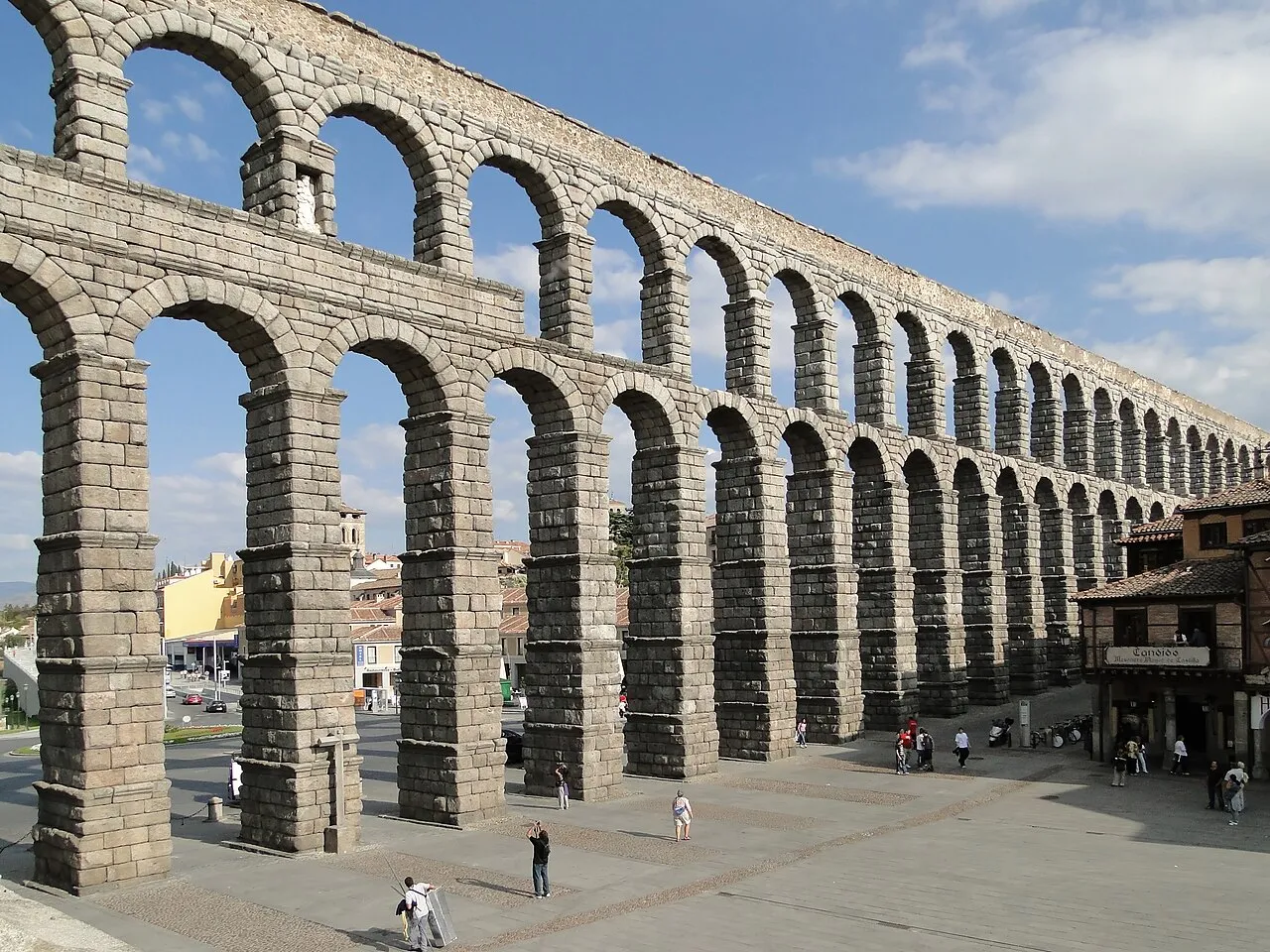
The classic roast-house district, at the foot of the aqueduct, with houses that have been roasting in wood-fired ovens for generations. Book at weekends, and reckon on a full cochinillo lunch taking its time: this is not a quick stop between two monuments.
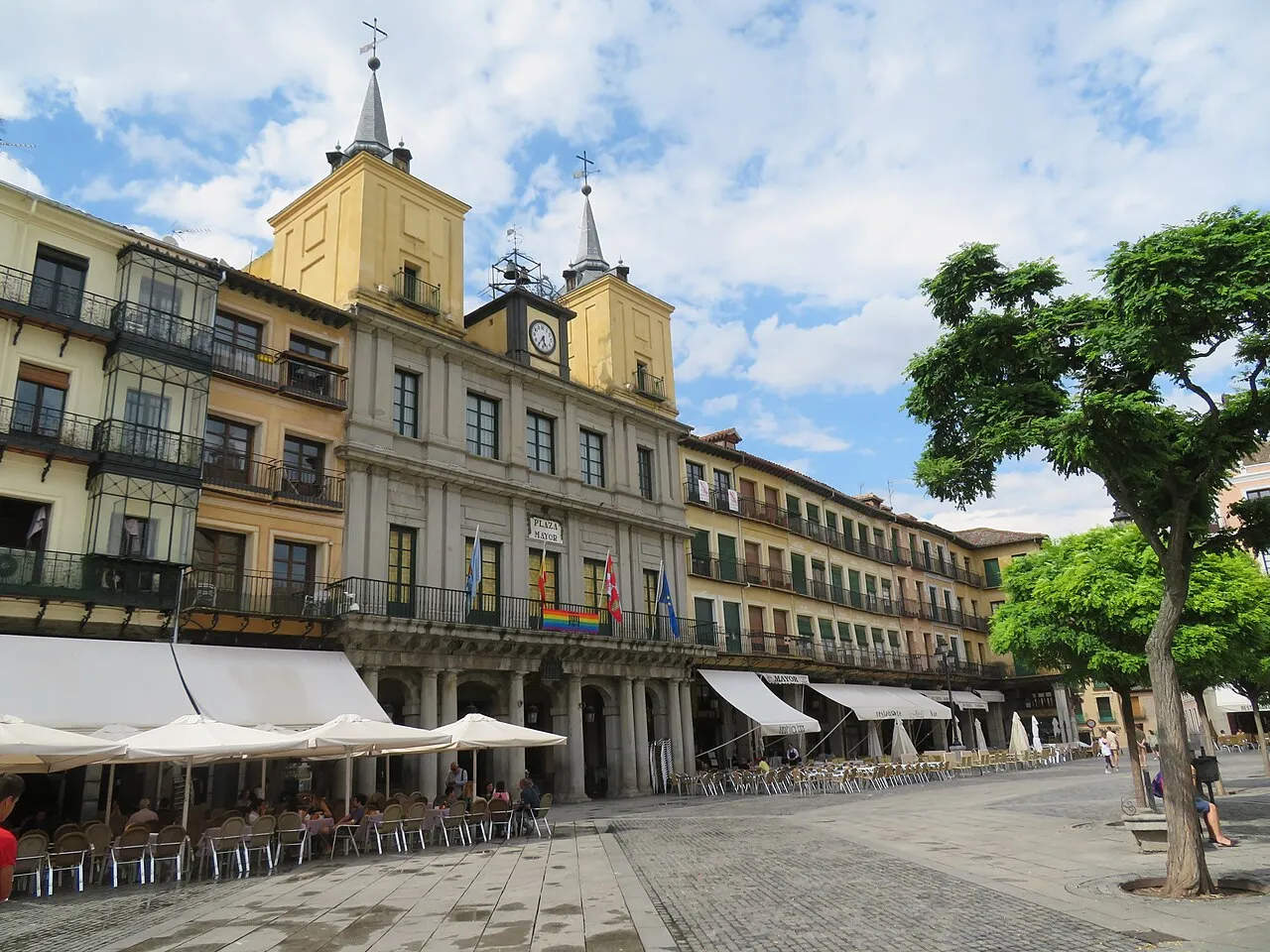
The other district of asadores and restaurants, under the arcades and along the streets running off the square. More central, with outdoor tables and the cathedral opposite. A good choice if you want to break the day in half without walking down to the aqueduct.
Judiones de La Granja are the other great speciality, and far less known outside the province. They are a white bean with a very large grain and a very fine skin, grown around La Granja de San Ildefonso, and they are stewed with ear, chorizo and morcilla into a substantial winter pot.
Roast milk-fed lamb is the direct alternative to cochinillo, made with the same technique and the same oven. Some people in Segovia prefer it, and in any serious asador the two are on the same level. It is ordered by the quarter.
Among the classic starters: sopa castellana, a garlic soup with a poached egg, morcilla de Segovia, the local blood sausage made with rice, and torreznos, crisp pork belly. And in season, pine-forest mushrooms and asparagus.
To drink, wines from Ribera del Duero, a little over an hour away, or from the Valtiendas denomination, very small and very local. Craft beer has also taken hold in the city in recent years.
The ponche and the timings
Ponche segoviano is the city's dessert, and it is stranger than it looks: layers of sponge soaked in syrup, pastry cream, a marzipan lid and burnt sugar on top, scored into diamonds. The combination of marzipan and cream is unusual in Spanish baking.
It is rich, and it is eaten in a small portion, almost always with coffee. It is sold in the confiterías, the cake shops of the old town, and you can take a whole one away, though bear in mind that it keeps for only a few days and spoils quickly in the heat.
On planning the day: a meal in an asador takes between an hour and a half and two hours, and that has to come off your sightseeing time. What works in Segovia is eating late, around three, after doing the aqueduct and the cathedral in the morning.
And book. The classic asadores fill up at weekends, on bank-holiday weekends and during Holy Week (Semana Santa), and turning up without a booking at two on a Saturday means waiting or finding something else. A phone call the day before solves it.
A landmark for finding the central restaurant district: the streets running off the square and the arcades hold a good share of the asadores and outdoor tables. It is also the midpoint of the route, and therefore the best midday stop.
Because it is a demonstration: if the meat comes apart under the edge of an earthenware plate, with no need for a knife, it has reached the right tenderness. The plate is then smashed on the floor. It is an old local tradition and not a routine invented for visitors, even if today it is also done for them.
What makes a cochinillo good?
Two things at once, and that is the difficulty: the skin should be crisp to the point of making a sound when you break it, and the meat underneath has to stay juicy rather than dry. It is roasted whole in an earthenware dish, in a wood-fired oven, with nothing but water and salt, no spices and no marinades. Everything depends on the oven, the timing and the hand behind it.
What can you eat if you do not fancy meat?
Judiones de La Granja, a white bean with a large grain and a very fine skin, stewed into a pot, though it comes with compango, the cured pork that goes in with it. Also sopa castellana, pine-forest mushrooms and asparagus in season. Vegetarian choice in the classic asadores is limited, but the old town has more contemporary alternatives.
What is ponche segoviano?
The city's dessert: layers of sponge soaked in syrup, pastry cream, a marzipan lid and burnt sugar scored into diamonds on top. The combination of marzipan and cream is not common in Spanish baking. It is eaten in a small portion and sold in the cake shops of the old town.
Do you need to book?
In the classic asadores, yes, above all at weekends, on bank-holiday weekends and during Holy Week. Turning up without a booking at two on a Saturday usually means a long wait or looking for something else. A phone call the day before solves it and costs nothing.
How much time should you set aside for lunch?
An hour and a half to two hours for a full meal in an asador, and it is worth taking that off your sightseeing time when planning the day. What works best is doing the aqueduct and the cathedral in the morning, eating around three and giving the afternoon to the Jewish Quarter and the Alcázar.
Practical information
The dishCochinillo roasted in a wood-fired oven: a suckling pig of about three weeks, fed on milk alone.
AlternativeMilk-fed lamb, same technique. Or judiones de La Granja, the other great speciality.
DessertPonche segoviano: sponge, cream, marzipan and burnt sugar scored into diamonds.
AreasAround the aqueduct and the Plaza Mayor. Both are classics.
BookingEssential at weekends, on bank-holiday weekends and during Holy Week.
TimeA meal in an asador takes an hour and a half to two hours. Take it off your day.
On the map
🎧 With Viavoy
Walk Segovia and listen at your own pace
Download Viavoy and walk Segovia offline, whenever you like.
from 3,99 €· one-off payment
City Pass · 9,99 €3 days, all the tours in Segovia