The Aqueduct of Segovia: why it still stands without mortar
Twenty thousand blocks fitted dry, a problem of levels solved with arches, and four centuries broken before Isabella the Catholic rebuilt it. What to look at, and from where.
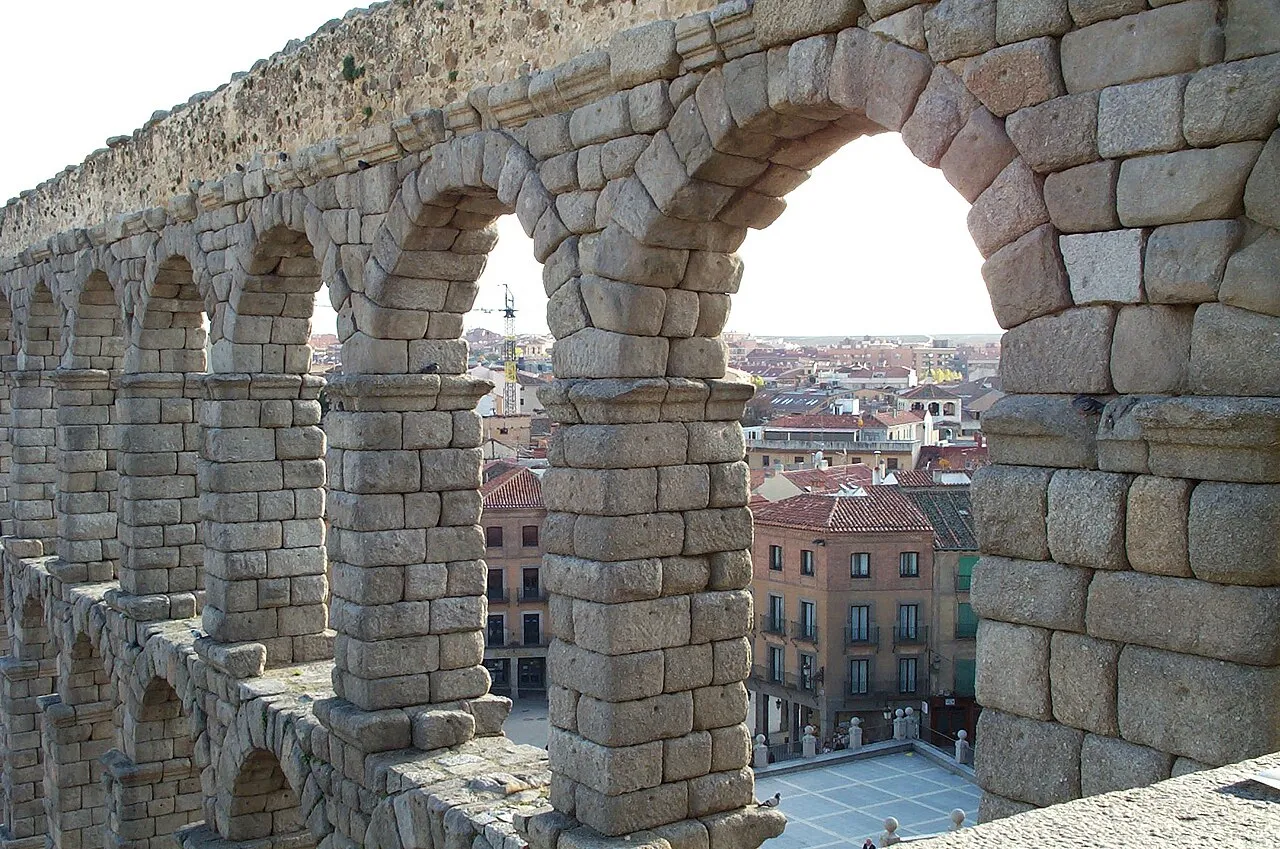
Everyone standing in front of the aqueduct asks the same question: how can it still be up with nothing holding the stones together. The answer is that the absence of mortar is not a shortcoming but the system itself. In a well-calculated arched structure, every block is pressed against its neighbours by the weight above it, and the more load it carries, the firmer it sits.
Go at dawn or at dusk. In raking light the joints between the blocks stand out and you can see that they are dry; at midday the stone flattens and that detail, which is the heart of the monument, disappears.
The problem it solves
It is not a bridge: it is a channel.
A Roman aqueduct does not work by pressure but by gravity, and that is the key to everything. Water comes down from the spring along a channel with a very slight gradient calculated to the millimetre: too steep and it erodes the conduit, too flat and the water goes stagnant. Holding that gradient constant over kilometres was the real challenge.
Segovia's water came from the Sierra de Guadarrama, more than fifteen kilometres away, and the whole route ran at ground level or underground. The problem appeared only here, where the ground drops into a valley: losing height would have meant the water never reaching the upper town.
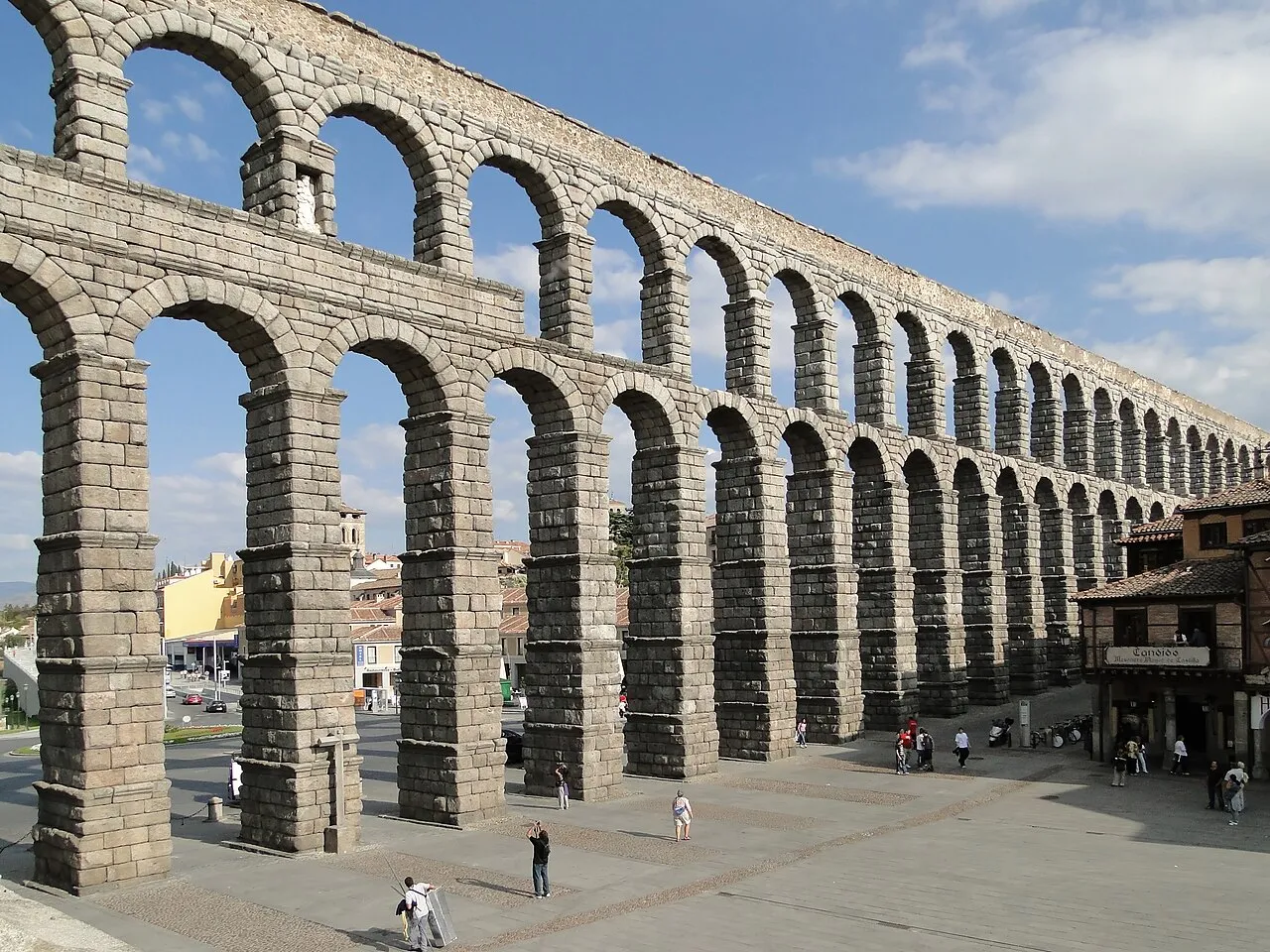
Hence the arches. They are not there to cross a river or to clear a physical obstacle, but to hold the channel at exactly the height it needs. At the deepest point, at the bottom of the valley, the structure reaches almost twenty-eight metres and is resolved with two superimposed tiers of arcading.
It originally had one hundred and sixty-seven arches. And it genuinely worked: it carried water to Segovia until a little over a century ago. That is the fact that impresses most, because this is not a ruin preserved for its own sake but a piece of infrastructure that stayed in service for some eighteen hundred years.
More than twenty thousand granite ashlars from the sierra, fitted dry and held up by their own weight. A World Heritage Site and the symbol of the city. Out in the open, visible at all hours and free, with three different viewpoints and all of them free.
Above the central point there are two empty niches with a series of holes where bronze letters were once fixed. That inscription was lost, and with it the name of the man who commissioned the work and the exact date. This is why the dating — late first century or early second — is still a deduction.
It was not always whole, and that chapter is rarely told. In 1072 the troops of a king of Toledo brought down some thirty arches during a military campaign, and the aqueduct was left cut and out of use along that stretch for four centuries.
The city lived with its broken aqueduct for whole generations, with neither the technical nor the financial means to repair it. That the rest of the structure stayed standing throughout, with no maintenance, says a good deal about the original calculation.
The rebuilding came around 1484 by order of Isabella the Catholic, directed by the prior of El Parral, and it followed the Roman layout scrupulously instead of replacing it with some more modern solution. It was a decision of heritage respect five centuries before the idea existed.
If you look closely at the arches in that section you will see slightly different cutting, with somewhat more regular ashlars and slightly finer joints. Telling the fifteenth-century stretch from the Roman one is the best game the monument offers, and it appears in almost no guidebook.
Where to look at it from
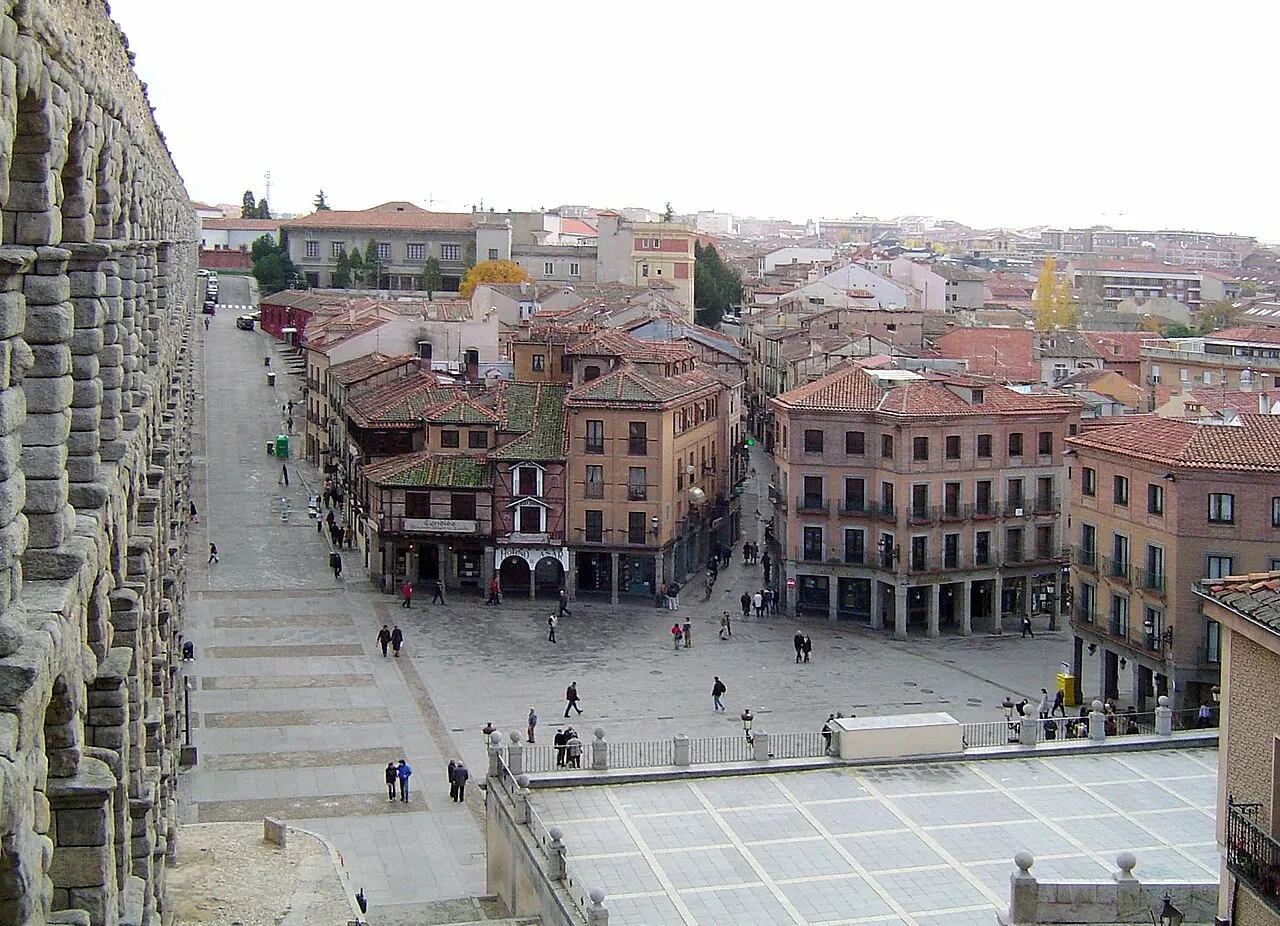
There are three viewpoints and all three are free. The first, from the Plaza del Azoguejo, at its feet: this is where you take in the height and where the scale flattens you, with the two tiers of arches rising almost twenty-eight metres.
The second, from the side stairway climbing towards the Postigo: from there the double arcading is seen in perspective, foreshortened, and you grasp the depth of the structure, which from below reads as flat.
And the third, right at the top, at the level of the channel: from there you see where the water ran, you can make out the gradient and you understand the purpose of the whole work. It is the one fewest people take and the one that explains most.
On timing: dawn or dusk, no argument. Raking light picks out the joints between the blocks and makes visible what makes the monument unique, which is the absence of mortar. At midday the granite flattens and the effect is lost completely.
3
Plaza del Azoguejo
📍 Foot of the aqueduct
The natural way into the city coming from the station and the car parks, and the point where the scale of the monument takes over. The side stairway up to the old town starts here, and gives the second, foreshortened viewpoint.
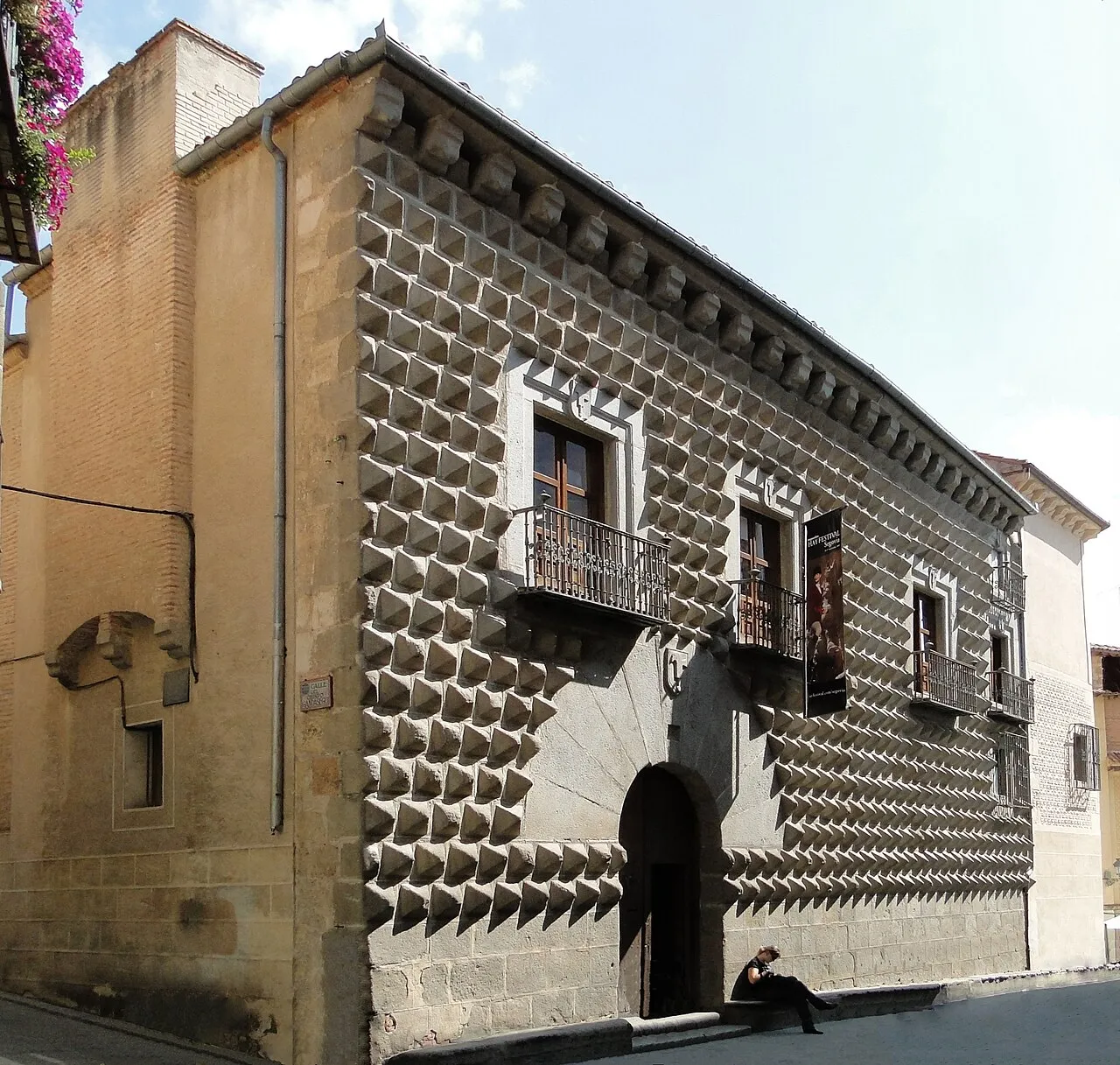
The first stop as you enter the city from the aqueduct: a fifteenth-century façade covered with more than six hundred ashlars cut into diamond points, unique in Spain. Today it houses the art school and you can go into the courtyard.
Because it does not need any: in a well-calculated arched structure, every block is pressed against its neighbours by the weight above it, and the more load it carries, the firmer it sits. The absence of mortar is not a shortcoming but the building system, and it has been working for almost two thousand years.
When was it built?
In the late first century or the early second, probably under Trajan, but the exact date is not known. The niches at the top once held a bronze inscription that was lost, and with it the name of the man who commissioned it and any firm dating. What remains are the holes the letters were fixed into.
Is it true that it was broken?
Yes, and for four centuries. In 1072 the troops of a king of Toledo brought down some thirty arches, and so it stayed, unused along that stretch, until Isabella the Catholic ordered it rebuilt around 1484, following the Roman layout. The ashlars in that section are slightly more regular and can be told apart if you look.
How long did it carry water to the city?
Until a little over a century ago, which means some eighteen hundred years of continuous service. That is probably the most impressive fact about the monument: it is not a ruin preserved for its historical value but a piece of infrastructure that was working practically until yesterday.
What is the best time to see it?
Dawn or dusk. Raking light picks out the joints between the blocks and makes visible what makes it unique, which is the absence of mortar. At midday the granite flattens visually and that detail disappears. On top of that, the square is far less crowded at those hours.
Can you climb to the top?
Yes: the side stairway climbing from the Azoguejo towards the Postigo takes you up to the level of the channel. Access is free and it is the viewpoint fewest people take: from there you see where the water ran and you understand the purpose of the whole work, which from below is lost on you.
Practical information
WherePlaza del Azoguejo, the natural way into the old town of Segovia.
PriceOut in the open, visible at all hours, no ticket.
Best timeDawn or dusk: raking light picks out the dry joints between the blocks.
Three viewsFrom the square, from the side stairway foreshortened, and from the top, at the level of the channel.
The detailLook for the stretch rebuilt in 1484: slightly more regular ashlars and finer joints.
DurationHalf an hour walking round it properly, taking in all three viewpoints.
🎧 With Viavoy
Walk Segovia and listen at your own pace
Download Viavoy and walk Segovia offline, whenever you like.
from 3,99 €· one-off payment
City Pass · 9,99 €3 days, all the tours in Segovia