A Roman aqueduct raised without a drop of mortar, a castle shaped like a ship's prow, the last Gothic cathedral in Spain and a twelve-sided church lost in the countryside.
Segovia can be walked from end to end in a day and it has a geography that reads itself: a spur of rock between two rivers, with the aqueduct at one end and the Alcázar at the other, and everything else in between. That straight line of twenty minutes concentrates two thousand years of history with hardly a gap: Roman public works, a medieval Jewish quarter, late Gothic of the sixteenth century and Romantic rebuilding of the nineteenth. This guide follows that axis, from east to west, in the order in which you walk it.
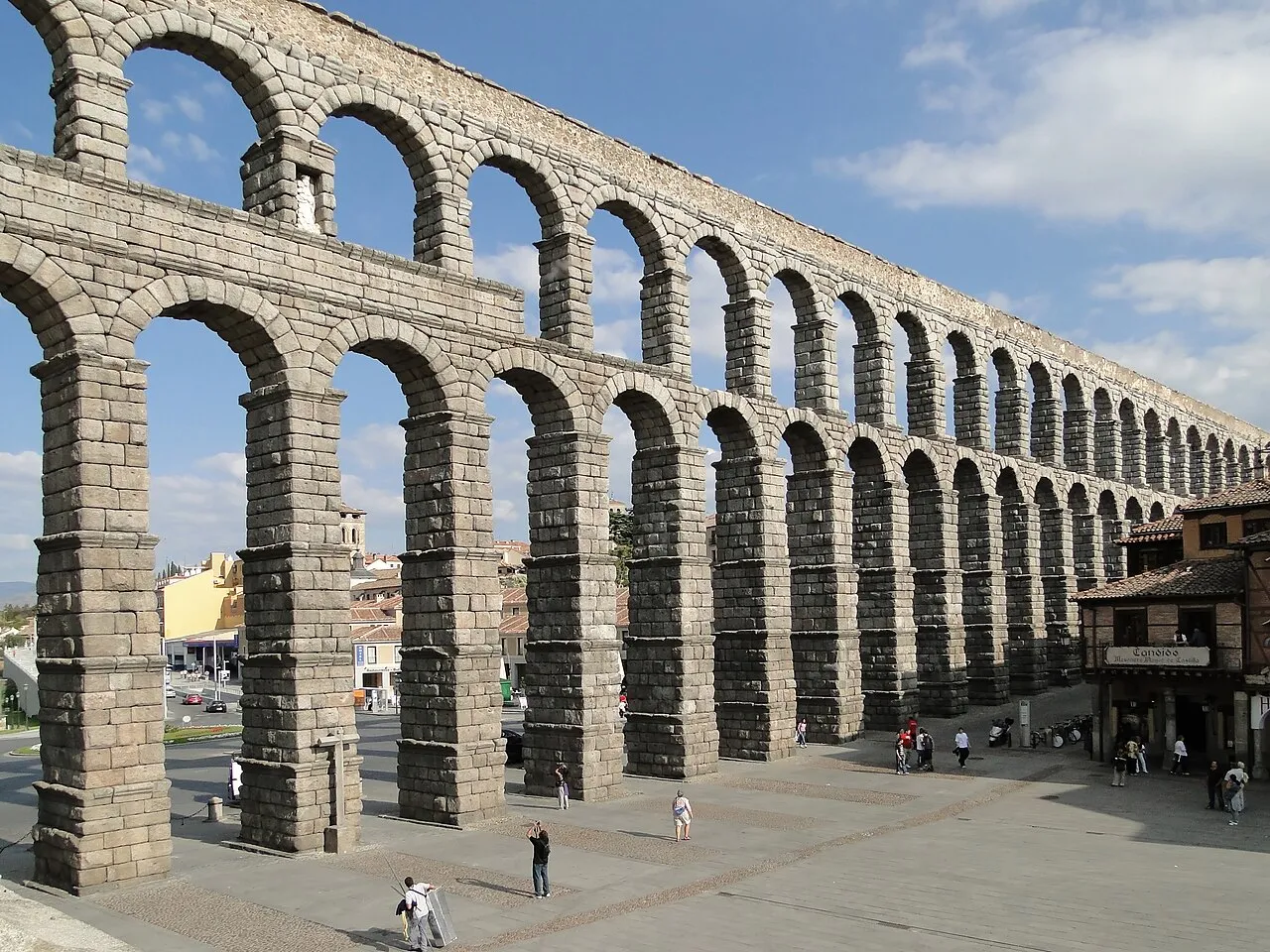
More than twenty thousand granite blocks fitted dry, with no mortar and no clamps, held up by their own weight alone for almost two thousand years. It had a hundred and sixty-seven arches and carried water to the city until a little over a century ago. It stood mutilated for four centuries after an attack in 1072, until Isabella the Catholic rebuilt it respecting the Roman design.
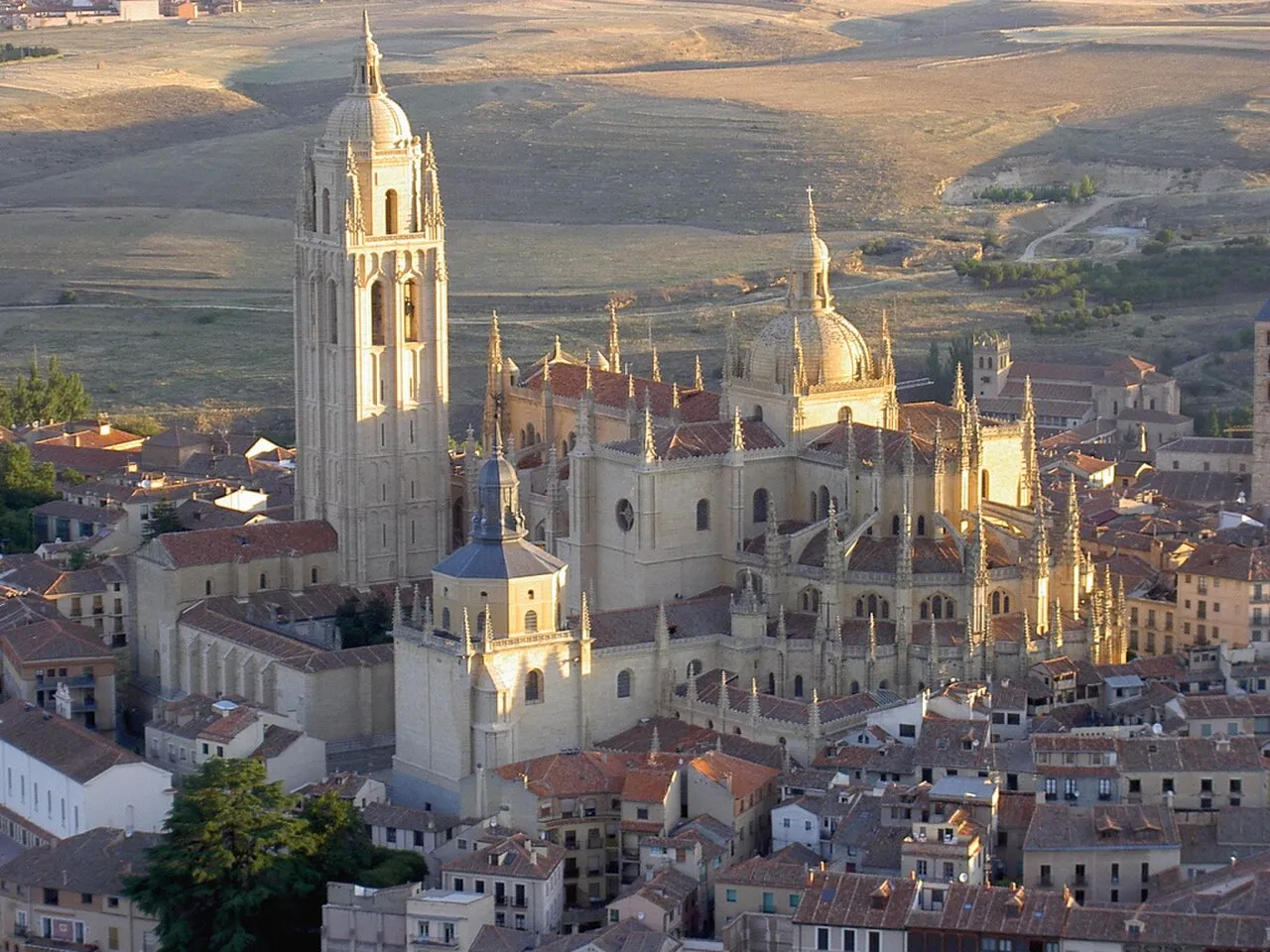
The Lady of Cathedrals, and the last Gothic one in Spain: it was begun in 1525, when Europe was already building in Renaissance style, and it was a deliberately conservative decision by the Gil de Hontañón family. It was raised here because the previous cathedral was destroyed in the war of the Comuneros. Its cloister was moved stone by stone from the old one.
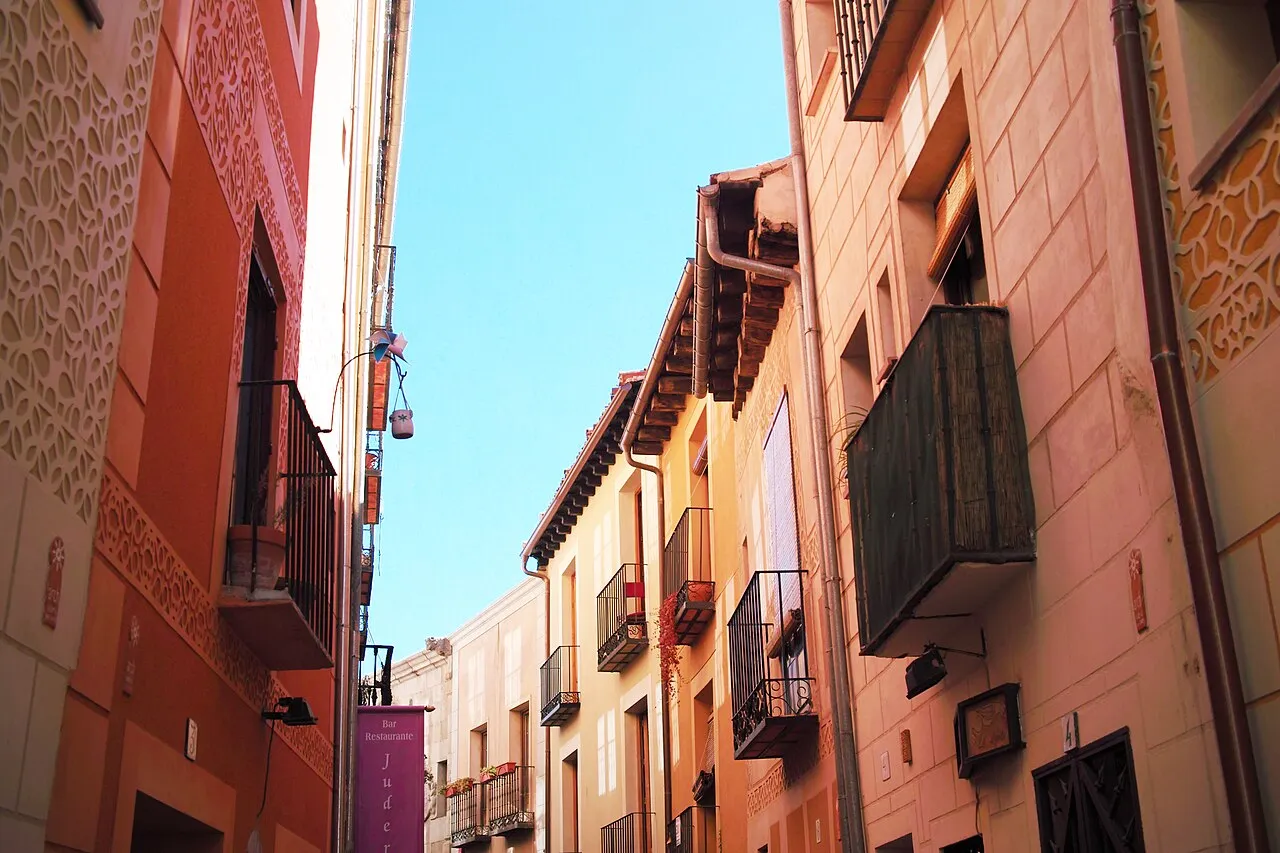
One of the most important Jewish quarters Castile ever had, with the medieval street plan intact and a silence that contrasts with the square two minutes away. The Great Synagogue is today the church of Corpus Christi. Going down through the Puerta de San Andrés you reach the Jewish cemetery, with tombs cut into the rock of the valley.
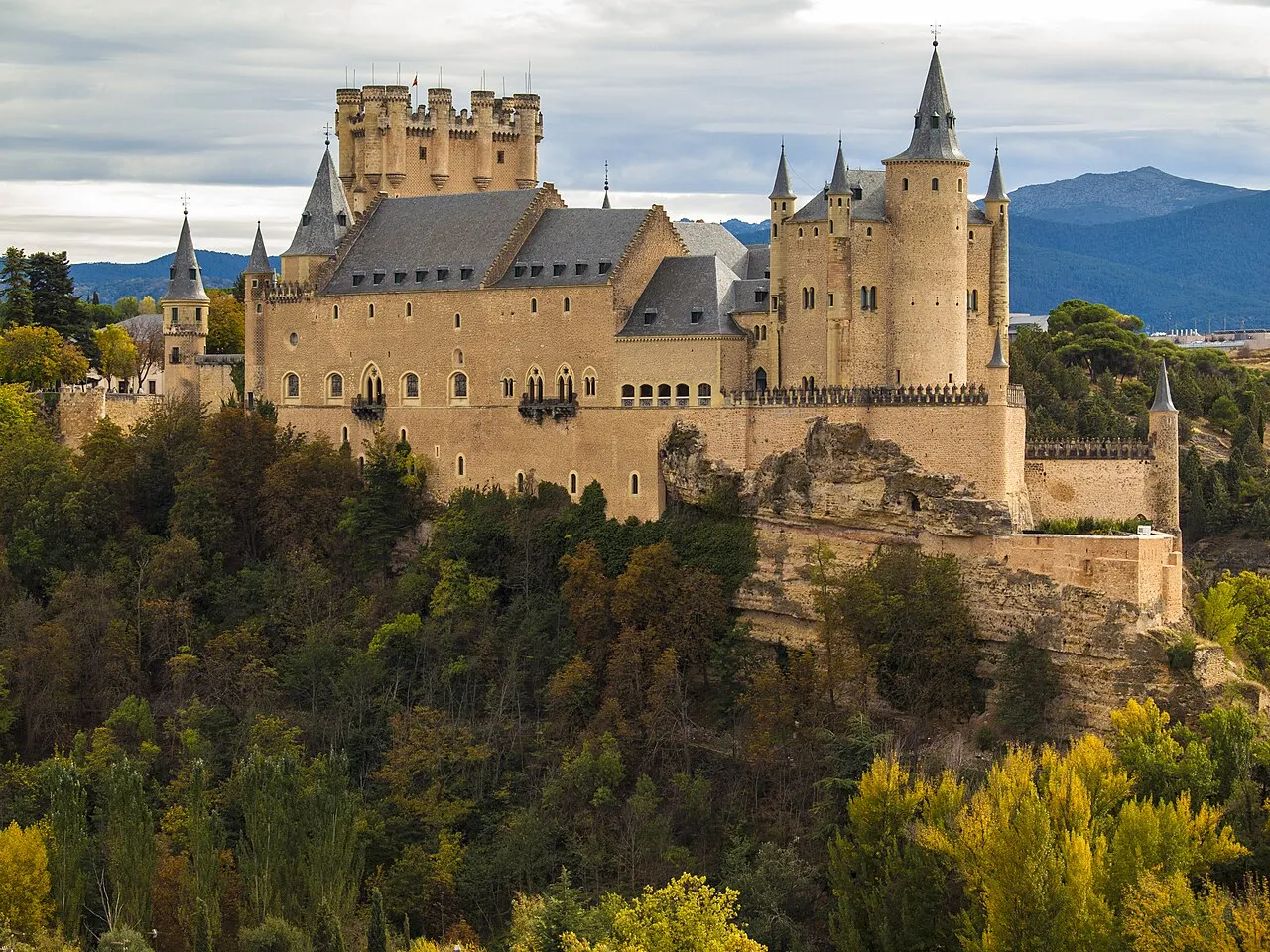
Driven into the point of the rock where two rivers meet, with a sheer drop on three sides: from the valley it looks like the prow of a stone ship. Isabella the Catholic left here in 1474 to proclaim herself queen. A fire devoured it in 1862, so the sharp spires that travelled round the world are a later re-creation.
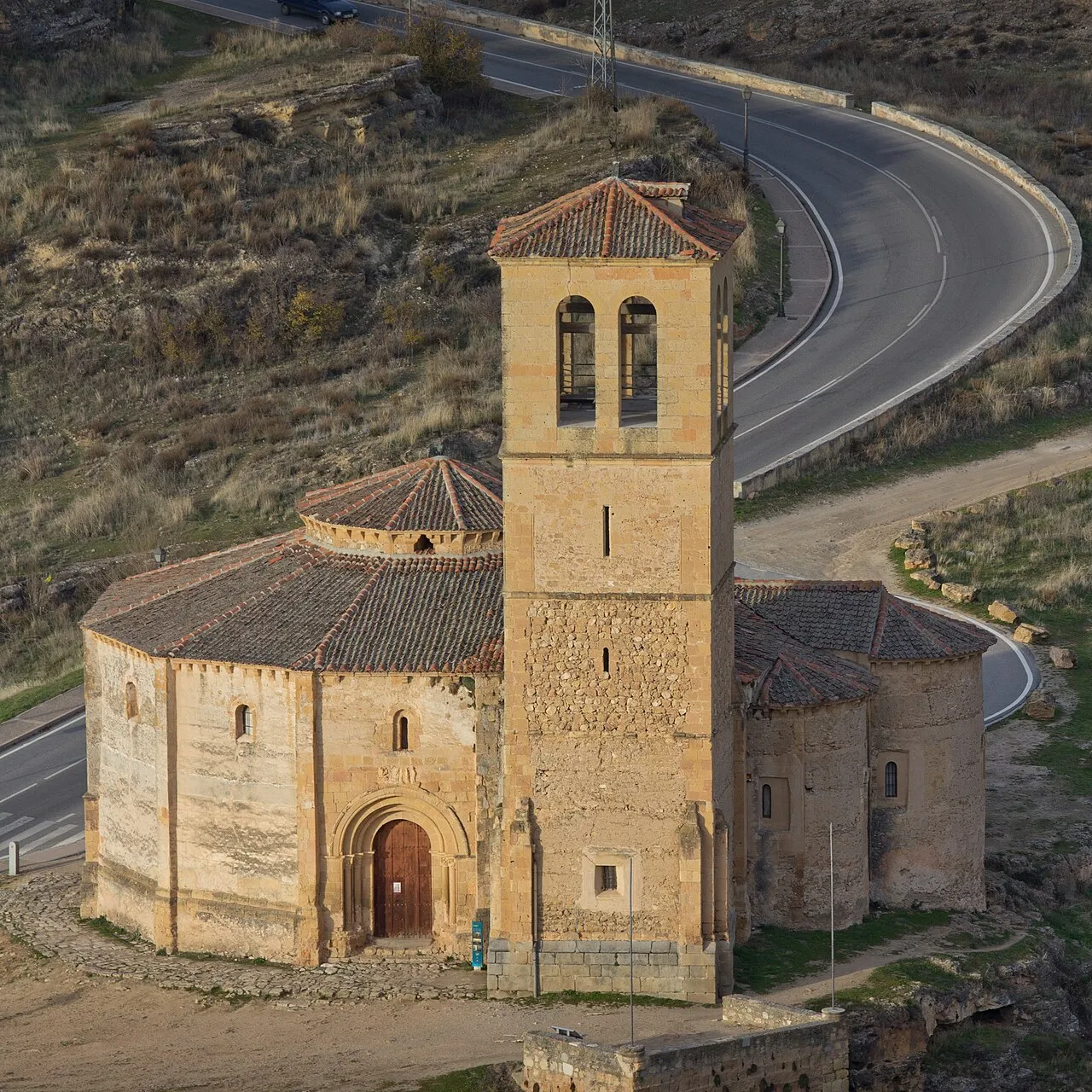
A twelve-sided polygon planted alone in the countryside, raised around 1208 to reproduce the shape of the Holy Sepulchre in Jerusalem. It was attributed to the Templars, but today the knights of the Holy Sepulchre are the likelier candidates. Inside, a two-storey shrine where a knight kept vigil over his arms. From its tower, the best view of the Alcázar.
Yes, with room to spare. The old town is a narrow spur walked from end to end in twenty minutes, and everything essential is on that axis. A long day covers the aqueduct, the cathedral, the Jewish quarter and the Alcázar. What usually gets left out is going down into the Eresma valley to see the Vera Cruz and the view of the castle from below.
How do you get there from Madrid?
By high-speed train from Chamartín in less than half an hour, though the station is on the outskirts and you have to take a city bus to the centre. By bus from Moncloa it takes a little over an hour but you arrive in the centre directly. It is the most convenient day trip Madrid has.
Is it worth going up the Alcázar tower?
If you have no problems with mobility or with heights, yes: it is some hundred and fifty steps of narrow spiral and from the top you command the valley, the sierra and the aqueduct beyond. It costs a supplement on the general ticket. If time is short, the interior rooms of the palace are enough.
Where is the best view of Segovia?
From the Eresma valley, going down from the Alcázar towards the Vera Cruz: that is where the castle appears as a stone prow on the rock. Also from the viewpoint on the Zamarramala road. Inside the old town, the best spot is the viewpoint over the Clamores valley, in the Jewish quarter.
What do you eat in Segovia?
Roast suckling pig, which is the city's dish and is served from a wood-fired oven with crackling skin; judiones from La Granja, the big local beans; and for pudding, ponche segoviano, a sponge with marzipan and burnt sugar. The roast houses around the aqueduct and the Plaza Mayor are the classics, and it is best to book at weekends.
When is the best time to visit?
Spring and autumn. Segovia is more than a thousand metres up and the winter is very cold, with frequent snow, while the Castilian summer comfortably passes thirty-five degrees. The city fills with day trips from Madrid, so sleeping here and getting up early changes the experience considerably.
Segovia on the map
The 5 must-sees, point by point.
🎧 With Viavoy
Walk Segovia and listen at your own pace
Download Viavoy and walk Segovia offline, whenever you like.
from 2,99 €· one-off payment
City Pass · 9,99 €3 days, all the tours in Segovia