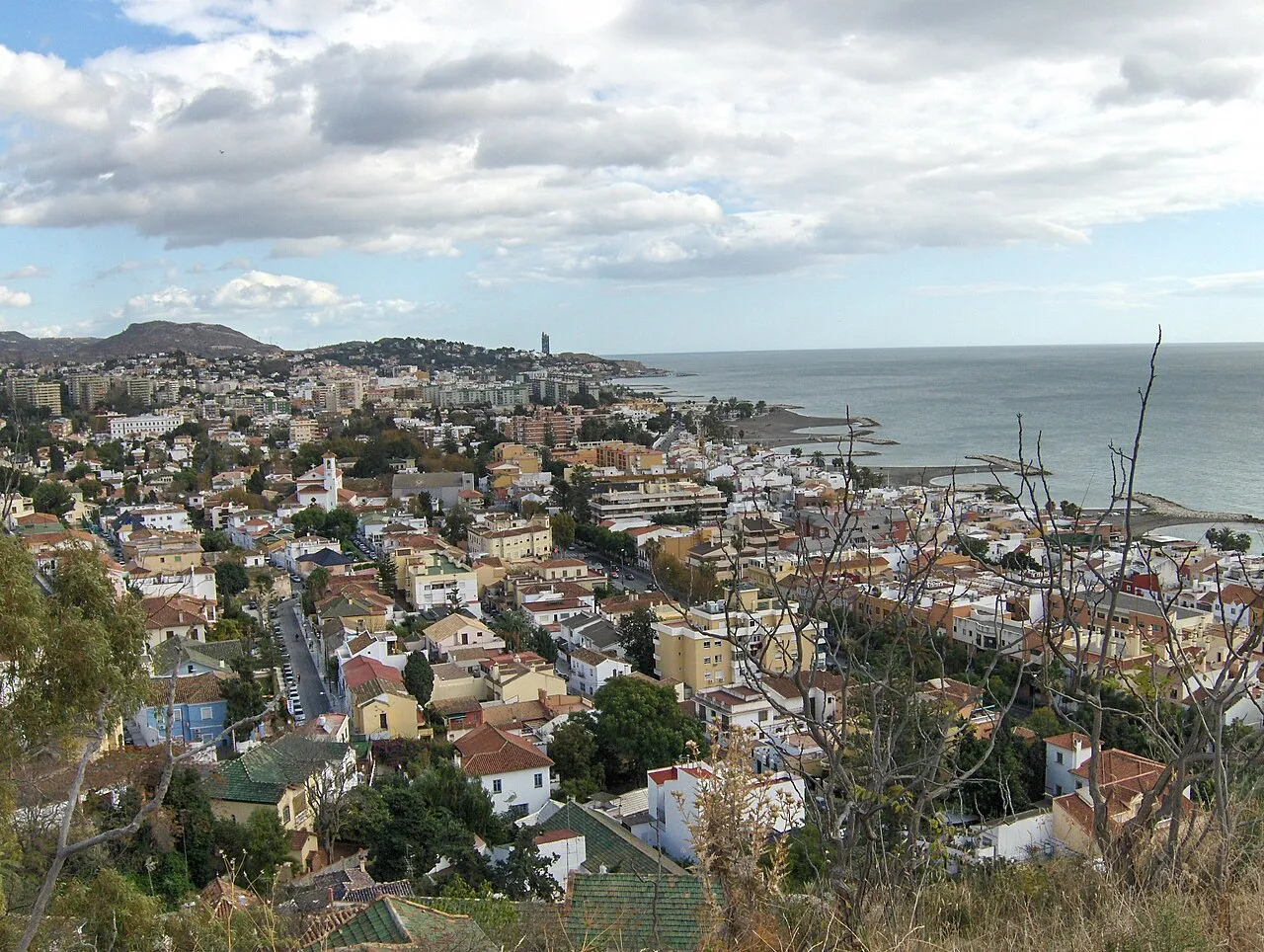
The best-preserved alcazaba in Spain, a cathedral missing a tower, the first Pompidou outside France and the quarter where the espeto was born. A selection ordered by area, to be walked on foot.
Málaga reads better if you understand the decision it took twenty years ago: to stop being only sun and beach and become a city of museums. Today it has more than thirty exhibition spaces, but beneath that new layer the three Málagas of always are still there — the Phoenician, the Andalusi and the seafaring — and what makes it interesting is that they touch. This guide goes by area, in the order in which they string together on foot: first the hill with the Alcazaba and Gibralfaro, then the centre and the Soho, then the harbour front and, at the end of the day, the fishermen's quarters to the east.
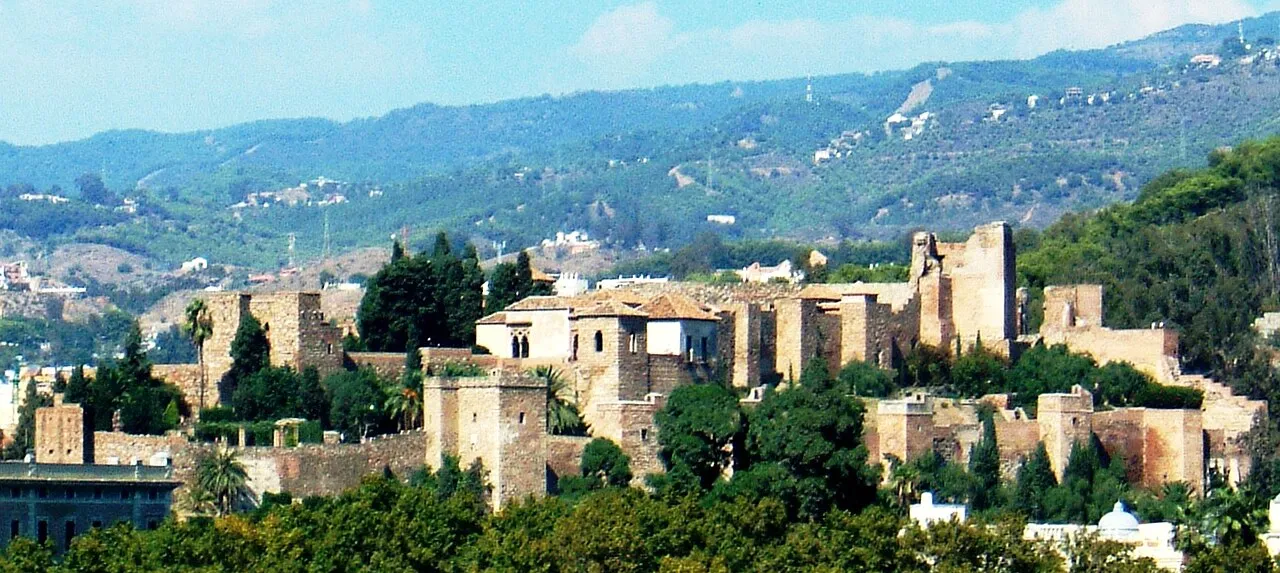
It passes for the best preserved in Spain and it is not a castle, it is a small city inside a wall: two enclosures, a zigzag path that broke the attacker's momentum, and above, palaces with water channels and pools on a dry hill. In the Puerta de las Columnas there are Roman column shafts taken from the theatre below, fitted into Arab walls without any attempt to hide them. There is a free lift on calle Guerrero.
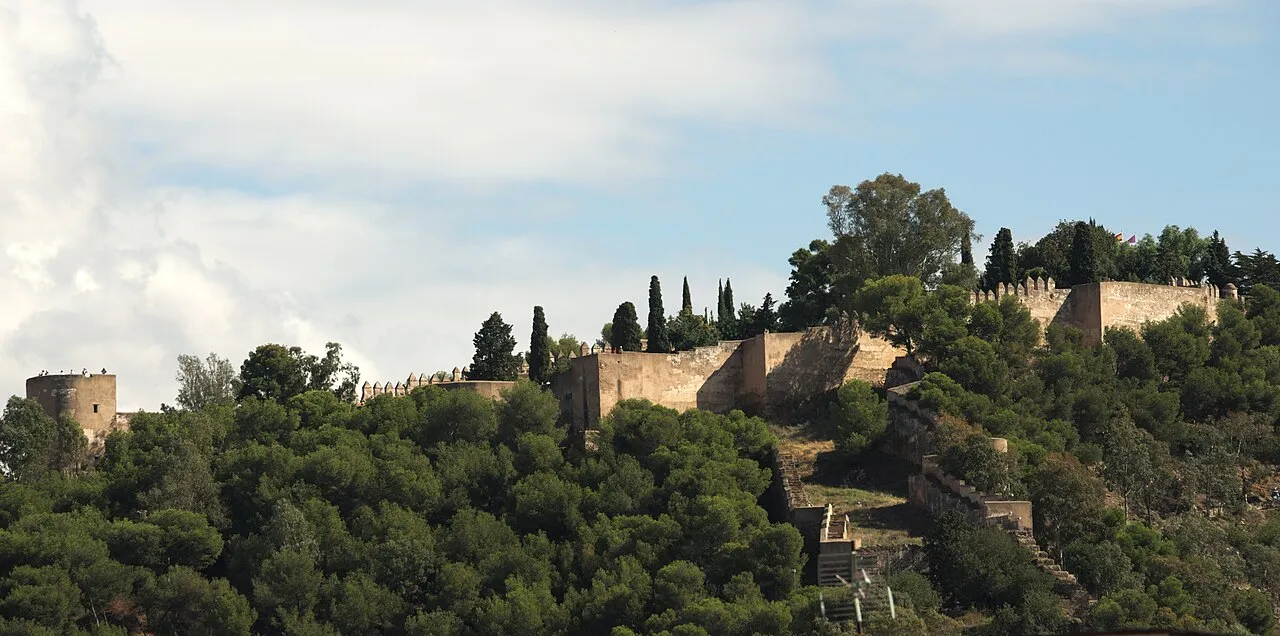
The fourteenth-century castle raised to protect the Alcazaba from above, with a well forty metres deep cut into the rock to withstand long sieges. The real visit is the adarve, the wall walk that goes the whole way round: harbour, cathedral, bullring and Mediterranean changing quadrant every few steps. Go up on the number 35 bus and walk down.
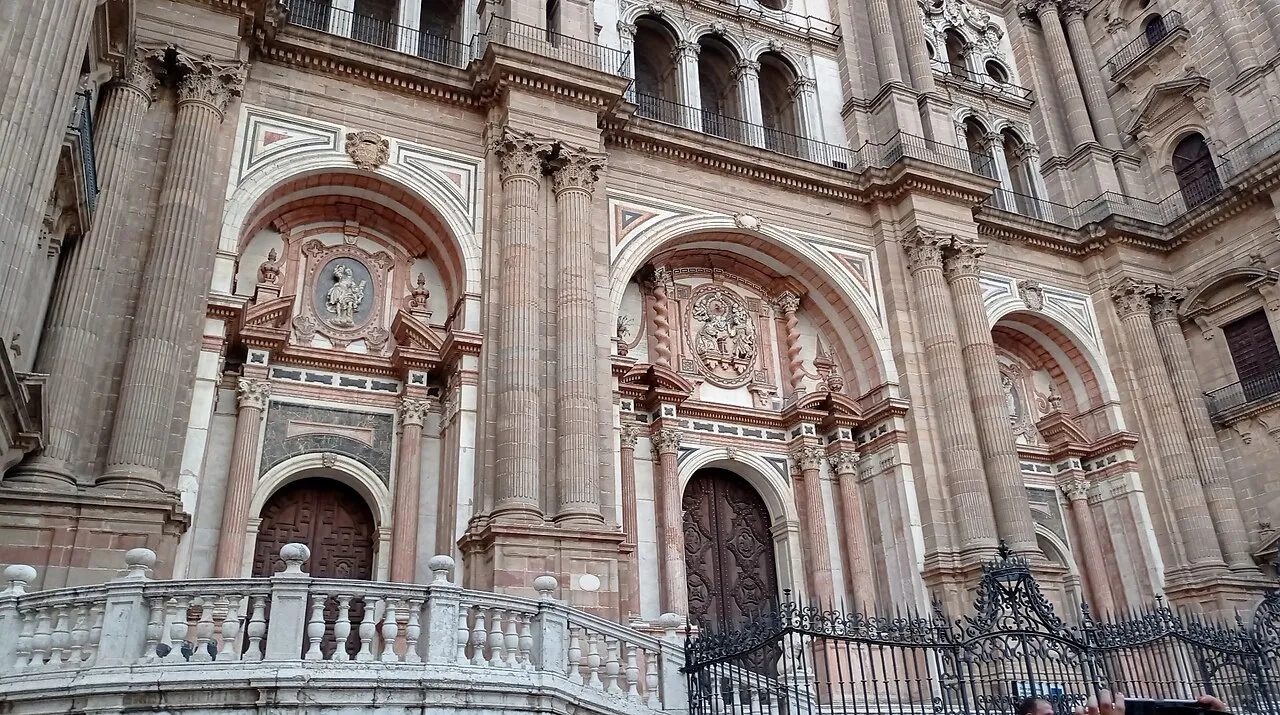
La Manquita, the little one-armed lady: of the two towers planned only one was raised, and the other starts with the same thickness as its twin because it had all been planned. Two hundred and fifty years of building left Gothic in the foundations, Renaissance in the body and Baroque on the façade. Inside, the choir stalls by Pedro de Mena. And up above you walk along the roofs, possible precisely because the roof was never finished.
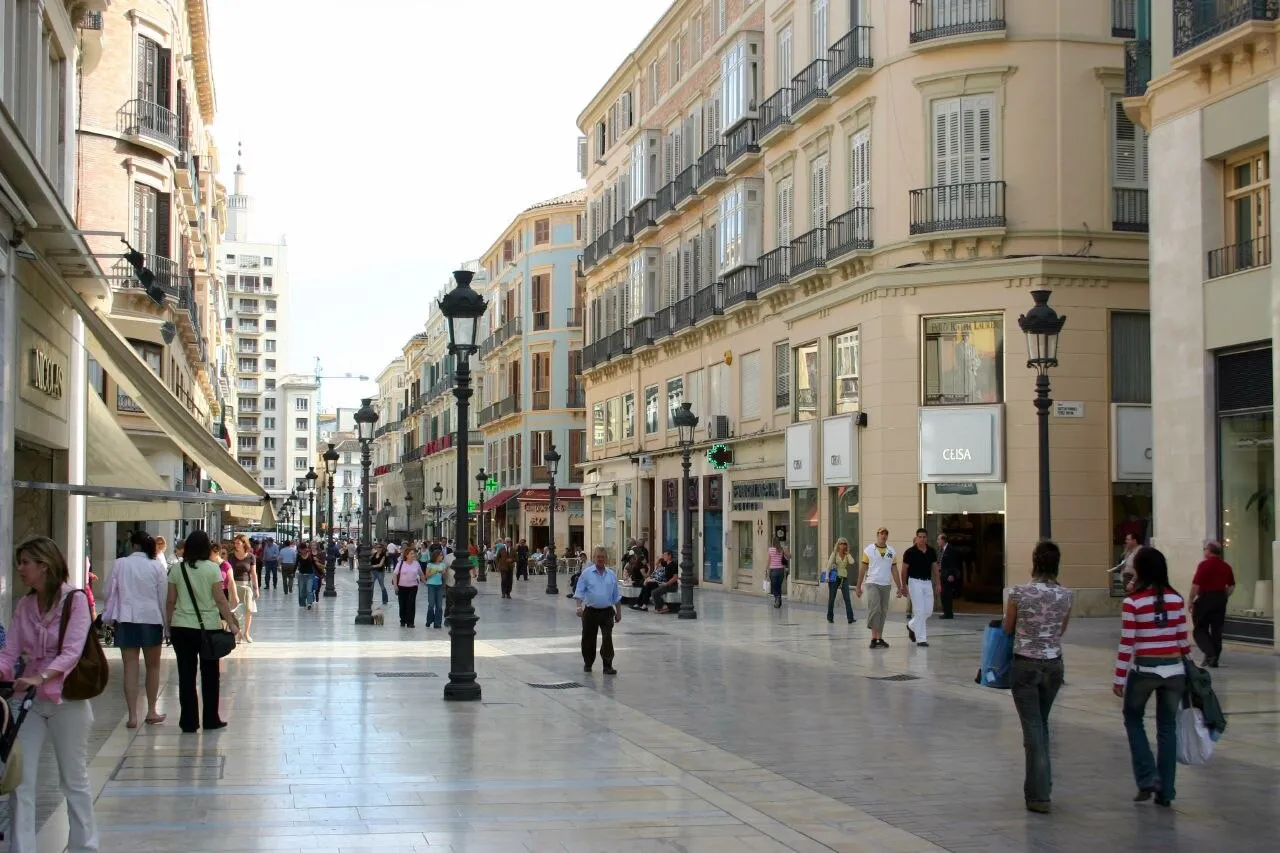
The city's drawing room, three hundred metres of grey marble between the Alameda and the Plaza de la Constitución. It opened in 1891 with a metal structure and rounded corners, designed with an eye on Chicago after the earthquake of 1884: an Andalusian street with the skeleton of a skyscraper. At dusk the whole of Málaga comes out to stroll, and in December the lights make it impassable.
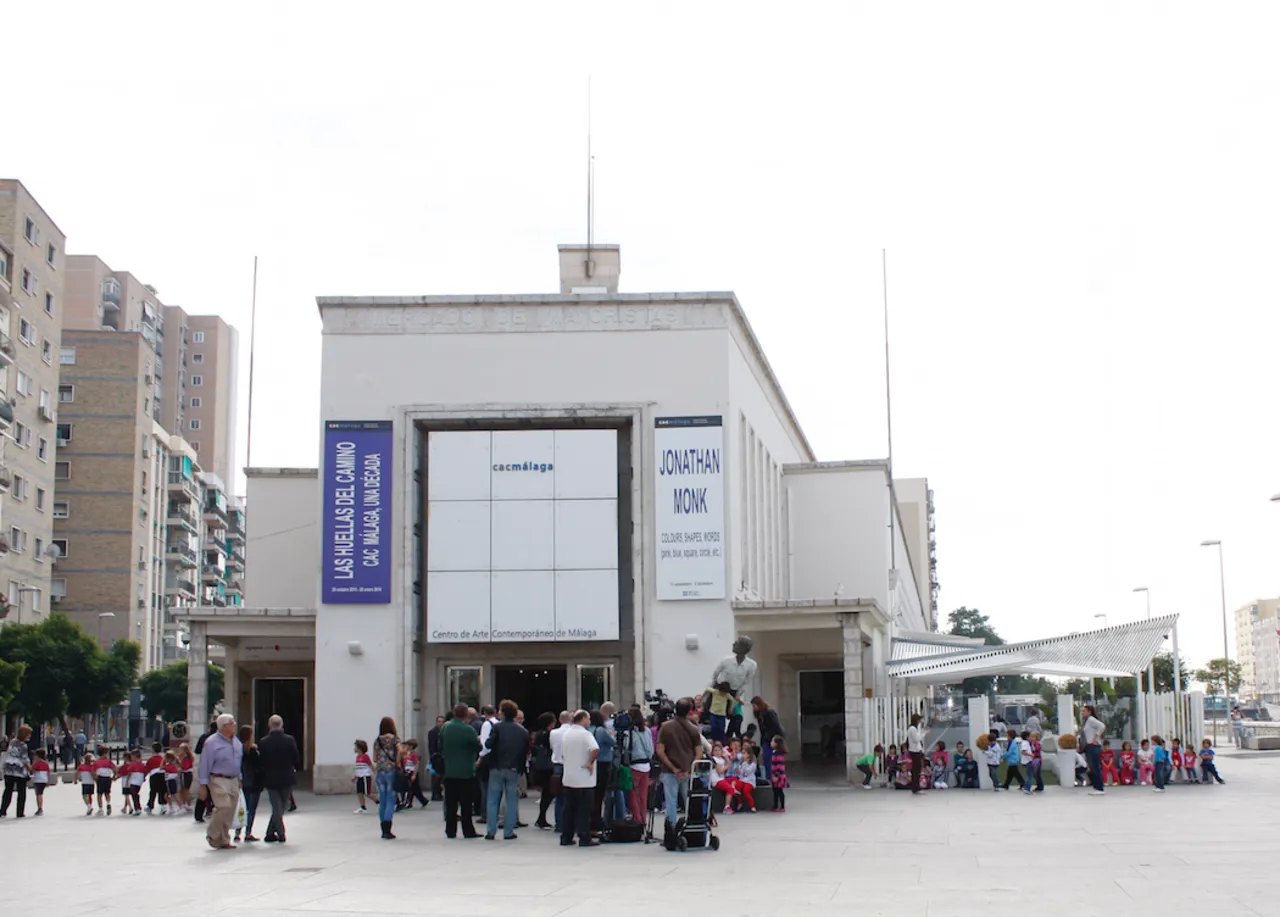
It was the wholesale fish and fruit market, opened in 1939 and signed by Luis Gutiérrez Soto, one of the great names of Spanish Rationalism. In 2003 it became an art centre without disguising its origin: the hall-like floor plan and the continuous windows are the same, and that industrial scale allows installations that would not fit in another museum. Entry is free.
A woman's face several storeys high signed by Shepard Fairey, the author of Obama's HOPE poster. It came here in 2013 with the MAUS festival, which brought international artists to paint the party walls of the Soho, those blind walls that are the ugliest thing in any quarter that has come down in the world. Two or three flat inks and hard outlines: pure political poster.
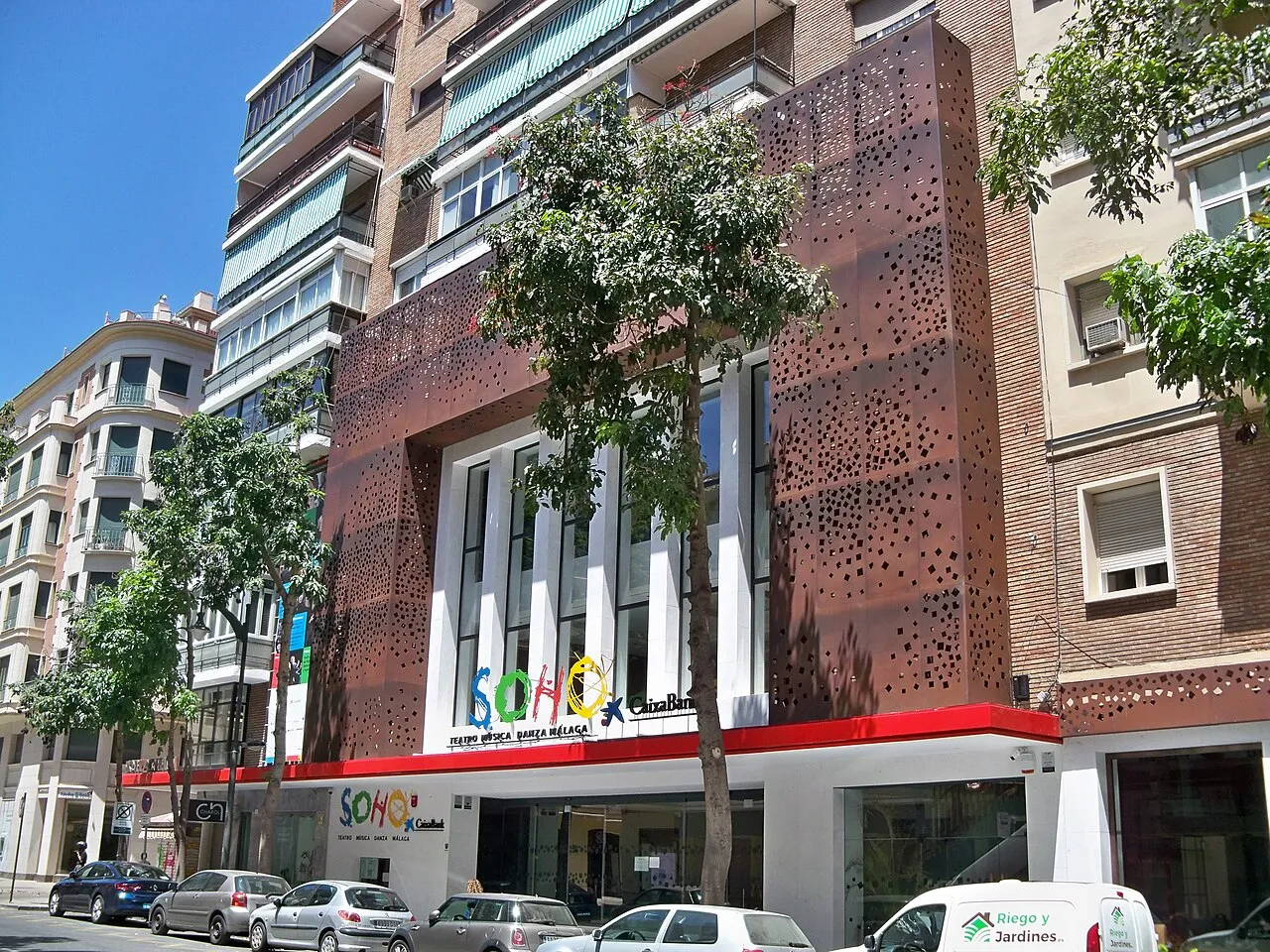
The old Teatro Alameda, closed and waiting, which Antonio Banderas reopened in 2019, inaugurating it himself by directing and dancing in A Chorus Line. The bet was not a hall for hire but its own production of musicals in Spanish with a permanent company, something that in Spain had been concentrated in Madrid. For the quarter it was worth more than a hundred murals.
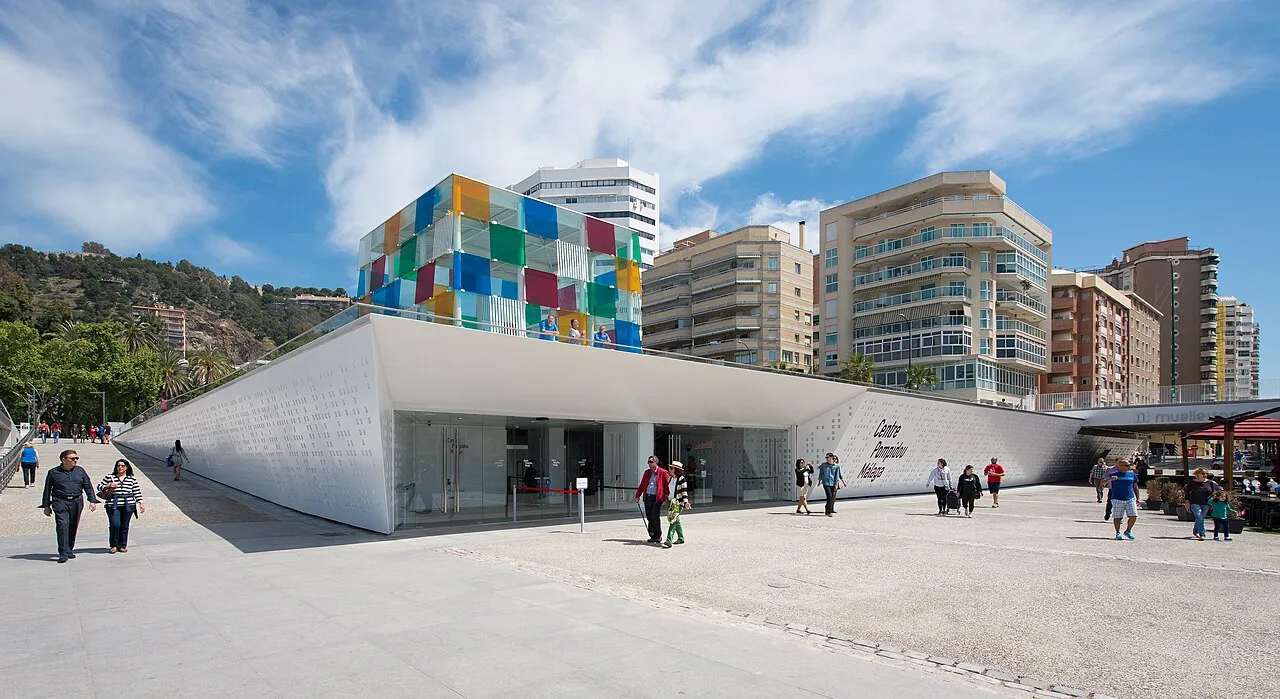
The Cube: eight metres of coloured glass by Daniel Buren that never look the same twice. The museum is buried beneath the promenade so as not to block the newly recovered sea frontage, and it was the first outpost of the Pompidou outside France, signed in 2015 as a five-year experiment. The holdings are lent from Paris and rotate.
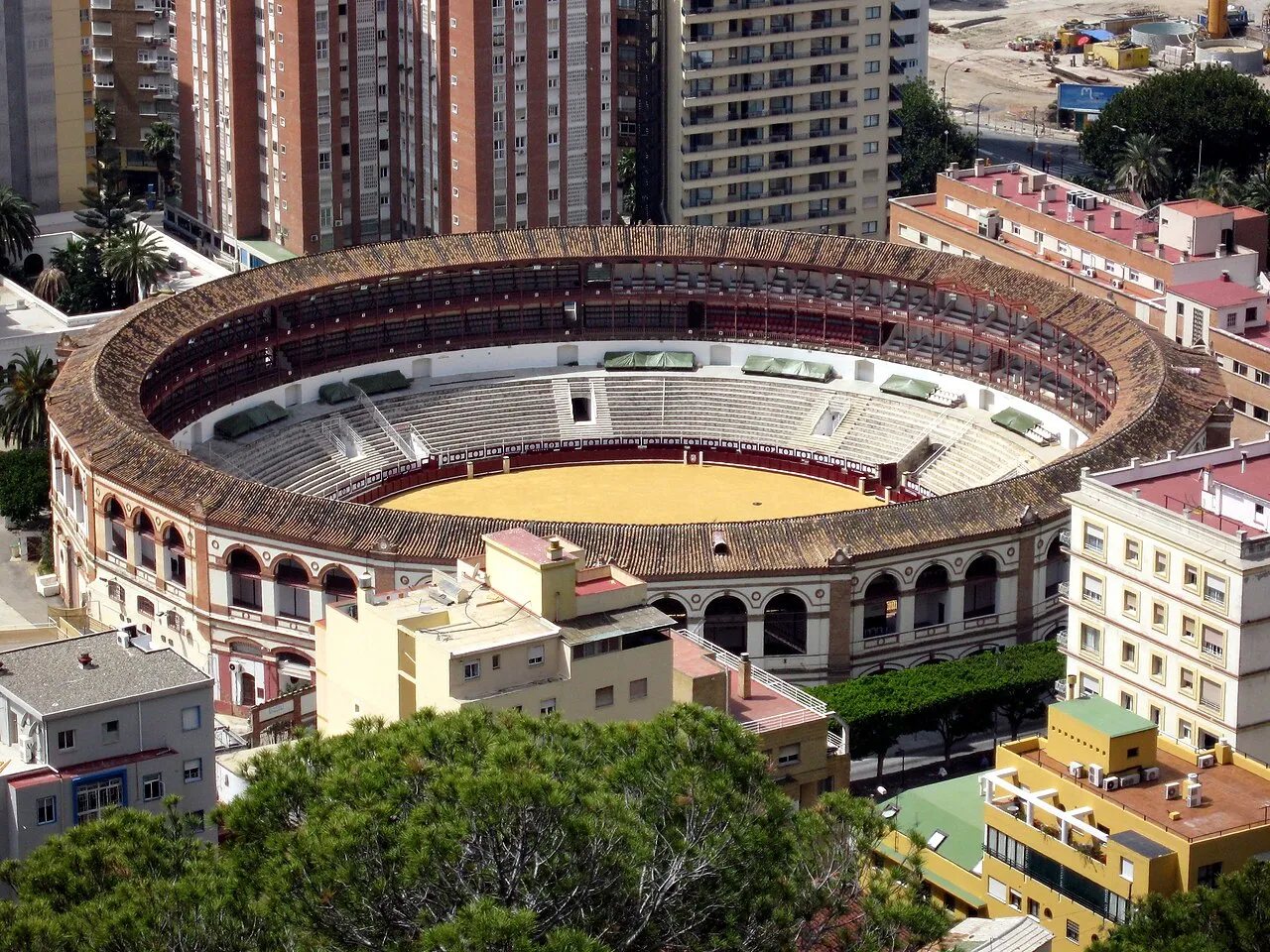
A ring of red brick from 1874 that gave its name to the quarter and to the beach. It is a sixteen-sided polygon in neo-Mudéjar style, signed by Joaquín Rucoba, the same man as the Mercado de Atarazanas. Its best image is not taken from the pavement but from Gibralfaro, where the ring appears entire among the rooftops with the sea behind it.
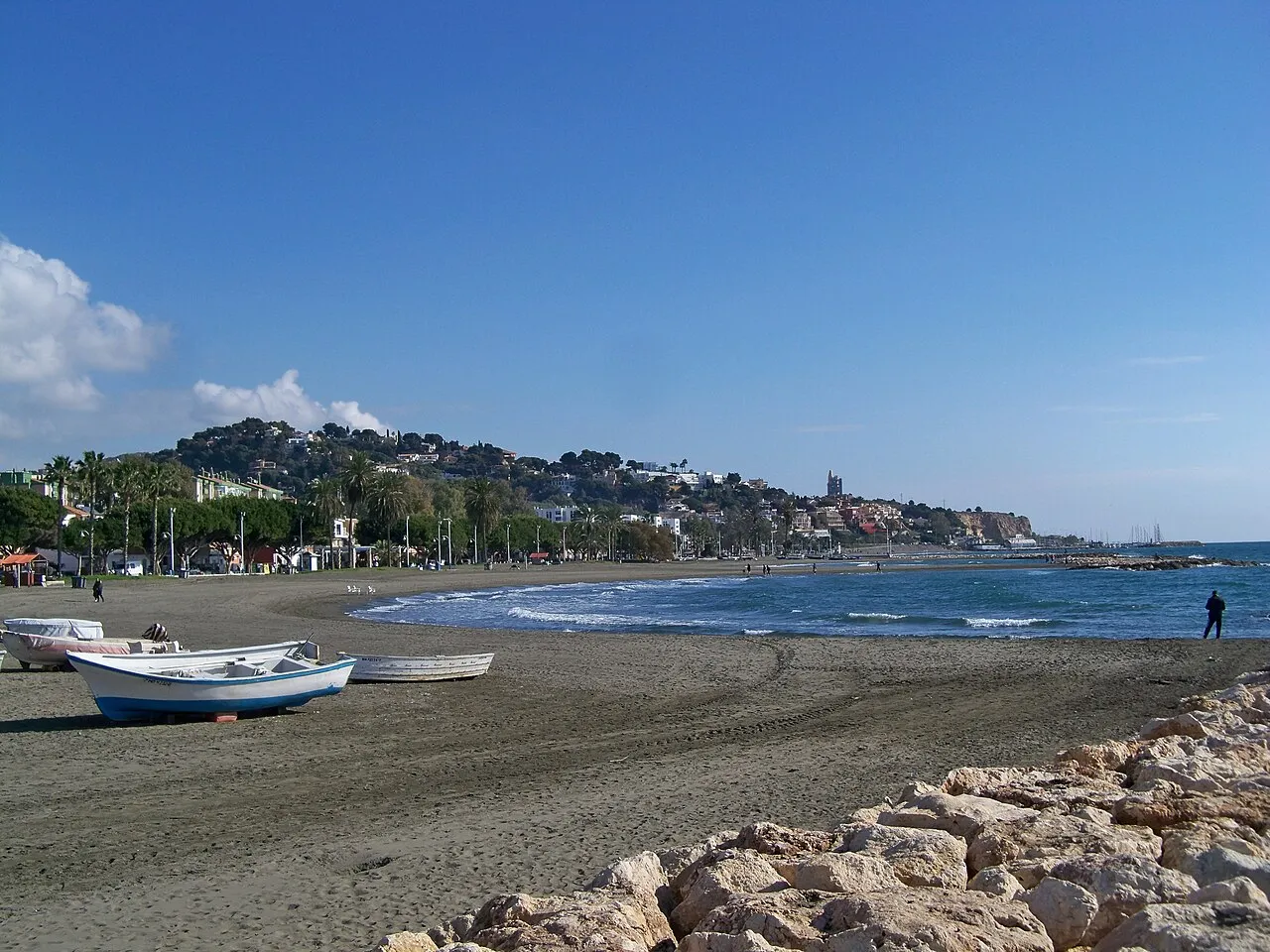
The oldest sea-front promenade in Málaga, boarded in wood beside a necklace of little coves separated by groynes. A century ago this was stony ground, market gardens and poor fishermen; it was turned into a bathing resort by the tram that linked the centre with El Palo and put the coves within an easy ride of home. Today the two souls live side by side, the seafaring and the genteel.
🎧 Pedregalejo and El Palo: Beaches, Beach Bars and Grilled Sardines📍 View on Google Maps
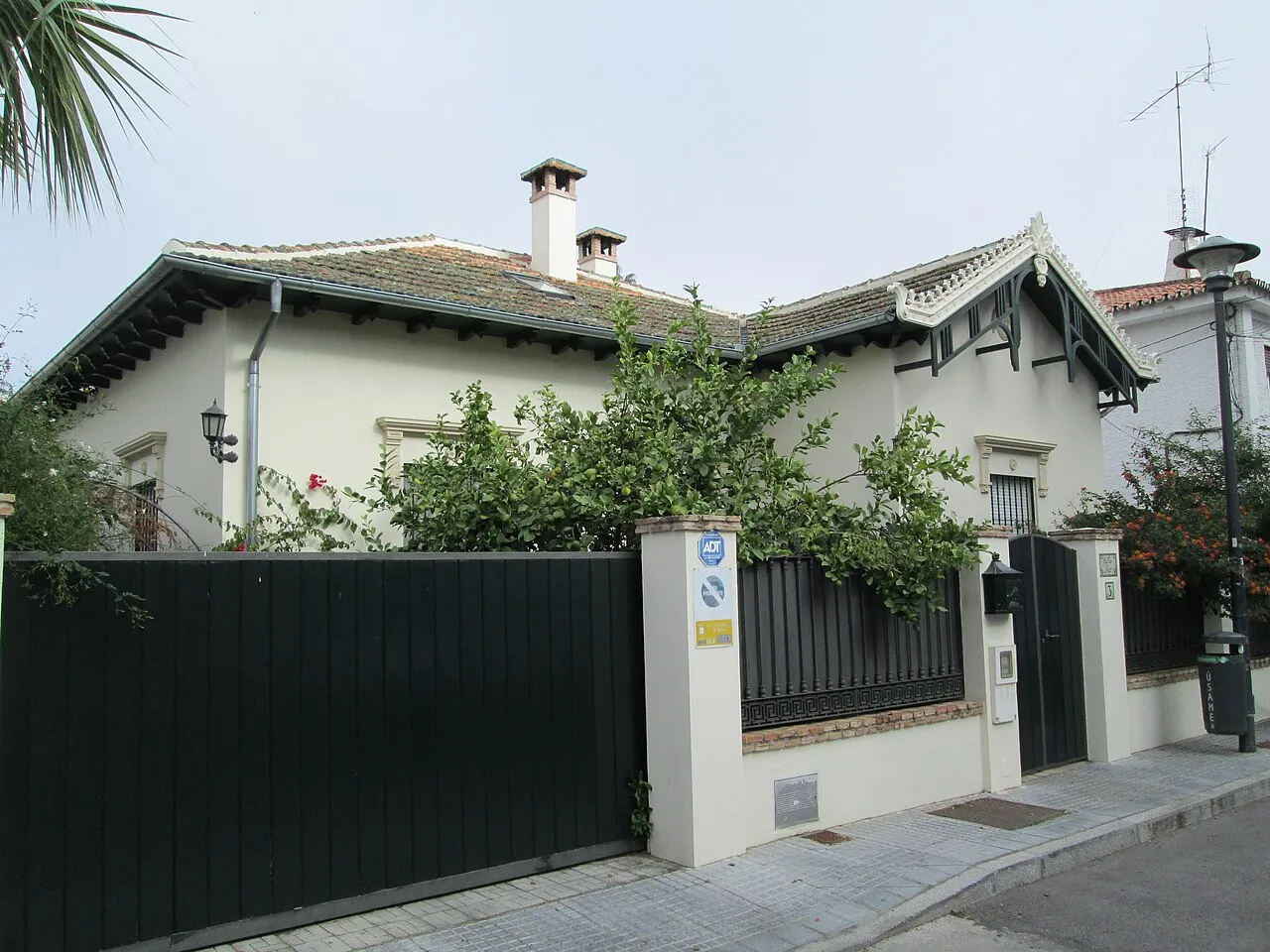
Whitewashed houses with extremely narrow fronts and a great deal of depth, built that way because the ground was taxed by metres of frontage onto the street. Between them slip villas with glazed bay windows and palm trees, the houses of the merchant families, many of them from northern Europe. Walk along the upper street, not along the promenade: the contrast is only visible there.
🎧 Pedregalejo and El Palo: Beaches, Beach Bars and Grilled Sardines📍 View on Google Maps
The parish church of the seafaring quarter, with no frills: a whitewashed front, a single nave and a simple bell tower, because it was raised by people who lived from fishing. It is still used for what it was built for. Every 16 July they take the Virgen del Carmen out in a decked boat and carry her over the water among flares.
🎧 Pedregalejo and El Palo: Beaches, Beach Bars and Grilled Sardines📍 View on Google Maps
The most seafaring quarter the city has left, with boats hauled up that carry an eye painted on the bow, of Phoenician origin, so that the vessel can «see» its course. The espeto was born here and here it is still made the same way: sardines on a cane driven into the sand beside an old boat filled with sand where the wood burns. From May to August.
🎧 Pedregalejo and El Palo: Beaches, Beach Bars and Grilled Sardines📍 View on Google Maps
Two days cover the essentials with room to spare: one for the hill — Alcazaba, Roman theatre and Gibralfaro — plus the cathedral and the centre, and another for the Soho, the harbour front and an afternoon in Pedregalejo and El Palo. With three days there is also room for two or three museums at leisure and a trip along the coast.
Is the joint ticket for the Alcazaba and Gibralfaro worth it?
Yes, if you are going to see both, which is the normal thing because they are linked by a walled path. The combined ticket costs a good deal less than the two separately and does not oblige you to do them on the same day. On top of that, the Alcazaba usually has a free slot on Sunday afternoons.
Can you get up to Gibralfaro without walking?
Yes. The number 35 city bus leaves from the centre and drops you at the castle gate, and a taxi takes ten minutes. What works best is to go up by bus and walk down, because the descent is comfortable, gives you views all the way and ends in the historic centre.
Which is the best quarter for eating fish?
El Palo and Pedregalejo, on the east coast, some twenty minutes from the centre by bus. Boats still go out to fish there and the beachside eating houses make the espeto on the sand. You eat well in the centre, but the fish of the day is in the east.
When is the best time of year?
Spring and autumn are ideal, with mild temperatures and a warm sea well into October. Summer is hot but bearable thanks to the breeze, and winter is among the mildest in Europe, though swimming is no longer on the cards.
Does Málaga have a real beach in the city?
Yes, and several. La Malagueta is the urban one, right behind the bullring and fifteen minutes' walk from the centre. To the east, Pedregalejo and El Palo have quieter little coves and a better neighbourhood feel, and to the west is La Misericordia, the most local of them all.
Málaga on the map
The 13 must-sees, point by point.
🎧 With Viavoy
Walk Málaga and listen at your own pace
Download Viavoy and walk Málaga offline, whenever you like.