Madrid
Madrid · What to see

What to see in Madrid: the 15 essentials

From the great palaces to a neighbourhood vermouth: the definitive guide to walking Madrid on foot and at your own pace.

Madrid has an enormous advantage over almost any other European capital: nearly everything you want to see fits inside a rectangle you can cross on foot in forty minutes. From the Palacio Real to the Museo del Prado is two kilometres; from the Templo de Debod to the Plaza Mayor, not much more. This guide gathers the fifteen stops that really define the city, ordered so that they can be strung together on foot and without stress: first the Madrid of the Habsburgs, then the modern axis of the Gran Vía and finally the Paseo del Arte and the Retiro. All of them can be visited, almost half are free, and at each one you will find what to look for, what it costs and what time to go.

The 15 must-sees

1Puerta del Sol

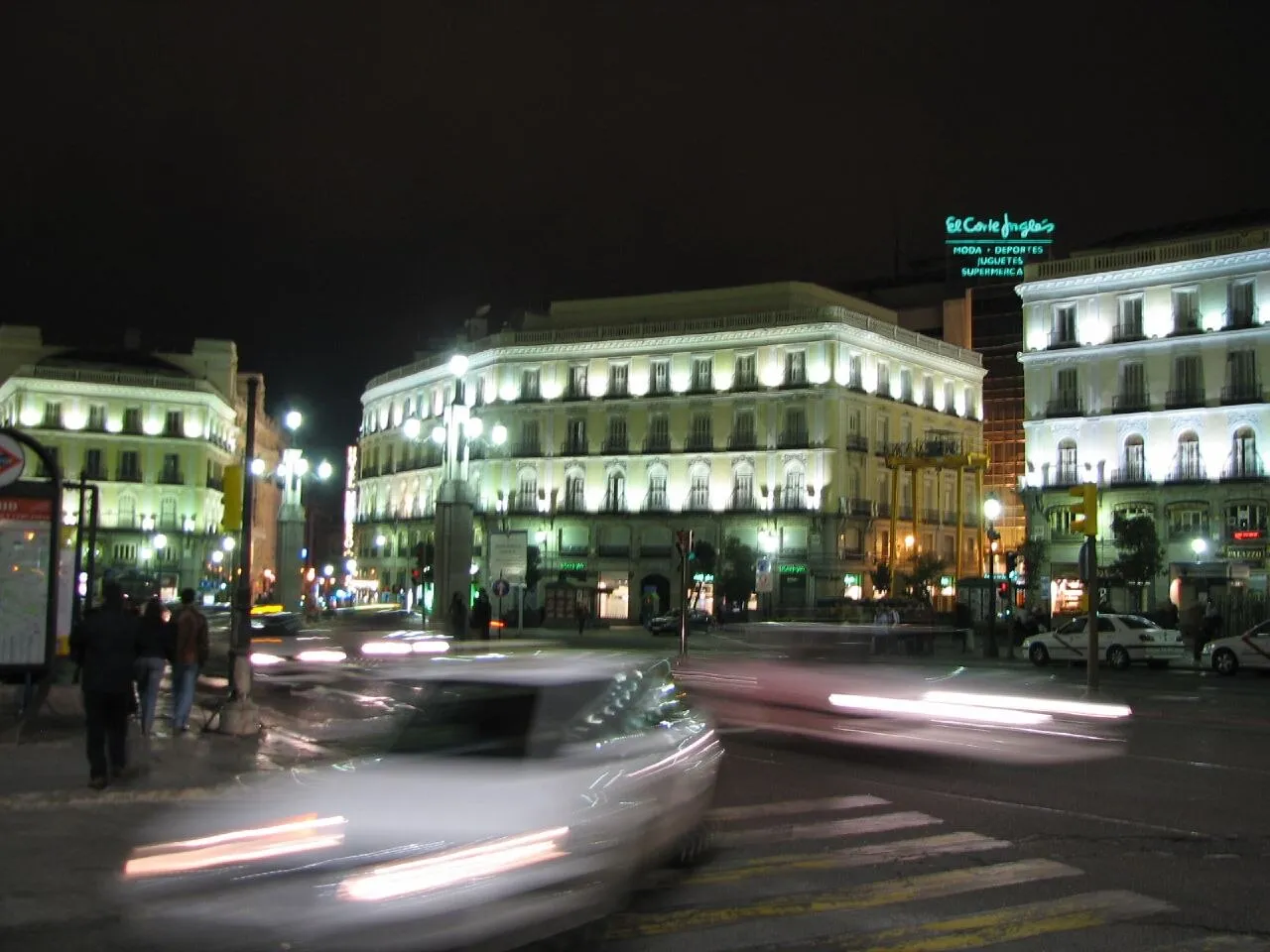
Puerta del Sol

The navel of the country begins literally under your feet: the Kilómetro Cero slab, in front of the Real Casa de Correos, marks the point from which Spain's roads are measured and Madrid's streets are numbered. On that reddish façade is the clock whose chimes ring in the New Year, given to the city in 1866, and on one corner waits the Bear and the Strawberry Tree, where the bear is not eating the fruit: it is stretching to reach it. The people of Madrid rose here on 2 May 1808, the scene Goya made immortal. Go before nine in the morning if you want the photograph without fifty people in front of it, and do not eat on the square: two streets away, at Casa Labra, you eat better and for a quarter of the price.

🎧 Historic & Royal Madrid (Habsburg Quarter)📍 View on Google Maps
2Plaza Mayor

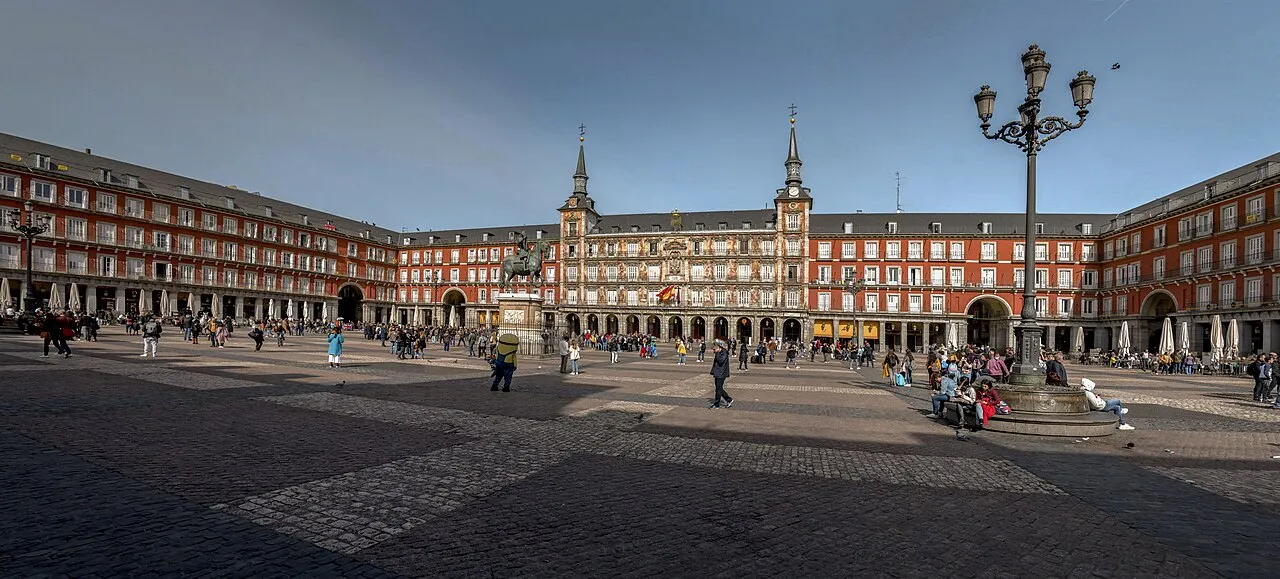
Plaza Mayor

Madrid's great open-air drawing room: a rectangle closed in by identical balconies, finished in 1619 and rebuilt after three fires. For centuries those balconies were a giant box from which bullfights, proclamations of kings, markets and also autos-da-fé of the Inquisition were watched. Look at the Casa de la Panadería, the one with the painted façade: it looks ancient, but the frescoes are from 1992. On Sunday mornings the stamp and coin market is set up under the arcades, with almost a century of tradition behind it. Cross it, take the photograph, eat a fried-squid roll in the surrounding streets and do not sit at the terraces inside: they charge you for the scenery.

🎧 Historic & Royal Madrid (Habsburg Quarter)📍 View on Google Maps
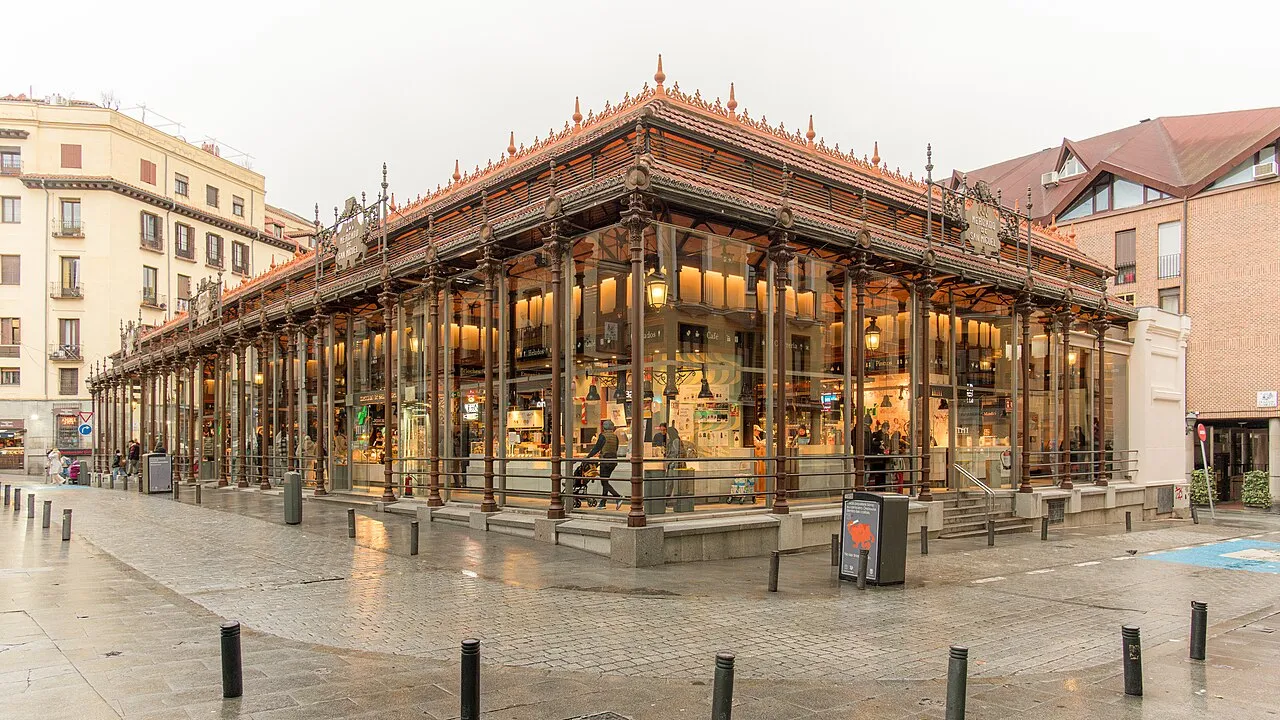
3San Miguel Market

San Miguel Market

The last iron market still standing in Madrid, built in 1916 on the site of a church demolished during the French occupation. It was an ordinary neighbourhood market until, at the beginning of this century, it was turned into a temple of tapas, and today it is the most visited in the city. It is beautiful and it is worth the walk round, but it is best to go in knowing what it is: expensive and very touristy, with the locals conspicuous by their absence. The clever move is to have a glass of vermouth watching the bustle under the iron structure and then walk a hundred metres down the Cava de San Miguel, where the houses hide up to eight storeys down the ravine.

🎧 Historic & Royal Madrid (Habsburg Quarter)📍 View on Google Maps
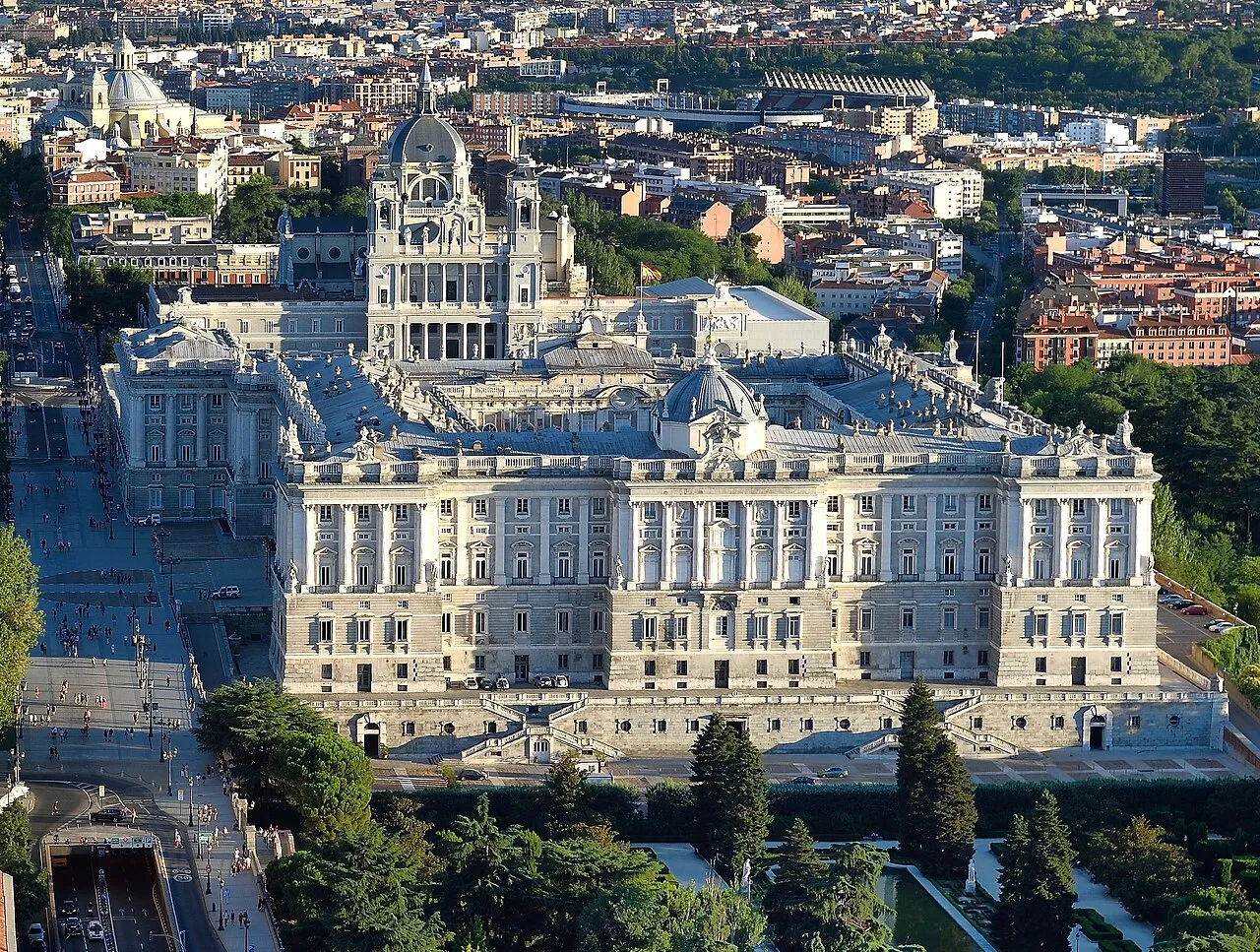
4Royal Palace of Madrid

Royal Palace of Madrid

The largest royal palace in western Europe by floor area: more than three thousand rooms behind a white façade you cannot take in at a single glance. It was raised in stone and marble because the old Habsburg Alcázar burned down on Christmas Eve 1734 — Las Meninas was saved by a very narrow margin that night — and Philip V wanted something that could not burn again. Inside, the Throne Room with its ceiling frescoed by Tiepolo awaits you, along with the Royal Armoury and the only decorated Stradivarius quartet preserved in the world. The ticket is around 14 €; if you are short of time, the Patio de la Armería and the Sabatini Gardens are free and give you the same photograph.

🎧 Historic & Royal Madrid (Habsburg Quarter)📍 View on Google Maps
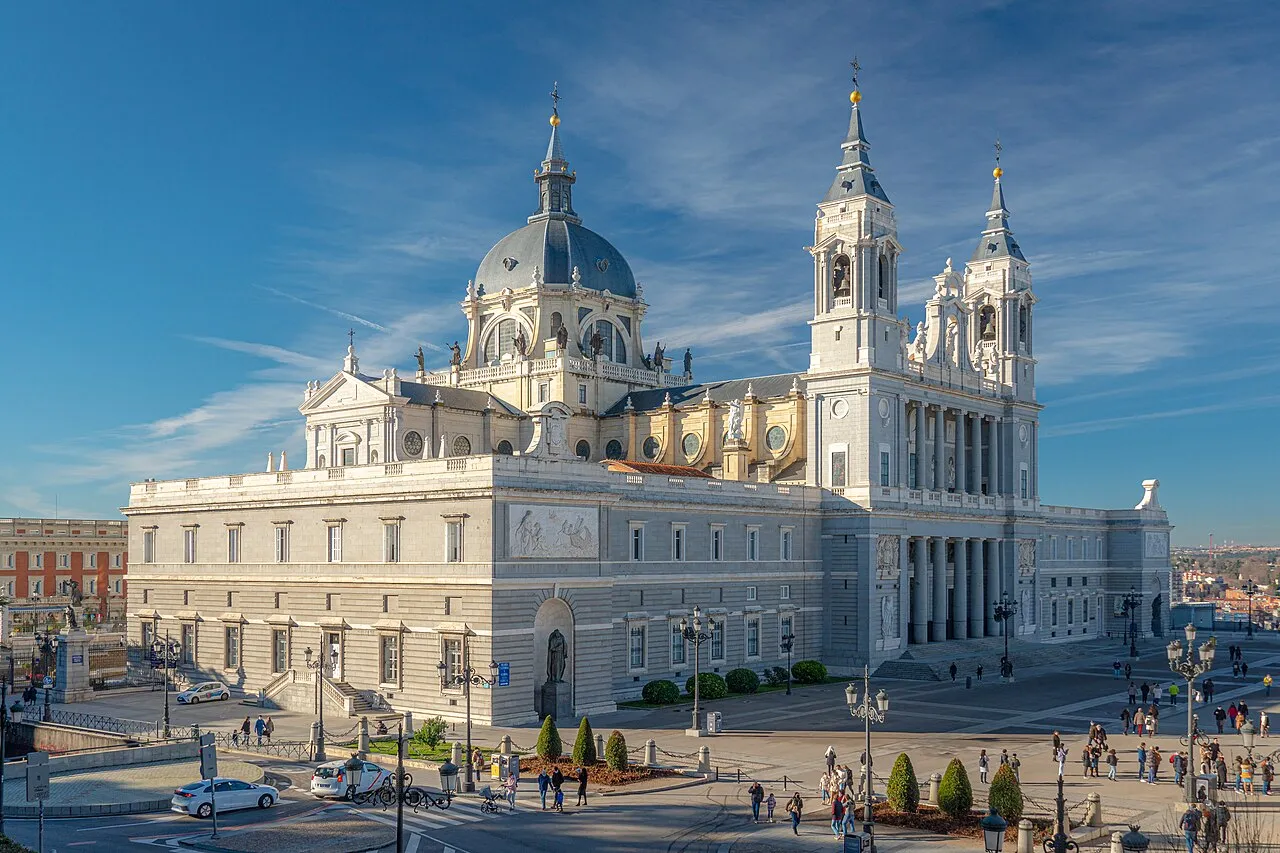
5Almudena Cathedral

Almudena Cathedral

The cathedral with the strangest history in Spain: begun in 1883 and not consecrated until 1993, with a neoclassical exterior to match the palace opposite and an interior of vivid, almost geometric stained glass. It is oriented north to south instead of facing east, breaking a thousand years of liturgical rule, purely so as not to turn its back on the king. Madrid had been the capital since 1561 and spent more than four centuries without a cathedral of its own. Entry to the church is free with a donation; what almost nobody visits is the neo-Romanesque crypt on the side street, a forest of more than four hundred columns that is older and, for many, lovelier than the cathedral above.

🎧 Historic & Royal Madrid (Habsburg Quarter)📍 View on Google Maps
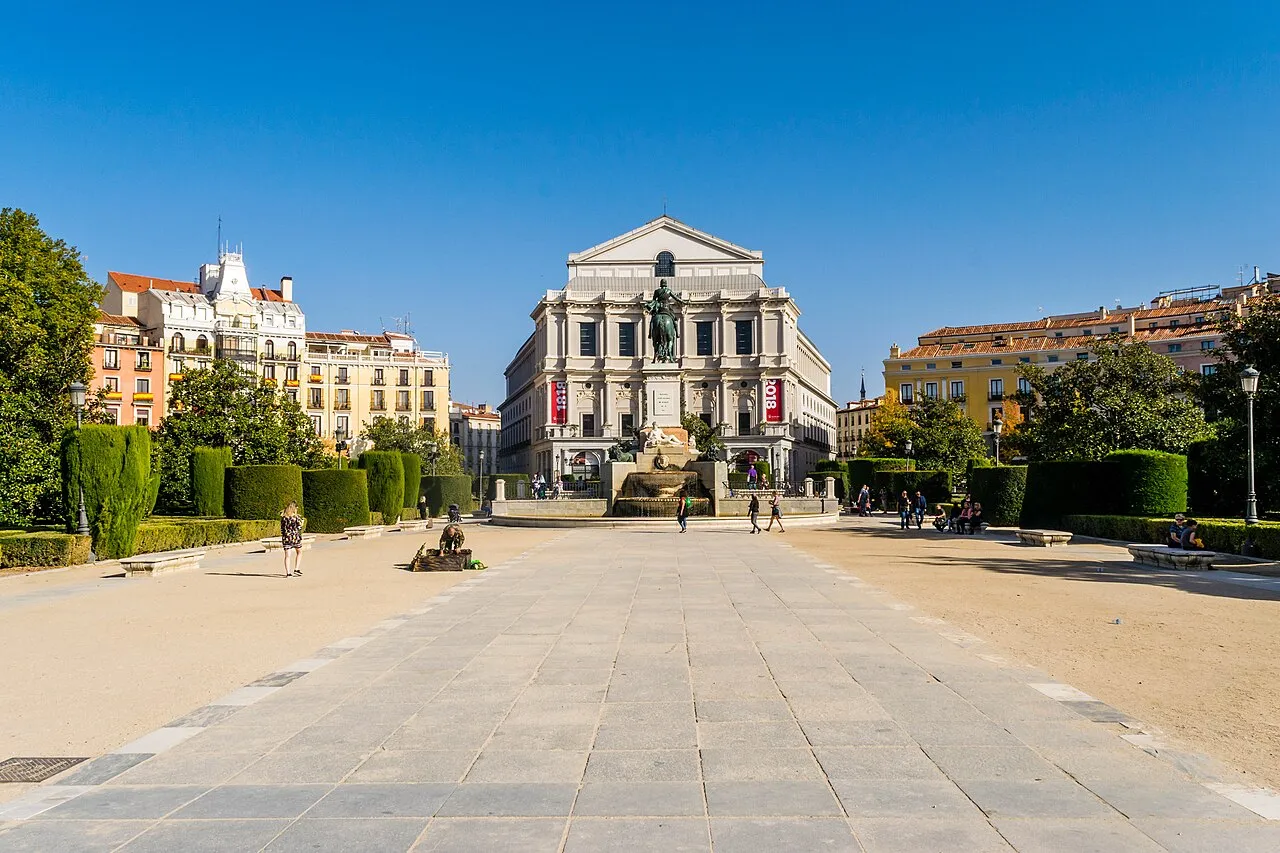
6Plaza de Oriente

Plaza de Oriente

The great landscaped semicircle between the Palacio Real and the Teatro Real, and the most stately square in the city. The statues of Gothic kings that surround it were meant to crown the cornice of the palace, but they weighed too much — or, according to the tastier legend, a queen dreamed that an earthquake brought them down on her head — and they ended up at eye level. In the centre, the equestrian Philip IV by Pietro Tacca was the first statue in the world held up on the hind legs alone: they say Galileo was consulted to solve the balance. Go first thing in the morning, with the gardens empty and the sun on the palace façade.

🎧 Historic & Royal Madrid (Habsburg Quarter)📍 View on Google Maps
7Convent of the Descalzas Reales

Convent of the Descalzas Reales

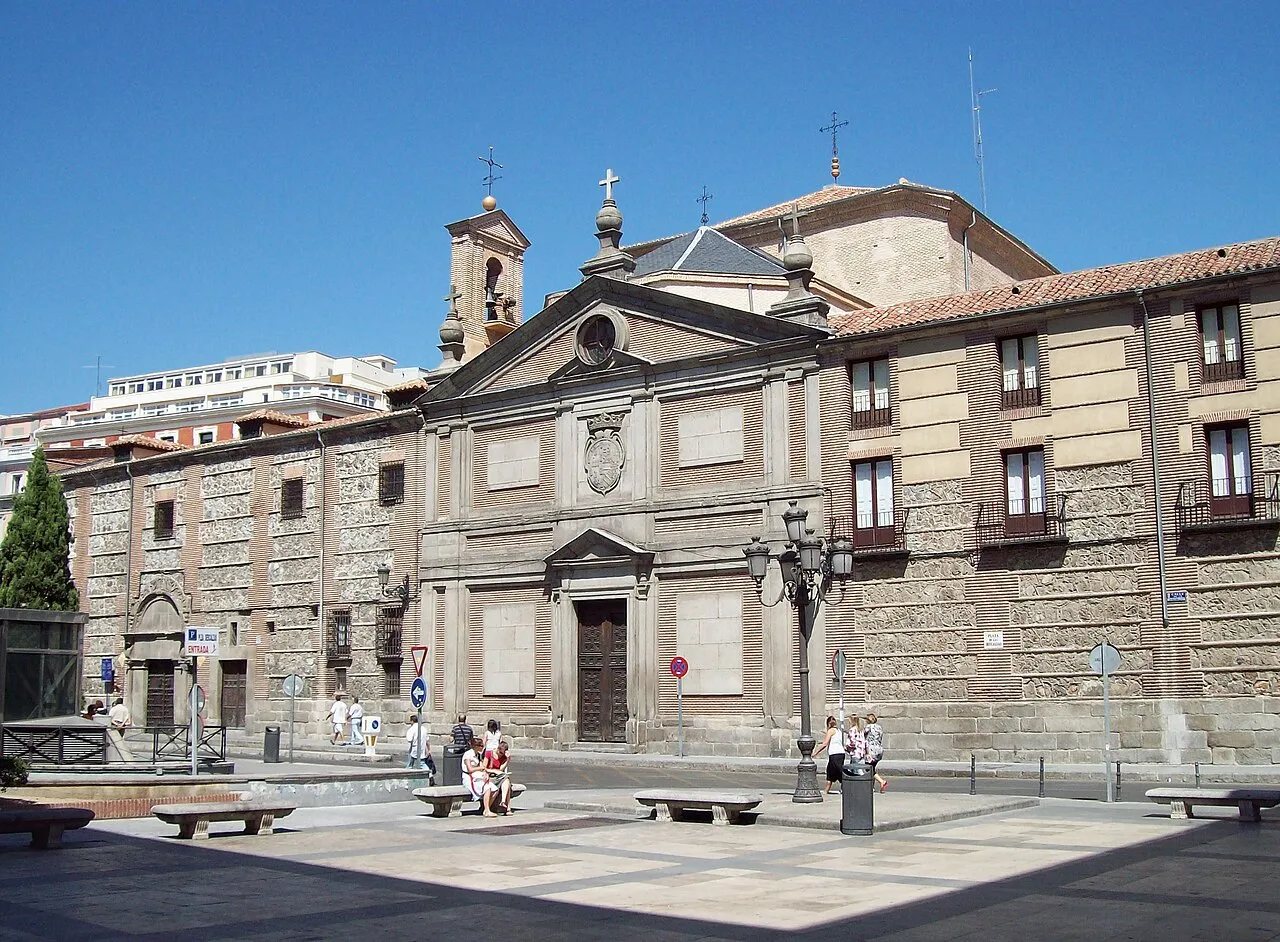
The most underrated visit in the centre and the most deceptive façade in Madrid: sober and austere outside, with one of the most impressive interiors in Spain behind it. It was the palace where Juana of Austria, daughter of Charles V, was born, turned into a convent of Poor Clares in 1559; for centuries royal infantas and widows entered here with dowries paid in art. The result is tapestries woven from cartoons by Rubens, canvases by Titian and a staircase with frescoes that stops everyone in their tracks. It is still an enclosed convent, so the visit is guided, with a small capacity and no photographs: buy the ticket online in advance.

🎧 Historic & Royal Madrid (Habsburg Quarter)📍 View on Google Maps
8Círculo de Bellas Artes

Círculo de Bellas Artes

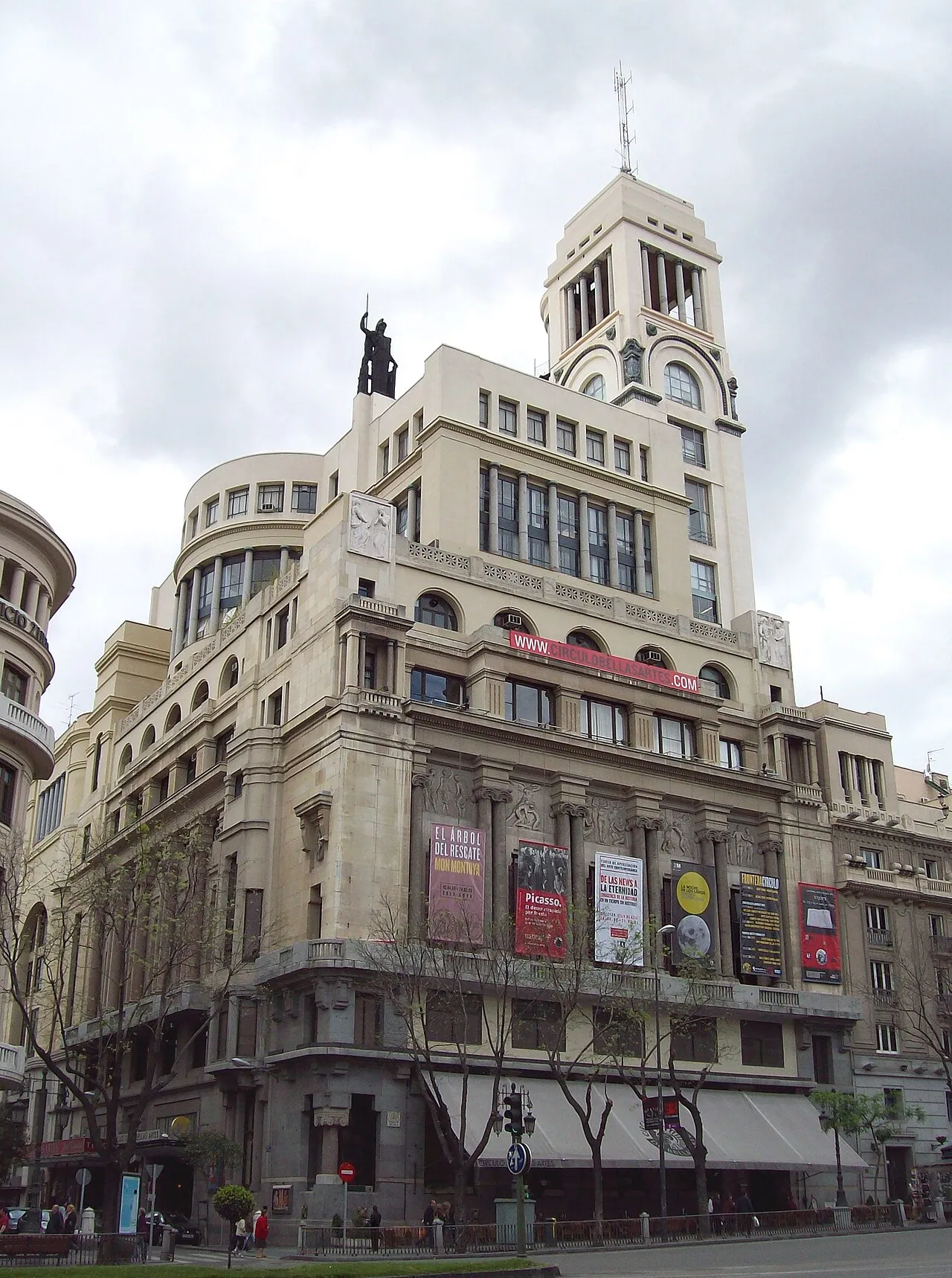
If you only go up to one viewpoint on the whole trip, make it this one. Seven floors above the calle de Alcalá, the roof terrace of the Círculo opens the best panorama of the centre: the Gran Vía unfurling like a serpent of rooftops, the golden dome of the Metrópolis almost within reach and the sierra beyond. The building, by Antonio Palacios and finished in 1926, also hides salons, a ballroom with a century-old masked ball at Carnival and La Pecera, the café where Valle-Inclán and the poets of the Generation of '27 used to sit. The roof terrace costs around 6 €: go up an hour before sunset and stay to watch the neon signs come on.

🎧 Gran Vía & Modern Madrid📍 View on Google Maps
9Carrión Building

Carrión Building

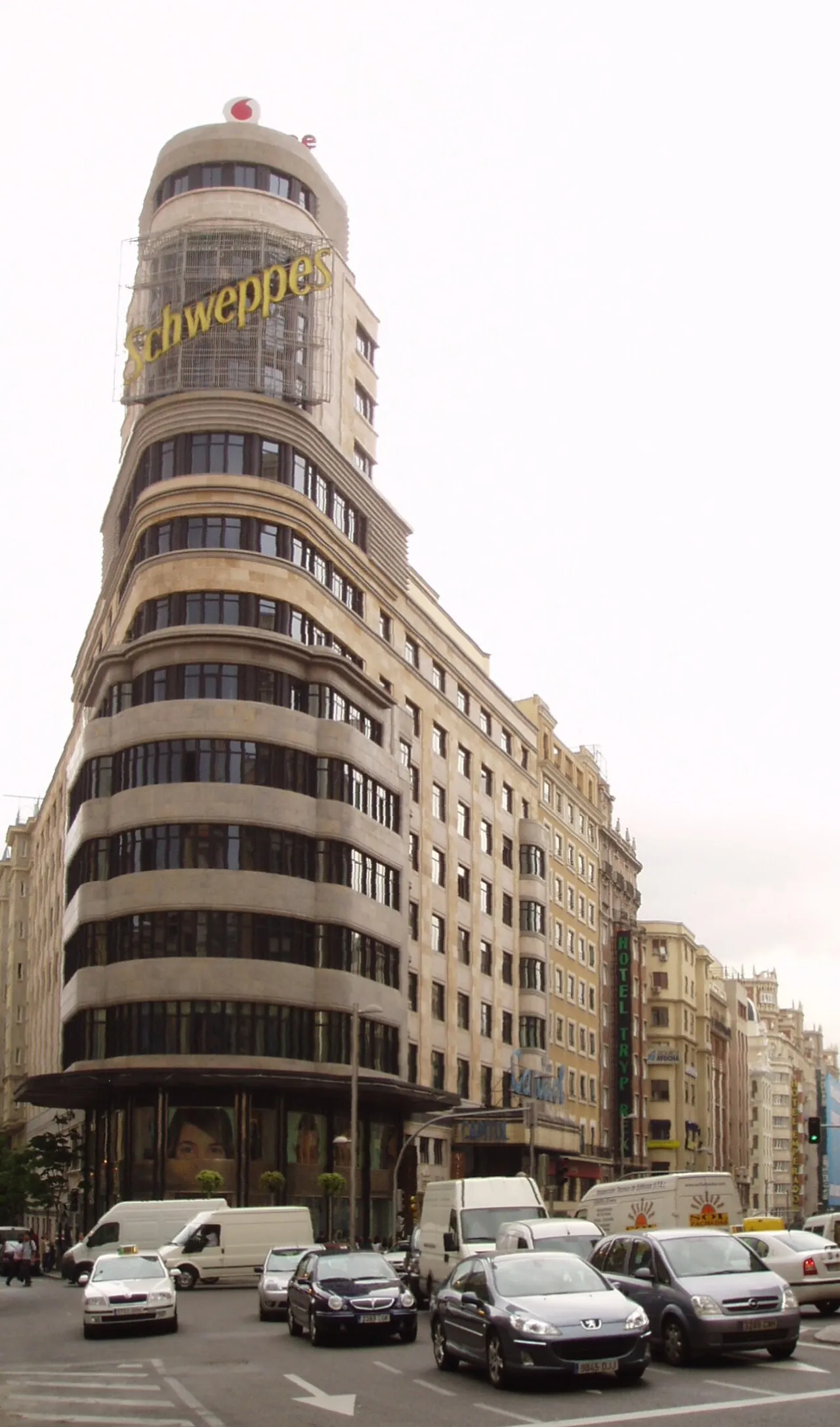
The most photographed corner in Spain: a white curved prow from 1933 crowned by a red neon sign you recognise even if you have never been here. The building is called Carrión after the developer who paid for it, but Madrid rechristened it after its Schweppes sign, lit since 1972 and so protected by popular affection that nobody can take it down now. It was one of the most rule-breaking constructions of its time, with a cinema, flats, offices, a hotel and one of the first central air-conditioning systems in Spain. Look at it from the eastern pavement of the Plaza del Callao, by day or at nightfall, and afterwards go up to the free ninth-floor terrace of El Corte Inglés.

🎧 Gran Vía & Modern Madrid📍 View on Google Maps
10Temple of Debod

Temple of Debod

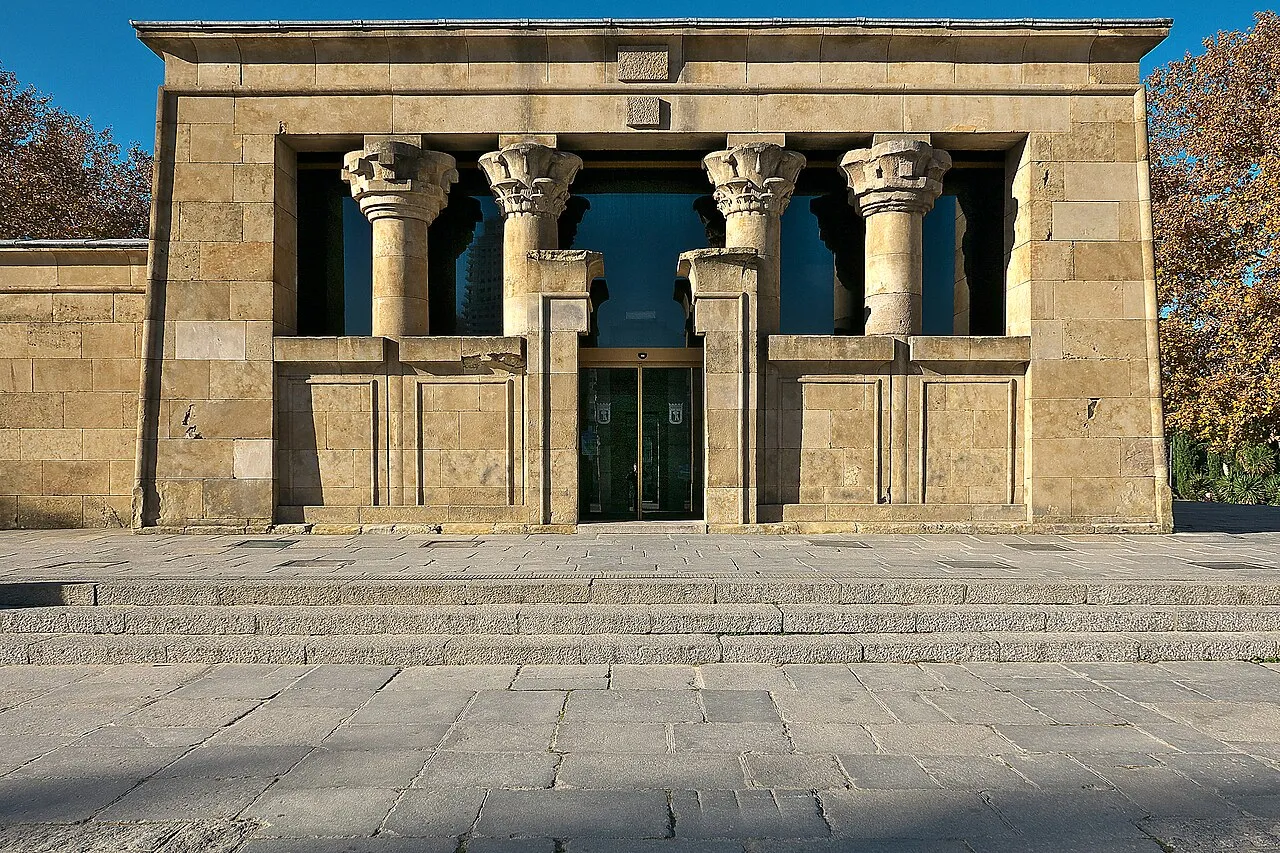
A genuine Egyptian temple more than 2,200 years old, given by Egypt to Spain in 1968 in thanks for the rescue of the temples of Nubia and rebuilt here stone by stone in 1972. It was placed imitating its original orientation on the Nile, and that is why at dusk the light passes through it and sets it alight in orange above the sheet of water, with the sierra cut out beyond. It is the best free sunset in Madrid and the place people from here take friends who come from out of town. The outer enclosure is always open; the interior, with original reliefs, is free but closes on Mondays and has a limited capacity.

🎧 Gran Vía & Modern Madrid📍 View on Google Maps
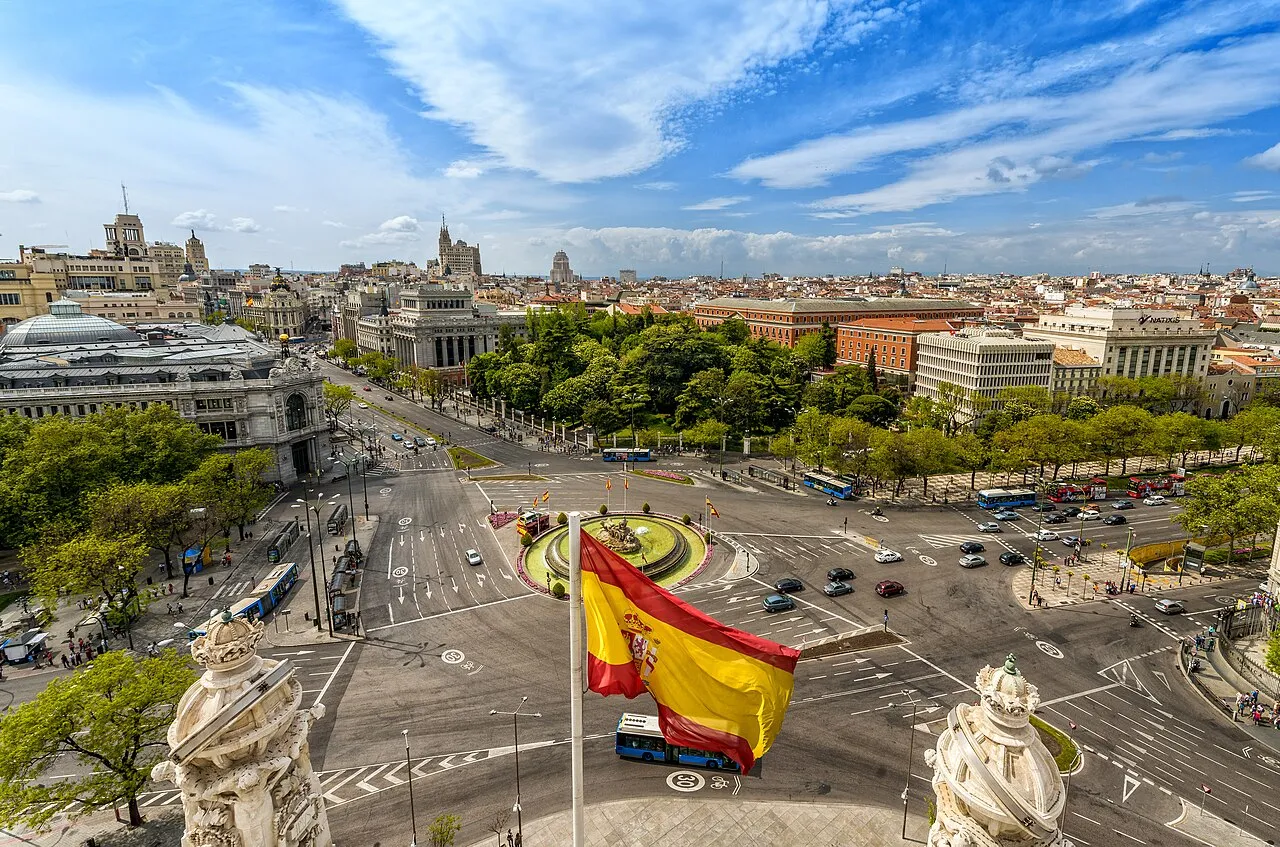
11Plaza de Cibeles

Plaza de Cibeles

The most famous roundabout in the city and the border between old Madrid and the Madrid of the great twentieth-century buildings. The goddess has been sitting in her chariot of lions since 1782, when this was not the centre but the tree-lined edge of the town; during the Civil War the people of Madrid walled her up with sandbags to save her from the bombs, and they succeeded. Today it is the altar where Real Madrid celebrates its titles — Atlético does so at Neptuno, 600 metres down the boulevard. Behind it rises the Palacio de Cibeles, which was the main post office and is today the city hall, with a viewpoint in the tower at 70 metres for about 3 €: the best value for money in Madrid.

🎧 Paseo del Arte & Retiro (Museums Walk)📍 View on Google Maps
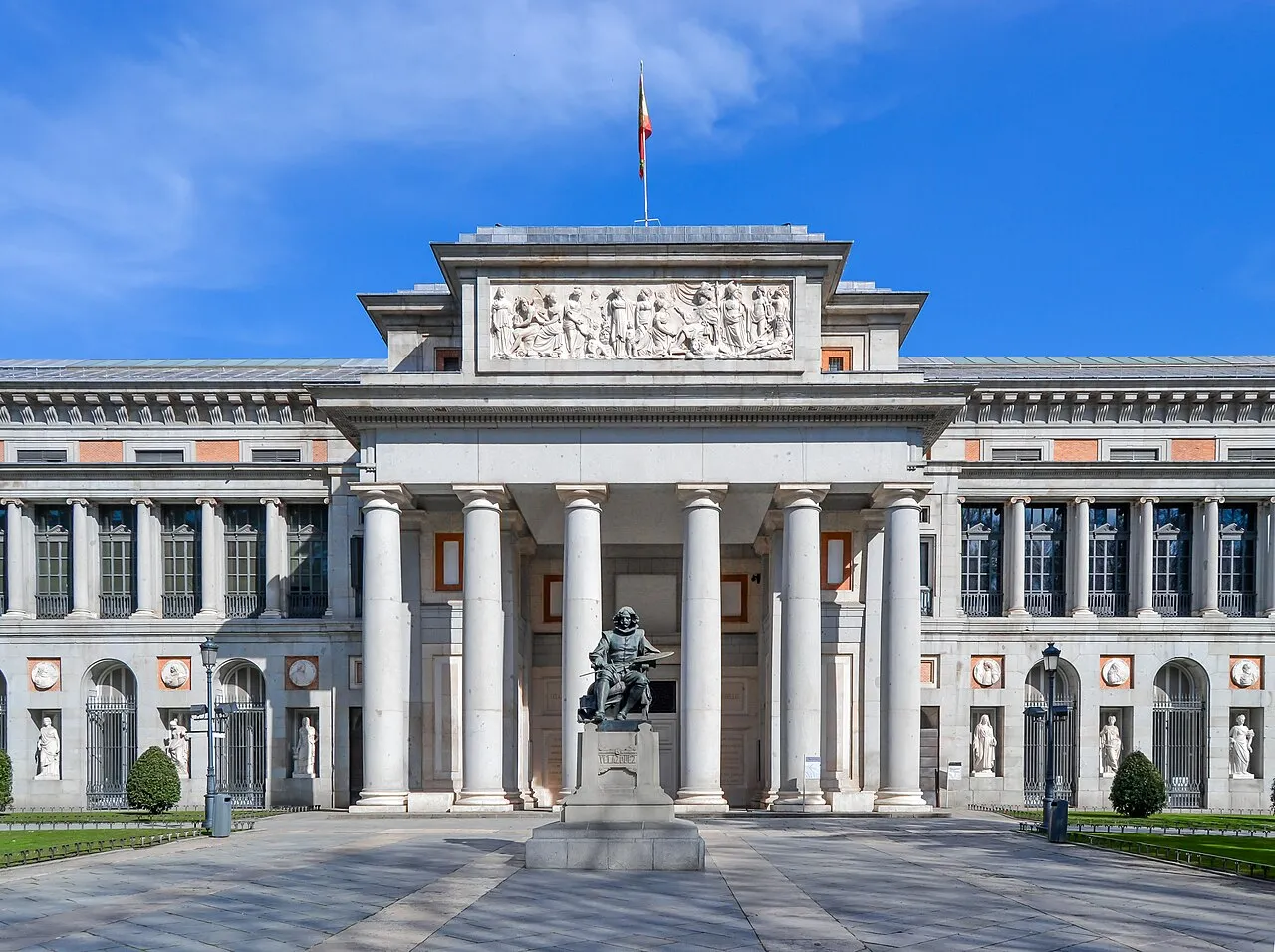
12Prado Museum

Prado Museum

The visit that justifies half the trip. It was not formed by buying works but with what the kings of Spain accumulated over centuries, and that is why its Spanish, Flemish and Italian painting has no rival anywhere else in the world. It was not even born as an art museum: Villanueva's building was going to be a natural history cabinet, and the French used it as barracks. Go for the great things and do not try to see it all: Las Meninas, Goya's black paintings, The Garden of Earthly Delights and the Titians of Philip II will take you a good two hours. Ticket around 15 €, with free access in the last two hours of every day.

🎧 Paseo del Arte & Retiro (Museums Walk)📍 View on Google Maps
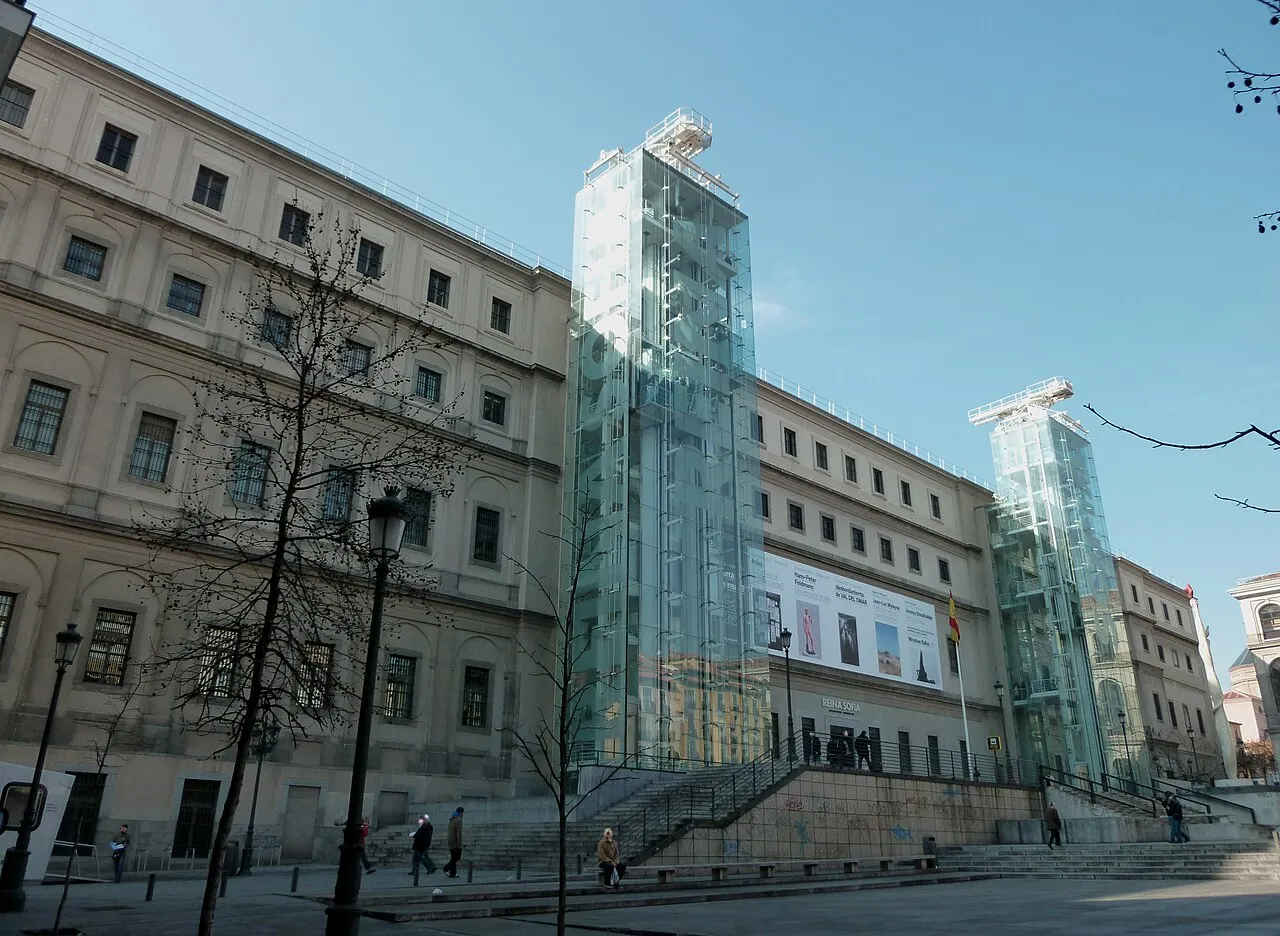
13Reina Sofía Museum

Reina Sofía Museum

In what was the General Hospital of Madrid, where the poor of the city were treated and died, hangs Guernica today: three and a half metres by nearly eight of pain in white, black and grey. Picasso painted it in a few weeks in 1937 for the Spanish pavilion at the Paris Exposition and refused to let it come back while Spain was not a democracy; it waited more than forty years at MoMA and did not return until 1981. Around it, the best collection of twentieth-century Spanish art, with rooms devoted to Dalí, Miró and cubism. Ticket around 12 €, free late in the afternoon almost every day and on Sunday mornings.

🎧 Paseo del Arte & Retiro (Museums Walk)📍 View on Google Maps
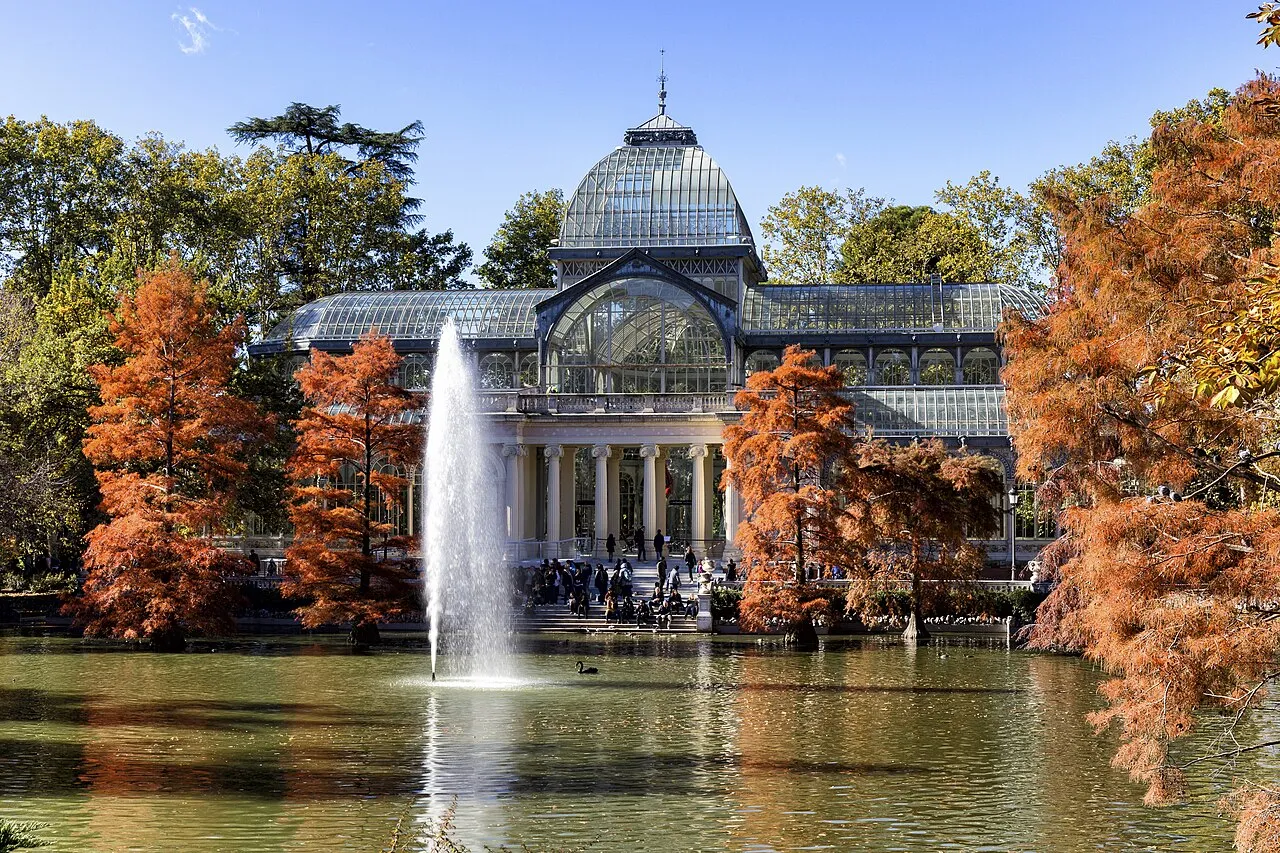
14Crystal Palace

Crystal Palace

For many people, the loveliest corner in Madrid: a dome of iron and glass reflected in a pond with ducks, hidden among the trees of the Retiro. And it was not raised as a romantic whim but as a greenhouse for the Exhibition of the Philippine Islands of 1887, a colonial show with a decidedly dark side, because it was not only plants that were brought from the other side of the world. Today it houses contemporary art installations that change every few months and entry is free. Go mid-morning during the week or late in the afternoon: at midday the steps are a continuous queue of photographs, and autumn is when it looks best.

🎧 Paseo del Arte & Retiro (Museums Walk)📍 View on Google Maps
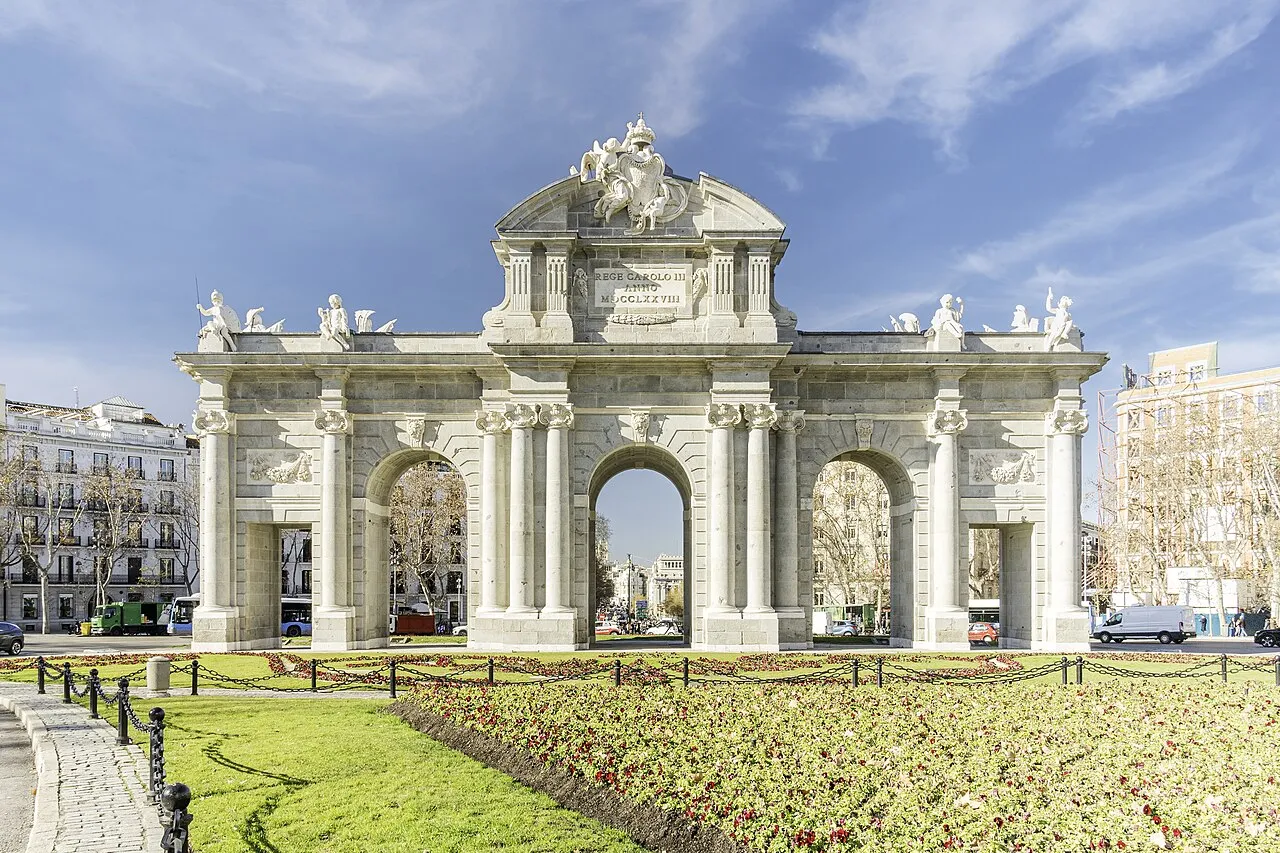
15Puerta de Alcalá

Puerta de Alcalá

A civic triumphal arch, one of the first of its kind in Europe, commissioned by Charles III from the Italian Francesco Sabatini and inaugurated in 1778 to give a dignified entrance to anyone arriving by the Alcalá road. Walk round it and look closely: its two faces are not the same, and tradition says the king could not decide between the two designs put to him and ordered one façade of each. Marks of shrapnel from the Civil War remain in the stone, which the restorations have chosen not to erase. It was part of the city's boundary wall; when the wall came down it was spared for being beautiful, and today it is a gate that leads nowhere.

🎧 Paseo del Arte & Retiro (Museums Walk)📍 View on Google Maps

Walking tours in Madrid

🎧 Gran Vía & Modern Madrid · Historic & Royal Madrid (Habsburg Quarter) · Lavapiés: Multicultural Madrid · Malasaña & La Movida · Paseo del Arte & Retiro (Museums Walk) · Tapas: La Latina & El Rastro

Frequently asked questions

What must you not miss in Madrid?

If you only had half a day: the Puerta del Sol, the Plaza Mayor and the Palacio Real, and sunset at the Templo de Debod. If you have a whole day, add the Museo del Prado and a walk through the Retiro. And if you have two, add the complete Paseo del Arte, the Gran Vía and an evening of tapas along the Cava Baja, in La Latina.

How many days do you need to see Madrid?

Two full days let you see the essentials without rushing: the Madrid of the Habsburgs and the Palacio Real on one, the Paseo del Arte and the Retiro on the other. With three you also fit in the quarters — Malasaña, Lavapiés, La Latina — which is where the city really lives. From the fourth day on there is room for excursions such as Toledo, 33 minutes away by high-speed train.

Can you walk around Madrid on foot?

Yes, and it is the best way. Between the Puerta del Sol and the Palacio Real there are 15 minutes; from the Prado to the Retiro, 5; and the whole Gran Vía is walked in half an hour. Almost all the centre is flat or gently sloping, though the old town is cobbled. You only need the metro for the airport and for getting back to your accommodation at night.

What can you see for free in Madrid?

Rather more than it seems: the Templo de Debod, the Sabatini Gardens, the Plaza de Oriente, the whole Retiro with its Palacio de Cristal, Las Vistillas, the Catedral de la Almudena and the ninth-floor terrace of El Corte Inglés at Callao. On top of that, the Prado, the Reina Sofía and the Thyssen have free-access slots, almost always late in the afternoon.

What is the best time to visit Madrid?

April to June and September to October, with mild temperatures and many hours of daylight. July and August comfortably pass 35 ºC: if you come in summer, move your walks to first thing in the morning and to dusk, and save midday for the museums. In December the city fills with lights and Christmas atmosphere, with a dry cold that is very bearable.

How can you visit Madrid with a guide but on your own terms?

With Viavoy you download walking routes narrated by local guides and do them whenever you like, with no timetable and no group, even without a connection. There are six routes through Madrid — from the Madrid of the Habsburgs to the Paseo del Arte, by way of Malasaña, Lavapiés and the tapas of La Latina — and several include the interior visit narrated inside monuments such as the Palacio Real or the Círculo de Bellas Artes. Your first tour is free.
Madrid on the map

The 15 must-sees, point by point.

🎧 With Viavoy

Walk Madrid and listen at your own pace

Download Viavoy and walk Madrid offline, whenever you like.

from 2,99 €· one-off payment
City Pass · 9,99 €3 days, all the tours in Madrid
Find out more about Viavoy →
Viavoy app

In the Magazine

Keep discovering Madrid

Culture

Flamenco in Madrid: where to see the real thing

Neighbourhoods

La Latina and the Rastro: a guide to Madrid at its most castizo

What to see

The best viewpoints in Madrid: where to see the city from above

What to see

The Madrid of the Habsburgs on foot: a route through the old town