The Gothic of the sea: how a handful of merchants built Palma
History · Palma

The Gothic of the sea: how a handful of merchants built Palma

An exchange that looks like a castle, a trade court from 1306 and an independent kingdom that lasted decades. The history that explains why this city has the heritage it has.

8 min read · Updated for 2026
🎧 On the walk El Born, La Lonja and Modernist Palma

Palma did not grow on its farming or its industry: it grew because it sits in the middle of the western Mediterranean, on the route between the peninsula, North Africa and Italy. Between the thirteenth and fifteenth centuries that geographical fact produced an accumulation of merchant wealth that translated directly into stone, and that stone is what you visit today.

The Lonja sums it all up: a merchants' guild commissioning a building with towers and battlements, not because it needed them, but because the language of the castle was the language of power.

A kingdom of its own, and why it did not last

Jaume I conquered Mallorca in 1229 and, on his death, divided up his territories: the Crown of Aragon for one son and an independent Kingdom of Mallorca for another, taking in the Balearics, Roussillon, the Cerdanya and Montpellier. A scattered, maritime kingdom, held together by routes and not by land.

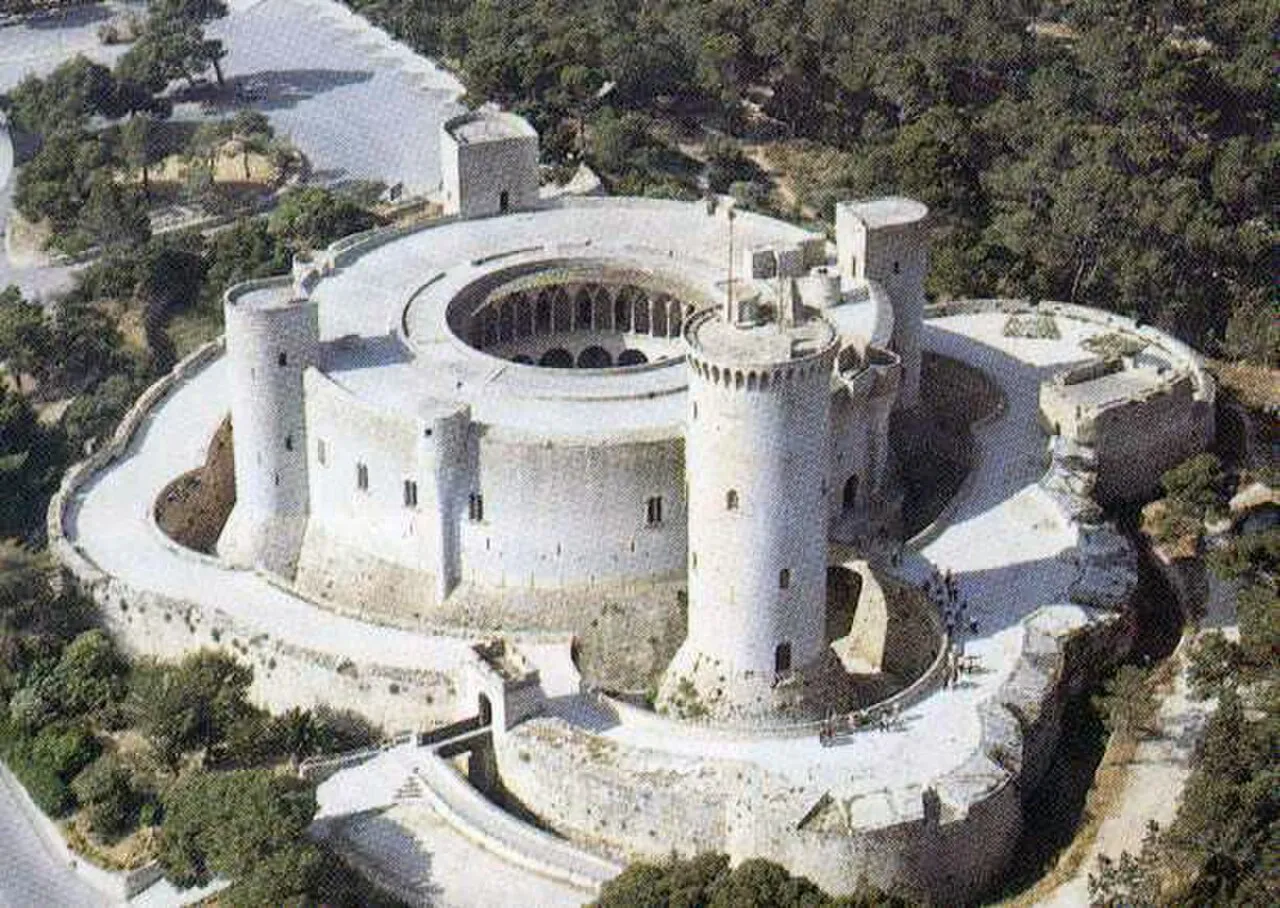
For a few decades the island had its own king, its own currency and its own court, with Jaume II, Sanç and Jaume III ruling from the Palace of La Almudaina. That period, brief but decisive, is the one that produced the castle of Bellver and a good part of the city's building drive.

In 1276, at Santa Eulàlia, Jaume II swore to uphold the privileges and was recognised as king. And in 1343 the kingdom was reincorporated by force into the Crown of Aragon, ending the independence. But the commercial infrastructure was already in place and carried on working.

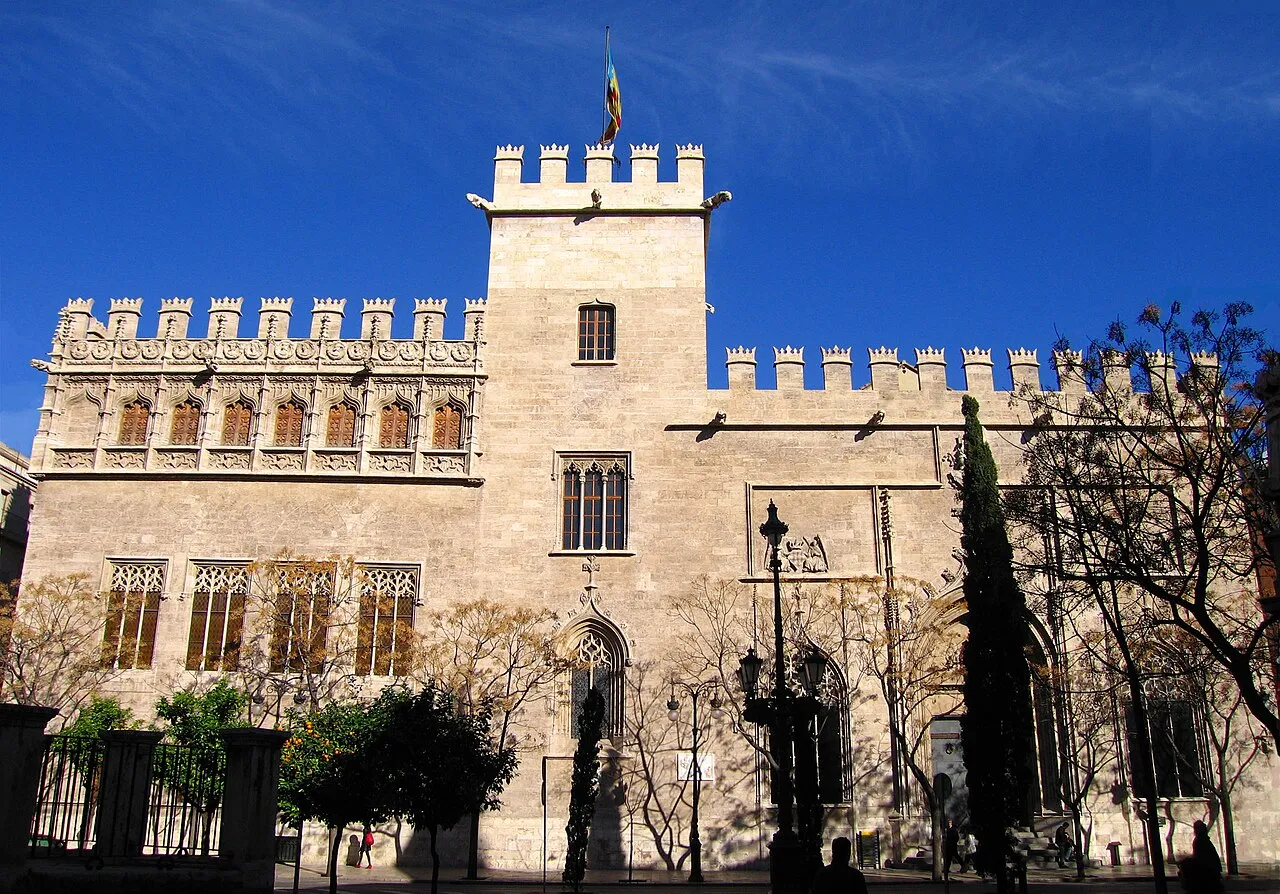
1La Lonja

La Lonja

📍 Barrio de la Lonja

Guillem Sagrera, 1420-1452, for the Col·legi de la Mercaderia. Inside, six twisted columns without capitals open out at the top into ribs: a forest of stone palm trees. It is one of the peaks of European civil Gothic, and Valencia copied the model.

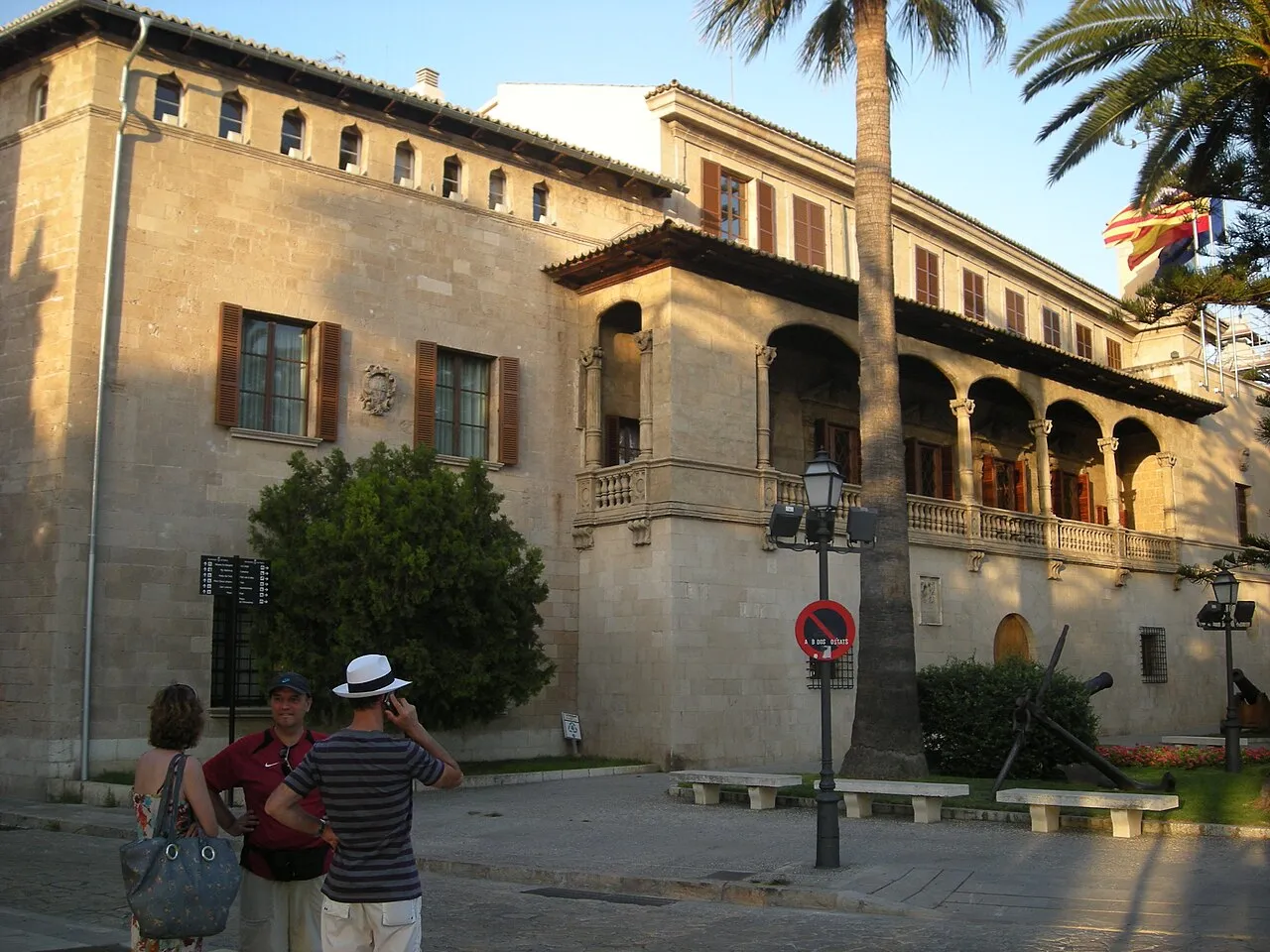
2Consolat de Mar

Consolat de Mar

📍 Passeig de Sagrera

A maritime trade court authorised in 1306: shipwrecks, freight charters, lost cargoes. Judgement was passed by merchants chosen by their colleagues, quickly and by word of mouth, without lawyers. Today it is the presidency of the Balearic Govern.

🎧 With Viavoy

Explore Palma at your own pace

Download the app and discover Palma offline, whenever you like. Take the walking tour El Born, La Lonja and Modernist Palma with a local guide in your ear.

Find out more about Viavoy →

The law, the cartography and the money

The Consolat de Mar is the key institutional piece. In 1306 Jaume II authorised the creation of a court to settle disputes between merchants and sailors, and in 1344 Pere el Cerimoniós renewed it. Seven hundred years ago Palma had its own specialised maritime commercial law.

What is remarkable is the procedure: judgement was passed by merchants chosen by their own colleagues, people who knew the trade from the inside, quickly and by word of mouth, without lawyers or paperwork. Guild justice designed so that trade would not stop, and out of it came rules applied across half the Mediterranean.

In the fourteenth and fifteenth centuries Mallorca was also one of the great cartographic centres of Europe. The so-called Mallorcan cartographic school — with names such as Abraham and Jafudà Cresques, from the island's Jewish community — produced the most advanced sea charts of their time, the Catalan Atlas among them.

That combination — commercial capital, specialised court and the best cartography available — is what turned a small island into a node of the first order. It was not chance or geographical luck: it was infrastructure that somebody built.

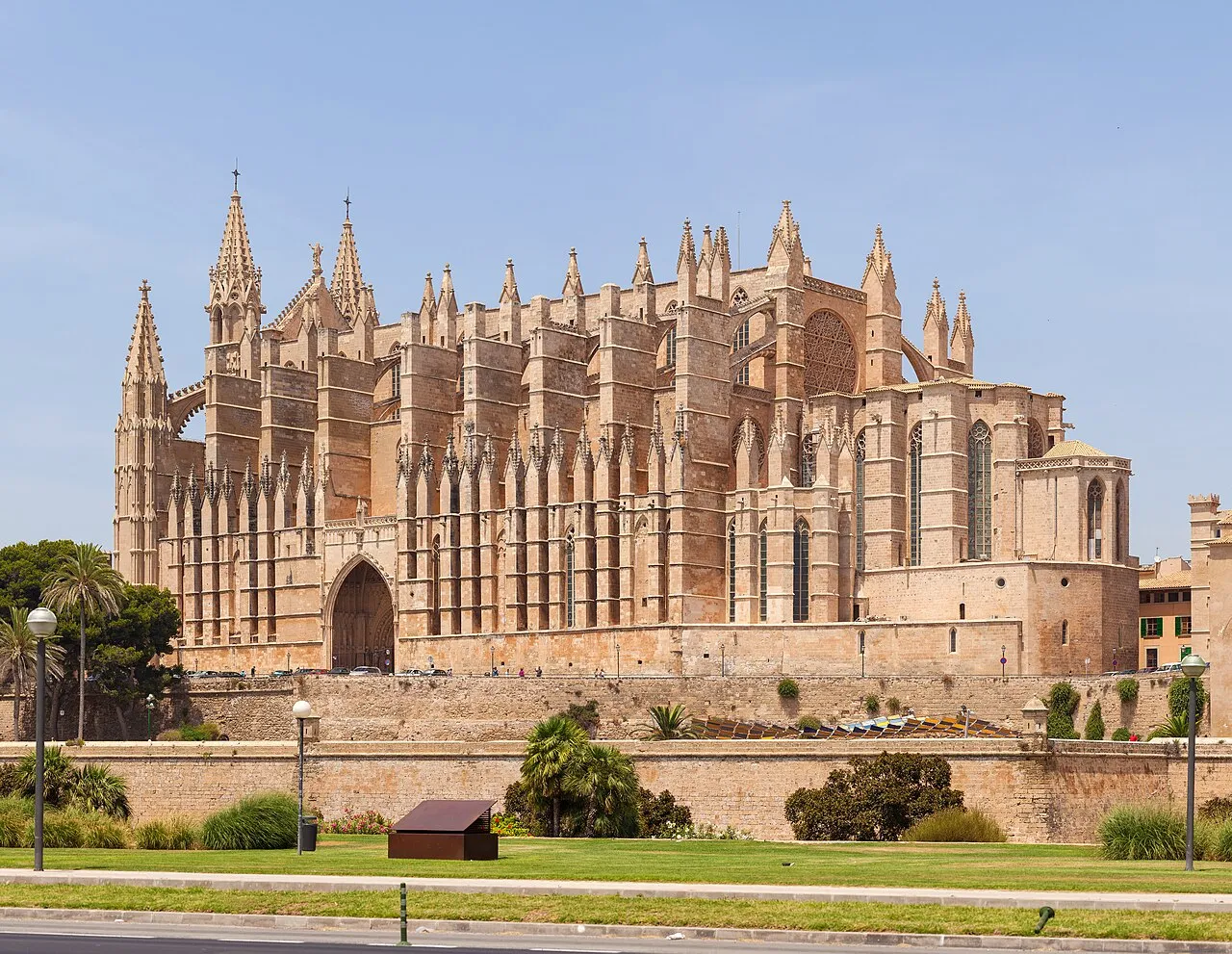
3Palma Cathedral

Palma Cathedral

📍 Plaça de la Seu

The other great work of Mallorcan Gothic, on which Guillem Sagrera himself worked before the Lonja. It was built facing the sea on purpose, to be the first thing ships saw as they came into the bay.

Frequently asked questions

Why does Palma have so much civil Gothic?

Because its wealth was mercantile, not agricultural or industrial. Between the thirteenth and fifteenth centuries the island was a commercial node of the first order in the western Mediterranean, and the merchants who grew rich on it commissioned buildings to match: the Lonja, the Consolat de Mar and a good part of the old town.

What was the Kingdom of Mallorca?

An independent kingdom created on the death of Jaume I, who divided his territories among his sons. It took in the Balearics, Roussillon, the Cerdanya and Montpellier: a scattered, maritime kingdom, held together by routes and not by land. It lasted from 1276 to 1343, when it was reincorporated by force into the Crown of Aragon.

What was the Consolat de Mar?

A maritime trade court authorised in 1306 to settle disputes between merchants and sailors: shipwrecks, broken freight charters, lost cargoes. What is remarkable is that judgement was passed by merchants chosen by their own colleagues, quickly and by word of mouth, without lawyers. Out of it came rules applied across half the Mediterranean.

Who was Guillem Sagrera?

The greatest Mallorcan architect and sculptor, born in Felanitx around 1380. He was master of works of Palma Cathedral, carved two of the figures on the Portal del Mirador and raised the Lonja between 1420 and 1452. He ended up falling out with the guild over his pay, left before finishing it and died in Naples working for Alfonso the Magnanimous.

What is the Mallorcan cartographic school?

A group of cartographers from the island, many of them from the Jewish community, who in the fourteenth and fifteenth centuries produced the most advanced sea charts in Europe. The best known names are Abraham and Jafudà Cresques, linked to the Catalan Atlas. It was a key piece of Mallorcan commercial power: whoever had the best charts sailed better.

Can you see the Lonja from the inside?

Yes, and it is free, but it only opens when an exhibition is up, so it shuts between one and the next. That is the most common mistake people make coming to see it. Even when it is closed it is worth walking round the outside: the tracery windows and the turrets are better appreciated from the square, above all in afternoon light.

Guillem Sagrera, and how to see all this today

There is one name that runs through the whole of Mallorcan Gothic: Guillem Sagrera, born in Felanitx around 1380. He was master of works of the cathedral, a very fine sculptor — two of the figures on the Portal del Mirador are his — and the author of the Lonja.

His story has a very human ending: he fell out with the guild that paid him over a matter of money and left before the work was finished. Alfonso the Magnanimous then called him in to vault the great hall of the Castel Nuovo in Naples, where he died. Palma's seafront promenade bears his name.

The route for seeing all this is short: Passeig de Sagrera, Consolat de Mar, the Lonja and up to the Born, which was the axis along which trade grew because the sea came almost to its foot.

And it is worth finishing at the cathedral, because the religious and the civil Gothic of this city are the same thing: the same masters, the same marès stone and the same money behind them.

Practical information

The routePasseig de Sagrera · Consolat de Mar · La Lonja · Paseo del Born · Cathedral.
DurationA good two hours if you stop, not counting the inside of the cathedral.
La LonjaFree, but it only opens when an exhibition is up. Check beforehand.
Consolat de MarSeat of the Govern: seen from outside, from the promenade. Inside by arrangement only.
The figureGuillem Sagrera, from Felanitx, around 1380. Cathedral, Lonja and then Naples, where he died.
ContextAn independent Kingdom of Mallorca 1276-1343, with its own king, currency and court.
On the map

🎧 With Viavoy

Walk Palma and listen at your own pace

Download Viavoy and walk Palma offline, whenever you like.

from 2,99 €· one-off payment
City Pass · 9,99 €3 days, all the tours in Palma
Find out more about Viavoy →
Viavoy app

Keep reading

More articles

Art & architecture

La Seu: a guide to visiting Palma Cathedral

Itineraries

Palma in 2 days: an itinerary through the old town, Bellver and Santa Catalina

Art & architecture

The patios of Palma: a hundred grand houses hidden behind a gate

Neighbourhoods

Bellver and El Terreno: the round castle and the neighbourhood of legendary nights