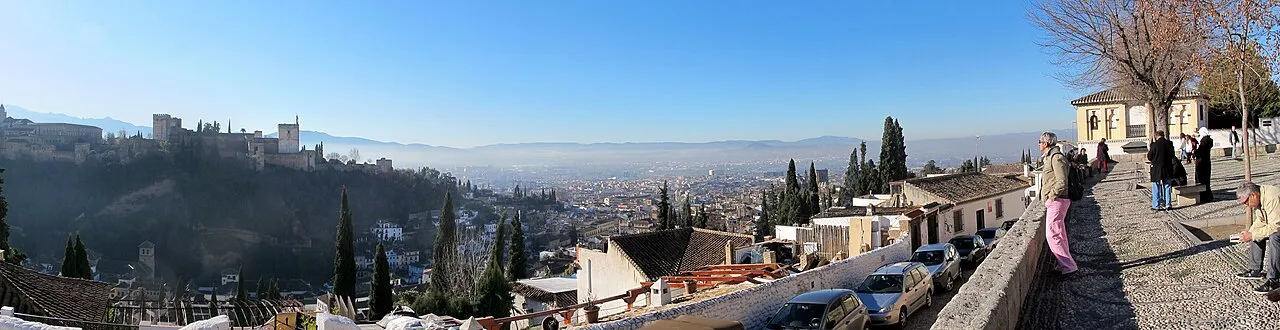
El Realejo sits on the slope below the Alhambra, between the centre and the hill, and it is the neighbourhood most visitors cross without stopping on their way to something else. It was the Jewish Quarter of Nasrid Granada, it has a hidden Andalusi palace, the greatest concentration of street art in the city and, above all, the best tapas. It is where the people of Granada go out, and that says almost everything.
It was called Garnata al-Yahud, “Granada of the Jews”. The Jewish community was important here for centuries, and it disappeared in 1492 with the expulsion.
From Jewish quarter to Realejo
The Jewish community of Granada was one of the most significant in al-Andalus. Under the Zirids it came to carry notable political weight: Samuel ibn Nagrella, a Jew, was vizier of the kingdom in the eleventh century, and his son Joseph after him. That splendour ended violently in 1066 with an assault that destroyed the quarter.
In Nasrid times the Jewish Quarter stood on this slope and was known as Garnata al-Yahud. After the conquest of 1492 and the expulsion of the Jews that same year, the population of the area changed completely, and the present name, Realejo, comes from the royal camp the Catholic Monarchs set up nearby during the siege.
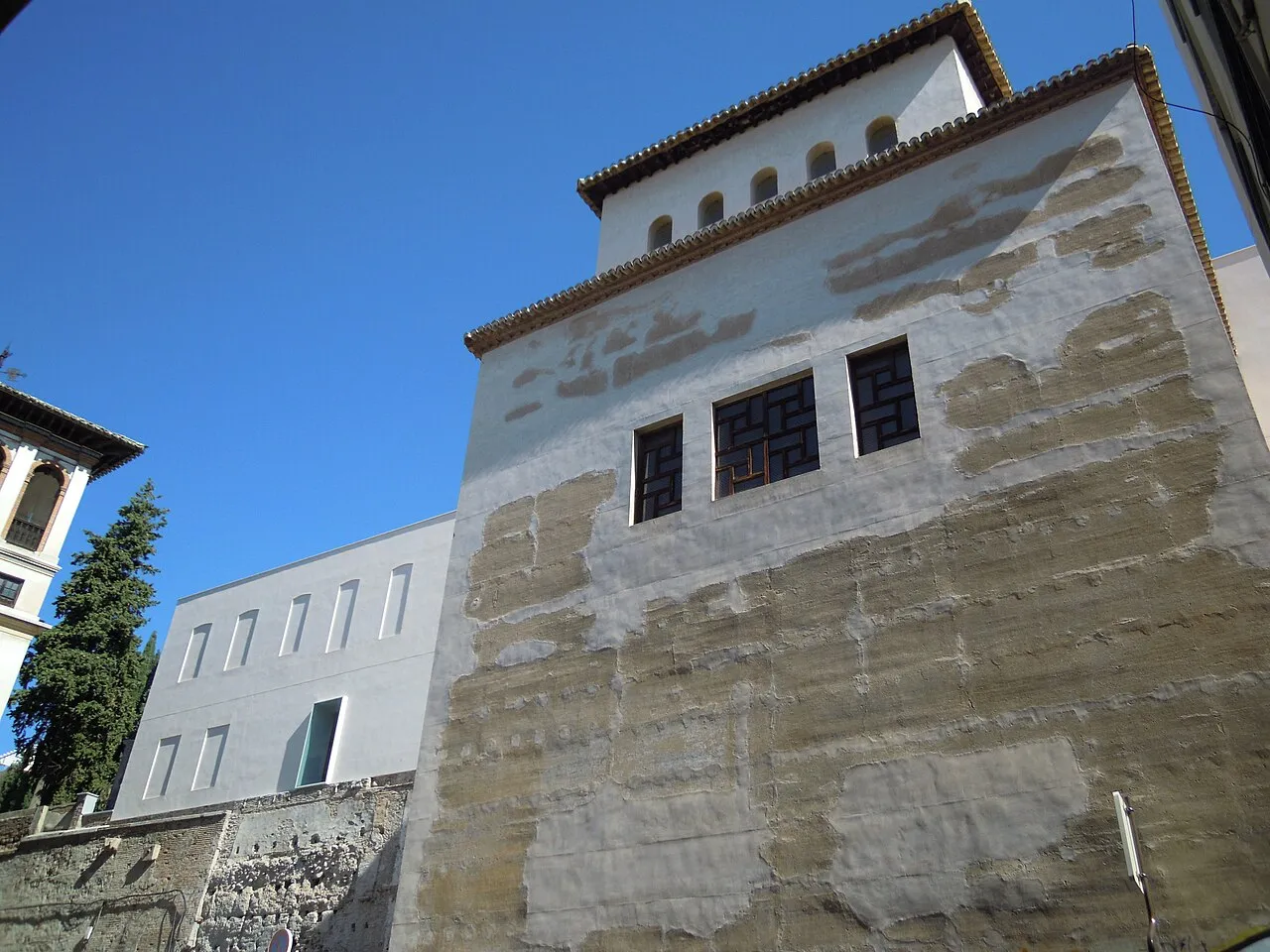
No identifiable buildings remain from the Jewish Quarter: it was razed and rebuilt. What does remain is the layout, the slopes and a few Nasrid elements that survived, wedged in among later houses. The most remarkable is the Cuarto Real de Santo Domingo.
The square of the neighbourhood, opened in 1497 to celebrate the wedding of Prince Juan, heir to the Catholic Monarchs, who died that same year at nineteen. In one corner stands the Cristo de los Favores: every Good Friday at three o'clock sharp, the whole square kneels in silence to ask for three wishes. The rest of the year it is terraces and tapas.
A thirteenth-century Nasrid palace with a qubba — a square, roofed hall — that keeps its original plasterwork and tilework, today wedged into a garden between modern buildings. It is one of the least known Andalusi remains in Granada and one of the best preserved. It is usually completely empty.
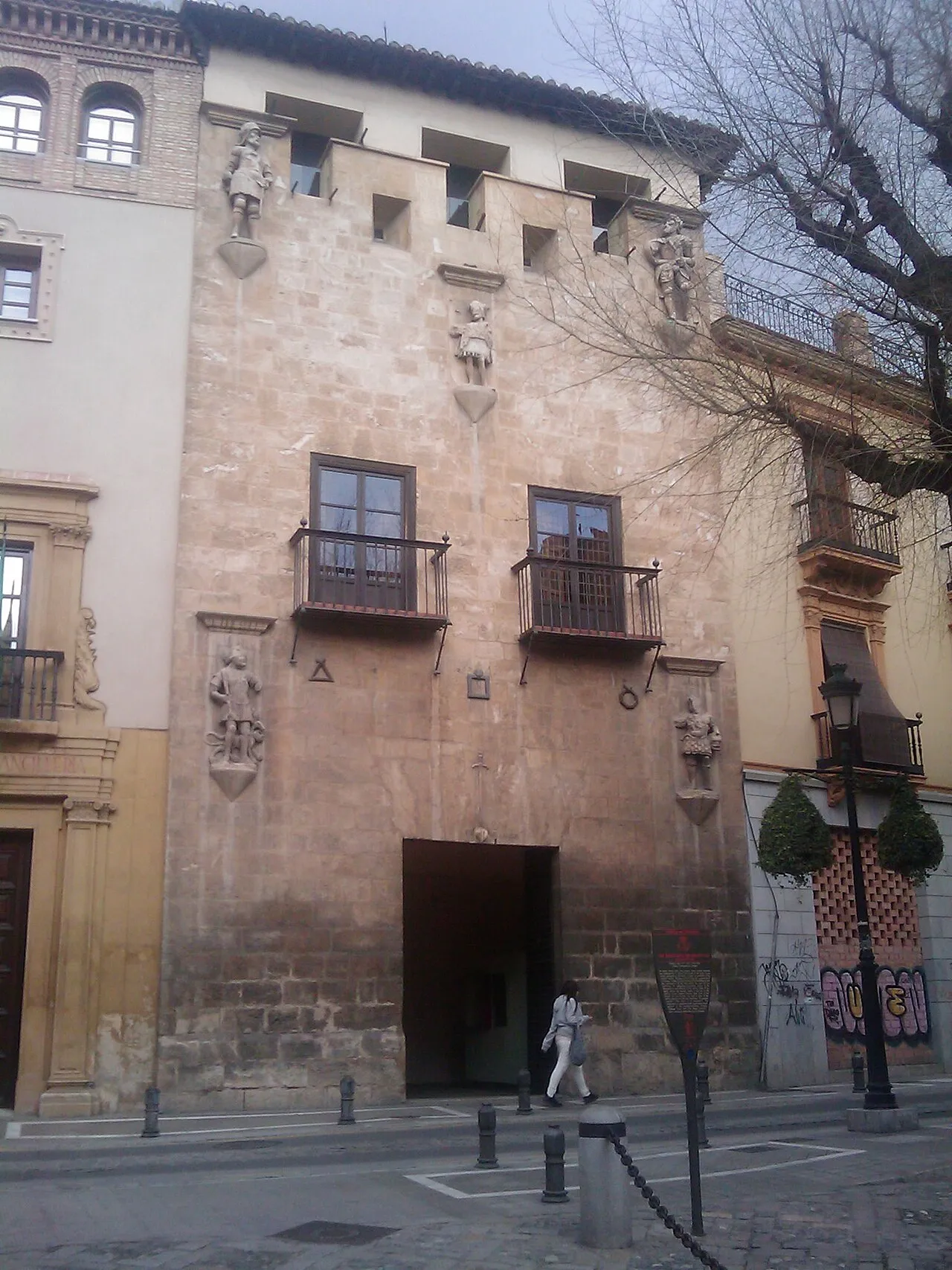
A sixteenth-century mansion with its façade bristling with figures of classical heroes and with harquebuses poking out of the battlements, which is where the name comes from. Today it houses a museum on the romantic, travelled Granada of the nineteenth century, that of Washington Irving and the English travellers. Free entry for EU citizens.
El Realejo is the territory of El Niño de las Pinturas, the pseudonym of Raúl Ruiz, the best-known muralist from Granada and a reference point in Spanish street art. His large-format portraits, almost always accompanied by handwritten phrases, are spread across dozens of walls in the neighbourhood.
What marks his work is the combination of faces — often people from the neighbourhood, children, the elderly — with short texts, somewhere between poetic and political, which turn every wall into a kind of personal message. There is work of his dating from the nineties, and much of it has been painted over or has decayed.
The neighbourhood has ended up adopting that mural painting as a badge of identity, with authorised murals and commissions, even though it began as something purely illegal. Walking calle Molinos, calle Santiago, calle Varela and the streets that cross them, with your head up, is the way to see it.
It is free, there is no signposted route and it changes constantly: what is on a wall today may not be there next year. That impermanence is part of the point.
4
Calle Molinos and its cármenes
📍 El Realejo
One of the streets with most character in the neighbourhood, with cármenes — houses with a kitchen garden behind a wall — and some of the best-known murals by El Niño de las Pinturas. It climbs towards the hillside and keeps letting the Alhambra show between the houses. It is the street along which El Realejo turns from tapas quarter into a residential quarter on a slope.
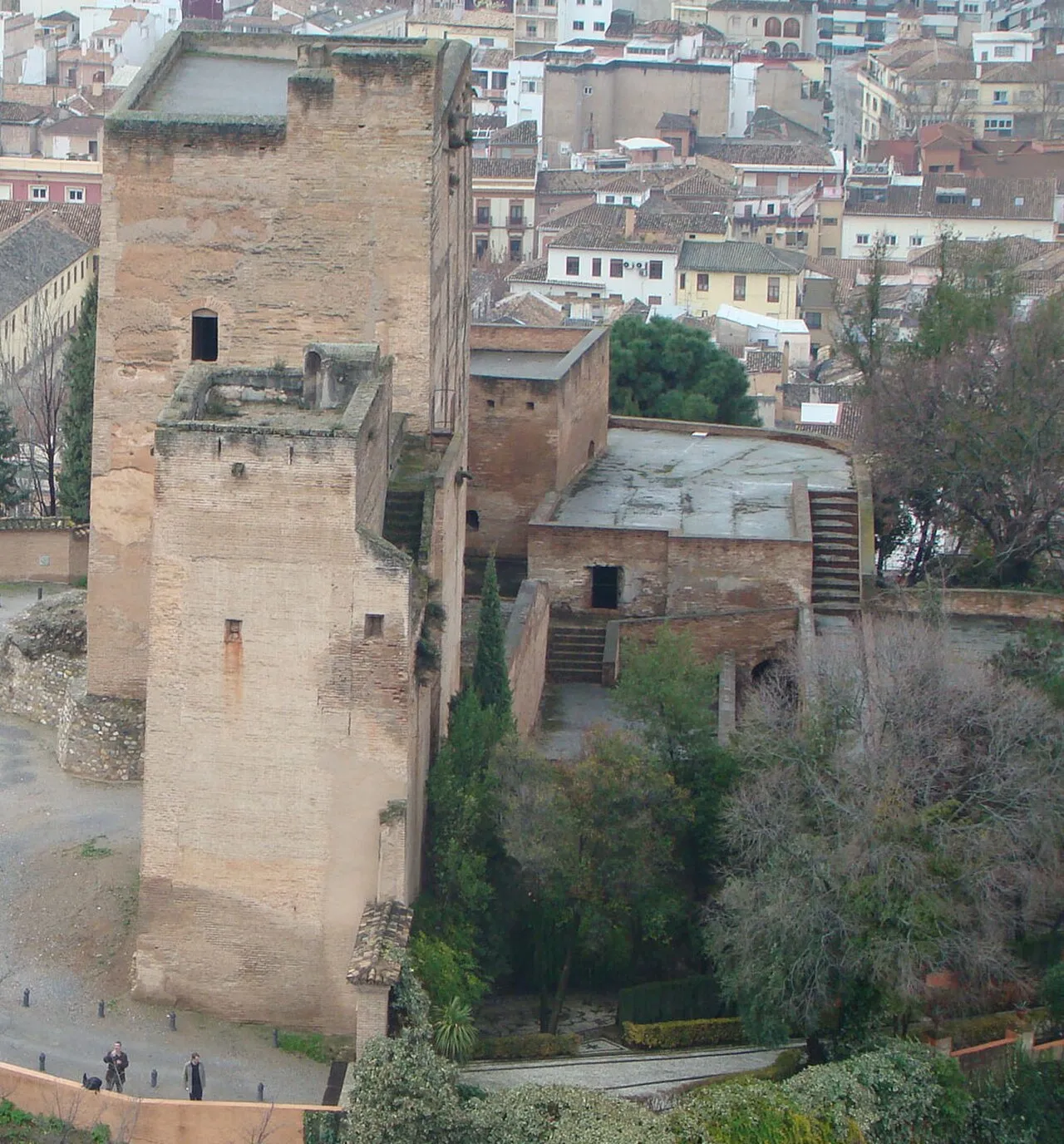
Three towers older than the Alhambra, possibly from the eleventh century, on the slope that separates El Realejo from the walled complex. They are among the oldest defensive remains in Granada and can be seen from the neighbourhood and from the path that climbs the Cuesta de Gomérez. You cannot go inside, but they explain how this hill was defended before the Nasrids.
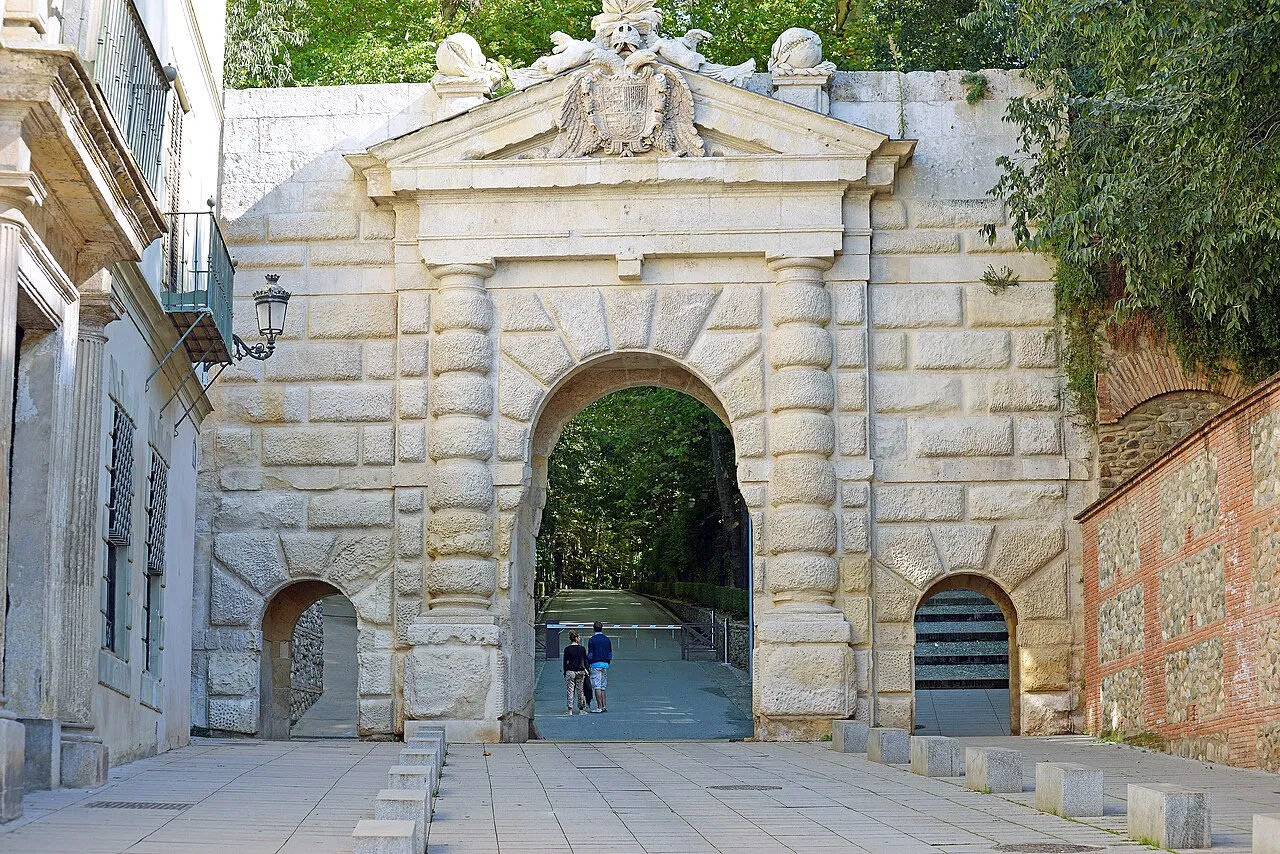
The Renaissance arch through which you enter the woods of the Alhambra from the centre, crowned by three stone pomegranates. Charles V had it built over an earlier Nasrid gate. It marks the exact point where the city gives way to the complex and where the most pleasant climb on foot in Granada begins.
For many people in Granada, El Realejo is the best area in the city for tapas: local prices, generous tapas and a high density of bars without quite becoming a nightlife street. The Campo del Príncipe and calle Molinos, calle Santiago and calle Pavaneras hold most of it.
Here the free tapa works in its purest form: you order a drink, they bring you something, and in plenty of places it gets better with every round. Three or four beers make a dinner, and unlike calle Navas, the customers are mostly local.
The logical route through the neighbourhood climbs from the Plaza del Realejo or from Pavaneras towards the Campo del Príncipe, carries on along Molinos looking at the murals and finishes at the Puerta de las Granadas or at the foot of the Cuesta de Gomérez, which is the way up to the Alhambra.
It is, in fact, the best way to chain the neighbourhood to the visit to the monument: tapas at midday in El Realejo and then the walk up through the woods to the afternoon slot for the Nasrid Palaces.
Frequently asked questions
What was El Realejo in Granada?
The Jewish Quarter of Nasrid Granada, known as Garnata al-Yahud, “Granada of the Jews”. The Jewish community carried real weight here for centuries — under the Zirids, Samuel ibn Nagrella rose to be vizier of the kingdom in the eleventh century — and it disappeared with the expulsion of 1492. The present name comes from the royal camp the Catholic Monarchs set up nearby during the siege of the city.
Where is the street art in Granada?
Mainly in El Realejo, which holds the greatest density of murals in the city. It is the territory of El Niño de las Pinturas, the pseudonym of Raúl Ruiz, one of the most recognised Spanish muralists, whose large-format portraits accompanied by handwritten phrases are spread across dozens of walls. Calle Molinos, calle Santiago and calle Varela hold the most work. It is free, there is no signposted route and it changes constantly.
Is El Realejo the best tapas area in Granada?
For many people in the city, yes. It has local prices, generous tapas and a high density of bars without becoming a street given over entirely to going out, and the customers are mostly local, unlike calle Navas or the Elvira area. The Campo del Príncipe and calle Molinos, calle Santiago and calle Pavaneras hold most of it. Three or four drinks make a dinner.
What is the Cristo de los Favores?
A seventeenth-century crucifix at one end of the Campo del Príncipe, in El Realejo, in front of which one of the most striking popular gatherings in Granada takes place: every Good Friday at three o'clock in the afternoon sharp — the hour at which tradition places the death of Christ — the square fills and thousands of people kneel in silence to ask for three wishes. It lasts a few minutes and no brotherhood stages it as a spectacle.
Can you visit the Cuarto Real de Santo Domingo?
Yes, and it is one of the calmest and least known visits in Granada. It is a thirteenth-century Nasrid palace of which a qubba survives, a square roofed hall with original plasterwork and tilework, today set into a garden between modern buildings. Entry costs very little and it is usually completely empty. It is worth checking opening hours before you go, because they are limited.
How do you get up to the Alhambra from El Realejo?
By the Cuesta de Gomérez, going through the Puerta de las Granadas — the Renaissance arch with three stone pomegranates that Charles V had built over a Nasrid gate — and climbing through the woods to the Puerta de la Justicia. It is about twenty minutes of shaded slope and it is the approach the complex was designed for. Combining tapas in El Realejo at midday with that climb in the afternoon is one of the best plans in the city.
Practical information
Getting thereA 10-minute walk from Plaza Nueva; buses C30 and C32 on the way to the Alhambra.
DurationHalf a day with tapas included. The walking route itself is 30 minutes.
What costs moneyThe Cuarto Real de Santo Domingo, very little. The Casa de los Tiros is free for EU citizens.
Street artCalle Molinos, calle Santiago and calle Varela. Work by El Niño de las Pinturas, free and always changing.
TapasThe best area in Granada. Campo del Príncipe and the streets around it, with local customers.
Combine itTapas here at midday and then walk up to the Alhambra by the Cuesta de Gomérez.
🎧 With Viavoy
Walk Granada and listen at your own pace
Download Viavoy and walk Granada offline, whenever you like.
from 2,99 €· one-off payment
City Pass · 9,99 €3 days, all the tours in Granada