Granada in 2 days: the Alhambra, the Albaicín and everything that fits in between
One day for the whole Alhambra and another for the Albaicín, the centre and El Realejo. With the booking you have to make before anything else and where to have dinner for free on tapas.
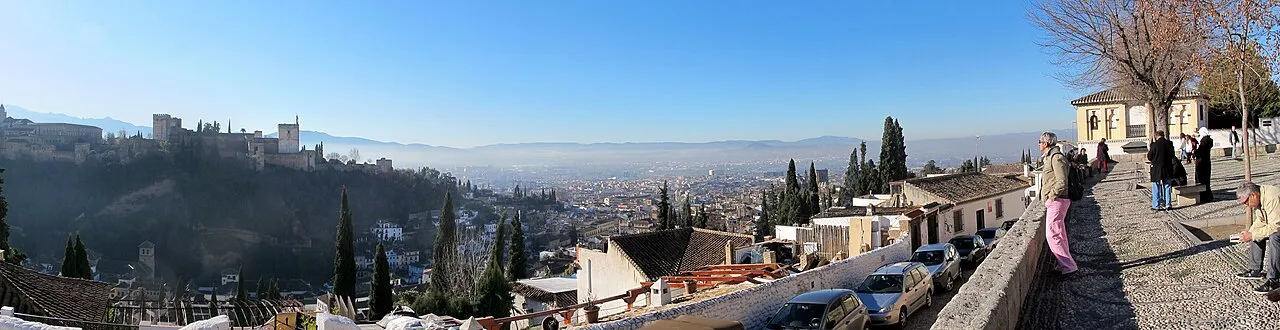
Granada is arranged over three hills and a centre, and that geography rules over any plan. On one hill is the Alhambra, which eats up a long half-day and demands a ticket booked weeks in advance. Facing it is the Albaicín, a maze of slopes with the best viewpoints. And below, between the two, the Christian Granada of the cathedral and the Royal Chapel. Two well-shared days cover all of that without rushing. The only thing that leaves no room for improvising is the ticket.
Before you book the hotel, book the Alhambra. Tickets sell out weeks in advance and the whole organisation of the trip depends on the time slot you get.
Day 1: the whole Alhambra
The entire day turns around your time slot for the Nasrid Palaces.
Walk up from Plaza Nueva along the Cuesta de Gomérez: twenty minutes of shaded slope that cross the woods and come out at the Puerta de la Justicia. It is the approach the complex was designed for, and arriving that way instead of by bus changes the first impression.
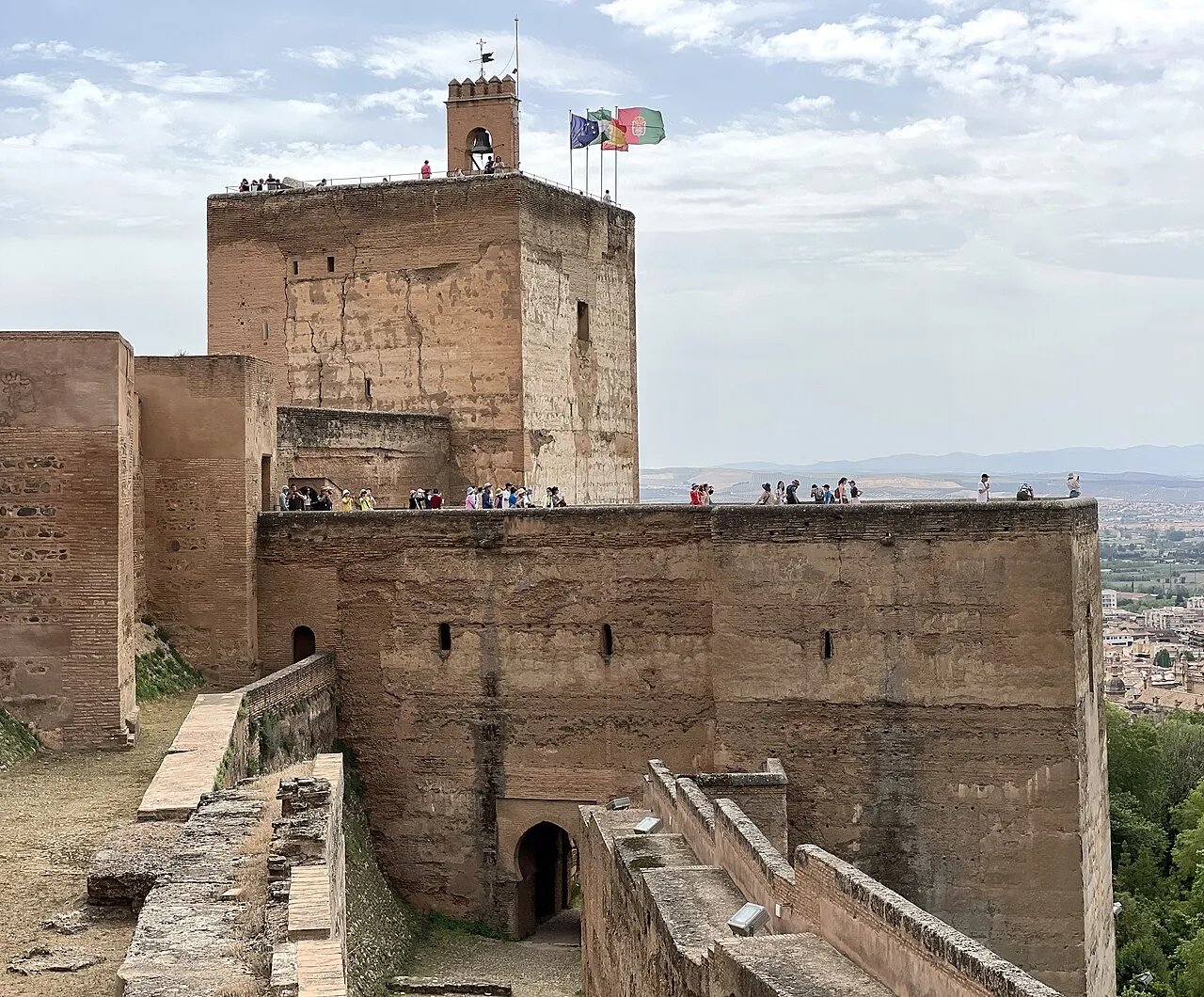
Arrange the order according to your slot. If the one for the Nasrid Palaces is early, go straight to them and leave the Alcazaba and the Generalife for afterwards. If it is mid-morning or afternoon, start with the Alcazaba, which is at the entrance, and climb the Torre de la Vela to get your bearings with the whole city below.
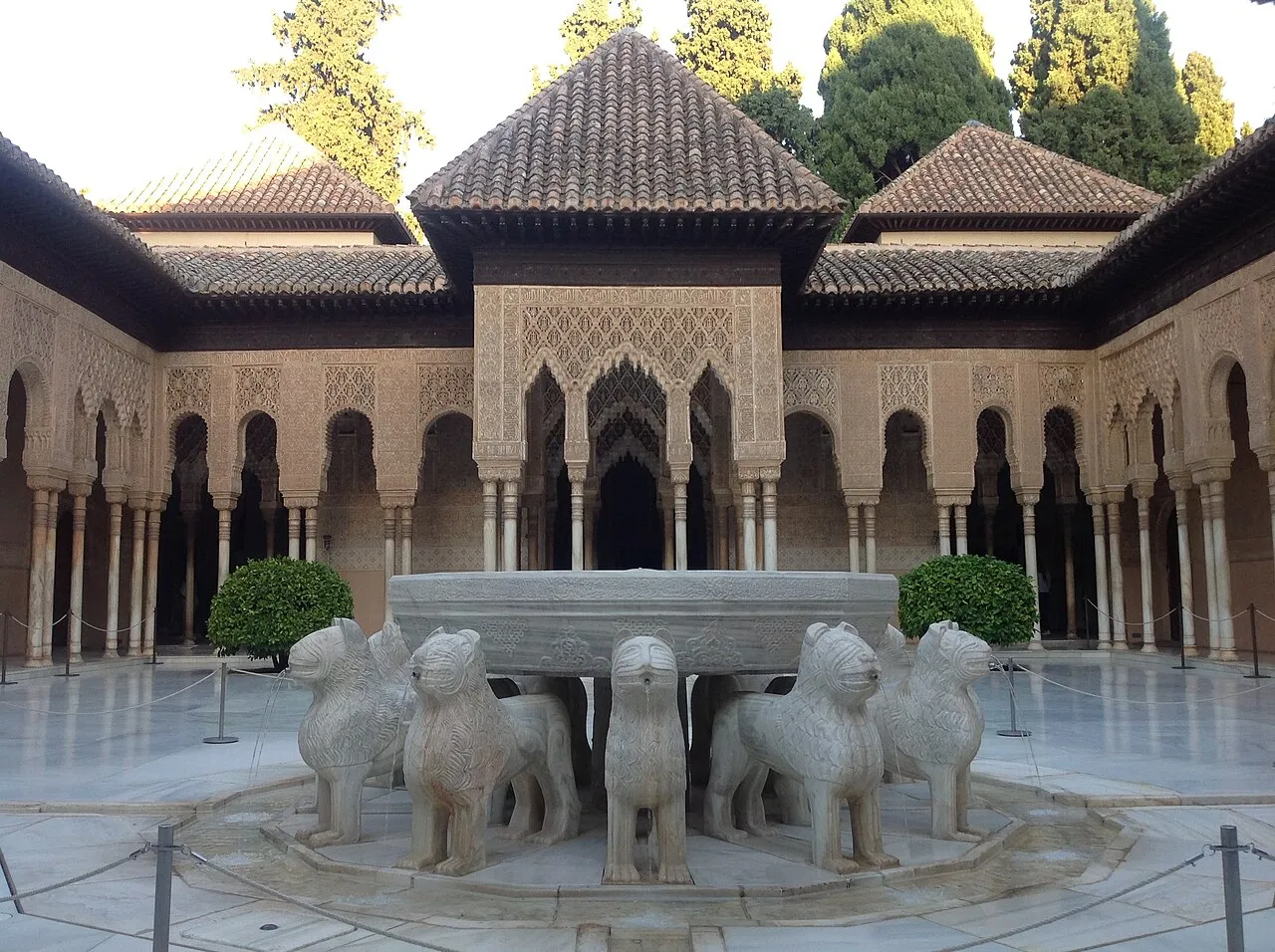
In the Nasrid Palaces, remember that the route runs one way only: Mexuar, Patio de los Arrayanes, Salón de Embajadores, Patio de los Leones and out. You cannot go back, so do not walk past things while hunting for the famous ones.
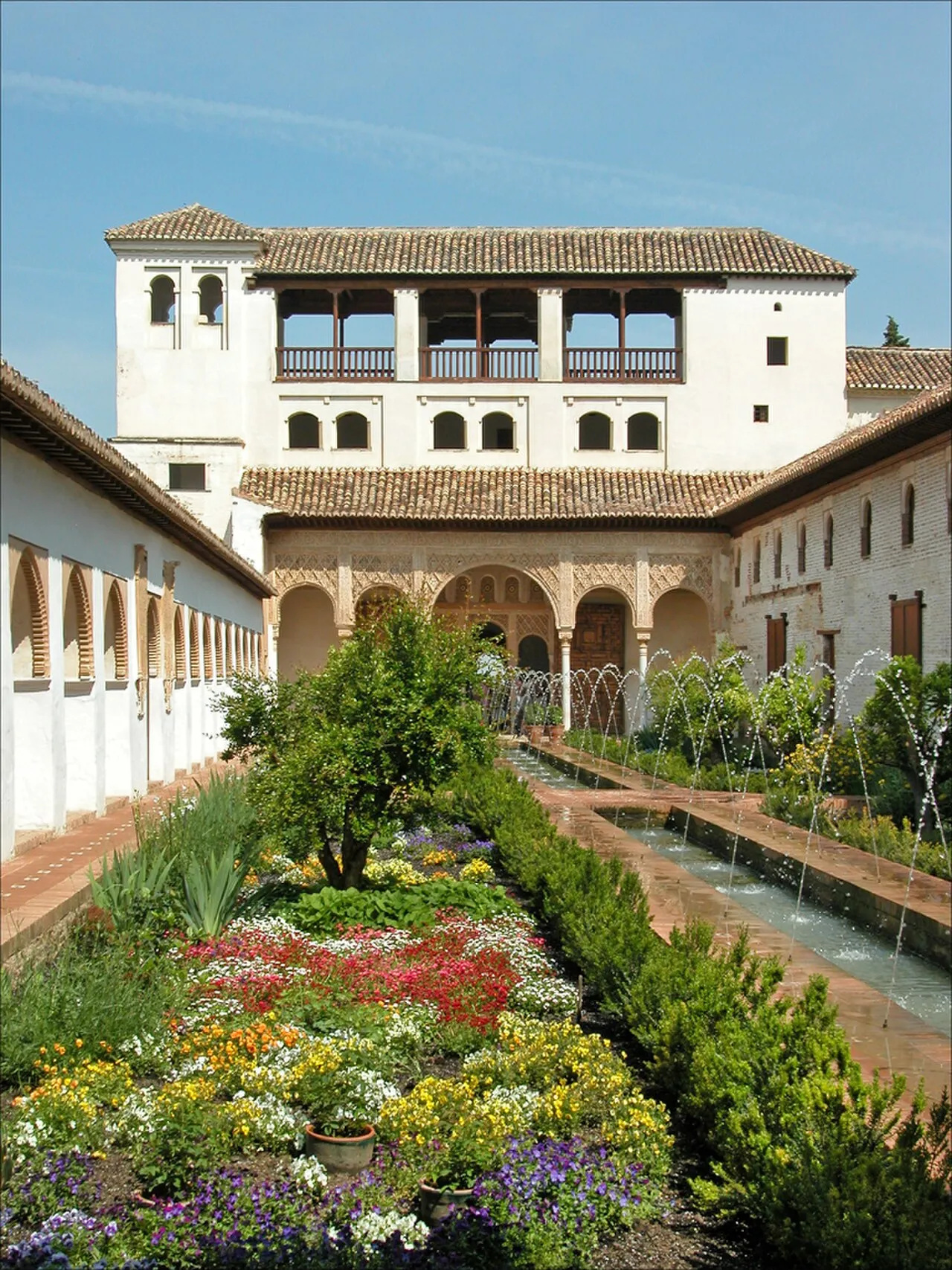
And do not skip the Generalife because you are tired, which is the most common mistake at the end of the day. It is fifteen minutes away on foot and it is where you best understand what this really was: a court that kept its pleasure garden on the hill opposite.
The oldest and most military part of the Alhambra, with the Barrio Castrense, the garrison quarter where the soldiers lived, and the Torre de la Vela at the top, whose bell set the irrigation shifts for the whole Vega. It is the best balcony in Granada: the city below, the Albaicín opposite and Sierra Nevada behind. There is not a scrap of shade.
A hundred and twenty-four columns set to a calculated rhythm that opens and closes the perspective as you walk, and twelve lions holding up a basin. From the floor run four narrow channels in a cross, representing the rivers of the Quranic paradise. All the water in the complex arrives by gravity from the mountains, without a single pump, and has done since the thirteenth century.
The sultans' pleasure estate, outside the walled complex: it was an almunia, a working kitchen garden with pavilions. Its Patio de la Acequia is the most famous garden courtyard in the Islamic world, and the Escalera del Agua carries water down channels carved into the handrails themselves. It is fifteen minutes away and plenty of people leave it out.
Download the app and discover Granada offline, whenever you like. Take the walking tour The Alhambra and the Generalife with a local guide in your ear.
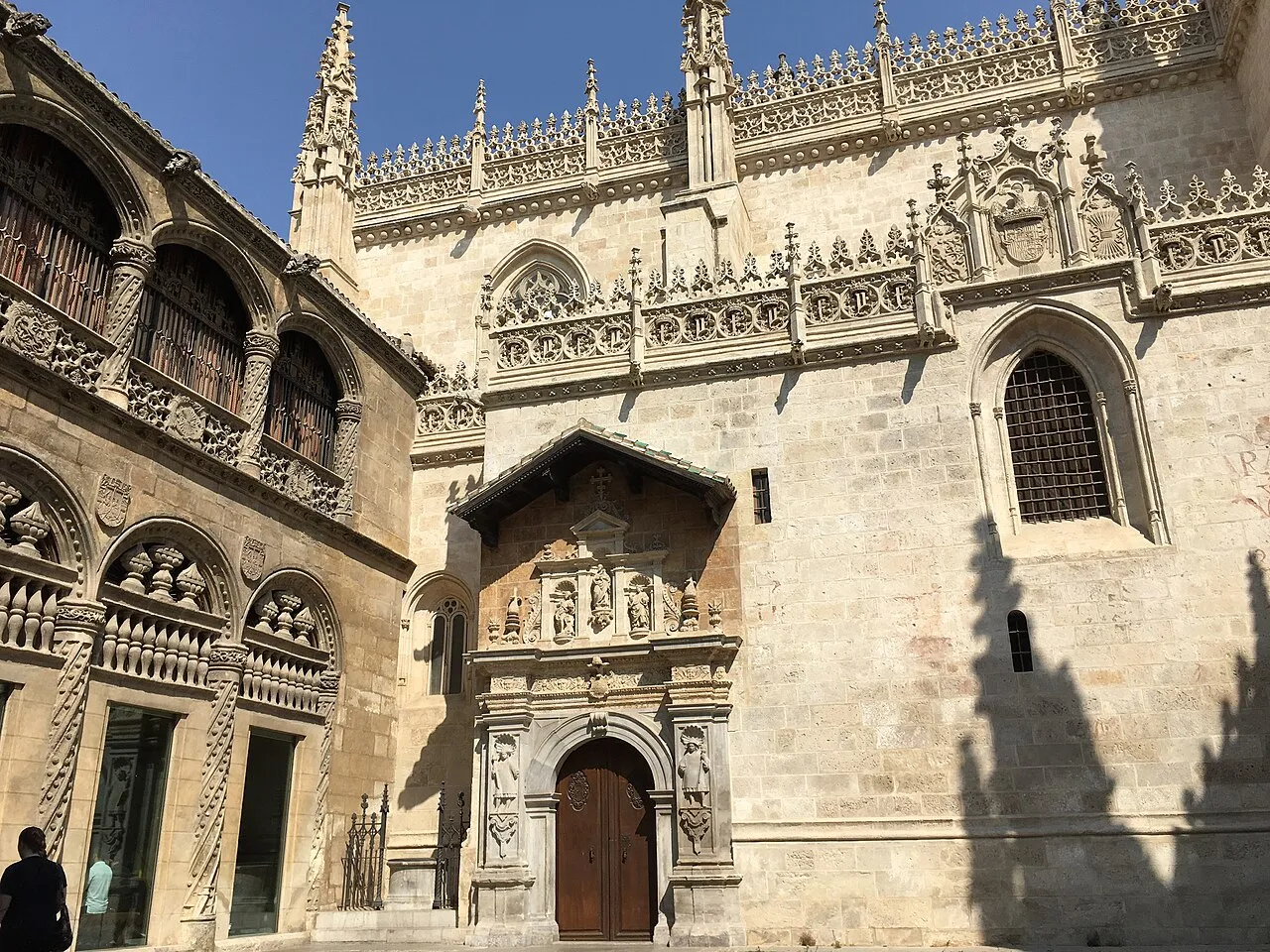
Start at the Royal Chapel, which opens early and is smaller and more intimate than the cathedral. The Catholic Monarchs are buried here, with their gilded screen, their Carrara tombs and, down in the crypt, the plain lead coffins in full view. In the museum is Isabella's private painting collection: the Flemish panels from her oratory.
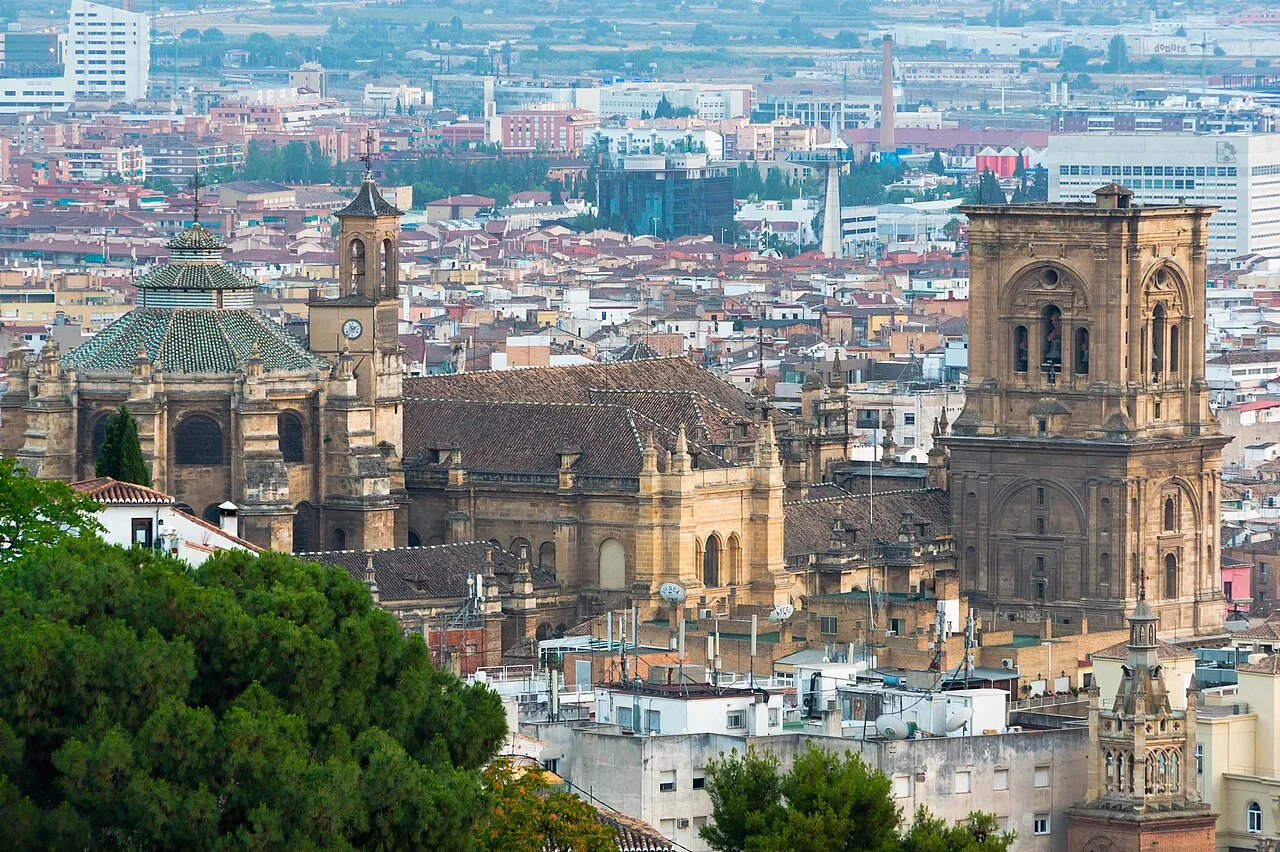
Carry on to the cathedral, which is a separate building with its own entrance. It is exactly the opposite of a Gothic cathedral: Diego de Siloé redesigned it in 1528 as a temple of light, with dazzlingly white columns on tall pedestals and a circular main chapel inspired by the Holy Sepulchre.
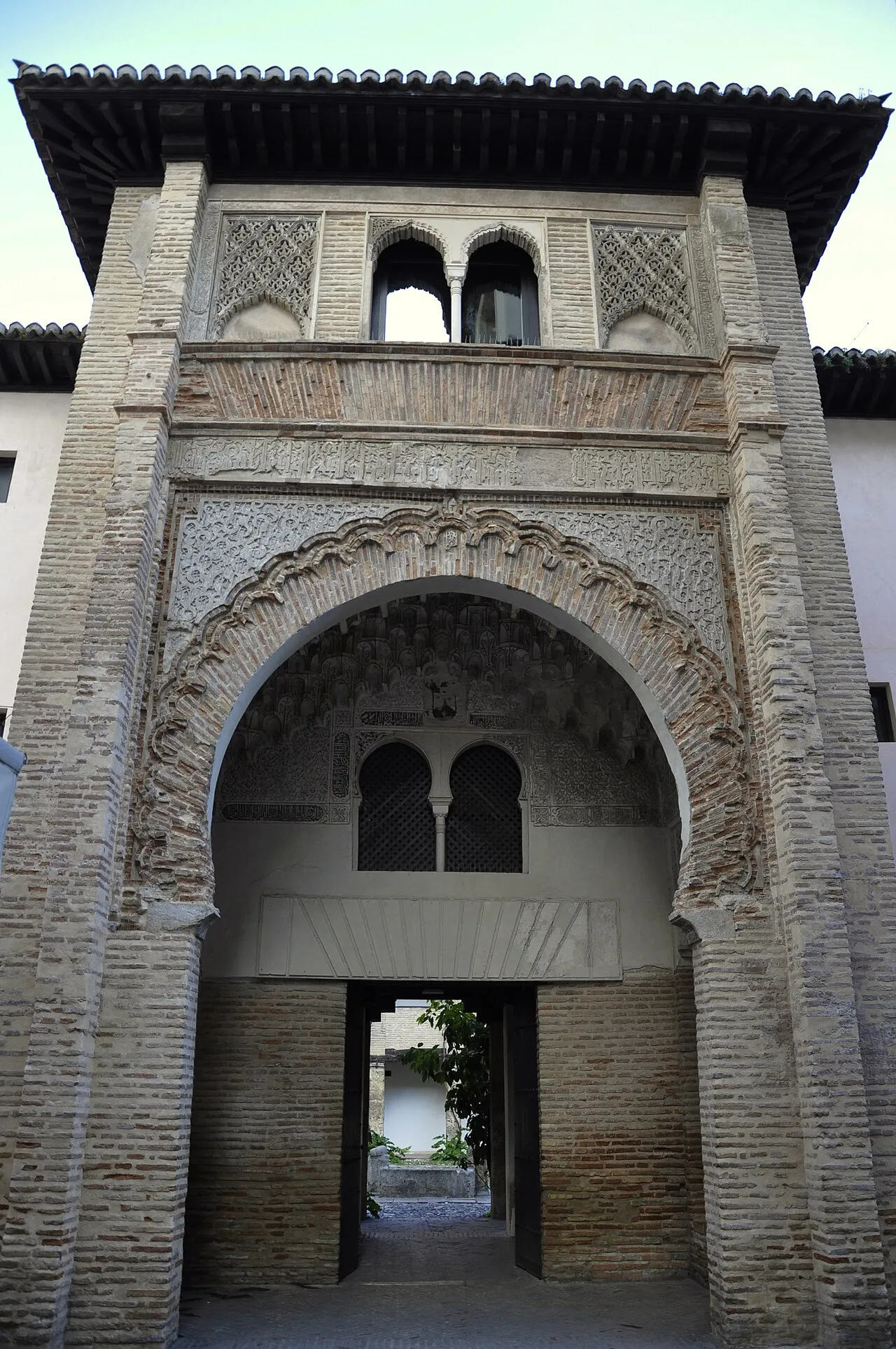
Five minutes away, the Corral del Carbón: the only complete Nasrid alhóndiga, or merchants' inn, on the peninsula, a silent courtyard with wooden galleries on three floors, right in the shopping district and free to enter. And opposite, the Alcaicería, the old silk market rebuilt in the nineteenth century.
Have lunch in the Elvira or Navas area, where the tapa still comes free with your drink and where three or four beers settle the meal.
Isabella chose Granada, the last city she conquered, to be buried in. Inside there is a gilded iron screen by Maestro Bartolomé that ranks among the best in Europe, tombs of Carrara marble and, in the crypt, the royal lead coffins, plain and in full view. The museum holds the Flemish panels from the queen's personal oratory.
A cathedral made of light, on the site of the Nasrid main mosque. Diego de Siloé redesigned it in 1528 in a Renaissance key, with columns on tall pedestals and a circular main chapel twenty metres across inspired by the Holy Sepulchre. It took a hundred and eighty years to finish and its solution was copied across half of Andalusia and in the Americas.
The only complete Nasrid alhóndiga on the peninsula: a square courtyard with wooden galleries on three floors, behind a soaring horseshoe arch. It was an inn for merchants, and from its Arabic name, funduq, come the Spanish words alhóndiga and fonda. It survived because it kept being useful for something: a coal store, a corral de comedias playhouse and a tenement. Free entry.
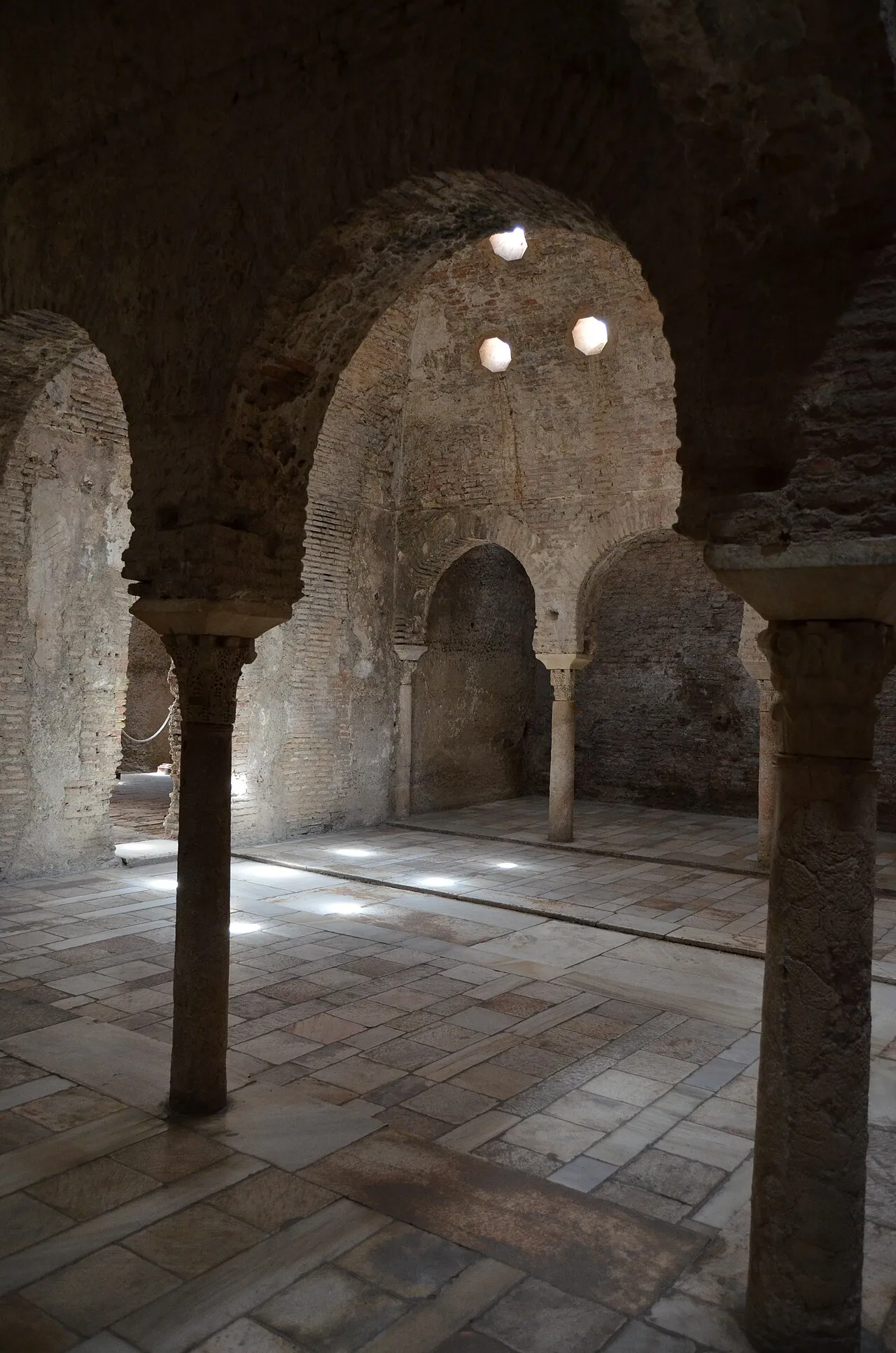
Go up the Carrera del Darro, which follows the river at the foot of the hill and is one of the most beautiful walks in Spain. Halfway along is El Bañuelo, an eleventh-century Arab bathhouse, two hundred years older than the Alhambra, with its roof pierced by star-shaped skylights.
Then head into the Albaicín with no plan. There is no route to follow: it is cobbled slopes, cármenes behind whitewashed walls and small squares that appear out of nowhere. The only useful rule is that going up always ends up taking you to a viewpoint.
Pass through Plaza Larga, with its street market and its Nasrid arch, the Puerta de las Pesas, which is where the neighbourhood stops being a postcard and turns into a village. And eat or have a drink up there, not in the lower part: local prices and real shade.
Finish at the Mirador de San Nicolás at sunset, with the whole Alhambra in front of you and Sierra Nevada behind. Then walk down the Paseo de los Tristes, with the fortress lit up above: it is the best night-time walk in the city.
Eleventh-century Arab baths, from Zirid times, two hundred years older than the Alhambra. The vaulted roof is pierced by eight-pointed star skylights that let the light in without letting the steam out, and the capitals are reused Roman, Visigothic and caliphal pieces. Entry costs very little and it is usually in the combined ticket for Andalusi monuments.
The whole Alhambra in front of you, floating above the trees, with Sierra Nevada behind. It is the postcard of Granada and in the flesh it still works. At sunset the stone goes from ochre to red in a few minutes, and that is also when there are most people: if you want the quiet photograph, go at dawn.
Yes, and with room to spare if you share it out well. One full day for the Alhambra and the Generalife, which take between three and a half and four and a half hours plus the journeys, and another for the Christian centre — the Royal Chapel, the cathedral, the Corral del Carbón — in the morning and the Albaicín in the afternoon, finishing at the Mirador de San Nicolás at sunset. With a third day you can fit in Sacromonte, La Cartuja and San Jerónimo.
What do you have to book in Granada?
Only one thing, but it is essential: the Alhambra. You buy it online on the official site, it costs around 19 € and it sells out weeks in advance in high season. Check that your ticket includes the Nasrid Palaces, because there are cheaper partial options that do not include them, and bear in mind that the time assigned for those palaces is exact and cannot be moved. Every other monument in the city can be done as you go.
Is it true that tapas are free in Granada?
Yes, and this is one of the last Spanish cities where the custom holds across the board: with every drink they bring you a tapa at no cost, and in many places it goes up in quality with each round you order. Three or four beers make a perfectly good dinner. The areas where it works best are El Realejo, calle Elvira, calle Navas and the upper Albaicín.
When is the best time to travel to Granada?
Spring and autumn are the best seasons: reasonable temperatures and, in spring, Sierra Nevada still under snow, which multiplies the view from the Albaicín. Summer is very hot and the Alhambra complex has hardly any shade. Winter is underrated: it is cold but the days are bright, the monuments are empty and the white mountains behind give you the best postcard there is.
Is Granada a comfortable city to walk?
It is walkable but demanding. The historic centre is compact and everything essential is within strolling distance, but the Albaicín, Sacromonte and the climb to the Alhambra are serious slopes over uneven cobbles. Footwear matters here more than in most Spanish cities. If gradients are a problem, the C30, C31 and C32 minibuses cover the Alhambra, the Albaicín and Sacromonte.
Is Sacromonte worth it?
If you have another half-day, yes. It is the neighbourhood of caves dug into the hillside, historically home to the Roma community, and the cradle of the Granada zambra, a form of flamenco of its own with a different format from the usual tablao. There is an open-air cave museum that explains how people lived in them, and several caves where shows are put on. The views towards the Alhambra from the Sacromonte road are excellent.
What is worth knowing beforehand
Granada is a city of slopes, and not in a figurative sense. The Albaicín, Sacromonte and the climb to the Alhambra are serious gradients, and the paving is uneven cobble. Footwear matters here more than in almost any other Spanish city.
The free tapa is real and this is one of the last cities where it holds across the board: with every drink they bring you something at no cost, and in many places it goes up a level with each round. Three or four beers make a dinner. The areas are El Realejo, calle Elvira, calle Navas and the upper Albaicín.
The climate is extreme in both directions: very hot summers, with no shade in the Alhambra, and cold winters with Sierra Nevada under snow half an hour away. Spring and autumn are the best seasons, and winter is badly underrated: empty monuments and the best possible view from the Albaicín.
And a third thing that fits if you have another half-day: Sacromonte, with its caves and its flamenco zambras, and the Monastery of La Cartuja, with a Baroque sacristy reckoned among the most spectacular in Spain.
Practical information
Book before anything elseThe Alhambra online, weeks in advance. The whole organisation depends on that time slot.
DurationTwo days. Day 1 the whole Alhambra; day 2 the centre in the morning and the Albaicín in the afternoon.
FootwearA city of cobbled slopes. It matters here more than in almost any other Spanish city.
EatingThe tapa is free with your drink. El Realejo, Elvira, Navas and the upper Albaicín.
When to goSpring and autumn. Winter is underrated: empty monuments and the snow-covered sierra behind.
If you have more timeSacromonte and its zambras, and the Monastery of La Cartuja with its Baroque sacristy.
On the map
🎧 With Viavoy
Walk Granada and listen at your own pace
Download Viavoy and walk Granada offline, whenever you like.
from 2,99 €· one-off payment
City Pass · 9,99 €3 days, all the tours in Granada