Ávila in one day: the walls, the fortress-cathedral and Teresa
Start outside to see the whole ring, walk the adarve and leave the enclosure for the golden stone. With what almost everybody misses by staying inside the walls.
Ávila fits inside its walls, and that sentence is literal: the walled ring never let the city grow, and that is why the old centre reached us whole, with the same core it had in Roman times. A long day is enough, and there is one decision that changes the whole visit: starting outside the walls instead of inside.
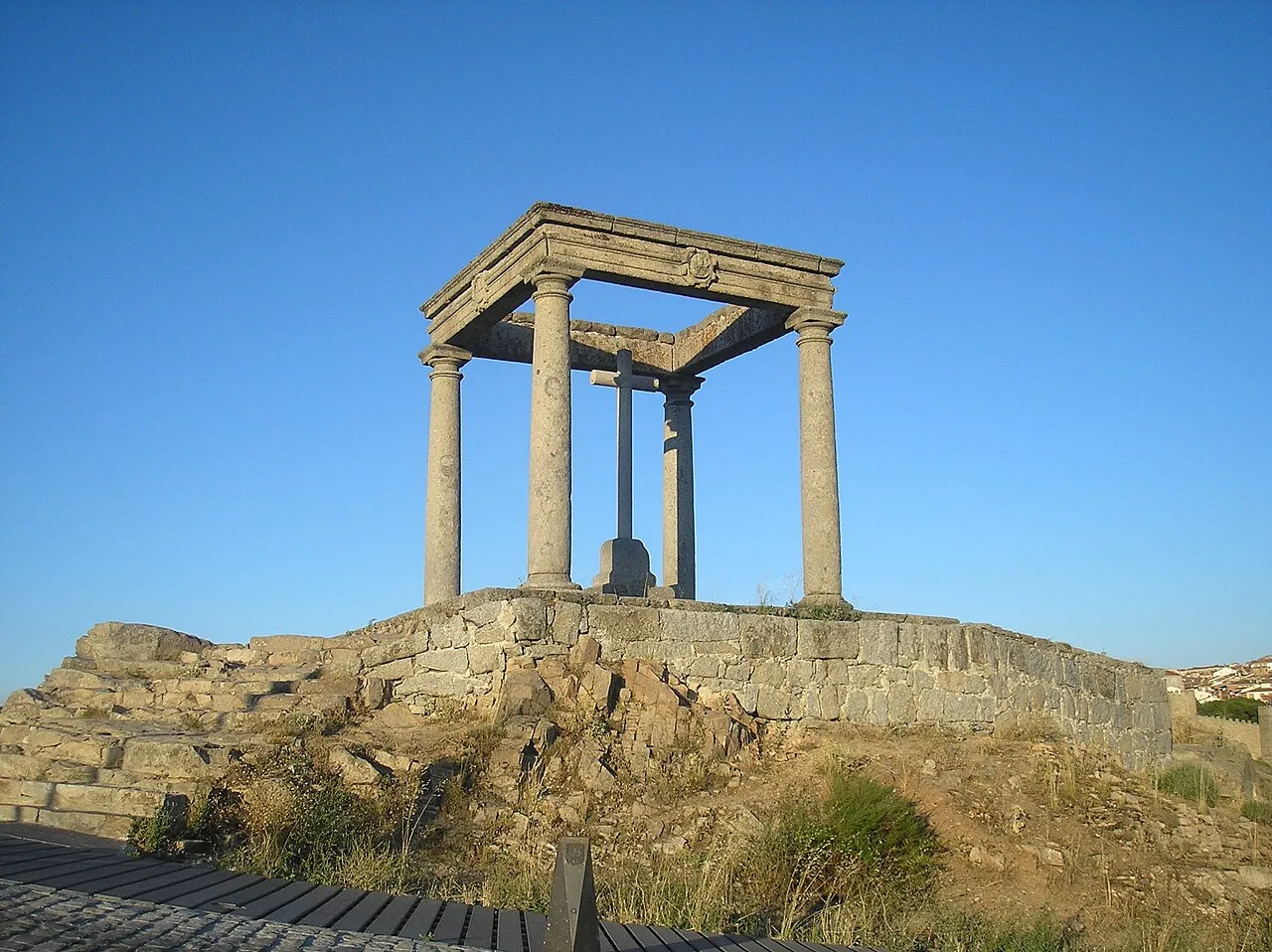
Go first to Los Cuatro Postes, on the other side of the river. From there the ring of walls appears complete on its hill, something impossible to grasp from inside, and everything you walk afterwards makes sense.
Morning: the walls from outside and from above
Fifteen minutes across the river, and then the adarve.
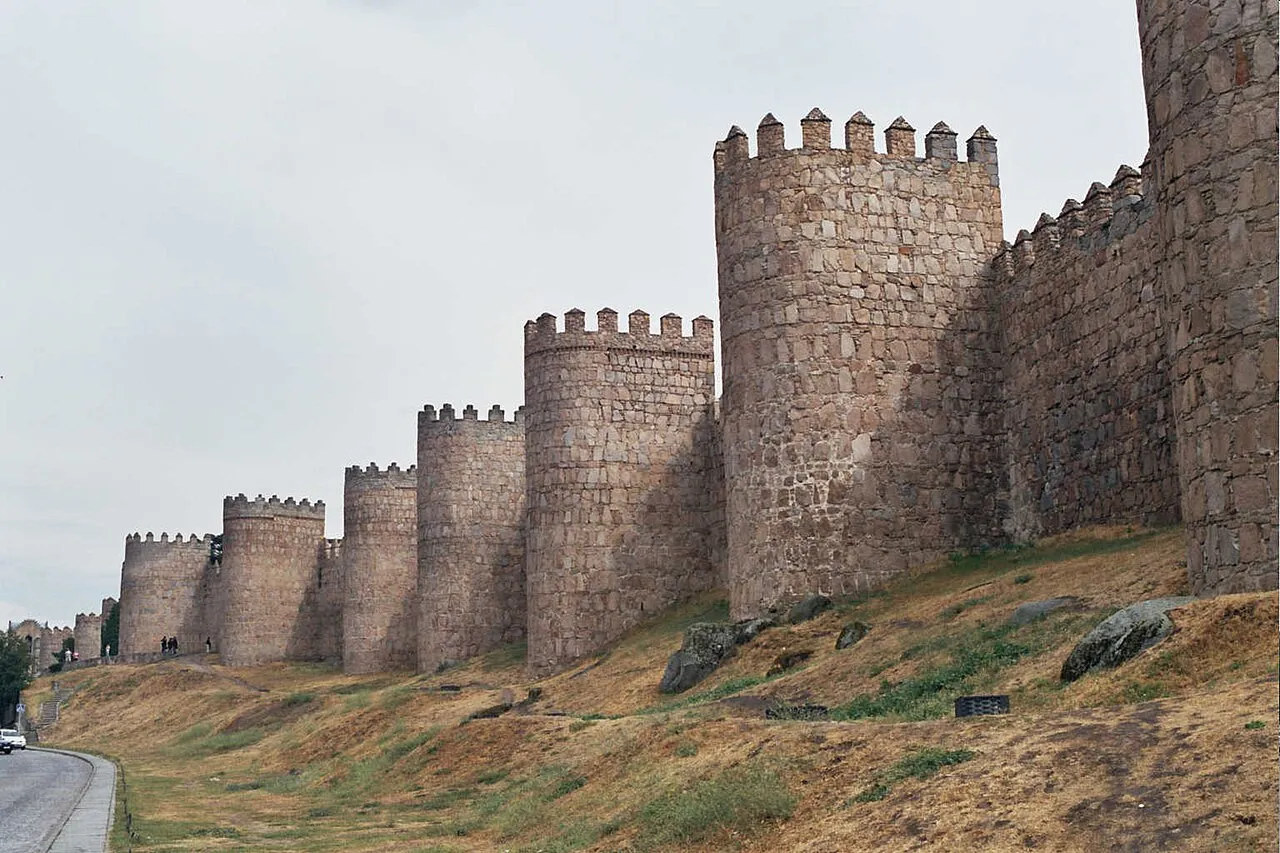
Los Cuatro Postes is a humilladero, a wayside shrine, from 1566 on the far side of the Adaja, and from there you see what has to be seen: two thousand five hundred metres of wall closed around the hill, eighty-seven round towers and the rooftops of a city that fits inside. It is the best preserved medieval wall in Europe and it is not a stretch of it: it is the whole ring.
And there is a story attached to the place that deserves telling: this is where Teresa de Cepeda was caught at the age of seven, as she fled on foot with her brother Rodrigo towards the land of the Moors to be martyred and win heaven once and for all. An uncle caught up with them and took them home.
Go back to the enclosure and enter through the Puerta del Alcázar, the most solemn of the gates: two round towers joined at the top by a stone bridge, with machicolations over the head of anyone coming in. This stretch is the highest and thickest of the whole perimeter because here the terrain gave no natural advantage.
And go up onto the adarve, the walkway along the top of the wall. There are stretches of different lengths, so it adjusts to your time, and it is the thing to do: you see the city inside and the countryside outside exactly as a sentry saw them. Look at the ashlars: some are reused Roman and Visigothic gravestones.
Four columns and a cross, with no walls and no roof, at the point where what matters is what you see through them. Free access with no opening hours. At sunset the granite turns golden, and at night the walls are lit. Wrap up: out in the open at 1,100 metres the wind never fails.
Twelve metres high, three metres thick and some 2,500 merlons. The towers are very close together because with bow and crossbow the range is short and no stretch of wall could be left uncovered. Ávila was never taken by assault: it deterred simply by being seen.
The noble face of the city and one of the ways up onto the adarve. Nothing is left of the alcázar that gives it its name: it fell into ruin and was pulled down, and the place name outlived the stone. In front, the Mercado Grande, the setting for fairs, jousts and tournaments for centuries.
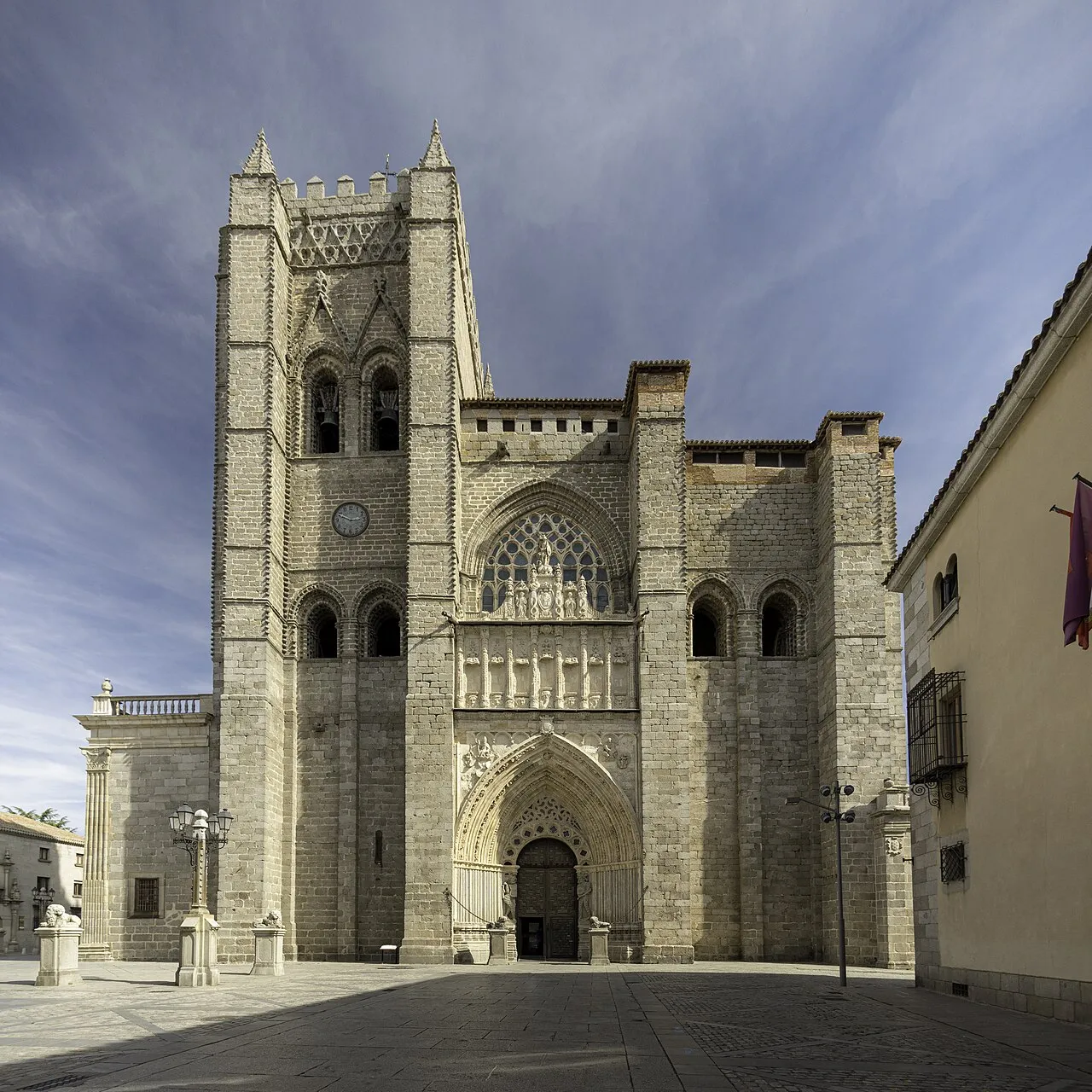
The cathedral has a peculiarity that is not repeated anywhere in Spain: its apse is not beside the wall, it is a tower of the wall. It is called the cimorro and it forms part of the defensive system of the enclosure. Church and fortress in the same wall. It is worth walking round the building on the outside before going in, to see it.
Inside, two things. The first is that it is credited with being the first Gothic cathedral on the peninsula, designed by the master Giral Fruchel in the twelfth century, and it has the first ambulatory in Spain. As you go in you see the process vertically: heavy Romanesque below, growing more slender as it rises.
The second is the colour. The granite of the nave is mottled red and ochre by iron oxides and produces a warm, almost organic gloom that in Ávila they call the bleeding stone. It was not an aesthetic decision: it was what the quarry had.
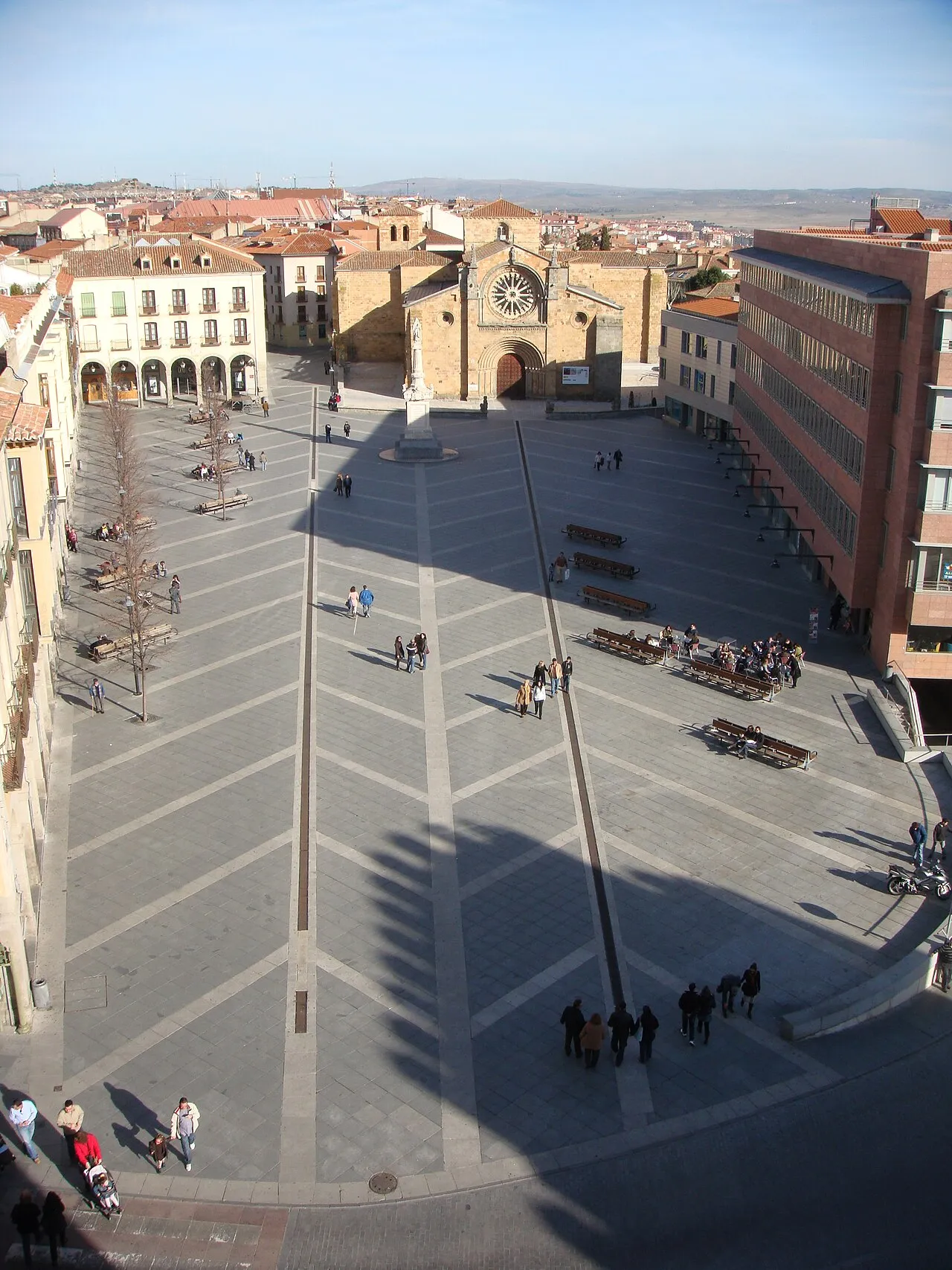
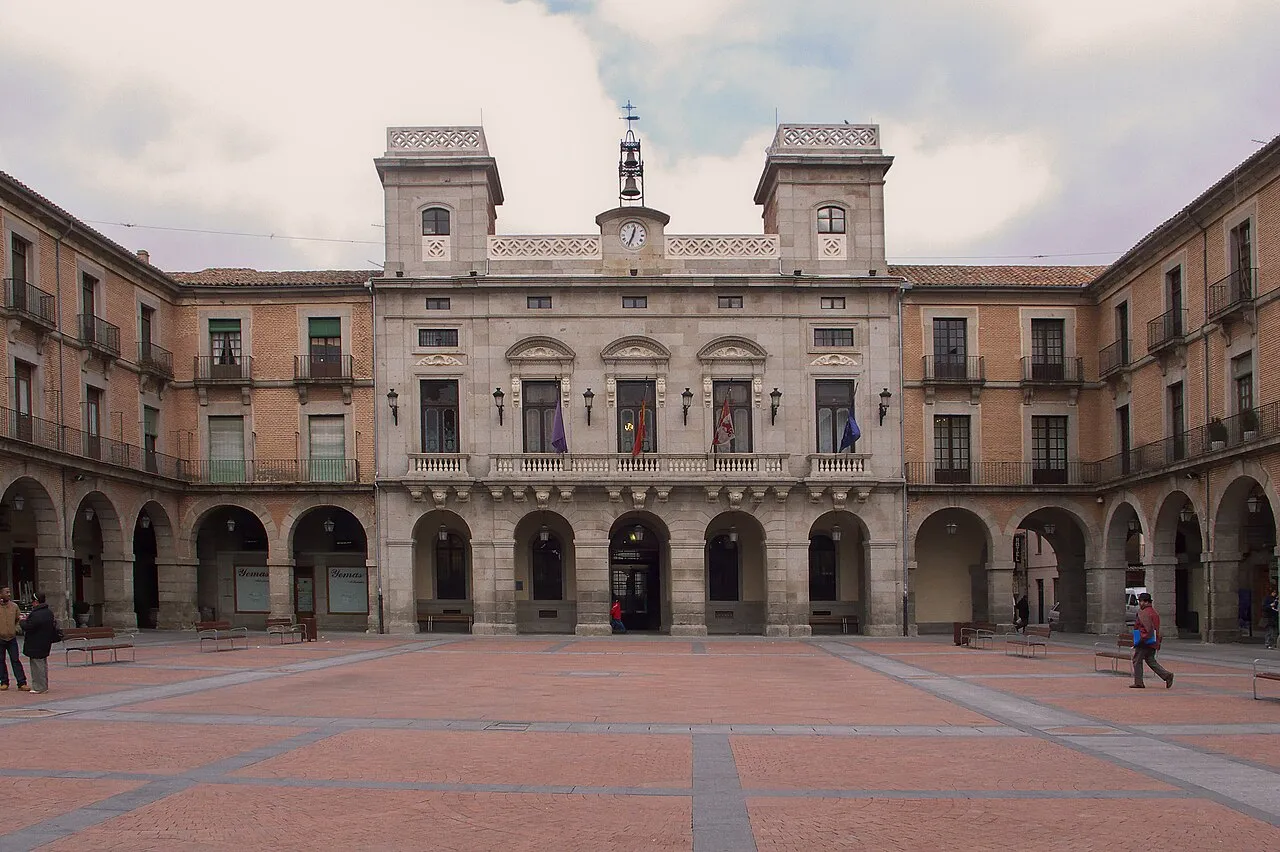
Five minutes away, the Plaza del Mercado Chico, which is the city's drawing room and where the Roman forum stood: two thousand years of public life on the same square of ground. It is the best place to stop for lunch, under the arcades.
Behind the high altar, the tomb of El Tostado carved in alabaster by Vasco de la Zarza, one of the major pieces of the Spanish Renaissance. And look at the façade: two twin towers were planned and only one was finished, so it was left lopsided for ever.
It is called Chico, the small one, to distinguish it from the Mercado Grande outside the walls: the one inside was the daily market, the one outside the fair and livestock market, which could not come into the enclosure. Around it, the palaces of the wool nobility.
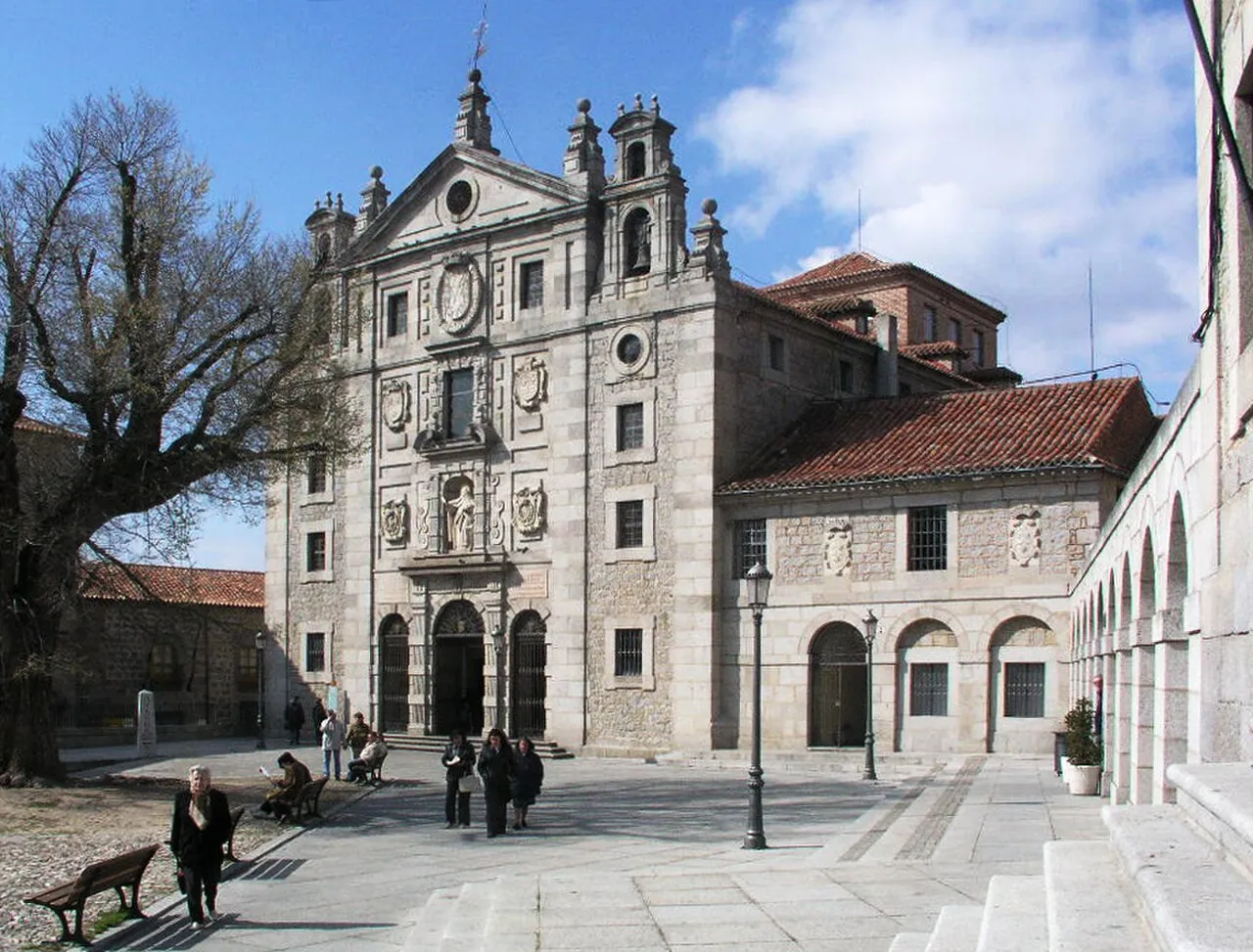
Raised in 1636 over the house where she was born in 1515. The church is turned round, facing north rather than east as convention demanded, so that the altar would fall over the room where she was born. Inside, a Christ by Gregorio Fernández and a room of relics.
This is what almost everybody misses. Ávila is not only the city inside: the World Heritage listing of 1985 expressly includes the churches outside the walls, and they are Romanesque of the first rank.
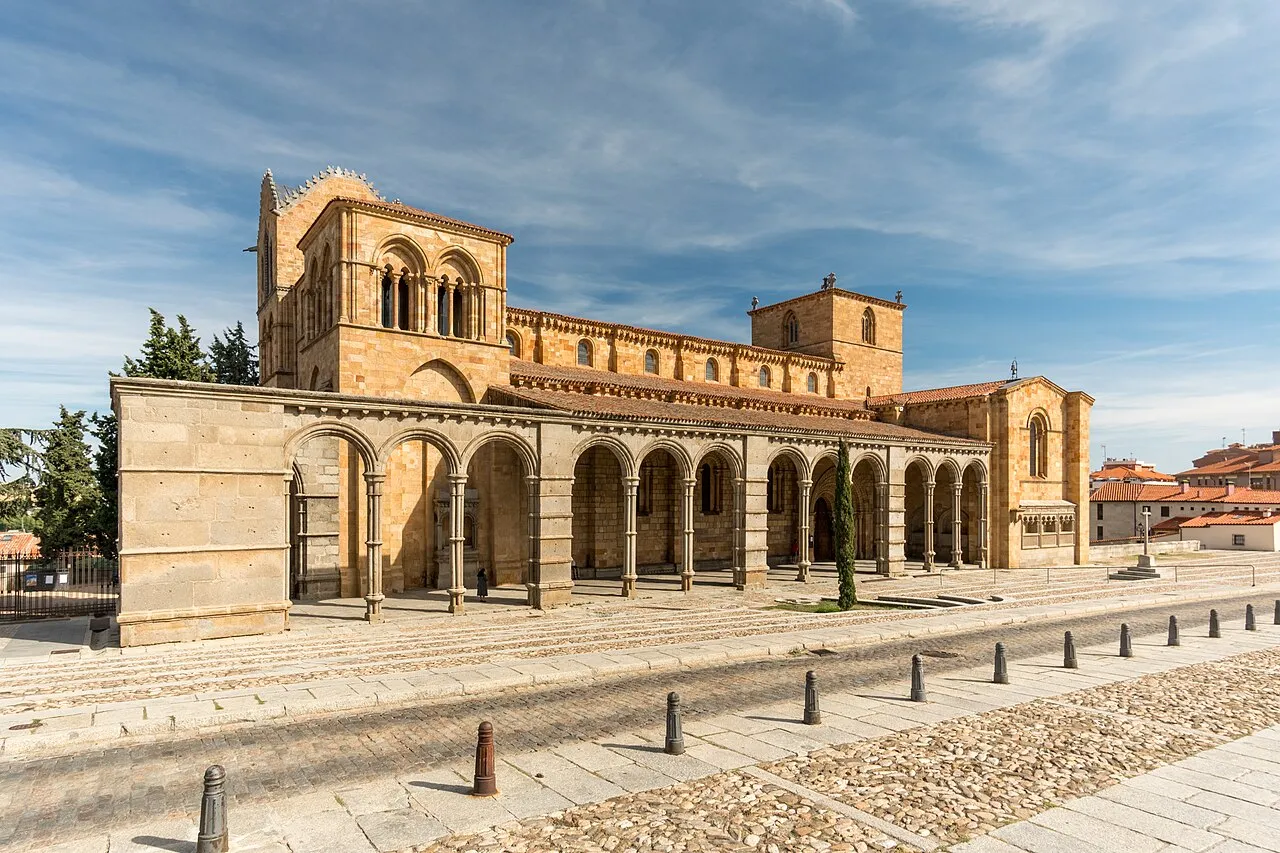
The main one is the Basilica of San Vicente, next to the gate of the same name. The first thing that changes when you go out is the colour: here the stone is no longer the grey granite of the enclosure but caleña sandstone, warm, which catches fire in low light. That contrast is the best argument for going through the gate.
Its western doorway is among the peaks of Spanish Romanesque sculpture, with apostles who turn their bodies and look at one another, and inside, the cenotaph of the three martyrs tells the martyrdom scene by scene beneath a Gothic baldachin. Do not leave without going down to the crypt.
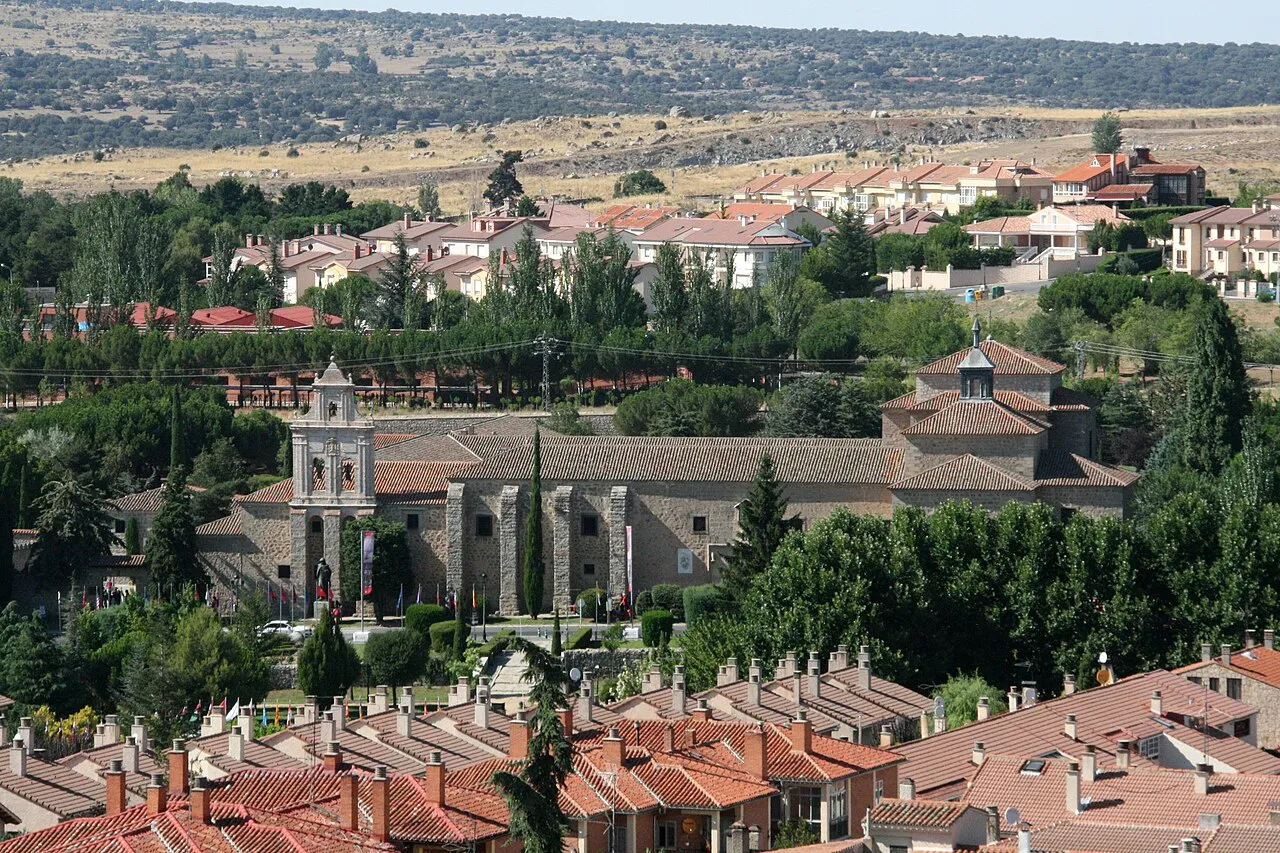
And if there is afternoon left, the Monastery of La Encarnación, fifteen minutes further north. It is the place in the city with the heaviest charge and the one fewest people set foot in: Teresa lived here for almost thirty years, half her life, and here she overlapped with John of the Cross, who was her confessor while she was prioress.
📍 Outside the walls, next to the Puerta de San Vicente
Begun around 1130 and worked on for almost two centuries, so you can read the passage from Romanesque to Gothic as you move towards the west end. The legend of the Jew and the serpent who paid for the church is carved on the cenotaph itself: very explicit medieval proselytising.
It was a large convent with little reform, with cells according to social status and a relaxed rule. Her reform of the Carmelite order was in good part a reaction to what she lived through in here. An enclosed community still active, with reduced opening hours.
Yes, with room to spare. The walled enclosure is small and everything is done on foot. A long day covers Los Cuatro Postes, the adarve along the walls, the cathedral, the Plaza del Mercado Chico, the convent of Saint Teresa and San Vicente outside the walls. With two days you can fit in the complete Teresian circuit and the other Romanesque churches.
Where is it best to start?
At Los Cuatro Postes, outside the walls and on the far side of the river, even though it seems counterintuitive. From there the ring of walls appears complete on its hill, something impossible to grasp from inside, and everything you walk afterwards inside the enclosure takes on meaning. It is fifteen minutes on foot.
Is it worth going up onto the walls?
Very much so, and it is the visit to make. You walk along the adarve, the walkway that crowns the wall, seeing the city inside and the countryside outside as a sentry did. There are stretches of different lengths, so it adjusts to your time. In winter, with no shelter at all, it is very cold.
What is special about the cathedral?
That its apse is not beside the wall: it is a tower of the wall, built into the defensive system of the enclosure. Church and fortress in the same wall, and there is no other case like it in Spain. It is also credited with being the first Gothic cathedral on the peninsula and it has the first ambulatory in the country.
What is there outside the walls?
The Romanesque churches beyond the walls, included in the World Heritage listing along with the wall itself: San Vicente, San Pedro, San Andrés, San Segundo. They are built in caleña sandstone, not in the grey granite of the enclosure, and in low light they catch fire. And the Monastery of La Encarnación.
What do people eat in Ávila?
Chuletón de Ávila, a beef chop from the avileña breed with its own geographical indication, served very thick and grilled over embers; judías del Barco de Ávila, beans that also have their own denomination; patatas revolconas, mashed paprika potatoes with torreznos; and for dessert, yemas de Santa Teresa, egg-yolk sweets. It is high-plateau cooking and quite filling.
Practical information
Getting thereTrain from Madrid in an hour and a half. Buses from Madrid and Salamanca.
Start withLos Cuatro Postes, outside the walls: seeing the whole ring before you go in changes the day.
The wallsThe adarve, with entry at around 5 €, in stretches of different lengths.
Don't missLeaving the enclosure: San Vicente and the Romanesque churches in golden sandstone.
When to goSpring and autumn. The highest provincial capital in Spain: constant wind and hard winters.
EatingChuletón de Ávila, judías del Barco, patatas revolconas and yemas de Santa Teresa.
On the map
🎧 With Viavoy
Walk Avila and listen at your own pace
Download Viavoy and walk Avila offline, whenever you like.