A Galician oak wood that ended up inside the city, the walk students do not finish out of superstition and the exact spot from which the most repeated image of Compostela is taken.
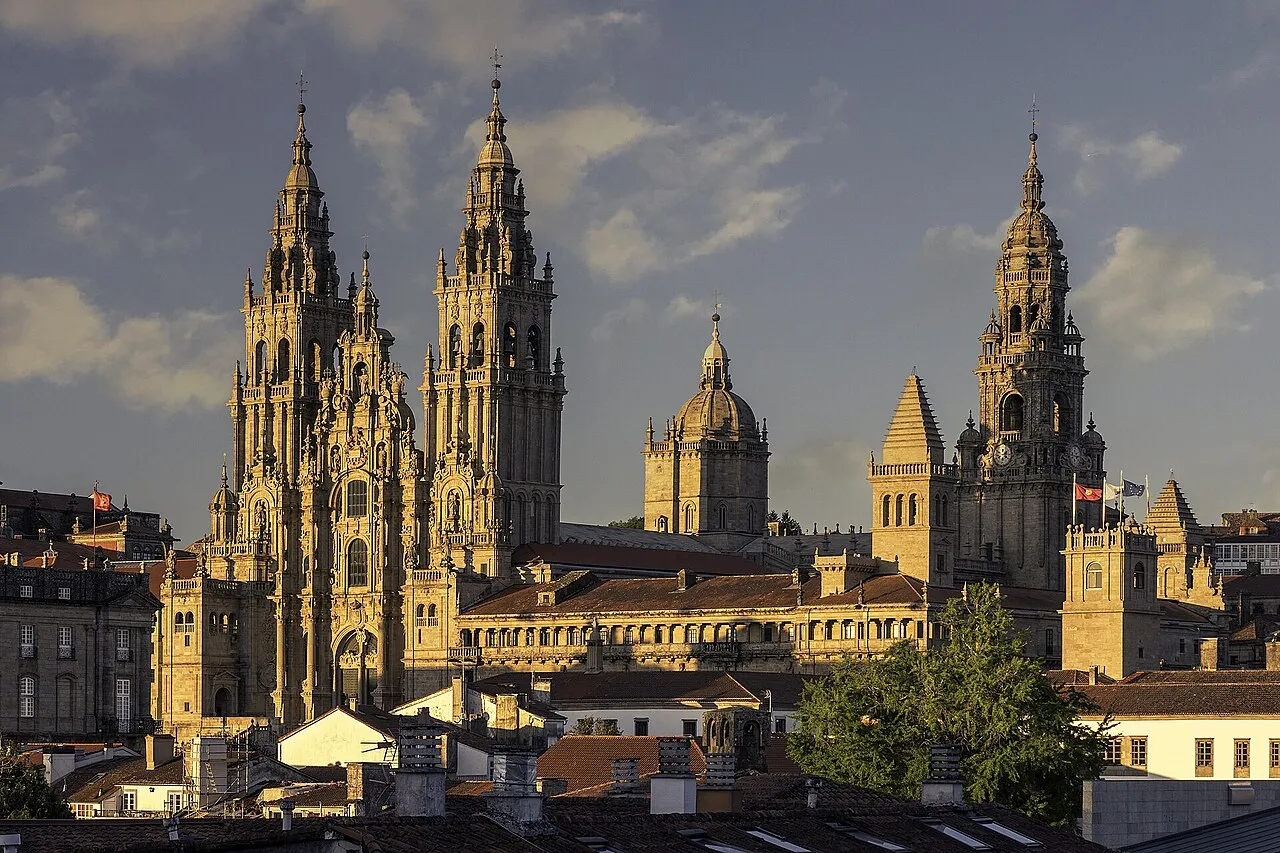
In a city of narrow streets, damp and without large squares, the parque de la Alameda is literally the lungs and the drawing room. It is five minutes from the old town through the Porta Faxeira, it is free and open, and at its highest point it keeps the view that appears on every poster of Santiago: the cathedral rising between the trunks of an oak wood.
The viewpoint is in the Carballeira de Santa Susana, which is not a planted garden but a genuine Galician oak wood that ended up inside the city when the city grew around it.
The Paseo da Ferradura
A curve that hugs the hill.
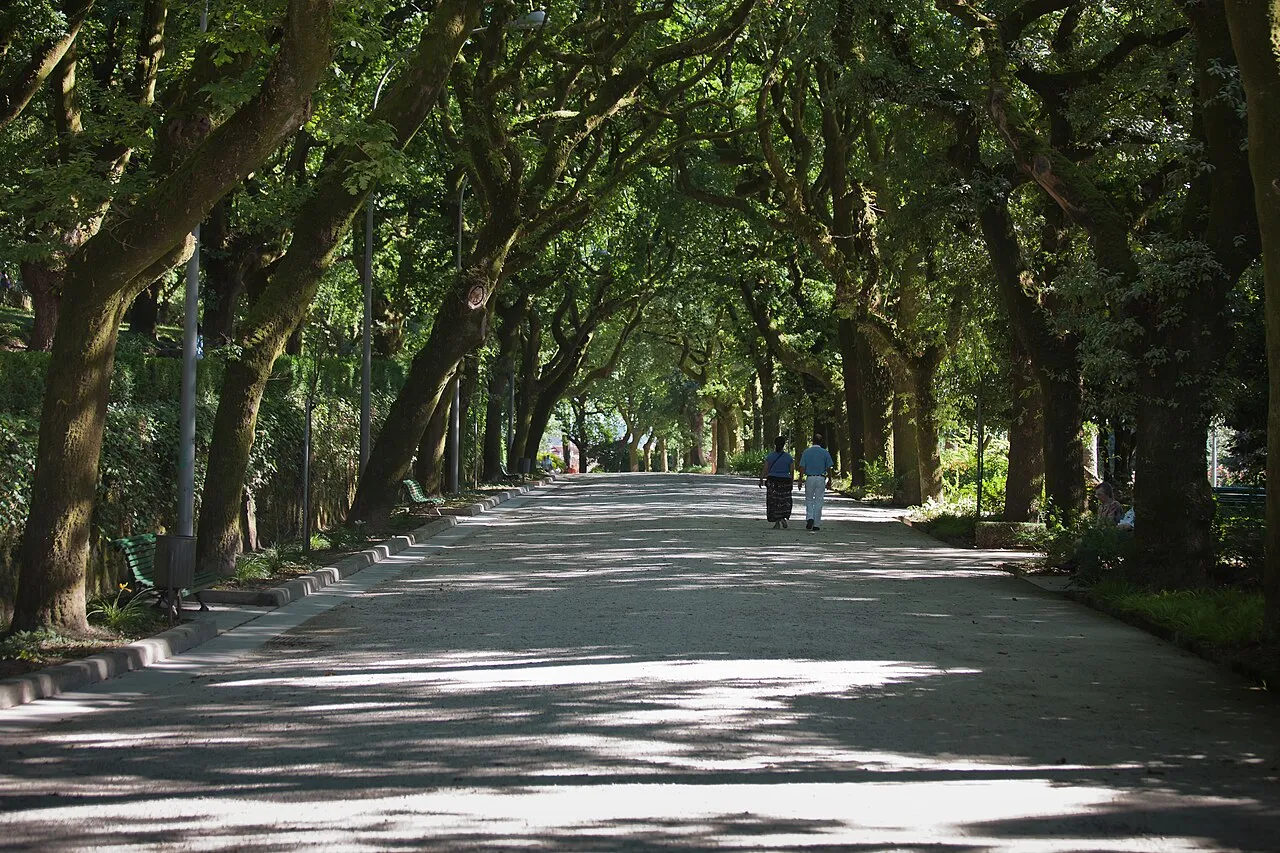
The spine of the park is named after its shape: a long, open curve like a horseshoe that goes round the monte de Santa Susana, with the trees on one side and the whole old city unfolding on the other between the branches. It is the walk of the people of Santiago and the walk of the wedding photographs.
People come at the fall of the afternoon, when the stone of Santiago turns golden and the towers stand out against a sky that almost always carries passing clouds. It is a flat, wide, perfectly kept route, with benches and a railing from which you look out over the old town.
Look at the metalwork: the lamp posts and railings are full of small Art Nouveau motifs from the start of the twentieth century, with those very characteristic plant curls. Almost nobody looks at them, and they are a whole layer of the park that goes unnoticed.
And there is a student superstition told completely straight-faced. University students hold that you must not walk the whole Ferradura, from end to end, until you have finished your degree: anyone who completes it before will never graduate. That is why you see people turning back halfway.
Enormous magnolias, eucalyptus and hundred-year-old oaks, all with a density that surprises anyone coming from the south. With the constant rain of the city, the green here is of another order. The park was laid out in the nineteenth century on land that had been a romería ground, used for country festivals.
The cathedral appears framed between oaks, half hidden, not all at once: that framing is what makes the image recognisable. And what you see is the eighteenth-century Baroque façade, not the Romanesque church behind it. Better at dusk or in fog.
The route is peopled with sculptures that are part of the local imagination and are worth identifying. At the entrance, Rosalía de Castro, the mother of Galician literature, whose “Cantares Gallegos”, Galician Songs, was the first great book written in Galician for centuries and who is buried in Bonaval.
Valle-Inclán sits on a bench, with his beard and his pince-nez, looking towards the cathedral. It is probably the most photographed statue in the park because it lets you sit down beside him, something most visitors do without knowing who he is.
And there are the Dúas Marías, the Two Marías, two real sisters, Maruxa and Coralia Fandiño, who walked the Alameda every day dressed in loud colours and heavy make-up, in the greyest years of the post-war period. Their family had suffered reprisals, and that daily walk had something of a challenge about it. Today they are a popular symbol of the city.
There is also a statue of the naval officer Méndez Núñez, an iron bandstand and the Pombal, a traditional Galician dovecote that recalls that all of this was countryside until little more than a century ago.
How to make the most of it
The park begins at the Porta Faxeira, five minutes from the old town, so you reach it without meaning to as you come out of the rúas. It is the natural complement to a morning of stone and narrow streets: air, green and perspective.
The circuit that works is this: walk the Ferradura, climb up to the Carballeira for the view of the cathedral and come back down to the old town when the lights go on. It takes a long hour and it is the best urban walk in Santiago.
On timing: at dusk the stone turns golden, and in fog — which is plentiful here — the cathedral seems to float above the wet roofs. In the middle of the morning the façade is backlit and the photograph loses a good deal.
And a practical note: it rains a lot in Santiago and the floor of the oak wood turns to mud easily. Footwear with some grip is worth having if you leave the cobbled path, above all in winter.
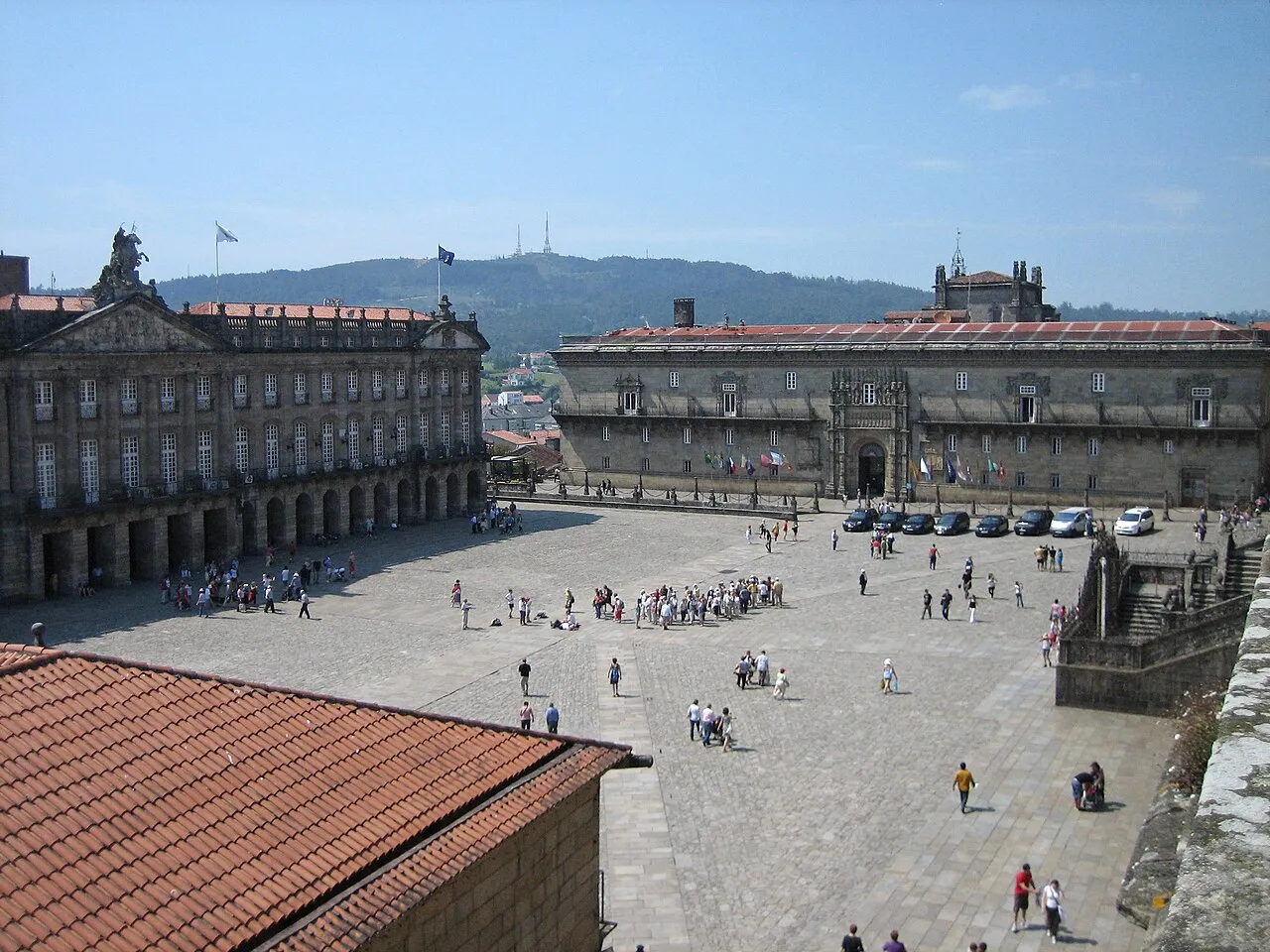
The natural destination when you come down from the park, ten minutes away through the Porta Faxeira. Seeing it first from the viewpoint and then close up, in the square, changes your sense of the building quite a bit: from far off it is a silhouette and from below, an accumulation of detail without a centimetre at rest.
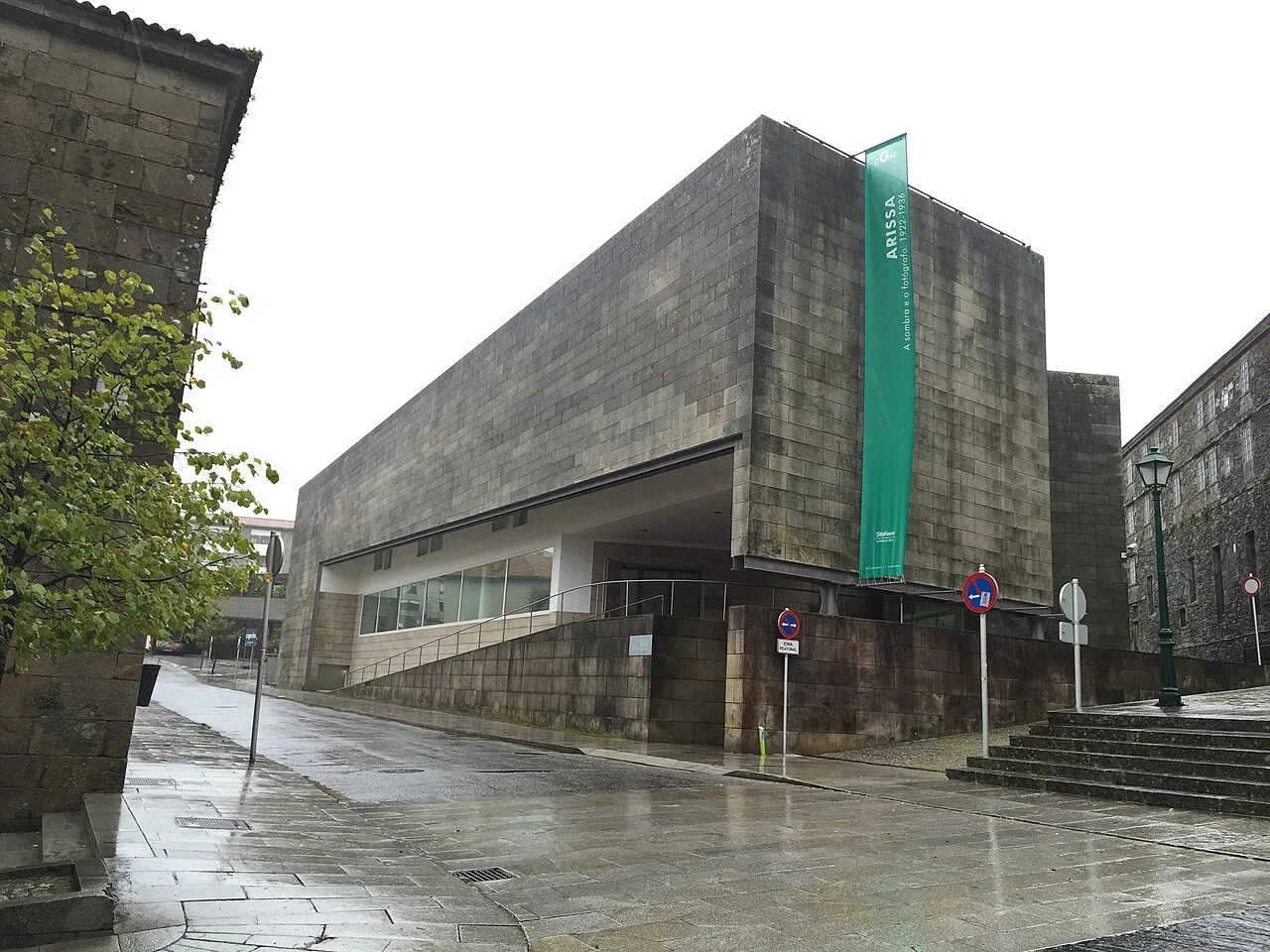
The other free viewpoint in the city, at the opposite end: the roof of Álvaro Siza's museum is a public terrace over the rooftops of the old town. The view is different from the one at the Alameda, from the north and closer up, with the slate in the foreground.
Where is the viewpoint with the classic view of Santiago?
In the Carballeira de Santa Susana, at the high point of the parque de la Alameda, ten minutes on foot from the Obradoiro. The cathedral appears framed between hundred-year-old oaks, and that framing between trunks is what makes the image recognisable. It is free, open and has no set hours.
What is a carballeira?
An oak wood, from the Galician carballo, oak. The one at Santa Susana is not a planted garden but a genuine wood that ended up inside the city when the city grew around it. In rural Galicia oak woods had a communal, almost sacred character: they were the meeting place of the parish and of the romerías, the country festivals.
Who are the Dúas Marías?
Maruxa and Coralia Fandiño, two real sisters who walked the Alameda every day dressed in loud colours and heavy make-up during the greyest years of the post-war period. Their family had suffered reprisals, and that daily walk had something of a challenge about it. Today their statue is one of the popular symbols of the city.
Is the superstition about the walk true?
It is a student tradition told in all seriousness: the university students of Santiago hold that you must not walk the whole Ferradura, from end to end, until you have finished your degree, because anyone who completes it before will never graduate. You do indeed see people turning back halfway.
What time of day is the cathedral best seen from here?
At dusk, when the stone turns golden, or on foggy days, which are plentiful here and give the most characteristic image: the cathedral floating above the wet roofs. In the middle of the morning the façade is backlit and the photograph loses a good deal of contrast and colour.
Are there other viewpoints in Santiago?
The other good, free one is at the opposite end of the city: the roof of the CGAC, in Bonaval, conceived by Álvaro Siza as a public terrace. The view is different, from the north and closer up, with the slate roofs in the foreground. Also the roofs of the cathedral itself, which are visited by booking.
Practical information
WhereEntrance through the Porta Faxeira, 5 minutes from the old town.
PricePublic park, free and open with no set hours.
The viewpointIn the Carballeira de Santa Susana, at the high point of the park.
Best timeDusk or foggy days. In the middle of the morning the cathedral is backlit.
DurationA long hour for the full circuit with the viewpoint.
FootwearThe floor of the oak wood turns to mud. Take something with grip if you leave the cobbles.
On the map
🎧 With Viavoy
Walk Santiago de Compostela and listen at your own pace
Download Viavoy and walk Santiago de Compostela offline, whenever you like.
from 2,99 €· one-off payment
City Pass · 9,99 €3 days, all the tours in Santiago de Compostela