From the largest Gothic cathedral in the world to the Triana bank, an ordered selection for walking Seville unhurriedly.
Seville is understood on foot and in a particular order. Almost everything essential fits into a small triangle — cathedral, Alcázar, Santa Cruz — to which two arms are added: the river, with the Arenal and Triana opposite, and the monumental south of the Plaza de España and the park. This guide follows that natural route: first the heart, then the water, and at the end the neighbourhoods that give the city its character. They are not ordered by importance but by how they link up on the map, which is how they are really visited.
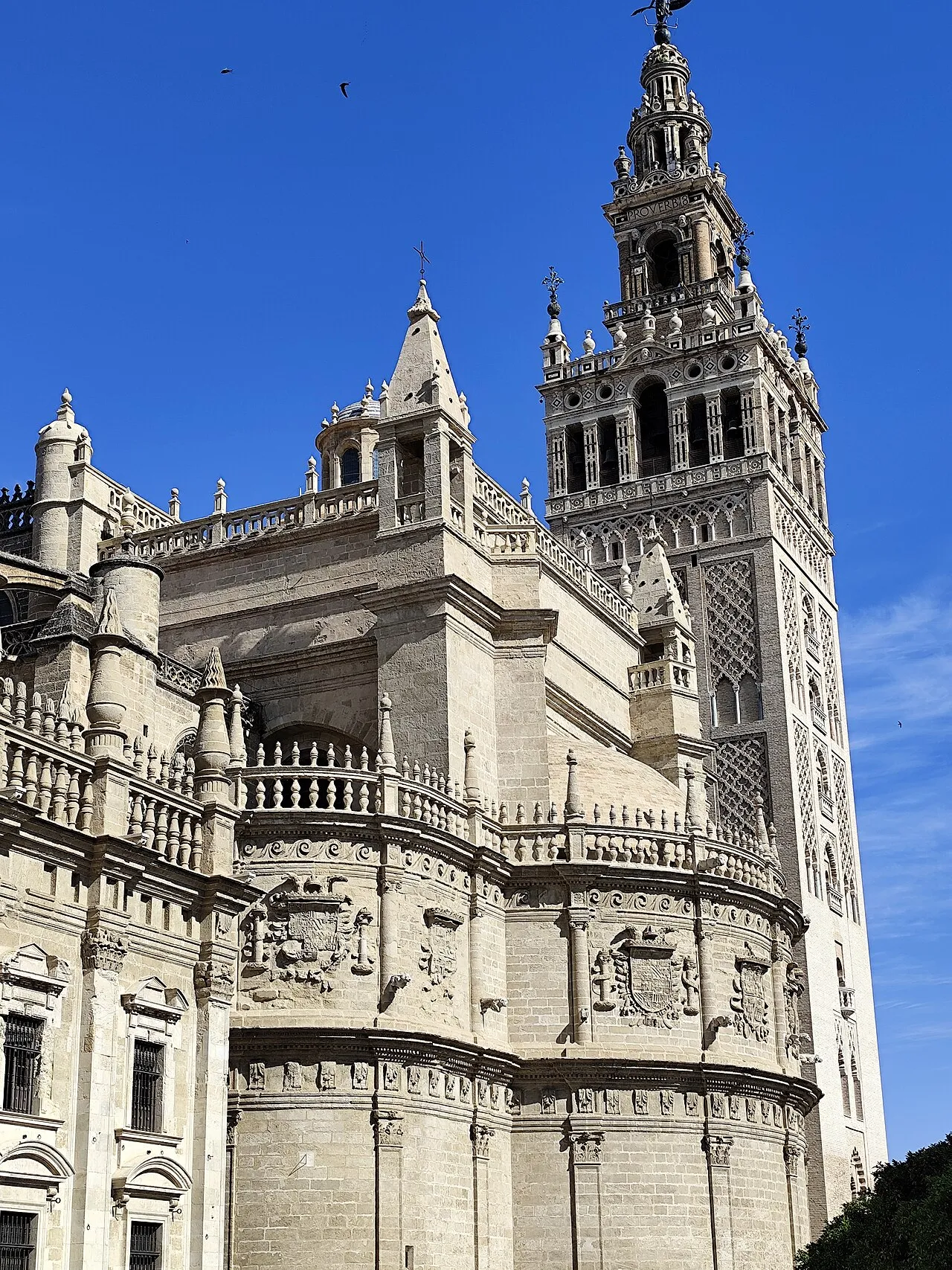
It is the largest Gothic church in the world, and not by accident: when the chapter decided to raise it in 1401 over the old great mosque, the record preserves the intention of building a church so large that whoever saw it finished would take them for madmen. Inside there is room for five immense naves, the high altarpiece with more than two hundred carved and gilded figures, the choir, the very tall stained glass and the tomb of Columbus borne by four heralds. In the Capilla Real lies Ferdinand III, the king who conquered the city in 1248 and to whom Seville prays as saint and patron. Set aside real time: it is one of those interiors where half an hour is not enough. The ticket also gives access to the climb up the Giralda, so it is worth doing them one after the other.
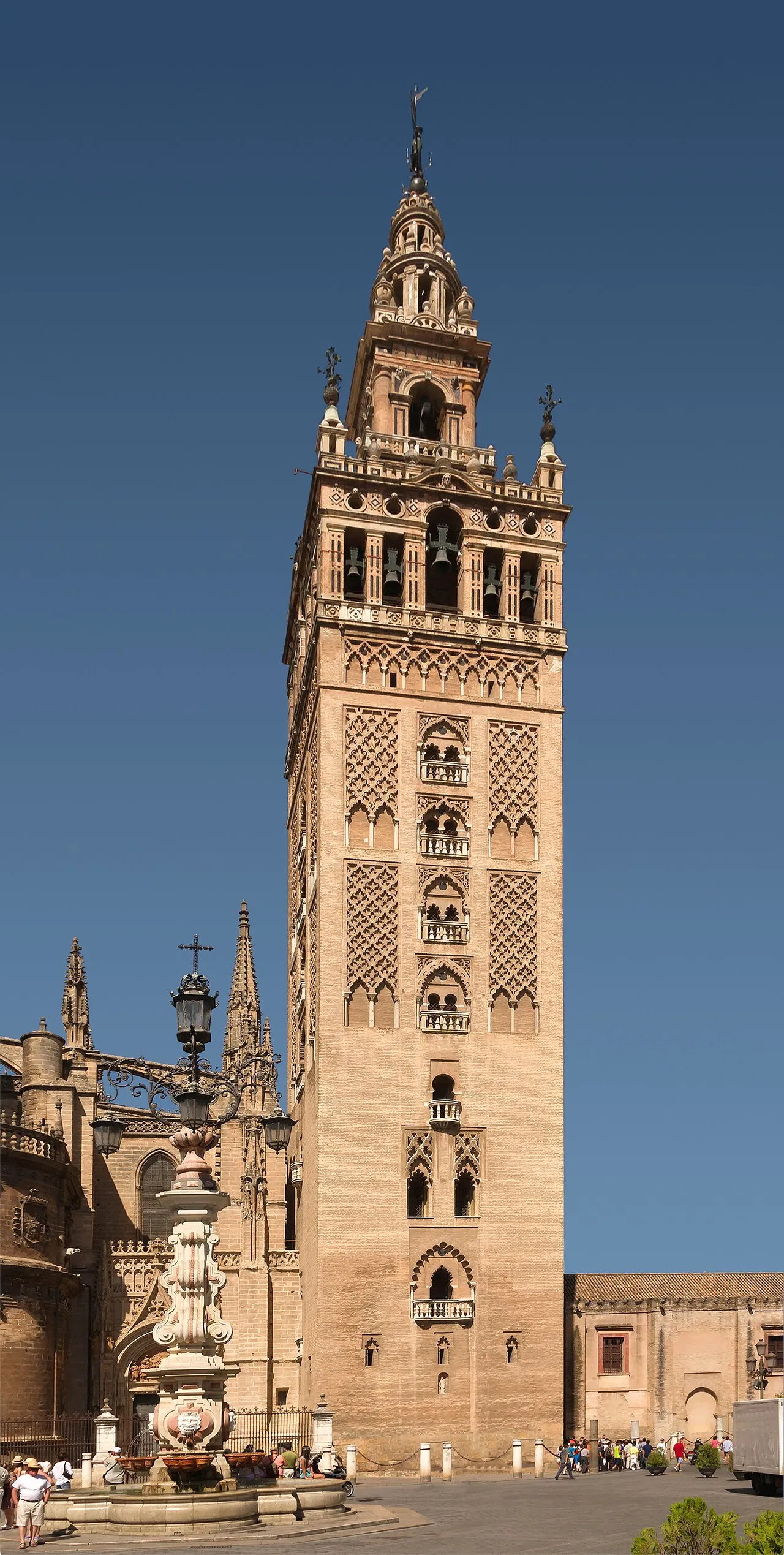
Almost a hundred metres of brick that began as something else: it was born around 1184 as an Almohad minaret, the tower from which the call to prayer was made when Seville was Isbiliya and one of the great capitals of the Muslim west. The Christians turned it into a bell tower and centuries later crowned it with the Giraldillo, the bronze weathervane «that turns» and that gave it its name. The best of it is that you go up without a single step: thirty-five gentle ramps, designed so that a rider could climb on horseback, between sebka panels and ajimeces, the twin windows. At the top is the best view of the city, with the roofs of the old town opening out towards the river.
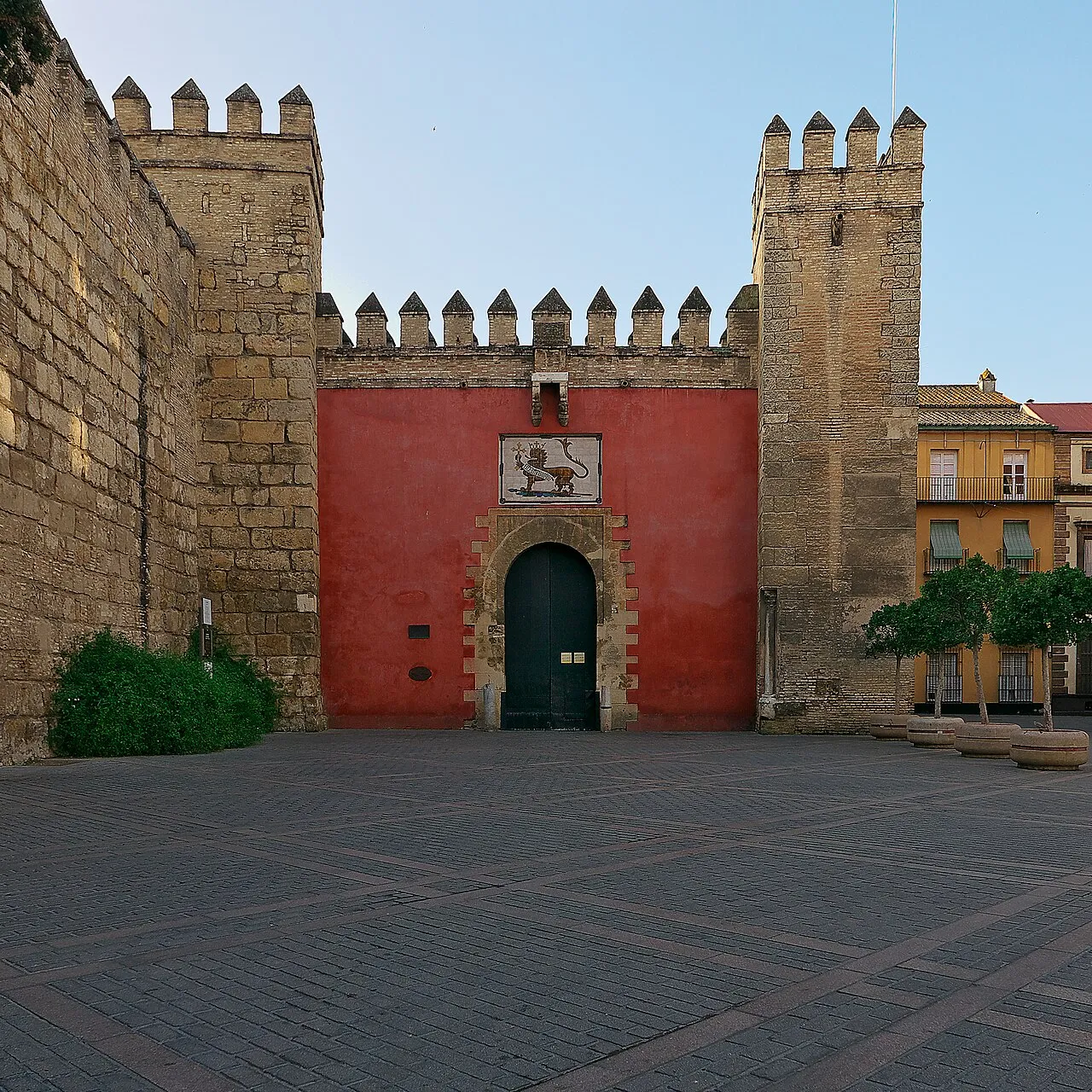
A modest gate in a battlemented brick wall, topped by a tiled lion with a cross and a flag. Do not trust the discretion: behind it is the Real Alcázar, the oldest royal palace still in use in Europe, where the Spanish royal family still stays when it visits Seville. It is a thousand years stacked up, from the Almohad walls to the Mudéjar palace Peter I raised in the fourteenth century with craftsmen who wove Christian and Islamic art into the very same walls. Inside await the Patio de las Doncellas, the Salón de Embajadores beneath its gilded dome, the Patio de las Muñecas and gardens that eat up half the visit. Buy the ticket in advance: it is the monument whose capacity sells out soonest.
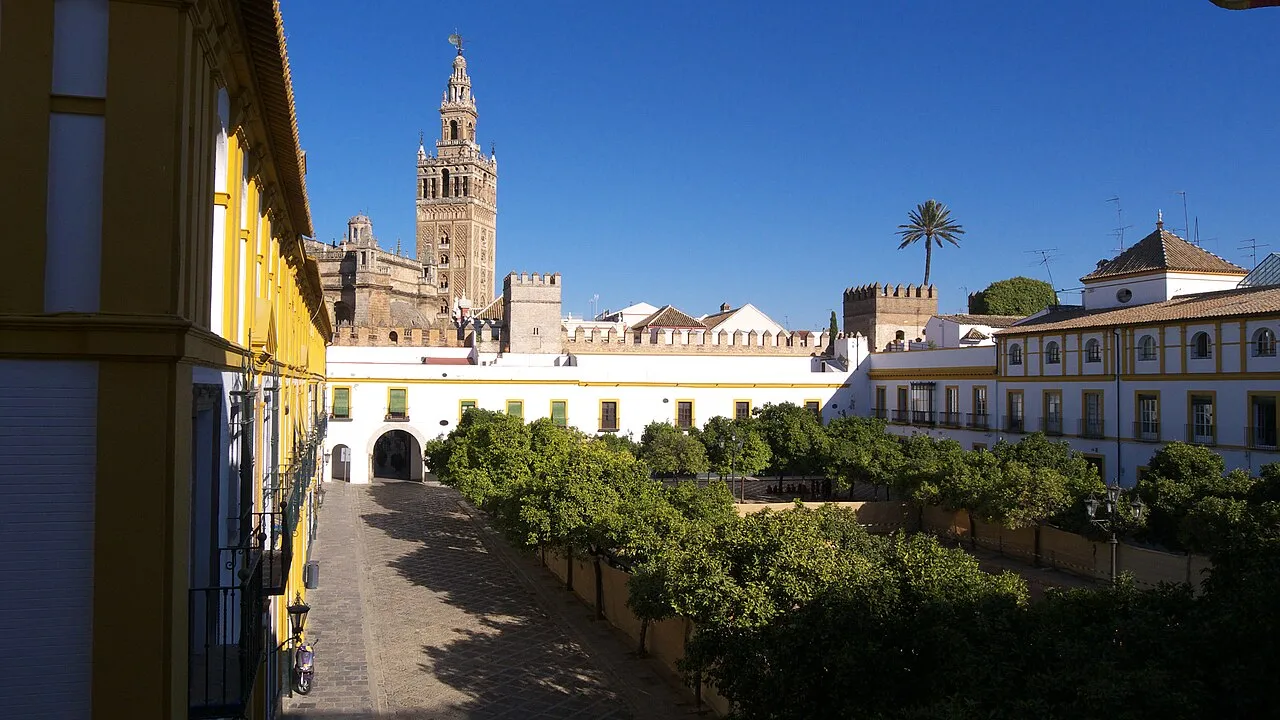
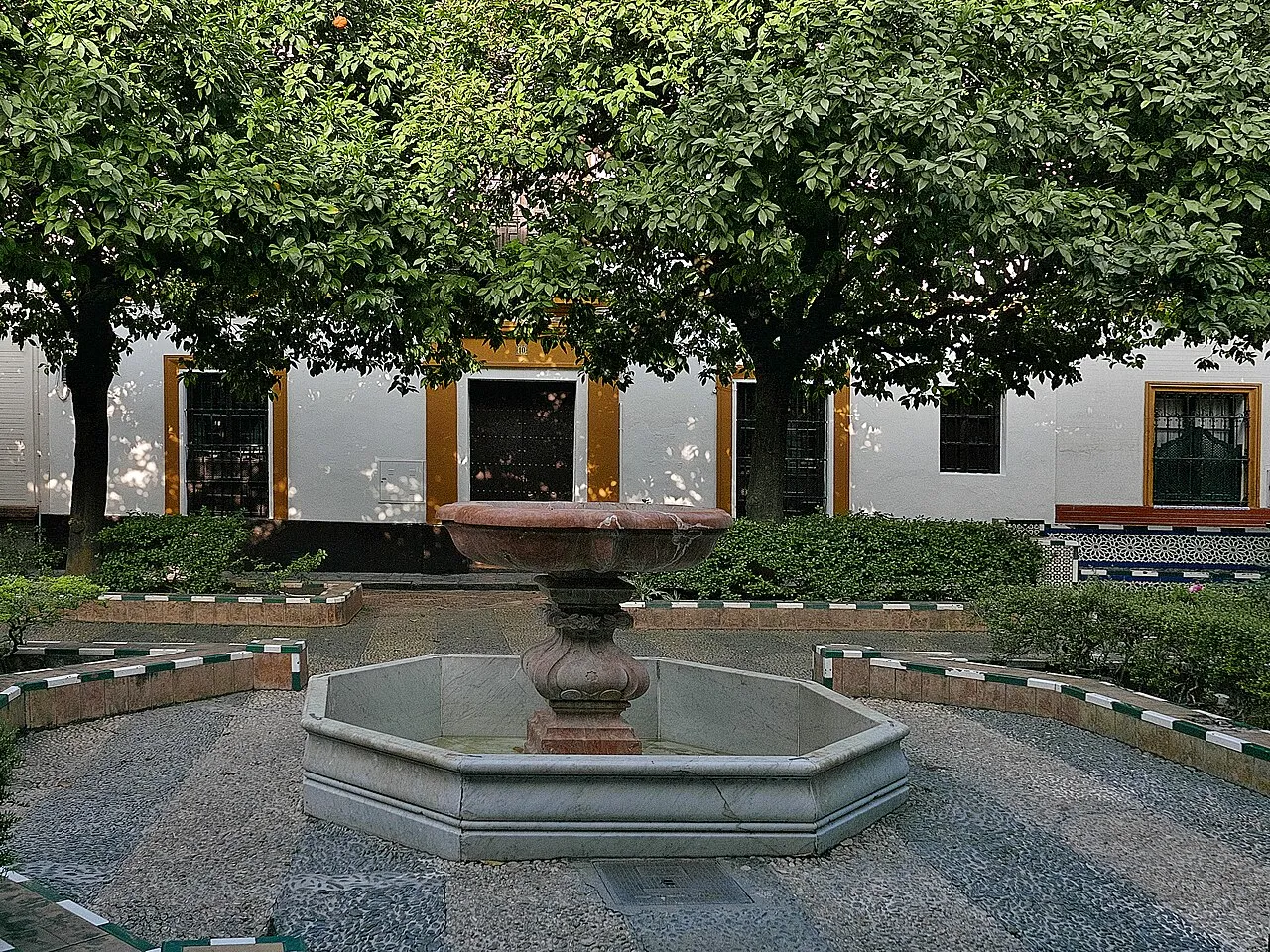
A closed courtyard pressed against the wall of the Alcázar, with houses the colour of albero, a fountain and the Giralda showing above the roofs: it is the postcard everybody takes without knowing they are standing on something extraordinary. Beneath these flagstones the excavations have found levels descending to the ninth century BC, almost three thousand years, including what is interpreted as a Phoenician sanctuary. That is, one of the few points in Seville where you can look in on its first heartbeat. Come early in the morning, when there is still no queue at the Alcázar and the courtyard is silent.
Small, enclosed, with orange trees and tiled benches, almost always with a guitar sounding: for many people it is the loveliest corner of Santa Cruz. What hardly anybody knows is that on this very ground there was a corral de comedias, an open-air theatre where the first companies of the Golden Age performed and where the career of Lope de Rueda took off, the Sevillian craftsman whom Cervantes remembered with admiration. Where today there are tourists taking photographs, four centuries ago there were groundlings shouting and plays under the stars. The name comes from the Doña Elvira of the Don Juan legend, whom tradition placed around here.
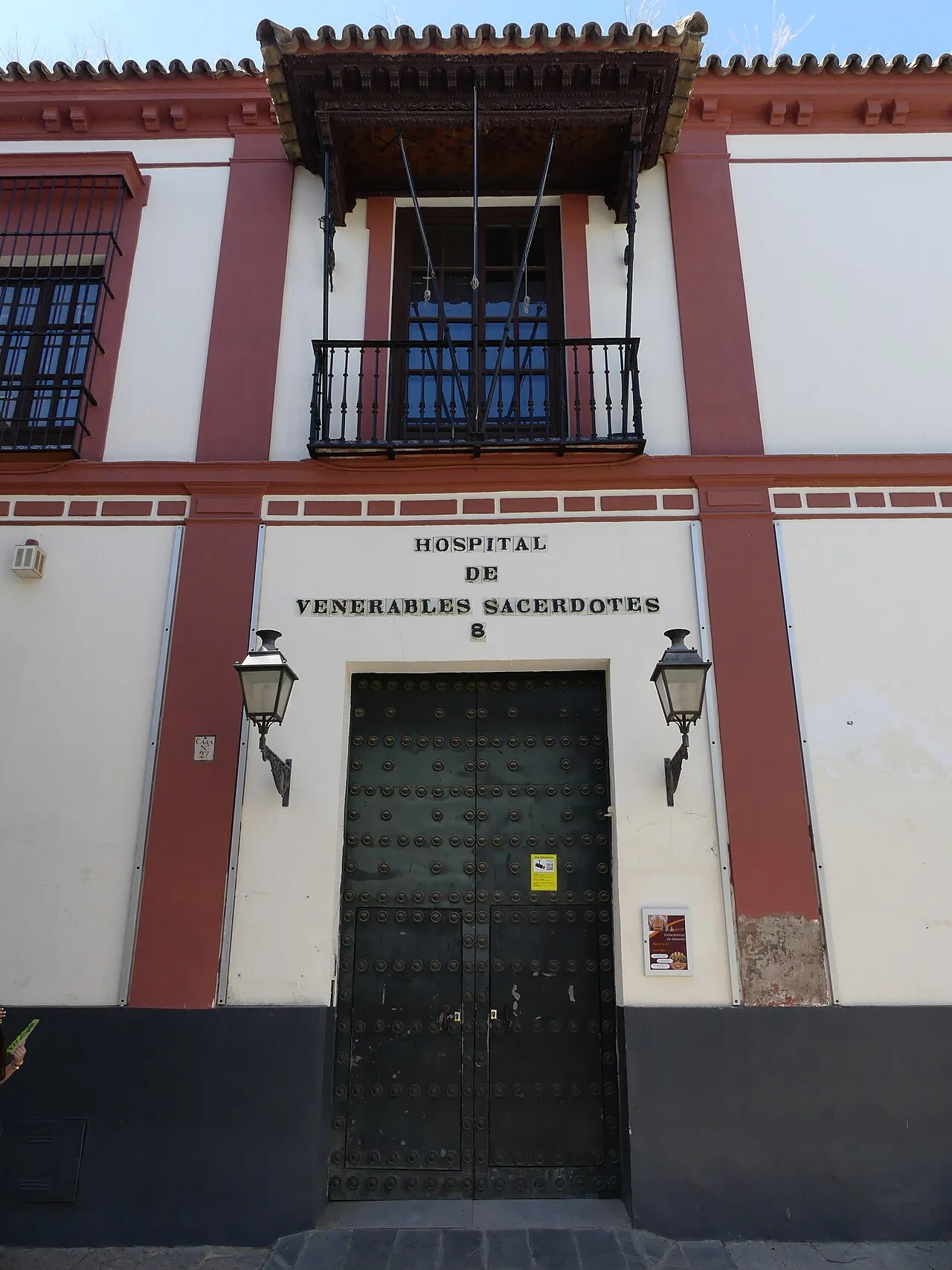
Red brick, a bell gable cut against the sky and a plain façade that gives no hint of what is inside. It was founded in the seventeenth century to take in elderly and poor priests, and it was raised by the Figueroa family, the great dynasty of the Sevillian Baroque. Its courtyard is sunken, with the fountain at the bottom of a kind of bowl: it is not an aesthetic caprice but a device for collecting water in a city of scorching summers. Inside are the monumental staircase, the vault painted by Valdés Leal and the Centro Velázquez, with the «Santa Rufina» the foundation bought in 2007 for a record sum for a Spanish painting. Seeing it in the city where Velázquez was born and learned to paint changes the experience.
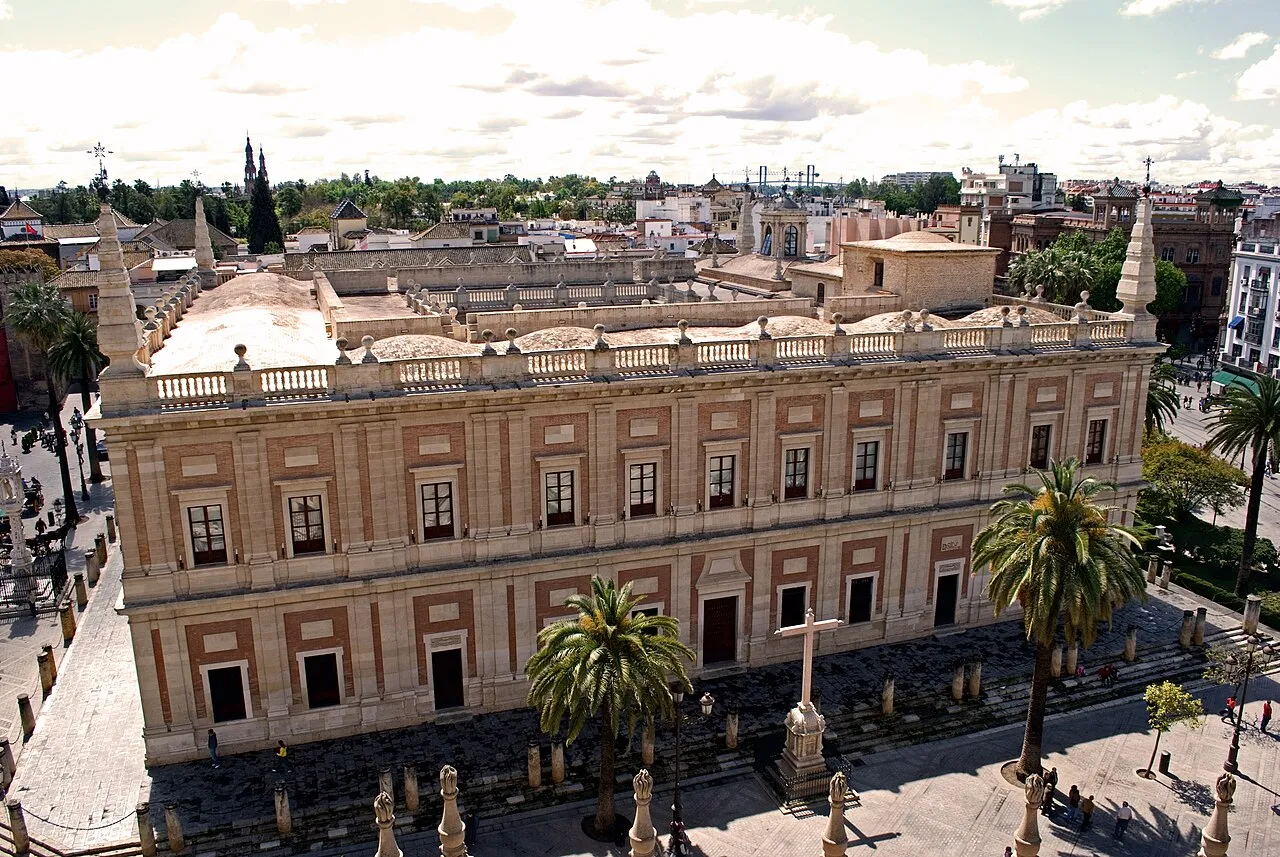
A square, severe building, almost without ornament, that looks like a strongbox. In a way it is: here Spain keeps the paper memory of its entire American empire. Philip II had it built in the sixteenth century as the Casa Lonja, the merchants' exchange, and two centuries later Charles III turned it into an archive to bring together in one place the documents of the Indies scattered around the country. Behind those windows are some eighty million pages: Columbus's journal, the Treaty of Tordesillas that split the world in two, letters from conquistadors and viceroys, in galleries of mahogany shelving. Entry is free and it is usually empty, which is almost incomprehensible.
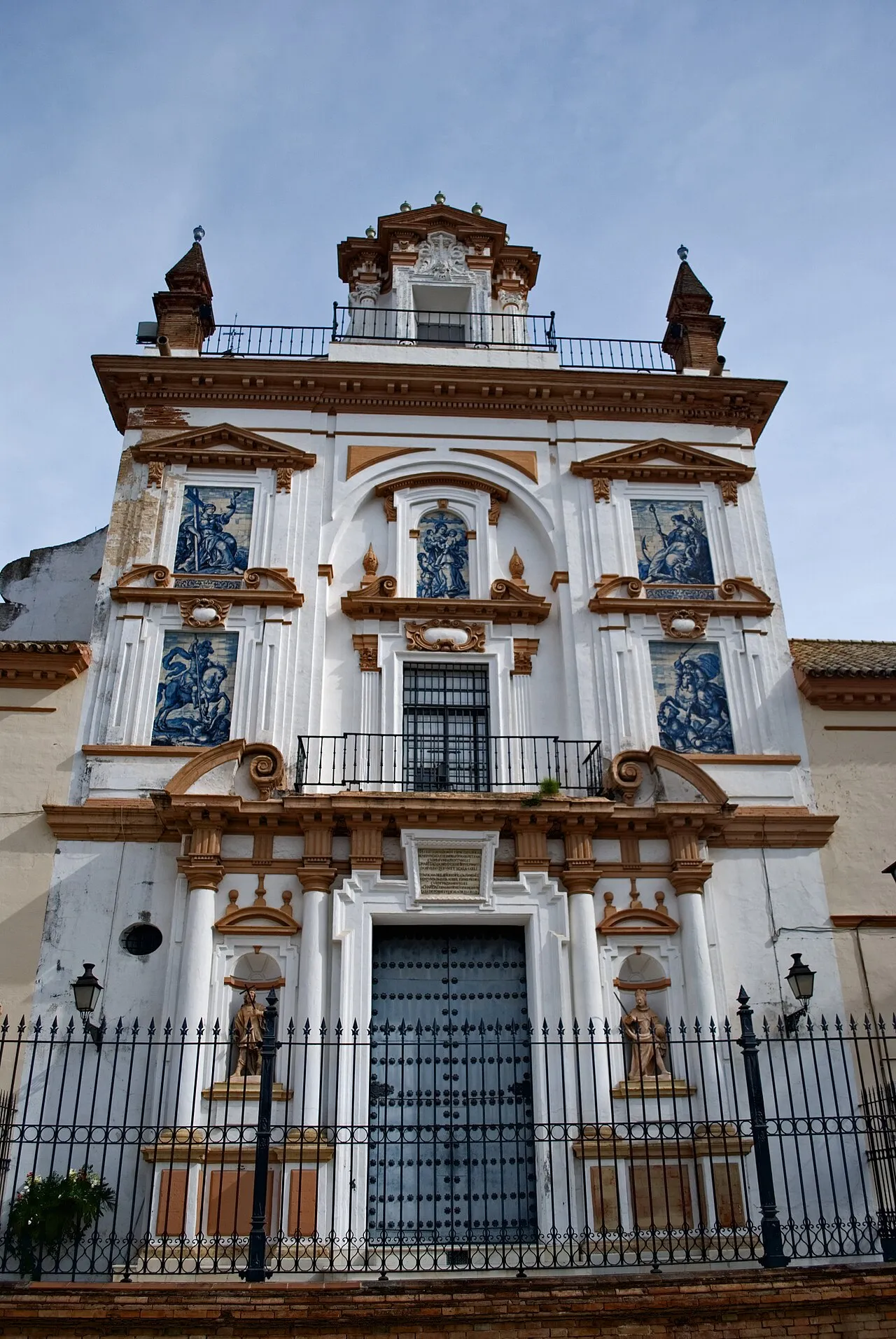
Behind this façade of stone and tile is one of the most intense stories in Seville. It was refounded in the seventeenth century by Miguel de Mañara, a rich and worldly nobleman who — so the legend goes — saw his own funeral pass in the street and devoted the rest of his life and his fortune to collecting and burying the poor nobody wanted. He commissioned the best painters for his church, and there they still are: the two harrowing canvases by Valdés Leal on death and vanity — so raw that Murillo said you had to hold your nose to look at them — alongside the gentler pictures by Murillo himself. What impresses most is that the brotherhood is still alive and still doing the same thing: today it maintains a home for elderly people without means inside these walls.
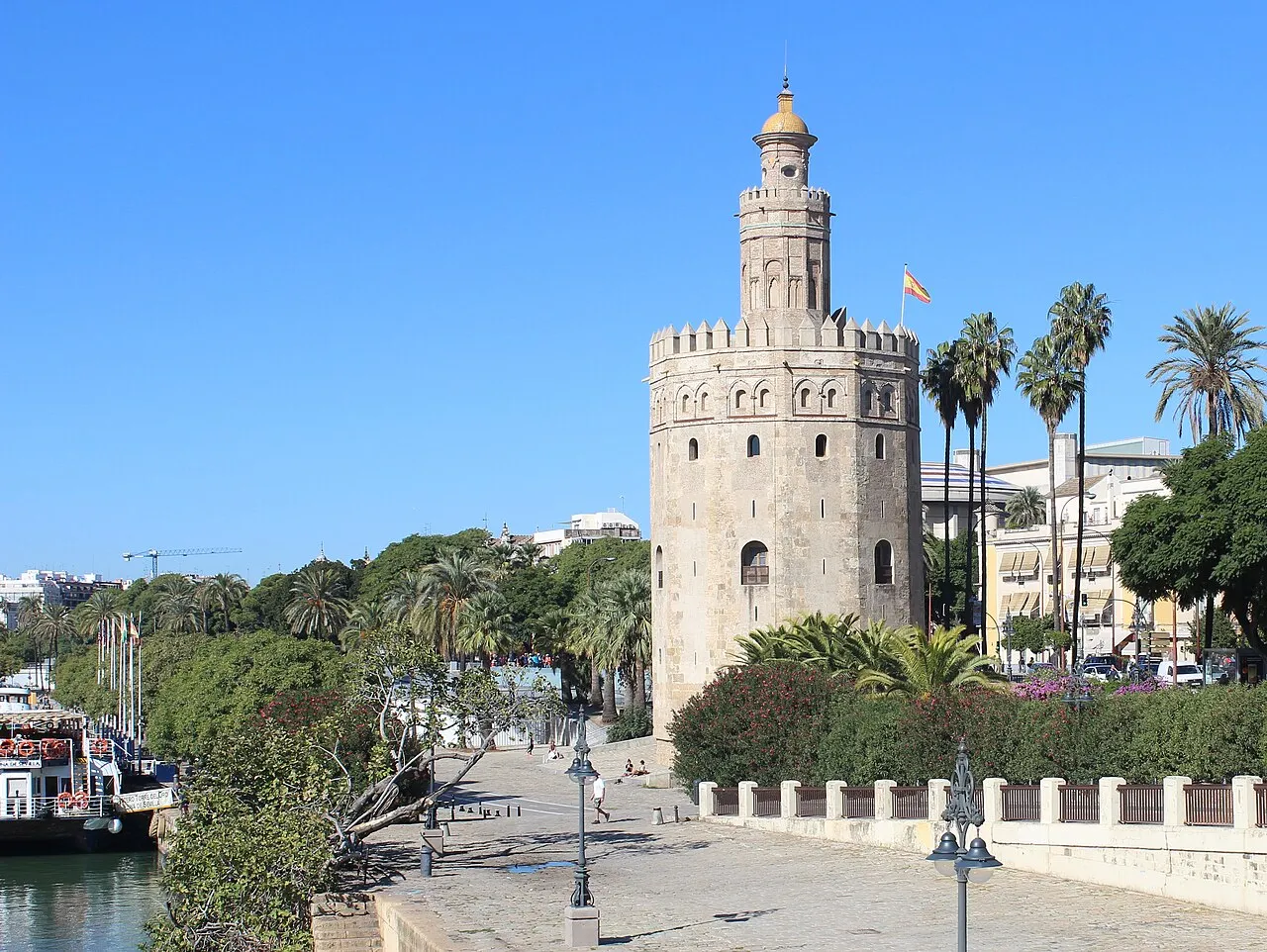
Twelve sides of warm stone at the water's edge, the most repeated silhouette in the city. The Almohads raised it between 1220 and 1221 as an albarrana tower — standing clear of the wall and joined to it by an arm of stone — to watch the river and protect the port. Its shape reads like a geological section: the twelve-sided body is Almohad, the middle one was added by Peter I in the fourteenth century and the round top is from the eighteenth, after the Lisbon earthquake of 1755. And the name does not come from gold: a restoration in 2005 discovered that the gleam came from a mixture of lime mortar and pressed straw that shone in the sun. Mud and straw well worked, not precious ceramic.
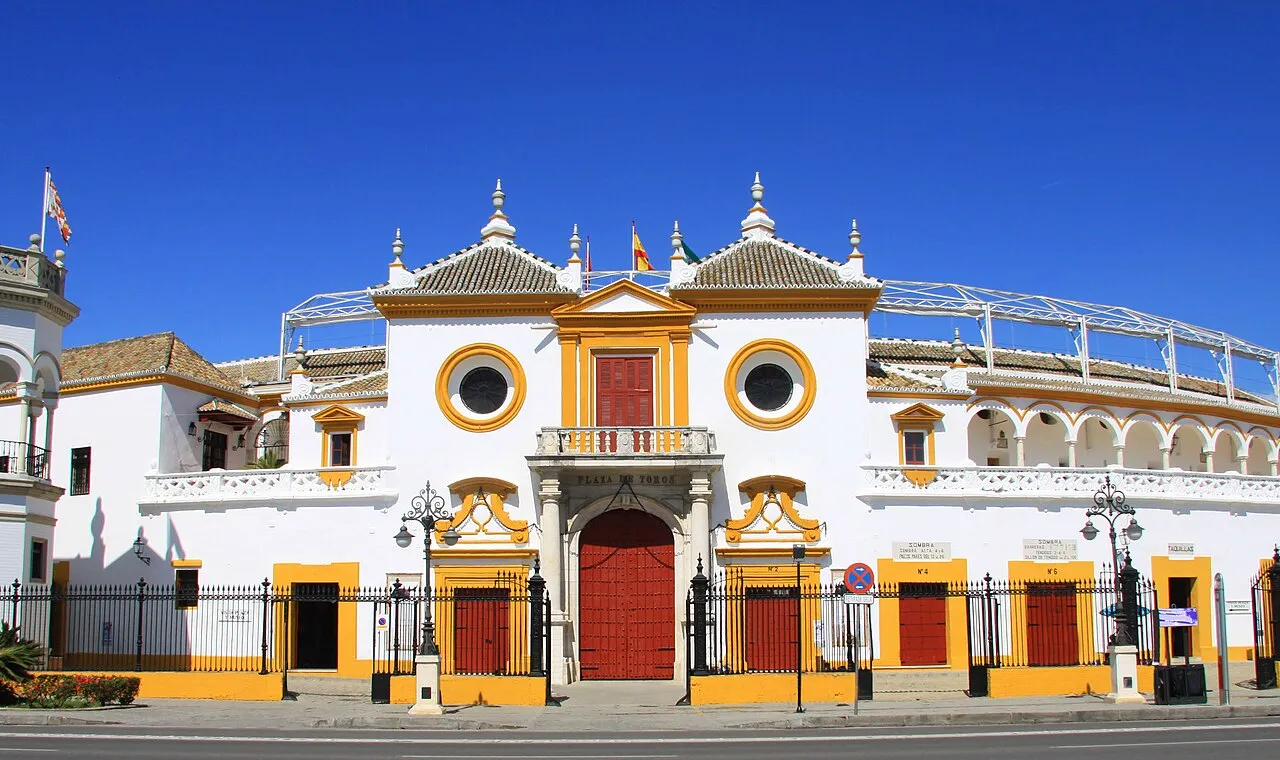
A very long wall, white and ochre, curving slowly beneath a balcony of yellow arches. It was begun in the eighteenth century by the Real Maestranza de Caballería, a corporation of noblemen on horseback founded around 1670, and the works dragged on for more than a hundred years, until 1881: that is why it is not a perfect circle but slightly irregular, the fruit of so many hands and so many decades. It holds some eleven thousand five hundred people. Look at the Puerta del Príncipe: there is only one way out through it, on shoulders, and doing so in Seville is worth more than in any other ring. Whether or not you like bullfighting, the visit explains three centuries of the city's history.
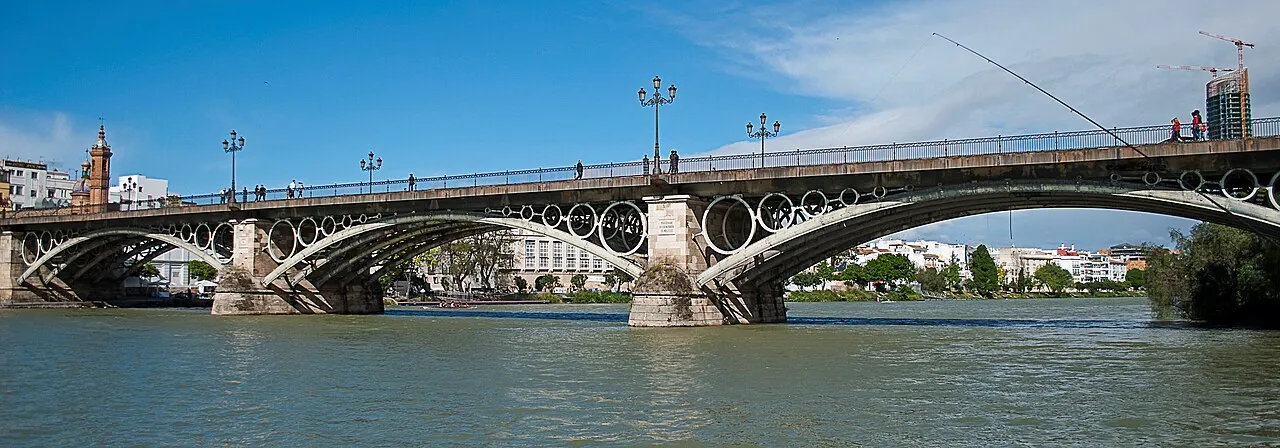
The Triana bridge, which almost nobody calls by its official name. Its chained cast-iron arches were raised between 1845 and 1852, and they hide a story nobody expects: they were not invented from scratch, they were copied girder by girder from a bridge that crossed the Seine in Paris, the Carrousel, beside the Louvre. The Paris original was demolished almost a century ago; the Seville copy is still standing. Crossing it is the gesture that separates the two Sevilles, and from the middle of the bridge the city is understood better than from any viewpoint: the water below, the old town on one side, Triana on the other.
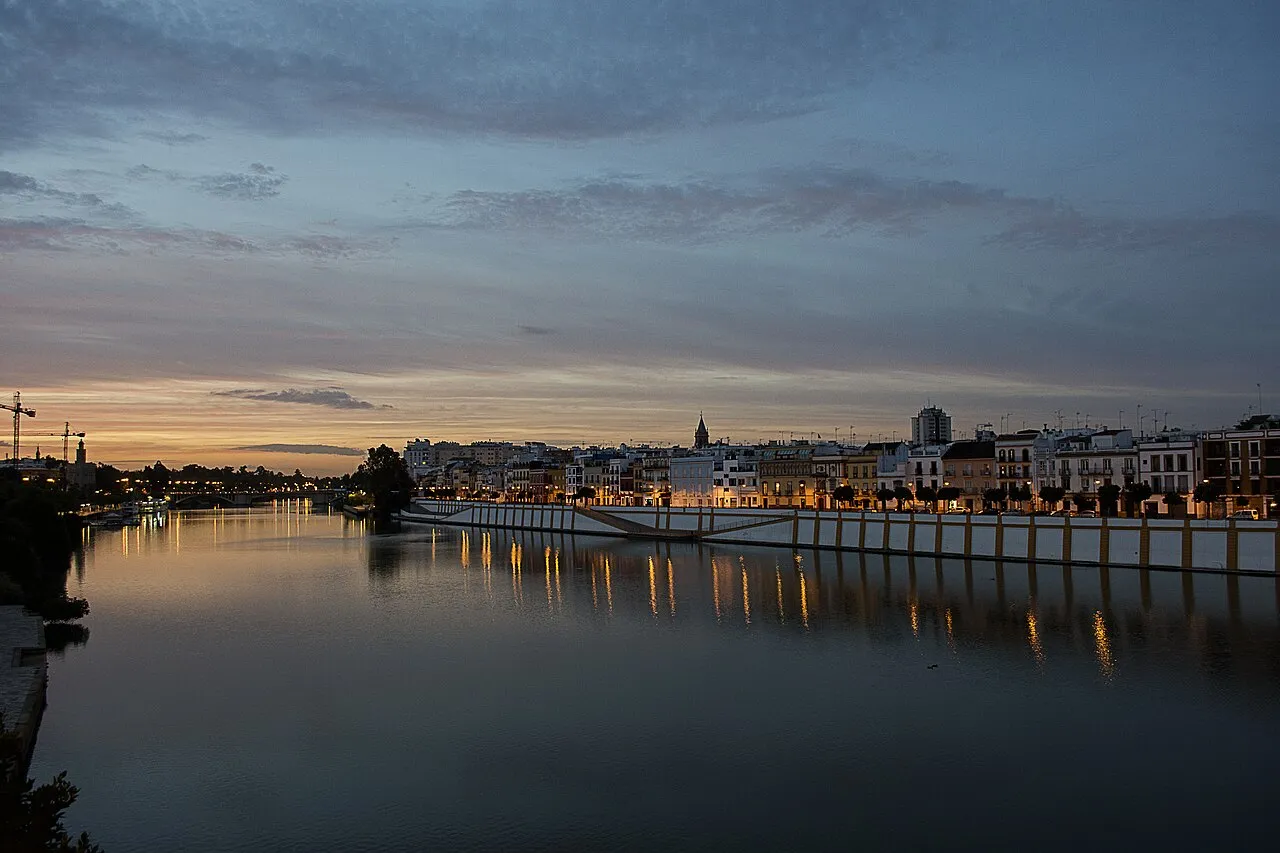
A row of coloured façades — ochre, earth red, indigo, yellow — lined up facing the Guadalquivir like a backdrop. From here you see the whole of Seville posing: the Torre del Oro golden in the sun, the Maestranza and, behind, the Giralda showing above. It is, beyond argument, the postcard of the city, and it works best at dusk. The name is a journey through time: Betis, or Baetis, is what the Romans called the Guadalquivir two thousand years ago. These houses pressed against the water have spent centuries fighting the river: the bank was raised in the nineteenth century with a retaining wall because until then the Guadalquivir flooded Triana again and again.
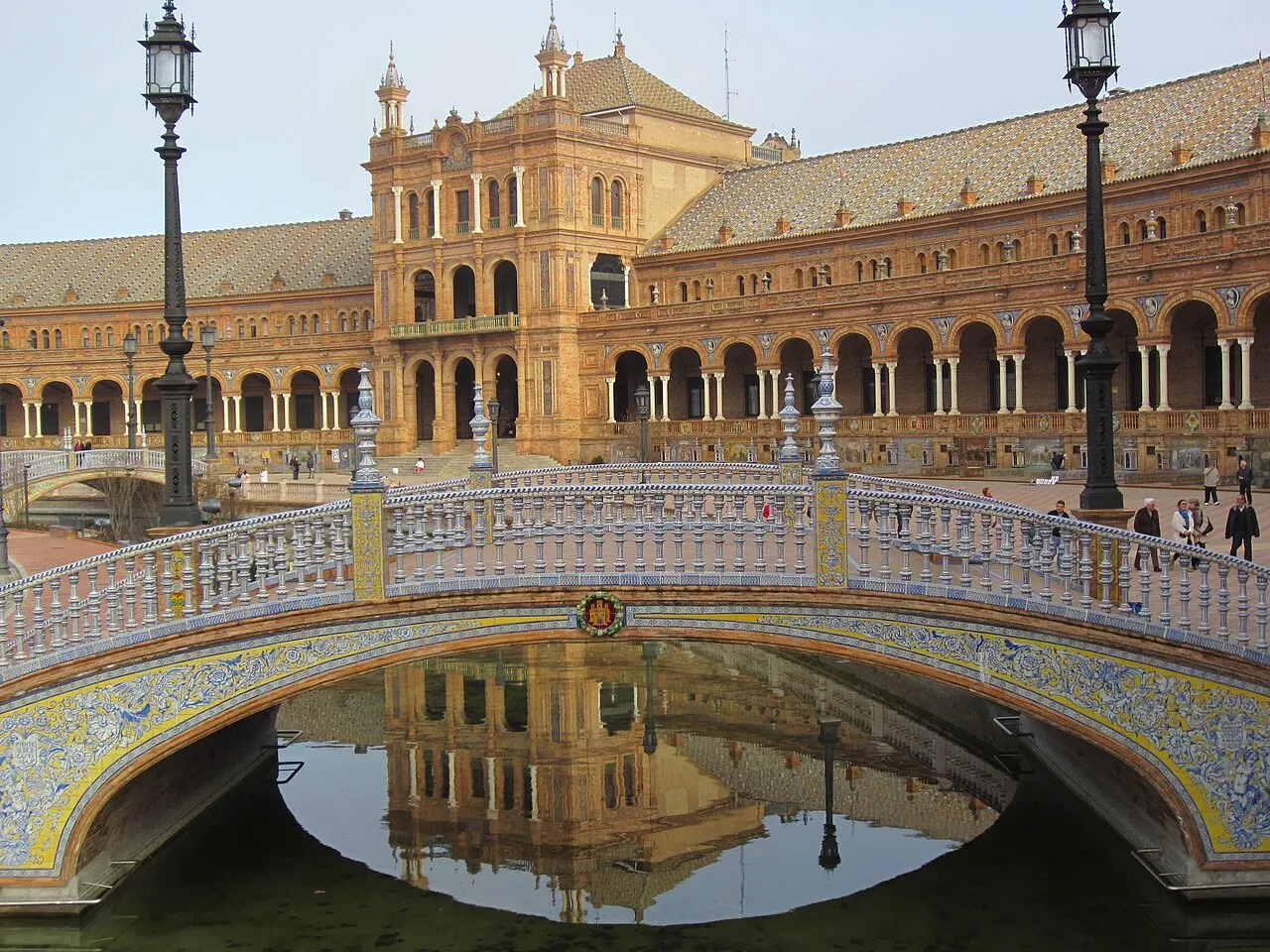
A semicircle a hundred and seventy metres across in brick and ceramic, with a colonnaded gallery, two very tall towers and a canal embracing it all. It was designed by the Sevillian Aníbal González for the Ibero-American Exposition of 1929 and it is the greatest piece of regionalism: exposed brick, coloured tiles and wrought iron. The forty-eight benches running along the front each represent a Spanish province, with its map and its historical scene in tilework, and looking for your own has become a rite. In the year 2000 the square played the palace of the planet Naboo in Episode II of Star Wars, without a single stone being moved. Go first thing or at dusk: at midday the sun is merciless and there is no shade.
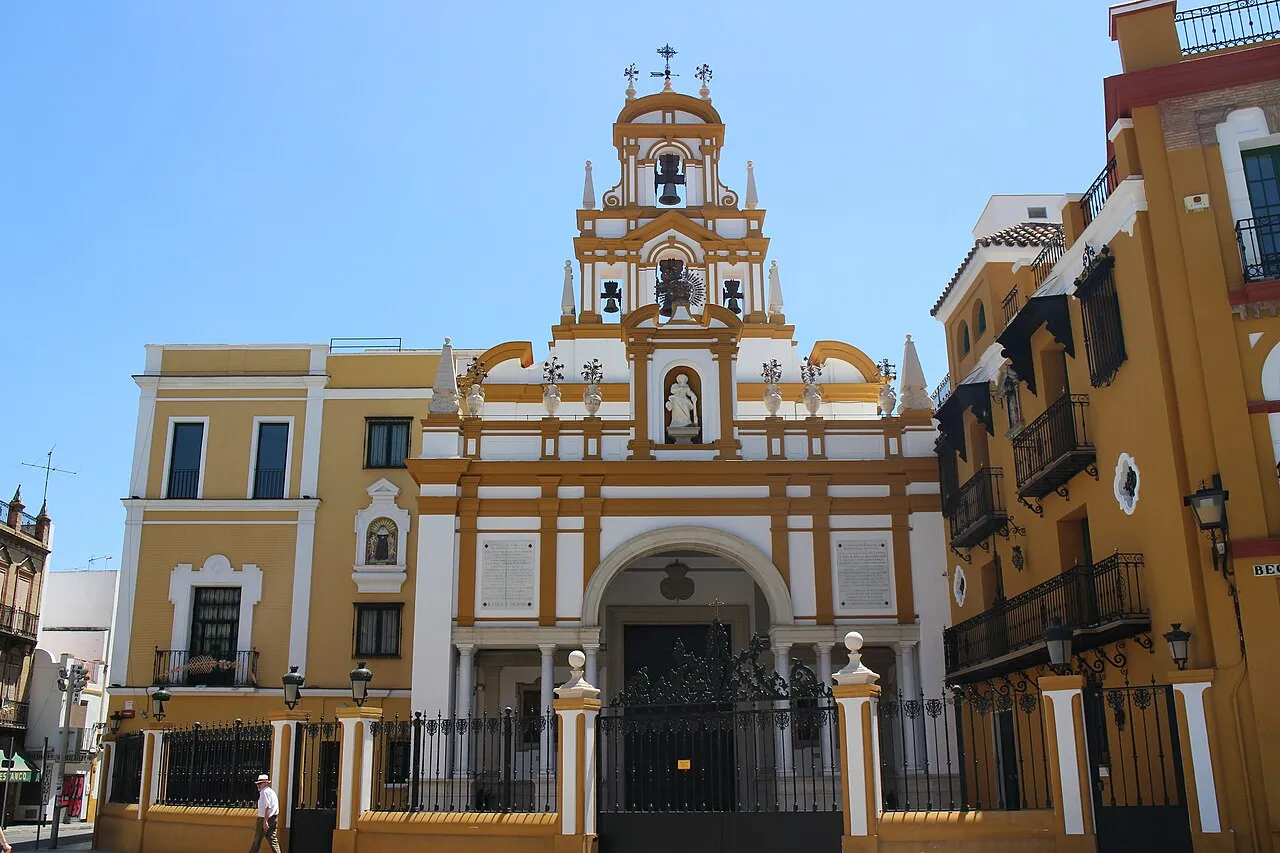
A clean white façade, and as soon as you step in the smell of candle wax. Inside, in her gilded altarpiece, is the most loved image in Seville: the Virgen de la Esperanza Macarena, a Baroque carving of around 1680. Look at her face. She is weeping: five glass tears run down her cheeks, with an expression between grief and sweetness that has moved the city for generations. The basilica is young, from 1949; before that the Virgen lived next door, in San Gil. She was dressed in mourning only once in her whole history, in 1920, when the bullfighter Joselito el Gallo, who adored her, died in the ring: the entire city stopped.
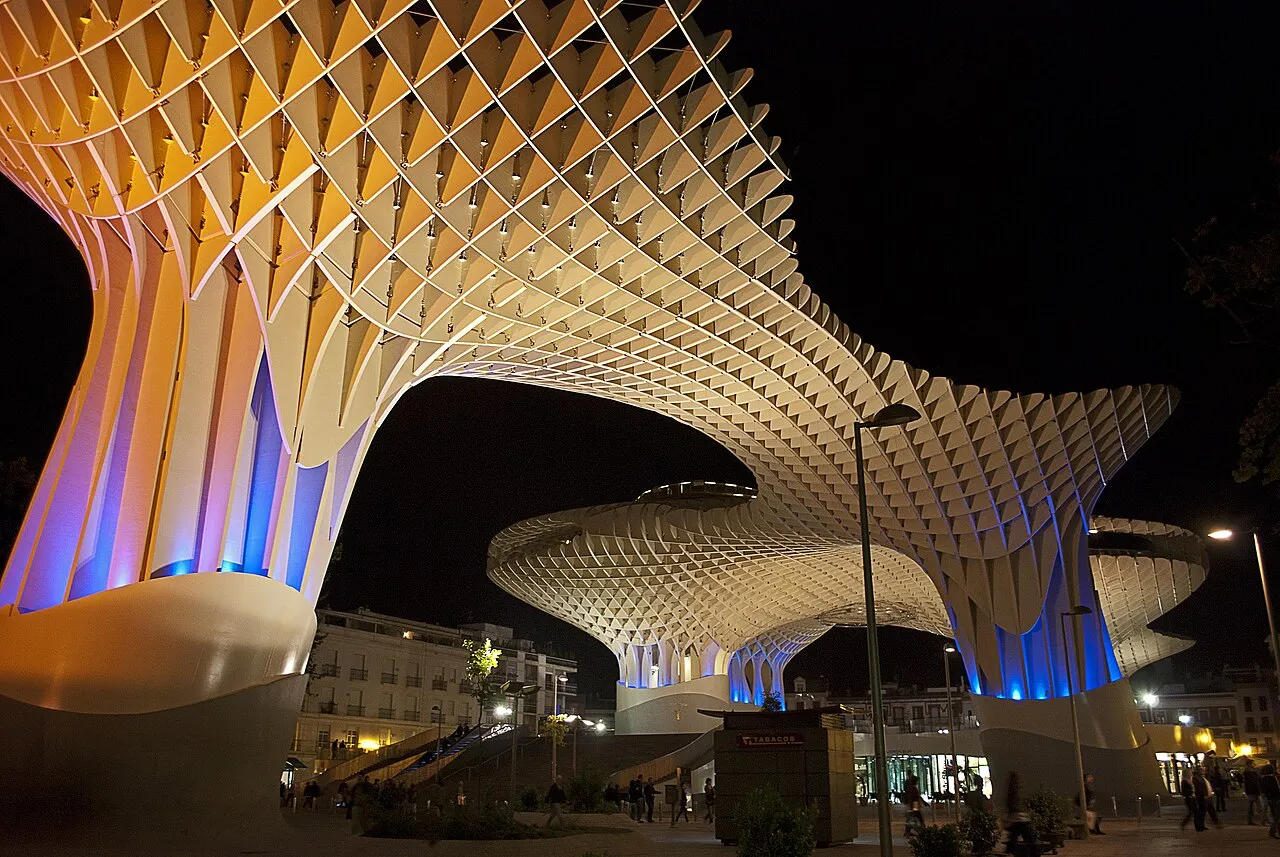
An enormous undulating timber structure in the form of six giant parasols, floating over the Plaza de la Encarnación. The work of the German architect Jürgen Mayer and opened in 2011, it is the largest wooden structure in the world, raised with thousands of pieces of pine. When it was built it divided the city between those who hated it and those who adored it; today it is already one of its postcards. Below there is a museum, the Antiquarium, with the Roman and Arab remains that turned up during the digging: that is why the work took so long, because another city appeared underneath. Above there is an undulating viewpoint with the best view of the old town, especially at dusk.
🎧 Tapas Through the Center: Sierpes, the Salvador, and La Alfalfa📍 View on Google Maps
Two full days cover the essentials: cathedral, Giralda, Alcázar and Santa Cruz on the first; river, Triana and Plaza de España on the second. Three days bring in the Macarena, the Parque de María Luisa and an afternoon of tapas without looking at the clock, which in Seville is not an extra but part of the visit.
What can you see in Seville for free?
A good deal more than it seems. The Archivo General de Indias has free entry and is usually empty. Also free are the Parque de María Luisa, the Plaza de España, the Patio de Banderas, the Jardines de Murillo, the Alameda de Hércules and the whole river walk to Triana. The Cathedral opens free in particular slots for residents and there are free access times at the Alcázar late on weekdays: it is worth checking them on their website, because they change.
Do you have to book tickets for the Real Alcázar and the Cathedral?
For the Alcázar, yes, and days ahead: it is the monument whose capacity sells out soonest, above all from March to June. For the Cathedral it is worth buying online to avoid the queue at the Puerta del Príncipe. The Cathedral ticket includes the climb up the Giralda, so they are done in one go.
Can Seville be walked?
Yes, and it is the only reasonable way to do it. The whole old town is walked from one point to another in minutes: from the Cathedral to the Torre del Oro is ten minutes, and to Triana fifteen crossing the bridge. The distances in this guide add up to a little over five kilometres spread across several days. The only long stretch is the one down to the Plaza de España and the park, which also asks for two hours of its own.
What is the best time to visit Seville?
Spring and autumn, beyond argument. From March to May the city is at its best, with the orange blossom and the two great festivals — Holy Week and the Feria de Abril — although in those weeks prices shoot up and you have to book far ahead. October and November are the quiet alternative. In July and August the midday heat is serious: the day has to be reorganised around the early morning and the late afternoon and evening.
Where is it best to start?
With the Cathedral–Alcázar–Santa Cruz triangle, and first thing. They are the three places with the heaviest footfall and the three that are best enjoyed empty. After that the day opens up on its own: down to the river, across to Triana and leaving the Plaza de España for dusk.
Seville on the map
The 15 must-sees, point by point.
🎧 With Viavoy
Walk Seville and listen at your own pace
Download Viavoy and walk Seville offline, whenever you like.
from 2,99 €· one-off payment
City Pass · 9,99 €3 days, all the tours in Seville