Murcia
Murcia · What to see

What to see in Murcia: the 15 essentials

A concave Baroque façade that wraps round you, a tower that took three centuries, an Islamic palace beneath an enclosed convent and the finest religious imagery of the Spanish Baroque.

Murcia is one of the least known Spanish cities in relation to what it holds. Behind a spectacular Baroque imafronte — concave, unique — its cathedral hides a Gothic nave and the heart of Alfonso X; its tower took almost three centuries to raise and changes style as you climb; beneath an enclosed convent lies a complete Islamic palace with its water tank and its plasterwork; and in a museum in the centre is the work of Francisco Salzillo, the greatest image-maker of the Spanish Baroque, with a nativity of five hundred figures dressed as Murcian peasants. All of it can be walked, in a flat city with one of the best tapas kitchens in the country.

The 15 must-sees

1The Imafronte of the Cathedral

The Imafronte of the Cathedral

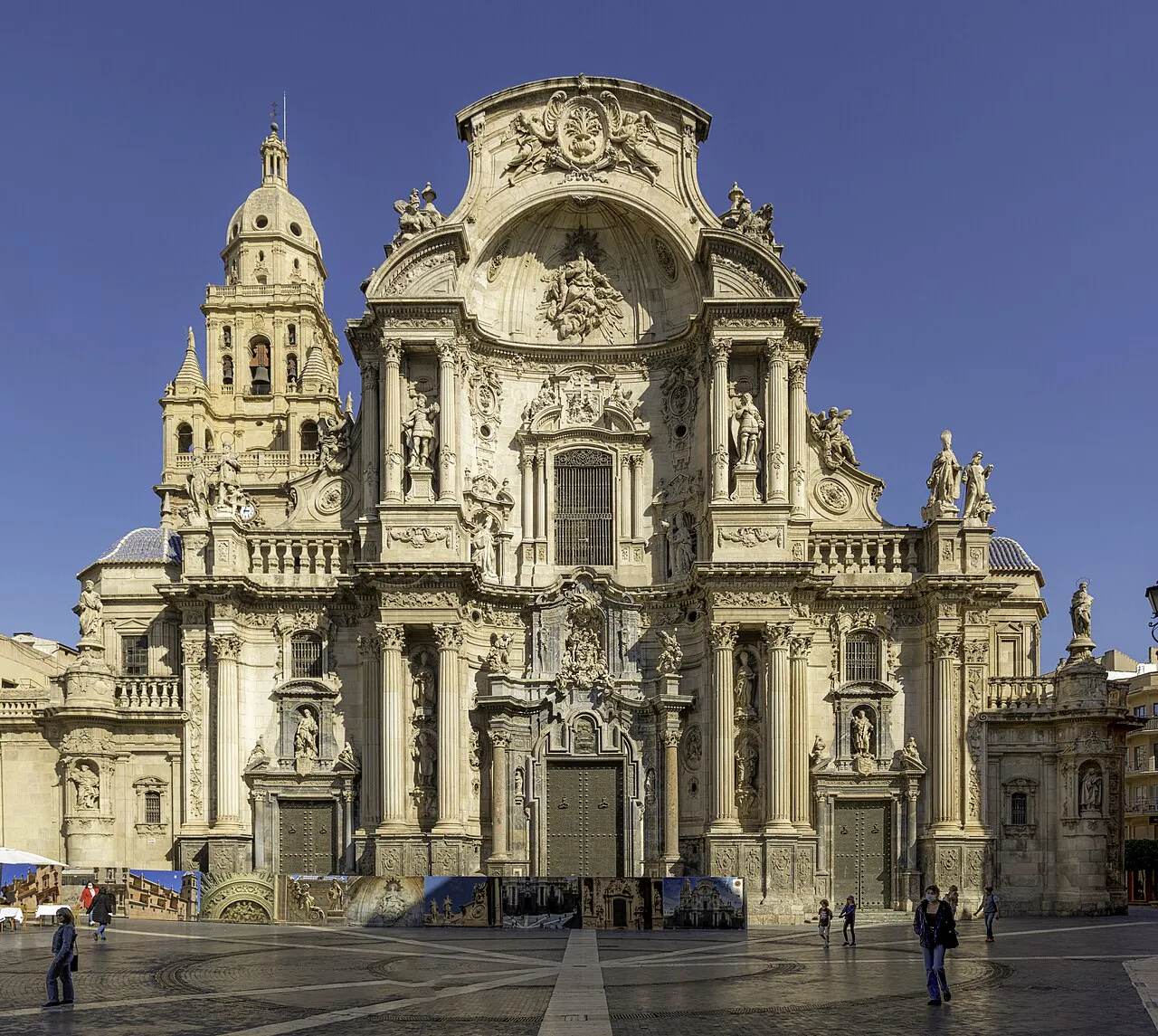
One of the great works of the Spanish Baroque: a giant altarpiece taken out of the church and set in the open air, raised between 1737 and 1754 by Jaime Bort. And it is concave, curving inwards like a pair of open arms, something extremely rare in a façade. Behind it there is no Baroque: there is a Gothic cathedral.

🎧 The Cathedral, Belluga and the Baroque heart📍 View on Google Maps
2Royal Casino of Murcia

Royal Casino of Murcia

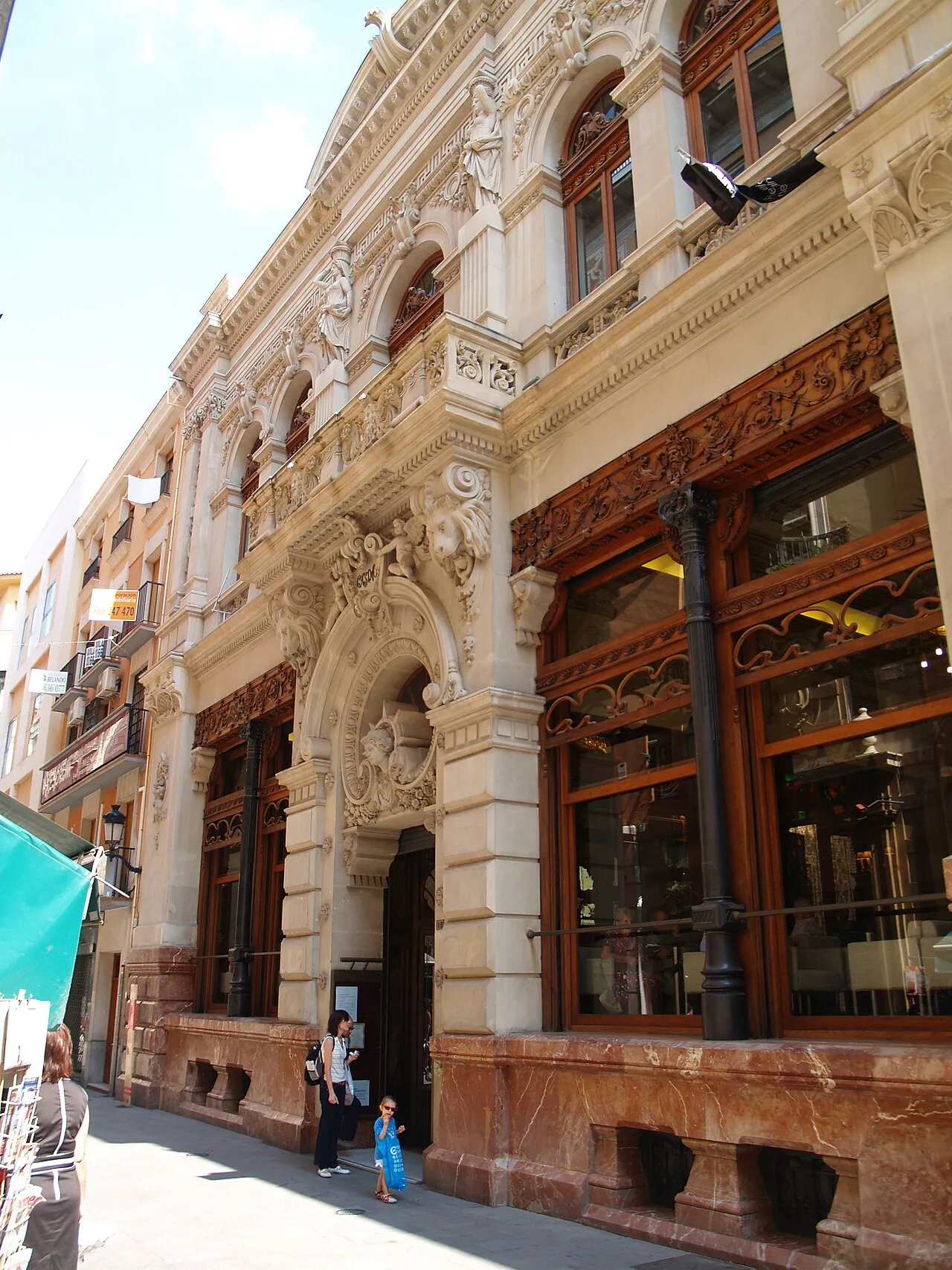
The most visited civil building in the region, and nobody ever played roulette here: in the nineteenth century a casino was a private gentlemen's club. Founded in 1847, each generation of members added a room: an Alhambra-inspired Patio Árabe, an English Library, a Ballroom, a Ladies' Dressing Room and a Pompeian Courtyard.

🎧 The Casino, Trapería street and the Romea Theatre📍 View on Google Maps
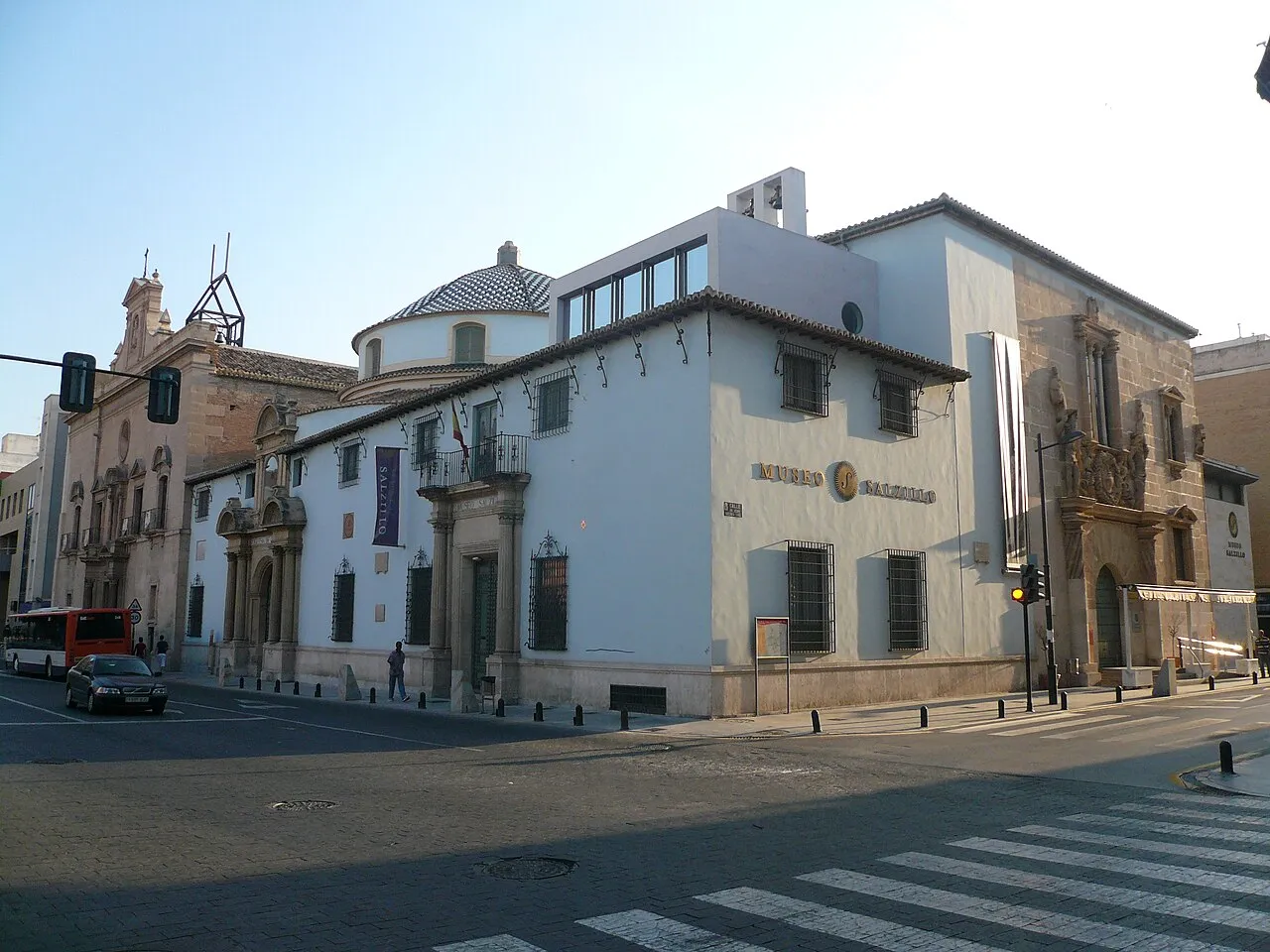
3Salzillo Museum

Salzillo Museum

The heart of Murcian Holy Week and the work of the greatest image-maker of the Spanish Baroque. Here is "The Agony in the Garden", of 1754, and a nativity of more than five hundred tiny figures in which Salzillo dressed the shepherds as eighteenth-century Murcian peasants, not as people of the Holy Land.

🎧 Salzillo, Jesús and Santa Clara📍 View on Google Maps
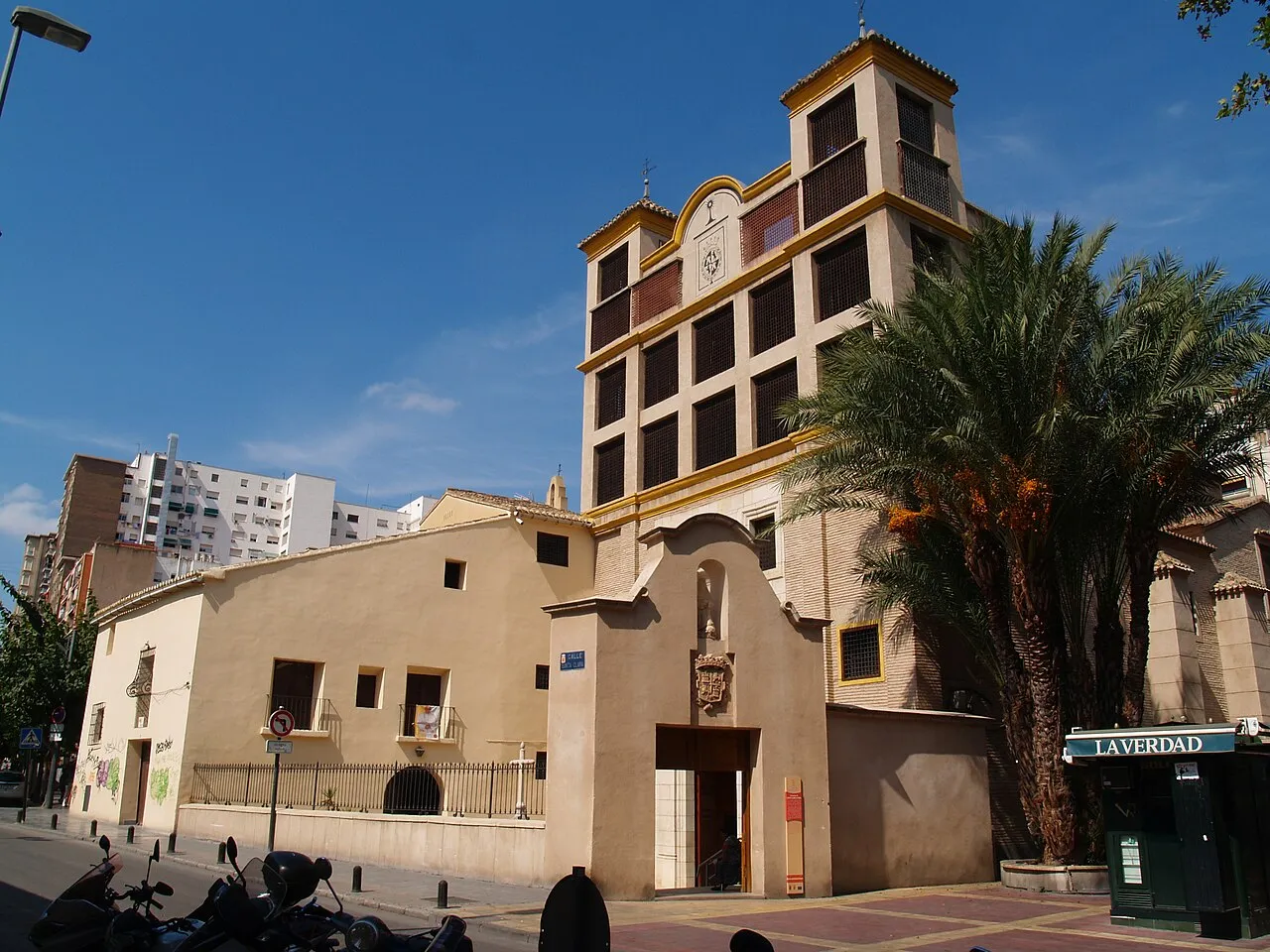
4Monastery of Santa Clara la Real

Monastery of Santa Clara la Real

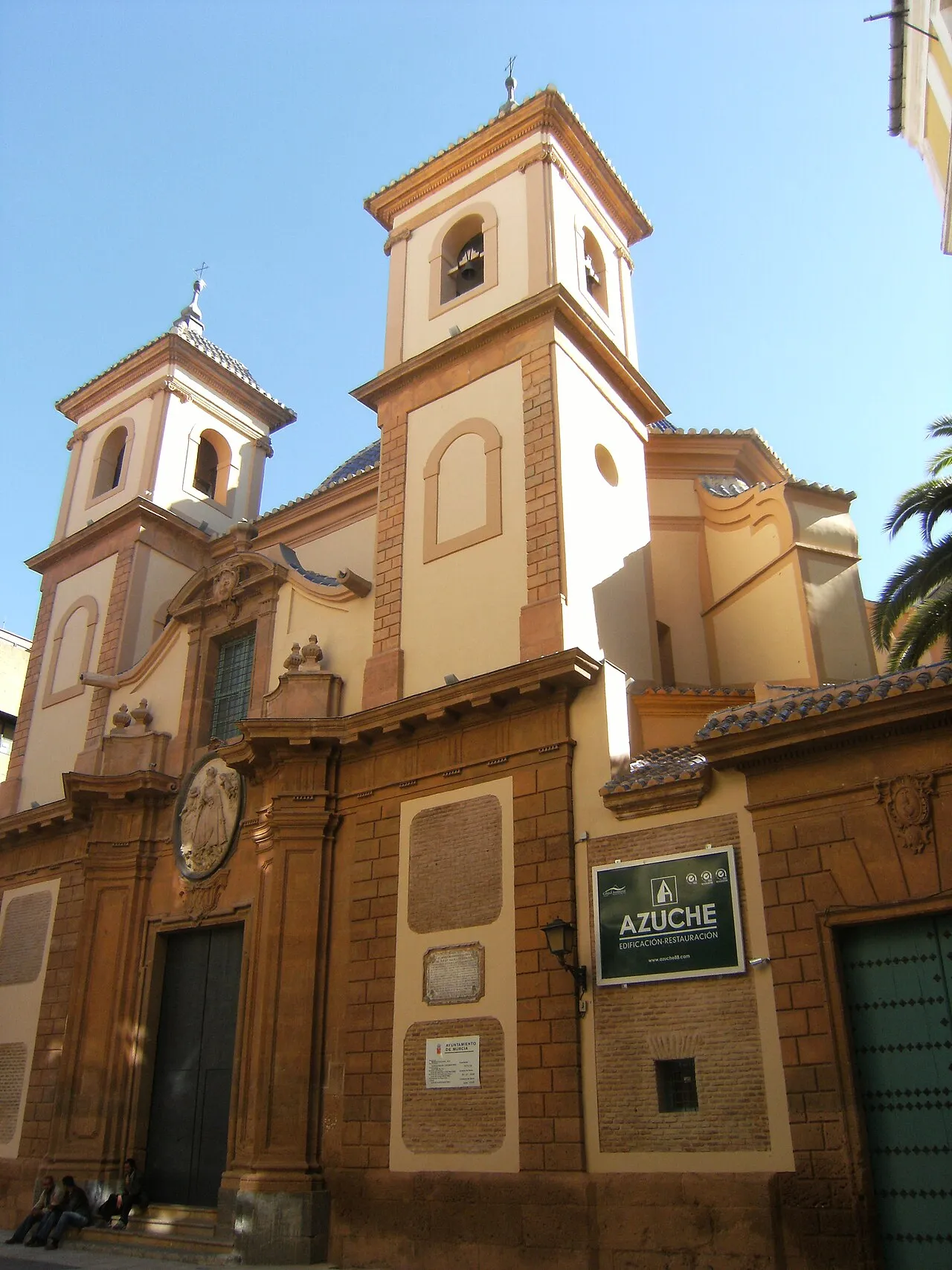
Three cities stacked together: a thirteenth-century Islamic palace with its water tank and its plasterwork, turned afterwards into a Castilian royal fortress and finally into a convent of Poor Clares, who are still here in enclosure. The palace appeared in excavations in the late twentieth century and today can be visited whole.

🎧 Salzillo, Jesús and Santa Clara📍 View on Google Maps
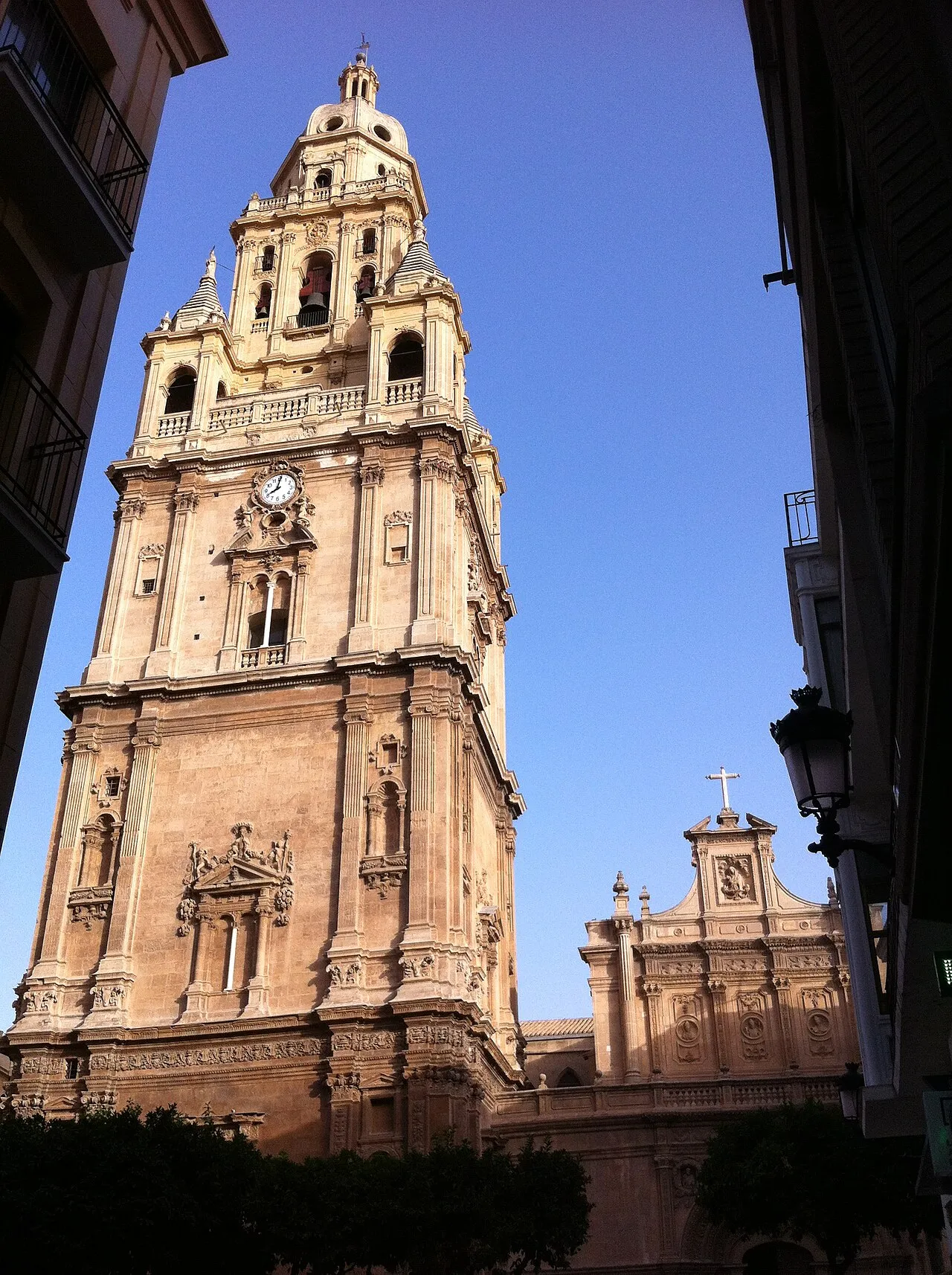
5Cathedral Tower

Cathedral Tower

Ninety-three metres and almost three centuries of building: begun in 1519 and finished in 1793, with a pause of two hundred years because it threatened to lean. It changes style as you climb. Its bells gave warning of the floods of the Segura and marked the irrigation turns in the huerta.

🎧 The Cathedral, Belluga and the Baroque heart📍 View on Google Maps
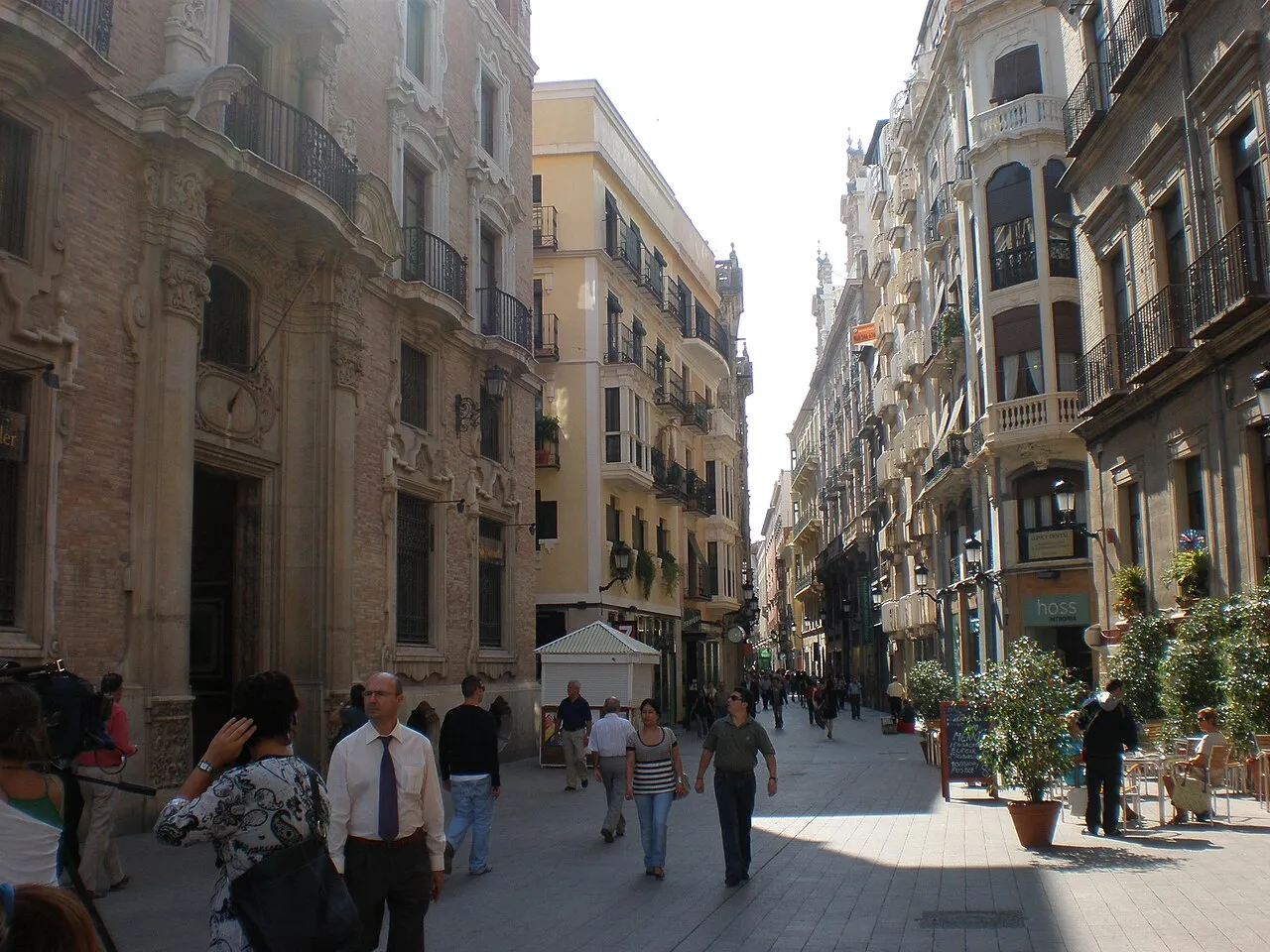
6Calle Trapería

Calle Trapería

Murcia's main street since the conquest of 1266, where the dealers in cloth had their shops. The city lived on silk: the huerta reared the worms and this was one of the silk capitals of Spain. For centuries, more than a shopping street, it was the stage for the evening stroll.

🎧 The Casino, Trapería street and the Romea Theatre📍 View on Google Maps
7Plaza de Santa Catalina

Plaza de Santa Catalina

It was Murcia's main square: here the council met and the condemned were executed. Today it is the epicentre of tapas. Order a marinera — a ring of bread with Russian salad and an anchovy — and learn the language: without the anchovy it is a «bicicleta», with a vinegared boquerón it is a «marinero».

🎧 The Casino, Trapería street and the Romea Theatre📍 View on Google Maps
8Romea Theatre

Romea Theatre

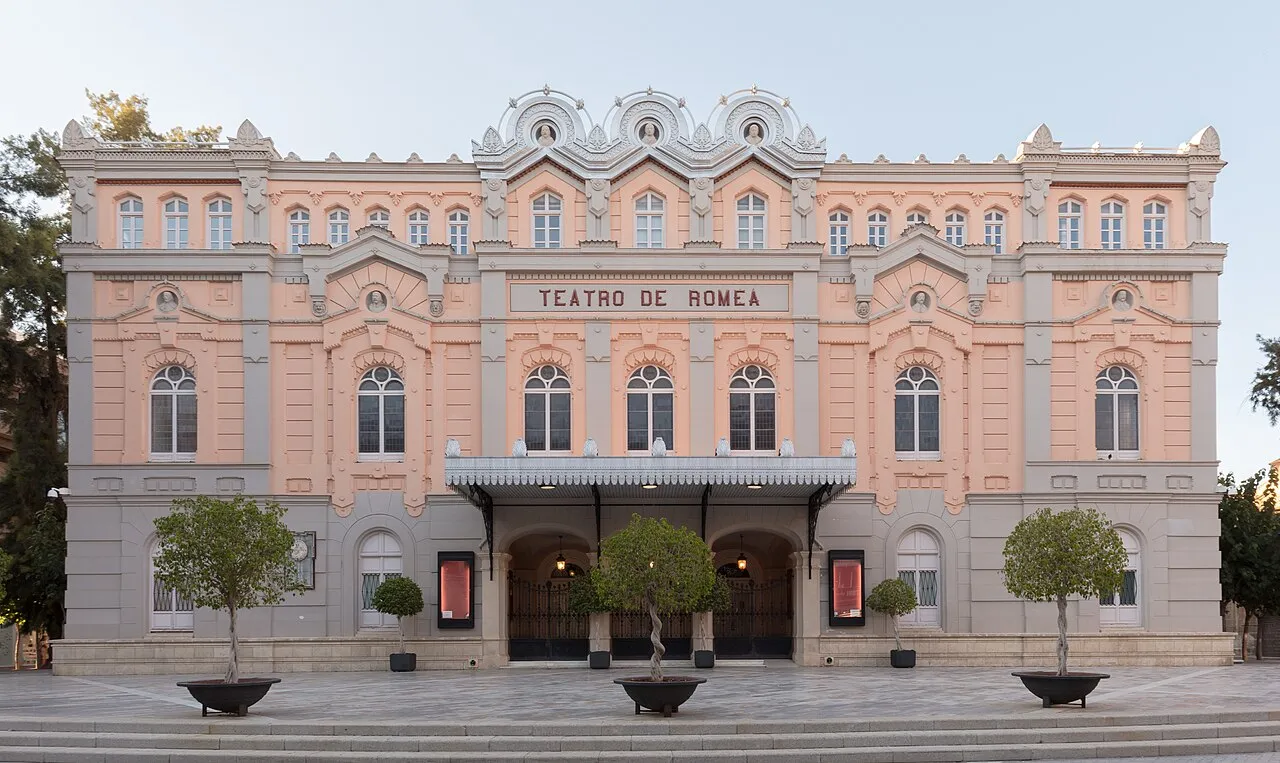
Opened in 1862 with Queen Isabella II in the box, on the market garden of a Dominican friary that the disentailment had freed. It comes with a legend: they say a friar cursed it with three fires, and it really did burn more than once. Even today one ticket is withheld per performance so that it never fills.

🎧 The Casino, Trapería street and the Romea Theatre📍 View on Google Maps
9Glorieta de España

Glorieta de España

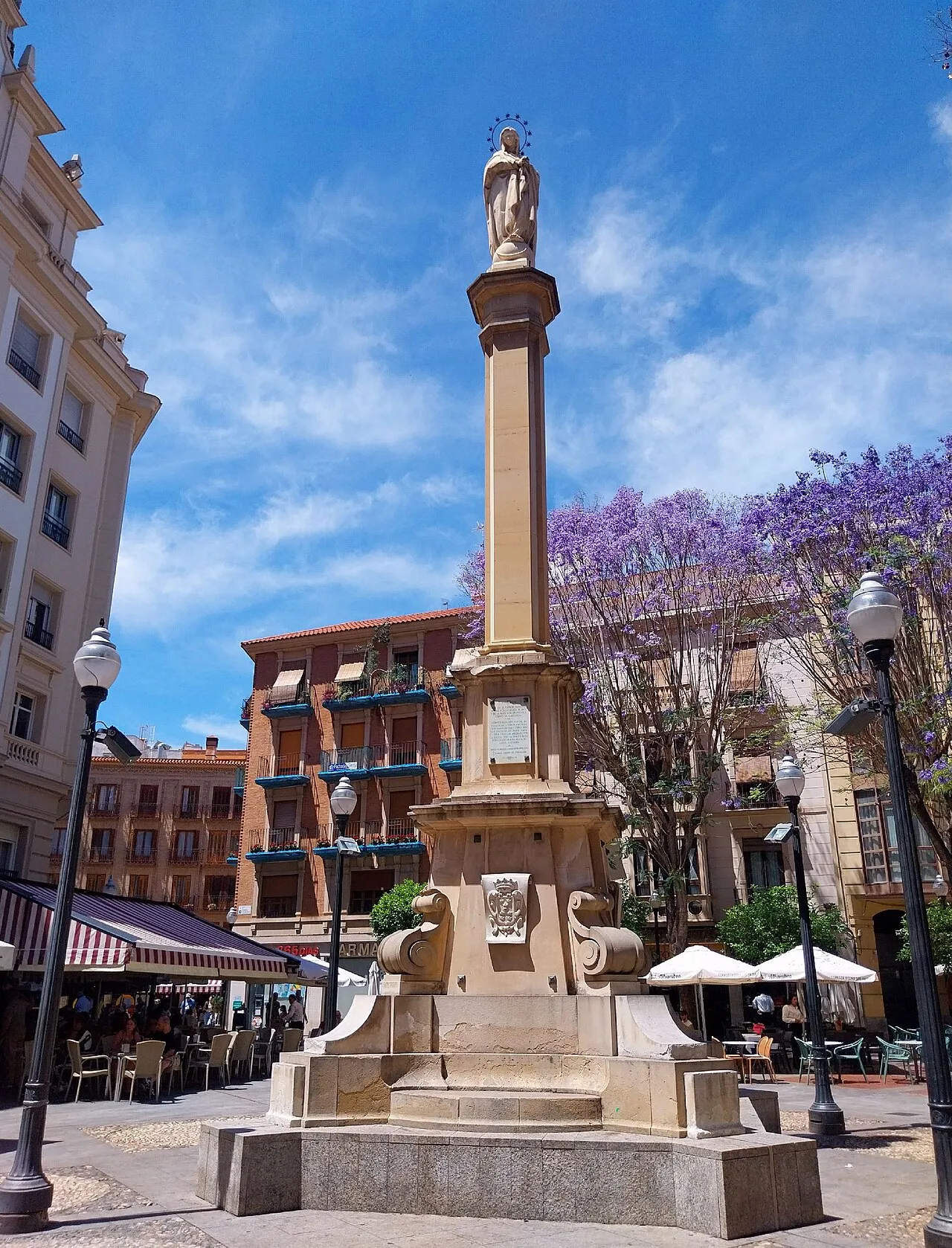
Murcia's sitting room for two centuries, with century-old ficus trees and fountains inspired by the Generalife. Before it was a square it was the river's sandbank, and to build it they used stones from demolished towers of the palace of the Inquisition. It has changed its name with every regime.

🎧 The Cathedral, Belluga and the Baroque heart📍 View on Google Maps
10Verónicas Market

Verónicas Market

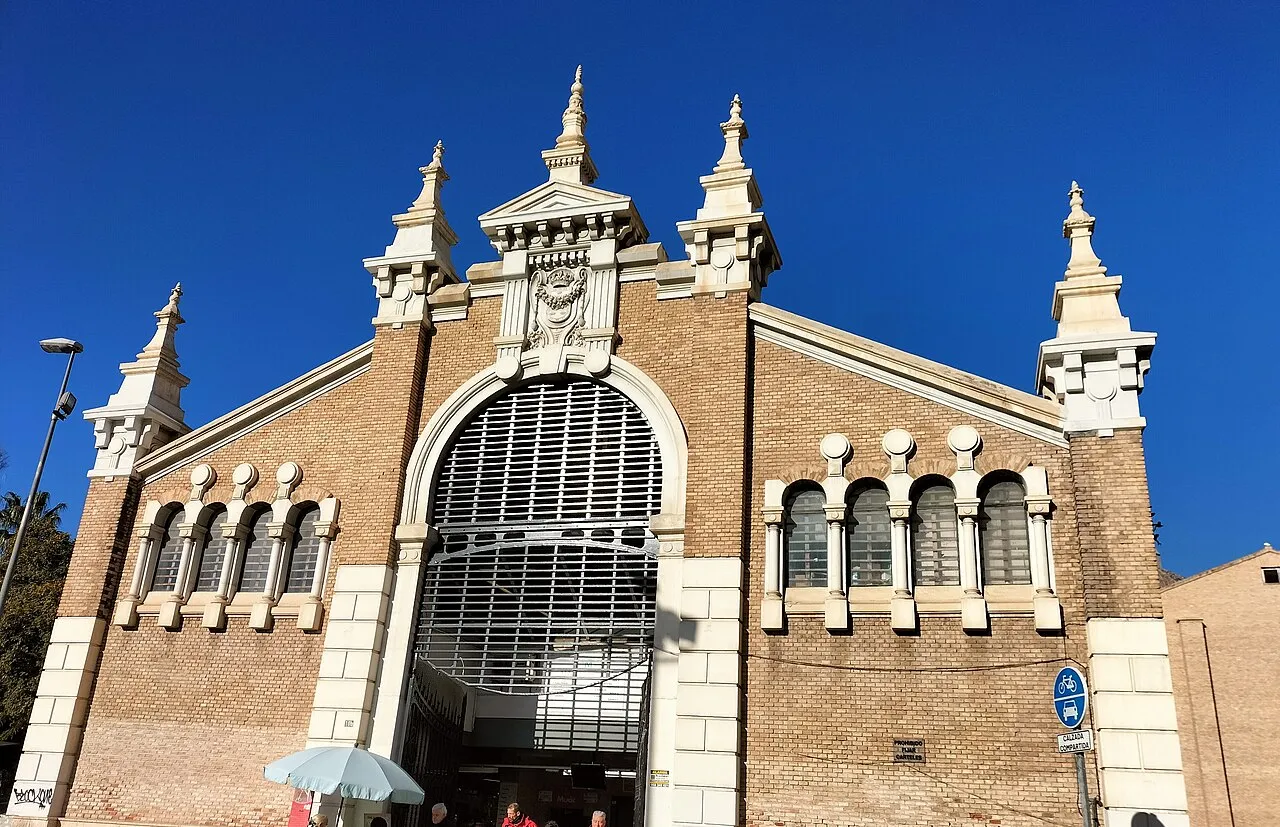
Art Nouveau in reddish brick and white stone, raised between 1912 and 1916 by Pedro Cerdán, although food has been sold here since the fifteenth century. Inside is the market garden of Europe on ice: a plain watered by channels of Arab origin that supplies half the continent in winter.

🎧 Las Flores, Verónicas and the tapas📍 View on Google Maps
11Church of San Juan de Dios

Church of San Juan de Dios

An oval plan, very rare in Spain, raised between 1745 and 1781. But what matters is underneath: this is the site of the fortress of the Muslim kings, and here Alfonso X ordered the city's first Christian church to be built. The remains of the palace and its wall can be seen beneath the floor.

🎧 The Cathedral, Belluga and the Baroque heart📍 View on Google Maps
12Old Bridge

Old Bridge

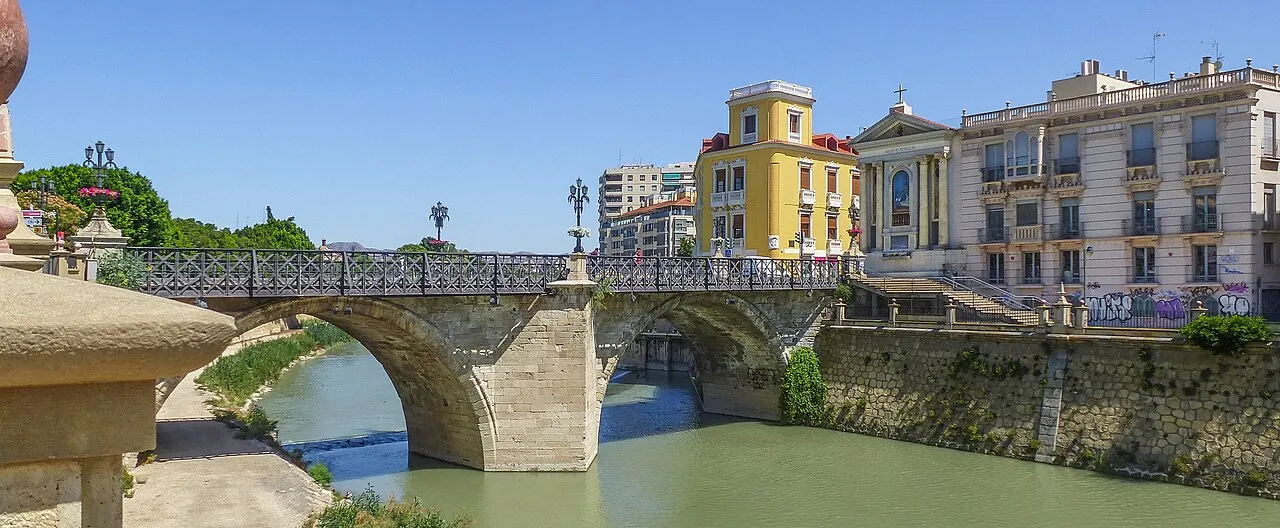
The oldest stone bridge over the Segura in the city, built between 1718 and 1742 because the flood of 1701 carried off the earlier wooden one. It was made to hold and it held: it survived the great Santa Teresa flood of 1879. For almost two centuries it was Murcia's only bridge.

🎧 The Cathedral, Belluga and the Baroque heart📍 View on Google Maps
13Church of Jesús

Church of Jesús

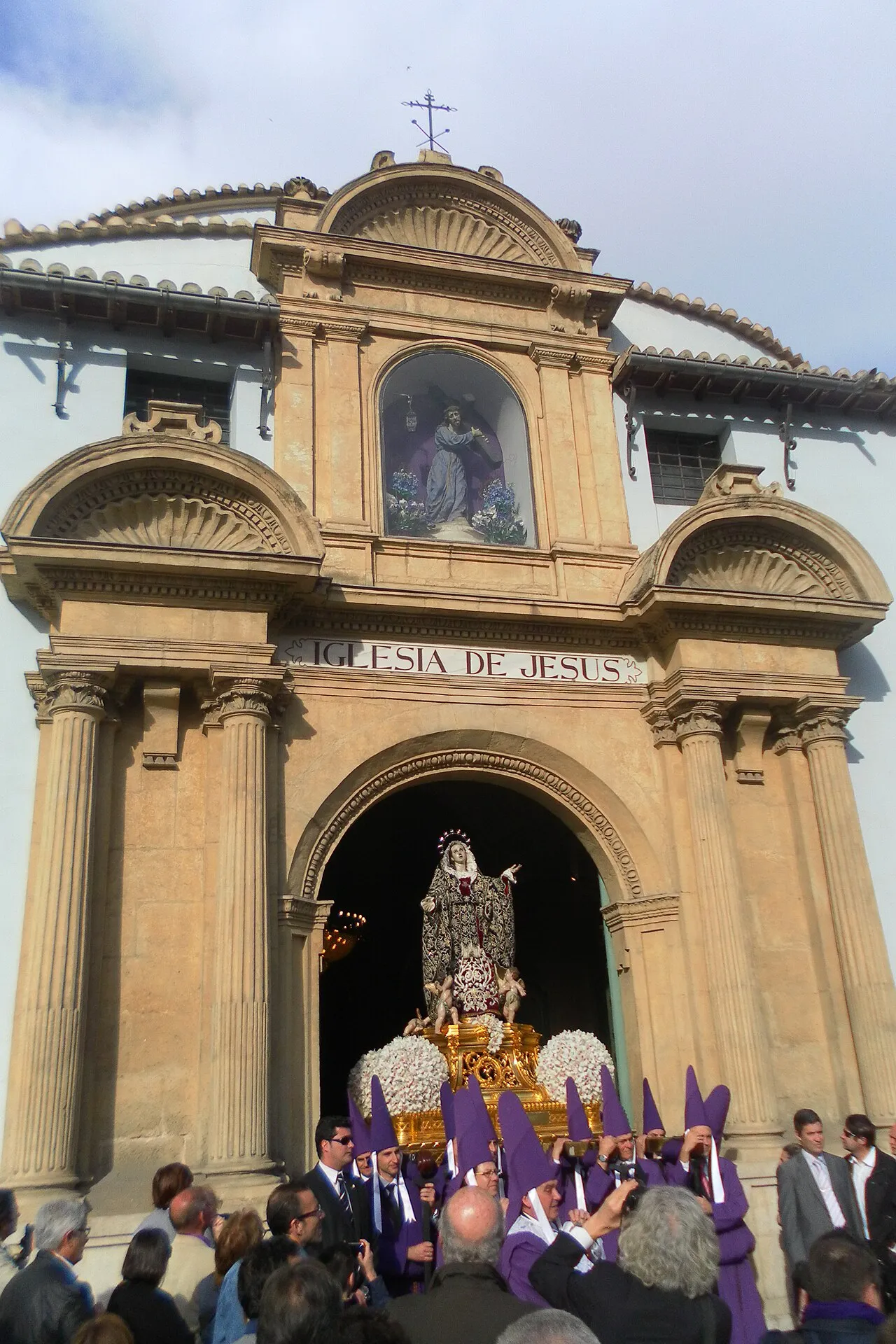
A round church, one of the very few you will see in your life, raised between 1675 and 1696 as a case: radiating chapels open around the nave and in each one rests a paso by Salzillo. From this door, in the small hours of Good Friday, the procession of «los moraos» sets out.

🎧 Salzillo, Jesús and Santa Clara📍 View on Google Maps
14City Hall Extension

City Hall Extension

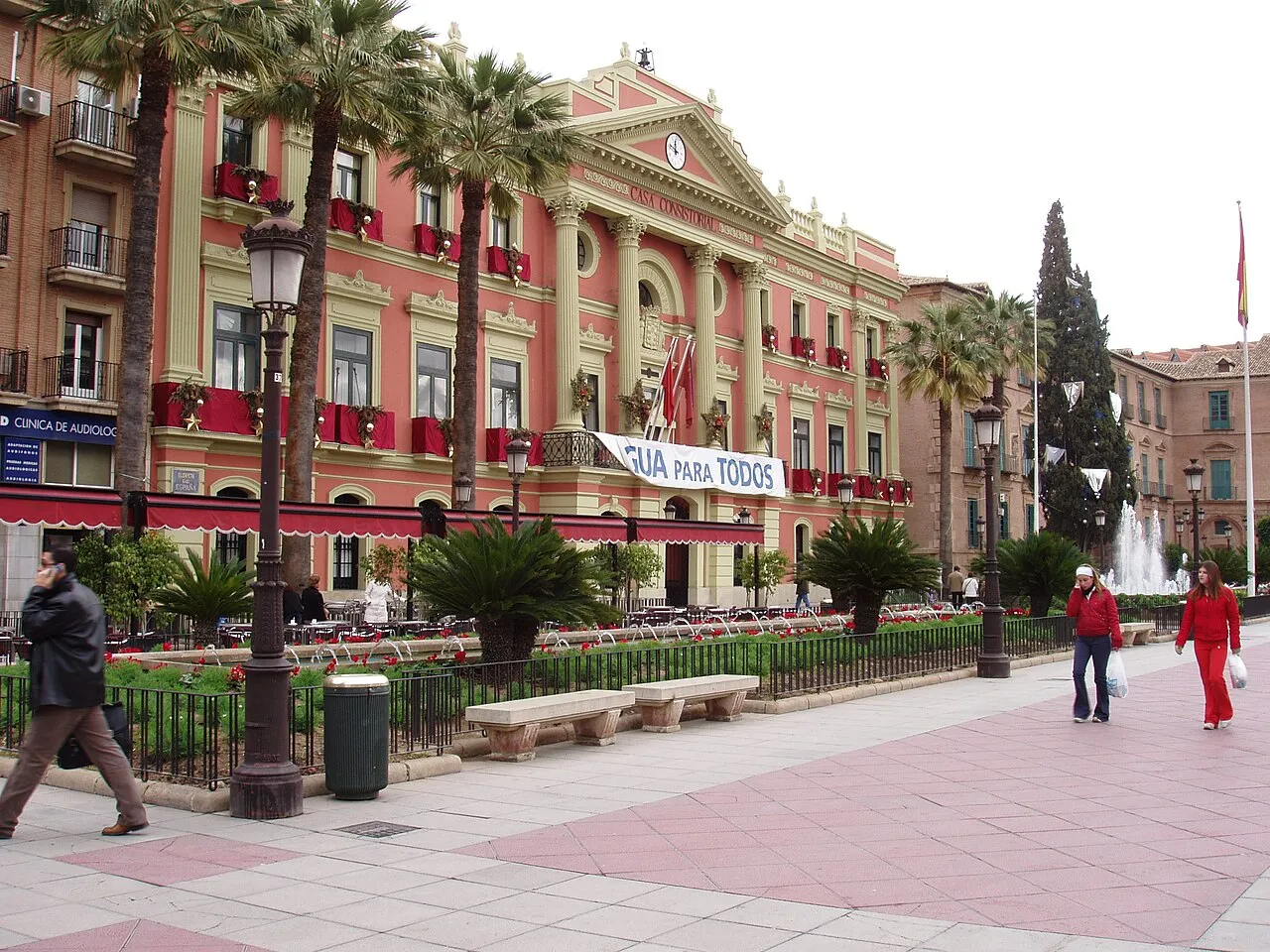
Rafael Moneo, the first Spanish Pritzker laureate, solved the challenge of standing opposite the Baroque imafronte without imitating it and without shouting: a screen of stone with openings ordered like the lines of a musical score. And it opens no door onto the square, out of deference: you go in from the side.

🎧 The Cathedral, Belluga and the Baroque heart📍 View on Google Maps
15Lion of the Malecón

Lion of the Malecón

The guardian of the promenade, with the city's coat of arms between his claws and its crowns: because of them Murcia is the «Seven Times Crowned». The one you see is a replica; the sandstone original suffered so badly in the rain that it was moved to the museum. He guards the dyke that protected the city from the river.

🎧 The Malecón, Floridablanca and the Segura📍 View on Google Maps

Walking tours in Murcia

🎧 Las Flores, Verónicas and the tapas · Salzillo, Jesús and Santa Clara · The Casino, Trapería street and the Romea Theatre · The Cathedral, Belluga and the Baroque heart · The Malecón, Floridablanca and the Segura

Frequently asked questions

Is Murcia worth visiting?

Far more than its reputation suggests. It has one of the great Baroque façades of Spain, a complete Islamic palace beneath an enclosed convent, the country's finest collection of Baroque religious imagery in the Museo Salzillo, a nineteenth-century casino with spectacular rooms and one of the best tapas cultures in Spain. All of it flat and on foot.

How many days do you need?

A full day covers the essentials: the cathedral with its tower, the plaza del Cardenal Belluga, the Trapería with the Real Casino, the Teatro Romea and tapas in Santa Catalina. With two days you fit in without hurrying the Museo Salzillo, the Monasterio de Santa Clara la Real and the far bank of the river, with the Malecón and the Carmen quarter.

What is a marinera?

The queen of Murcian tapas: a ring of bread with Russian salad and an anchovy on top. And it has a vocabulary of its own: take the anchovy off and it is called a «bicicleta», and if you put a vinegared boquerón there instead, a «marinero». Ordering it properly is a local skill and it is appreciated.

Why does the cathedral façade seem to embrace you?

Because it is concave: it curves inwards like a great niche or a pair of open arms, something extremely rare in a façade. That is why, standing in front of it, you feel the stone wrapping round you and pushing you towards the church. It was raised between 1737 and 1754 to a design by Jaime Bort, at the commission of Cardinal Belluga.

Who was Francisco Salzillo?

An eighteenth-century Murcian and one of the greatest sculptors of the Spanish Baroque, specialising in processional imagery: carvings of polychrome wood that go out in Holy Week. Murcia devotes a whole museum to him. He made his pasos hollow, with glued cloth, so they could be carried shoulder-high through narrow streets.

When is Holy Week in Murcia?

In March or April, depending on the calendar. It is one of the most important in Spain and it has a unique moment: in the small hours of Good Friday the Procession of the Salzillos sets out from the Iglesia de Jesús, with the purple-robed penitents, «los moraos», carrying the carvings from the museum shoulder-high.

What do people eat in Murcia?

Marinera, michirones — dried broad beans stewed with chorizo and ham — zarangollo of courgette and onion, pastel de carne, a puff-pastry pie with hard-boiled egg inside, and vegetables from the huerta, which is among the best in Europe. For wine, the region's three appellations: Jumilla, Yecla and Bullas, with monastrell as the dominant grape.
Murcia on the map

The 15 must-sees, point by point.

🎧 With Viavoy

Walk Murcia and listen at your own pace

Download Viavoy and walk Murcia offline, whenever you like.

from 2,99 €· one-off payment
City Pass · 9,99 €3 days, all the tours in Murcia
Find out more about Viavoy →
Viavoy app

In the Magazine

Keep discovering Murcia

Food & drink

Eating in Murcia: the marinera, the bicicleta, the marinero and everything else

Architecture

The Real Casino de Murcia: a gentlemen's club with a Patio Árabe and a Biblioteca Inglesa

Architecture

Murcia Cathedral: a façade that embraces you and a tower three centuries in the making

Nature

The huerta of Murcia: Arab acequias, a water court and a river that punished