Cuenca
Cuenca · What to see

What to see in Cuenca: the 6 essentials

Houses that fly over forty metres of empty air, a Gothic cathedral with an English accent, an avant-garde museum hanging from the precipice and a ruined castle with the best view in Castile.

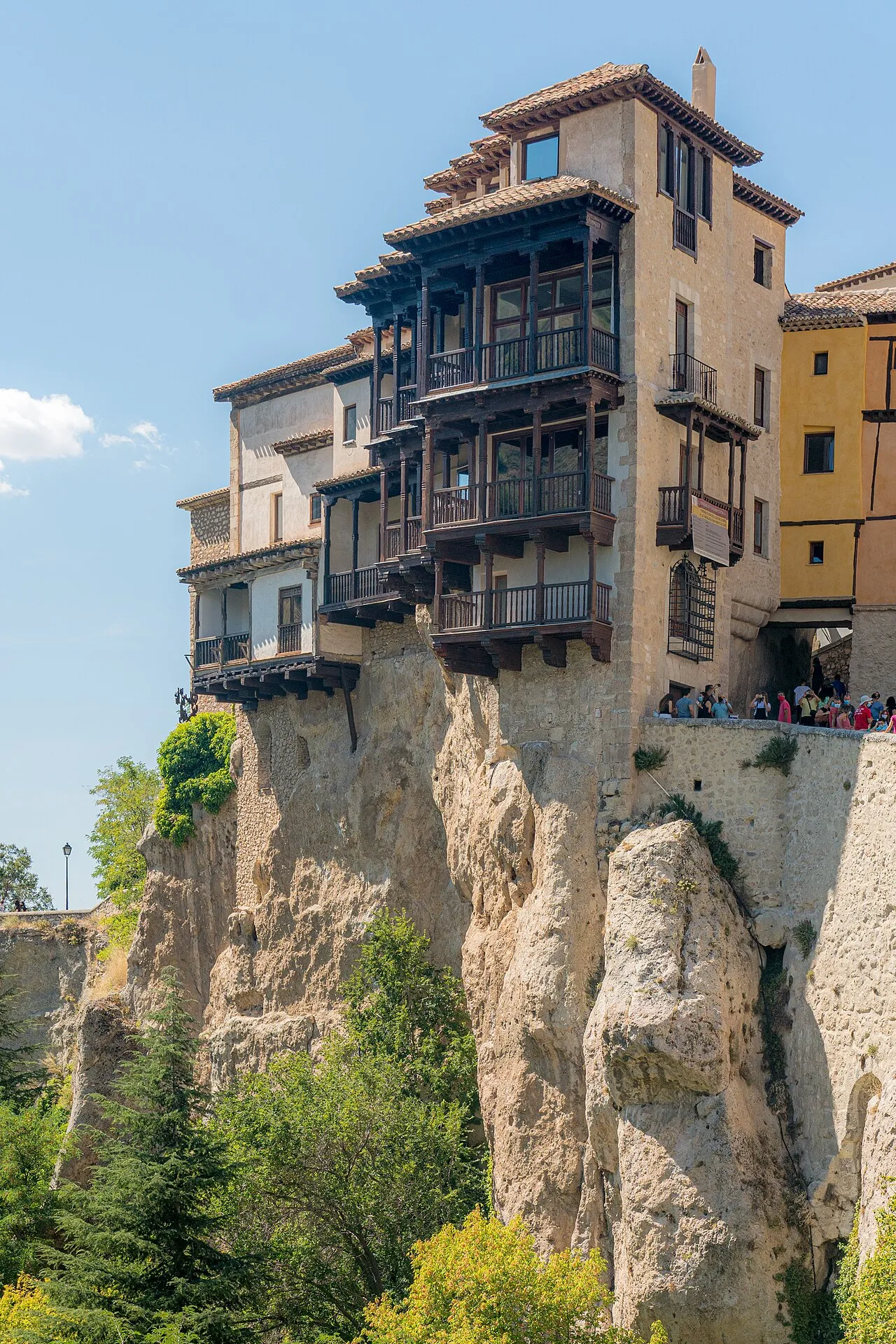
Cuenca is built on an extremely narrow rocky ridge between two ravines, the Júcar gorge and the Huécar gorge, and that impossible geography explains absolutely everything: why the houses fly over the abyss, why the main square is triangular, why the old town is a succession of slopes and why the castle is where it is. It has been World Heritage since 1996, and is one of the few Spanish cities where the landscape is not the frame of the monument but its cause.

The 6 must-sees

1Hanging Houses

Hanging Houses

Three real houses flying over almost forty metres of empty air, and not out of whim: in a city wedged onto a ridge with no horizontal ground, growing outwards was the only option. There was once a whole cornice of them. What you see today is a careful early twentieth-century restoration that saved them from ruin.

🎧 Hanging Cuenca: from the Hanging Houses to the Castle📍 View on Google Maps
2Cuenca Cathedral

Cuenca Cathedral

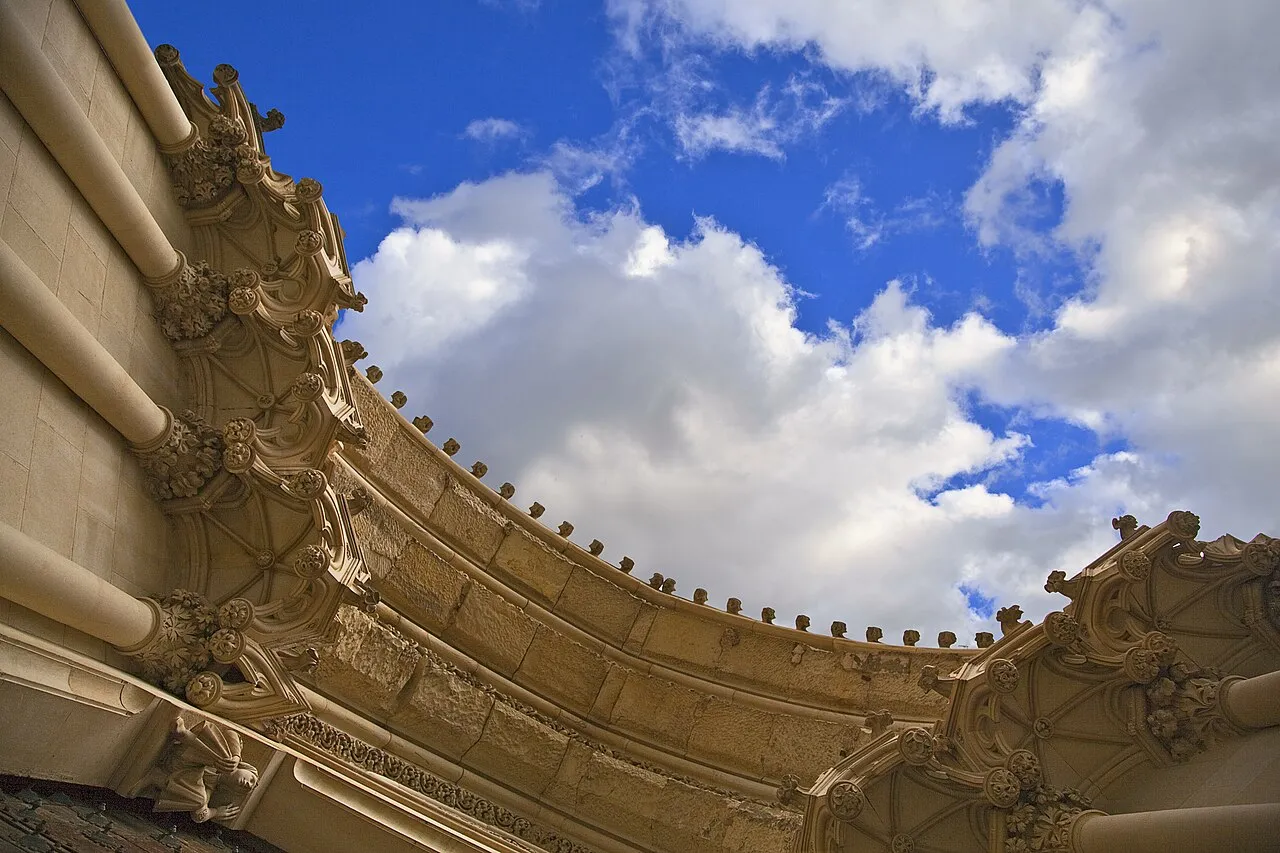
One of the first Gothic cathedrals in Spain, and there is a reason: Alfonso VIII conquered Cuenca in 1177 while married to Eleanor Plantagenet, and stonemasons from the north came with her. It looks more Norman than Castilian. The façade is from 1902 — the Giraldo tower collapsed and brought the medieval one down — but inside is the triforium of the angels.

🎧 Hanging Cuenca: from the Hanging Houses to the Castle📍 View on Google Maps
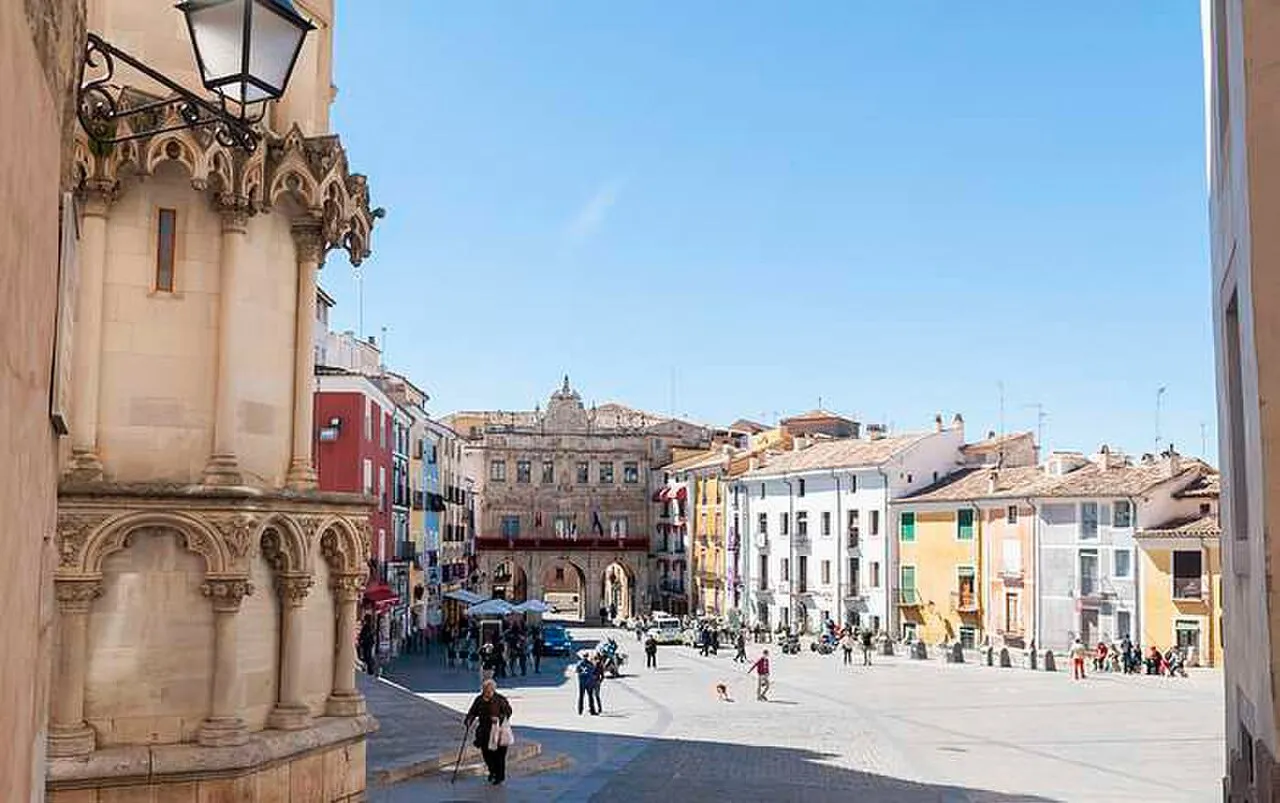
3Plaza Mayor de Cuenca

Plaza Mayor de Cuenca

An elongated triangle, not a rectangle: the rock gave no more and the square was fitted where the hill allowed. It is closed by the Baroque city hall raised on three arches through which the street still passes. In the early hours of Good Friday Las Turbas erupts here, hundreds of drums shattering the silence.

🎧 Hanging Cuenca: from the Hanging Houses to the Castle📍 View on Google Maps
4Museum of Spanish Abstract Art

Museum of Spanish Abstract Art

Inside the Hanging Houses, above the precipice. It was set up by the painter Fernando Zóbel in 1966 to gather his friends: Chillida, Tàpies, Saura, Millares, Torner. The artists themselves designed the rooms, and that display changed Spanish museum design. Free admission since Zóbel donated it to the Fundación Juan March.

🎧 Hanging Cuenca: from the Hanging Houses to the Castle📍 View on Google Maps
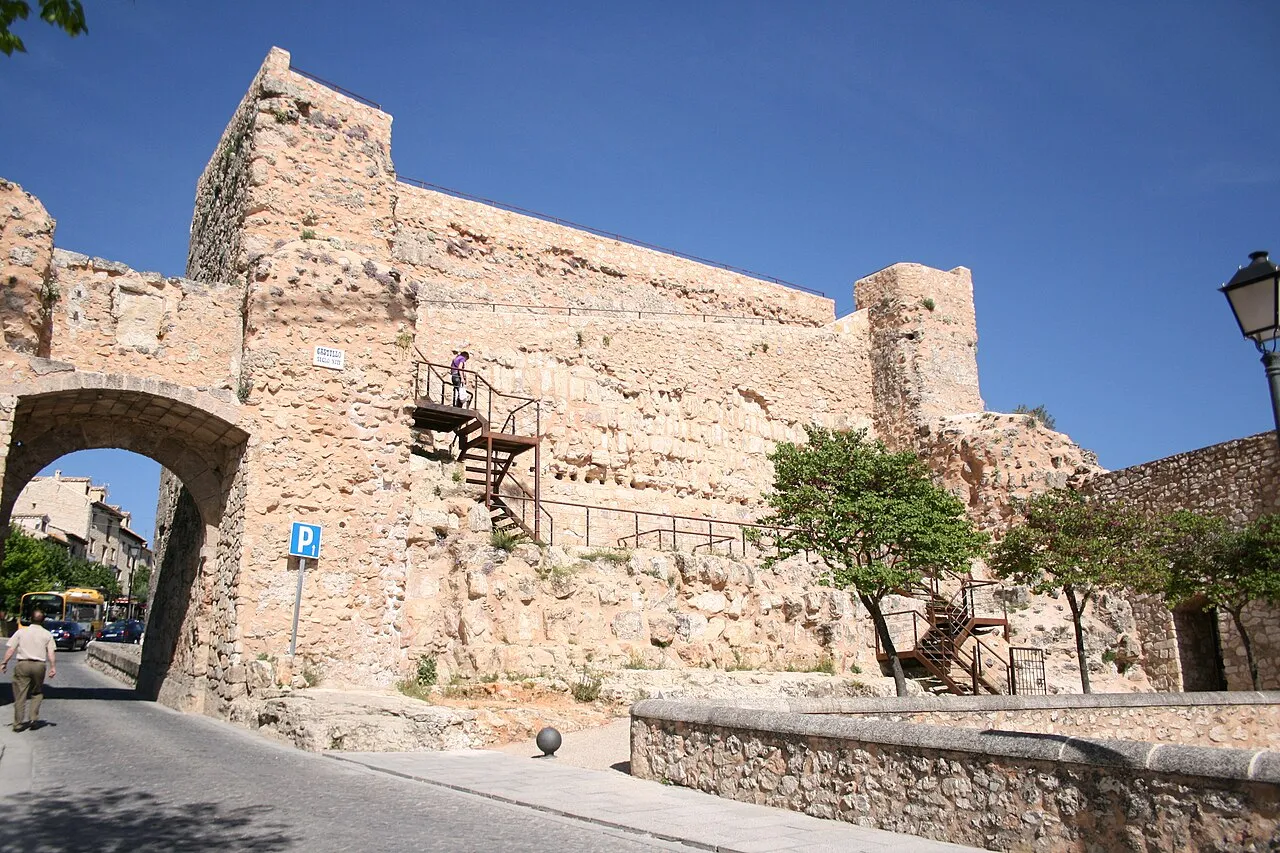
5Cuenca Castle

Cuenca Castle

A few stretches of wall and some towers leaning over the void remain, but it is the best viewpoint in the city and the point where it all began: the only attackable front of a city surrounded by precipices. Having lost its military function, the Inquisition tribunal was installed beside it and its chambers served as a prison.

🎧 Hanging Cuenca: from the Hanging Houses to the Castle📍 View on Google Maps
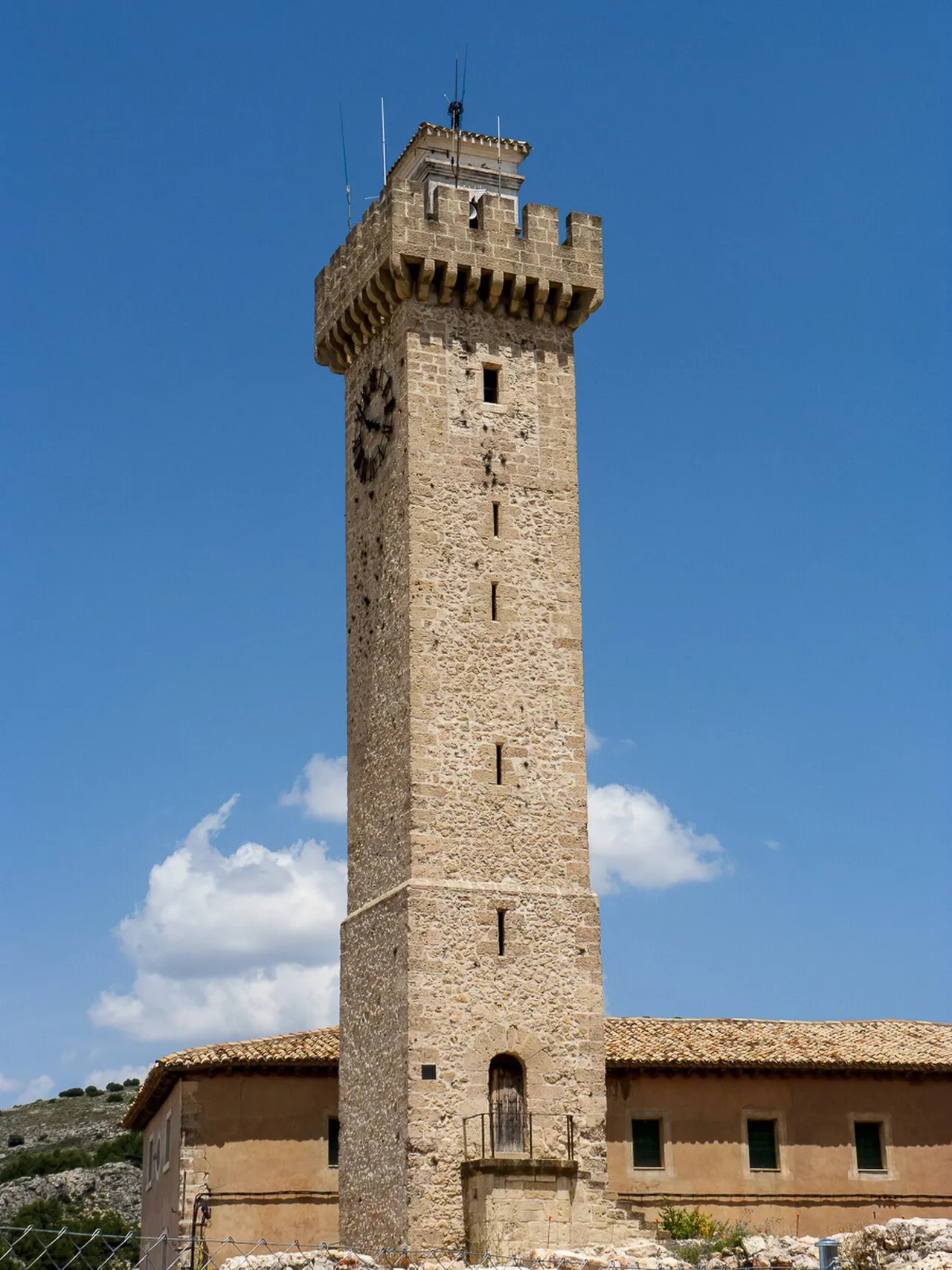
6Mangana Tower

Mangana Tower

The emblem of the city, on the watchtower of Muslim Cuenca, and also its most argued-over monument: two twentieth-century restorations changed its crowning and gave it battlements. It is the collective clock, where the people of Cuenca eat their grapes on New Year's Eve.

🎧 Hanging Cuenca: from the Hanging Houses to the Castle📍 View on Google Maps

Walking tours in Cuenca

🎧 Hanging Cuenca: from the Hanging Houses to the Castle

Frequently asked questions

How many days do you need to see Cuenca?

One full day covers the entire old town: Torre de Mangana, Plaza Mayor, cathedral, Hanging Houses with the museum, Puente de San Pablo and castle. With two days you can also fit in the city's other art foundations, the walk through the Huécar gorge and a trip to the Ciudad Encantada, thirty kilometres away.

Where is the classic photograph of the Hanging Houses taken from?

From the Puente de San Pablo, the iron footbridge that crosses the Huécar gorge at a considerable height. From there you see them in profile, with the ravine below, and that is where practically every known image of Cuenca was taken. First thing or at night, lit up, you can take it without people in front.

Is the climb to the old town hard?

Yes, there is a considerable height difference between the lower town and the upper old town, and then the old town goes on climbing to the castle. There is a public lift connecting the two parts and a city bus as well, and the sensible thing is to go up with one of them and walk down, rather than the other way round.

Can you go inside the Hanging Houses?

Yes, in two of the three: they are the home of the Museum of Spanish Abstract Art, whose admission is free. It is the only way to see them from inside and to lean out of their windows over the precipice. The third houses a restaurant. Check the museum's weekly closing day beforehand.

What is Las Turbas?

The procession in the early hours of Good Friday, when hundreds of drums and bugles shatter the silence of the old town in a continuous din. It is one of the most intense Holy Week traditions in Spain and fills the city, so if you travel on those days accommodation has to be booked far in advance.

What do people eat in Cuenca?

Mountain and game cooking: morteruelo, a warm pâté of game and pork; ajoarriero, with salt cod and potato; zarajos, lamb tripe wound on vine shoots; gazpacho manchego, which is a stew with flatbread and game, nothing to do with the Andalusian one; and for dessert, alajú and resoli, the local liqueur.
Cuenca on the map

The 6 must-sees, point by point.

🎧 With Viavoy

Walk Cuenca and listen at your own pace

Download Viavoy and walk Cuenca offline, whenever you like.

from 2,99 €· one-off payment
City Pass · 9,99 €3 days, all the tours in Cuenca
Find out more about Viavoy →
Viavoy app

In the Magazine

Keep discovering Cuenca

Food & drink

Eating in Cuenca: morteruelo, ajoarriero and resoli

Art & architecture

Cuenca and abstract art: the city that adopted the avant-garde

Itineraries

Cuenca in a day: an itinerary through the old town

Nature

The Júcar and Huécar gorges: the city seen from below