Córdoba
Córdoba · What to see

What to see in Córdoba: the 12 essentials

The forest of columns, the bridge of Augustus, the synagogue that survived and the courtyards UNESCO declared heritage. A selection ordered to be walked from end to end.

Córdoba has a rare advantage: almost everything essential fits into a compact historic centre you can walk in a day, and the city was a capital three times — of Roman Baetica, of the emirate and of the caliphate — so the layers lie literally one on top of another. This guide follows the order in which they string together on the map: first the Mezquita-river axis, then the Alcázar and the courtyards, then the Judería and finally the Roman and modern Córdoba to the north.

The 12 must-sees

1Mosque-Cathedral

Mosque-Cathedral

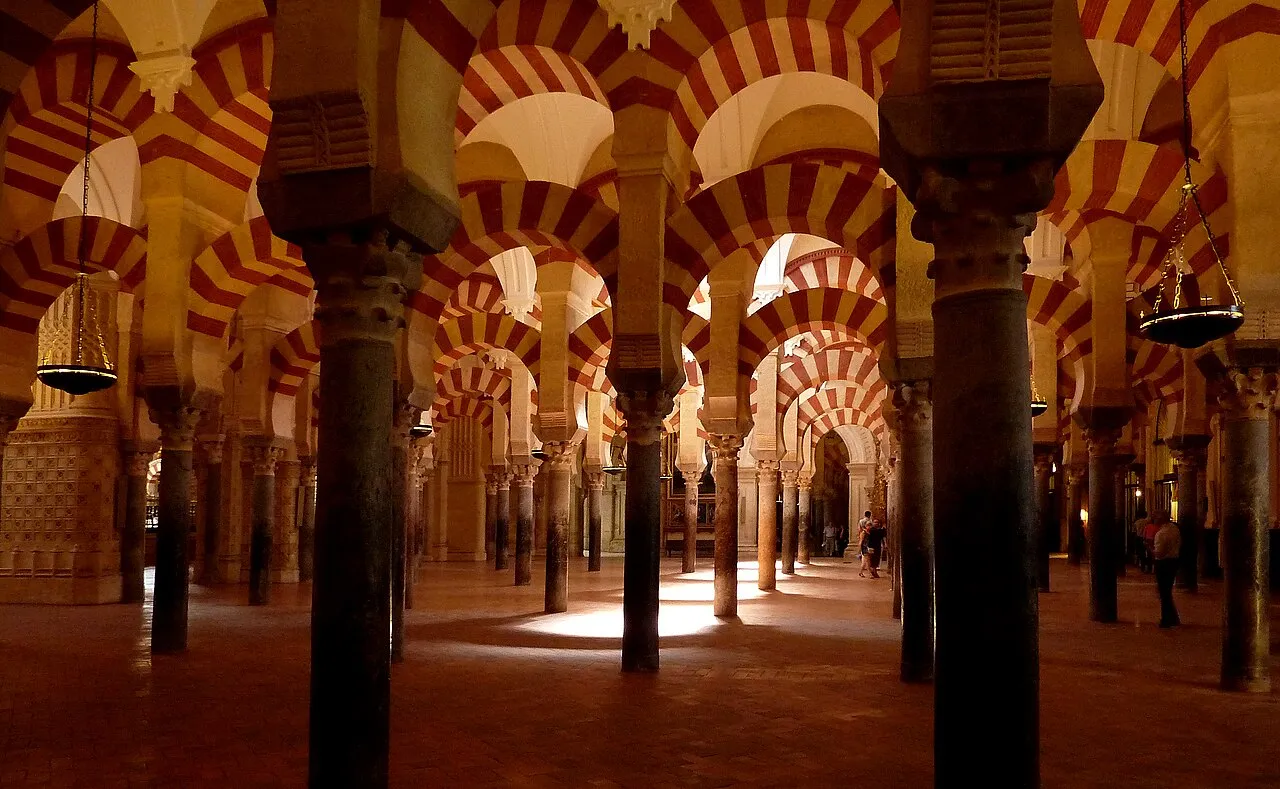
From outside it is a brown wall that impresses nobody, and that is Córdoba's first lesson: what is enormous is kept inside. Behind it there are eight hundred columns of marble and jasper, arches of red and white voussoirs repeating with no vanishing point, and the mihrab of al-Hakam II, covered by a scallop-shell dome carved from a single block and faced with mosaics made by craftsmen sent by the emperor of Byzantium. And in the middle, a Renaissance cathedral built in 1523 by pulling down columns. Like it or not, that superimposition is what makes this building unique in the world. There is a free slot first thing, Monday to Saturday.

🎧 The Mezquita-Catedral and the Roman Bridge📍 View on Google Maps
2Roman Bridge

Roman Bridge

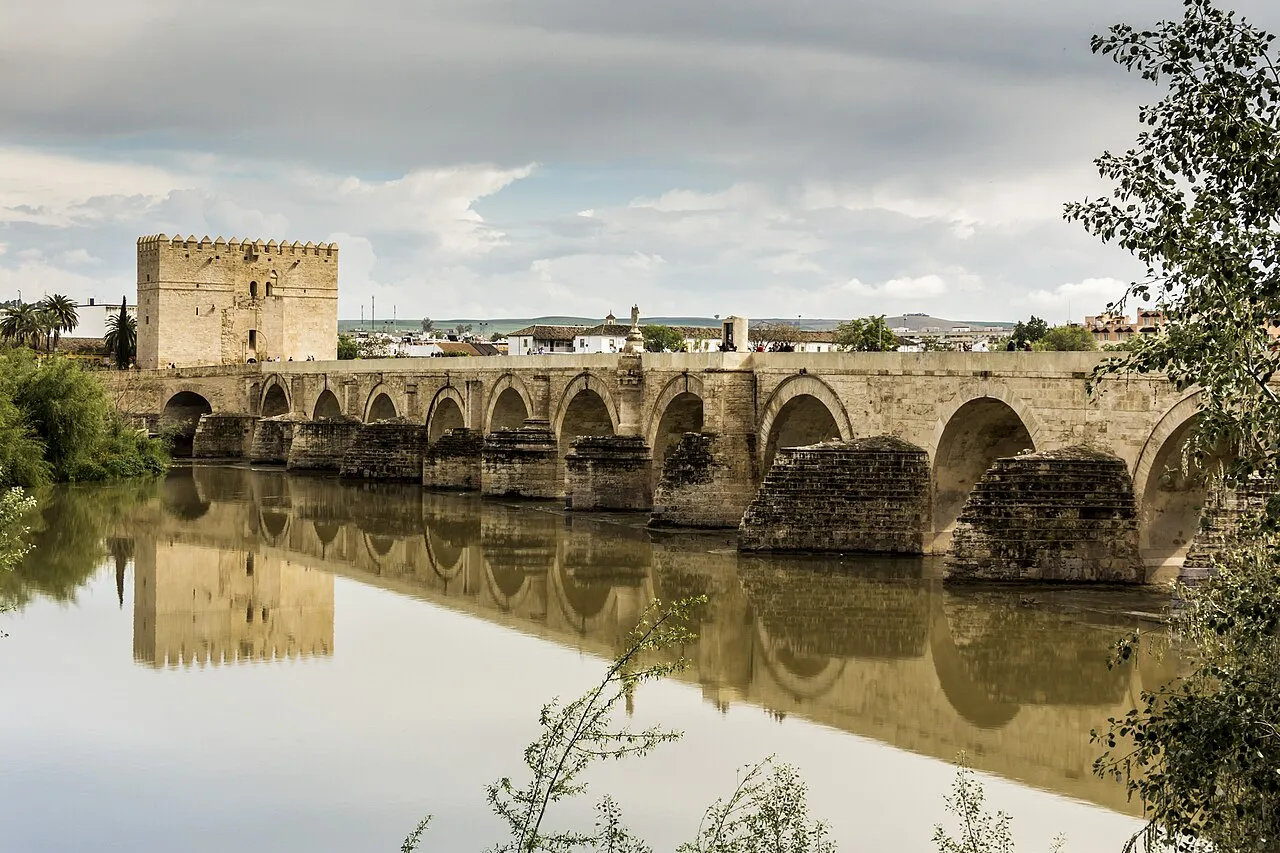
Three hundred and thirty metres and sixteen arches crossing the Guadalquivir on the same line for twenty centuries: the Vía Augusta that linked Rome with the south of Hispania passed this way. The fabric has been remade many times, but you cross exactly where the legions and the caliphs crossed. From the parapet you see the Arab mills in the middle of the channel, the Albolafia waterwheel that appears on the city's coat of arms and the reed-bed islands where herons and night herons nest. Halfway across, the oldest Triunfo de San Rafael in Córdoba, always with candles.

🎧 The Mezquita-Catedral and the Roman Bridge📍 View on Google Maps
3Calahorra Tower

Calahorra Tower

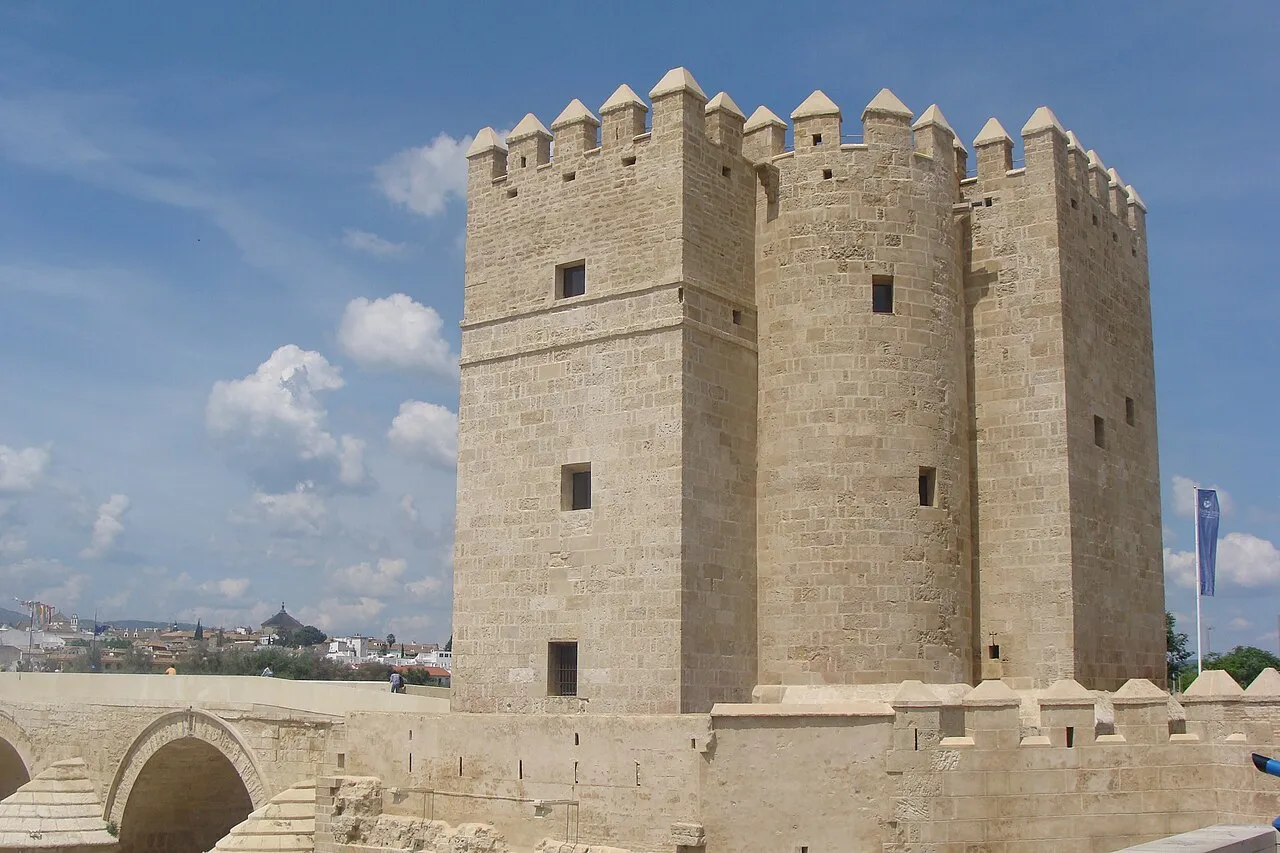
At the end of the bridge, a massive tower that guarded its head: the city's most vulnerable point. Its Arabic name means «detached fortress», and it describes its situation exactly, standing alone on the far side of the river. Inside it houses the Museo Vivo de al-Ándalus, devoted to the Córdoba of the tenth century and to Averroes, Maimonides and Ibn Arabi, with a room of models reproducing the Mezquita before the cathedral. But what to do here is turn round: the best postcard of Córdoba is taken from this bank.

🎧 The Mezquita-Catedral and the Roman Bridge📍 View on Google Maps
4Alcázar of the Christian Monarchs

Alcázar of the Christian Monarchs

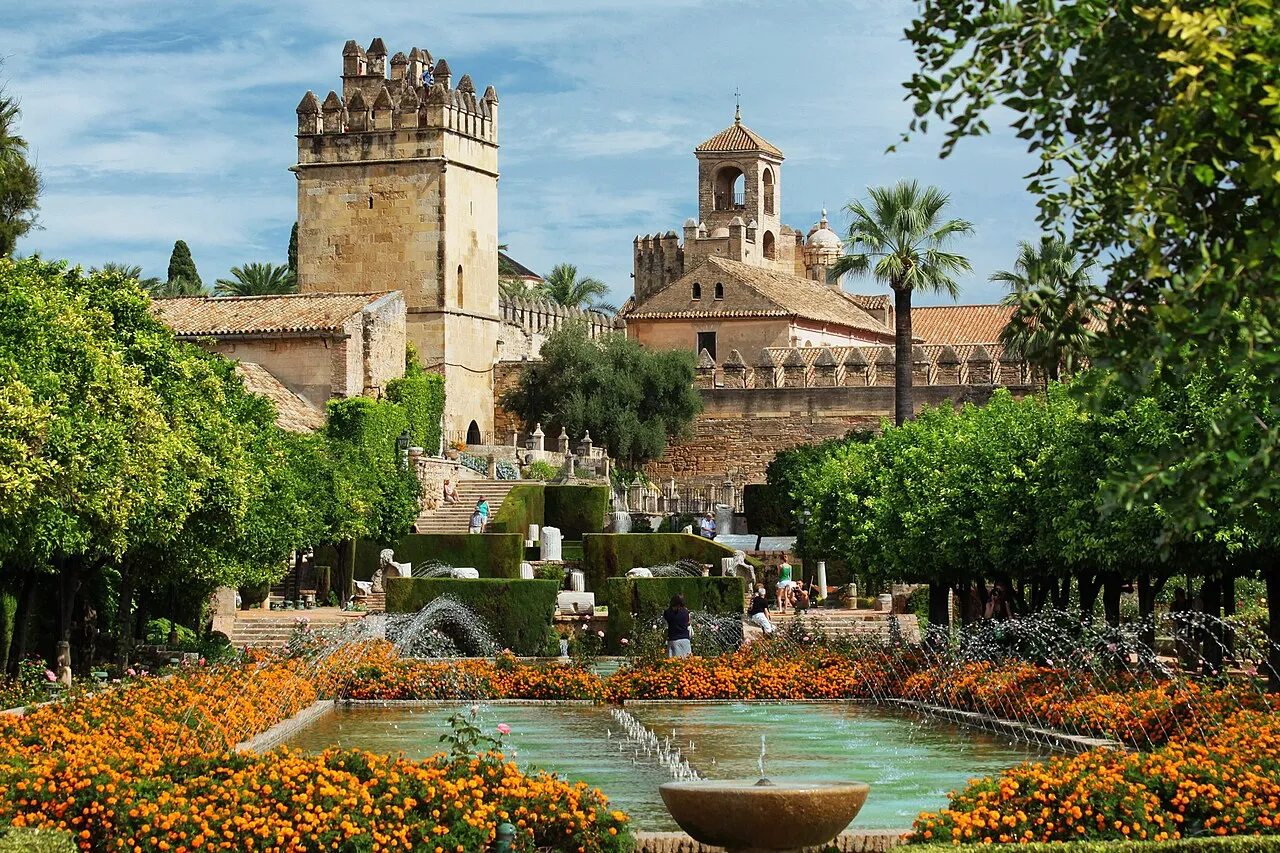
A fortress of golden stone with gardens on three terraces, pools and fountains running down towards the river. The Catholic Monarchs used it as their headquarters during the ten years of the war of Granada, and here, around 1486, they received Christopher Columbus, who did not get the yes he was hoping for. Afterwards it was the seat of the Inquisition's tribunal for three centuries and a prison until 1931. Inside, Roman mosaics found beneath the Plaza de la Corredera and a third-century sarcophagus with the door to the beyond carved half open.

🎧 The Alcázar, San Basilio and the Patios📍 View on Google Maps
5Baths of the Caliphal Alcázar

Baths of the Caliphal Alcázar

In the middle of a garden, a few steps go down to the private hammam of the caliphs, built in the tenth century beside their palace and buried for centuries until excavation brought it out. You walk the three rooms — cold, warm and hot — with the vaults pierced by skylights in the shape of eight-pointed stars, which regulated light and humidity with plugs. And you see the complete hypocaust: the furnace, the little pillars under the floor and the flues in the walls. Very few surviving baths show it so clearly.

🎧 The Judería, the Synagogue, and Caliphal Córdoba📍 View on Google Maps
6Patios of San Basilio, 44

Patios of San Basilio, 44

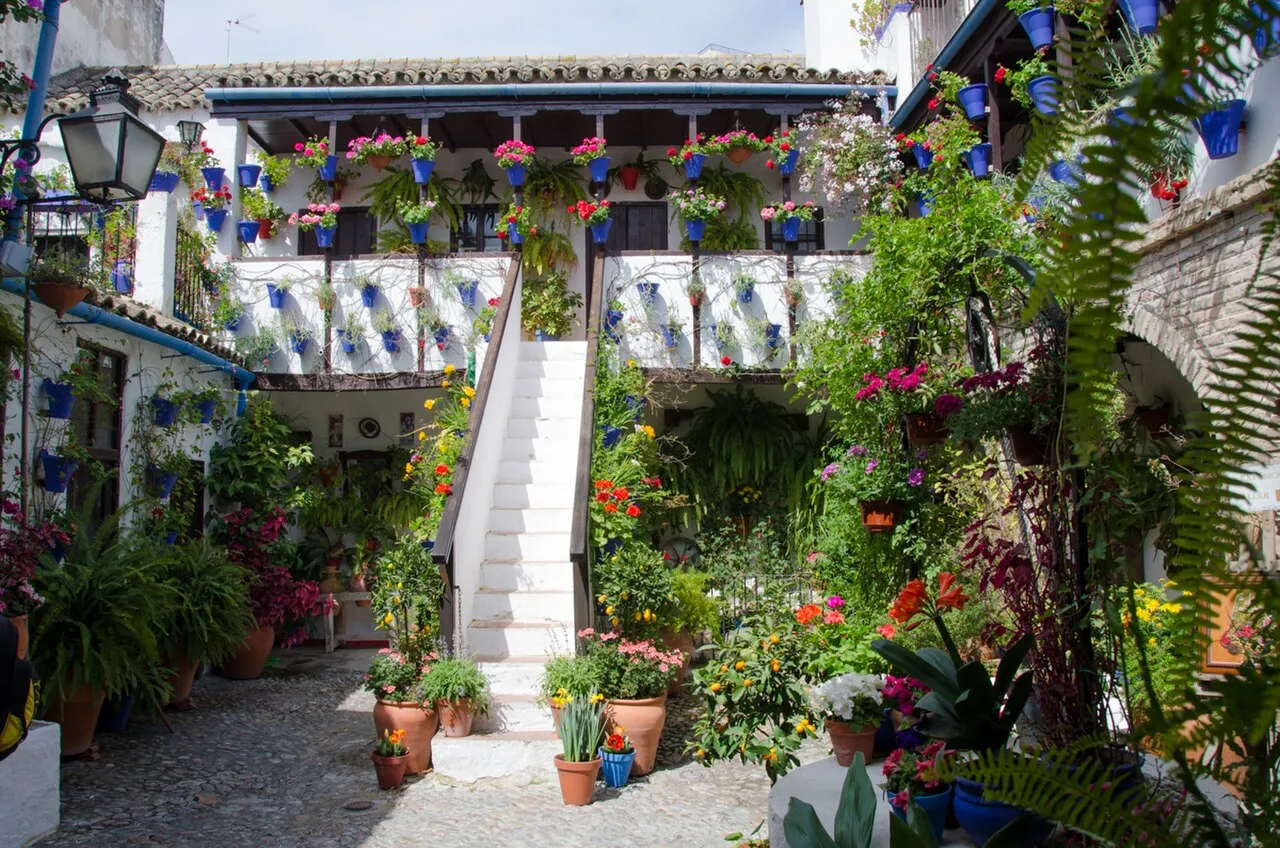
One of the most award-winning Córdoba courtyards in the city, home of the residents' association that came together in 1974 so that these corners would not disappear. White walls carpeted with flowerpots down to the last gap, a well, ferns and orange trees. What has to be understood is that this was not decoration: up to a dozen families lived here sharing a kitchen, a sink and a lavatory, and the shared courtyard was their whole life. It is watered with a long cane tipped with a tin, twice a day in summer. The Fiesta de los Patios has been Intangible Heritage since 2012.

🎧 The Alcázar, San Basilio and the Patios📍 View on Google Maps
7Almodóvar Gate

Almodóvar Gate

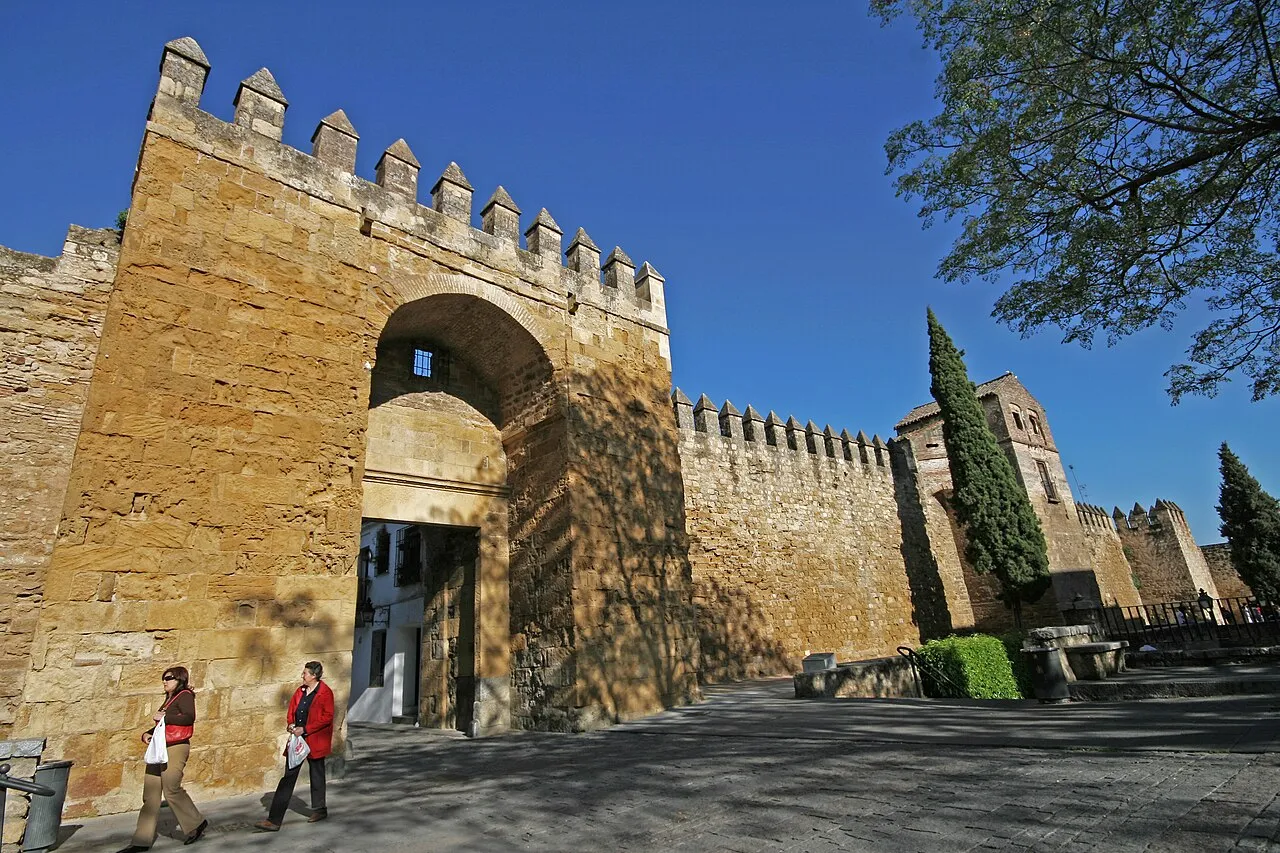
The only medieval gate still standing of the many Córdoba had, raised by the Muslims on Roman foundations and known then as Bab al-Yawz, the Gate of the Walnut Tree. Crossing it means going from the modern city into the Judería in a single step: behind you the avenues; in front, alleys two metres wide where the sun barely gets in. At its foot stands the statue of Seneca, born here in the year 4 BC, in the city that also gave us Averroes, Maimonides, Lucan and Góngora.

🎧 The Judería, the Synagogue, and Caliphal Córdoba📍 View on Google Maps
8Córdoba Synagogue

Córdoba Synagogue

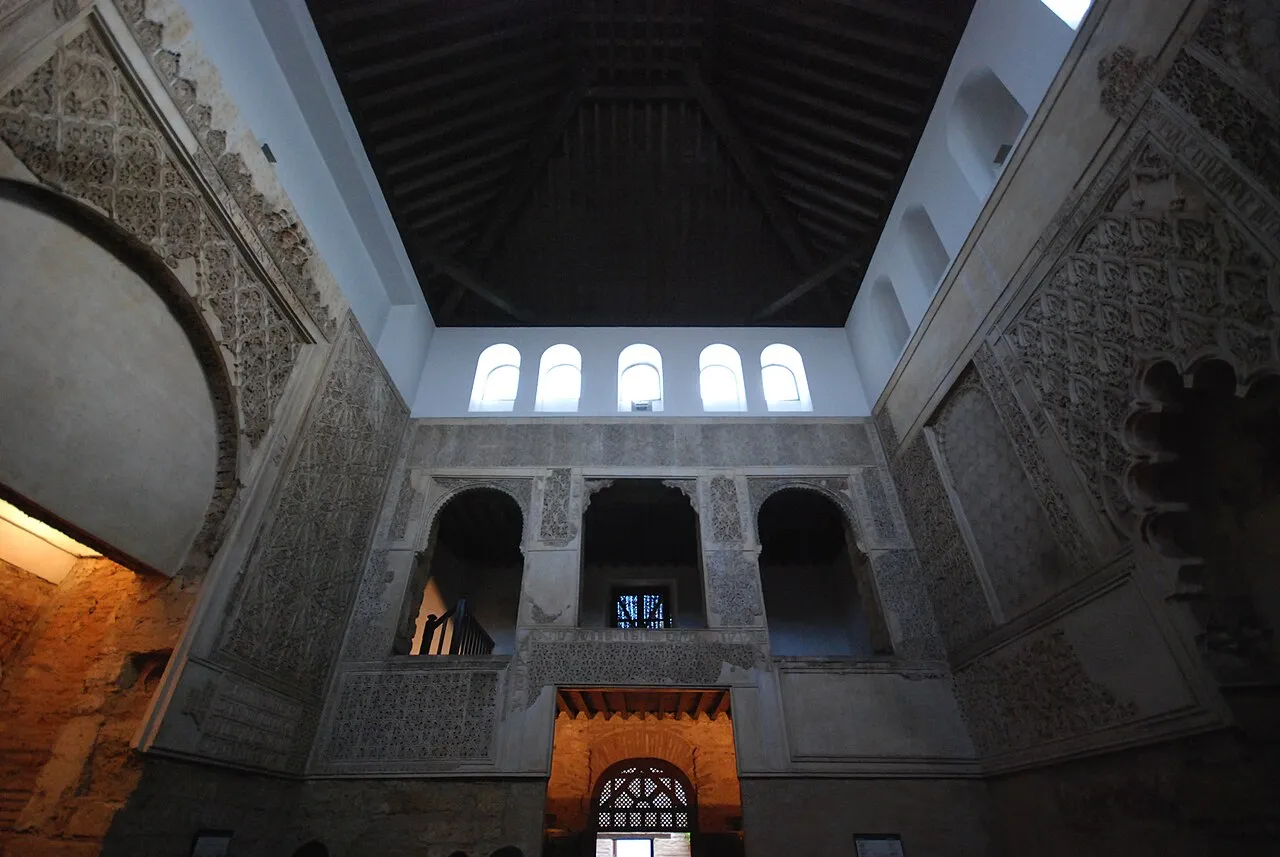
A modest front on calle de los Judíos hides one of the three medieval synagogues left in Spain and the only one in Andalusia. It is small, a square room of seven metres, and it is covered in Mudéjar plasterwork carved like lace, with verses of the Psalms in Hebrew running among the interlacing and the recess for the Torah Ark on the wall facing Jerusalem. It was built in 1315 and survived because, after the expulsion, it served as a rabies hospital, a chapel and a shoemakers' chapel. What it was went unidentified until 1885.

🎧 The Judería, the Synagogue, and Caliphal Córdoba📍 View on Google Maps
9Roman Temple

Roman Temple

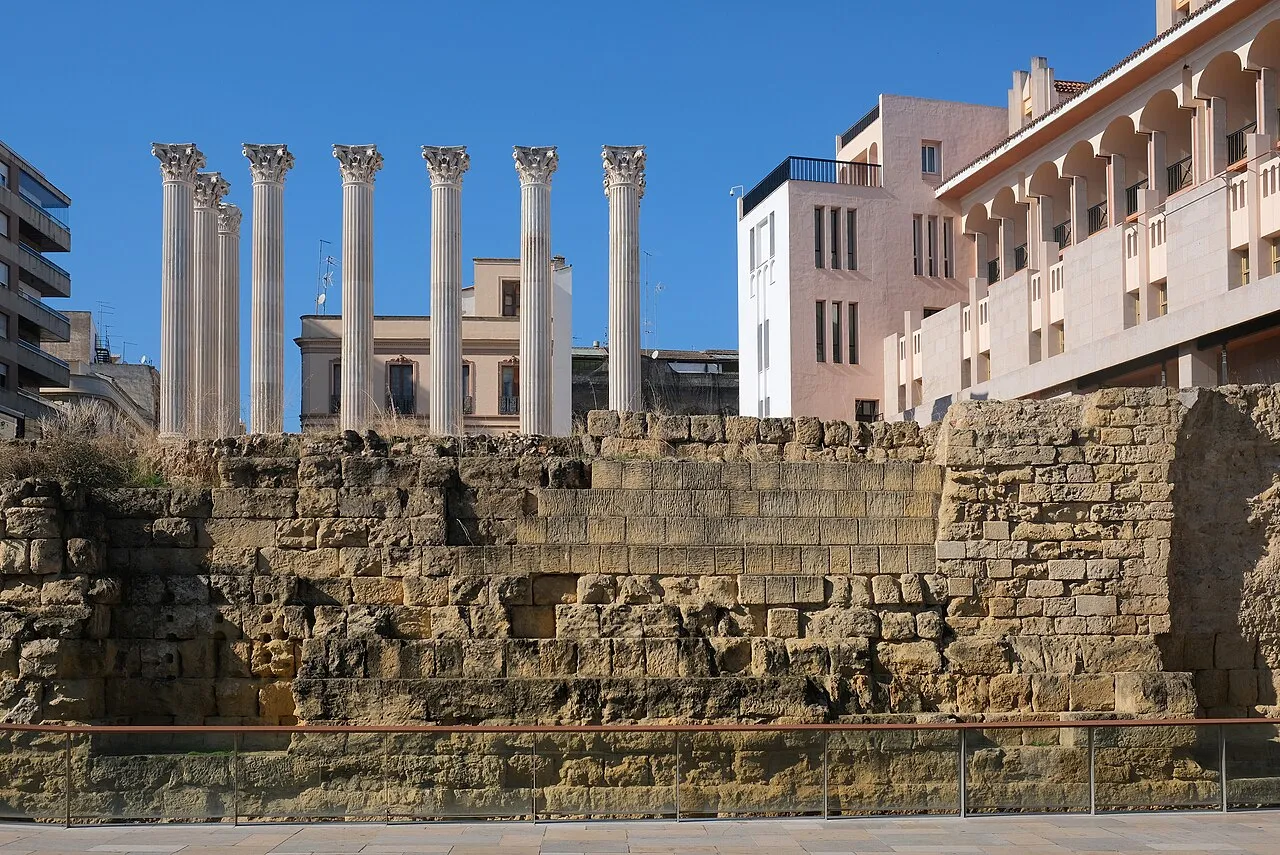
Six white Corinthian columns on a podium, in the middle of the modern centre and hard against the town hall. It is what remains of the great temple of the imperial cult of Corduba, capital of Baetica, and what was worshipped here was not a divinity but the deified emperors themselves. It lay buried under houses for centuries and turned up by chance in the fifties, during work to enlarge the municipal building: column drums began to appear among the rubble. The marble of the capitals was brought from Italian quarries.

🎧 Roman Córdoba: From the Temple to la Corredera📍 View on Google Maps
10Plaza de las Tendillas

Plaza de las Tendillas

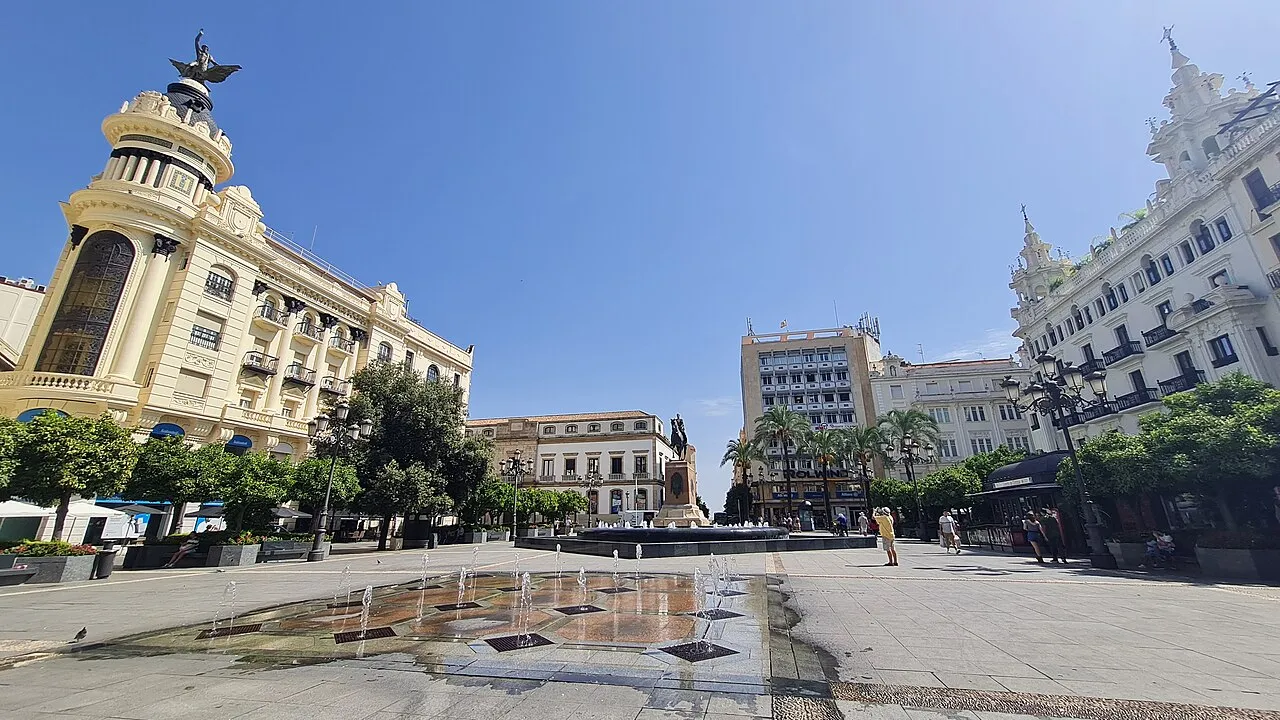
The most central square in Córdoba and the place where the city arranges to meet itself, opened in its present form in the twenties and surrounded by bourgeois buildings. In the middle, the Gran Capitán on horseback, with a detail still commented on a century later: the statue is bronze but the horse's head is white marble. And on one corner, a clock that strikes the hours with chords of Spanish guitar and beneath which half the city gathers every New Year's Eve. Roman roads turned up under the paving.

🎧 Roman Córdoba: From the Temple to la Corredera📍 View on Google Maps
11Cristo de los Faroles and Plaza de los Capuchinos

Cristo de los Faroles and Plaza de los Capuchinos

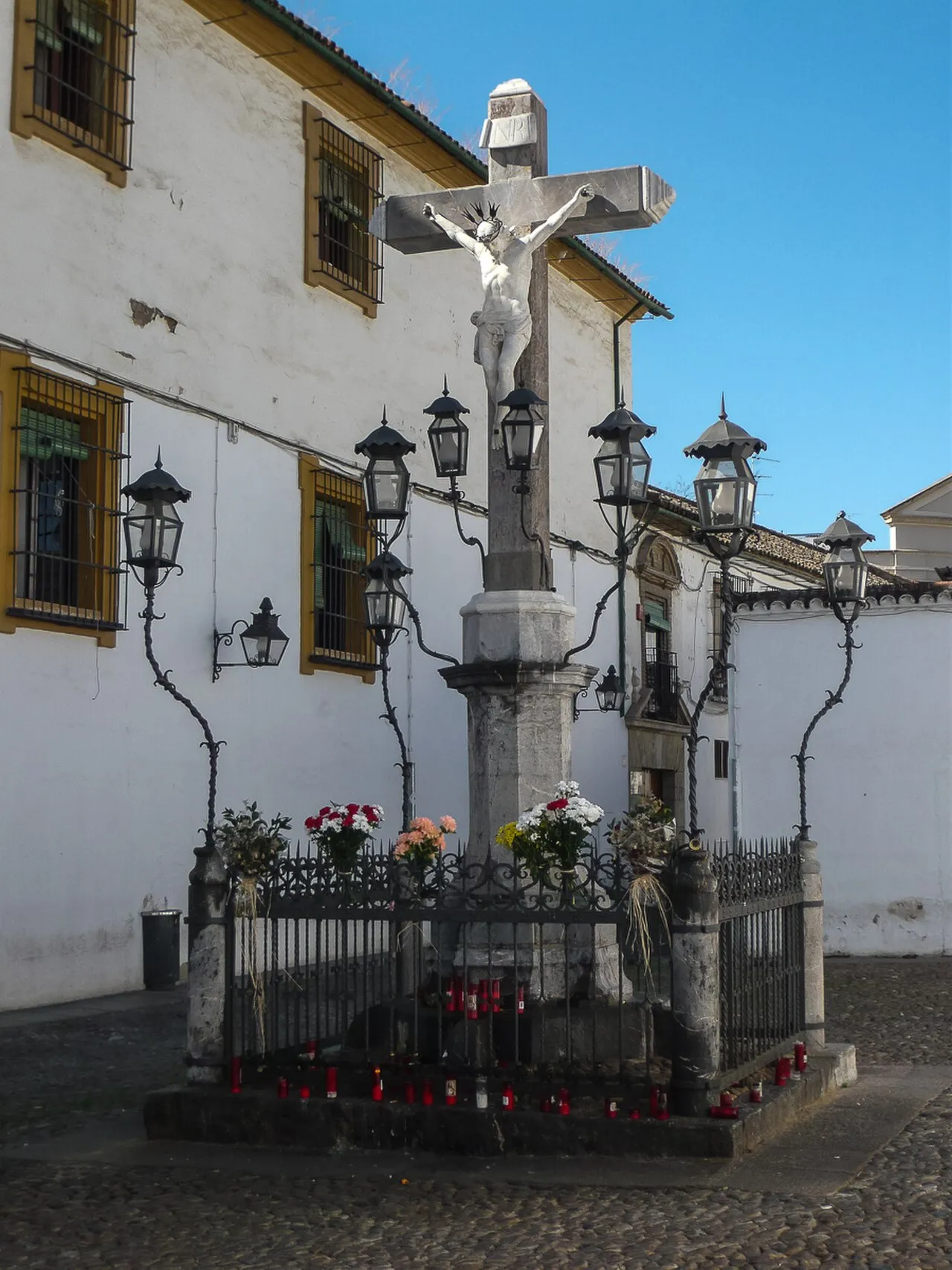
A bare, whitewashed square, with not a single balcony or terrace, and in the middle a Christ in stone surrounded by eight iron lanterns. Nothing else. Its power lies exactly in that emptiness, and the moment is dusk: when the lanterns are lit and the whitewash gives back the flame, the whole square turns warm and trembling. It was carved in 1794 and its real name is Christ of Mercy, but the lanterns ate the name. People who come in lower their voices without anyone asking them to.

🎧 Axerquía: Plaza del Potro, San Lorenzo and the Taverns📍 View on Google Maps
12Roman Mausoleums

Roman Mausoleums

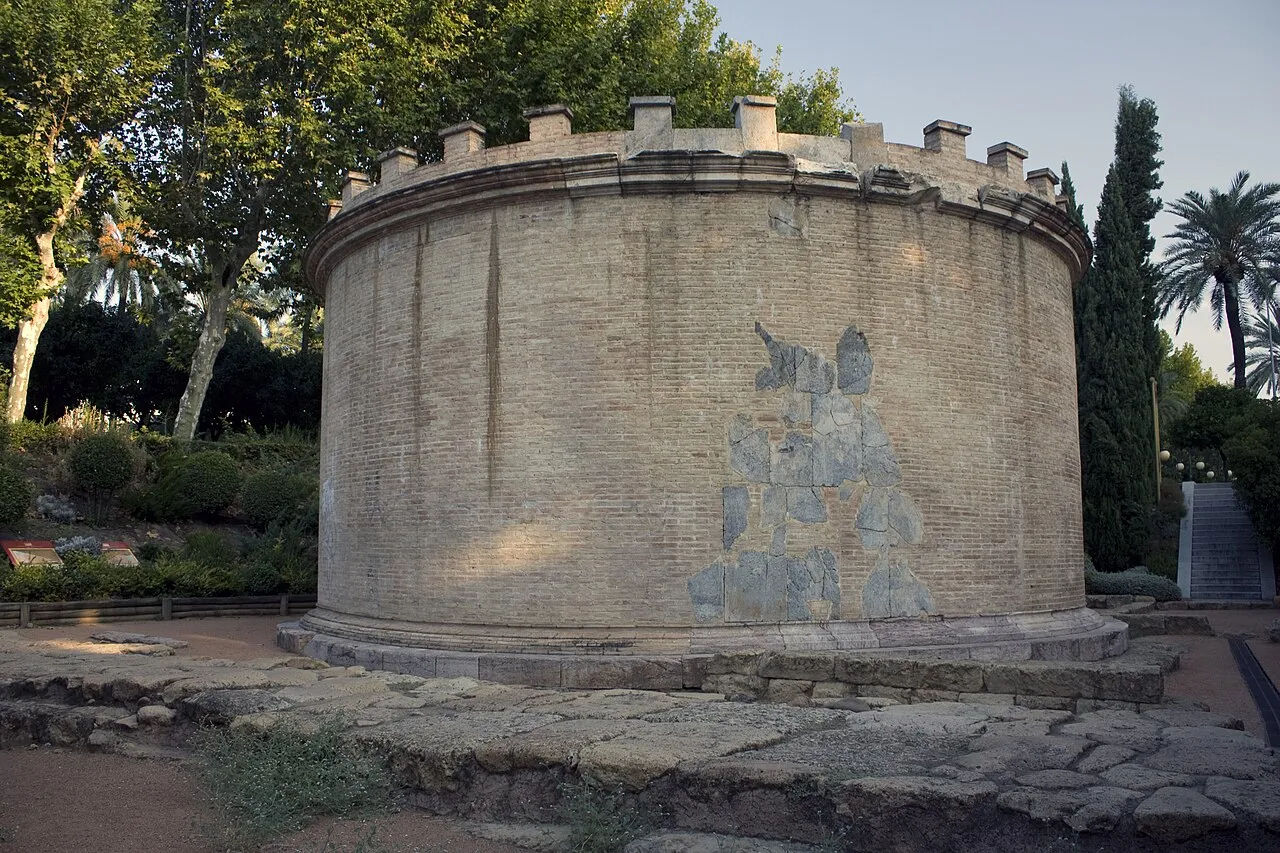
Two cylindrical stone towers in the Jardines de la Victoria, beside an avenue half of Córdoba walks along every day. They are monumental tombs of the first century that flanked the road to Seville, because Roman law forbade burial inside the urban precinct: whoever arrived at the city was met by an avenue of the sepulchres of powerful families. Their form copies the great circular mausolea of Rome, beginning with that of Augustus. One can be visited inside and explains Roman funerary rites.

🎧 Roman Córdoba: From the Temple to la Corredera📍 View on Google Maps

Walking tours in Córdoba

🎧 Axerquía: Plaza del Potro, San Lorenzo and the Taverns · Roman Córdoba: From the Temple to la Corredera · The Alcázar, San Basilio and the Patios · The Judería, the Synagogue, and Caliphal Córdoba · The Mezquita-Catedral and the Roman Bridge

Frequently asked questions

How many days do you need to see Córdoba?

One full day covers the essentials: the Mezquita-Catedral, the Roman Bridge, the Alcázar, the Judería and the Synagogue all fit into a historic centre you can walk. With two days you also fit in the courtyards of San Basilio, Roman Córdoba — temple, archaeological museum with the theatre, mausolea — the Plaza de la Corredera and the taverns to the north. And with three, Medina Azahara, the caliphal palace-city eight kilometres away, which deserves half a day.

When is the Córdoba Courtyards Festival?

The first two weeks of May. During those days, dozens of courtyards open free to the public in several quarters — San Basilio, Santa Marina, San Agustín, the Judería — with a municipal competition running alongside, and they are at their best for flowering. It has been Intangible Cultural Heritage of Humanity since 2012. The trade-off is the queues and the saturation: May is the densest month of the Córdoba calendar, with courtyards, crosses, the wine tasting and the fair.

Can you get into the Mezquita of Córdoba for free?

There is a free-access slot first thing in the morning, Monday to Saturday, for individual visitors. It is limited in time, does not give access to every area and usually has a fair number of people, but it exists and very few visitors know about it. Outside that slot, general entry is around 13 €, and the climb up the bell tower is paid for separately and works by time slots with limited capacity.

What is the best time to visit Córdoba?

Spring and autumn, without any doubt. May is the most spectacular month — courtyards, crosses, fair — and also the most saturated and the most expensive. Córdoba summers are extreme: forty degrees is passed frequently and visiting the city between June and September at midday is frankly inadvisable. Winter is mild, bright and with the monuments empty, and it is much underrated.

Is Medina Azahara worth it?

Very much, and it is the great absentee from almost every short trip to Córdoba. It is the palace-city Abd al-Rahman III had built in the tenth century eight kilometres from the city, sacked and abandoned barely seventy years later, and declared a World Heritage site in 2018. You visit the site and its museum, it takes half a day and there is a shuttle bus from the centre. To understand what the caliphate was, it is more eloquent than anything else.

Where do you eat in Córdoba without falling into traps?

Get away from the Judería and the immediate surroundings of the Mezquita, which is where the visitor prices are concentrated. The streets north of the Plaza de las Tendillas and the Santa Marina quarter have traditional Córdoba taverns, with salmorejo, flamenquín, rabo de toro, aubergines with honey and Montilla-Moriles wines. And the Mercado Victoria, in the Jardines de la Victoria, solves a quick meal at a reasonable price.
Córdoba on the map

The 12 must-sees, point by point.

🎧 With Viavoy

Walk Córdoba and listen at your own pace

Download Viavoy and walk Córdoba offline, whenever you like.

from 2,99 €· one-off payment
City Pass · 9,99 €3 days, all the tours in Córdoba
Find out more about Viavoy →
Viavoy app

In the Magazine

Keep discovering Córdoba

Itineraries

Córdoba in one day: the itinerary that makes every hour count

Neighbourhoods

La Axerquía: the other half of Córdoba, the one nobody visits

Culture

Roman Córdoba: the bridge, the temple and the theatre nobody visits

Neighbourhoods

The Jewish Quarter of Córdoba: the synagogue, Maimonides and the two-metre streets