A walled monumental city with no cables, no advertising and hardly any residents, with Almohad towers of earth, noble palaces lopped by the Catholic Monarchs and a Roman gate two thousand years old.
Cáceres is two cities separated by a wall. Outside, the Plaza Mayor with its terraces, where people live. Inside, an almost intact medieval and Renaissance enclosure: no advertising, no overhead cables, hardly any inhabitants, with the fortified houses of the lineages leaning on a twelfth-century Almohad wall that came down to us complete because the Christian nobility preferred to reuse it rather than pull it down. That ensemble, a World Heritage site, is why half the historical series of recent decades have been filmed here: nothing has to be covered up for it to look like the fifteenth century.
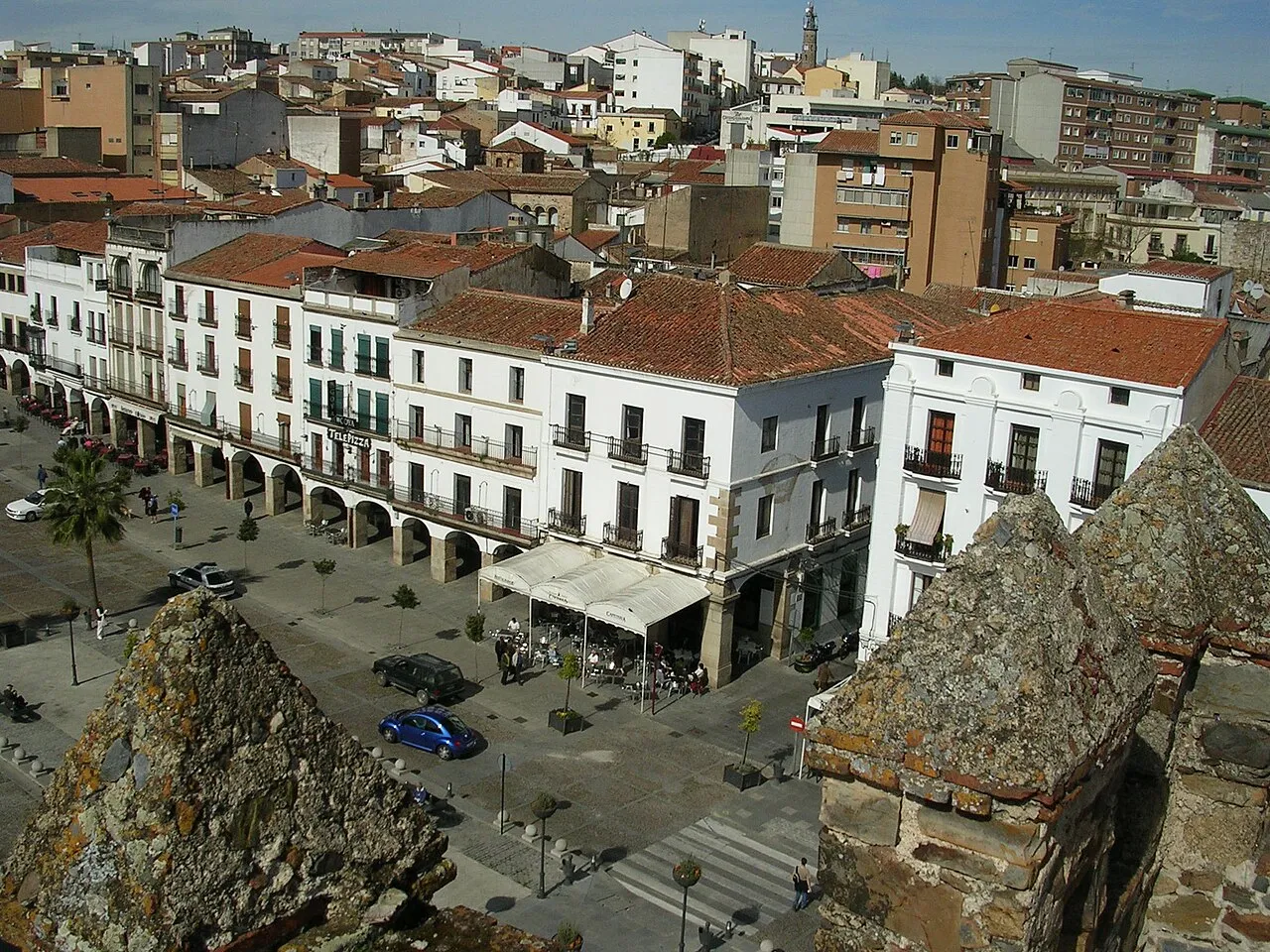
The point where the city splits in two. It is outside the wall, on a slope, with arcades, and at the far end a wall with towers behind which another world begins. Outside people live; inside, hardly anyone. At nightfall, with the enclosure lit, that contrast is the best of Cáceres.
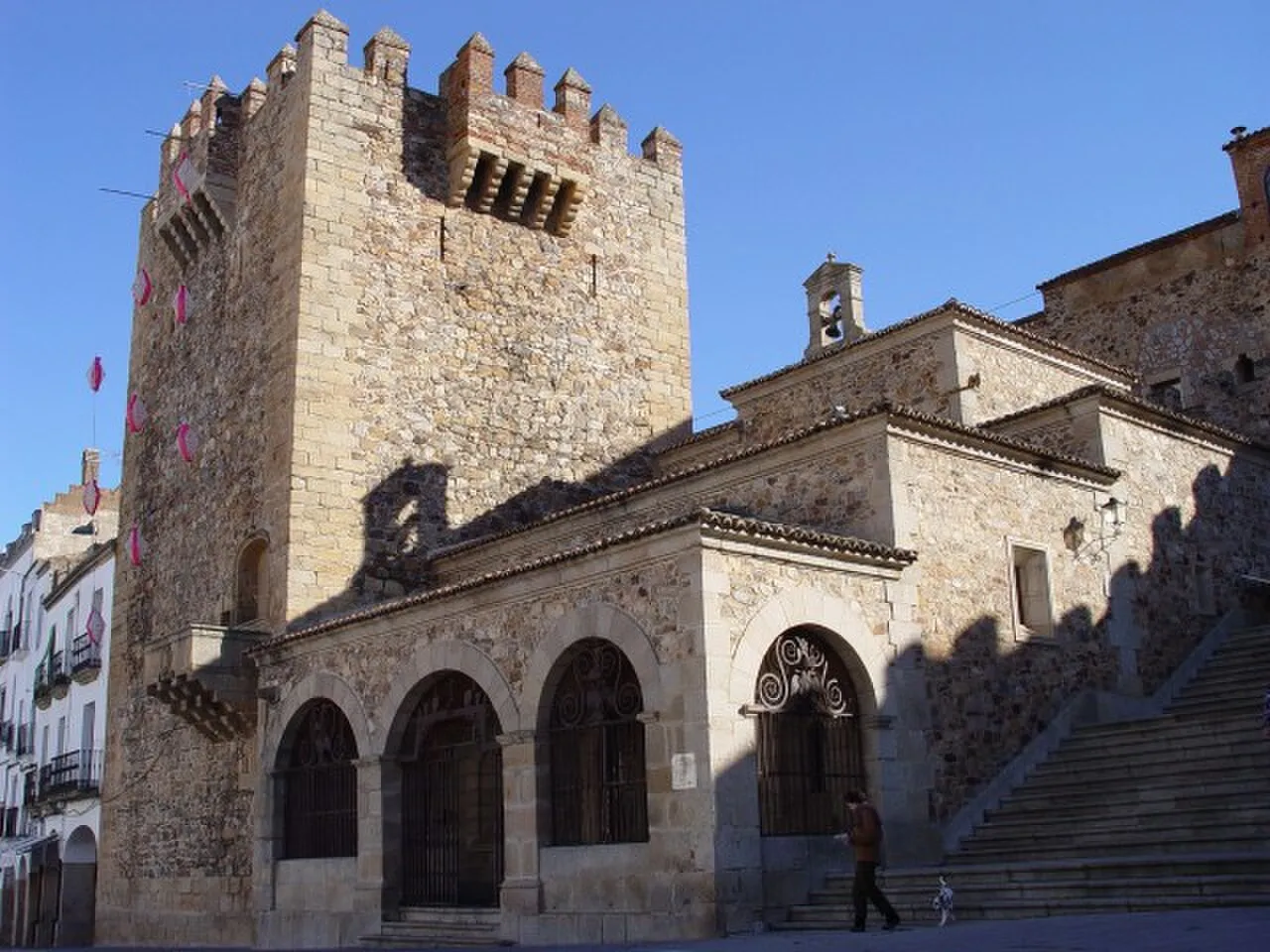
It is not stone: it is twelfth-century Almohad rammed earth, soil packed inside formwork, and it has stood for eight hundred years. The horizontal bands you can see are the joints between courses. The base, on the other hand, is reused Roman blocks. You can climb it, and from the top the whole visit orders itself.
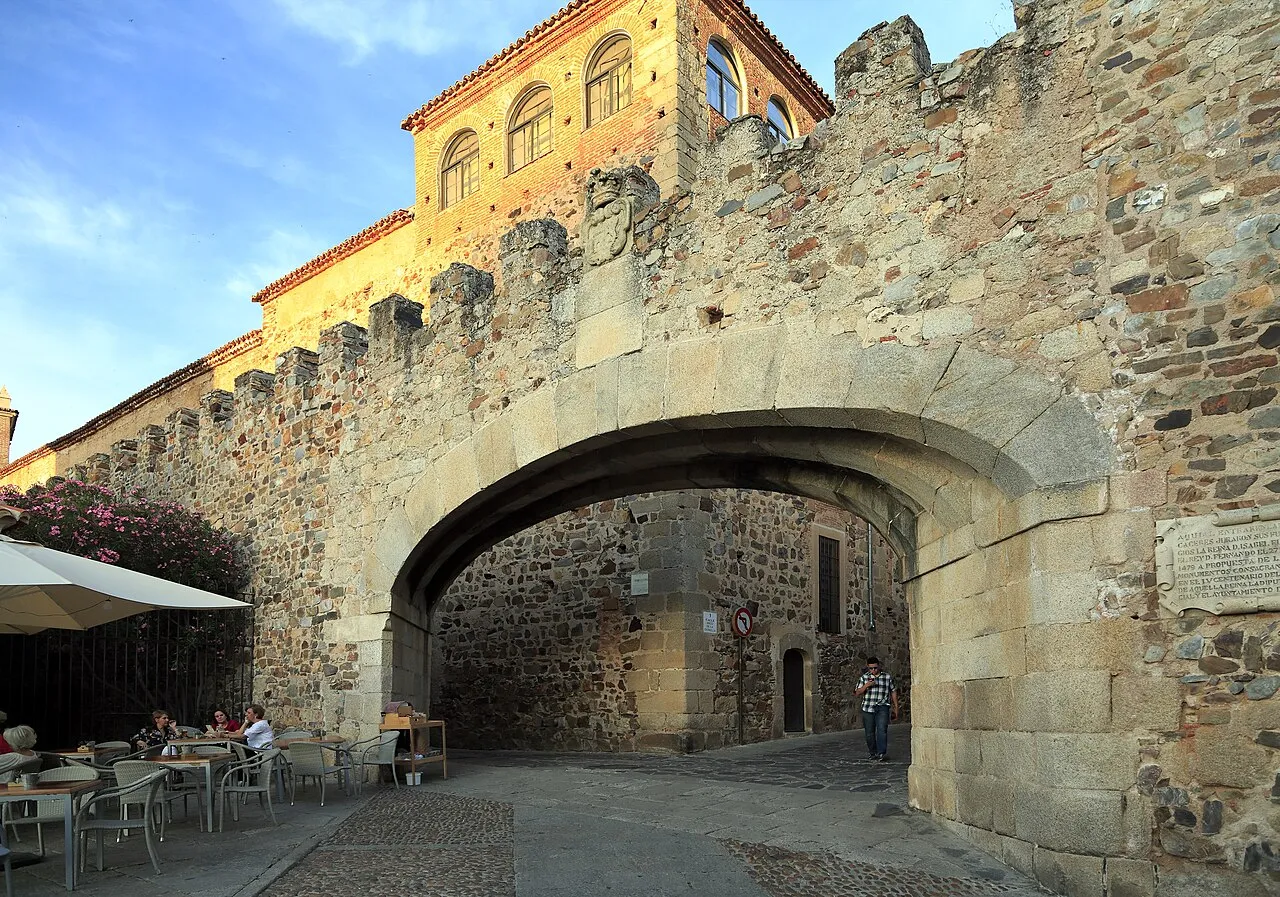
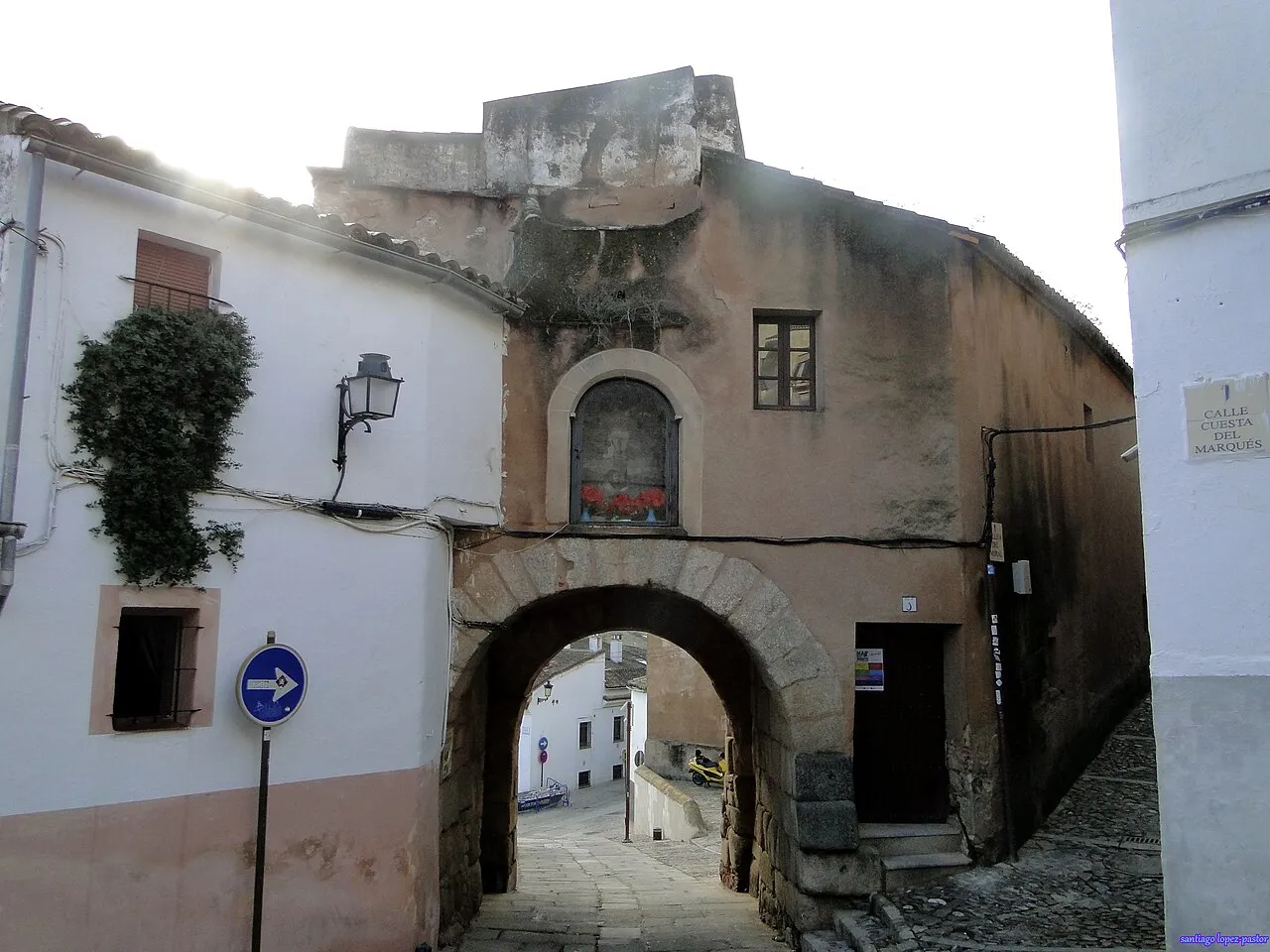
It was born of a practical problem: the nobility's carriages did not fit through the fifteenth-century gate. In 1726 Manuel de Lara Churriguera replaced it with a vaulted passage with an inner curve calculated so that a carriage could turn. The result is the best way into the enclosure.
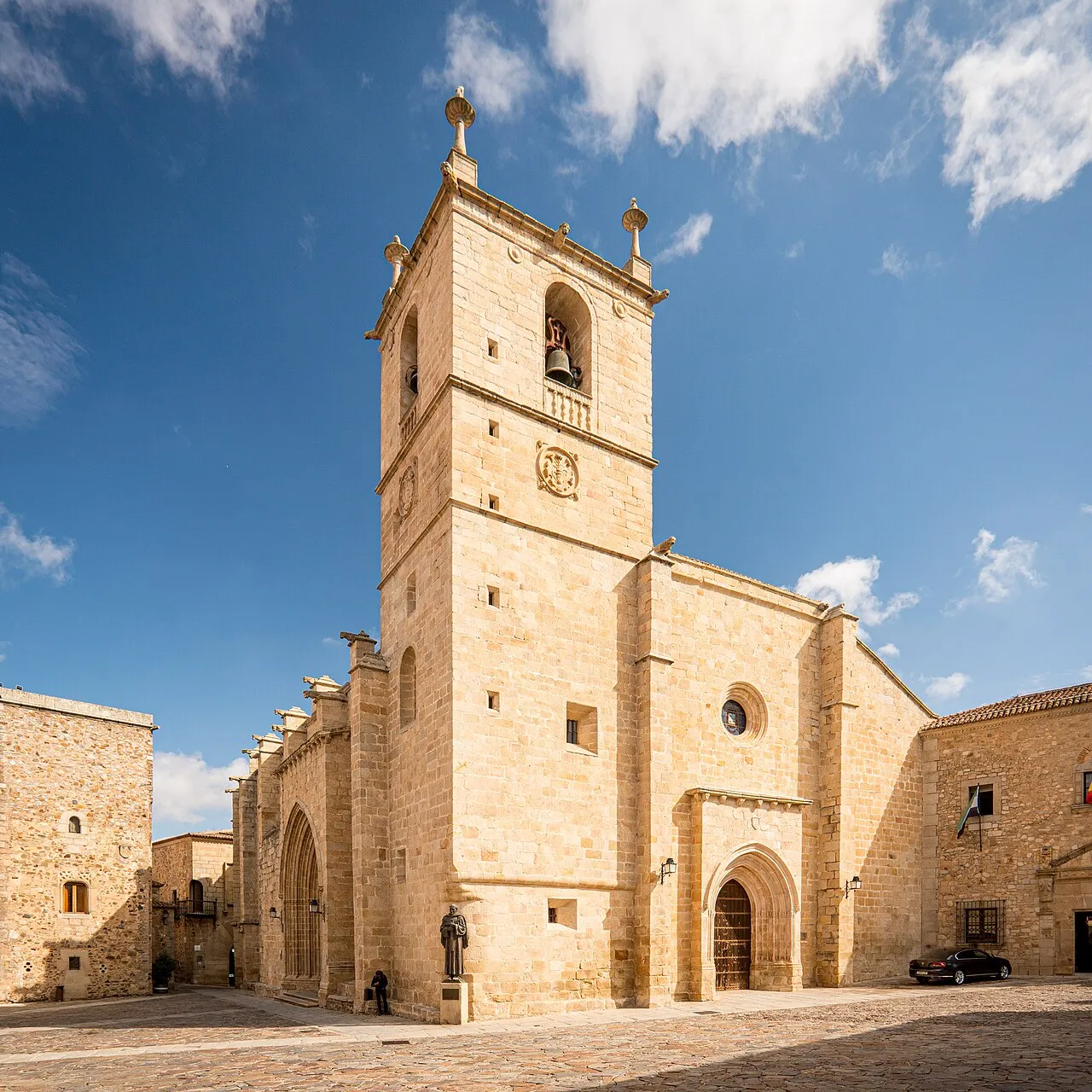
Late Gothic with the look of a fortress, and inside two pieces: a Plateresque altarpiece carved in bare wood, ungilded, and the fourteenth-century Black Christ, which goes out in the small hours of Good Friday in absolute silence. Go up the tower: it is the best viewpoint in the city.
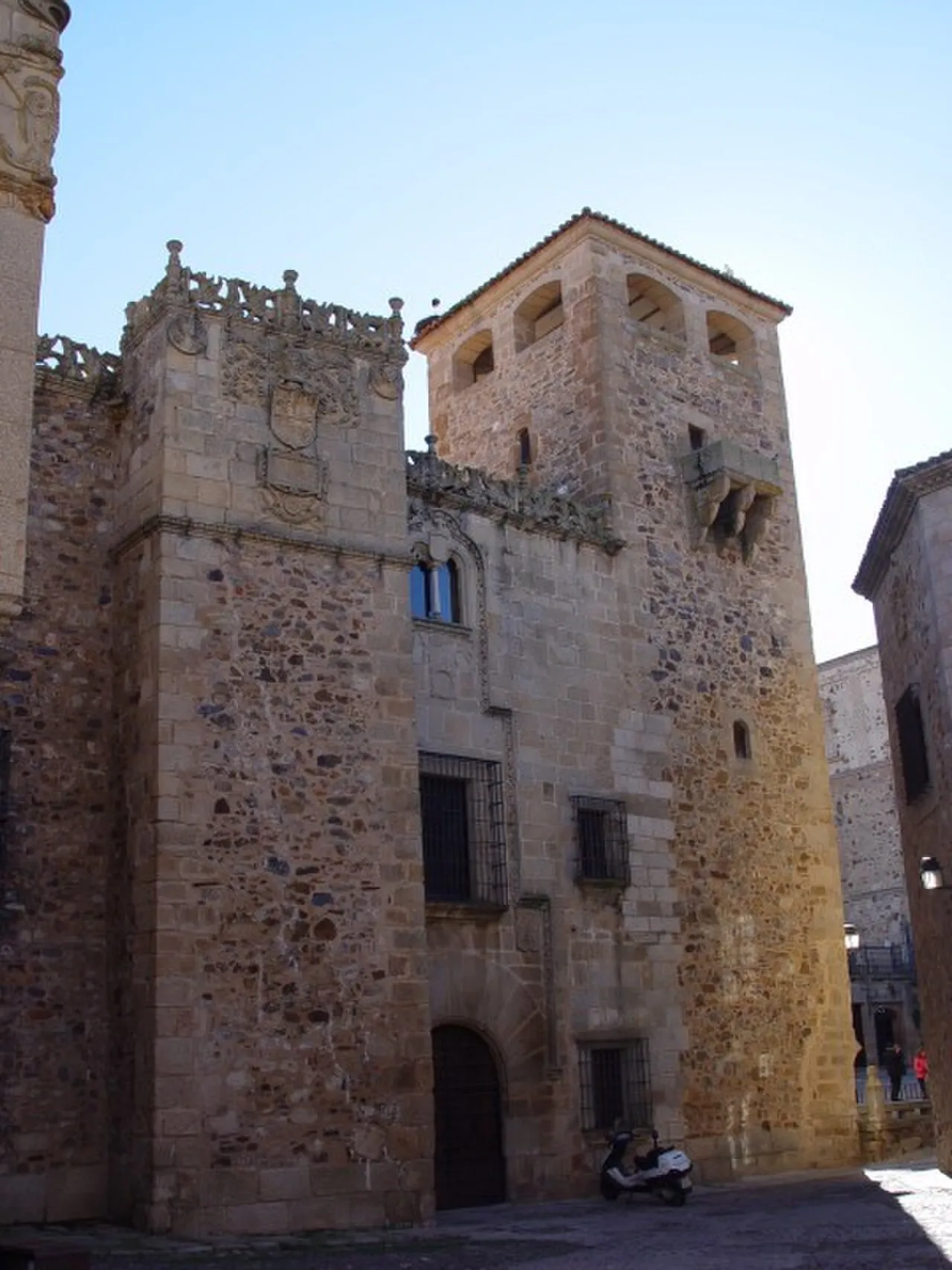
The only building in the enclosure allowed to display its coat of arms on the façade, by privilege of the Catholic Monarchs, who had the towers of every other lineage lopped. The façade mixes the fifteenth-century fortified house with a pierced Plateresque cresting. It is the best visitable interior in the city.
The oldest thing still standing: a Roman gate of the first century, the only survivor of Norba Caesarina. You recognise it by the size of the granite blocks, fitted almost without mortar, beside the small medieval stone. Next to it begins San Antonio, the old Jewish quarter.
The walled enclosure, some ten hectares of medieval and Renaissance ensemble declared a World Heritage site. Its rarity is that it came down to us unaltered: it has no advertising, no overhead cables and no modern street furniture, and hardly anyone lives inside. It is walked from end to end in a couple of hours.
How many days do you need?
One is enough for the whole enclosure with two indoor visits, the co-cathedral and the palace of the Golfines de Abajo. With two days you also fit in the Museo de Cáceres in the Casa de las Veletas, with its Almohad cistern, the San Antonio quarter and a night-time walk, which is when the ensemble is at its best.
Why is so much filmed here?
Because nothing has to be covered up. The monumental city has no contemporary elements in view, so a historical production can film with hardly any intervention. It was King's Landing in the seventh season of Game of Thrones, and before and after it has been the setting for many other series and films.
Can you go up on the wall?
The wall walk is not open as a continuous promenade, unlike Ávila. What you can climb are the towers: the Torre de Bujaco, with its interpretation centre, and the tower of the co-cathedral, which gives the best panorama of the enclosure. With those two you have the overall view.
When is the best time to visit Cáceres?
Spring and autumn. The Extremaduran summer comfortably passes forty degrees and the enclosure is stone with no shade, so at midday it is punishing. If you go in July or August, it is best to walk it first thing in the morning or at night, with the city lit.
What do you eat in Cáceres?
Extremaduran cooking from the dehesa: acorn-fed Iberian pork from the district, torta del Casar — a sheep's cheese eaten with a spoon, opened at the top — migas, grilled meats and Vera paprika in almost everything. The city also has a notable scene of chef-led cooking for its size.
Caceres on the map
The 6 must-sees, point by point.
🎧 With Viavoy
Walk Caceres and listen at your own pace
Download Viavoy and walk Caceres offline, whenever you like.
from 2,99 €· one-off payment
City Pass · 9,99 €3 days, all the tours in Caceres