The old town of Marbella: a medina with a Renaissance square on top
Caliphal wall, a city that surrendered without a fight in 1485 and Mudéjar coffered ceilings hidden under false ceilings for centuries. What almost nobody visits.
Marbella has a reputation for having no history, and it is false. Its old town keeps stretches of caliphal wall from the tenth century, a square laid out with a ruler in 1485 as a political act, doorways where three styles live together and several Mudéjar coffered ceilings that were hidden until seventy years ago. You can walk it in a good hour.
In 1485 Marbella was not taken by storm: it surrendered by agreement. There were no cannon shots and no destruction, and that is why its urban fabric survived far better than that of other cities in the kingdom of Granada.
Marbal-la, the Muslim city
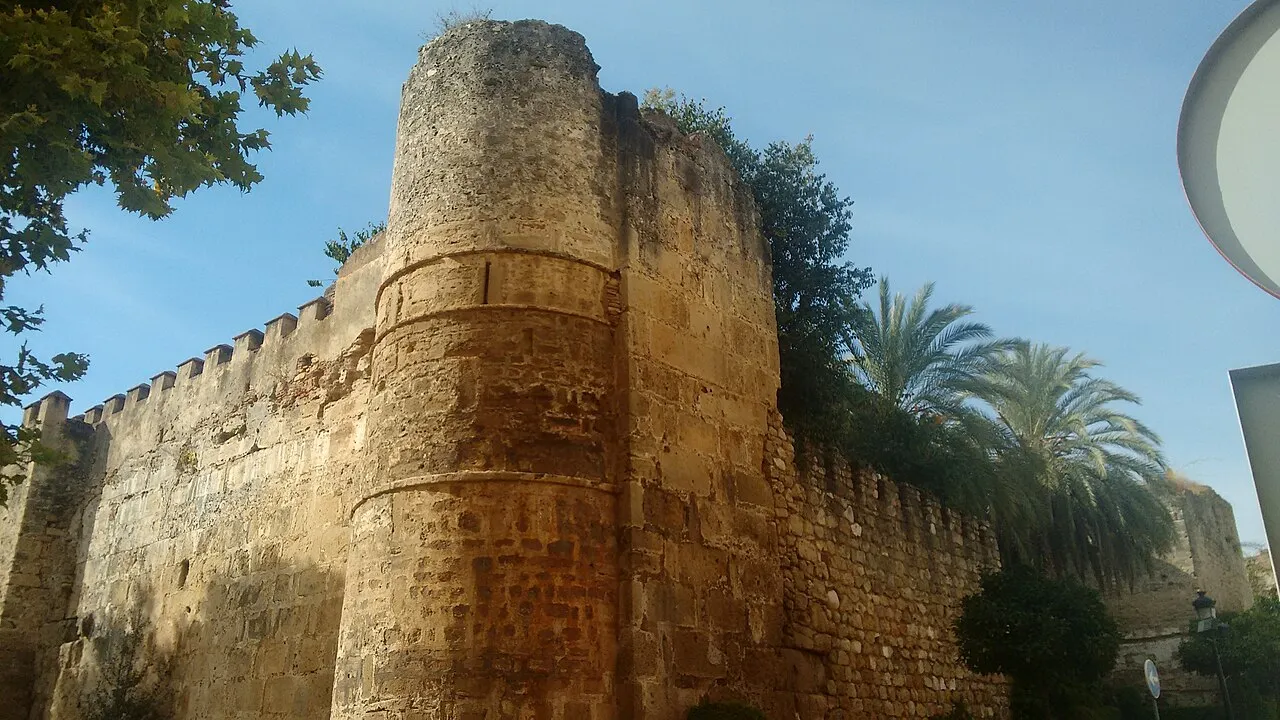
Before 1485 this was Marbal-la, a Muslim stronghold looking out to sea. Its alcazaba and its wall embraced the whole medina in an enclosure of some ninety thousand square metres, with more than twenty watchtowers and three gates: the Ronda gate, the Málaga gate and the Sea gate.
What is left of all that are isolated stretches of wall built into the houses, from the caliphal period, the tenth and eleventh centuries. And something less obvious but more complete: the layout. The narrow, broken lanes of the old town are nothing but the ghost trace of that Islamic plan.
The Arab engineers, when they built, reused stones from an earlier Roman building. In those walls there are literally layers of empires stacked on top of each other — Phoenicians, Romans, Arabs, Castilians — they all passed through here and they all left something.
And the name does not come from “mar bella”, the beautiful sea, however well it works on the postcards: that is a modern folk etymology. The place name is born in the Muslim period and its exact origin is still being argued over.
What you see is only one rib of the skeleton: fragments of curtain wall built into the houses, some with towers. It is not an enclosure you can visit, but a succession of remains that you have to go and find along the streets.
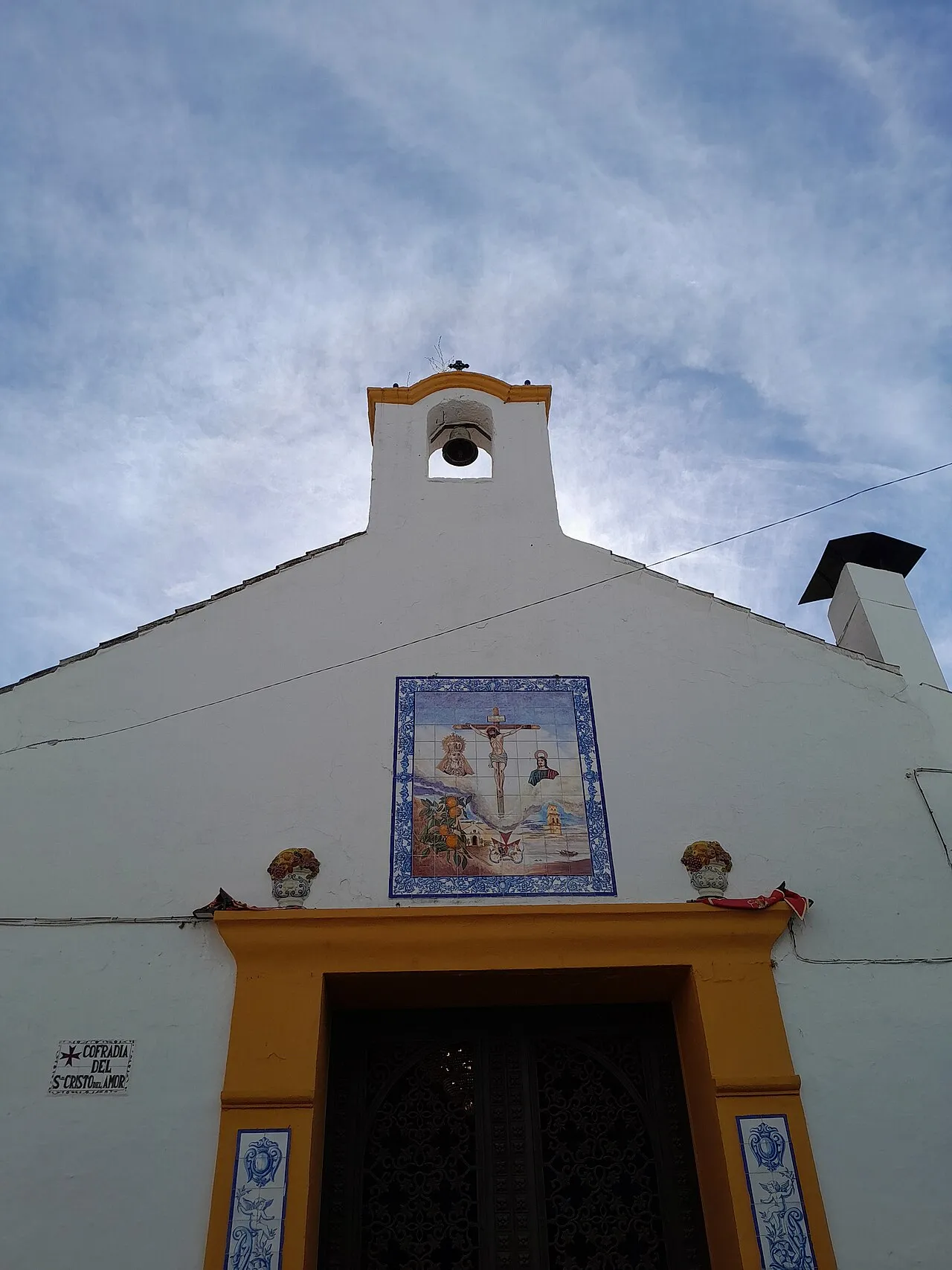
The oldest religious building in the city, from the fifteenth century. It was a parish church from 1505 and ended up demoted to a hermitage when the Encarnación won the contest. Curved Moorish tiles: popular techniques do not change with conquests.
Download the app and discover Marbella offline, whenever you like. Take the walking tour The Old Town and the Orange Square with a local guide in your ear.
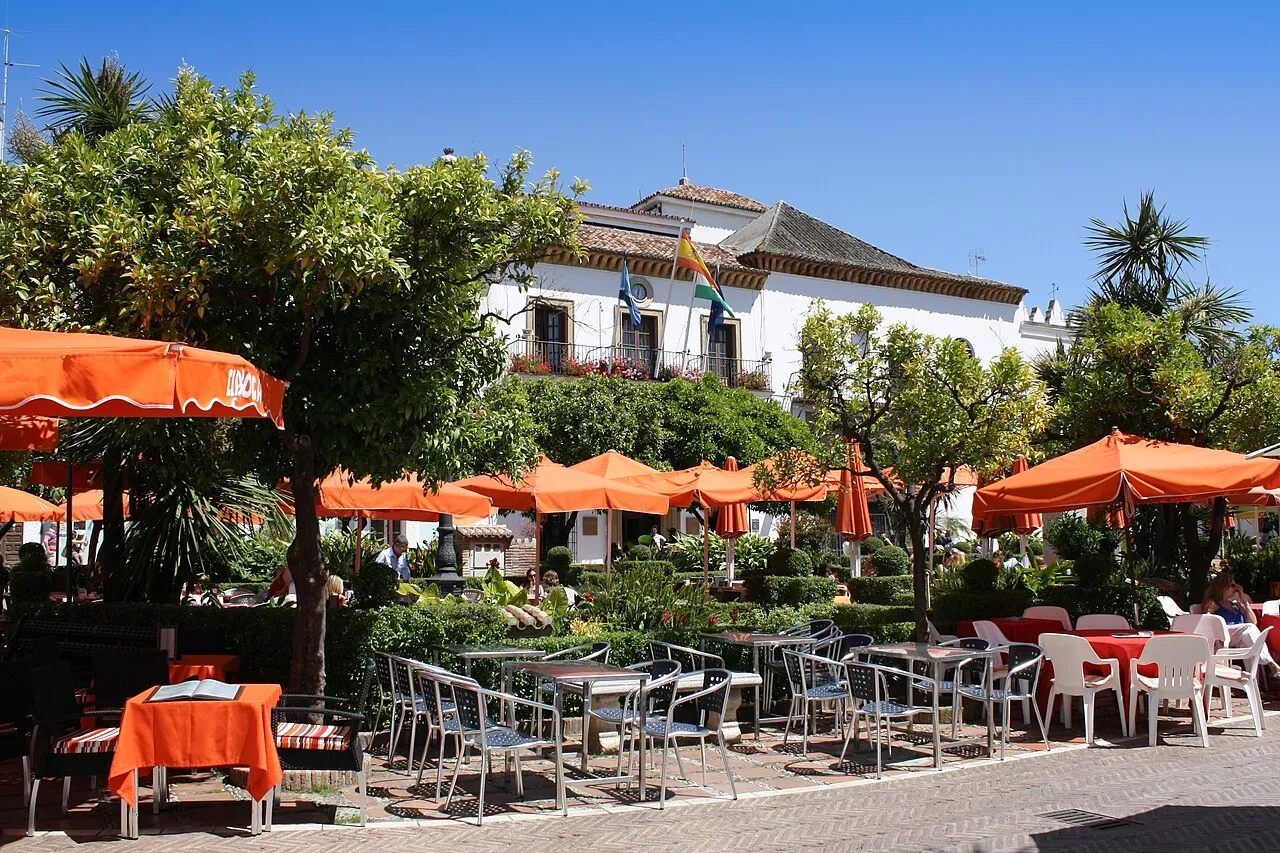
With the town just taken, it was decided to break up the tangle of lanes of the medina and to lay out here, with ruler and compass, a new and orderly space in the Italian Renaissance manner. That is the Plaza de los Naranjos, and it is no town-planning accident.
The reading is clear: a medina is a maze with no visible hierarchy; a rectangular square with institutional buildings around it is a legible space where power can be seen. Around it were placed civil government, justice and the Church, facing one another.
The buildings that close it document the process. The Casa del Corregidor, from 1552, has a Gothic pointed arch, Mudéjar decoration by Morisco master builders and a Renaissance crowning on the same doorway. Three worlds on one front.
And the City Hall, from 1568-1572, carries on its façade stone plaques in old Castilian that are the city's diary: the conquest of 1485, the arrival of the water in 1632, the reforms of 1779. That the water is commemorated alongside the conquest says a lot about what really mattered.
The ceilings that spent centuries covered up
The most valuable part of Marbella's heritage cannot be seen from the street: the Mudéjar coffered ceilings. Wooden ceilings assembled like a puzzle, almost without nails, with thousands of geometric pieces slotted together forming interlaces and eight-pointed stars.
They were made by the Muslim carpenters who went on working for the Christians after the conquest, and they are the material proof of a continuity that conquest stories usually leave out: the trades and the labour went on being the same for generations.
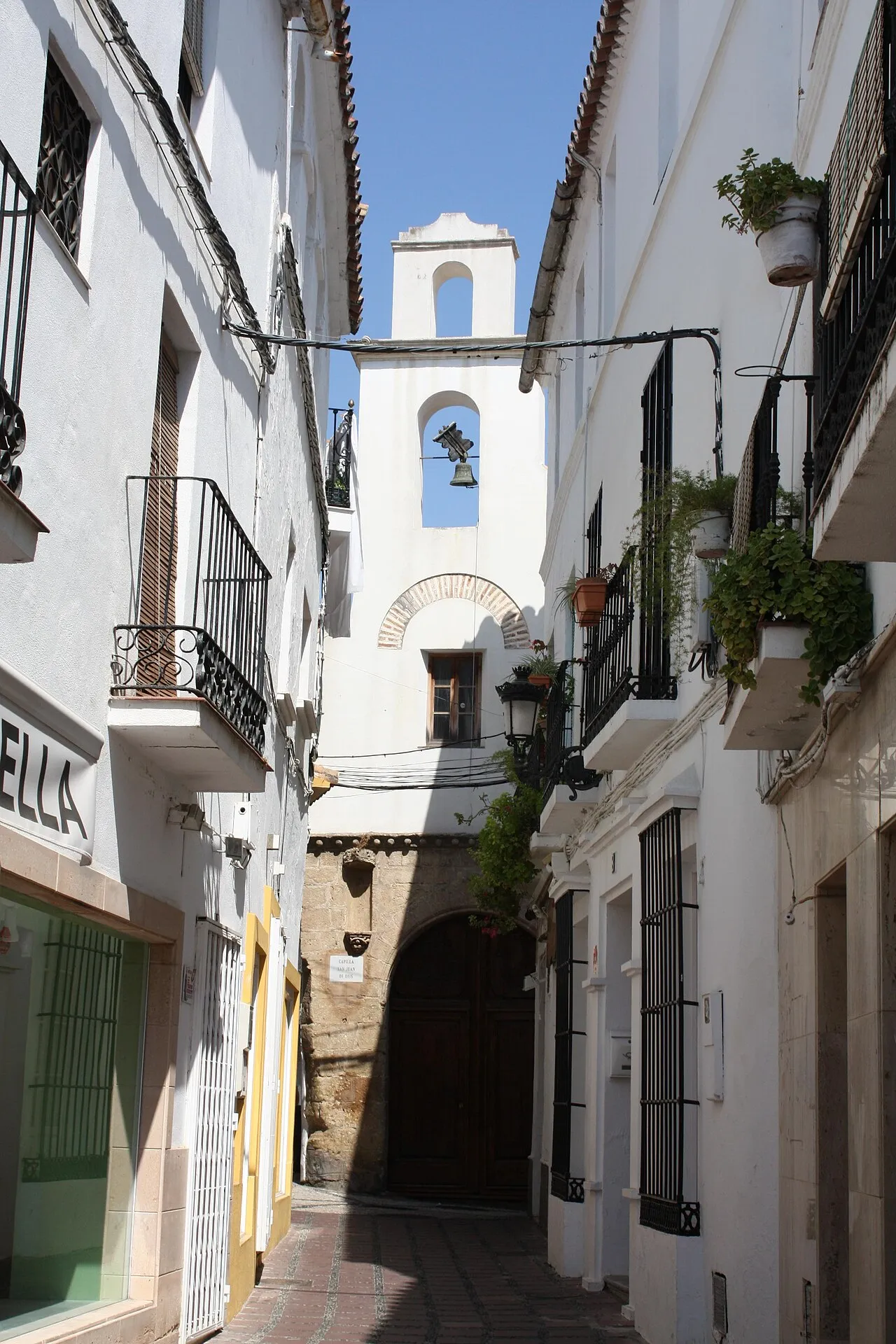
The one in the chapel of San Juan de Dios was covered over and forgotten beneath a false ceiling until the middle of the twentieth century, when it was rediscovered by chance, remains of wall painting included. That concealment is what saved it.
The other is in the Chapter Room of the City Hall, with paintings from around 1572, and access to it is more limited. Between the two, and with the Museo del Grabado, you cover everything in the old town that can be visited indoors.
It was part of the Royal Hospital founded by the Catholic Monarchs as soon as they conquered the town. On the doorway, the coat of arms with a pomegranate, a granada: the symbol of the kingdom just incorporated into Castile, a political signature in stone.
No. When the troops of Ferdinand the Catholic stood in front of it, the city surrendered by agreement, amicably. There was no siege, no cannon shots and no destruction, there was a capitulation. Thanks to that its urban fabric survived far better than that of the cities taken by storm, where the population was expelled and the housing razed.
Where does the name Marbella come from?
Not from “mar bella”, the beautiful sea, however lovely it looks on the postcards: that is a modern folk etymology laid on top centuries later. The name is born in the Muslim period, when the city was called Marbal-la, and its exact origin is still a matter of discussion among scholars.
Why is the Plaza de los Naranjos so regular?
Because it was deliberately laid out with ruler and compass in 1485, with the town just taken, to break the maze of lanes of the Muslim medina with an orderly Renaissance space. It did not grow on its own: it is a deliberate town-planning act with a clear political reading, and around it were placed the three powers of the town.
What is a Mudéjar coffered ceiling?
A wooden ceiling assembled like a puzzle, almost without nails, with thousands of geometric pieces slotted together forming interlaces and eight-pointed stars. They were made by the Muslim carpenters who went on working for the Christians after the conquest, and they are the material proof of a continuity that conquest stories usually leave out.
Where can you see those ceilings?
In the chapel of San Juan de Dios, whose ceiling was hidden beneath a false ceiling until the middle of the twentieth century and was rediscovered by chance, remains of wall painting included; and in the Chapter Room of the Casa Consistorial, with paintings from around 1572, although access to it is more limited.
How long does it take to see the old town?
A good hour for the outdoor route, and about two if you go into the interiors that can be visited: the Museo del Grabado, the chapel of San Juan de Dios and the hermitage of Santo Cristo. It is small — a few blocks of white streets — and all pedestrian.
Practical information
DurationA good hour for the outdoor route; two with the interiors that can be visited.
The Muslim partCaliphal stretches of wall from the tenth and eleventh centuries and the street layout, which follows the plan of the medina.
The squareLaid out with a ruler in 1485 as a political act, with the three powers around it.
The ceilingsChapel of San Juan de Dios and Chapter Room of the Town Hall. Check the opening hours.
AlsoMuseo del Grabado, in the Hospital Bazán, with more than four thousand works.
WhenEarly or at the end of the afternoon: at mealtimes the terraces take up the whole square.
On the map
🎧 With Viavoy
Walk Marbella and listen at your own pace
Download Viavoy and walk Marbella offline, whenever you like.
from 2,99 €· one-off payment
City Pass · 9,99 €3 days, all the tours in Marbella