León on the Camino de Santiago: where it comes in and where it leaves
The Way (Camino) · León

León on the Camino de Santiago: where it comes in and where it leaves

One of the great stops on the Camino Francés. The exact route through the city, what there is at each point and why the Puerta del Perdón at San Isidoro was a shortcut to the jubilee.

8 min read · Updated for 2026
🎧 On the walk Monumental León: the cathedral of light, San Isidoro and the Barrio Húmedo

The Camino Francés, the French Way, crosses León from east to west and does so through the exact centre of the historic quarter, passing beside the city's two greatest monuments. That is no coincidence: the route and the city grew up together over centuries, and a good part of what you visit today was built precisely because pilgrims came this way.

If you are walking the Camino, León is one of the stops where staying a full day pays off most. And if you are not, following its route through the city is still the best itinerary there is.

The route inside the city

The Camino comes in from the east, from Puente Castro, crosses the river Torío and enters the old town along calle de Puerta Moneda, in the lower part of the historic quarter. That first stretch passes beside the plaza del Grano, cobbled with river stones, which is the prettiest square in León and one that almost nobody reaches.

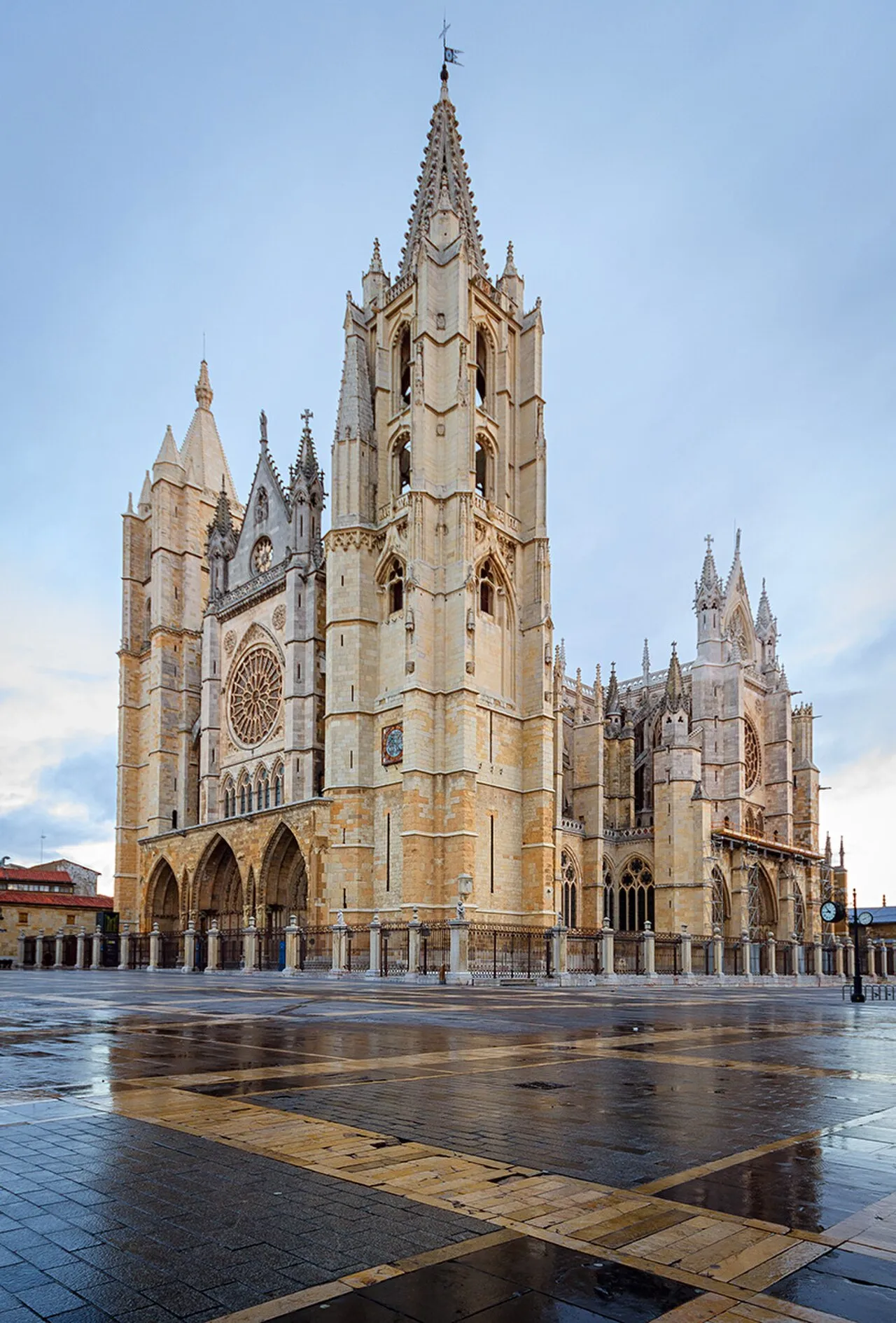
It then climbs towards the plaza Mayor and calle Ancha, the main artery of the centre, and comes out on the plaza de Regla, in front of the west front of the cathedral. That is the high point of the urban stretch and where many pilgrims make the long stop of the day.

It continues along calle del Cid to the Royal Collegiate Church of San Isidoro, skirting the surviving stretch of city wall with its towers, and leaves the old town along calle Renueva towards the plaza de San Marcos.

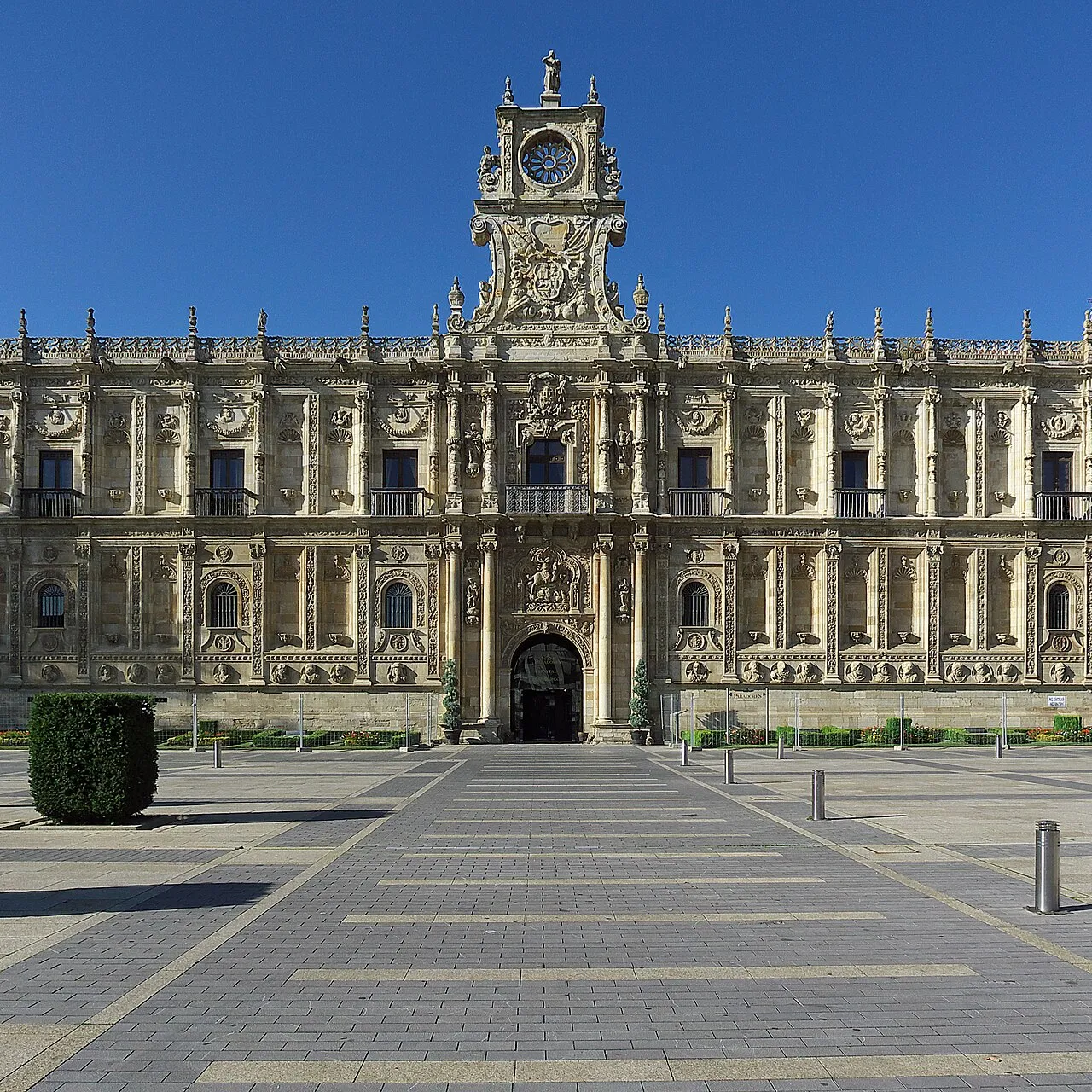
The urban end is the Hostal de San Marcos and the bridge over the Bernesga. From there the stage towards Villadangos or Villar de Mazarife begins, out in open country.

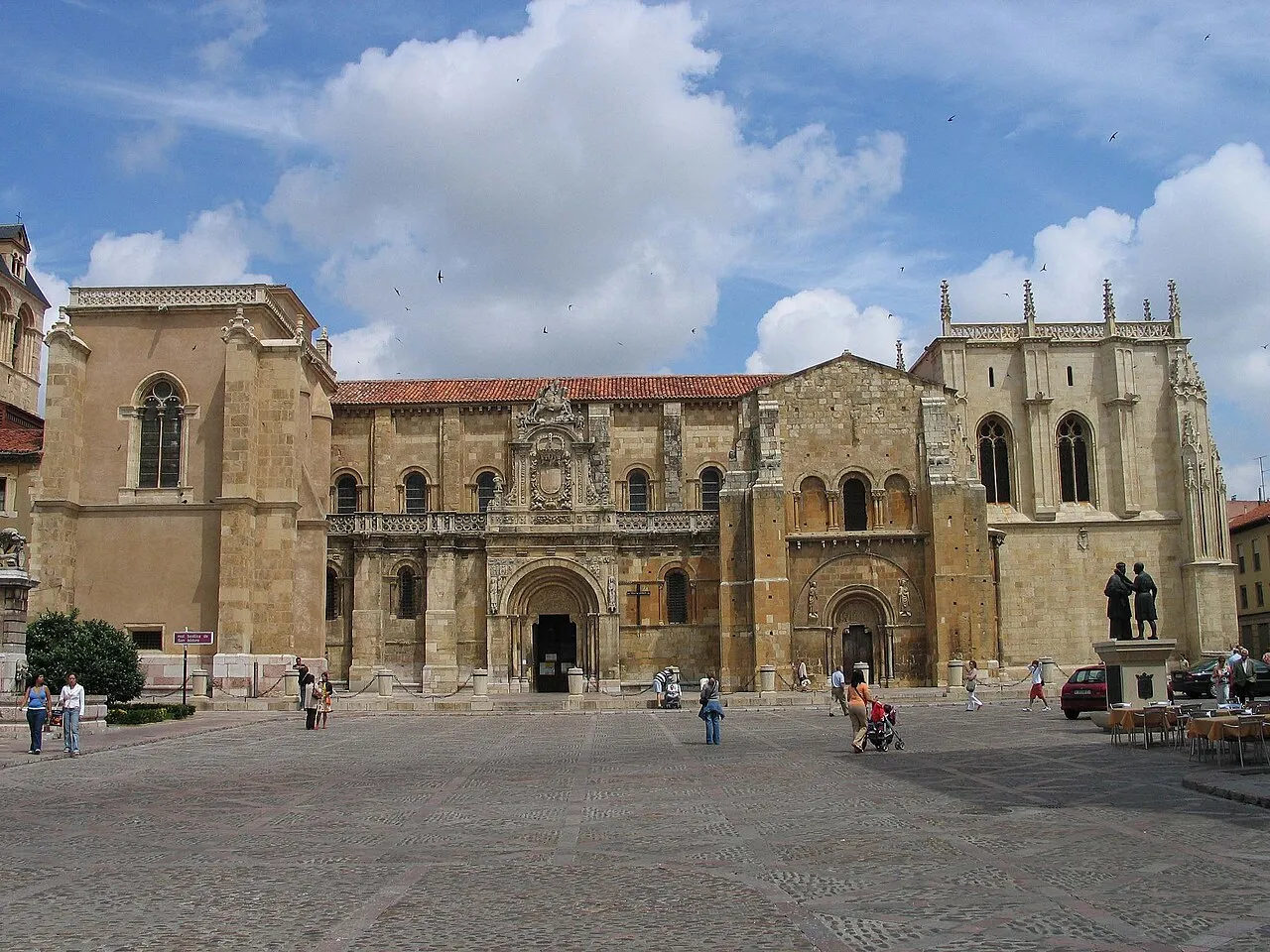
1Royal Collegiate Church of San Isidoro

Royal Collegiate Church of San Isidoro

📍 Calle del Cid

Its Puerta del Perdón was one of the very few doorways in the world through which a pilgrim could win the jubilee without reaching Santiago. That made León an obligatory stop and explains a good part of its medieval growth.

2Hostal de San Marcos

Hostal de San Marcos

📍 The way out towards the Bernesga

It began in the twelfth century as a hospital for the poor and for pilgrims on the Camino, beside the bridge where the route leaves the city. What you see today is the 1514 rebuilding as the mother house of the Order of Santiago, which protected these routes.

🎧 With Viavoy

Explore Leon at your own pace

Download the app and discover Leon offline, whenever you like. Take the walking tour Monumental León: the cathedral of light, San Isidoro and the Barrio Húmedo with a local guide in your ear.

Find out more about Viavoy →

Why León grew with the Camino

The Puerta del Perdón at San Isidoro is the fact that explains most. It was one of the very few doorways in the Christian world through which a sick or disabled pilgrim could win the jubilee without reaching Santiago, and that turned León into a destination in itself, not just a stage.

Around that status an infrastructure was built: pilgrim hospitals, hostelries, charitable brotherhoods and military orders devoted to protecting the route. San Marcos began exactly like that, as a twelfth-century hospital beside the bridge out of the city.

The flow of pilgrims also brought money, ideas and people from outside. The Gothic cathedral on a French model is partly explained by that continuous contact with northern Europe: the masters, the models and the fashions travelled the same routes as the walkers.

And it brought whole quarters. The areas serving pilgrims — taverns, inns, smithies, money changers — clustered along the route, and much of the street pattern of the old town still answers to that logic.

3León Cathedral

León Cathedral

📍 Plaza de Regla

The high point of the Camino's passage through the city and where many pilgrims make the long stop of the day. Its French Gothic model is partly explained by the continuous contact with northern Europe that the route itself made possible.

Frequently asked questions

Where does the Camino run inside León?

It comes in from the east from Puente Castro, enters the old town along calle Puerta Moneda beside the plaza del Grano, climbs to the plaza Mayor and calle Ancha, passes in front of the cathedral, continues along calle del Cid to San Isidoro and leaves by Renueva towards San Marcos and the bridge over the Bernesga.

What is the Puerta del Perdón?

One of the doorways of the Royal Collegiate Church of San Isidoro, and one of the very few in the Christian world through which a sick or disabled pilgrim could win the jubilee without reaching Santiago. That turned León into a destination in itself and explains a good part of its medieval growth.

Is it worth stopping a full day in León?

It is one of the stops where it pays off most. It is a big city, with chemists, gear shops, chiropodist, laundry and transport, and with enough to see — cathedral, San Isidoro, Casa Botines, San Marcos — for the rest day not to be time wasted. On top of that, the tapas run in the Barrio Húmedo is a cheap and complete dinner.

Are there albergues in León?

Yes, public and private ones in the old town, as well as the whole normal range of hotels, including the parador hotel at San Marcos itself at the other end of the scale. From June to September it is worth booking or arriving early, because León also receives city tourism and occupancy is high.

Which is the best variant for leaving León?

There are two: the Villadangos del Páramo one, which runs alongside the road, and the Villar de Mazarife one, quieter and slightly longer. Most experienced walkers recommend the second, because the first is noisy and monotonous, although both are long and flat.

Does the Camino route work as a sightseeing itinerary?

It is the best there is. Crossing León from east to west, entering by the plaza del Grano and leaving by San Marcos, takes you past absolutely everything that matters in the city and has a thousand years of logic behind it. You do not need to be walking the Camino to follow it.

Practical advice for pilgrims

León is one of the stops where a rest day pays off most. It is a big city, with everything that implies — chemists, gear shops, chiropodist, laundry, transport — and with enough to see for the day not to be time wasted.

There are public and private albergues, pilgrim hostels, in the old town, as well as the whole normal range of hotels. In high season, from June to September, it is worth booking or arriving early, because León also receives city tourism and occupancy is high.

The stage out of the city is long and fairly monotonous, with two variants: the Villadangos one, alongside the road, and the Villar de Mazarife one, quieter and slightly longer. Most experienced walkers recommend the second.

And a note for anyone not walking the Camino: following its route through the city from east to west, entering by the plaza del Grano and leaving by San Marcos, is still the best possible itinerary through León. It passes everything that matters and has a thousand years of logic behind it.

Practical information

Coming inFrom the east through Puente Castro and calle Puerta Moneda, beside the plaza del Grano.
The routePlaza Mayor, calle Ancha, cathedral, calle del Cid, San Isidoro, Renueva, San Marcos.
Going outThe bridge over the Bernesga, in front of San Marcos, towards Villadangos or Villar de Mazarife.
JubileeThe Puerta del Perdón at San Isidoro allowed it to be won without reaching Santiago.
RestOne of the best stops for a day off: a big city with plenty to see.
BookingFrom June to September it is worth booking or arriving early: occupancy is high.
On the map

🎧 With Viavoy

Walk Leon and listen at your own pace

Download Viavoy and walk Leon offline, whenever you like.

from 3,99 €· one-off payment
City Pass · 9,99 €3 days, all the tours in Leon
Find out more about Viavoy →
Viavoy app

Keep reading

More articles

Itineraries

León in a day: the cathedral, San Isidoro and the Barrio Húmedo

Art & architecture

The stained glass of León Cathedral: how to look at it

Food & drink

The Barrio Húmedo of León: how the tapas run works here

Food & drink

Eating in León: cecina, botillo and cocido maragato