A tiny beach between two fortresses, a kilometre-long causeway laid over the sea and the best sunsets on the Atlantic. What to see and what time to go.
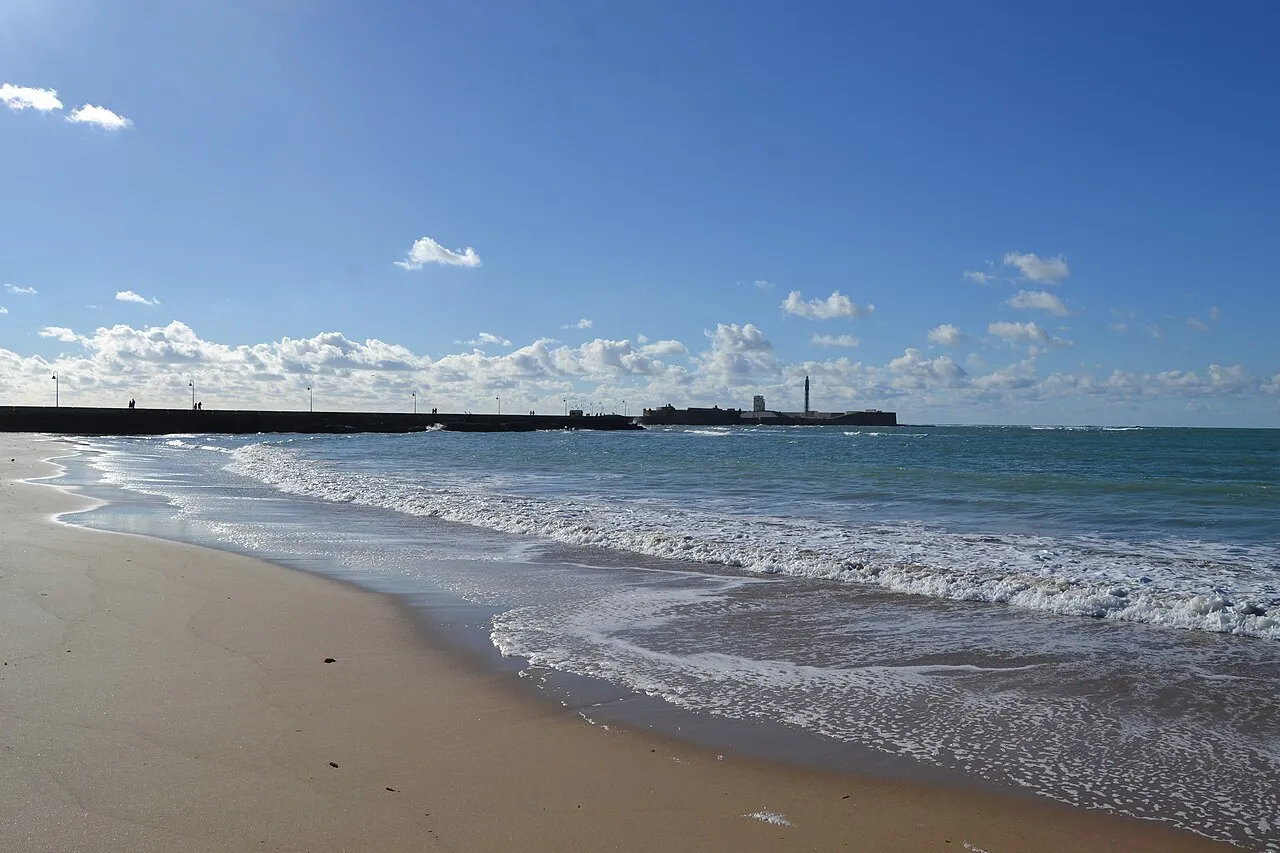
La Caleta is the only beach in the old town and it is small, barely four hundred metres wedged between two castles, with an Art Nouveau bathing pavilion from 1926 planted in the middle. But it is the place that defines Cádiz visually, because it faces due west and because this is where the stone causeway sets off a kilometre into the Atlantic.
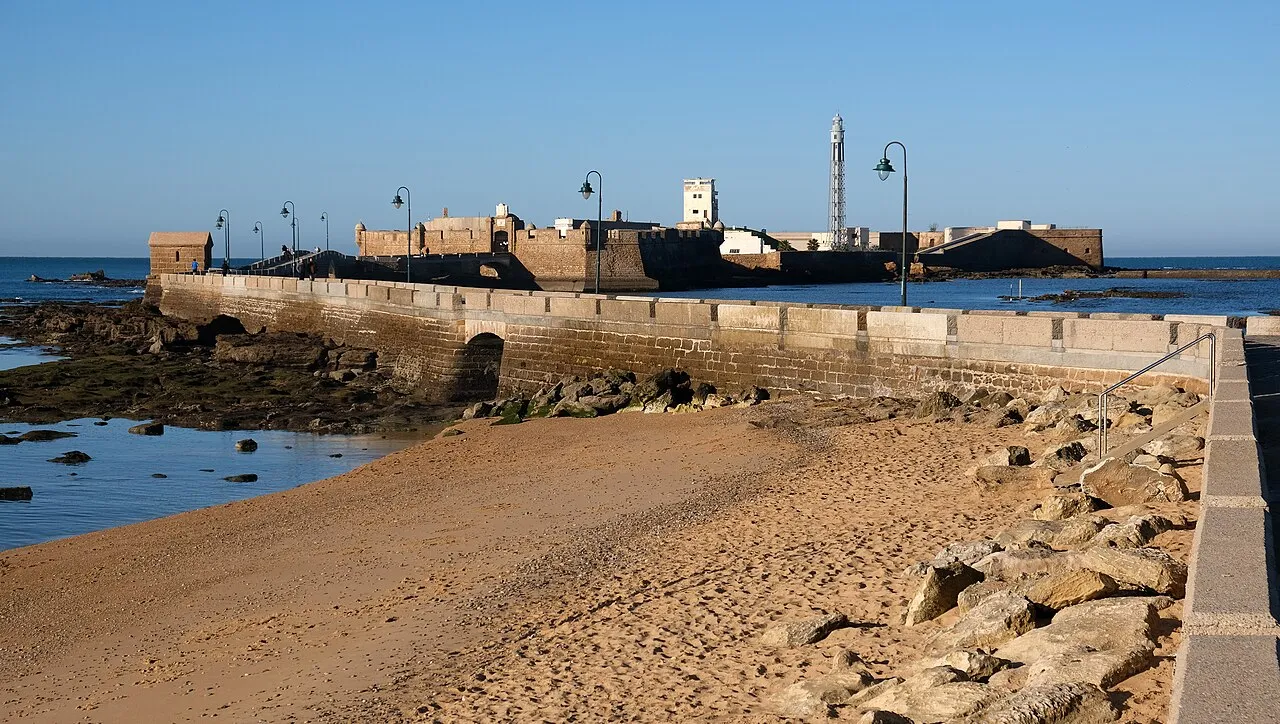
Watch out: the causeway to the Castillo de San Sebastián has no railing for much of the way and closes in stormy weather. Halfway along, if you turn round, you have the best image of Cádiz there is.
A beach between two fortresses
And a bathing pavilion in the middle of the water.
La Caleta occupies the natural gap between the two castles, and that position explains its history: it was the original harbour of the Phoenician and Roman city, sheltered from the swell by the reefs, before the modern port moved to the other side of the peninsula.
In the middle of the water stands the bathing pavilion of la Palma y del Real, an Art Nouveau building from 1926 on stilts, with two symmetrical wings and a central rotunda. Today it houses a centre for underwater archaeology, and at low tide it is left with its feet in the sand.
It is a small urban beach, with fine sand and calm water, and in summer it fills up completely. Its appeal lies not in the swimming but in the scene: the two castles closing the frame, the pavilion in the centre and the sun dropping right in front of you.
The people of Cádiz hold it as the sentimental symbol of the city and it turns up constantly in the Carnival coplas. It is also where some scenes of a James Bond film pretending to be Havana were shot, something Cádiz remembers with a smirk.
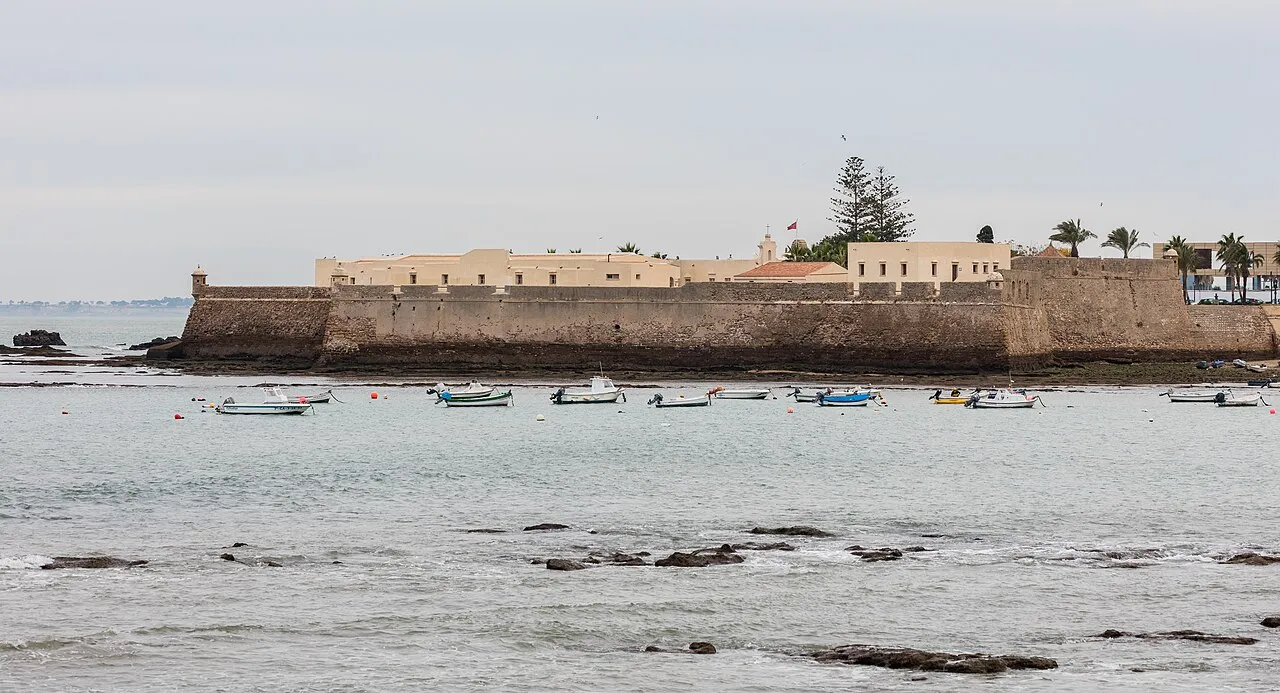
A star-shaped plan with pointed bastions, begun in 1598 after an English fleet sacked and burned the city two years earlier. It was designed by Cristóbal de Rojas, who that same year published the reference treatise on fortification. Free access.
It is reached along a stone causeway almost a kilometre long over the sea. Ancient tradition placed a temple to Cronus here, at the end of the known world. Its iron lighthouse, from 1908, was one of the first electric ones in Spain. Variable opening hours and closures for works.
Four hundred metres of sand that were the original harbour of the Phoenician and Roman city, sheltered by the reefs. In the middle, the Art Nouveau bathing pavilion from 1926 on stilts, today a centre for underwater archaeology, which at low tide is left with its feet in the sand.
From the southern end of the beach a stone causeway almost a kilometre long sets off into the Atlantic as far as the islet of the Castillo de San Sebastián. It has no railing for much of the way, the water breaks on both sides and at high tide with wind it soaks you from end to end.
Walking it slowly and turning round as you go is the best experience the city offers. Cádiz moves away and shrinks with every step, and halfway along you have the whole old town inside the frame, with the yellow dome dominating the skyline and the lookout towers poking up between the rooftops.
The castle at the far end has had variable opening hours and closures for works at different times, so it is worth checking before you walk the kilometre. But the walk pays off all the same, because the view is had from the causeway itself and not from inside the compound.
In stormy weather access is closed for safety, and rightly so: the waves come over the causeway and there is nowhere to shelter. On days of heavy sea the scene from the shore, with the water leaping over the parapet, is a spectacle in itself.
The rest of the seafront
La Caleta does not stand alone: it is part of a continuous promenade that runs around the whole old town along the water's edge and can be walked from end to end in a good hour, always flat and always with the sea in view.
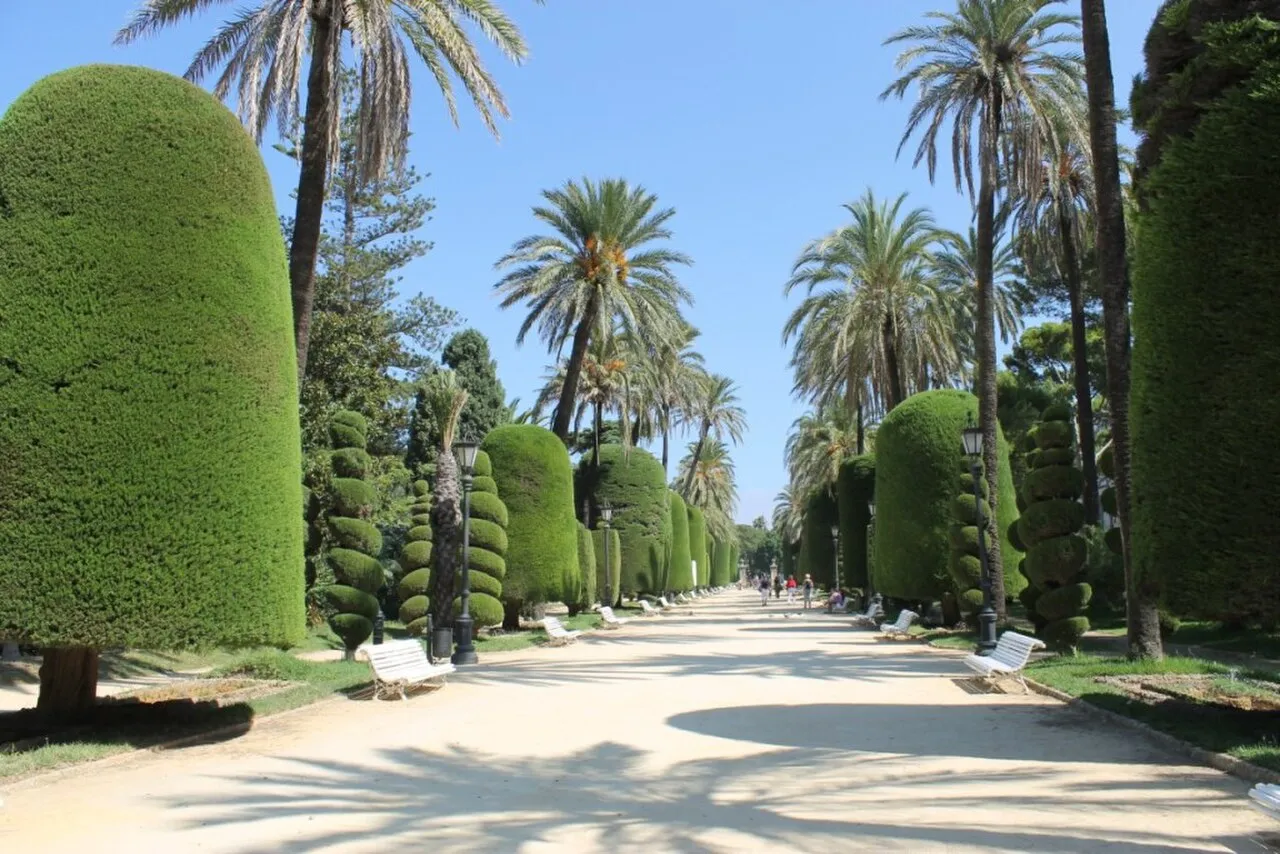
To the north, the Alameda Apodaca and the Parque Genovés, two nineteenth-century gardens with enormous ficus trees, palms and hedges clipped into fanciful shapes, looking out over the bay. And the Baluarte de la Candelaria, another piece of the defensive system, today a cultural space with free access.
To the south, the paseo Fernando Quiñones runs along the sea to the start of the castle causeway, with open views of the Atlantic. It is the most pleasant stretch for walking late in the day, when the heat drops.
The moment for all of this is sunset. La Caleta faces due west, the sun sets right in front of it and from here you watch it drop into the ocean with the two castles silhouetted against the water. It is, without exaggeration, one of the best ends to a day on the Spanish coast.
4
Parque Genovés
📍 Next to the Alameda Apodaca
A nineteenth-century garden with more than a hundred tree species, hedges clipped into fanciful shapes and a grotto with a waterfall. It is the lung of the old town and gives continuous shade, which is welcome in summer. Free access.
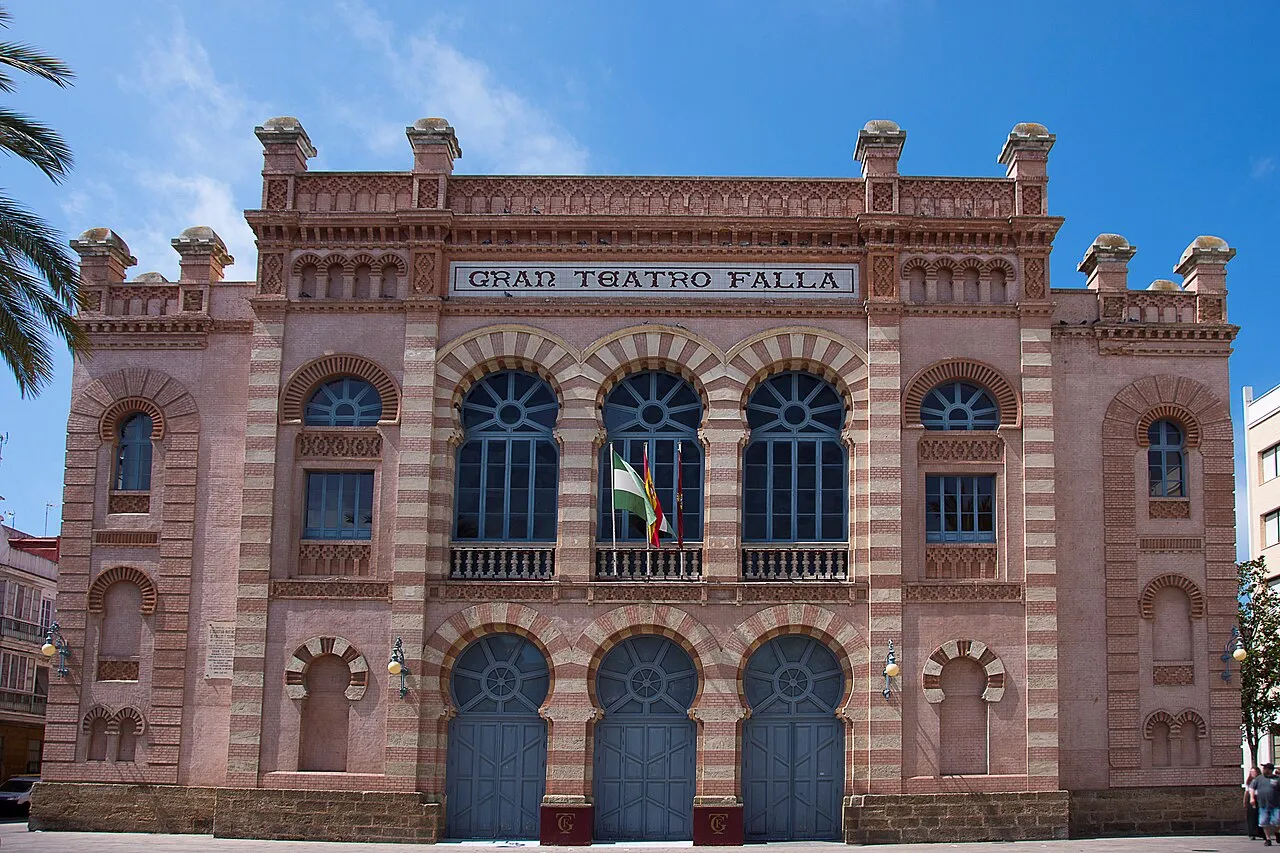
It lies on the way between the centre and La Caleta, and its neo-Mudéjar façade in red brick is one of the most photographed in the city. It is the home of the official Carnival competition, which fills the theatre for weeks every February.
Yes, along a stone causeway almost a kilometre long laid over the sea that sets off at the end of La Caleta. It has no railing for much of the way and closes for safety in stormy weather. The castle compound has had variable opening hours and closures for works, but the walk pays off even if it is shut.
What is the best time for La Caleta?
Sunset, no argument. The beach faces due west, the sun sets right in front of it and from there you watch it drop into the Atlantic with the Castillo de Santa Catalina on one side and San Sebastián on the other. It is one of the best ends to a day on the whole Spanish coast.
What is the building in the middle of the beach?
The old bathing pavilion of la Palma y del Real, built in 1926 on stilts in Art Nouveau style, with two symmetrical wings and a central rotunda. Today it houses a centre for underwater archaeology. At low tide it is left with its feet in the sand and you can walk right around it.
Is it a good beach for swimming?
It is small, barely four hundred metres, with fine sand and calm water because the reefs shelter it from the swell: in fact it was the original harbour of the Phoenician and Roman city. In summer it fills up completely. For swimming with room to spare, the beaches in the new part of town, Victoria and Santa María del Mar, are better.
Is the Castillo de Santa Catalina free?
Yes, access to the compound is free. You can walk the parade ground, the chapel, the armouries and the walkway around the walls, from which you see the whole of La Caleta at your feet. It also hosts exhibitions and concerts, with seasonal opening hours worth checking.
What else is there on the seafront?
A continuous promenade that runs around the whole old town along the water's edge, flat and walkable in a good hour. To the north, the Alameda Apodaca, the Parque Genovés and the Baluarte de la Candelaria; to the south, the paseo Fernando Quiñones as far as the start of the castle causeway.
Practical information
WhereWestern edge of the old town, 15 minutes on foot from the cathedral.
The causewayAlmost a kilometre over the sea to San Sebastián, with no railing for much of it.
FreeThe beach, the Castillo de Santa Catalina, the Parque Genovés and all the promenades.
Best timeSunset: La Caleta faces due west.
Watch outIn stormy weather the causeway to the castle closes. And San Sebastián has had closures for works.
NearbyAlameda Apodaca, Baluarte de la Candelaria and paseo Fernando Quiñones, all flat.
On the map
🎧 With Viavoy
Walk Cadiz and listen at your own pace
Download Viavoy and walk Cadiz offline, whenever you like.